Counterfeit Detection and Anti-Fraud Technology: How a Small UV Light Protects Financial Security

Money has always represented more than simple paper or numbers. It represents trust, economic activity, personal effort, and the foundation of everyday transactions. Every time people exchange cash for goods and services, they rely on an invisible agreement: that the currency being used is genuine.

However, counterfeit money has challenged financial systems for centuries. From hand-drawn imitations in the past to sophisticated modern reproductions, counterfeiters continue to develop new methods to copy banknotes.

To protect financial security, governments and financial institutions have created increasingly advanced anti-counterfeiting technologies. Among these technologies, one of the simplest yet most effective tools is the UV counterfeit detector, often known as a small ultraviolet verification lamp.

At first glance, a UV money detector may look like a simple device that produces purple light. It does not have a complicated screen, advanced artificial intelligence, or expensive components. Yet this small tool plays an important role in helping businesses, banks, and individuals identify suspicious banknotes.

So how can a small UV light help protect financial security?

The answer lies in the hidden security features built into modern currency.


Understanding the Challenge of Counterfeit Currency

Counterfeit money refers to illegally produced currency designed to look like legitimate government-issued money.

The goal of counterfeiters is not only to copy the appearance of a banknote but also to deceive people into believing it is authentic.

Modern banknotes contain many complex security features, including:

  • Special printing techniques
  • Watermarks
  • Security threads
  • Color-changing elements
  • Microprinting
  • Hidden patterns
  • Ultraviolet-reactive materials

These features are intentionally difficult to reproduce.

A counterfeit note may look convincing under normal lighting, but specialized detection methods can reveal differences that are invisible to the human eye.

This is where ultraviolet technology becomes valuable.


What Is a UV Money Detector?

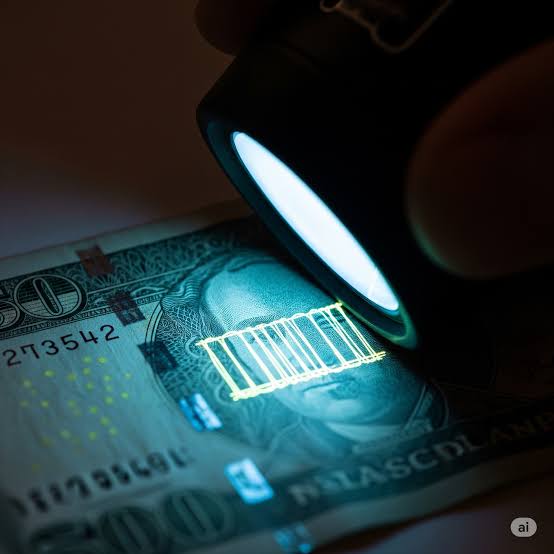
A UV money detector is a device that produces ultraviolet light, usually within a specific wavelength range, to reveal security features embedded in currency.

Unlike ordinary visible light, ultraviolet light can expose materials and markings that cannot be seen under normal conditions.

Many legitimate banknotes contain special fluorescent elements that react when exposed to UV light.

When authentic currency is placed under a UV detector, certain parts may:

  • Glow brightly
  • Display hidden patterns
  • Reveal security markings
  • Show specific colors

Counterfeit notes often fail this test because they may lack these specialized materials or reproduce them incorrectly.


Why Do Banknotes Use UV Security Features?

Governments and central banks use UV-reactive features because they provide a practical balance between security and usability.

A good anti-counterfeiting feature needs to meet several requirements:

Difficult to Copy

Security features should require specialized materials or technology that are not easily available to counterfeiters.

Easy to Verify

Businesses and the public need simple methods to check authenticity.

Durable

Currency must survive:

  • Folding
  • Handling
  • Washing
  • Transportation
  • Long-term circulation

UV-reactive materials can remain effective throughout the normal lifespan of a banknote.


How Ultraviolet Light Reveals Hidden Security Features

The science behind UV detection is based on fluorescence.

Some materials absorb ultraviolet energy and release part of that energy as visible light.

This process creates a glowing effect that can be detected under UV illumination.

In simple terms:

  1. The UV lamp produces ultraviolet radiation.
  2. The security material inside the banknote absorbs the UV energy.
  3. The material responds by producing visible fluorescence.
  4. The user observes the glowing pattern or mark.

Authentic currency is designed with specific fluorescent responses.

Counterfeit currency often produces:

  • No reaction
  • Incorrect colors
  • Wrong patterns
  • Unusual brightness

The Difference Between Normal Light and UV Light

To understand why UV detectors work, it helps to understand the difference between ordinary light and ultraviolet light.

Visible light is the part of the electromagnetic spectrum that human eyes can see.

It allows us to recognize:

  • Colors
  • Shapes
  • Images
  • Text

Ultraviolet light has a shorter wavelength than visible light and cannot normally be seen.

However, it interacts differently with certain materials.

This unique interaction allows UV technology to reveal hidden information.

A banknote may appear completely normal under room lighting but show additional security features under ultraviolet illumination.


Why a Small UV Lamp Can Make a Big Difference

Many people wonder why such a simple device can contribute to financial security.

The reason is that effective security does not always require complicated technology.

A small UV lamp provides several important advantages:


1. Fast Authentication

Cash transactions often happen quickly.

Retail employees, cashiers, and customers need a verification method that works within seconds.

A UV detector can quickly show whether certain security features are present.

This makes it practical for:

  • Retail stores
  • Restaurants
  • Gas stations
  • Ticket counters
  • Small businesses

2. Affordable Protection

Compared with advanced currency verification machines, UV detectors are relatively inexpensive.

This allows more businesses to use basic authentication tools without significant investment.

Even a small shop handling daily cash transactions can add an extra layer of protection.


3. Easy Operation

Most UV money detectors require minimal training.

Users typically need to:

  1. Turn on the UV light.
  2. Place the banknote underneath.
  3. Observe the reaction.

This simplicity makes UV verification accessible to many people.


UV Detection in Modern Banking Security

Banks and financial institutions use multiple authentication technologies to protect currency.

Although professional systems may include advanced scanning and automated analysis, UV detection remains an important part of the verification process.

Banks often combine methods such as:

  • UV inspection
  • Magnetic ink detection
  • Infrared analysis
  • Optical scanning
  • Manual examination

No single method is perfect by itself.

Instead, multiple security checks create stronger protection.


UV Detection Beyond Paper Money

Although UV lamps are commonly associated with banknote verification, the technology has many other security applications.

UV authentication is also used for:

  • Identification documents
  • Passports
  • Certificates
  • Event tickets
  • Product labels
  • Official documents

Many valuable documents include hidden security marks that can be checked under ultraviolet light.

This demonstrates how UV technology supports broader anti-fraud efforts.

How Counterfeiters Try to Copy Currency Security Features

As anti-counterfeiting technology improves, counterfeiters continue searching for ways to imitate legitimate currency.

Modern banknotes are not simply printed pieces of paper. They are carefully engineered products that combine specialized materials, complex printing processes, and multiple hidden security elements.

Counterfeiters may attempt to reproduce:

  • Colors
  • Images
  • Text
  • Logos
  • Security patterns
  • Special effects

However, many security features are difficult to duplicate because they depend on technologies that are not available through ordinary printing methods.


Copying the Appearance Is Easier Than Copying the Science

One of the biggest challenges for counterfeiters is that visual similarity does not equal authenticity.

A counterfeit bill may look convincing under normal lighting but fail when tested with specialized tools.

For example:

A printer may reproduce a banknote’s visible design, but it cannot easily recreate:

  • Genuine fluorescent inks
  • Embedded security materials
  • Specialized fibers
  • Advanced printing layers

This is why professional verification tools remain important.


The Limitations of UV Counterfeit Detection

Although UV money detectors are useful, they are not a complete solution.

Understanding their limitations helps users avoid relying on a single method.


UV Detection Is Only One Security Check

A UV lamp can reveal certain security features, but it does not examine every possible element of a banknote.

A counterfeit note may potentially imitate one feature while failing another.

For stronger verification, users may combine UV inspection with:

  • Checking texture
  • Examining printing quality
  • Looking for watermarks
  • Checking security threads
  • Comparing suspicious notes with verified currency

A layered approach provides stronger protection.


Not Every Mark Is Visible Under UV Light

Different currencies use different security technologies.

Some features may respond clearly under ultraviolet light, while others require different detection methods.

This means users should understand what they are looking for rather than simply expecting every genuine note to glow.


Incorrect Equipment Can Reduce Accuracy

The effectiveness of UV detection depends on the quality of the device.

Factors that influence performance include:

  • UV wavelength accuracy
  • Lamp strength
  • Light coverage
  • Device condition
  • Viewing environment

A weak or damaged UV lamp may make authentication more difficult.


How Businesses Use UV Money Detectors for Daily Protection

For many businesses, cash handling happens hundreds or thousands of times every day.

Small mistakes can create financial losses.

A simple UV verification process can help employees identify suspicious notes before they enter the cash system.


Retail Stores

Retail environments often handle large amounts of cash through frequent transactions.

Common situations include:

  • Busy checkout periods
  • High customer traffic
  • Multiple employees handling money

A UV detector provides a quick additional check when a note appears unusual.


Restaurants and Hospitality Businesses

Restaurants, hotels, and service businesses often receive cash payments from many different customers.

During busy periods, employees may not have time for complicated verification procedures.

A fast UV inspection can provide extra confidence.


Small Businesses

Small businesses may face greater challenges because financial losses from counterfeit currency can directly affect profits.

Affordable tools like UV detectors allow smaller operations to improve security without purchasing expensive equipment.


Cash Handling Best Practices With UV Verification

A UV detector works best when combined with good cash-handling procedures.

Businesses can improve protection by training employees to:


Pay Attention to Suspicious Details

Employees should know common warning signs, such as:

  • Unusual paper texture
  • Poor printing quality
  • Missing security features
  • Strange colors
  • Different thickness

Use Verification Tools Consistently

A common mistake is only checking suspicious-looking bills.

Experienced counterfeiters often design notes that appear normal.

Consistent verification procedures create better protection.


Maintain Detection Equipment

Like any device, UV detectors require care.

Maintenance tips include:

  • Cleaning the lamp area
  • Checking brightness
  • Replacing aging bulbs
  • Protecting the device from damage

A reliable tool must remain reliable over time.


Choosing a Reliable UV Money Detector

If you are considering purchasing a UV counterfeit detector, several factors are worth considering.


1. UV Wavelength Quality

A good UV detector should produce an appropriate wavelength for the intended application.

The wavelength affects how effectively security features can be revealed.

Reliable devices are designed specifically for authentication purposes rather than simple decorative UV lighting.


2. Brightness and Visibility

A strong and consistent UV output helps users identify security reactions more easily.

Poor-quality devices may produce weak results that make verification difficult.


3. Design and Usability

A practical UV detector should be:

  • Easy to operate
  • Comfortable to use
  • Durable
  • Suitable for the working environment

For businesses, convenience matters because employees need to use the device quickly during transactions.


4. Portability

Different users have different needs.

Portable UV detectors may be useful for:

  • Mobile businesses
  • Markets
  • Delivery services
  • Field operations

Larger desktop models may be better for:

  • Cash counters
  • Banks
  • Retail locations

The Role of UV Technology in Fighting Financial Fraud

Financial fraud affects more than individual transactions.

Counterfeit currency can impact:

  • Businesses
  • Consumers
  • Banks
  • Economic confidence

When counterfeit money enters circulation, it reduces trust in financial systems.

Authentication technologies help maintain confidence by allowing people to verify what they receive.

UV detection represents one part of a larger global effort to protect financial integrity.


The Future of Counterfeit Detection Technology

As counterfeit methods become more advanced, authentication technology continues to evolve.

Future verification systems may combine multiple technologies, including:

  • Artificial intelligence
  • Image recognition
  • Smartphone scanning
  • Advanced optical sensors
  • Machine learning analysis

These technologies may allow faster and more accurate currency verification.

However, simple tools like UV lamps are likely to remain valuable because they provide:

  • Low cost
  • Easy operation
  • Fast results
  • Practical accessibility

Sometimes the most effective technology is the one people can use every day.


Why Simple Technology Often Remains Powerful

In a world filled with advanced digital systems, it is easy to overlook simple tools.

A UV counterfeit detector does not require complex software or expensive infrastructure.

It uses a basic scientific principle:

Invisible ultraviolet energy reveals hidden information.

This simple concept creates a practical security solution.

The power of the UV lamp comes not from complexity but from precision.

It targets specific features designed by currency experts and helps ordinary users identify authenticity.


Common Questions About UV Money Detection

Can UV lights detect all counterfeit money?

No technology can identify every counterfeit note by itself.

UV detection is an important verification method, but it should ideally be combined with other checks.


Why does genuine money react under UV light?

Authentic banknotes often contain special materials designed to fluoresce under ultraviolet illumination.

This reaction is part of the currency’s security design.


Can ordinary purple LED lights verify money?

Not necessarily.

A decorative UV light may not produce the correct wavelength or intensity needed for reliable authentication.

Professional verification devices are designed specifically for detecting security features.


Are UV detectors only useful for banks?

No.

They can be useful for many environments, including:

  • Retail businesses
  • Restaurants
  • Small shops
  • Cash service locations
  • Document verification applications

Final Thoughts: A Small UV Light With a Big Security Mission

The ability to verify money may seem like a simple task, but it plays an important role in maintaining financial trust.

A small UV counterfeit detector demonstrates how science can provide practical protection in everyday life.

By revealing hidden security features that cannot be seen under normal lighting, ultraviolet technology helps businesses and individuals identify suspicious currency and reduce the risks associated with counterfeit fraud.

However, UV detection works best as part of a broader approach that includes awareness, proper training, and multiple verification methods.

The next time a small purple light reveals a hidden mark on a banknote, remember that it represents much more than a simple glow. It represents years of scientific research, security planning, and the ongoing effort to protect financial systems around the world.

Simple technology, when designed with purpose, can make a significant difference.

Leave a comment