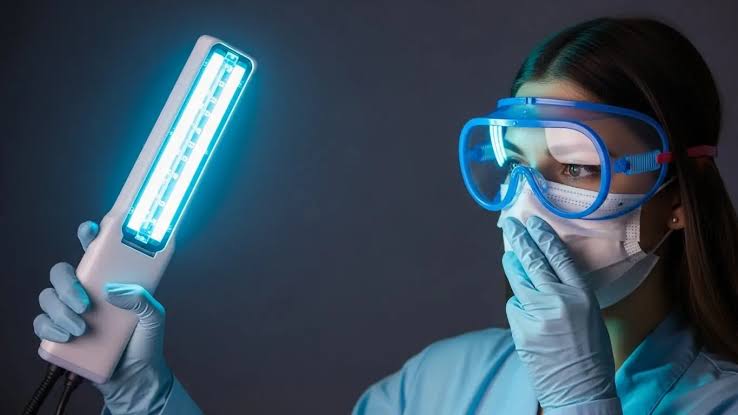
A comprehensive guide to the role of ultraviolet curing and sterilization in medical device production, including material performance, manufacturing efficiency, contamination control, regulatory considerations, and product reliability.
Medical devices play a critical role in modern healthcare. From diagnostic instruments and surgical tools to catheters, wearable sensors, and implantable components, these products must perform reliably in environments where quality failures can have serious consequences.
Unlike many ordinary consumer products, medical devices are often subject to strict requirements concerning biocompatibility, mechanical performance, cleanliness, contamination control, and manufacturing consistency. A small defect in a bonded component, an incompletely cured coating, or an ineffective sterilization process can compromise product performance and potentially create risks for patients.
For this reason, medical device manufacturers must carefully control every stage of production.
Two technologies that can play important roles in this process are UV curing and sterilization.
UV curing uses ultraviolet radiation to initiate or accelerate the polymerization of specially formulated materials, such as adhesives, coatings, inks, and resins. When the formulation and process are appropriate, UV curing can produce strong bonds, durable surfaces, and precise finished components.
Sterilization, by contrast, is a process intended to eliminate or render inactive viable microorganisms on or in a product to a specified level of sterility assurance. Depending on the device, materials, packaging, and intended use, manufacturers may select methods such as moist heat, ethylene oxide, radiation, or other validated technologies.
Although both processes may involve ultraviolet-related terminology in certain manufacturing discussions, UV curing and sterilization are not interchangeable.
UV curing changes the physical and chemical properties of a material. Sterilization addresses microorganisms through a validated process designed for the specific product and its intended use.
Understanding this distinction is fundamental to medical device manufacturing.
This article explores why UV curing and sterilization matter, how they support different stages of production, what technical challenges manufacturers must address, and how these technologies can contribute to safer and more reliable medical devices.
1. Understanding the Role of UV Curing in Medical Device Manufacturing
UV curing is a photochemical manufacturing process that uses ultraviolet light to initiate a chemical reaction in a light-sensitive material.
The technology is widely used in industries such as electronics, automotive manufacturing, optical products, packaging, and medical devices.
In medical device production, UV curing may be used for applications including:
-
Bonding selected plastic components.
-
Fixing optical elements.
-
Sealing certain assemblies.
-
Applying protective coatings.
-
Encapsulating electronic components.
-
Producing specialized medical-device markings.
-
Curing selected resins and composite materials.
-
Securing components in diagnostic equipment.
-
Manufacturing certain microfluidic devices.
-
Bonding compatible tubing and fittings.
The exact application depends on the adhesive or resin formulation, the device design, and the manufacturer's validated process.
How UV Curing Works
A typical UV-curable material contains one or more photoactive ingredients that respond to ultraviolet radiation.
When the material is exposed to the appropriate wavelength and sufficient energy, a photochemical reaction begins. In many formulations, this initiates polymerization, transforming liquid or semi-liquid material into a solid polymer network.
The process may involve:
-
Applying a formulated adhesive, coating, or resin.
-
Positioning the relevant components.
-
Exposing the material to a suitable UV source.
-
Initiating the curing reaction.
-
Allowing the material to reach the required degree of conversion.
-
Inspecting and testing the finished assembly.
The process may occur within seconds or require longer exposure, depending on the formulation, thickness, optical conditions, and equipment.
Why the Chemistry Matters
Not all UV-curable materials behave in the same way.
Their performance may depend on:
-
Photoinitiator chemistry.
-
Resin composition.
-
Additives.
-
Pigments.
-
Fillers.
-
Optical transparency.
-
Exposure wavelength.
-
Light intensity.
-
Exposure time.
-
Temperature.
-
Oxygen inhibition.
-
Material thickness.
A formulation designed for industrial packaging may not be suitable for a medical device.
Medical applications may require additional evaluation of:
-
Biocompatibility.
-
Extractables and leachables.
-
Residual monomers.
-
Chemical stability.
-
Mechanical durability.
-
Aging performance.
-
Compatibility with sterilization.
-
Contact with bodily fluids.
-
Intended duration of patient contact.
Therefore, manufacturers must select materials based on the complete device application rather than simply choosing the fastest-curing product.
2. Why UV Curing Matters in Medical Device Production
UV curing is not simply a faster way to dry an adhesive. In many medical device applications, it is a carefully controlled manufacturing process that can influence the strength, reliability, appearance, and long-term performance of a finished product.
When appropriately selected and validated, UV curing can offer several important advantages.
2.1 Strong and Reliable Bonding
Medical devices often contain multiple components made from different materials.
For example, a device may combine:
-
Medical-grade plastics.
-
Glass.
-
Metal.
-
Silicone.
-
Elastomeric materials.
-
Electronic components.
-
Optical elements.
-
Specialized coatings.
These materials may need to be joined without introducing excessive heat, distortion, or contamination.
A suitable UV-curable adhesive can provide a reliable bond between compatible surfaces. Depending on the formulation and application, it may be used to secure components in diagnostic equipment, optical assemblies, fluid-handling devices, or selected disposable medical products.
A properly cured adhesive can help provide:
-
Mechanical stability.
-
Resistance to vibration.
-
Protection against moisture.
-
Dimensional stability.
-
Improved component alignment.
-
Consistent assembly quality.
However, bonding performance depends on much more than exposure to ultraviolet light. Surface preparation, adhesive selection, joint design, curing conditions, and material compatibility all influence the result.
2.2 Faster Production Cycles
Traditional adhesives may require extended drying, heating, or curing periods.
UV-curable materials can often achieve useful handling strength rapidly when exposed to suitable radiation.
This can help manufacturers:
-
Reduce waiting time between assembly stages.
-
Increase production throughput.
-
Improve process consistency.
-
Reduce the need for large curing ovens.
-
Simplify certain assembly lines.
-
Improve production scheduling.
For high-volume medical device manufacturing, shorter process times can contribute to greater efficiency.
However, a material that appears cured quickly is not necessarily fully cured.
Manufacturers must establish the appropriate curing conditions and verify that the resulting material meets the required performance specifications.
2.3 Better Process Control
UV curing can be integrated into automated manufacturing systems.
For example, a production line may use:
-
Automated adhesive dispensing.
-
Robotic component positioning.
-
UV exposure stations.
-
Optical sensors.
-
Exposure monitoring.
-
Automated inspection.
-
Digital process records.
This can improve repeatability when the process is properly designed.
Instead of relying entirely on an operator's judgment, manufacturers can establish defined parameters for:
-
Adhesive quantity.
-
Component positioning.
-
Exposure wavelength.
-
Irradiance.
-
Exposure time.
-
Distance between the lamp and the workpiece.
-
Temperature.
-
Material batch.
-
Equipment condition.
The result is a more controlled manufacturing environment.
2.4 Reduced Thermal Stress
Some medical device materials are sensitive to heat.
Excessive temperatures may cause:
-
Plastic deformation.
-
Warping.
-
Dimensional changes.
-
Damage to electronic components.
-
Changes in optical properties.
-
Stress within bonded assemblies.
-
Degradation of heat-sensitive materials.
UV curing can sometimes provide a useful alternative to high-temperature curing methods because the primary curing reaction is initiated by light.
Nevertheless, UV lamps may generate heat, and the curing reaction itself can release heat. Manufacturers must therefore evaluate the actual thermal profile of the process rather than assuming that UV curing is always low-temperature.
2.5 Improved Product Design Flexibility
UV-curable adhesives and coatings can support certain designs that would be difficult to manufacture using conventional processes.
For example, they may be useful where a manufacturer needs:
-
Precise bonding.
-
Small adhesive volumes.
-
Transparent bonding zones.
-
Controlled coating thickness.
-
Rapid assembly.
-
Minimal mechanical clamping.
-
Compatibility with automated dispensing.
This flexibility can be valuable in the production of compact medical instruments and sophisticated diagnostic systems.
However, the material must be suitable for the intended use. A design that is easy to assemble is not necessarily safe or reliable in a medical application.
3. Common Medical Device Applications of UV Curing
The role of UV curing varies significantly from one product category to another.
A manufacturer should determine whether the technology is appropriate for the specific device, materials, and intended clinical use.
3.1 Medical Device Bonding
Bonding is one of the most familiar applications of UV-curable materials.
Selected adhesives may be used to join compatible components in:
-
Diagnostic instruments.
-
Optical assemblies.
-
Certain fluid-handling systems.
-
Medical equipment housings.
-
Sensor assemblies.
-
Tubing connections.
-
Disposable device components.
The adhesive must be evaluated for the required mechanical and chemical conditions.
For example, a bond exposed to repeated cleaning or disinfectant contact may require different performance characteristics from a bond inside a sealed electronic enclosure.
3.2 Optical Medical Equipment
Optical systems may require accurate alignment and stable bonding.
Examples include selected components used in:
-
Diagnostic imaging equipment.
-
Optical sensors.
-
Medical cameras.
-
Inspection instruments.
-
Specialized illumination systems.
-
Optical measurement devices.
UV-curable optical adhesives may be useful because they can provide precise positioning and rapid fixation.
However, optical applications introduce additional considerations:
-
Light transmission.
-
Refractive index.
-
Optical clarity.
-
Yellowing.
-
Shrinkage.
-
Long-term transparency.
-
UV exposure sensitivity.
-
Compatibility with sterilization.
A material that performs well in a general bonding application may not be appropriate for a precision optical assembly.
3.3 Medical Device Coatings
Some medical components require protective or functional coatings.
Depending on the application, coatings may provide:
-
Surface protection.
-
Chemical resistance.
-
Wear resistance.
-
Electrical insulation.
-
Reduced friction.
-
Improved appearance.
-
Protection against environmental exposure.
The coating must be uniform and properly cured.
An incompletely cured coating may remain tacky, develop defects, release unwanted substances, or fail prematurely.
For products that contact patients or bodily fluids, the coating's chemical composition and biological safety must be carefully evaluated.
3.4 Electronic and Sensor Assemblies
Modern medical devices increasingly include electronic components and sensors.
UV-curable materials may be used in selected applications involving:
-
Sensor protection.
-
Component fixation.
-
Encapsulation.
-
Electrical insulation.
-
Optical sensor assembly.
-
Small electronic modules.
However, electronic assemblies can contain areas that ultraviolet light cannot reach directly.
Manufacturers must determine whether the material can cure adequately throughout the required volume.
If a formulation depends on direct UV exposure, shaded regions may remain insufficiently cured.
3.5 Microfluidic and Diagnostic Devices
Some diagnostic products contain small channels, chambers, and precisely aligned components.
UV-curable materials may be used in selected manufacturing processes for:
-
Component bonding.
-
Sealing.
-
Optical integration.
-
Structural fixation.
-
Certain microfluidic assemblies.
These applications require careful evaluation because the adhesive or coating must not obstruct channels, interfere with fluid movement, or introduce unacceptable extractables.
A tiny manufacturing defect can have a disproportionate effect on a miniature diagnostic system.
4. The Most Important UV Curing Parameters
Successful UV curing requires more than choosing a UV lamp and exposing a product to light.
Manufacturers must understand the relationship between the material, the equipment, and the production environment.
4.1 Wavelength
UV-curable materials are formulated to respond to particular ranges of ultraviolet radiation.
The relevant wavelength depends on the photoinitiator and formulation.
A lamp may produce ultraviolet radiation, but that does not mean it emits the wavelengths needed for efficient curing.
Using an unsuitable wavelength can result in:
-
Slow curing.
-
Incomplete polymerization.
-
Poor surface performance.
-
Inconsistent bonding.
-
Excessive exposure time.
-
Unpredictable production results.
Manufacturers should confirm the material's recommended spectral range and verify that the curing equipment is compatible.
4.2 Irradiance
Irradiance describes the optical power delivered per unit area, commonly expressed in watts per square centimeter or a related unit.
It is an important process parameter because the amount of light reaching the material affects the curing reaction.
However, higher irradiance does not automatically mean better results.
Excessive irradiance may cause:
-
Excessive heat.
-
Uneven curing.
-
Material damage.
-
Surface defects.
-
Rapid skin formation.
-
Increased internal stress.
The appropriate irradiance must be established through material-specific testing.
4.3 Exposure Time
Exposure time determines how long the material receives UV radiation.
A short exposure may be insufficient for the required degree of cure.
A longer exposure may not always improve performance and could increase heat or degradation.
Manufacturers should establish the appropriate exposure time based on:
-
Material thickness.
-
Adhesive formulation.
-
Light intensity.
-
Wavelength.
-
Joint geometry.
-
Component transparency.
-
Production speed.
4.4 UV Dose
UV dose is commonly understood as the energy delivered per unit area over a specified exposure period.
In simplified terms:
UV dose = irradiance × exposure time
The relationship is useful for understanding the curing process, but it should not be treated as the only parameter that determines curing quality.
Two processes with the same nominal dose may produce different results if they use different wavelengths, thermal conditions, exposure geometries, or material configurations.
For medical device manufacturing, the relevant process parameters should be established and validated together.
4.5 Distance and Exposure Geometry
The distance between the UV source and the product can affect the amount of radiation reaching the material.
Other factors include:
-
Lamp angle.
-
Product orientation.
-
Surface curvature.
-
Shadowed areas.
-
Reflective surfaces.
-
Fixture design.
-
Distance variation across the assembly.
A flat sample exposed directly to a lamp may cure differently from a three-dimensional medical device with narrow joints and hidden surfaces.
4.6 Material Thickness and Transparency
UV light may not penetrate all materials equally.
Transparent materials may allow light to pass through, while opaque or highly pigmented materials may block it.
Thick adhesive layers can also create curing challenges.
A material that cures effectively in a thin layer may not achieve the same result in a thicker joint.
Manufacturers must evaluate the actual geometry of the finished device.
4.7 Oxygen Inhibition
Oxygen can interfere with certain free-radical polymerization reactions, particularly near exposed surfaces.
This may leave the surface of a UV-curable material softer or tackier than the underlying material.
The extent of the effect depends on the formulation and process conditions.
Manufacturers may need to investigate:
-
Material formulation.
-
Exposure conditions.
-
Surface requirements.
-
Atmospheric conditions.
-
Post-curing procedures.
-
Protective processing methods.
Any approach used to address oxygen inhibition must be validated for the specific material and device.
5. Why Incomplete UV Curing Can Create Medical Device Risks
UV curing can improve manufacturing efficiency and product performance, but an inadequately cured material may introduce serious quality problems.
In medical device production, the consequences of an incomplete cure can extend beyond appearance or assembly convenience.
5.1 Reduced Bond Strength
An adhesive that has not achieved the required degree of cure may have insufficient mechanical strength.
This can lead to:
-
Component separation.
-
Leakage.
-
Vibration-related failure.
-
Misalignment.
-
Structural instability.
-
Reduced product lifespan.
The severity of the problem depends on the function of the bonded joint.
A minor cosmetic attachment and a component responsible for fluid containment cannot be evaluated using the same criteria.
5.2 Chemical Residues
Incomplete polymerization may leave residual reactive ingredients or other substances in the finished material.
Depending on the formulation, these may affect:
-
Odor.
-
Surface properties.
-
Chemical stability.
-
Extractables and leachables.
-
Material compatibility.
-
Biological safety.
For medical devices that contact patients, manufacturers must assess whether the finished material is suitable for its intended use.
The safety of a UV-curable adhesive cannot be determined solely from the fact that it has hardened.
5.3 Surface Defects
Incomplete curing may result in:
-
Sticky surfaces.
-
Uneven gloss.
-
Soft areas.
-
Cracking.
-
Blistering.
-
Poor coating adhesion.
-
Discoloration.
-
Inconsistent appearance.
These defects may indicate that the process is not adequately controlled.
5.4 Long-Term Performance Problems
A component may appear acceptable immediately after production but deteriorate during use.
Potential concerns include:
-
Loss of adhesion.
-
Material embrittlement.
-
Swelling.
-
Chemical degradation.
-
Changes in flexibility.
-
Reduced resistance to cleaning agents.
-
Performance changes after sterilization.
For this reason, manufacturers should evaluate the product under conditions that represent its intended use and expected service life.
5.5 The Importance of Process Validation
A medical device manufacturer should not rely solely on visual inspection to determine whether UV curing is adequate.
A robust process may require:
-
Defined material specifications.
-
Equipment qualification.
-
Calibration or verification of relevant instruments.
-
Exposure monitoring.
-
Process parameter limits.
-
Representative test samples.
-
Bond-strength testing.
-
Chemical evaluation.
-
Aging studies.
-
Sterilization compatibility studies.
-
Documented acceptance criteria.
The appropriate testing depends on the device's design, materials, risks, and intended use.
Part II: Why Sterilization Is Essential in Medical Device Manufacturing
6. What Is Sterilization?
Sterilization is a process intended to eliminate or render inactive viable microorganisms on or in a product to a specified level of sterility assurance.
It is particularly important for medical devices that are labeled sterile or intended to be used in circumstances where microbial contamination could create unacceptable risks.
Examples may include selected:
-
Surgical instruments.
-
Invasive medical devices.
-
Implantable products.
-
Catheters.
-
Sterile fluid-path components.
-
Certain diagnostic products.
-
Wound-care products.
-
Disposable medical supplies.
-
Devices used in controlled clinical procedures.
However, not every medical device needs to be supplied sterile.
The required level of microbial control depends on the device's intended use, contact with the body, clinical application, packaging, and applicable regulatory requirements.
A reusable external medical device, for example, may require cleaning and disinfection rather than terminal sterilization.
Sterilization Is Not the Same as Cleaning
Cleaning removes dirt, residues, and contaminants from a surface.
Disinfection reduces or eliminates many types of microorganisms, but it does not necessarily achieve the same result as sterilization.
Sterilization is a distinct process with specific performance requirements.
A product that looks clean is not necessarily sterile.
Likewise, a product that has undergone a cleaning process cannot automatically be labeled sterile.
Sterility Is Not Created by Appearance
A medical device may appear:
-
Clean.
-
Dry.
-
Sealed.
-
Undamaged.
-
Free of visible particles.
None of these observations proves that the product has achieved the required sterility assurance.
Sterility depends on the validated process, the product configuration, the microbial challenge, and the integrity of the overall manufacturing and packaging system.
7. Why Sterilization Matters for Patient Safety
The primary reason sterilization matters is that microorganisms introduced into the body or a vulnerable clinical environment may cause serious harm.
Depending on the device and application, microbial contamination may contribute to:
-
Local infections.
-
Systemic infections.
-
Inflammation.
-
Complications after surgery.
-
Device-related infections.
-
Delayed healing.
-
Additional treatment.
-
Extended hospital stays.
-
Serious patient outcomes.
The risk depends on the type of microorganism, the route of exposure, the patient's condition, and the intended use of the device.
For invasive or implantable products, the consequences of contamination can be particularly serious.
Sterilization Supports Infection Prevention
A properly developed sterilization process is one part of a broader infection-prevention strategy.
Other important controls may include:
-
Appropriate raw-material handling.
-
Environmental controls.
-
Personnel hygiene.
-
Controlled manufacturing areas.
-
Cleaning procedures.
-
Bioburden management.
-
Packaging integrity.
-
Transportation controls.
-
Storage conditions.
-
Correct clinical handling.
Sterilization cannot compensate for every weakness in manufacturing.
For example, a product may undergo a validated sterilization cycle but later become contaminated because its packaging is damaged.
The entire product lifecycle must therefore be considered.
Sterility Assurance Is a Process-Level Concept
Manufacturers should not think of sterilization as a single machine operation.
A reliable system involves:
-
Understanding the product.
-
Defining the intended sterility requirements.
-
Selecting a suitable sterilization method.
-
Characterizing the product's microbial burden.
-
Establishing appropriate process parameters.
-
Validating the process.
-
Monitoring routine production.
-
Maintaining equipment.
-
Controlling packaging and storage.
-
Investigating deviations.
This approach helps ensure that the sterilization process is appropriate for the actual medical device rather than merely effective in a laboratory demonstration.
8. Common Sterilization Methods Used for Medical Devices
Different medical devices require different sterilization technologies.
The choice depends on materials, geometry, packaging, product sensitivity, intended use, and applicable requirements.
8.1 Moist Heat Sterilization
Moist heat sterilization commonly uses saturated steam under controlled pressure and temperature conditions.
It is widely used for compatible medical instruments and products that can withstand the required thermal and moisture exposure.
Potential advantages include:
-
Established technology.
-
No residual ethylene oxide.
-
Effective microbial inactivation under appropriate conditions.
-
Suitability for many reusable instruments.
-
Well-developed validation approaches.
However, moist heat is not suitable for every device.
Potential limitations include:
-
Heat-sensitive materials.
-
Moisture-sensitive components.
-
Certain electronic assemblies.
-
Packaging limitations.
-
Material deformation.
-
Corrosion concerns.
-
Difficulty processing complex configurations.
Manufacturers must establish whether the device can tolerate the complete sterilization cycle, including heating, exposure, pressure changes, and cooling.
8.2 Ethylene Oxide Sterilization
Ethylene oxide, commonly called EtO or EO, is a low-temperature sterilization method used for selected medical devices.
It may be suitable for products that cannot tolerate the temperatures associated with certain other sterilization processes.
Potential advantages include:
-
Low-temperature processing.
-
Ability to penetrate certain packaging and product configurations.
-
Suitability for selected heat-sensitive devices.
-
Use with a broad range of compatible materials.
However, ethylene oxide sterilization requires careful control.
Important considerations include:
-
Gas exposure.
-
Humidity.
-
Temperature.
-
Gas concentration.
-
Exposure time.
-
Product configuration.
-
Aeration.
-
Residual ethylene oxide.
-
Residual ethylene chlorohydrin.
-
Worker and environmental safety.
Residual chemicals must be evaluated because ethylene oxide and related residues can present health concerns if not appropriately controlled.
The U.S. Food and Drug Administration identifies standards addressing EO sterilization processes and relevant residual limits for medical devices. (U.S. Food and Drug Administration)
8.3 Radiation Sterilization
Radiation sterilization uses ionizing radiation to inactivate microorganisms.
Common industrial approaches include:
-
Gamma radiation.
-
Electron-beam radiation.
-
X-ray radiation.
Radiation sterilization may be used for selected disposable medical products and packaged devices.
Potential advantages include:
-
Processing of certain prepackaged products.
-
No need for high-temperature steam exposure.
-
Compatibility with some high-volume manufacturing operations.
-
Potential for efficient industrial processing.
However, radiation can affect materials.
Potential concerns include:
-
Polymer degradation.
-
Discoloration.
-
Embrittlement.
-
Changes in flexibility.
-
Changes in mechanical strength.
-
Altered chemical properties.
-
Effects on packaging.
-
Changes in adhesive performance.
The radiation dose must be appropriate for the product and validated for the intended sterilization process.
Radiation sterilization should not be confused with ordinary UV exposure.
8.4 Other Sterilization Technologies
Depending on the application, manufacturers may consider other validated technologies, such as:
-
Vaporized hydrogen peroxide.
-
Hydrogen peroxide gas plasma systems.
-
Certain low-temperature sterilization methods.
-
Specialized processes for particular device categories.
Each method has its own limitations, equipment requirements, compatibility considerations, and validation expectations.
A technology should be selected based on the complete device—not simply because it is fast or convenient.
9. Why UV Light Is Not a Universal Sterilization Solution
One of the most important distinctions in medical device manufacturing is the difference between UV curing and UV disinfection or sterilization applications.
These processes should never be treated as interchangeable.
UV Curing Uses Light to Change Material Properties
In UV curing, ultraviolet radiation initiates a chemical reaction in a specially formulated material.
The objective is to create a desired physical or chemical transformation.
Examples include:
-
Hardening an adhesive.
-
Curing a coating.
-
Fixing an optical component.
-
Producing a protective surface.
UV Microbial Inactivation Uses Light to Affect Microorganisms
Certain ultraviolet wavelengths can damage microbial genetic material and interfere with replication.
UV-based microbial reduction may be used in selected controlled applications, such as treatment of air, water, or exposed surfaces.
However, its effectiveness depends heavily on:
-
Wavelength.
-
Delivered dose.
-
Exposure time.
-
Surface geometry.
-
Microorganism type.
-
Surface contamination.
-
Shadowing.
-
Distance.
-
Material transparency.
-
Equipment design.
Why UV Exposure May Be Inadequate for Medical Device Sterilization
UV radiation generally has limited penetration into opaque materials and complex assemblies.
A device may contain:
-
Internal channels.
-
Narrow gaps.
-
Hidden surfaces.
-
Layered materials.
-
Enclosed cavities.
-
Overlapping components.
-
Irregular geometries.
If UV light cannot reach a contaminated area with the required exposure, microorganisms may survive.
This is particularly important for medical devices with complex internal structures.
A surface that appears exposed to UV light may not receive a uniform or sufficient dose.
UV-Cured Does Not Mean Sterile
A UV-cured medical device component may have a properly hardened adhesive or coating, but that does not establish that the complete product is sterile.
Similarly, a product exposed to UV light for microbial reduction cannot automatically be considered adequately cured.
The two processes have different objectives, materials, parameters, and validation requirements.
Manufacturers must never use UV curing as a substitute for a validated sterilization process.
10. How Sterilization Can Affect UV-Cured Materials
A medical device may undergo UV curing during assembly and sterilization later in the manufacturing process.
This creates an important compatibility question:
Will the selected sterilization method change the performance or safety of the UV-cured material?
The answer depends on the adhesive, coating, substrate, sterilization method, and intended use.
10.1 Heat Effects
If the device undergoes moist heat sterilization, elevated temperatures may affect the cured material.
Possible effects include:
-
Softening.
-
Thermal expansion.
-
Dimensional changes.
-
Loss of adhesion.
-
Cracking.
-
Chemical degradation.
-
Changes in flexibility.
The extent of these effects depends on the material's thermal properties and the actual sterilization cycle.
10.2 Radiation Effects
Ionizing radiation can change the structure of certain polymers.
Depending on the material, radiation may cause:
-
Chain scission.
-
Additional cross-linking.
-
Discoloration.
-
Embrittlement.
-
Changes in tensile strength.
-
Changes in elongation.
-
Changes in optical clarity.
A UV-cured adhesive that performs well before radiation exposure may behave differently afterward.
10.3 Ethylene Oxide Effects
Ethylene oxide processing may affect certain materials or leave residues that require evaluation.
Manufacturers should investigate:
-
Chemical compatibility.
-
Absorption.
-
Desorption.
-
Residual levels.
-
Changes in mechanical properties.
-
Changes in adhesive performance.
-
Effects of humidity and aeration.
A product should not be assumed compatible with EO simply because it is compatible with room-temperature conditions.
10.4 Hydrogen Peroxide Effects
Certain low-temperature hydrogen peroxide-based sterilization systems may affect specific materials, coatings, or adhesives.
Potential concerns include:
-
Oxidative effects.
-
Surface changes.
-
Adhesive degradation.
-
Material discoloration.
-
Changes in mechanical performance.
Compatibility must be evaluated for the exact sterilization system and product configuration.
10.5 Packaging and Storage Effects
The effects of sterilization do not necessarily end when the cycle finishes.
The product may subsequently experience:
-
Storage.
-
Transportation.
-
Temperature fluctuations.
-
Humidity changes.
-
Extended shelf life.
-
Repeated handling.
Manufacturers should consider whether the UV-cured material and packaging maintain their required performance throughout the intended product lifecycle.
11. Material Selection: The Foundation of Reliable UV Curing
The success of UV curing begins before the first production run.
Selecting the correct adhesive, coating, or resin is essential.
11.1 Consider the Substrate Materials
The material must be compatible with the surfaces being joined or coated.
Potential substrates include:
-
Polycarbonate.
-
Acrylic.
-
Polyethylene.
-
Polypropylene.
-
Polyurethane.
-
Silicone.
-
Glass.
-
Stainless steel.
-
Aluminum.
-
Other engineering polymers.
Not all materials bond easily with UV-curable adhesives.
Some substrates may require:
-
Surface treatment.
-
Primers.
-
Plasma treatment.
-
Corona treatment.
-
Mechanical preparation.
-
Specialized adhesive formulations.
The selected process must be evaluated for the specific substrate combination.
11.2 Evaluate Optical Properties
UV curing depends on light reaching the reactive material.
Consider:
-
Transparency.
-
Opacity.
-
Pigments.
-
Fillers.
-
Surface coatings.
-
Component thickness.
-
Joint geometry.
A transparent substrate may allow light to reach an adhesive beneath it. An opaque substrate may prevent direct curing.
In some applications, a dual-cure formulation may be considered. Such materials use more than one curing mechanism, potentially allowing certain shaded regions to cure through another reaction.
However, dual-cure materials require their own validation and should not be assumed to solve every exposure problem.
11.3 Evaluate Mechanical Requirements
The cured material should meet the mechanical demands of the finished device.
Relevant characteristics may include:
-
Tensile strength.
-
Shear strength.
-
Flexibility.
-
Elongation.
-
Hardness.
-
Fatigue resistance.
-
Impact resistance.
-
Dimensional stability.
-
Adhesion strength.
The correct properties depend on the device.
A rigid adhesive may be appropriate for one assembly but unsuitable for a component that repeatedly bends.
11.4 Evaluate Chemical Resistance
Medical devices may encounter:
-
Water.
-
Saline solutions.
-
Cleaning agents.
-
Disinfectants.
-
Oils.
-
Body fluids.
-
Pharmaceuticals.
-
Humidity.
-
Other chemicals.
A cured material must be evaluated under relevant exposure conditions.
A bond that performs well in a dry laboratory environment may not remain reliable after prolonged chemical exposure.
11.5 Evaluate Biological Safety
For devices that contact patients, the finished material must be evaluated for biological safety according to the device's intended use and applicable requirements.
Relevant considerations may include:
-
Cytotoxicity.
-
Sensitization.
-
Irritation.
-
Systemic toxicity.
-
Chemical characterization.
-
Extractables and leachables.
-
Contact duration.
-
Contact type.
-
Patient exposure.
A supplier's statement that a material is “medical grade” does not automatically establish that it is suitable for every medical application.
The complete finished device must be considered.
12. The Importance of Surface Preparation Before UV Curing
Even the best adhesive may fail if the surfaces are not properly prepared.
Surface contamination can interfere with bonding and reduce process reliability.
Common Contaminants
Potential contaminants include:
-
Dust.
-
Oils.
-
Grease.
-
Mold-release agents.
-
Fingerprints.
-
Cleaning residues.
-
Moisture.
-
Particles.
-
Processing chemicals.
The appropriate cleaning method depends on the materials and product requirements.
Why Surface Preparation Matters
A clean and compatible surface can improve:
-
Adhesion.
-
Wetting.
-
Bond consistency.
-
Coating uniformity.
-
Repeatability.
-
Long-term performance.
However, cleaning alone may not be enough.
Some materials have low surface energy or poor compatibility with particular adhesives.
In such cases, an additional surface-treatment process may be necessary.
Avoid Uncontrolled Cleaning Methods
A cleaning agent that works well on metal may damage a plastic component.
A solvent may cause:
-
Stress cracking.
-
Swelling.
-
Discoloration.
-
Surface softening.
-
Residual contamination.
Manufacturers should validate the cleaning process for the actual device materials.
The surface preparation process is part of the manufacturing process—not merely a cosmetic step.
13. Equipment Selection and Maintenance for UV Curing
A reliable UV curing system requires suitable equipment and ongoing maintenance.
The equipment should be selected according to the material and product configuration.
Important Equipment Considerations
Manufacturers may need to evaluate:
-
UV wavelength output.
-
Irradiance range.
-
Exposure area.
-
Lamp or LED configuration.
-
Cooling system.
-
Product positioning.
-
Shielding.
-
Safety interlocks.
-
Exposure monitoring.
-
Equipment control.
-
Maintenance requirements.
UV LEDs Versus Conventional UV Lamps
Modern curing systems may use UV LEDs or other UV sources.
UV LEDs can offer potential advantages such as:
-
Targeted wavelength output.
-
Reduced warm-up requirements.
-
Potentially longer operating life.
-
Lower energy consumption in suitable applications.
-
Compact equipment design.
-
Easier integration into automated systems.
Conventional UV lamps may offer different spectral characteristics and process capabilities.
The choice should be based on the curing material, required wavelength, production geometry, and process requirements.
Equipment Output Can Change Over Time
UV sources may experience changes in output as they age.
Other factors can also affect exposure:
-
Dirty lenses.
-
Damaged reflectors.
-
Cooling problems.
-
Lamp positioning.
-
Power fluctuations.
-
Optical contamination.
-
Equipment wear.
A system that worked correctly during initial qualification may not deliver the same exposure months later.
Monitor the Actual Process
Manufacturers should establish appropriate methods to verify that the curing system continues to operate within its validated range.
This may involve:
-
Irradiance measurements.
-
Dose monitoring.
-
Equipment inspections.
-
Lamp or LED maintenance.
-
Exposure verification.
-
Recordkeeping.
-
Preventive maintenance.
The monitoring method should be appropriate for the equipment and material.
14. Sterilization Validation: Why Testing Must Be Product-Specific
Sterilization is not validated merely by demonstrating that a sterilizer works.
The complete process must be evaluated using the actual product, packaging configuration, and relevant conditions.
14.1 Understand the Product’s Bioburden
Bioburden refers to the population of viable microorganisms associated with a product before sterilization.
Manufacturers should understand the product's microbial burden and how it varies during production.
Factors that may influence bioburden include:
-
Raw materials.
-
Manufacturing environment.
-
Handling.
-
Assembly procedures.
-
Storage before sterilization.
-
Packaging.
-
Production volume.
-
Cleaning processes.
Understanding bioburden helps support appropriate sterilization process development.
14.2 Evaluate Product Configuration
The same sterilization method may perform differently on different products.
Consider:
-
Device size.
-
Internal channels.
-
Material density.
-
Packaging.
-
Product orientation.
-
Component arrangement.
-
Air removal.
-
Gas penetration.
-
Radiation distribution.
-
Moisture exposure.
A complex device may require additional evaluation to establish that the process reaches the necessary areas.
14.3 Establish Appropriate Process Parameters
The sterilization process must operate within defined conditions.
Depending on the method, these may include:
-
Temperature.
-
Pressure.
-
Humidity.
-
Gas concentration.
-
Exposure time.
-
Radiation dose.
-
Moisture content.
-
Vacuum conditions.
-
Aeration.
-
Load configuration.
The appropriate parameters depend on the selected sterilization technology.
14.4 Evaluate Microbiological Performance
Sterilization validation may involve microbiological testing and other evidence appropriate to the process.
Manufacturers should use recognized standards and applicable regulatory requirements to determine the appropriate validation strategy.
For example, FDA-recognized standards include frameworks for sterilization using radiation, ethylene oxide, and moist heat, as well as microbiological methods relevant to medical devices. (FDA Access Data)
14.5 Confirm Routine Process Control
Validation is not a one-time event that eliminates the need for monitoring.
Manufacturers should establish controls for:
-
Routine production.
-
Equipment maintenance.
-
Process deviations.
-
Load configuration.
-
Product changes.
-
Packaging changes.
-
Sterilization facility changes.
-
Supplier changes.
-
Revalidation triggers.
A change to the device or sterilization process may affect the original validation.
15. How UV Curing and Sterilization Fit into the Manufacturing Workflow
UV curing and sterilization often occur at different stages of production.
A typical workflow may include:
-
Material receiving.
-
Component inspection.
-
Cleaning and surface preparation.
-
Component assembly.
-
Adhesive or coating application.
-
UV curing.
-
Visual and functional inspection.
-
Additional assembly.
-
Cleaning or other processing, where applicable.
-
Packaging.
-
Sterilization, when required.
-
Post-sterilization inspection.
-
Storage and distribution.
The actual order depends on the product and manufacturing process.
Why Process Order Matters
The sequence can influence:
-
Material performance.
-
Contamination control.
-
Product handling.
-
Packaging requirements.
-
Sterilization compatibility.
-
Manufacturing efficiency.
-
Final product quality.
For example, a UV-cured adhesive may be applied and cured before a device is packaged for sterilization.
The manufacturer must then determine whether the sterilization process affects the adhesive's performance.
Avoid Unnecessary Exposure
Every additional process can affect the product.
Manufacturers should evaluate whether the device is exposed to:
-
Excessive heat.
-
UV radiation.
-
Moisture.
-
Chemicals.
-
Mechanical stress.
-
Ionizing radiation.
-
Cleaning agents.
-
Pressure changes.
A well-designed manufacturing process minimizes unnecessary exposure while maintaining product quality.
Use Process Controls at Each Stage
Important controls may include:
-
Material identification.
-
Batch traceability.
-
Equipment verification.
-
Assembly inspection.
-
UV exposure monitoring.
-
Curing verification.
-
Sterilization process records.
-
Packaging inspection.
-
Final product testing.
The exact controls depend on the product's risk profile and manufacturing requirements.
16. Quality Management and Regulatory Considerations
Medical device manufacturing requires a systematic approach to quality.
UV curing and sterilization should be integrated into the manufacturer's quality management system.
16.1 Document Material Specifications
Manufacturers should maintain appropriate information about:
-
Adhesive formulation.
-
Coating formulation.
-
Resin composition.
-
Supplier.
-
Material batch.
-
Shelf life.
-
Storage requirements.
-
Recommended curing conditions.
-
Compatibility information.
-
Relevant safety data.
16.2 Control Manufacturing Changes
A change to a UV-curable adhesive, lamp, curing time, sterilization method, or packaging material may affect the finished device.
Examples include:
-
Switching adhesive suppliers.
-
Changing photoinitiator chemistry.
-
Replacing a UV lamp.
-
Changing curing equipment.
-
Increasing adhesive thickness.
-
Altering assembly geometry.
-
Changing sterilization facilities.
-
Changing packaging materials.
These changes should be evaluated through an appropriate change-control process.
16.3 Evaluate the Finished Device
Testing should focus on the actual finished product.
Depending on the device, evaluation may include:
-
Mechanical testing.
-
Dimensional inspection.
-
Functional testing.
-
Leak testing.
-
Chemical characterization.
-
Biocompatibility evaluation.
-
Aging studies.
-
Packaging integrity testing.
-
Sterilization validation.
-
Post-sterilization performance testing.
A material may pass an isolated laboratory test but fail when integrated into a complete medical device.
16.4 Consider Applicable Standards
The relevant requirements depend on the device, market, intended use, and regulatory pathway.
Manufacturers may need to consider:
-
Quality management requirements.
-
Medical device regulations.
-
Biocompatibility standards.
-
Sterilization standards.
-
Packaging standards.
-
Risk management.
-
Process validation.
-
Labeling requirements.
-
Supplier controls.
In the United States, manufacturers should consult applicable FDA requirements and recognized consensus standards. FDA maintains a database of recognized medical device standards, including standards related to sterilization. (FDA Access Data)
Standards recognition and applicability can change, so manufacturers should verify current requirements before relying on a particular edition or regulatory interpretation.
17. Common Manufacturing Mistakes to Avoid
Understanding common mistakes can help manufacturers improve their processes.
Mistake 1: Assuming All UV Adhesives Are Equivalent
Different formulations may have different curing requirements and medical-use limitations.
Better approach: Select materials according to the actual application and validate the complete process.
Mistake 2: Using UV Exposure Without Measuring the Process
A lamp that appears bright may not deliver the required wavelength or dose.
Better approach: Establish suitable exposure verification and maintenance procedures.
Mistake 3: Ignoring Shadowed Areas
A complex assembly may contain regions that do not receive sufficient UV radiation.
Better approach: Evaluate the actual product geometry and consider whether another curing mechanism or process is needed.
Mistake 4: Treating Surface Hardness as Proof of Complete Cure
A hard surface does not necessarily demonstrate that the entire material has achieved the required properties.
Better approach: Use appropriate material and product performance testing.
Mistake 5: Assuming Sterilization Is Compatible with Every Adhesive
A material that performs well before sterilization may change during the sterilization cycle.
Better approach: Evaluate post-sterilization performance and long-term compatibility.
Mistake 6: Using UV Light as a Substitute for Validated Sterilization
UV exposure may not reach internal or shadowed surfaces and does not automatically establish sterility.
Better approach: Select and validate a sterilization method appropriate to the device.
Mistake 7: Neglecting Packaging Integrity
A properly sterilized product may become contaminated if packaging fails.
Better approach: Evaluate packaging, sealing, handling, transport, and storage.
Mistake 8: Changing Production Parameters Without Review
Small changes can affect the finished product.
Better approach: Use documented change control and assess whether requalification or revalidation is necessary.
Mistake 9: Relying Only on Final Inspection
Some manufacturing defects may not be visible after production.
Better approach: Combine incoming-material controls, process monitoring, validation, and finished-product testing.
Mistake 10: Ignoring Worker Safety
UV radiation, chemicals, sterilization gases, heat, and other production hazards require appropriate controls.
Better approach: Follow equipment safety instructions, occupational safety requirements, and site-specific procedures.
18. A Practical Checklist for UV Curing and Sterilization in Medical Device Manufacturing
The following checklist can help manufacturers review important considerations.
UV Curing
-
Is the UV-curable material appropriate for the device?
-
Are the substrate materials compatible?
-
Is the required wavelength known?
-
Are irradiance and exposure time defined?
-
Is the UV dose appropriate?
-
Is the adhesive thickness controlled?
-
Are shadowed areas evaluated?
-
Is surface preparation controlled?
-
Are material batches traceable?
-
Is the equipment maintained?
-
Are curing results verified?
-
Are mechanical properties evaluated?
-
Are chemical and biological safety requirements considered?
-
Is the material compatible with later processing?
Sterilization
-
Does the device require sterilization?
-
Is the selected method appropriate?
-
Is product bioburden understood?
-
Is the product configuration suitable?
-
Is the packaging compatible?
-
Are process parameters defined?
-
Has the process been validated?
-
Are relevant microbiological methods used?
-
Is routine monitoring established?
-
Are deviations documented?
-
Is post-sterilization performance evaluated?
-
Are residual chemicals considered where relevant?
-
Is packaging integrity maintained?
-
Are storage and transportation conditions controlled?
Overall Manufacturing Quality
-
Are materials properly identified?
-
Are suppliers qualified?
-
Are manufacturing changes reviewed?
-
Are equipment records maintained?
-
Are operators appropriately trained?
-
Are safety procedures followed?
-
Are finished products tested appropriately?
-
Are applicable regulatory requirements reviewed?
-
Are quality records complete and traceable?
19. Frequently Asked Questions
What is UV curing in medical device manufacturing?
UV curing is a photochemical process that uses ultraviolet radiation to initiate the curing of specially formulated adhesives, coatings, or resins.
It may be used to bond or protect selected medical device components.
Why is UV curing important for medical devices?
When properly selected and controlled, UV curing can support reliable bonding, precise assembly, faster production, and reduced thermal stress.
Its suitability depends on the material, device design, and intended application.
Is UV curing the same as sterilization?
No.
UV curing changes the properties of a material through a chemical reaction. Sterilization is intended to eliminate or render inactive viable microorganisms to a specified level of sterility assurance.
They are separate manufacturing processes.
Can UV light sterilize medical devices?
Certain UV-based processes can reduce microorganisms on appropriately exposed surfaces or in other controlled applications.
However, UV light may not penetrate complex medical devices or reach shadowed areas adequately.
A medical device should not be labeled sterile based solely on ordinary UV exposure.
Which sterilization method is best for medical devices?
There is no single best method for every product.
The appropriate method depends on:
-
Device materials.
-
Product design.
-
Packaging.
-
Intended use.
-
Temperature sensitivity.
-
Chemical compatibility.
-
Product geometry.
-
Regulatory requirements.
Can UV-cured adhesives withstand sterilization?
Some can, while others may degrade or change performance.
Compatibility must be evaluated for the specific adhesive, device, and sterilization method.
Why is incomplete UV curing dangerous?
Incomplete curing may result in reduced bond strength, chemical residues, surface defects, or long-term performance problems.
The potential consequences depend on the role of the material in the finished device.
What is the difference between UV dose and sterilization dose?
UV dose generally describes the optical energy delivered by ultraviolet radiation per unit area.
Sterilization dose refers to the relevant process exposure used in a validated sterilization system.
The two concepts are not interchangeable.
Does a medical-grade adhesive automatically meet medical device requirements?
No.
A material's suitability depends on its formulation, application, finished-device exposure, manufacturing process, and applicable safety requirements.
Why is sterilization validation necessary?
Validation provides documented evidence that a sterilization process can achieve the required outcome under defined conditions.
It helps establish confidence in routine production when the process is properly controlled.
Can sterilization damage a medical device?
Yes.
Depending on the technology, sterilization may affect polymers, adhesives, coatings, packaging, electronics, or other components.
Manufacturers must evaluate the complete product before selecting a sterilization method.
How can manufacturers improve UV curing consistency?
They can improve consistency through:
-
Appropriate material selection.
-
Controlled surface preparation.
-
Defined exposure parameters.
-
Equipment maintenance.
-
Process monitoring.
-
Operator training.
-
Material traceability.
-
Appropriate testing.
Conclusion: UV Curing and Sterilization Are Different but Essential Manufacturing Considerations
Medical device manufacturing demands a high level of control because product quality can directly affect patient safety.
UV curing and sterilization each play important roles, but they address different manufacturing challenges.
UV curing helps transform selected adhesives, coatings, and resins into functional materials. When properly controlled, it can support strong bonding, precise assembly, efficient production, and reliable component performance.
Sterilization addresses microbial contamination and is essential for medical devices that require a validated sterile presentation or sterile use. The selected sterilization method must be appropriate for the device, packaging, materials, and intended application.
The relationship between these processes is especially important.
A UV-cured adhesive may need to withstand heat, moisture, radiation, gases, or other conditions associated with sterilization. A sterilization process may affect the mechanical, chemical, or biological properties of a cured material.
For this reason, manufacturers should evaluate the complete production system rather than considering UV curing or sterilization as isolated steps.
A reliable approach includes:
-
Selecting suitable materials.
-
Understanding the device design.
-
Controlling surface preparation.
-
Establishing appropriate UV curing parameters.
-
Monitoring equipment performance.
-
Evaluating material and device compatibility.
-
Selecting a suitable sterilization technology.
-
Validating the sterilization process.
-
Testing the finished device.
-
Maintaining documented quality controls.
-
Reviewing manufacturing changes.
-
Protecting workers and patients through appropriate safety procedures.
The ultimate objective is not simply faster production or a more attractive finished product.
It is the creation of safe, reliable, consistent, and fit-for-purpose medical devices.
When UV curing and sterilization are selected, validated, and managed correctly, they can support stronger manufacturing performance while helping manufacturers meet the demanding quality expectations of the medical device industry.
If you are looking for reliable UV curing equipment, sterilization solutions, or customized manufacturing support for medical device production, feel free to leave us a message for a professional consultation and quotation.