Mosquitoes can ruin almost any outdoor experience. Whether you’re camping in the mountains, relaxing on a backyard patio, fishing by the lake, or traveling during summer vacation, mosquito bites quickly turn comfort into frustration. In recent years, portable mosquito repellents have become one of the fastest-growing outdoor gadget categories because people want more effective, cleaner, and more convenient protection than traditional sprays alone.
Today’s portable mosquito repellent market offers several major technologies, each designed for different environments and lifestyles. Some devices use heat to diffuse repellent into the air, others rely on ultrasonic frequencies, while fan-based systems create invisible protection zones using airflow and cartridges.
But which type actually works best?
This in-depth guide explores the three most popular portable mosquito repellent technologies in 2026:
-
Thermal diffusion mosquito repellents
-
Ultrasonic mosquito repellents
-
Fan-based mosquito repellents
We’ll compare how they work, their strengths and weaknesses, battery life, portability, safety, outdoor performance, and which option makes the most sense for different situations.
By the end of this guide, you’ll know exactly what type of portable mosquito repellent fits your needs.
Why Portable Mosquito Repellents Are More Popular Than Ever
Traditional mosquito sprays still dominate many households, but portable mosquito repellents are rapidly gaining popularity for several reasons:
-
Hands-free operation
-
Reduced skin exposure to chemicals
-
Better comfort during outdoor activities
-
Longer-lasting protection
-
Rechargeable battery technology
-
Compact travel-friendly designs
-
Improved effectiveness in outdoor environments
Modern consumers also want mosquito protection that fits naturally into their lifestyle without constantly reapplying lotions or sprays.
As outdoor living trends continue growing in 2026, portable mosquito-control devices are becoming essential gear for:
-
Campers
-
Hikers
-
RV travelers
-
Backyard entertainers
-
Parents with children
-
Anglers
-
Gardeners
-
Beachgoers
-
International travelers
Understanding the Three Main Types of Portable Mosquito Repellents
Before buying a device, it’s important to understand the differences between the three major categories.
1. Thermal Diffusion Mosquito Repellents
These devices use heat to vaporize insect-repellent compounds into the air.
Most systems use:
-
Butane heating
-
Electric heating plates
-
Rechargeable heating elements
The heated repellent creates a protective zone around the user.
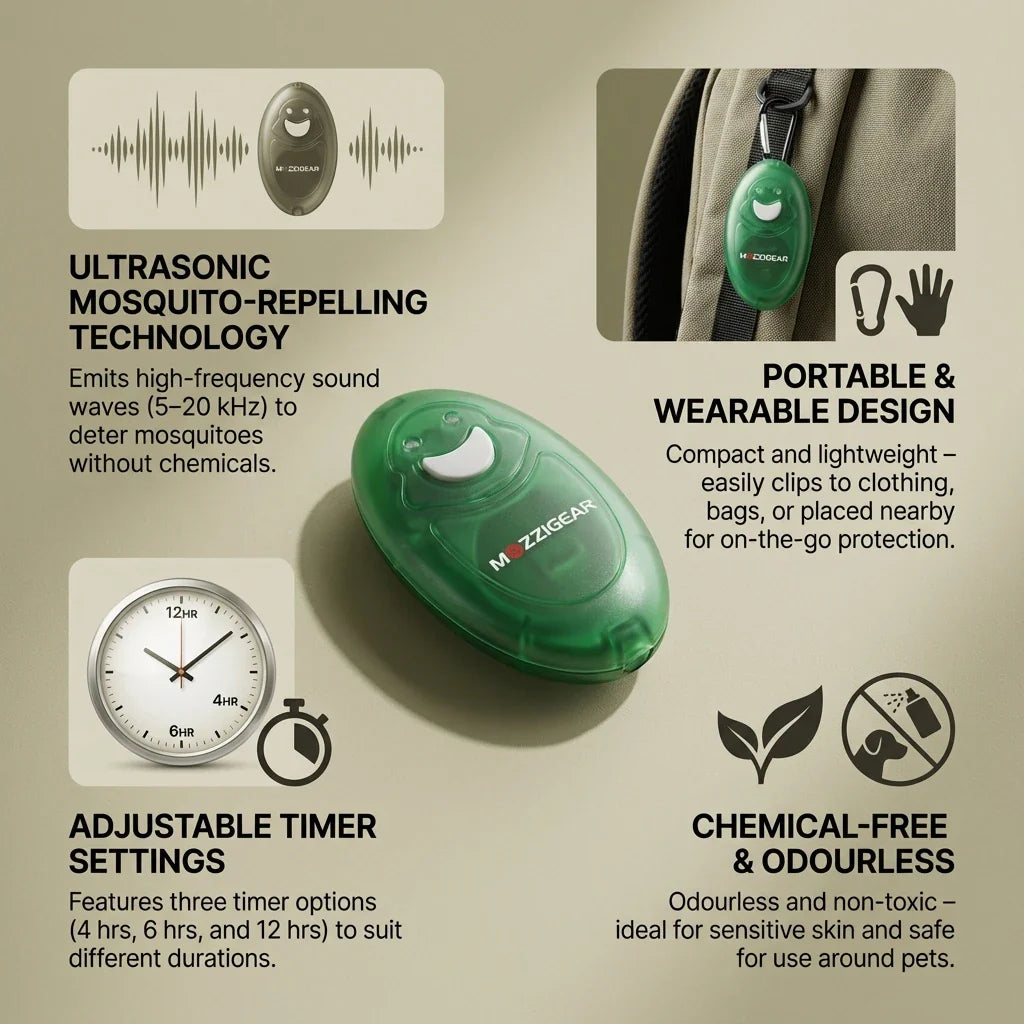
2. Ultrasonic Mosquito Repellents
Ultrasonic devices emit high-frequency sound waves designed to interfere with mosquito behavior.
These devices are often:
-
Lightweight
-
Wearable
-
Rechargeable
-
Silent to humans
They are especially popular among travelers seeking chemical-free solutions.
3. Fan-Based Mosquito Repellents
Fan-style systems use airflow to distribute repellents or physically disrupt mosquito flight.
Many fan devices combine:
-
Air circulation
-
Repellent cartridges
-
Physical trapping systems
-
Rechargeable battery operation
These devices are becoming increasingly popular for patios and campsites.
Thermal Diffusion Mosquito Repellents
How Thermal Diffusion Technology Works
Thermal mosquito repellents heat a repellent mat or liquid cartridge to release active ingredients into the surrounding air.
The resulting vapor forms an invisible mosquito-protection zone.
Most thermal systems use compounds such as:
-
Allethrin
-
Metofluthrin
-
Prallethrin
These synthetic repellents are modeled after natural chrysanthemum compounds called pyrethroids.
Advantages of Thermal Diffusion Repellents
Highly Effective Outdoors
One of the biggest strengths of thermal diffusion devices is outdoor performance.
Unlike sprays that remain only on skin or clothing, thermal systems create a larger protection area.
This makes them ideal for:
-
Campsites
-
Patios
-
Fishing trips
-
Outdoor dining
-
Hiking breaks
Fast Protection
Many thermal devices begin working within minutes.
Mosquito activity often decreases rapidly once the protection zone is established.
Wide Coverage Area
Premium thermal diffusers can protect areas ranging from:
-
Small personal spaces
-
Picnic tables
-
Tent entrances
-
Large backyard seating areas
Coverage depends on wind conditions and device size.
Portable and Lightweight
Modern devices are compact enough to fit into:
-
Backpacks
-
Tackle boxes
-
Travel bags
-
Car glove compartments
Disadvantages of Thermal Diffusion Devices
Ongoing Refill Costs
Most thermal systems require replacement:
-
Fuel cartridges
-
Repellent mats
-
Liquid refills
Long-term operating costs can add up.
Reduced Performance in Strong Wind
Heavy airflow may weaken the protective vapor barrier.
Heat Generation
Because these devices rely on heating elements, they may become warm during operation.
Users should exercise caution around:
-
Small children
-
Pets
-
Flammable materials
Chemical Sensitivities
Some users prefer avoiding synthetic airborne repellents indoors or in enclosed spaces.
Best Situations for Thermal Repellents
Thermal diffusion devices perform best for:
-
Backyard gatherings
-
Camping
-
Fishing
-
Outdoor dining
-
RV travel
-
Evening relaxation outdoors
They are often considered the strongest all-around portable mosquito-control option for outdoor use.
Ultrasonic Mosquito Repellents
How Ultrasonic Technology Works
Ultrasonic repellents emit high-frequency sound waves beyond normal human hearing range.
Manufacturers claim these sounds may:
-
Confuse mosquitoes
-
Mimic predators
-
Interfere with mating signals
-
Discourage mosquito approach
Most ultrasonic devices are extremely portable and lightweight.
Why Ultrasonic Devices Became So Popular
Ultrasonic repellents exploded in popularity because they offer several appealing features:
-
No sprays
-
No scent
-
No heat
-
No visible emissions
-
No chemical refills
-
Quiet operation
For travelers and minimalists, these advantages are highly attractive.
Advantages of Ultrasonic Mosquito Repellents
Extremely Portable
Ultrasonic devices are often:
-
Pocket-sized
-
Clip-on
-
Wearable
-
USB rechargeable
Some resemble smartwatches or fitness trackers.
Safe Around Children and Pets
Many users appreciate avoiding chemical exposure entirely.
Low Maintenance
Unlike thermal systems, ultrasonic devices usually do not require:
-
Refills
-
Cartridges
-
Mats
-
Fuel canisters
Long Battery Life
Some devices can operate continuously for days on a single charge.
The Biggest Debate: Do Ultrasonic Repellents Actually Work?
This remains one of the most controversial topics in mosquito-control technology.
Scientific research over the years has produced mixed conclusions regarding ultrasonic mosquito repellents.
Some users report positive experiences, especially in low-mosquito environments. Others find little measurable protection in high-density mosquito areas.
Why Results Vary
Several factors influence effectiveness:
-
Mosquito species
-
Environmental conditions
-
Device quality
-
Frequency range
-
User expectations
Newer 2026 devices attempt to improve performance through:
-
Adaptive frequency cycling
-
Multi-frequency emission
-
Combined technologies
-
AI-powered signal variation
Best Use Cases for Ultrasonic Devices
Ultrasonic repellents may work best for:
-
Light mosquito conditions
-
Indoor use
-
Office environments
-
Travel
-
Supplemental protection
-
Chemical-sensitive users
Many consumers use ultrasonic devices alongside other mosquito-control methods rather than relying on them alone.
Fan-Based Mosquito Repellents
How Fan Mosquito Repellents Work
Fan-based repellents use airflow to either:
-
Blow repellent into the air
-
Disrupt mosquito flight patterns
-
Pull mosquitoes into traps
-
Create protective air barriers
These systems combine physical and chemical defense strategies.
Why Fan Systems Are Growing Quickly
Advances in rechargeable batteries and quiet motor technology have dramatically improved portable fan repellents.
Modern systems are:
-
More compact
-
Quieter
-
More energy efficient
-
More powerful than earlier designs
Advantages of Fan-Based Mosquito Repellents
Excellent for Patios and Tables
Fan systems are especially effective in stationary outdoor settings.
They work well for:
-
Outdoor meals
-
BBQs
-
Picnics
-
Camping tables
-
Deck seating
Improved Air Circulation
The airflow itself makes it harder for mosquitoes to land.
This adds an additional layer of protection beyond the repellent.
Safer for Enclosed Spaces
Some fan-based systems use little or no heat.
Lower Chemical Concentration
Because airflow improves distribution, many systems require less repellent material.
Limitations of Fan Repellents
Bulkier Than Ultrasonic Devices
Fan systems are generally larger and less wearable.
Battery Consumption
Fans require more power than ultrasonic devices.
Noise
Although modern fans are quieter, some users still notice humming sounds.
Limited Mobility
Fan repellents work best when stationary rather than while actively hiking or moving.
Best Uses for Fan-Based Mosquito Repellents
Fan repellents are ideal for:
-
Backyard patios
-
Campsites
-
Outdoor dining
-
RV setups
-
Family gatherings
-
Fishing docks
Thermal vs Ultrasonic vs Fan-Based Repellents
Now let’s compare the three technologies directly.
Which Type Is Most Effective?
Best Overall Outdoor Protection: Thermal Diffusion
Thermal devices generally provide the strongest mosquito-reduction performance in outdoor environments.
They create a measurable protective zone and work well in moderate mosquito conditions.
Best Chemical-Free Option: Ultrasonic
Ultrasonic devices appeal most to users seeking non-chemical solutions.
However, effectiveness varies more significantly.
Best for Group Settings: Fan-Based Systems
Fan repellents excel in shared outdoor spaces where multiple people gather.
Which Type Is Best for Camping?
Thermal Repellents
Excellent for campsites because they:
-
Cover wider areas
-
Handle moderate mosquito density
-
Operate independently of sprays
Ultrasonic Devices
Good as lightweight backup protection during hiking or sleeping.
Fan Systems
Great for campsite tables and tent entrances but less portable during active movement.
Which Is Best for Travel?
Ultrasonic Devices Win for Portability
Travelers often prioritize:
-
Lightweight design
-
USB charging
-
Quiet operation
-
Compact storage
Ultrasonic devices excel here.
Thermal Devices for Outdoor Destinations
If traveling to mosquito-heavy areas, thermal protection is often more reliable.
Battery Life Comparison
Ultrasonic Devices
Usually offer the longest runtime.
Some models last:
-
Several days
-
Multiple nights
-
Entire weekend trips
Thermal Devices
Battery life varies depending on heating intensity.
Fuel-based systems may operate for several hours continuously.
Fan Devices
Fan motors consume more energy, reducing battery duration.
Weather Performance
Windy Conditions
Strong wind reduces effectiveness for:
-
Thermal vapor systems
-
Some fan-based repellents
Ultrasonic devices are less affected by wind because they rely on sound rather than airborne compounds.
Humid Conditions
Mosquito activity increases in humid weather, which may require stronger protection methods.
Thermal systems often perform best under heavy mosquito pressure.
Indoor vs Outdoor Use
Indoor Use
Best options:
-
Ultrasonic devices
-
Quiet fan systems
-
Low-emission thermal units
Outdoor Use
Best options:
-
Thermal diffusion
-
Fan-based systems
Safety Considerations
Around Children and Pets
Look for devices with:
-
Enclosed heating systems
-
Non-toxic formulations
-
Stable construction
-
Automatic shutoff features
Ventilation Matters
Thermal repellents should be used with proper airflow, especially indoors.
Features to Look for When Buying a Portable Mosquito Repellent
Battery Type
Preferred options include:
-
USB-C rechargeable batteries
-
Lithium-ion systems
-
Solar-assisted charging
Coverage Area
Check manufacturer specifications carefully.
Coverage can range from:
-
Personal protection zones
-
Small tents
-
Entire patios
Portability
Consider:
-
Weight
-
Clip-on capability
-
Pocket size
-
Backpack compatibility
Noise Level
Important for:
-
Sleeping
-
Quiet outdoor evenings
-
RV use
-
Offices
Refill Availability
Thermal systems require accessible replacement cartridges or mats.
Water Resistance
Outdoor users should prioritize weather-resistant construction.
Combining Multiple Mosquito Protection Methods
Many experienced outdoor users combine technologies for better protection.
For example:
-
Thermal diffuser + wearable ultrasonic device
-
Fan repellent + protective clothing
-
Portable repellent + mosquito netting
Layered mosquito defense is often more effective than relying on a single method.
Common Mistakes When Buying Portable Mosquito Repellents
Choosing Based Only on Price
Cheap devices may offer:
-
Weak coverage
-
Poor battery performance
-
Ineffective technology
-
Low durability
Ignoring Environmental Conditions
A device that works well indoors may struggle outdoors.
Expecting Complete Mosquito Elimination
No portable device guarantees 100% mosquito removal.
Realistic expectations matter.
Not Checking Refill Costs
Long-term ownership expenses vary widely.
Future Trends in Portable Mosquito Repellent Technology
The mosquito-control market continues evolving rapidly.
Emerging innovations include:
-
AI-powered mosquito sensors
-
Smart wearable repellents
-
Solar charging integration
-
Adaptive ultrasonic frequencies
-
Hybrid thermal-fan systems
-
Eco-friendly repellent compounds
Consumers increasingly want products that combine:
-
Portability
-
Sustainability
-
Smart automation
-
Quiet operation
-
Child-safe design
Which Portable Mosquito Repellent Should You Buy?
The best choice depends on your specific needs.
Choose Thermal Diffusion If You Want:
-
Strong outdoor protection
-
Reliable mosquito reduction
-
Campsite performance
-
Patio coverage
Choose Ultrasonic If You Want:
-
Lightweight portability
-
Chemical-free operation
-
Quiet protection
-
Travel-friendly convenience
Choose Fan-Based Systems If You Want:
-
Shared outdoor protection
-
Tabletop coverage
-
Air circulation
-
Family-friendly outdoor comfort
Final Thoughts
Portable mosquito repellents have become far more advanced in 2026 than they were just a few years ago. Whether you prefer thermal diffusion, ultrasonic technology, or fan-based airflow systems, there are now options designed for nearly every lifestyle and outdoor environment.
Thermal devices remain the strongest overall performers for serious outdoor mosquito protection. Ultrasonic repellents offer unmatched portability and chemical-free convenience. Fan-based systems provide comfortable shared protection for patios, campsites, and outdoor dining areas.
The ideal mosquito-control strategy often combines multiple layers of defense, especially in high-mosquito regions. By understanding how each technology works and where it performs best, you can choose a portable mosquito repellent that keeps your outdoor experiences far more comfortable all season long.