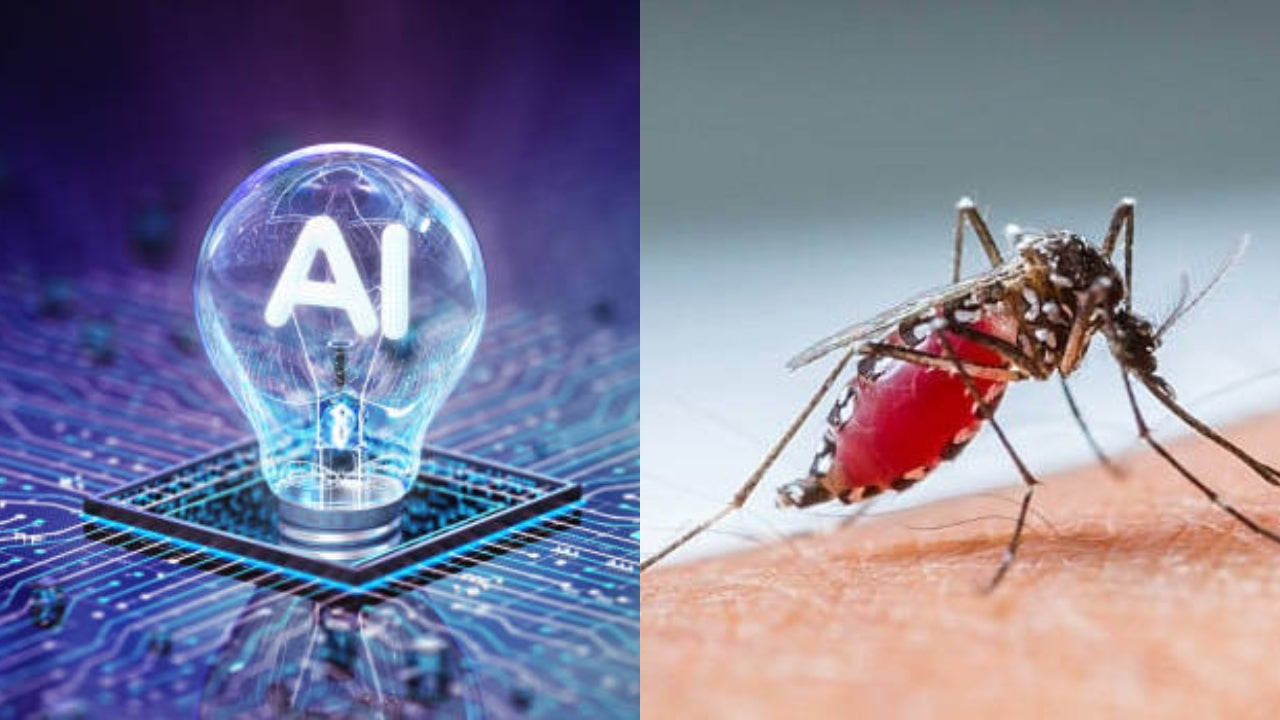
For decades, mosquito control has followed the same pattern.
Sprays.
Repellents.
Coils.
Zappers.
Different forms, same idea: react after the mosquito appears.
But mosquitoes haven’t changed much—and neither have most of the solutions. Meanwhile, our homes have become smarter, quieter, and more automated. We ask AI to optimize our work, our energy use, even our sleep.
So why are we still fighting mosquitoes like it’s 1995?
AI mosquito lamps represent a fundamental shift—not just in technology, but in how we think about pest control. Instead of reacting to mosquitoes, we begin to predict, identify, and manage them intelligently.
This is not science fiction.
This is the future of mosquito control—and it’s already taking shape.
The Problem with Traditional Mosquito Control
Before we talk about AI, we need to understand what’s broken.
Traditional mosquito control methods suffer from the same core limitations:
They Are Passive or Reactive
-
Sprays work only after application
-
Swatters require perfect timing
-
Coils and vaporizers disperse chemicals continuously
They don’t adapt. They don’t learn. They don’t improve.
They Treat All Insects the Same
Most electric zappers kill indiscriminately:
-
Mosquitoes
-
Moths
-
Beneficial insects
This is inefficient, noisy, and environmentally questionable.
They Ignore Human Behavior
Traditional devices don’t care:
-
When you sleep
-
Where you sit
-
How airflow changes
-
How lighting affects attraction
They operate blindly.
Mosquitoes, however, are not blind.
Why Mosquito Control Needs Intelligence
Mosquitoes are not random pests.
They respond to:
-
Carbon dioxide
-
Body heat
-
Movement
-
Humidity
-
Light spectrum
-
Airflow
In other words, mosquitoes follow patterns.
And where patterns exist, intelligence can be applied.
AI doesn’t just make devices smarter—it makes them context-aware.
That’s the breakthrough.
What Is an AI Mosquito Lamp?
An AI mosquito lamp is not simply a lamp with a processor.
It is a system that combines:
-
Sensors
-
Data processing
-
Adaptive control
-
Targeted elimination
Instead of running at full power all the time, an AI mosquito lamp:
-
Observes the environment
-
Identifies mosquito activity
-
Adjusts attraction and capture strategies
-
Learns from outcomes
Think of it less as a trap—and more as a mosquito management system.
Step One: Intelligent Detection
The first challenge is detection.
AI mosquito lamps can integrate multiple sensors, such as:
-
Optical sensors to detect insect size and flight patterns
-
Acoustic sensors to recognize wingbeat frequencies
-
Motion sensors to detect activity zones
-
Environmental sensors for temperature and humidity
Mosquitoes have distinct physical and behavioral signatures. AI models can be trained to distinguish them from:
-
Flies
-
Moths
-
Gnats
-
Non-target insects
This alone solves one of the biggest problems of traditional zappers: wasted energy and unnecessary killing.
Step Two: Selective Attraction
Light alone is a blunt tool.
AI mosquito lamps move beyond constant UV exposure by dynamically adjusting:
-
Light wavelength
-
Brightness
-
Emission timing
Some systems can even coordinate:
-
Light
-
Heat simulation
-
CO₂ release (or CO₂ mimicry)
-
Airflow direction
Instead of shouting “come here” to every insect, AI lamps whisper only to mosquitoes—and only when conditions are optimal.
This increases efficiency while reducing disturbance.
Step Three: Adaptive Capture and Elimination
Once mosquitoes are detected and attracted, AI systems can optimize capture methods:
-
Fan speed adjusted in real time
-
Capture duration optimized per insect type
-
Energy usage scaled based on activity
-
Silent operation during sleep hours
Over time, the system learns:
-
Peak mosquito activity periods
-
High-risk zones in the room
-
Seasonal behavior changes
The result is not just fewer mosquitoes—but faster population reduction.
Learning Over Time: Why AI Gets Better, Not Worse
Traditional devices degrade in performance.
AI systems improve.
As data accumulates, an AI mosquito lamp can:
-
Identify recurring patterns
-
Predict activity windows
-
Adjust strategies proactively
-
Reduce unnecessary runtime
For example:
-
Less power during low-risk hours
-
Increased sensitivity during peak seasons
-
Room-specific behavior profiles
Mosquito control becomes preventive rather than reactive.
The Smart Home Advantage
AI mosquito lamps don’t exist in isolation.
Integrated into a smart home ecosystem, they can:
-
Sync with lighting systems
-
Respond to window or door sensors
-
Adjust behavior when people enter or leave rooms
-
Integrate with sleep or energy management systems
Imagine a lamp that:
-
Activates mosquito control before bedtime
-
Switches to ultra-quiet mode at night
-
Increases activity near open windows
-
Reduces operation when no one is home
That’s not pest control—it’s environmental intelligence.
Health, Safety, and Sustainability
AI mosquito lamps also address long-standing concerns:
Reduced Chemical Dependence
By improving efficiency, AI systems reduce the need for:
-
Sprays
-
Vaporizers
-
Repellents
This is especially important for:
-
Children
-
Pregnant individuals
-
People with sensitivities
Lower Energy Consumption
Adaptive operation means:
-
Less wasted power
-
Smarter runtime
-
Better long-term efficiency
More Ethical Insect Control
Selective targeting minimizes harm to:
-
Non-biting insects
-
Beneficial species
Intelligence makes control more responsible.
Why AI Mosquito Control Matters More Than Ever
Climate change is extending mosquito seasons.
Urban density increases breeding opportunities.
Global travel spreads mosquito-borne diseases faster than ever.
Mosquito control is no longer just about comfort—it’s about:
-
Public health
-
Quality of life
-
Sustainable living
AI brings scalability and precision to a problem that has long relied on brute force.
Common Misconceptions About AI Mosquito Lamps
“AI Is Overkill for Mosquitoes”
So was AI for navigation—until everyone needed it.
Complex problems don’t always feel complex until conditions change.
“Traditional Lamps Are Cheaper”
Upfront, yes.
Long-term efficiency, comfort, and effectiveness tell a different story.
“AI Means Complicated”
Modern AI systems are designed to be invisible to users—working quietly in the background.
The best intelligence feels effortless.
From Device to System: The Real Shift
The true innovation of AI mosquito lamps is not any single feature.
It’s the shift from:
-
Static devices → adaptive systems
-
Manual control → autonomous management
-
One-size-fits-all → personalized environments
This mirrors the evolution we’ve already seen in:
-
Thermostats
-
Lighting
-
Security
-
Air purification
Mosquito control is simply the next frontier.
What the Future Looks Like
In the near future, AI mosquito lamps may:
-
Share anonymized data to improve models
-
Predict outbreaks based on climate patterns
-
Integrate with city-wide pest control systems
-
Adjust strategies regionally and seasonally
What feels like a small household device today could become part of a much larger public health infrastructure.
Final Thoughts: Intelligence Changes the Equation
Mosquitoes have always been small—but the problem they create is not.
AI doesn’t eliminate nature.
It helps us coexist more intelligently.
AI mosquito lamps represent a move away from frustration, noise, chemicals, and guesswork—toward calm, quiet, and control.
The future of mosquito control isn’t louder.
It isn’t harsher.
It isn’t more aggressive.
It’s smarter.
And once intelligence enters the equation, everything changes.