Clean water is one of the most important foundations of public health, environmental protection, and sustainable development. As communities grow, industries expand, and water resources become increasingly stressed, modern water and wastewater treatment facilities are under growing pressure to provide reliable disinfection while reducing chemical consumption, operational risks, and environmental impact.
Ultraviolet (UV) disinfection has become an important technology in this changing landscape. By using ultraviolet light to inactivate microorganisms, UV systems can provide rapid and effective microbial treatment without adding a disinfecting chemical directly to the water. This makes UV technology attractive for drinking water facilities, municipal wastewater treatment plants, industrial water treatment systems, water reuse facilities, and many other applications.
Unlike traditional chemical disinfection methods, UV treatment works through a physical process. When microorganisms pass through a properly designed UV reactor, ultraviolet energy damages their genetic material, preventing them from reproducing and reducing their ability to cause infection.
Today, UV disinfection systems are no longer limited to specialized applications. Advances in lamp technology, reactor design, sensors, automation, control systems, and energy management have made modern UV systems more efficient, compact, and adaptable.
This article explores how UV disinfection systems are used in modern water and wastewater treatment plants, how the technology works, what factors affect system performance, and how treatment facilities can select and maintain the right UV solution.
What Is UV Disinfection?
UV disinfection is a physical water treatment process that uses ultraviolet radiation to inactivate microorganisms such as bacteria, viruses, and protozoa.
The most commonly used wavelength range for germicidal treatment is within the UV-C region. Low-pressure and medium-pressure UV lamps are commonly used in engineered treatment systems, although different lamp technologies offer different operating characteristics.
The basic principle is straightforward.
Water flows through a UV reactor where UV lamps generate ultraviolet radiation. As microorganisms pass through the reactor, they absorb UV energy. The radiation causes damage to microbial DNA or RNA, interfering with their ability to replicate.
A properly designed system must provide sufficient UV dose throughout the reactor to achieve the required level of microbial inactivation.
This makes UV treatment fundamentally different from chemical disinfection.
A chemical disinfectant remains in the water and continues to provide a residual effect under appropriate conditions. UV, by contrast, generally does not leave a disinfectant residual in the treated water.
This distinction is particularly important when engineers design complete water treatment processes.
Why Are Water Treatment Plants Using More UV Technology?
Modern treatment plants face several challenges simultaneously.
They need to achieve increasingly demanding microbial treatment goals while controlling operating costs, reducing chemical handling, improving worker safety, and meeting environmental requirements.
UV technology can address several of these challenges.
1. Reduced Chemical Handling
Because UV disinfection does not require the direct addition of a chemical disinfectant to the treated water, facilities can reduce their dependence on certain chemical storage and dosing systems.
This can simplify chemical management and reduce risks associated with transporting, storing, and handling disinfectants.
2. Rapid Disinfection
UV treatment occurs as water passes through the reactor.
There is no requirement for a long chemical contact tank simply to allow a disinfectant to react with microorganisms.
This can be especially useful when treatment plants have limited space or need to increase capacity without constructing extremely large contact basins.
3. No Significant Chemical Residual
UV treatment does not intentionally introduce a conventional disinfectant residual into the water.
For certain applications, this is highly desirable because excessive chemical residuals can affect water chemistry, aquatic environments, downstream industrial processes, or reuse applications.
4. Effective Microbial Inactivation
UV systems can be engineered to provide high levels of inactivation for many microorganisms.
Performance depends on UV dose, water quality, reactor hydraulics, lamp output, equipment condition, and the characteristics of the target microorganisms.
5. Compatibility With Water Reuse
Water reuse is becoming increasingly important as communities look for alternatives to developing new freshwater supplies.
UV disinfection is frequently incorporated into advanced treatment trains for applications such as irrigation reuse, industrial reuse, process water, and other reclaimed-water applications.
The Role of UV Dose in Water Disinfection
One of the most important concepts in UV treatment is UV dose.
UV dose can generally be understood as the amount of UV energy delivered to microorganisms over a period of exposure.
A simplified relationship is:
UV Dose = UV Intensity × Exposure Time
In real treatment systems, however, the situation is more complicated.
Water does not travel through a reactor in one perfectly uniform path. Some water molecules may pass closer to lamps, while others may travel farther away. Flow patterns, turbulence, lamp aging, water transmittance, and reactor geometry all influence the actual UV exposure received by microorganisms.
For this reason, professional UV reactor design relies on hydraulic and UV performance modeling, validation testing, sensor feedback, and appropriate safety margins rather than simply calculating lamp power.
The required UV dose depends on the treatment objective.
For example, a facility designed for general bacterial reduction may have different requirements from a facility targeting more UV-resistant microorganisms or a high-level water reuse application.
UV Transmittance and Why Water Quality Matters
A UV lamp can produce plenty of ultraviolet energy, but that energy is only useful if it can reach the microorganisms.
This is why UV transmittance, commonly called UVT, is a critical parameter.
UVT describes how effectively water allows UV radiation to pass through it.
Clear water generally allows UV light to penetrate more effectively than water containing high concentrations of dissolved or suspended substances that absorb or scatter UV radiation.
Several water quality characteristics can affect UV performance, including:
-
Suspended solids
-
Turbidity
-
Dissolved organic matter
-
Iron
-
Manganese
-
Color
-
Other UV-absorbing compounds
This explains why UV disinfection is often installed after filtration or other treatment processes.
The upstream treatment process helps produce water with suitable optical characteristics so that UV radiation can reach microorganisms more effectively.
UV Disinfection in Drinking Water Treatment Plants
One of the most important applications of UV technology is drinking water treatment.
A typical drinking water treatment facility may include multiple stages such as coagulation, flocculation, sedimentation, filtration, and disinfection.
UV can be integrated into the treatment train as a primary or supplemental microbial barrier.
Protecting Drinking Water From Pathogens
The fundamental goal is to reduce the risk posed by pathogenic microorganisms.
UV treatment can be particularly useful for controlling microorganisms that may be more difficult to manage using certain conventional treatment approaches.
Modern UV systems can be designed to treat very large water flows, making them suitable for municipal water treatment facilities.
Compact Reactor Design
Large municipal water plants may process millions of gallons of water per day.
Installing a disinfection technology that can handle high flow rates in a relatively compact footprint is a major advantage.
Modern UV reactors can contain multiple lamps and sophisticated flow-control structures designed to maintain effective treatment across a wide range of operating conditions.
Integration With Existing Treatment Systems
UV reactors can often be integrated into existing pipelines or treatment channels.
This gives water utilities flexibility when upgrading aging facilities or expanding treatment capacity.
Instead of completely redesigning the plant, engineers may be able to incorporate UV reactors into an existing treatment stage, provided hydraulic conditions, water quality, and available space are suitable.
UV Disinfection in Wastewater Treatment Plants
Wastewater treatment is another major application for UV systems.
Municipal wastewater contains a wide variety of microorganisms and organic contaminants. After biological treatment and clarification, the remaining water may still require disinfection before discharge or reuse.
UV treatment is frequently installed near the end of a wastewater treatment process.
A simplified wastewater treatment train may look like:
Preliminary Treatment → Primary Treatment → Biological Treatment → Secondary Clarification → Filtration or Tertiary Treatment → UV Disinfection → Discharge or Reuse
The exact process varies from facility to facility.
Why UV Works Well for Treated Wastewater
Once wastewater has undergone biological treatment and clarification, much of the material that could interfere with UV transmission has already been removed.
This creates more favorable conditions for UV disinfection.
UV can then provide microbial inactivation immediately before the treated water leaves the facility.
Environmental Benefits
For certain wastewater applications, reducing chemical disinfectant use can be beneficial.
Some chemical disinfectants can react with organic compounds and produce disinfection byproducts. Depending on the treatment process and regulatory requirements, avoiding or reducing those reactions can be an important consideration.
UV does not disinfect by adding an oxidizing chemical to the water, which makes it attractive for many treated-effluent applications.
UV for Water Reuse and Reclaimed Water
Water reuse is changing how communities think about wastewater.
Instead of treating wastewater solely as something that must be discharged, modern facilities increasingly view treated wastewater as a potential water resource.
Reclaimed water can be used for applications such as:
-
Landscape irrigation
-
Agricultural irrigation
-
Industrial processes
-
Cooling systems
-
Toilet flushing
-
Construction
-
Environmental restoration
-
Certain advanced potable reuse processes
UV disinfection can be an important component of these systems.
The exact treatment requirements depend heavily on the intended reuse application.
For higher-risk reuse applications, UV may be combined with filtration, membrane treatment, advanced oxidation, or other treatment technologies.
UV and Advanced Oxidation Processes
UV systems can also be combined with oxidants to create advanced treatment processes.
One well-known approach uses UV light together with hydrogen peroxide to generate highly reactive hydroxyl radicals.
These radicals can attack certain difficult-to-remove organic compounds.
This type of system is commonly described as a UV advanced oxidation process, or UV-AOP.
While conventional UV disinfection focuses primarily on microbial inactivation, UV-AOP can be designed for broader contaminant treatment.
Potential applications include treatment of certain trace organic compounds and other difficult-to-degrade substances.
However, UV-AOP is a more complex process than standard UV disinfection.
Engineers must consider factors such as oxidant dose, UV intensity, water chemistry, reaction kinetics, energy consumption, and downstream treatment requirements.
Low-Pressure vs. Medium-Pressure UV Lamps
Lamp technology has a major impact on UV system performance.
Two common categories are low-pressure and medium-pressure lamps.
Low-Pressure UV Lamps
Low-pressure lamps generally produce UV energy within a relatively narrow wavelength range.
They are known for electrical efficiency and are widely used in water disinfection applications.
Modern low-pressure systems may use high-output lamp configurations that provide substantial treatment capacity while maintaining reasonable energy consumption.
Medium-Pressure UV Lamps
Medium-pressure lamps produce a broader UV spectrum.
They can provide high UV output from relatively compact lamp assemblies.
This can be advantageous where reactor footprint, lamp count, or high-intensity treatment is important.
However, medium-pressure systems may have different energy and maintenance characteristics compared with low-pressure systems.
The best choice depends on flow rate, UVT, target dose, available space, energy costs, maintenance strategy, and project requirements.
Open-Channel UV Systems for Wastewater
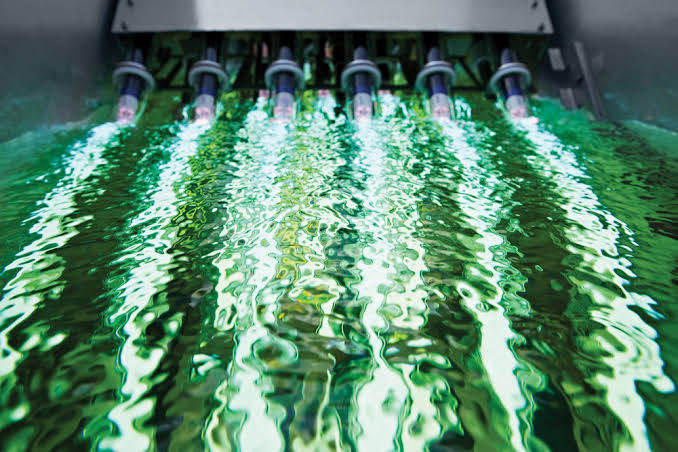
Wastewater plants often use open-channel UV systems.
Instead of forcing all water through a fully enclosed pressurized reactor, treated wastewater flows through an open channel containing UV lamp modules.
The lamps may be installed horizontally or vertically depending on the system design.
This configuration can be particularly convenient for municipal wastewater facilities because many plants already have open channels near their final treatment stages.
Advantages of Open-Channel Systems
Open-channel UV systems can provide:
-
High flow capacity
-
Easy integration into treatment channels
-
Modular expansion
-
Automatic lamp control
-
Flow-based power adjustment
-
Real-time UV monitoring
-
Reduced chemical dependence
Some modern systems automatically adjust lamp output according to flow rate and water quality.
When flow decreases, the system can reduce lamp power rather than operating every lamp at maximum intensity.
This can significantly improve energy management.
Closed-Vessel UV Reactors
Closed-vessel reactors are commonly used in pressurized water treatment systems.
Water enters the reactor under pressure and passes around UV lamps installed inside a sealed chamber.
These systems are particularly useful for drinking water, industrial water, process water, and certain reuse applications.
A closed reactor can be installed directly into a pipeline, making it attractive for facilities where open channels are not practical.
Typical Components
A modern closed-vessel UV system may include:
-
UV lamps
-
Quartz sleeves
-
Lamp ballasts
-
UV intensity sensors
-
Flow sensors
-
Temperature sensors
-
Automatic wipers
-
Control panels
-
Alarms
-
Data logging systems
-
Automatic power control
Together, these components allow the system to continuously monitor and adjust treatment performance.
The Importance of Quartz Sleeves
UV lamps are generally separated from the treated water by protective quartz sleeves.
Quartz is used because it allows ultraviolet radiation to pass through while protecting the lamp from direct contact with water.
However, quartz sleeves can accumulate deposits over time.
Scaling, iron deposits, organic fouling, and other contaminants can reduce UV transmission.
Even when the lamp itself is operating normally, a dirty sleeve can significantly reduce the amount of UV energy reaching the water.
This is why sleeve maintenance is a critical part of UV system operation.
Automatic UV Lamp Cleaning
Modern UV systems increasingly use automatic cleaning mechanisms.
Mechanical wipers can periodically move along quartz sleeves to remove deposits.
Some systems use chemical-assisted cleaning processes.
The goal is to maintain high UV transmission without requiring operators to manually remove and clean every lamp on a frequent basis.
Automatic cleaning can reduce maintenance labor and improve system consistency.
However, automatic cleaning does not eliminate maintenance entirely.
Operators still need to inspect equipment, replace worn components, monitor performance, and perform periodic cleaning according to manufacturer recommendations.
UV Sensors and Real-Time Monitoring
Modern UV systems are highly dependent on sensors.
A UV intensity sensor can measure the amount of UV radiation available within the reactor.
The control system can use this information together with flow rate and water quality data to determine whether sufficient treatment conditions are being maintained.
A modern control strategy may monitor:
-
Flow rate
-
UV intensity
-
Lamp status
-
UV transmittance
-
Water level
-
Temperature
-
Lamp operating hours
-
Cleaning system status
-
Power consumption
If treatment conditions fall outside acceptable limits, the system can trigger an alarm or automatically adjust lamp power.
This provides a much higher level of operational control than older systems that relied primarily on fixed lamp operation.
Energy Efficiency in Modern UV Systems
Energy consumption is an important consideration because UV systems rely on electrical power.
For large wastewater treatment plants, even small improvements in electrical efficiency can translate into meaningful annual savings.
Modern systems improve efficiency in several ways.
Variable Power Control
Rather than operating every lamp at full power all the time, the system can adjust lamp output based on actual treatment requirements.
Automatic Lamp Staging
Some systems turn lamps on or off depending on flow and water quality.
Improved Lamp Technology
Higher-output lamps can deliver more UV energy with fewer lamps or smaller equipment footprints.
Better Reactor Hydraulics
Improved reactor design helps distribute water more effectively through the UV field.
This can reduce inefficient treatment zones and improve the relationship between electrical input and delivered UV dose.
UV System Design for Peak Flow Conditions
Treatment plants rarely operate at exactly the same flow rate every day.
A municipal wastewater plant may experience:
-
Low nighttime flow
-
Normal daytime flow
-
Seasonal changes
-
Storm-related increases
-
Industrial discharge variations
A UV system must therefore be designed for a realistic operating range.
Sizing only for average flow can result in inadequate treatment during peak conditions.
On the other hand, designing every component for an extreme theoretical flow can increase capital costs unnecessarily.
Engineers should evaluate historical flow data, projected future capacity, seasonal patterns, and regulatory requirements.
Hydraulic Design Matters
A UV system is not simply a collection of lamps.
Hydraulic design is equally important.
Water must pass through the reactor in a way that provides adequate UV exposure.
Poor flow distribution can result in areas receiving less UV treatment than expected.
Important design considerations include:
-
Flow velocity
-
Reactor geometry
-
Lamp arrangement
-
Mixing
-
Channel depth
-
Hydraulic headloss
-
Residence time
-
Flow distribution
-
Minimum and maximum operating conditions
Computational fluid dynamics and validated reactor models can be used to analyze complex flow patterns.
UV Dose Validation
For critical treatment applications, UV system performance should not be based solely on theoretical calculations.
Validation testing can demonstrate whether a reactor actually delivers the required performance under defined operating conditions.
A validated UV reactor provides greater confidence that the system will achieve its intended microbial reduction.
This is especially important for municipal drinking water, wastewater discharge, and water reuse applications where treatment performance may be tied directly to regulatory requirements.
Maintenance Requirements for UV Systems
A UV disinfection system is only as reliable as its maintenance program.
Routine maintenance typically includes:
-
Lamp inspection
-
Quartz sleeve cleaning
-
Wiper inspection
-
Sensor inspection
-
Electrical checks
-
Ballast inspection
-
Lamp replacement
-
Seal inspection
-
Control-system testing
-
Alarm verification
Lamp replacement schedules depend on lamp type, operating conditions, and manufacturer specifications.
Operators should track lamp operating hours rather than waiting for visible lamp failure.
A lamp may continue to glow while producing insufficient germicidal UV output.
Common Causes of UV System Performance Problems
Several issues can reduce UV treatment performance.
Dirty Quartz Sleeves
Deposits can block UV radiation.
Aging Lamps
UV output decreases over lamp life.
Sensor Fouling
A dirty sensor may provide inaccurate intensity measurements.
Excessive Turbidity
Suspended particles can shield microorganisms from UV radiation.
Low UV Transmittance
Dissolved substances can absorb UV energy.
Incorrect Flow Conditions
Flow outside the reactor's intended operating range can affect treatment performance.
Poor Maintenance
Neglected equipment can gradually lose efficiency.
A good preventive maintenance program is therefore essential.
UV System Automation
Automation has become an important feature of modern treatment facilities.
An advanced UV control system can automatically respond to changing conditions.
For example, if the wastewater flow increases, the controller may increase lamp output or activate additional lamps.
If flow decreases, the system can reduce power.
If UV intensity drops because of sleeve fouling, the system may trigger a cleaning cycle or alert operators.
This creates a dynamic treatment process rather than a fixed operating strategy.
Integrating UV With SCADA Systems
Many modern treatment plants use Supervisory Control and Data Acquisition systems to monitor plant operations.
UV equipment can be integrated into SCADA systems so operators can view important information from a central control interface.
Typical data points include:
-
UV intensity
-
Lamp status
-
Power consumption
-
Flow rate
-
UV dose
-
Alarm status
-
Cleaning cycles
-
Lamp hours
-
Maintenance alerts
Historical data can also help operators identify trends.
For example, a gradual reduction in UV intensity may indicate increasing sleeve fouling or lamp aging.
Early detection can prevent unexpected treatment interruptions.
UV Disinfection for Industrial Water Treatment
UV technology is not limited to municipal facilities.
Industrial facilities use UV systems in many applications.
Potential industries include:
-
Food and beverage
-
Pharmaceutical manufacturing
-
Electronics
-
Chemical processing
-
Agriculture
-
Aquaculture
-
Power generation
-
Manufacturing
-
Commercial facilities
Industrial applications often have highly specific water quality requirements.
A UV system may be used to treat process water, recycled water, rinse water, or wastewater before discharge.
The system must be selected based on the actual water chemistry rather than simply the flow rate.
UV in Aquaculture and Recirculating Water Systems
Aquaculture facilities require careful microbial management because water is continuously circulated through tanks and filtration systems.
UV can be installed in recirculating water loops to reduce microbial concentrations.
The goal is not necessarily to sterilize every microorganism.
Instead, the system can help maintain microbial control and reduce pathogen pressure.
Proper flow, UV dose, water clarity, and maintenance are particularly important in these systems.
UV and Membrane Treatment
UV can also complement membrane technologies.
Reverse osmosis, ultrafiltration, and other membrane processes can provide powerful physical separation.
UV may be installed downstream of membrane treatment as an additional microbial barrier.
Alternatively, UV-based advanced oxidation may be used as part of a broader treatment strategy.
Combining technologies can provide multiple protective barriers.
This approach is particularly valuable for advanced water reuse systems where treatment reliability is critical.
Advantages of UV Compared With Chemical Disinfection
UV should not automatically be considered a replacement for every chemical disinfection process.
Instead, engineers should compare technologies according to the specific application.
UV offers several potential advantages:
-
Rapid treatment
-
No intentional chemical addition
-
No conventional disinfectant residual
-
Compact equipment
-
Automated operation
-
Strong microbial inactivation capability
-
Compatibility with many reuse applications
-
Reduced chemical storage requirements
However, UV also has limitations.
It requires electrical power.
Performance depends on water clarity.
It does not normally provide a lasting disinfectant residual.
Lamps and quartz components require maintenance.
Therefore, the best treatment approach depends on the facility's overall objectives.
UV and Chlorine: Using Both Technologies
Some treatment plants use both UV and chemical disinfection.
This can provide complementary benefits.
For example, UV may provide rapid microbial inactivation while a chemical disinfectant provides residual protection within a downstream distribution system.
In other situations, UV may be used after chemical treatment to provide an additional microbial barrier.
The correct combination depends on water quality, distribution requirements, regulations, and the intended end use of the water.
Choosing the Right UV Disinfection System
Selecting a UV system requires more than comparing lamp wattage.
Important factors include:
Flow Rate
Determine average, minimum, and peak flow.
UV Transmittance
Measure actual water quality instead of relying on assumptions.
Target Microorganisms
Identify which microorganisms require control.
Required UV Dose
Determine the required treatment performance.
Installation Configuration
Decide whether an open-channel or closed-vessel reactor is more appropriate.
Maintenance Strategy
Consider labor availability, cleaning requirements, and spare-parts access.
Energy Costs
Evaluate long-term electricity consumption rather than focusing only on initial equipment price.
Automation Requirements
Consider how much automatic control and remote monitoring the facility needs.
Future Expansion
A modular system may make it easier to increase capacity later.
Total Cost of Ownership
The lowest purchase price does not necessarily mean the lowest overall cost.
Treatment plants should evaluate total cost of ownership.
This can include:
-
Equipment purchase
-
Installation
-
Electrical infrastructure
-
Lamp replacement
-
Quartz sleeve replacement
-
Cleaning chemicals
-
Labor
-
Electricity
-
Sensor calibration
-
Spare parts
-
Preventive maintenance
-
Downtime
A more efficient UV system may have a higher initial price but lower operating costs over many years.
For municipal infrastructure, lifecycle economics are particularly important because treatment equipment may remain in service for a decade or longer.
Designing for Reliability
Reliability is one of the most important considerations for critical water infrastructure.
A well-designed UV system should account for equipment redundancy and operational flexibility.
Possible strategies include:
-
Multiple lamp banks
-
Redundant reactors
-
Automatic bypass arrangements where appropriate
-
Spare sensors
-
Backup power
-
Modular equipment
-
Remote alarms
-
Preventive maintenance schedules
The correct redundancy level depends on the consequences of treatment failure and the facility's regulatory requirements.
The Future of UV Water Treatment
UV technology continues to evolve.
Future systems are likely to place even greater emphasis on intelligent control, energy optimization, predictive maintenance, and integrated water quality monitoring.
Sensors are becoming more capable.
Control systems are becoming more sophisticated.
Data analytics can help operators identify performance changes before equipment failure occurs.
Machine-learning-based monitoring may eventually help treatment plants optimize lamp operation based on historical flow patterns, water quality, equipment condition, and energy prices.
These developments could make UV treatment more efficient while reducing unnecessary energy consumption.
Smart UV Systems and Predictive Maintenance
Traditional maintenance often follows fixed schedules.
For example, operators may inspect equipment every month and replace lamps after a predetermined number of operating hours.
Smart systems can move toward condition-based maintenance.
Instead of replacing components solely because a calendar says they are due, the system can evaluate actual operating conditions.
A combination of lamp hours, UV intensity trends, cleaning frequency, power consumption, and sensor behavior may indicate when a component is approaching the end of its useful service life.
This can reduce unnecessary maintenance while improving reliability.
Sustainability Benefits of UV Disinfection
Water treatment itself consumes resources.
Modern facilities therefore need to consider environmental performance as well as treatment effectiveness.
UV can contribute to sustainability goals by reducing chemical consumption in applications where chemical disinfection is not required or where UV can reduce chemical demand.
Energy efficiency remains important.
A poorly optimized UV system can consume substantial electricity.
A properly designed system with variable power control, efficient lamps, good reactor hydraulics, and effective cleaning can significantly improve resource efficiency.
Sustainability therefore depends not simply on choosing UV, but on designing and operating the entire treatment system intelligently.
Common Mistakes When Installing UV Systems
Several mistakes can reduce the effectiveness of a UV installation.
Mistake 1: Ignoring Actual Water Quality
Designing a system based only on flow rate can result in insufficient treatment.
Mistake 2: Underestimating Peak Flow
A system that works well during average conditions may struggle during high-flow events.
Mistake 3: Neglecting Quartz Sleeve Maintenance
Even excellent lamps cannot compensate for severe sleeve fouling.
Mistake 4: Using Insufficient Monitoring
Without reliable sensors, operators may not know when treatment performance is declining.
Mistake 5: Focusing Only on Initial Cost
Long-term energy and maintenance expenses can exceed the original equipment cost.
Mistake 6: Failing to Plan for Future Expansion
Population growth and increased water reuse can eventually push a treatment plant beyond its original capacity.
A modular UV system can provide greater flexibility.
Best Practices for UV System Operation
A strong operating program should include several key practices.
First, establish baseline operating conditions when the equipment is new and functioning properly.
Second, monitor UV intensity and other critical parameters consistently.
Third, maintain quartz sleeves and cleaning systems.
Fourth, record lamp operating hours.
Fifth, inspect sensors and calibrate them according to the manufacturer's recommendations.
Sixth, review energy consumption regularly.
Seventh, investigate unusual changes instead of waiting for an alarm.
Finally, maintain an adequate inventory of critical spare parts.
These simple practices can significantly improve long-term system reliability.
UV Disinfection as Part of a Multi-Barrier Treatment Strategy
One of the most important principles in modern water treatment is that no single technology should be expected to solve every problem.
UV is highly effective for its intended purpose, but it should usually be considered one component of a broader treatment strategy.
A modern facility may combine:
Physical Separation + Biological Treatment + Filtration + Membrane Treatment + UV Disinfection + Advanced Oxidation + Chemical Treatment
The exact combination depends on the source water, contaminants, microbial risks, discharge requirements, and final water use.
The strength of a multi-barrier system comes from the fact that each treatment stage addresses different risks.
Conclusion
UV disinfection has become an important technology in modern water and wastewater treatment because it offers rapid microbial inactivation, compact equipment configurations, automated operation, and reduced reliance on chemical disinfectants for many applications.
From municipal drinking water facilities to wastewater treatment plants, industrial process water systems, and advanced water reuse projects, UV reactors can provide an important microbial barrier when properly designed and operated.
However, successful UV treatment depends on much more than installing ultraviolet lamps.
Water quality, UV transmittance, hydraulic conditions, UV dose, lamp technology, reactor design, sensor accuracy, maintenance, automation, and energy management all influence real-world performance.
For wastewater treatment facilities, open-channel UV systems can provide high-capacity disinfection at the end of the treatment process. For drinking water and industrial applications, closed-vessel UV reactors can offer compact and highly controllable treatment. In advanced reuse applications, UV can also work together with membranes and advanced oxidation processes to create multiple treatment barriers.
As water scarcity, environmental regulations, and sustainability requirements continue to shape the future of water infrastructure, reliable disinfection will remain a critical priority.
Modern UV technology is evolving from a simple lamp-based treatment method into an intelligent, monitored, and energy-optimized treatment platform.
The facilities that achieve the best results will be those that look beyond lamp power and consider the entire treatment process—from incoming water quality and hydraulic design to real-time monitoring, preventive maintenance, energy consumption, and long-term system reliability.
With proper engineering and operation, UV disinfection can play a valuable role in producing safer water, supporting wastewater reuse, protecting receiving environments, and building more sustainable water treatment infrastructure for the future.