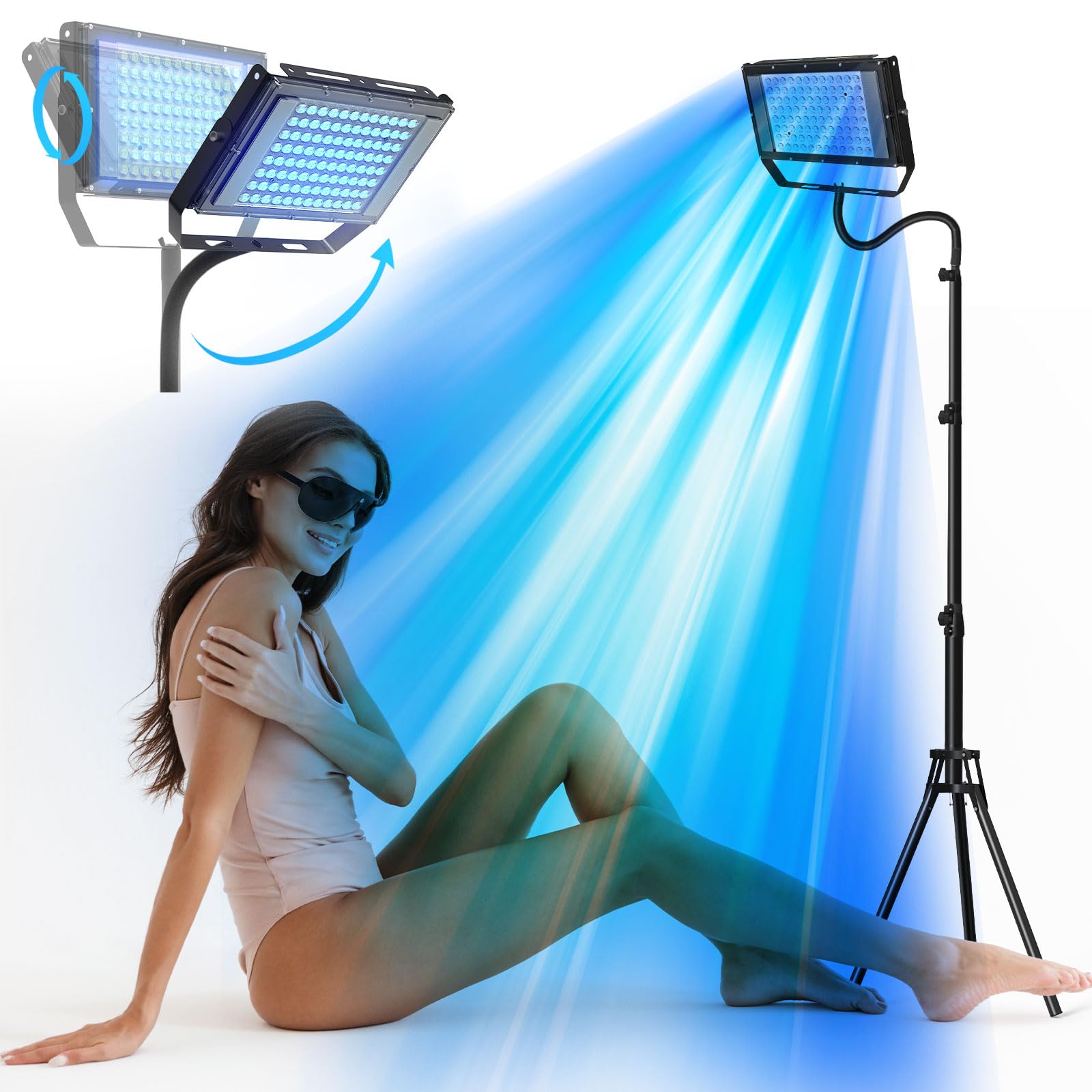
Back tanning has moved far beyond beach vacations and tanning salons. Today, more people are investing in at-home back tanning lamps to achieve an even glow, balance tan lines, and maintain a sun-kissed look year-round. But choosing the right back tanning lamp isn’t as simple as picking the highest wattage and turning it on.
If you get the wattage wrong, sit too close, or expose your skin too long, you risk burns, premature aging, and uneven pigmentation. On the other hand, if the lamp is too weak or used incorrectly, results will be disappointing.
This comprehensive guide breaks down the golden rules of wattage, distance, and exposure time — so you can choose a back tanning lamp that delivers safe, consistent, and effective results at home.
Why Back Tanning Requires Special Consideration
The back is one of the most difficult areas to tan evenly:
-
Hard to reach with self-tanners
-
Often covered year-round
-
Thicker skin in some areas
-
Uneven natural sun exposure
Because of this, many people seek controlled UV exposure using home tanning lamps to achieve uniform color.
Unlike sunbathing outdoors, a tanning lamp gives you:
-
Predictable UV intensity
-
Controlled exposure time
-
Repeatable results
-
Indoor convenience
But precision is everything.
Understanding Wattage: More Power Is Not Always Better
When shopping for a back tanning lamp, wattage is often the first specification listed. Many assume higher wattage means better results. That’s not necessarily true.
What Wattage Actually Means
Wattage refers to how much electrical power the lamp consumes. It does not automatically equal stronger tanning intensity.
A 100W lamp and a 300W lamp can produce very different UV outputs depending on:
-
Bulb type
-
Reflector design
-
UVB vs UVA ratio
-
Distance from skin
General Wattage Categories
Low Power (50–100W)
-
Best for beginners
-
Suitable for fair or sensitive skin
-
Slower tanning process
-
Lower burn risk
Mid-Range (100–200W)
-
Balanced option
-
Suitable for most skin types
-
Faster visible results
-
Requires careful timing
High Power (200W+)
-
Advanced users only
-
Faster tanning response
-
Higher burn risk
-
Requires strict exposure control
The key takeaway: choose wattage based on skin type and experience level, not impatience.
Skin Type Matters More Than Lamp Power
Before selecting wattage, determine your skin type using the Fitzpatrick scale.
Type I
-
Very fair skin
-
Always burns, never tans
-
Should avoid UV tanning or use extremely low wattage
Type II
-
Fair skin
-
Burns easily, tans minimally
-
Low wattage recommended
Type III
-
Medium skin
-
Sometimes burns, gradually tans
-
Mid-range wattage works well
Type IV
-
Olive or light brown skin
-
Rarely burns
-
Mid to higher wattage possible
Type V–VI
-
Brown to deep brown skin
-
Very rarely burns
-
May tolerate higher wattage but still requires caution
The golden rule: Match lamp intensity to your skin’s tolerance, not your tanning goals.
The Golden Distance Rule: How Far Should the Lamp Be?
Distance dramatically affects UV intensity. Doubling the distance can reduce exposure significantly due to the inverse square law.
Recommended Starting Distances
-
Low wattage lamps: 12–18 inches
-
Mid-range lamps: 18–24 inches
-
High wattage lamps: 24–36 inches
If you sit too close:
-
Skin overheats
-
Burn risk increases
-
Uneven tanning may occur
If you sit too far:
-
Results are slow
-
Sessions become unnecessarily long
Pro Tip:
If your skin feels hot rather than gently warm, you are too close.
Exposure Time: The Most Critical Variable
Even a low-wattage lamp can cause burns if exposure is excessive.
Beginner Exposure Guidelines
Week 1:
-
3–5 minutes per session
-
2–3 sessions per week
Week 2:
-
Increase by 1–2 minutes if no redness
Never increase:
-
Wattage
-
Distance
-
Exposure time
All at once. Adjust one variable at a time.
Understanding UVA vs UVB in Tanning Lamps
Most home tanning lamps emit primarily UVA light with limited UVB.
UVA
-
Darkens existing melanin
-
Immediate bronzing effect
-
Lower burn risk than UVB
-
Still contributes to skin aging
UVB
-
Stimulates new melanin production
-
Longer-lasting tan
-
Higher burn potential
High-quality back tanning lamps balance UVA and UVB to optimize color while reducing risks.
The Overheating Mistake
Many users confuse warmth with effectiveness.
A tanning lamp should produce UV exposure — not excessive heat. If you sweat heavily during use, the lamp may be:
-
Too powerful
-
Too close
-
Poorly ventilated
Overheating increases dehydration and skin irritation.
Frequency: How Often Should You Tan Your Back?
Less is more.
Ideal schedule:
-
2–3 sessions per week
-
At least 48 hours between sessions
Skin needs recovery time. Melanin production continues after exposure.
Daily tanning dramatically increases:
-
Burn risk
-
Collagen breakdown
-
Hyperpigmentation
Even Coverage: Avoiding Patchy Results
The back has curves, shoulder blades, and muscle contours that create shadows.
To ensure even tanning:
-
Rotate slightly halfway through session
-
Sit upright with neutral posture
-
Keep hair lifted off shoulders
-
Remove reflective surfaces nearby
Some users prefer adjustable panel lamps that cover wider areas.
Eye Protection Is Non-Negotiable
UV light damages eyes even when not looking directly at the lamp.
Always use:
-
UV-blocking goggles
-
Certified eye protection
Regular sunglasses are not sufficient.
Moisture and Skin Preparation
Dry skin reflects more UV and tans unevenly.
Before session:
-
Shower
-
Gently exfoliate 24 hours prior
-
Avoid heavy lotions immediately before
After session:
-
Apply fragrance-free moisturizer
-
Hydrate internally
Well-hydrated skin holds color longer.
Signs You Are Overdoing It
Stop immediately if you experience:
-
Redness lasting more than 12 hours
-
Skin tenderness
-
Peeling
-
Tightness
-
Itching
These indicate overexposure.
Long-Term Skin Health Considerations
Repeated UV exposure accelerates:
-
Wrinkle formation
-
Elasticity loss
-
Hyperpigmentation
-
Collagen degradation
If long-term skin health is your priority, consider combining light tanning with:
-
Self-tanners
-
Bronzing lotions
-
Spray applications
Moderation is essential.
Comparing Back Tanning Lamp Types
Panel Lamps
-
Broad coverage
-
Ideal for back
-
More expensive
-
Even exposure
Handheld Lamps
-
Targeted use
-
Affordable
-
Require repositioning
-
Slower coverage
Stand-Mounted Lamps
-
Adjustable height
-
Professional feel
-
Stable positioning
-
Best for consistent sessions
The Golden Formula: Putting It All Together
Safe tanning requires balance.
Wattage matched to skin type
+
Correct distance based on power
+
Gradual exposure increases
Controlled, even results
Change only one factor at a time.
Common Myths About Back Tanning Lamps
Myth: Higher wattage equals faster safe results.
Truth: It increases burn risk if misused.
Myth: If you don’t burn, it’s safe.
Truth: Skin aging occurs without visible burns.
Myth: Short sessions daily are safer.
Truth: Skin needs recovery time.
Who Should Avoid UV Back Tanning?
-
People with history of skin cancer
-
Extremely fair skin types
-
Those taking photosensitive medications
-
Individuals with autoimmune skin disorders
Consult a dermatologist if unsure.
Maintenance of Your Tanning Lamp
To ensure consistent output:
-
Clean reflectors regularly
-
Replace bulbs according to manufacturer schedule
-
Avoid touching bulbs with bare hands
-
Store in dry, dust-free environment
Old bulbs may produce uneven UV output.
Final Thoughts: Tanning Smart, Not Just Fast
A beautiful, even back tan is achievable at home — but only with discipline and knowledge.
The golden rules are simple:
-
Choose appropriate wattage for your skin.
-
Maintain proper distance.
-
Start with minimal exposure time.
-
Increase gradually.
-
Protect your eyes.
-
Prioritize skin recovery.
Tanning is not about intensity — it’s about control.
By respecting wattage, distance, and exposure time, you can achieve consistent results while minimizing risk.
Glow should never come at the cost of skin health.