Introduction: A New Era for Continuous Coil Coating
Continuous coil coating has transformed modern manufacturing by allowing metal substrates to be cleaned, treated, coated, cured, and finished through highly controlled production lines. From roofing panels and architectural facades to automotive components, appliances, electrical enclosures, HVAC systems, and industrial equipment, coil-coated materials are everywhere.
Yet conventional thermal curing methods can place significant limitations on production speed, energy consumption, floor space, coating formulation, and process flexibility. As manufacturers search for faster and more sustainable production technologies, ultraviolet curing has emerged as a powerful alternative.
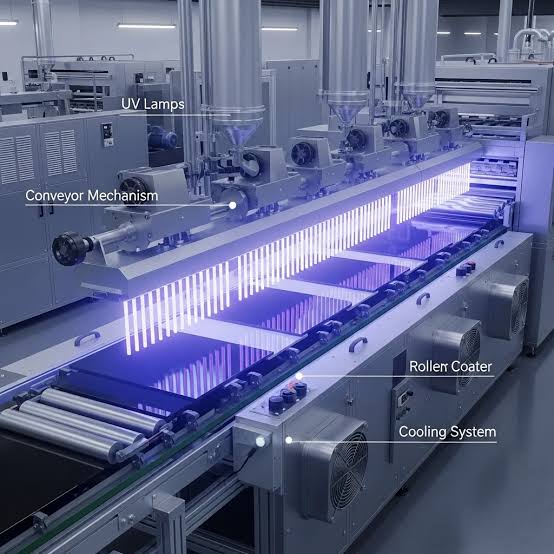
High-power industrial UV lamps are pushing this technology even further. Instead of treating UV curing as a niche solution for specialty coatings, manufacturers are exploring how powerful, precisely engineered ultraviolet systems can support continuous coil coating at industrial production speeds.
The concept is straightforward: apply a UV-curable coating to a continuously moving metal strip, expose the coating to carefully controlled ultraviolet radiation, and trigger rapid polymerization almost instantly. The practical engineering challenge, however, is much more complex.
Continuous coil coating requires consistent curing across wide substrates, stable production speeds, reliable lamp performance, precise energy delivery, effective heat management, and robust safety systems. A UV system must operate not simply as a lamp, but as an integrated part of a high-speed manufacturing process.
This is where high-power industrial UV lamps can break through traditional limitations.
By combining high-intensity UV output, optimized wavelength selection, advanced reflectors, electronic controls, cooling technologies, sensor systems, and intelligent process management, modern UV curing equipment can create new possibilities for continuous coating lines.
This article explores how high-power industrial UV lamps are changing continuous coil coating, why UV curing can provide advantages over traditional thermal processes, what technical challenges manufacturers must address, and how this technology may shape the future of industrial coating production.
1. Understanding Continuous Coil Coating
Before examining UV technology, it is important to understand the basic structure of a coil coating line.
In a conventional continuous coil coating process, a large metal coil is unwound and continuously transported through a sequence of processing stations. Depending on the application, these stages may include:
-
Uncoiling
-
Cleaning and degreasing
-
Surface preparation
-
Chemical pretreatment
-
Primer application
-
Coating application
-
Curing
-
Cooling
-
Inspection
-
Recoiling
The coated metal may eventually be fabricated into roofing products, wall panels, appliance housings, transportation components, construction materials, or other finished products.
The defining feature of coil coating is continuous movement.
Unlike batch coating, where individual parts can be stopped and processed separately, a coil coating line must maintain a carefully synchronized production flow. A change in line speed can affect coating thickness, curing dose, substrate temperature, and final performance.
This makes curing one of the most important parts of the entire production system.
If the coating is under-cured, it may have insufficient hardness, chemical resistance, adhesion, or durability. If it is overexposed or overheated, the coating can suffer from discoloration, degradation, excessive temperature rise, or other defects.
Traditional thermal curing relies primarily on heat transfer. UV curing takes a different approach.
Instead of requiring the entire coating system to reach a high temperature for a prolonged period, UV radiation initiates photochemical reactions within the coating itself.
That fundamental difference creates opportunities for much faster curing.
2. Why Traditional Thermal Curing Faces Industrial Limitations
Thermal curing remains highly effective and will continue to play an important role in industrial manufacturing. However, it also has inherent limitations.
The most obvious challenge is energy consumption.
A thermal oven must transfer substantial amounts of heat into the production environment and substrate. Depending on the coating chemistry and production requirements, this can require significant energy.
There is also a physical limitation related to oven length.
If a coating requires a certain amount of time at a particular temperature, increasing line speed may require a longer curing zone. In a high-speed continuous line, additional oven length can increase equipment footprint and capital costs.
Thermal systems can also heat the metal substrate.
This may not always be desirable, particularly when coating systems or downstream processes are sensitive to temperature.
Another issue is startup and shutdown time. Large thermal ovens require time to reach operating conditions and may retain considerable heat after production stops.
UV curing operates according to a different principle.
When the coating contains an appropriate photoinitiator system, UV energy can trigger polymerization rapidly after exposure. The reaction occurs within the coating rather than depending entirely on heating the complete material.
This can dramatically reduce the physical curing distance required in certain applications.
The result is a potentially smaller curing zone, faster processing, and lower overall thermal load.
3. What Makes High-Power Industrial UV Lamps Different?
Not all UV lamps are suitable for continuous industrial coil coating.
Industrial production requires much more than simply generating ultraviolet light.
A high-power UV curing system must deliver sufficient energy at the correct wavelengths while maintaining consistent irradiance across the entire coating width.
Several factors determine system performance.
UV Intensity
UV intensity refers to the amount of UV radiation delivered to the coating surface at a given moment.
Higher intensity can be particularly valuable when production lines operate at high speeds because the available exposure time becomes shorter.
However, maximum intensity is not automatically the best solution.
The objective is to achieve the required curing performance with an appropriate combination of irradiance, exposure time, wavelength, and coating chemistry.
UV Dose
UV dose is generally understood as the accumulated UV energy received by the coating over the exposure period.
A useful way to think about the relationship is:
UV Dose = Irradiance × Exposure Time
As line speed increases, exposure time decreases. Therefore, maintaining adequate curing may require higher irradiance or an optimized curing configuration.
This is one reason high-power UV lamps can be important in continuous coil coating.
Wavelength
Different photoinitiators respond to different wavelengths.
Industrial UV systems may use specific UV spectral ranges depending on the coating formulation. The lamp, reflector, coating, and photoinitiator must therefore be designed as a coordinated system.
Selecting the correct wavelength can improve curing efficiency while reducing unnecessary radiation.
Uniformity
A powerful lamp is not useful if the center of the metal strip receives significantly more energy than the edges.
For wide coil substrates, uniformity is critical.
Reflector geometry, lamp arrangement, working distance, cooling design, and system alignment all influence the final UV distribution.
4. High-Speed Production: Turning UV Power Into Line-Speed Advantages
One of the most attractive features of UV curing is the possibility of extremely rapid curing.
In traditional thermal curing, the coating may require a defined time inside a heated zone. Increasing the speed of the production line can therefore create a direct conflict between productivity and curing requirements.
UV curing can reduce that limitation.
Because photochemical polymerization can occur rapidly under sufficiently intense UV radiation, the curing zone can potentially be much shorter than a conventional thermal oven.
This creates an important industrial advantage.
Imagine a manufacturer operating a continuous metal coating line where production speed is a major constraint. If the curing stage currently determines the maximum line speed, replacing or supplementing thermal curing with a high-power UV system could potentially allow the line to operate faster.
Higher line speed can translate into:
-
Greater production capacity
-
More output per shift
-
Better utilization of upstream equipment
-
Reduced curing-zone footprint
-
Greater manufacturing flexibility
However, increased line speed should never be treated as simply a matter of installing a stronger lamp.
The entire curing system must be engineered around the coating formulation and production parameters.
The required UV dose, substrate width, coating thickness, line speed, lamp configuration, and photoinitiator response must all be evaluated together.
5. UV-Curable Coatings: The Other Half of the Equation
A high-power UV lamp cannot compensate for an unsuitable coating.
Successful UV coil coating requires compatibility between the UV equipment and the coating formulation.
UV-curable coatings typically contain reactive components and photoinitiators that respond to ultraviolet radiation.
When the coating receives the appropriate UV energy, the photoinitiator generates reactive species that initiate polymerization.
This can transform the liquid coating into a solid film rapidly.
The coating formulation influences:
-
Required UV dose
-
Curing speed
-
Surface hardness
-
Adhesion
-
Flexibility
-
Chemical resistance
-
Gloss
-
Color stability
-
Depth of cure
-
Oxygen sensitivity
-
Final mechanical performance
This means the lamp manufacturer and coating formulator often need to work together.
A UV curing system should be selected based on actual coating behavior rather than simply choosing the highest available lamp power.
6. The Importance of Consistent Curing Across Wide Metal Coils
Continuous coil coating often involves large substrate widths.
This creates a major engineering challenge: the UV exposure must remain consistent across the entire web.
If one section receives insufficient UV energy, under-cured areas may appear.
If another section receives excessive energy, the coating may develop undesirable characteristics.
Uniformity becomes especially important when production lines operate at high speed.
Modern industrial UV systems can address this challenge through optimized reflector designs and multiple lamp configurations.
Reflectors are not merely accessories surrounding a lamp. They are optical components that determine how UV radiation is distributed.
The reflector geometry can be engineered to:
-
Focus radiation toward the coating
-
Increase usable UV energy
-
Reduce unwanted exposure
-
Improve edge coverage
-
Create more consistent irradiance
-
Control the effective curing zone
For wide coil coating applications, reflector design can be just as important as lamp output.
7. Intelligent Power Control and Dynamic UV Management
One of the biggest developments in industrial UV curing is the move toward intelligent control.
Traditional systems may operate lamps at relatively fixed power levels.
Modern systems can be designed to adjust UV output according to production conditions.
For example, if the production line slows down, the system may not need to operate at maximum intensity. Reducing power can help control energy consumption and thermal load.
When line speed increases, UV output can be adjusted to maintain the required curing conditions.
This creates a more responsive production environment.
An advanced UV control system may monitor parameters such as:
-
Line speed
-
Lamp power
-
UV intensity
-
UV dose
-
Substrate temperature
-
Lamp operating conditions
-
Cooling performance
-
Production status
The result is a curing process that can respond dynamically rather than relying on a single fixed operating point.
8. Energy Efficiency: More Than Simply Reducing Electricity Use
Energy efficiency is increasingly important in manufacturing.
However, evaluating UV curing solely by lamp electricity consumption can be misleading.
The complete process should be considered.
A conventional thermal oven may require energy to:
-
Heat the oven structure.
-
Heat the surrounding air.
-
Heat the substrate.
-
Maintain operating temperature.
-
Exhaust process air.
-
Recover or replace lost heat.
A UV curing system primarily delivers energy directly through radiation to initiate the coating reaction.
This can reduce the amount of energy devoted to heating the entire production environment.
In some applications, this can create significant energy-saving potential.
Energy efficiency may also improve indirectly through reduced startup times, shorter curing zones, and lower thermal requirements.
For manufacturers, the real question is not simply:
“How many watts does the UV lamp consume?”
A better question is:
“How much energy is required to produce one unit of fully cured coated material?”
That production-based metric provides a more meaningful comparison.
9. Reduced Thermal Load and Better Substrate Control
One of the most interesting advantages of UV curing is that the coating can cure rapidly without requiring the entire metal substrate to experience the same thermal profile as a traditional oven process.
This can be valuable for temperature-sensitive materials or processes where dimensional stability matters.
Lower thermal load can help manufacturers manage:
-
Substrate temperature
-
Coating appearance
-
Dimensional stability
-
Energy consumption
-
Cooling requirements
-
Production-line layout
However, UV lamps can still generate heat.
High-power lamps produce substantial radiant and convective energy, so proper cooling and thermal management remain essential.
The goal is not to eliminate heat entirely.
The goal is to control where the energy goes.
10. Cooling Technology: A Critical Part of High-Power UV Systems
As UV lamp power increases, cooling becomes increasingly important.
Industrial UV curing equipment may use air cooling, water cooling, or other engineered thermal-management approaches depending on the system.
Effective cooling protects:
-
Lamps
-
Reflectors
-
Electrical components
-
Housing structures
-
Adjacent production equipment
-
Coating surfaces
Poor thermal management can reduce lamp life and cause unstable operating conditions.
A high-power UV system should therefore be evaluated as a complete thermal system.
The questions should include:
-
How is lamp heat removed?
-
How is reflector temperature controlled?
-
How is the substrate protected?
-
How is cooling performance monitored?
-
What happens if cooling fails?
-
Can the system automatically reduce power or shut down?
These questions become especially important in continuous production, where equipment may operate for long periods.
11. Lamp Life and Industrial Reliability
Production equipment is expected to operate reliably.
A curing system that requires frequent maintenance can quickly erase the productivity benefits of faster curing.
Lamp life depends on factors such as lamp technology, operating conditions, power settings, cooling, cycling frequency, and maintenance practices.
For continuous coil coating, reliability is particularly important because an unexpected curing-system failure can interrupt the entire production line.
Modern industrial UV systems therefore focus on more than maximum output.
They also emphasize:
-
Stable lamp operation
-
Predictable performance
-
Effective cooling
-
Easy maintenance
-
Monitoring systems
-
Replaceable components
-
Preventive maintenance planning
A well-designed system should make maintenance predictable rather than reactive.
12. UV Sensors and Process Verification
A major challenge in continuous coating is proving that the process remains stable.
Operators cannot simply look at a finished coil and determine the exact UV dose received by every section.
This is where UV measurement systems become valuable.
UV sensors can help monitor radiation levels during operation.
By continuously tracking output, manufacturers can identify changes that may indicate:
-
Lamp aging
-
Optical contamination
-
Reflector degradation
-
Cooling problems
-
Power instability
-
Alignment issues
Process monitoring can therefore support quality control and preventive maintenance.
Instead of waiting for coating defects to appear, manufacturers can identify changes in the curing system earlier.
This transforms UV curing from a relatively passive process into a measurable production parameter.
13. Breaking the Traditional Cure-Speed Barrier
The biggest innovation opportunity lies in the relationship between UV power and production speed.
Traditional curing systems often require manufacturers to choose between:
Higher production speed and sufficient curing time.
UV technology can change this relationship.
A high-intensity UV system can deliver substantial energy in a short exposure period. This means the curing stage may no longer need to be the slowest section of the production line.
The production line can potentially be designed around the coating's actual chemical response rather than the physical limitations of a long thermal oven.
This opens new possibilities for compact high-throughput manufacturing facilities.
14. Compact Equipment and More Efficient Factory Layouts
Industrial floor space is expensive.
Large thermal ovens can occupy considerable production-line length.
UV curing systems can potentially reduce the footprint of the curing section.
A compact UV curing module may be installed into a production line without requiring an extremely long heating tunnel.
This can provide several benefits:
-
More efficient factory layouts
-
Reduced equipment footprint
-
Easier integration into existing lines
-
Potentially lower construction costs
-
Greater production-line flexibility
For manufacturers operating in facilities with limited expansion space, this can be a major advantage.
Instead of building a longer plant to increase production speed, manufacturers may explore higher-performance curing technologies within the existing footprint.
15. Expanding the Range of Coating Formulations
UV curing does not simply improve production speed.
It can also encourage coating developers to explore new formulations.
Because UV curing is based on photochemical polymerization, coating manufacturers can formulate materials around rapid curing behavior.
This may open opportunities for coatings with specialized:
-
Hardness
-
Gloss
-
Chemical resistance
-
Scratch resistance
-
Adhesion
-
Flexibility
-
Decorative effects
-
Surface textures
The relationship between coating chemistry and UV equipment is therefore highly collaborative.
As UV lamp technology improves, coating formulators gain more opportunities to design materials specifically for high-speed industrial curing.
16. UV LED Versus Traditional Industrial UV Lamps
UV LED technology has attracted significant attention because LEDs can offer long service life, precise control, and reduced mercury-related concerns.
However, traditional industrial UV lamps continue to have important advantages in certain high-power applications.
The best choice depends on the coating chemistry, required wavelength, line speed, curing depth, substrate width, and system design.
Traditional arc lamps can provide broad-spectrum UV output and very high curing intensity.
UV LEDs can provide highly targeted wavelength output and excellent electronic controllability.
Neither technology should automatically be considered superior in every coil coating application.
The correct approach is to match the radiation source to the chemistry and production requirements.
Hybrid systems may also become increasingly interesting where different curing mechanisms are useful at different stages.
17. Safety Must Remain a Core Design Principle
High-power UV radiation is hazardous to skin and eyes.
Therefore, industrial UV curing systems must be designed with appropriate shielding, interlocks, access controls, warning indicators, emergency shutdown functions, and workplace safety procedures.
Operators should never rely on ordinary workplace awareness as the primary protective measure.
A professional UV curing installation should prevent unintended exposure through engineering controls.
Important considerations may include:
-
Fully enclosed curing zones
-
Interlocked access panels
-
Emergency stop systems
-
UV-resistant viewing solutions where appropriate
-
Warning indicators
-
Controlled maintenance procedures
-
Proper personal protective equipment when required
-
Regular safety inspections
Safety should be integrated into the machine design from the beginning rather than added afterward.
18. Quality Control in High-Speed UV Coil Coating
Fast curing is valuable only when quality remains consistent.
A high-speed UV coil coating process should monitor both the curing process and the final coating.
Potential quality-control parameters include:
-
Coating thickness
-
UV dose
-
UV intensity
-
Line speed
-
Substrate temperature
-
Adhesion
-
Hardness
-
Gloss
-
Chemical resistance
-
Surface appearance
-
Flexibility
-
Cure depth
These parameters can help establish a stable operating window.
The goal is to identify the combination of lamp power, line speed, coating thickness, and formulation that consistently produces the required result.
Once that process window is established, automated monitoring can help keep production inside it.
19. The Role of Reflectors in Maximizing UV Efficiency
A high-power lamp produces radiation in multiple directions.
Without effective optical management, a significant portion of that radiation may not reach the coating efficiently.
Reflectors redirect UV energy toward the substrate.
The geometry and surface characteristics of the reflector therefore have a direct influence on system performance.
A well-engineered reflector can help:
-
Increase effective irradiance
-
Improve uniformity
-
Reduce energy waste
-
Control the curing profile
-
Improve edge performance
-
Protect surrounding components
Reflector maintenance is also important.
Dust, coating residue, oxidation, and surface contamination can reduce optical efficiency.
Routine inspection and cleaning can therefore be an important part of maintaining curing performance.
20. Automation and Industry 4.0 Integration
The next step for industrial UV curing is greater integration with automated manufacturing systems.
A modern coil coating line can potentially connect UV curing equipment with the broader production-control architecture.
For example, the system could automatically adjust curing conditions based on:
-
Production recipe
-
Line speed
-
Coating formulation
-
Coil width
-
Coating thickness
-
Process temperature
-
UV output
This creates a recipe-based curing environment.
Operators can select the appropriate production profile, while the control system manages the required parameters.
Over time, production data can also support predictive maintenance and process optimization.
This is an important shift from manually operated curing equipment toward intelligent production systems.
21. Maintenance Strategies for High-Power UV Equipment
Preventive maintenance is essential for stable production.
Manufacturers should establish regular inspection schedules for:
-
Lamps
-
Reflectors
-
Cooling systems
-
Sensors
-
Electrical connections
-
Interlocks
-
Protective shielding
-
Ventilation
-
Optical surfaces
The frequency should be based on the equipment manufacturer's specifications and actual production conditions.
Maintenance should also include monitoring performance trends.
If UV intensity gradually decreases, the system may still appear to operate normally while curing performance slowly deteriorates.
Trend monitoring can identify these changes before they become serious quality problems.
22. Can UV Curing Replace Thermal Curing Completely?
Not always.
The answer depends heavily on the coating chemistry and application.
Some systems are ideal candidates for UV curing, while others may require thermal treatment, hybrid curing, or additional process stages.
A hybrid system can sometimes combine the strengths of both technologies.
For example, UV radiation may provide rapid surface and bulk polymerization while controlled thermal treatment addresses specific formulation requirements.
The objective should not be to eliminate thermal technology simply because UV curing is newer.
The objective should be to create the most efficient and reliable curing process for the application.
23. A Practical Framework for Evaluating High-Power UV Systems
Manufacturers considering UV curing for continuous coil coating should evaluate several categories.
Step 1: Analyze the Coating
Understand the coating's photoinitiator system, thickness, optical characteristics, curing mechanism, and required UV dose.
Step 2: Define Production Requirements
Determine:
-
Maximum line speed
-
Typical line speed
-
Coil width
-
Coating thickness
-
Required production volume
Step 3: Determine the UV Spectrum
Select a lamp system that produces radiation compatible with the coating's photoinitiator chemistry.
Step 4: Calculate Required UV Dose
Establish the minimum dose required for reliable curing under real production conditions.
Step 5: Design the Optical System
Optimize lamp positioning, reflector geometry, working distance, and coverage.
Step 6: Evaluate Thermal Management
Determine how lamp heat and substrate temperature will be controlled.
Step 7: Build Safety Controls
Include shielding, interlocks, emergency shutdowns, and maintenance protections.
Step 8: Validate With Production Testing
Laboratory testing is useful, but production-scale trials are critical.
The final system should be validated at realistic line speeds and coating conditions.
24. The Economic Case for High-Power UV Curing
The financial value of UV curing goes beyond electricity savings.
A complete economic evaluation should consider:
-
Production speed
-
Throughput
-
Energy consumption
-
Factory footprint
-
Equipment installation
-
Maintenance
-
Lamp replacement
-
Coating consumption
-
Scrap rate
-
Labor requirements
-
Downtime
-
Product quality
If UV curing allows a manufacturer to increase output without expanding the production facility, the economic benefit can be substantial.
Likewise, reducing curing-related defects can improve material utilization.
The best investment analysis therefore considers total production economics rather than the initial cost of the UV equipment alone.
25. Environmental Benefits and Resource Efficiency
Manufacturers are increasingly looking for production technologies that reduce resource consumption.
UV curing can contribute to this objective through lower thermal requirements and potentially more efficient energy use.
Depending on the coating formulation and production system, UV curing may also support high-solids or solvent-reduced coating technologies.
However, environmental performance must be evaluated across the complete production process.
A responsible assessment should consider:
-
Electricity consumption
-
Coating chemistry
-
Air emissions
-
Cooling requirements
-
Equipment lifetime
-
Lamp replacement
-
Maintenance materials
-
Waste generation
The goal is not simply to label a process “green,” but to quantify its actual resource performance.
26. The Future of High-Power UV Lamps in Coil Coating
The future is likely to involve increasingly integrated systems rather than isolated improvements to lamp power.
High-power industrial UV curing may evolve through advances in:
-
High-efficiency UV sources
-
Advanced reflector geometry
-
Intelligent power supplies
-
Real-time UV monitoring
-
Automated process control
-
Improved cooling systems
-
More responsive photoinitiator chemistry
-
Hybrid UV and thermal curing
-
Predictive maintenance
-
Digital production management
The result could be a new generation of continuous coil coating lines that are faster, more compact, more controllable, and more resource-efficient.
The most important development may not be a single breakthrough component.
Instead, it will be the integration of lamp technology, coating chemistry, optical engineering, thermal management, automation, and quality control into one coordinated system.
27. Why High-Power UV Technology Represents More Than a Faster Lamp
It is tempting to describe industrial UV innovation as simply “more power.”
But that interpretation misses the larger opportunity.
The real breakthrough comes from controlling energy more intelligently.
A high-power UV lamp provides intense radiation. The optical system determines where that radiation goes. The coating determines how effectively it is converted into polymerization. The control system determines how much energy is delivered. Sensors verify performance. Cooling systems manage heat. Safety systems protect personnel.
Every component contributes to the final result.
This means the future of UV curing is not necessarily about using the most powerful lamp available.
It is about delivering the right amount of UV energy, at the right wavelength, over the right area, for the right amount of time, under precisely controlled production conditions.
That is the foundation of efficient industrial curing.
Conclusion: Breaking Through the Limits of Conventional Continuous Coating
Continuous coil coating is fundamentally a high-speed manufacturing process, and curing has always been one of its most important technological challenges.
Traditional thermal curing remains valuable, but its dependence on heat transfer, long curing zones, substrate heating, and substantial energy input can limit certain production strategies.
High-power industrial UV lamps offer a different path.
By delivering intense, precisely controlled ultraviolet radiation, modern UV curing systems can enable rapid polymerization within extremely short exposure periods. When paired with compatible UV-curable coatings, optimized reflectors, advanced cooling, intelligent power control, UV monitoring, and robust safety systems, these technologies can fundamentally change how continuous coating lines are designed.
The greatest potential lies not in replacing every conventional curing process, but in identifying where UV technology can create measurable advantages.
For manufacturers seeking higher production speeds, compact equipment layouts, improved process control, lower thermal load, and potentially greater energy efficiency, high-power industrial UV curing deserves serious consideration.
The future of continuous coil coating will likely be defined by integration.
Lamp power alone will not determine success. The winners will be the systems that successfully integrate UV source technology, coating chemistry, optical engineering, thermal management, automation, monitoring, and production economics.
That is how high-power industrial UV lamps can move beyond their traditional role and become a core technology for the next generation of continuous coil coating.
If you are interested in high-power industrial UV lamps or customized UV curing solutions for continuous coil coating applications, feel free to leave a comment or contact us for a price inquiry.