Introduction: When Light Becomes a Manufacturing Tool
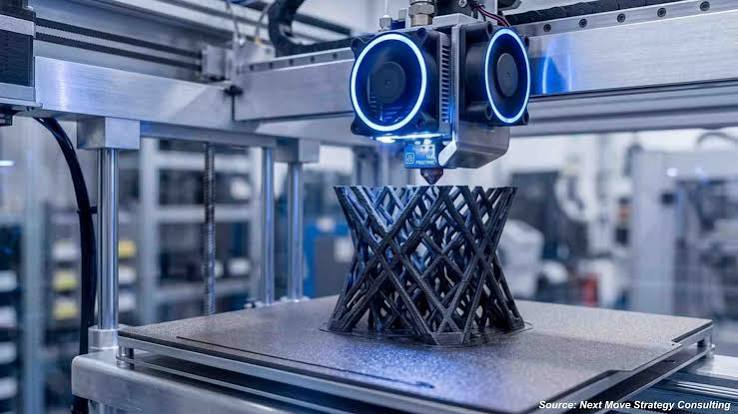
Additive manufacturing has evolved far beyond the early concept of simply building three-dimensional objects layer by layer. Today, 3D printing is becoming an important part of smart manufacturing, digital production, rapid prototyping, customized product development, and increasingly automated industrial workflows. Among the technologies driving this transformation, UV-based additive manufacturing stands out because it combines digital precision with photochemical material processing.
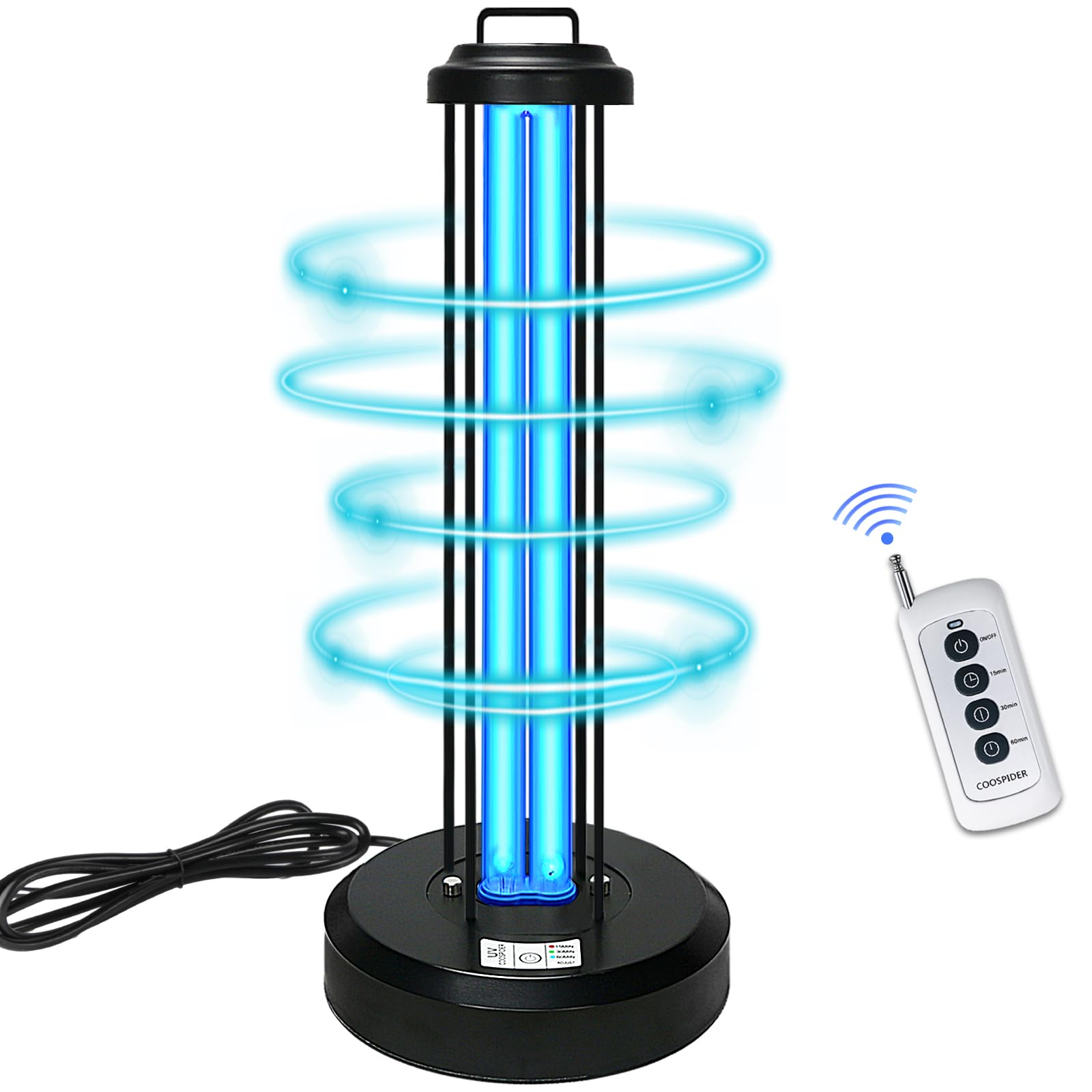
At the heart of many UV-based 3D printing systems is a component that may appear relatively simple but has a major influence on print quality: the UV exposure lamp or UV light source.
A high-precision UV exposure lamp does much more than illuminate a resin surface. It provides the optical energy required to initiate or accelerate photopolymerization, turning liquid photosensitive resin into precisely defined solid structures. The wavelength, optical uniformity, intensity, exposure stability, thermal behavior, and service life of the light source can all affect dimensional accuracy, surface quality, layer adhesion, production efficiency, and repeatability.
As manufacturers move toward smart factories, these characteristics become even more important. Modern additive manufacturing is no longer evaluated only by whether a printer can produce a model. Manufacturers increasingly care about whether the machine can produce thousands of parts with consistent quality, whether process parameters can be monitored automatically, whether production data can be integrated into a digital manufacturing system, and whether equipment can operate reliably for extended periods.
This is where high-precision UV exposure technology becomes particularly valuable.
By combining accurate UV energy delivery with digital control, automated calibration, intelligent monitoring, and optimized resin formulations, manufacturers can create a more stable and controllable additive manufacturing process.
This article explores the relationship between 3D printing, smart manufacturing, and high-precision UV exposure lamps, with a particular focus on how UV light technology influences additive manufacturing performance and why the light source deserves serious consideration when designing or upgrading professional 3D printing equipment.
1. Understanding UV-Based Additive Manufacturing
UV-based 3D printing generally relies on photopolymerization. Instead of mechanically depositing material or melting plastic filament, the printer uses ultraviolet light to selectively cure a liquid photosensitive resin.
When UV radiation reaches the resin, a photochemical reaction is initiated. The liquid resin begins to polymerize and solidify in the areas receiving sufficient optical energy.
Depending on the printing technology, the UV light may be delivered through different optical configurations.
Common approaches include:
-
Digital Light Processing (DLP)
-
Masked stereolithography (MSLA)
-
Laser stereolithography (SLA)
-
Projection-based photopolymerization
-
Digital manufacturing systems using UV LED arrays
Although these technologies differ in how light is generated and projected, they share an important requirement: the UV energy must reach the intended material with sufficient accuracy and consistency.
The basic relationship is straightforward.
UV light + photosensitive resin + controlled exposure = cured material.
However, industrial production is much more complicated than this simple equation suggests.
A small variation in exposure energy can affect the curing depth. Uneven illumination can produce inconsistent dimensions across a build platform. Excessive exposure can cause over-curing, while insufficient exposure may result in weak structures or incomplete polymerization.
Therefore, the UV light source becomes a critical part of the entire printing system.
2. Why UV Exposure Accuracy Matters
In professional additive manufacturing, precision is not simply a matter of printer mechanics.
A machine may have highly accurate motors, a rigid frame, and sophisticated software, but if its UV exposure system is unstable, the final part can still suffer from quality problems.
Consider a printer curing a thin layer of resin.
The intended exposure energy may be represented as:
Exposure Energy = UV Irradiance × Exposure Time
If the irradiance changes during operation, the actual energy received by the resin changes even if the software continues using exactly the same exposure time.
This can create differences between batches.
For example, one production run may receive slightly more UV energy than another. The resulting parts could have differences in:
-
Cure depth
-
Dimensional accuracy
-
Surface detail
-
Mechanical properties
-
Layer adhesion
-
Surface hardness
-
Shrinkage behavior
-
Fine-feature reproduction
For hobby printing, a small difference may be acceptable.
For industrial production, it can become a serious quality-control issue.
High-precision UV exposure systems are therefore designed to provide stable optical output and predictable energy delivery throughout the printing process.
3. The Role of Wavelength in Resin Curing
One of the first technical parameters to consider when selecting a UV exposure lamp is wavelength.
Photosensitive resins are formulated to respond to specific ranges of ultraviolet or near-ultraviolet radiation. Common industrial systems may use wavelengths around 365 nm, 385 nm, 395 nm, or 405 nm, although the appropriate wavelength depends on the resin chemistry and equipment design.
Choosing a wavelength is not simply a matter of selecting the strongest UV source available.
The light source and resin must be compatible.
A resin designed for a particular photoinitiator system may respond much more efficiently at one wavelength than another. If the wavelength does not match the material's absorption characteristics, curing efficiency can decrease.
This can lead to longer exposure times, incomplete curing, inconsistent layers, or increased energy consumption.
For this reason, manufacturers should evaluate the complete optical system rather than treating the UV lamp as an isolated component.
A well-designed system considers:
-
Resin photochemistry
-
UV wavelength
-
Optical power
-
Irradiance distribution
-
Exposure duration
-
Curing depth
-
Thermal characteristics
-
Optical transmission
-
Machine control software
When these elements are properly matched, the printer can achieve much more predictable curing behavior.
4. Uniform Illumination and Large-Build Accuracy
One of the biggest challenges in resin-based 3D printing is maintaining consistent illumination across the entire build area.
Imagine a printer with a large build platform.
If the center receives significantly more UV energy than the edges, two identical parts positioned in different areas of the platform could potentially cure differently.
This is undesirable for manufacturing.
Uniform UV illumination helps ensure that parts receive similar exposure conditions regardless of their position.
This is particularly important when printing:
-
Large components
-
Multiple identical components
-
Precision mechanical parts
-
Microstructures
-
Dental models
-
Customized medical models
-
Industrial prototypes
-
Small functional components
Optical uniformity can depend on the design of the UV LED array, lenses, reflectors, optical mixing structures, projection system, and distance between the light source and resin surface.
A high-quality UV exposure system should therefore be evaluated not only by its maximum optical output but also by its illumination uniformity.
In many applications, consistent energy distribution is more valuable than simply increasing UV intensity.
5. High-Precision UV Lamps and Fine Details
Additive manufacturing is often chosen because conventional manufacturing methods can struggle with complex geometries.
A resin printer can create:
-
Tiny channels
-
Thin walls
-
Intricate lattice structures
-
Sharp corners
-
Small holes
-
Fine text
-
Complex internal structures
-
Customized geometries
However, producing these details requires precise control over the boundary between cured and uncured resin.
If the UV exposure spreads beyond the intended area, the printed feature may become larger than designed.
This phenomenon can be influenced by optical scattering, resin characteristics, exposure energy, light diffusion, and the resolution of the projection system.
A high-precision UV optical system helps improve control over the curing boundary.
For example, when producing a small opening, excessive lateral exposure can partially close the opening. In a high-detail application, even a small dimensional change can affect whether the part functions correctly.
This makes UV optical precision an important factor in applications involving micro-scale or highly detailed components.
6. UV Exposure and Layer Thickness
Layer thickness is another critical parameter in additive manufacturing.
A printer may use extremely thin layers to achieve smoother surfaces and more detailed geometry. However, thinner layers require careful control of curing depth.
If UV exposure penetrates too deeply, the cured layer can interfere with the next layer or create unwanted dimensional changes.
If exposure is too weak, the layer may not bond adequately.
The ideal exposure profile therefore depends on the relationship between:
-
Layer thickness
-
Resin viscosity
-
Resin absorption
-
Photoinitiator concentration
-
UV wavelength
-
Irradiance
-
Exposure time
-
Desired mechanical properties
High-precision UV systems provide manufacturers with better control over this process.
Instead of treating UV exposure as a simple on/off function, advanced printers can optimize exposure parameters for different materials and layer thicknesses.
7. UV LED Technology in Modern 3D Printers
Traditional UV lamps have been used in many industrial curing applications, but UV LED technology has become increasingly attractive for modern additive manufacturing systems.
UV LEDs can provide several advantages, including:
-
Compact size
-
Fast switching
-
Long operating life
-
High controllability
-
Lower maintenance requirements
-
Efficient electronic control
-
Potentially reduced heat generation in the optical system
One particularly important advantage is controllability.
A UV LED array can be electronically controlled with very short response times. This makes it suitable for digital manufacturing systems where exposure needs to be synchronized precisely with image projection or layer formation.
UV LEDs can also be arranged into carefully designed arrays to improve illumination uniformity.
However, not all UV LED systems are equal.
The quality of the LEDs, thermal management, optical design, driver electronics, wavelength stability, and assembly precision all affect system performance.
8. Thermal Management: The Overlooked Part of UV Exposure
UV light sources generate heat, and temperature can influence both the light source and the printing process.
As a UV LED operates, its temperature can rise. If the system cannot remove heat effectively, several problems may occur.
Potential consequences include:
-
Reduced optical output
-
Wavelength variation
-
Shortened component life
-
Increased output instability
-
Optical deformation
-
Thermal stress
-
Changes in resin behavior
Heat can also affect the resin itself.
Photopolymerization is a chemical reaction, and temperature can influence reaction speed and material viscosity. Therefore, thermal management is not merely an electronics issue. It can become part of process control.
A professionally designed UV exposure module may incorporate:
-
Heat sinks
-
Forced-air cooling
-
Liquid cooling
-
Temperature sensors
-
Intelligent fan control
-
Thermal feedback
-
Automatic power management
In smart manufacturing environments, these systems can be connected to machine monitoring software so that abnormal temperature conditions can be detected before they cause significant quality problems.
9. Smart Manufacturing Changes the Role of the UV Lamp
Traditional 3D printers often operate according to fixed parameters.
The operator selects a material profile, sets exposure time, and starts printing.
Smart manufacturing introduces a different philosophy.
Instead of simply executing predefined commands, the machine continuously collects and analyzes operational data.
The UV exposure system can become part of this digital feedback loop.
For example, sensors can potentially monitor:
-
UV intensity
-
LED temperature
-
Operating hours
-
Power consumption
-
Cooling performance
-
Exposure consistency
-
System faults
This information can be used to identify gradual performance degradation.
Suppose a UV LED module produces slightly less optical energy after thousands of operating hours. The printer may still function, but exposure conditions may no longer match the original calibration.
A smart monitoring system could detect this change and alert the operator.
This creates a transition from reactive maintenance to predictive maintenance.
10. Intelligent Calibration for Consistent Production
Calibration is fundamental to industrial additive manufacturing.
A printer should not simply be accurate when it leaves the factory. It should remain predictable throughout its operating life.
UV calibration may involve measuring the optical output across the build platform and adjusting machine parameters accordingly.
Advanced systems can potentially use sensors or calibration tools to create an illumination map.
If one region produces slightly different optical output from another, software can compensate through exposure control where the system architecture allows it.
This concept is especially valuable for production environments.
Instead of assuming that every UV source remains perfectly uniform forever, smart manufacturing systems recognize that components age and operating conditions change.
Continuous or periodic calibration helps maintain production consistency.
11. Predictive Maintenance and UV Light Sources
Predictive maintenance is becoming an important concept in smart factories.
Rather than replacing components according to a fixed calendar, manufacturers can monitor actual operating conditions and replace components when performance begins to decline.
For UV exposure systems, useful indicators may include:
-
Total operating hours
-
Optical intensity
-
Temperature history
-
Current consumption
-
Cooling-system performance
-
Exposure compensation values
-
Error frequency
If a UV module gradually loses output, the system can identify the trend.
This helps manufacturers avoid two common problems.
The first is premature replacement, which increases maintenance costs.
The second is unexpected failure, which can interrupt production.
By integrating UV performance data into equipment management systems, manufacturers can make maintenance decisions based on real operating conditions.
12. UV Exposure and Automated Quality Control
Quality control is one of the most important goals of smart manufacturing.
A modern production line may combine machine vision, sensors, software analytics, and automated inspection.
UV exposure data can become another useful source of process information.
For example, a production management platform could record:
-
Printer identification
-
Resin batch
-
UV wavelength
-
Exposure parameters
-
Build temperature
-
UV operating hours
-
Calibration results
-
Printing duration
-
Part inspection results
This creates a digital production history for every manufacturing batch.
If a quality problem appears later, engineers can investigate whether the problem is associated with material changes, machine parameters, UV performance, environmental conditions, or another variable.
This type of traceability is especially useful for manufacturers producing high-value or technically demanding components.
13. The Relationship Between UV Intensity and Printing Speed
Printing speed is an important competitive factor in additive manufacturing.
Manufacturers naturally want to produce more parts in less time.
One method is to increase UV irradiance so that the resin reaches the required curing state faster.
However, simply increasing optical power is not always the best approach.
Excessive exposure can create:
-
Over-curing
-
Loss of fine detail
-
Dimensional distortion
-
Increased heat
-
Unwanted polymerization
-
Reduced surface quality
The goal is not maximum UV intensity.
The goal is controlled and sufficient UV energy.
A high-precision UV system allows manufacturers to optimize irradiance and exposure time together.
This can improve productivity while maintaining the desired part quality.
In other words, efficient additive manufacturing depends on intelligent energy delivery rather than brute-force illumination.
14. UV Exposure in Mass Customization
One of the greatest advantages of digital manufacturing is customization.
Traditional production methods often require expensive tooling. Producing a customized component may require a new mold, fixture, or machining setup.
3D printing eliminates many of these limitations.
A digital model can be modified, sliced, and manufactured without creating a completely new physical tool.
UV-based printing is particularly attractive for applications requiring:
-
Customized consumer products
-
Dental components
-
Jewelry prototypes
-
Architectural models
-
Engineering prototypes
-
Personalized accessories
-
Small-batch components
-
Complex replacement parts
When production moves toward one-piece or small-batch manufacturing, process repeatability becomes even more important.
Each customized design may be different, but the manufacturing process still needs to remain stable.
High-precision UV exposure helps provide that stable foundation.
15. The Importance of Optical Design
A UV LED alone does not determine the quality of a UV exposure system.
The optical architecture surrounding the light source is equally important.
Engineers may use lenses, reflectors, diffusers, light guides, projection optics, or other components to shape and distribute UV radiation.
The goal is to control:
-
Beam angle
-
Uniformity
-
Focusing
-
Light leakage
-
Optical efficiency
-
Exposure boundaries
-
Energy distribution
Poor optical design can waste energy and create uneven exposure.
Good optical engineering can transform a collection of UV LEDs into a highly controlled exposure system.
This distinction explains why manufacturers should evaluate complete UV exposure modules rather than comparing light sources based solely on nominal wattage.
16. Electrical Control and Exposure Precision
The electronic driver system is another important part of UV exposure technology.
Stable current regulation helps maintain consistent LED output.
If electrical power fluctuates significantly, optical output can also change.
Modern systems may use advanced drivers to regulate LED current and coordinate exposure with the printer's control system.
Fast electronic switching is especially valuable in digital projection systems.
The light source must respond rapidly to commands while maintaining predictable output.
This allows the printer to synchronize optical exposure with digital image information.
In advanced smart manufacturing systems, the UV driver may also provide diagnostic information to the main controller.
17. Manufacturing Applications Beyond Prototyping
UV-based additive manufacturing is increasingly moving into production environments.
Potential applications include:
Dental Manufacturing
Dental laboratories use photopolymerization-based printing for models, surgical guides, aligner-related components, and other customized applications.
Consistency is extremely important because dimensional accuracy directly affects downstream processes.
Jewelry Production
High-resolution resin printing can produce detailed patterns and models for jewelry manufacturing.
Fine features require precise exposure control.
Industrial Prototyping
Engineers can rapidly produce functional prototypes and design-test components before committing to mass production.
Consumer Product Development
Companies can manufacture customized housings, accessories, prototypes, and small production runs.
Education and Research
Universities and laboratories use UV-based additive manufacturing to experiment with new materials, structures, and manufacturing methods.
Microstructured Components
High-resolution photopolymerization can support the production of intricate geometries that would be difficult to manufacture using conventional methods.
18. UV Technology and Digital Twins
Smart manufacturing increasingly relies on digital twins.
A digital twin is a virtual representation of a physical manufacturing asset or process.
For an additive manufacturing system, the digital model can potentially incorporate information about:
-
Printer performance
-
Material behavior
-
Exposure parameters
-
Temperature
-
Maintenance status
-
Production history
-
Quality results
UV exposure data can become part of this digital representation.
For example, a production system may know how many hours a UV module has operated, how its optical output has changed, and whether compensation has been applied.
This makes the UV system more than a hardware component.
It becomes a measurable and manageable part of the manufacturing process.
19. Material Development and UV Exposure
The future of additive manufacturing depends not only on better printers but also on better materials.
Researchers are developing photopolymer resins with improved:
-
Strength
-
Toughness
-
Heat resistance
-
Chemical resistance
-
Flexibility
-
Biocompatibility
-
Dimensional stability
-
Processing speed
Each new resin can introduce different UV exposure requirements.
A high-performance UV system should therefore provide sufficient flexibility to support different materials.
Manufacturers may need to adjust wavelength, exposure time, intensity, or other process parameters according to resin characteristics.
The closer the relationship between material formulation and light-source performance, the more predictable the final printing process becomes.
20. Energy Efficiency in Additive Manufacturing
Energy efficiency is becoming increasingly important in modern factories.
Although UV exposure may consume less energy than some thermal manufacturing processes, the overall system still needs to be designed carefully.
Efficient UV LEDs can help reduce unnecessary energy consumption.
More importantly, precise exposure prevents excessive energy from being delivered to the resin.
Instead of using excessive power to compensate for poor optical efficiency, a well-designed system focuses energy where it is needed.
Efficient thermal management can also reduce the energy required for cooling.
When multiplied across thousands of production cycles, even modest improvements can have a meaningful impact on operating costs.
21. Designing a High-Precision UV Exposure System
When engineers design or select a UV exposure system for additive manufacturing, they should consider the entire process rather than a single specification.
Important evaluation criteria include:
Wavelength Compatibility
The UV wavelength should match the photoinitiator and resin system.
Optical Uniformity
Illumination should remain consistent across the useful printing area.
Output Stability
UV intensity should remain predictable during operation.
Thermal Management
The system should effectively control LED and optical-module temperatures.
Electrical Stability
Drivers should provide consistent current and reliable control.
Service Life
The expected operating life should match the manufacturer's production requirements.
Calibration Capability
The system should support accurate measurement and calibration.
Digital Integration
Where possible, UV performance data should be accessible to the machine control system.
Maintenance
The system should be designed for practical inspection, cleaning, replacement, and servicing.
A high nominal wattage does not automatically mean a high-quality UV exposure system.
Precision, stability, and integration are often more important than raw power.
22. Common Problems Caused by Poor UV Exposure
When UV exposure is not properly controlled, manufacturers may encounter several quality problems.
Uneven Curing
Different areas of the build platform may cure differently.
Over-Curing
Excessive exposure can make features larger or less defined than intended.
Under-Curing
Insufficient exposure can result in weak or incomplete structures.
Layer Adhesion Problems
Poor exposure settings can reduce bonding between layers.
Surface Defects
Inconsistent curing can contribute to visible surface irregularities.
Dimensional Inaccuracy
The final part may not match the digital model.
Production Variation
Parts from different print cycles may exhibit different properties.
These problems demonstrate why UV exposure should be treated as a critical process variable rather than a secondary hardware detail.
23. Maintenance Practices for UV Exposure Systems
Even high-quality UV systems require proper maintenance.
Operators should establish procedures for:
-
Monitoring optical output
-
Checking LED temperatures
-
Inspecting cooling systems
-
Cleaning optical surfaces
-
Verifying calibration
-
Recording operating hours
-
Checking electrical connections
-
Inspecting fans and heat sinks
-
Monitoring abnormal exposure behavior
Dust, resin contamination, and optical surface degradation can reduce light transmission.
A small amount of contamination on an optical component may become significant when the system is designed for high-precision exposure.
Regular maintenance therefore helps protect both equipment performance and production consistency.
24. Safety Considerations
UV radiation requires appropriate safety controls.
Direct exposure to UV radiation can be hazardous to skin and eyes. Industrial UV printing systems should therefore be designed and operated with appropriate shielding, interlocks, protective enclosures, warning systems, and operating procedures.
Operators should follow the equipment manufacturer's safety requirements and use appropriate protective measures when servicing UV systems.
In automated factories, safety systems can be integrated into the machine architecture.
For example, opening a protective enclosure may automatically disable UV exposure.
This approach helps prevent accidental exposure while supporting automated production.
Safety should always be considered during system design rather than added as an afterthought.
25. From 3D Printer to Intelligent Manufacturing Cell
The future of additive manufacturing is not simply about building faster printers.
The larger opportunity is to create intelligent manufacturing cells.
A smart additive manufacturing cell could combine:
-
Automated material handling
-
Digital model management
-
Intelligent slicing
-
High-precision UV exposure
-
Environmental monitoring
-
Automated calibration
-
Machine vision
-
Robotic part handling
-
Automated washing and post-processing
-
Quality inspection
-
Production data management
Within this environment, the UV exposure system becomes one component of a connected manufacturing ecosystem.
Data from the light source can be combined with data from the printer, material, environment, and inspection system.
This creates a much more comprehensive view of production.
26. Why Precision Matters More as Factories Become Smarter
Smart manufacturing depends on reliable data.
If a critical process variable is unstable, the data generated by the factory becomes less useful.
UV exposure is a good example.
A production management system may record that every part received a 2.5-second exposure. But if the actual optical output changed significantly over time, exposure duration alone does not describe the true curing conditions.
This is why future manufacturing systems are likely to monitor not only machine commands but also physical process conditions.
The combination of accurate hardware and intelligent software provides a stronger foundation for automated production.
High-precision UV exposure technology therefore fits naturally into the broader movement toward data-driven manufacturing.
27. Future Trends in UV-Based Additive Manufacturing
Several trends are likely to shape the next generation of UV printing systems.
Higher Resolution
Improved optical systems will support increasingly detailed parts.
Larger Build Areas
Manufacturers will continue seeking larger production platforms while maintaining uniform exposure.
Faster Curing
Higher-performance materials and optimized UV systems may reduce exposure times.
Intelligent Monitoring
Real-time measurement of UV output and equipment condition will become increasingly valuable.
Closed-Loop Control
Future systems may automatically adjust exposure based on measured process conditions.
Greater Material Diversity
New resin formulations will expand the range of applications.
More Automation
Robotic handling and automated post-processing will reduce manual intervention.
Better Energy Efficiency
Efficient LEDs, drivers, optics, and thermal systems will contribute to lower operating costs.
These developments point toward a future where light, materials, software, and automation work together as one manufacturing system.
28. How Manufacturers Can Choose the Right UV Exposure Technology
Manufacturers evaluating UV exposure systems should begin with their actual production requirements.
Instead of asking only, "How powerful is the UV lamp?" consider a broader set of questions.
What wavelength does the resin require?
How uniform is the illumination?
How stable is the optical output?
How is the system cooled?
Can UV performance be calibrated?
Can the system communicate with machine-control software?
How long is the expected operating life?
How easy is maintenance?
Can the UV module support future material development?
Can the manufacturer provide technical support and replacement components?
These questions provide a much better basis for evaluating UV technology.
The best solution is not necessarily the one with the highest rated power. It is the one that delivers the appropriate optical energy with the highest practical degree of control, stability, and repeatability.
29. The Bigger Picture: Light as a Digital Manufacturing Medium
One of the most fascinating aspects of photopolymerization-based 3D printing is that light becomes a manufacturing medium.
Traditional machining removes material.
Injection molding shapes material with a tool.
Extrusion deposits material.
UV additive manufacturing uses precisely controlled light to define where material becomes solid.
This gives digital information a direct physical connection to the manufacturing process.
A digital image can control exposure.
Exposure controls polymerization.
Polymerization creates geometry.
Geometry becomes a physical product.
That chain is one of the reasons UV-based additive manufacturing fits so naturally into smart manufacturing.
Conclusion: Precision UV Exposure Is a Foundation for Smarter 3D Printing
3D printing is entering a new stage in which production quality, automation, repeatability, and intelligent process management are becoming just as important as basic printing capability.
Within this evolution, high-precision UV exposure lamps and UV LED systems play a critical role.
They determine how efficiently and accurately photosensitive materials are cured. Their wavelength affects resin compatibility. Their optical uniformity influences dimensional consistency. Their thermal performance affects stability and service life. Their electronic control determines how precisely exposure can be synchronized with digital manufacturing data.
When integrated with sensors, calibration systems, machine controls, and production analytics, UV exposure technology becomes part of a much larger smart manufacturing ecosystem.
The future of additive manufacturing will not be defined by a single component. It will be built through the integration of precision optics, advanced materials, intelligent software, automation, reliable electronics, and data-driven process control.
High-precision UV exposure technology sits directly at the intersection of these trends.
As manufacturers pursue faster production, finer resolution, greater customization, and more reliable automated manufacturing, the ability to deliver stable and accurately controlled UV energy will become increasingly important.
For companies developing next-generation 3D printers, upgrading existing additive manufacturing equipment, or building automated production lines, the UV exposure system deserves the same level of engineering attention given to motion control, software, resin formulation, and mechanical design.
In the era of smart manufacturing, precision light is no longer simply a source of illumination—it is a core manufacturing technology.