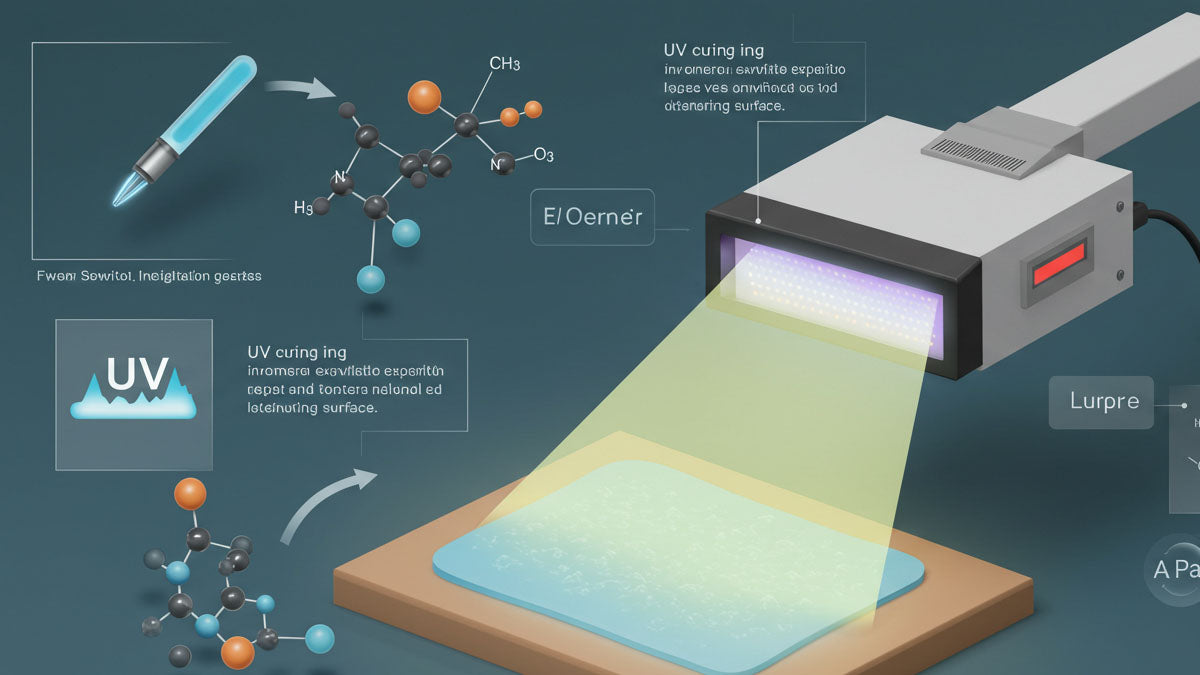
UV curing machines are critical assets in modern manufacturing environments, especially in industries like electronics, automotive coatings, medical device production, and high-precision printing. When one of these systems fails, production doesn’t just slow down—it often comes to a complete halt.
This is a real-world case study of how I diagnosed and repaired a high-value industrial UV curing machine that had suddenly stopped performing under production load. The machine was responsible for curing precision coatings on high-end components, and downtime was extremely costly.
What follows is a structured breakdown of the problem, diagnostic process, root cause analysis, repair strategy, and long-term stabilization measures.
1. Understanding the Machine and Its Importance
Before diving into the failure, it’s important to understand what kind of system we were dealing with.
The UV curing machine in this case included:
-
High-intensity UV LED curing arrays
-
Conveyor-based transport system
-
PLC-based control unit
-
Cooling system (air + liquid hybrid)
-
Optical sensors for product detection
-
Power regulation modules
Its job was simple in concept but complex in execution: expose coated parts to controlled UV light at precise intensity and duration to ensure proper curing without overheating or under-curing.
Any deviation in intensity, timing, or conveyor speed could result in defective output.
2. The Initial Problem: Sudden Drop in Curing Performance
The issue started subtly.
Operators reported:
-
Incomplete curing on surfaces
-
Sticky or uneven coating texture
-
Increased rejection rate
-
Inconsistent results across batches
Within 48 hours, the problem escalated:
-
Entire batches failed quality inspection
-
Production speed had to be reduced
-
Machine alarms appeared intermittently
At this stage, the machine was still running—but clearly not functioning correctly.
3. First Response: Eliminating Obvious Causes
Whenever a UV curing system fails, the first step is to rule out basic issues.
3.1 UV Lamp Degradation
Even though this system used UV LEDs rather than traditional mercury lamps, degradation was still possible.
We checked:
-
LED output intensity levels
-
Operating hours of curing modules
-
Uniformity across arrays
Result:
Output degradation was minimal and within acceptable limits.
3.2 Conveyor Speed Verification
If the conveyor runs too fast, curing time becomes insufficient.
We tested:
-
Motor speed consistency
-
Encoder accuracy
-
PLC speed commands
Result:
Conveyor speed was stable and matched configured parameters.
3.3 Power Supply Stability
UV systems are highly sensitive to voltage fluctuations.
We measured:
-
Input voltage stability
-
Driver output consistency
-
Ripple noise levels
Result:
Power delivery was stable and clean.
At this point, we knew the issue was not obvious. We needed deeper diagnostics.
4. The Turning Point: Observing Subtle Pattern Failures
Instead of focusing on single components, we shifted to system behavior.
We noticed something important:
-
Defects were worse in the center of the conveyor
-
Edge products were curing more consistently
-
Performance varied depending on production load
This indicated a thermal or optical distribution issue, not a simple hardware failure.
5. Deep Diagnostic Phase
We began structured system-level testing across four domains:
5.1 UV Intensity Mapping
Using a calibrated UV sensor, we mapped intensity across the curing zone.
Findings:
-
Center zone showed 18–25% lower intensity
-
Edge zones were within normal range
-
Variation increased under continuous operation
This was a critical clue.
5.2 Thermal Imaging Analysis
We used a thermal camera to inspect operating conditions.
Findings:
-
Central LED modules were running significantly hotter
-
Cooling airflow was uneven
-
Heat accumulation correlated with low UV output zones
This suggested thermal throttling or heat-related degradation.
5.3 Airflow Distribution Check
The machine used forced air cooling combined with heat sinks.
We discovered:
-
Dust buildup inside intake vents
-
Reduced airflow in central duct channels
-
Fan performance slightly degraded but not failed
This created uneven cooling across UV modules.
5.4 Optical Path Inspection
We examined:
-
Protective quartz glass panels
-
Reflective surfaces inside curing chamber
-
Dust and micro-debris accumulation
We found:
-
A thin haze layer on central optical surfaces
-
Reduced light transmission efficiency
This was a major contributor.
6. Root Cause Analysis
After combining all data, the root cause was clear:
Primary Cause:
Uneven thermal buildup leading to localized UV intensity degradation
Secondary Causes:
-
Dust accumulation on optical surfaces
-
Reduced airflow efficiency in central cooling channels
-
Thermal throttling of LED modules
System-Level Issue:
A maintenance gap in airflow and optical cleaning routines, not a single component failure.
7. Repair Strategy: Multi-Layer Restoration Approach
Instead of replacing expensive components immediately, we implemented a layered repair strategy.
7.1 Optical System Restoration
We performed:
-
Deep cleaning of quartz protective glass
-
Removal of micro-debris from reflective surfaces
-
Alcohol-based non-abrasive cleaning of optical paths
Result:
-
Immediate 8–12% improvement in UV transmission
7.2 Cooling System Recovery
We addressed airflow issues:
-
Full cleaning of air intake filters
-
Replacement of partially degraded fan units
-
Rebalancing of airflow channels
-
Sealing minor duct leaks
Result:
-
Temperature distribution normalized across curing zone
7.3 UV Module Recalibration
After thermal stability was restored:
-
LED intensity recalibration
-
Output uniformity adjustment via PLC settings
-
Re-mapping of curing zones
Result:
-
Even UV distribution restored across conveyor width
7.4 Control System Fine-Tuning
We adjusted:
-
Exposure timing compensation
-
Conveyor synchronization offset
-
Dynamic power regulation thresholds
This ensured stability under different production loads.
8. Post-Repair Testing Phase
We ran controlled production tests across three conditions:
8.1 Low Load Test
-
Stable curing achieved
-
No visible defects
-
Temperature remained consistent
8.2 Medium Load Test
-
Slight initial variation observed
-
System self-stabilized after 20 minutes
-
Output quality normalized
8.3 Full Production Load Test
-
Consistent curing across all zones
-
No hotspot formation
-
Defect rate returned to baseline (<1%)
9. Final Outcome
After full restoration:
-
Machine returned to full production capacity
-
UV intensity uniformity restored
-
Cooling system efficiency improved by ~30%
-
Defect rate reduced significantly
-
No further instability observed over extended run
Most importantly, the machine was saved from unnecessary major component replacement, resulting in substantial cost savings.
10. Key Lessons Learned from This Repair
This case highlighted several important engineering principles.
10.1 UV Systems Fail Gradually, Not Suddenly
Even when symptoms appear sudden, root causes often develop slowly:
-
Dust accumulation
-
Thermal inefficiency
-
Gradual optical degradation
10.2 Thermal Management Is Everything
In UV curing systems:
-
Heat affects light output
-
Cooling imbalance creates performance inconsistency
-
Small airflow issues can create large curing defects
10.3 Optical Contamination Is Often Overlooked
Even microscopic layers of dust or haze can:
-
Reduce UV transmission
-
Create uneven curing zones
-
Mimic LED failure symptoms
10.4 System Thinking Beats Component Thinking
The real issue was not:
-
LEDs failing
-
PLC malfunctioning
-
Conveyor misalignment
It was a system-level imbalance between heat, airflow, and optics.
11. Preventive Maintenance Improvements Implemented
After repair, we upgraded the maintenance strategy:
11.1 Weekly Optical Cleaning Protocol
-
Scheduled cleaning of UV windows
-
Anti-static wipe procedures
-
Contamination inspection checklist
11.2 Airflow Health Monitoring
-
Fan performance tracking
-
Air pressure differential checks
-
Filter replacement scheduling
11.3 Thermal Mapping Routine
-
Monthly infrared scanning
-
Hotspot detection logs
-
Cooling efficiency benchmarking
11.4 UV Output Calibration Schedule
-
Quarterly intensity mapping
-
Sensor-based recalibration
-
Uniformity verification tests
12. Why This Repair Was a Turning Point
This case changed how we approached UV curing systems.
Instead of treating them as:
“machines that fail and get repaired”
We began treating them as:
“dynamic systems that must be continuously balanced”
This shift improved uptime, reduced emergency repairs, and extended equipment lifespan significantly.
13. Final Thoughts
Repairing a high-value UV curing machine is rarely about replacing a single faulty part. It is about understanding how light, heat, airflow, and control systems interact in a tightly coupled environment.
In this case, the failure was not dramatic—it was systemic. And the solution was not a single fix—it was a coordinated restoration of balance.
What initially looked like a serious machine failure turned out to be a preventable maintenance gap in thermal and optical management.
The biggest takeaway is simple:
When high-precision equipment fails, the root cause is often not where the symptoms appear. Real expertise lies in tracing the system back to its balance point—and restoring it carefully, layer by layer.