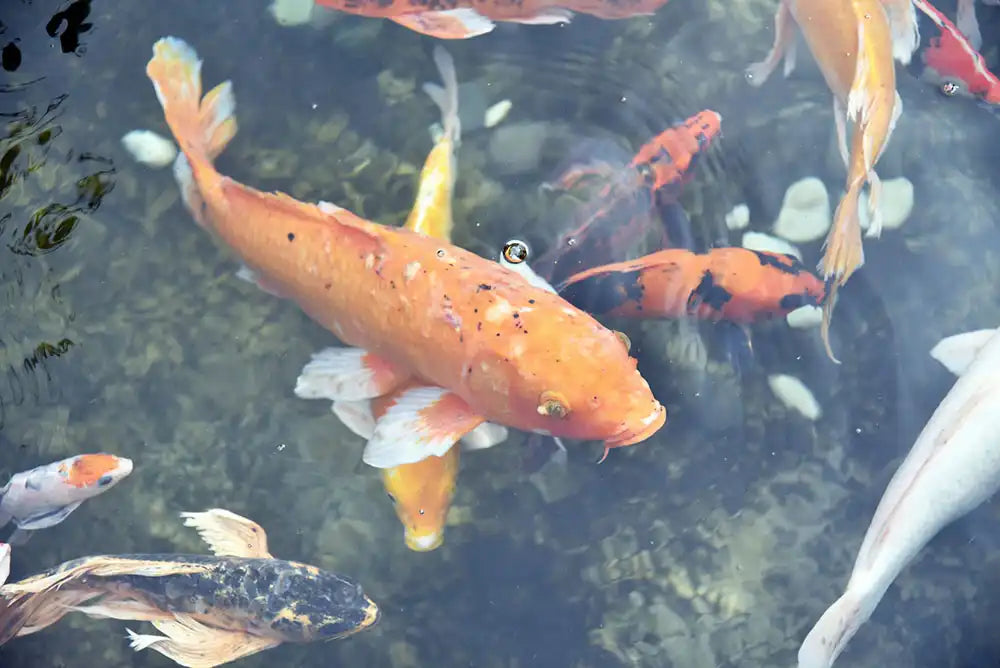
Koi keeping is both a science and an art.
For many pond enthusiasts, few things are more rewarding than watching koi develop vibrant colors, strong body structure, healthy skin quality, and graceful movement over time. While genetics play a major role in determining a koi’s potential appearance, environmental conditions strongly influence how that potential is expressed.
Among all environmental factors, water quality has one of the most powerful effects on koi coloration.
Experienced koi keepers often notice that the same bloodline of koi may develop very differently depending on where the fish are raised. A koi grown in one region may display deep, rich beni and bright shiroji, while the same variety raised elsewhere may develop softer colors, darker skin tones, or less defined patterns.
One of the biggest reasons for these differences lies in water hardness.
The balance between hard water and soft water significantly affects:
-
Skin quality
-
Pigment development
-
Color intensity
-
Luster
-
Growth rate
-
Scale appearance
-
Overall body condition
Understanding how regional water characteristics influence koi appearance allows pond owners to make smarter management decisions and better support the long-term beauty of their fish.
This guide explores the science behind hard and soft water, how mineral content affects koi coloration, why Japanese mud ponds produce unique results, and how hobbyists can optimize water conditions for healthier and more vibrant koi.
What Is Water Hardness?
Water hardness refers to the concentration of dissolved minerals in water, especially calcium and magnesium.
Generally, water falls into two categories:
Hard Water
Hard water contains higher concentrations of dissolved minerals.
It typically has:
-
Higher calcium levels
-
Higher magnesium levels
-
Greater mineral buffering capacity
-
Higher alkalinity stability
Soft Water
Soft water contains lower concentrations of dissolved minerals.
It often has:
-
Lower mineral content
-
Lower alkalinity
-
Reduced buffering capacity
-
Softer chemical composition
Water hardness varies dramatically by region depending on local geology and water sources.
Why Water Hardness Matters for Koi
Koi constantly interact with their surrounding water through:
-
Skin
-
Gills
-
Osmoregulation
-
Mineral exchange
-
Metabolic processes
Unlike terrestrial animals, fish live entirely immersed in their environment.
This means water chemistry directly affects biological function and physical appearance.
Mineral content influences:
-
Skin texture
-
Pigment stability
-
Scale quality
-
Metabolism
-
Stress response
-
Immune function
Over time, water conditions can significantly shape how koi colors develop and mature.
Understanding the Main Koi Colors
To understand how water affects koi coloration, it helps to understand the major color elements found in koi varieties.
Beni (Red)
The red pigment found in Kohaku, Sanke, Showa, and many other varieties.
Shiroji (White)
The bright white skin base considered highly valuable in many koi.
Sumi (Black)
Black pigmentation that develops differently depending on genetics and environment.
Metallic Luster
Reflective shine seen in metallic and hikari varieties.
Each of these elements responds differently to water conditions.
Why Soft Water Is Famous in Japanese Koi Culture
Many legendary Japanese koi farms are located in regions with naturally soft mountain water.
Soft water has become closely associated with high-end koi development because it often enhances:
-
Skin softness
-
Bright white coloration
-
Elegant beni quality
-
Smooth skin texture
-
Refined overall appearance
Japanese mud ponds frequently receive snowmelt and mountain runoff with relatively low mineral content.
This environment contributes to the famous skin quality seen in many top Japanese koi.
How Soft Water Influences Shiroji
Shiroji refers to the clean white skin areas on koi.
In high-quality koi, shiroji should appear:
-
Bright
-
Snow-white
-
Luminous
-
Smooth
-
Clean
Soft water often helps enhance white skin quality because lower mineral levels reduce yellowing and skin heaviness.
Many hobbyists notice that koi raised in soft water develop:
-
Cleaner white areas
-
Softer visual texture
-
Greater skin translucency
This is especially valued in varieties like:
-
Kohaku
-
Taisho Sanke
-
Platinum Ogon
-
Shiro Utsuri
Why Beni Develops Differently in Soft Water
Beni development is highly sensitive to environmental conditions.
Soft water often produces beni that appears:
-
Softer
-
More even
-
Smoother
-
More refined
However, extremely soft water may sometimes reduce the thickness or intensity of red pigment over time if not managed carefully.
The goal is balance rather than extreme softness.
Hard Water and Stronger Pigment Development
Hard water often creates different visual effects.
Higher mineral content may encourage:
-
Thicker skin appearance
-
Stronger pigment density
-
Deeper sumi development
-
More robust body growth
In some cases, hard water can intensify red coloration temporarily.
However, excessive hardness may also reduce the elegant skin softness prized in show-quality koi.
Why Sumi Often Reacts Strongly to Hard Water
Sumi development can change dramatically depending on water conditions.
Many hobbyists observe that black pigment becomes:
-
Darker
-
Heavier
-
More aggressive
-
Faster developing
in harder water environments.
This can benefit certain varieties such as:
-
Showa
-
Utsuri
-
Hi Utsuri
-
Kindai Showa
However, overly hard water may sometimes cause sumi to appear coarse or overly dominant.
How Calcium Influences Koi Skin Quality
Calcium plays multiple roles in koi physiology.
Appropriate calcium levels support:
-
Bone development
-
Scale structure
-
Osmoregulation
-
Muscle function
However, excessively high calcium concentrations may affect skin appearance by creating a thicker or less refined texture.
Balanced mineral levels remain important.
Magnesium and Pigment Stability
Magnesium contributes to various metabolic functions.
In moderate levels, it supports healthy biological processes.
Extreme mineral imbalances, however, may contribute to stress or inconsistent pigment development.
Stable water chemistry matters more than chasing specific numbers aggressively.
The Role of KH and GH in Koi Ponds
Water hardness discussions often involve two important measurements.
GH (General Hardness)
Measures dissolved calcium and magnesium.
KH (Carbonate Hardness)
Measures buffering capacity and pH stability.
Both influence pond stability and koi health.
Stable KH helps prevent dangerous pH swings that can stress koi and affect coloration indirectly.
Why Stable Water Is More Important Than Perfect Water
Many beginners focus excessively on achieving ideal numbers.
In reality, stability matters more than chasing perfection.
Frequent changes in:
-
pH
-
hardness
-
mineral content
-
alkalinity
can stress koi significantly.
Stress negatively affects:
-
Color quality
-
Immune function
-
Appetite
-
Growth
-
Skin condition
Consistent conditions usually outperform unstable “perfect” conditions.
Regional Water Differences Around the World
Different regions naturally produce different water chemistry profiles.
Mountain Regions
Often produce softer water with lower mineral content.
Limestone Regions
Usually create harder water rich in calcium.
Urban Municipal Systems
May vary depending on treatment methods and reservoir sources.
Well Water
Can range from extremely hard to surprisingly soft depending on underground geology.
Understanding local water characteristics helps guide pond management decisions.
Why the Same Koi Looks Different in Different Countries
Koi imported internationally often change appearance after relocation.
This surprises many hobbyists.
Environmental differences may alter:
-
Skin brightness
-
Color depth
-
Sumi development
-
Growth patterns
A koi raised in Japan may look different after several years in Europe, Southeast Asia, or North America due to local water chemistry.
How Hard Water Affects Metallic Koi
Metallic koi varieties rely heavily on reflective skin quality.
Hard water may sometimes reduce the smooth brilliance of metallic shine.
Soft to moderately soft water often enhances:
-
Metallic luster
-
Reflectivity
-
Smooth skin appearance
Varieties affected include:
-
Platinum Ogon
-
Yamabuki Ogon
-
Kujaku
-
Hariwake
Water Clarity and Color Perception
Water quality also affects how colors are visually perceived.
High dissolved minerals may slightly influence:
-
Water clarity
-
Light penetration
-
Reflection patterns
This changes how koi colors appear to the human eye.
Even excellent koi may look different under varying water conditions.
The Relationship Between Water Hardness and Growth
Water chemistry affects growth indirectly through:
-
Stress levels
-
Metabolism
-
Appetite
-
Osmoregulation
Moderately harder water sometimes supports stronger body growth.
Softer water may emphasize elegance and skin quality over rapid bulk development.
Different keepers prioritize different outcomes.
Why Japanese Breeders Use Mud Ponds
Mud ponds create highly natural environments for koi development.
Benefits often include:
-
Stable temperature
-
Natural minerals
-
Rich microbial ecosystems
-
Improved skin quality
-
Enhanced body development
Many mud ponds contain relatively soft water combined with natural trace minerals.
This combination supports unique color refinement.
Trace Minerals and Color Enhancement
Beyond calcium and magnesium, trace minerals may also influence koi appearance.
Elements such as:
-
Iron
-
Potassium
-
Sodium
-
Silica
can subtly affect biological function and pigmentation.
However, excessive supplementation can become harmful.
Balanced ecosystems remain safer than aggressive manipulation.
Why Sudden Water Changes Can Damage Color Quality
Large abrupt water changes may shock koi.
Rapid hardness shifts can disrupt:
-
Osmoregulation
-
Skin condition
-
Stress balance
Color deterioration sometimes follows major environmental instability.
Gradual adjustments are safer.
Can Hard Water Cause Yellowing?
In some cases, excessive minerals may contribute to dull or yellowish white skin tones.
This is especially noticeable in varieties requiring brilliant white skin.
High organic waste combined with mineral-heavy water may worsen discoloration.
Strong filtration and maintenance help reduce these risks.
Soft Water and Skin Transparency
One famous characteristic of soft water is improved skin translucency.
High-quality koi often display skin that appears:
-
Deep
-
Glowing
-
Layered
-
Almost translucent
Soft water environments frequently enhance this visual effect.
Why Some Hobbyists Blend Water Sources
Advanced koi keepers sometimes blend:
-
Well water
-
Reverse osmosis water
-
Municipal water
-
Rainwater
to create balanced hardness levels.
This allows greater control over mineral composition.
However, blending requires careful monitoring.
Reverse Osmosis Systems in Koi Keeping
Some hobbyists use reverse osmosis systems to soften extremely hard water.
RO systems remove many dissolved minerals.
Benefits may include:
-
Cleaner shiroji
-
Reduced mineral buildup
-
Better skin softness
However, completely demineralized water becomes unstable and unsafe.
Remineralization is often necessary.
Why Rainwater Alone Is Usually Not Ideal
Rainwater is naturally soft but often lacks mineral stability.
Pure rainwater may cause:
-
pH instability
-
Low buffering capacity
-
Dangerous fluctuations
Most ponds benefit from balanced mineral support rather than extreme softness.
How pH Interacts with Water Hardness
Harder water often stabilizes higher pH levels.
Soft water tends to experience more pH fluctuation.
Stable pH supports healthier koi and better long-term color development.
Extreme pH instability creates stress that negatively affects pigmentation.
Stress and Color Loss
Stress strongly affects koi appearance.
Stressed koi may display:
-
Faded beni
-
Weak sumi
-
Dull skin
-
Reduced luster
Water instability is one of the most common stress sources.
Balanced water chemistry helps preserve vibrant coloration.
Why Young Koi React Differently Than Mature Koi
Juvenile koi often respond more dramatically to environmental changes.
Young fish are still developing:
-
Pigment structure
-
Skin quality
-
Body shape
Water conditions during early development may influence long-term appearance significantly.
Seasonal Changes in Water Chemistry
Seasonal factors influence water conditions naturally.
Rainfall, evaporation, temperature, and source water changes may alter hardness levels throughout the year.
Monitoring seasonal patterns helps maintain consistency.
The Importance of Water Testing
Regular testing helps hobbyists understand their pond environment.
Important parameters include:
-
GH
-
KH
-
pH
-
Ammonia
-
Nitrite
-
Nitrate
-
Temperature
Consistent monitoring prevents gradual problems from developing unnoticed.
Common Mistakes When Adjusting Water Hardness
Many beginners overcorrect water chemistry.
Common mistakes include:
-
Rapid hardness adjustments
-
Excessive mineral additives
-
Ignoring pH stability
-
Chasing internet “ideal” numbers
-
Overusing chemical treatments
Slow, measured changes are safer for koi health.
How Filtration Influences Water Chemistry
Filtration systems indirectly affect hardness and stability.
Biological filtration supports healthier water balance by reducing:
-
Organic waste
-
Ammonia stress
-
Dissolved pollutants
Clean stable water enhances color development regardless of hardness level.
The Role of Diet in Color Development
Water chemistry is only one part of coloration.
Nutrition also plays a major role.
High-quality diets support:
-
Pigment production
-
Skin health
-
Immune function
-
Growth
Even ideal water cannot fully compensate for poor nutrition.
Sunlight and Water Conditions Together Influence Color
Natural sunlight affects pigment development strongly.
Combined with proper water conditions, sunlight may improve:
-
Beni depth
-
Skin brightness
-
Metallic shine
However, excessive UV exposure and overheating can create stress.
Balanced pond design remains important.
Why There Is No Universal “Perfect” Water Type
Different koi varieties respond differently to water conditions.
Some koi may look better in:
-
Softer water
-
Slightly harder water
-
Moderately mineralized environments
Additionally, individual genetics influence environmental response significantly.
There is no single formula suitable for every pond.
Building the Best Water Conditions for Your Goals
The ideal pond environment depends partly on keeper priorities.
For Maximum Skin Refinement
Softer stable water may help.
For Strong Body Growth
Moderate mineral support may benefit development.
For Sumi Enhancement
Slightly harder water sometimes supports stronger black pigment.
Balance is key.
Long-Term Stability Produces the Best Results
The highest-quality koi environments usually emphasize consistency.
Stable ponds support:
-
Better growth
-
Reduced stress
-
Improved immunity
-
More predictable color development
Extreme adjustments often create more harm than benefit.
Final Thoughts
Water hardness plays a major role in shaping koi appearance, skin quality, pigment development, and overall health.
Soft water often enhances refined skin texture, luminous shiroji, and elegant beni, while harder water may strengthen body development and intensify sumi expression.
However, successful koi keeping is not about choosing between extreme softness or extreme hardness.
It is about creating stable, balanced water conditions that support the long-term health and natural beauty of the fish.
Regional water characteristics will always influence how koi develop, which is why the same bloodline may look dramatically different when raised in different environments around the world.
By understanding local water chemistry, monitoring pond stability carefully, maintaining proper filtration, and avoiding sudden changes, koi keepers can create healthier ecosystems that allow their fish to reach their full visual potential.
In the end, beautiful koi are not shaped by genetics alone.
They are shaped by the water they live in every single day.