In today’s world, headphones and hearing aids are no longer optional accessories. They are deeply woven into daily life—used for work calls, entertainment, travel, exercise, and essential hearing support. These devices sit directly in or against the ear, one of the most sensitive and vulnerable parts of the human body.
Yet despite their importance, headphones and hearing aids are often overlooked when it comes to hygiene. Many users clean them only when they look dirty, if at all. What remains invisible, however, is a complex ecosystem of bacteria, fungi, moisture, and skin oils that builds up over time.
This is where UV sanitizing lights are redefining how we protect private hearing devices. By offering fast, chemical-free, and highly targeted disinfection, UV technology provides a modern solution to a growing but underestimated hygiene problem.
This in-depth guide explores the hidden risks associated with headphones and hearing aids, why traditional cleaning methods fall short, and how UV sanitization is becoming a critical tool for protecting ear health in the post-pandemic era.
1. Why Hearing Devices Require a Higher Level of Hygiene
1.1 The Ear: A Warm, Moist, and Sensitive Environment
The human ear canal is:
-
Warm
-
Humid
-
Rich in natural oils
These conditions make it ideal for microbial growth. When headphones or hearing aids are inserted repeatedly, they introduce external contaminants directly into this sensitive environment.
Unlike hands or surfaces, the ear canal is not easily washed or disinfected, making prevention especially important.
1.2 Daily, Prolonged Contact with Skin
Hearing devices are often worn:
-
For hours at a time
-
Multiple times per day
-
During physical activity
This prolonged contact increases the transfer of:
-
Sweat
-
Dead skin cells
-
Earwax
-
Environmental bacteria
Over time, contamination accumulates even if devices appear clean.
2. Common Microorganisms Found on Headphones and Hearing Aids
Scientific research and laboratory testing have identified a range of microorganisms commonly found on personal audio devices, including:
-
Staphylococcus aureus
-
Pseudomonas aeruginosa
-
E. coli
-
Candida (yeast)
-
Mold spores
These microorganisms are associated with:
-
Ear infections
-
Skin irritation
-
Itching and inflammation
-
Unpleasant odors
For hearing aid users—many of whom are older adults or individuals with compromised health—these risks are even more significant.
3. Headphones: Convenience Comes with Hidden Risks
3.1 In-Ear vs. Over-Ear Designs
Different headphone styles present different hygiene challenges:
In-ear headphones (earbuds):
-
Enter the ear canal directly
-
Trap moisture
-
Are difficult to clean thoroughly
Over-ear and on-ear headphones:
-
Contact skin and hair
-
Absorb sweat through ear pads
-
Accumulate oils and debris
Both types can harbor bacteria if not properly maintained.
3.2 Modern Usage Patterns Increase Exposure
Today’s headphones are used for:
-
Remote work and virtual meetings
-
Long commutes
-
Fitness and outdoor activities
-
Gaming sessions lasting hours
Extended use without cleaning significantly increases microbial buildup.
4. Hearing Aids: Medical Devices with Unique Hygiene Needs
4.1 Why Hearing Aids Are Especially Vulnerable
Hearing aids are:
-
Worn daily, often all day
-
Placed deep in or behind the ear
-
Exposed to moisture and earwax
Because they are medical-grade devices, hygiene directly impacts performance and user health.
4.2 The Consequences of Poor Hearing Aid Hygiene
Insufficient cleaning can lead to:
-
Reduced sound quality
-
Device malfunction
-
Increased repair costs
-
Ear canal infections
For hearing aid users, cleanliness is not just about comfort—it is about maintaining hearing health and device longevity.
5. Why Traditional Cleaning Methods Are Not Enough
5.1 Wiping with Cloths or Tissues
Many users rely on dry wiping, which:
-
Removes visible dirt
-
Does not eliminate microorganisms
-
Leaves bacteria in crevices
This method offers cosmetic cleaning, not true disinfection.
5.2 Alcohol and Chemical Cleaners
Alcohol wipes and sprays can:
-
Damage sensitive electronics
-
Dry out plastics and silicone
-
Irritate skin
For hearing aids in particular, moisture and chemicals pose a serious risk.
5.3 Soap and Water: Often Not an Option
Water-based cleaning:
-
Is unsafe for electronics
-
Requires drying time
-
Risks internal damage
As a result, many users clean less frequently than recommended.
6. Understanding UV Sanitizing Technology
6.1 What Is UV Light?
Ultraviolet (UV) light is part of the electromagnetic spectrum. UV-C light, with wavelengths between 200 and 280 nanometers, is known for its germicidal properties.
6.2 How UV Light Neutralizes Microorganisms
UV-C light works by:
-
Penetrating bacterial and viral cells
-
Damaging DNA and RNA
-
Preventing reproduction
Once exposed, microorganisms become inactive and unable to cause infection.
6.3 Why UV Is Ideal for Hearing Devices
UV sanitization:
-
Requires no liquids
-
Leaves no residue
-
Works at room temperature
-
Reaches small crevices
These characteristics make it perfectly suited for delicate electronic devices.
7. UV Sanitization for Headphones
7.1 Targeting High-Risk Areas
UV light effectively disinfects:
-
Earbud tips
-
Speaker grills
-
Silicone and foam covers
These areas are difficult to clean manually and are in direct contact with skin.
7.2 Recommended UV Routine for Headphones
-
Remove visible debris
-
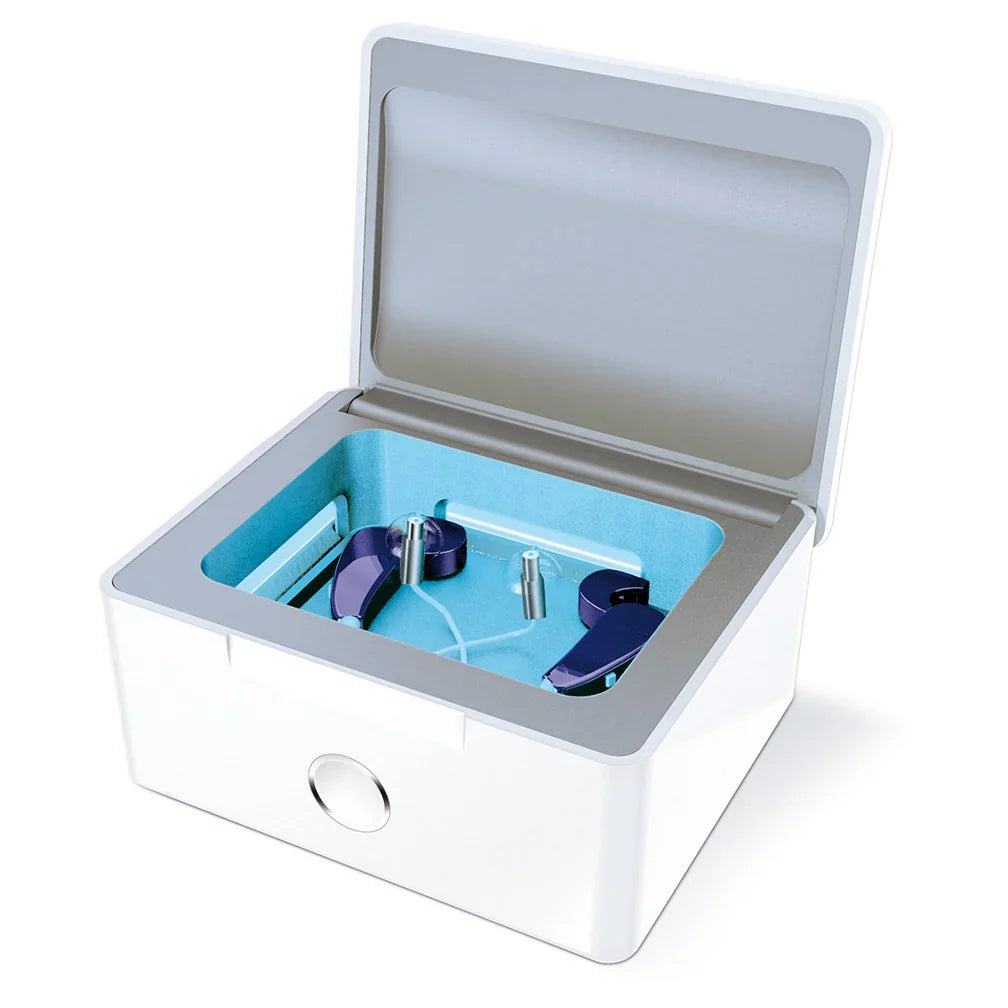
Place headphones in a UV sterilizing box
-
Run a full disinfection cycle
-
Store in a clean case
Regular UV treatment helps prevent odor buildup and skin irritation.
8. UV Sanitization for Hearing Aids
8.1 Professional-Grade Hygiene at Home
UV sanitizers designed for hearing aids:
-
Disinfect without heat
-
Protect electronic components
-
Reduce moisture-related issues
This mirrors the sanitation methods used in audiology clinics.
8.2 Supporting Device Performance and Longevity
Consistent UV disinfection:
-
Reduces microbial buildup
-
Minimizes corrosion risk
-
Maintains sound clarity
For hearing aid users, UV sanitation supports both health and investment protection.
9. Moisture Control and UV: A Powerful Combination
Many UV sterilizing devices also address moisture, which is a major contributor to hearing device problems.
Benefits include:
-
Reduced mold growth
-
Lower odor formation
-
Improved comfort
Moisture control enhances the effectiveness of UV disinfection.
10. UV Sanitizing Devices: Boxes, Chambers, and Cases
10.1 UV Sanitizer Boxes
Enclosed UV boxes offer:
-
Even light distribution
-
Automatic timers
-
Safe, hands-free operation
They are ideal for daily home use.
10.2 Portable UV Cases
Portable cases allow:
-
Sanitization while traveling
-
On-the-go hygiene maintenance
-
Protection between uses
These devices integrate seamlessly into modern lifestyles.
11. Safety Considerations for UV Use
11.1 Protecting Skin and Eyes
Direct exposure to UV-C light can be harmful. Safe use includes:
-
Fully enclosed devices
-
Automatic shut-off features
-
Following manufacturer instructions
When used properly, UV sanitizers are safe for household use.
11.2 Material Compatibility
UV light does not:
-
Melt plastics
-
Degrade silicone
-
Affect metal components
This makes it safe for repeated use on hearing devices.
12. Who Benefits Most from UV Sanitization of Hearing Devices?
UV sanitization is especially valuable for:
-
Daily headphone users
-
Athletes and fitness enthusiasts
-
Remote workers
-
Hearing aid users
-
Elderly individuals
For these groups, prevention reduces discomfort, infections, and device issues.
13. UV Sanitization vs. Traditional Cleaning Methods
| Method | Electronics Safe | Chemical-Free | Depth of Disinfection | Ease of Use |
|---|---|---|---|---|
| Dry Wiping | Yes | Yes | Low | High |
| Alcohol Cleaning | Limited | No | Moderate | Moderate |
| Soap & Water | No | Yes | High | Low |
| UV Sanitization | Yes | Yes | High | High |
UV technology fills a critical gap between safety and effectiveness.
14. The Growing Role of UV in Personal Health Technology
As awareness of hygiene grows, UV sanitization is increasingly adopted across:
-
Medical devices
-
Personal electronics
-
Wearable technology
What was once hospital-grade equipment is now accessible for everyday home use.
Conclusion: Protecting What You Hear Starts with What You Clean
Headphones and hearing aids are among the most personal devices we own. They touch sensitive skin, sit inside the ear, and accompany us through every part of the day. Yet they are also exposed to moisture, bacteria, and environmental contaminants that can quietly compromise health and comfort.
UV sanitizing lights offer a modern, effective, and gentle solution. By eliminating microorganisms without heat or chemicals, UV technology protects both the user and the device.
In a world where personal health and technology are increasingly connected, proper hygiene is not optional—it is essential. UV sanitization ensures that the devices that bring sound into your life do so safely, comfortably, and reliably.