In modern manufacturing, production speed is no longer the only measure of operational performance. Manufacturers also need to improve throughput, maintain consistent quality, reduce waste, control energy consumption, and respond quickly to changing customer demands. As production environments become more competitive, technologies that can shorten processing times while improving product consistency are becoming increasingly valuable.
One technology that has transformed many manufacturing processes is ultraviolet, or UV, curing.
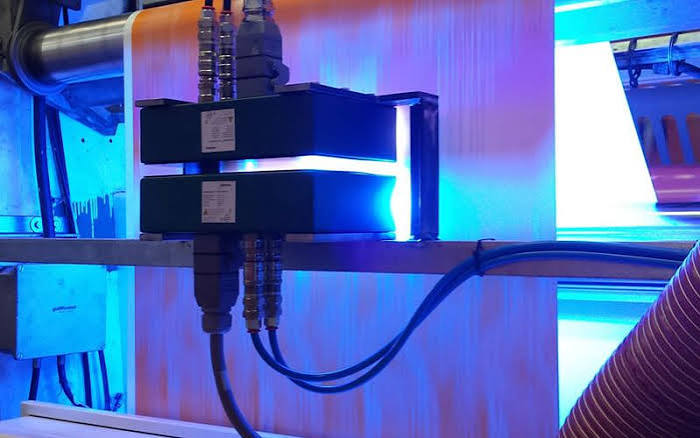
Industrial-grade UV curing systems use controlled UV energy to rapidly cure specially formulated coatings, inks, adhesives, resins, and other materials. Unlike conventional thermal curing methods that may require ovens, extended heating cycles, or long waiting periods, UV curing can complete certain curing processes in seconds—or even fractions of a second—when the material and system are properly matched.
This speed can have a major impact on manufacturing efficiency.
From printing and electronics to automotive components, woodworking, packaging, medical devices, flooring, and advanced industrial assembly, manufacturers are increasingly evaluating UV curing technology as a way to streamline production lines and improve process control.
But simply installing a UV lamp does not automatically create a faster factory. The real benefits come from selecting the right industrial UV curing system, integrating it correctly into the production line, optimizing operating parameters, and maintaining the equipment properly.
This guide explains how industrial-grade UV curing systems can increase production speed and efficiency, what factors determine system performance, and how manufacturers can maximize the return on their investment.
What Is an Industrial UV Curing System?
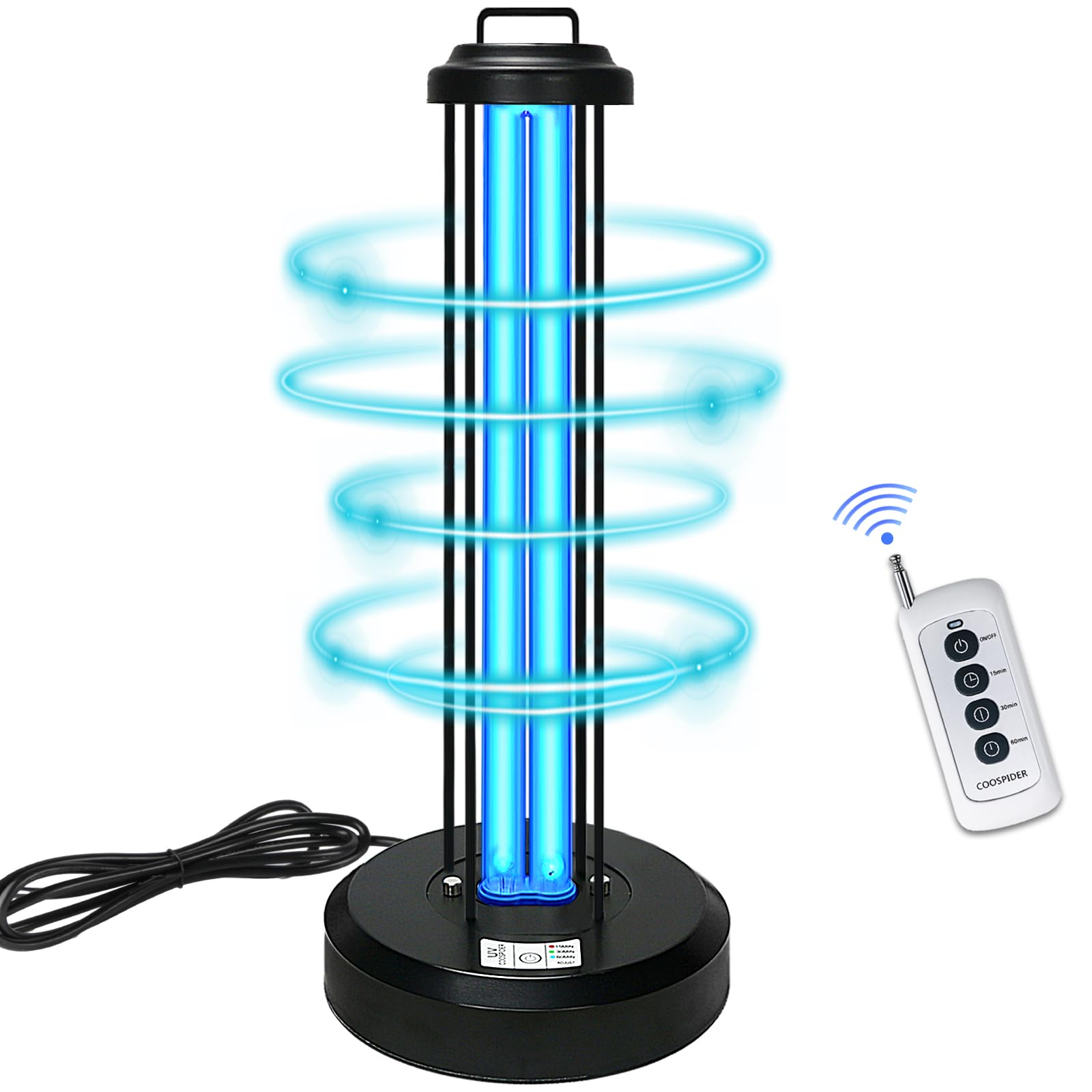
An industrial UV curing system is a specialized production technology designed to cure UV-reactive materials using ultraviolet radiation.
The process relies on photoinitiators contained within a UV-curable formulation. When the material is exposed to an appropriate wavelength and sufficient UV energy, a photochemical reaction begins. This reaction converts the liquid or semi-liquid material into a solid, durable polymer network.
Depending on the application, UV curing may be used for:
-
Industrial coatings
-
Printing inks
-
Adhesives
-
Protective finishes
-
Electronic encapsulation materials
-
Optical materials
-
Wood coatings
-
Plastic coatings
-
Composite materials
-
Flooring finishes
-
Metal coatings
-
Automotive components
-
Medical device components
-
Electronic assemblies
-
3D printing materials
Industrial systems are generally designed for continuous or high-volume manufacturing environments. They may use mercury-based UV lamps, metal-halide lamps, UV LED arrays, or hybrid configurations.
The system typically includes several key components:
-
UV light sources
-
Power supplies
-
Cooling systems
-
Reflectors or optical systems
-
Conveyor or material handling equipment
-
Control interfaces
-
Sensors
-
Safety interlocks
-
Monitoring systems
The combination of these components determines how effectively UV energy reaches the material and how consistently the curing process performs.
Why Production Speed Matters in Modern Manufacturing
Manufacturing efficiency affects much more than how quickly a product moves through a factory.
Production speed influences:
-
Overall equipment utilization
-
Labor productivity
-
Production capacity
-
Lead times
-
Inventory requirements
-
Factory floor space
-
Energy consumption
-
Order fulfillment
-
Customer satisfaction
-
Operating costs
A slow curing process can become a bottleneck even when every other stage of manufacturing is highly automated.
For example, imagine a coating line that can apply material to 1,000 components per hour but requires several hours for conventional curing. The curing stage may force manufacturers to use large drying rooms, racks, storage areas, or extended conveyor sections.
UV curing can dramatically reduce this limitation.
When a coating or adhesive can be cured immediately after application, the product can move directly to the next production stage.
This creates a concept often described as instant processing or on-demand curing.
Instead of waiting for a material to dry or thermally cure, manufacturers can potentially:
-
Apply the material.
-
Expose it to UV energy.
-
Cure it.
-
Inspect it.
-
Assemble it.
-
Package it.
The shorter the delay between these stages, the more efficiently the production line can operate.
1. Reduce Curing Time From Hours to Seconds
One of the most significant advantages of industrial UV curing is its rapid processing capability.
Traditional thermal curing may require materials to remain inside an oven for several minutes or even hours. Some formulations may also require cooling time before downstream processing.
UV curing works differently.
The curing reaction begins when the material receives sufficient UV energy. With a properly formulated coating or adhesive and a correctly designed curing system, the material can reach its required performance level very quickly.
In some applications, curing may take only a fraction of a second.
This creates enormous opportunities for high-speed production.
For example, a manufacturer producing coated plastic components might previously have needed:
-
Application equipment
-
Drying space
-
Heating equipment
-
Cooling time
-
Intermediate storage
-
Manual handling
A properly designed UV curing line can significantly shorten this sequence.
The result is not simply faster curing. It can mean a faster overall production cycle.
2. Increase Production Throughput
Throughput refers to how much finished product a manufacturing system can produce during a given period.
When curing becomes faster, production throughput can increase without necessarily expanding the physical size of the facility.
Consider a conveyor-based production line.
If the curing stage requires a long thermal tunnel, the conveyor may need to operate at a relatively slow speed to ensure adequate exposure.
With a high-intensity UV curing system, the required curing distance may be significantly shorter.
That allows the conveyor to operate faster while maintaining the necessary UV dose.
Higher conveyor speed can translate directly into higher production capacity.
However, manufacturers should not focus only on lamp intensity.
The actual curing performance depends on several factors:
-
UV intensity
-
UV dose
-
Wavelength
-
Exposure time
-
Material chemistry
-
Coating thickness
-
Substrate characteristics
-
Distance from the light source
-
Optical uniformity
-
Line speed
A system with extremely high intensity is not automatically better if the energy distribution is inconsistent or incompatible with the formulation.
The objective should be the correct UV energy delivered consistently across the entire product surface.
3. Eliminate Long Drying and Waiting Periods
Waiting time is one of the hidden sources of manufacturing inefficiency.
A product may technically be finished but still cannot move to the next stage because its coating, adhesive, or ink has not reached the required hardness.
This creates work-in-process inventory.
Products may need to be placed on racks, stored in controlled environments, or manually transferred between production areas.
UV curing can reduce these delays.
Once the material has received the required UV dose, the product can often proceed immediately to subsequent operations.
This creates a more continuous manufacturing flow.
Instead of:
Apply → Wait → Dry → Inspect → Move → Assemble
the process may become:
Apply → UV Cure → Inspect → Assemble
Reducing intermediate waiting time can improve factory organization and make production scheduling more predictable.
4. Support Faster Automated Production Lines
Automation is increasingly important in modern manufacturing.
Robotic arms, conveyor systems, automated inspection equipment, CNC machinery, and digital production controls all depend on predictable process times.
If one stage of production has highly variable curing times, it can disrupt the entire line.
Industrial UV curing systems can be integrated with automated manufacturing equipment to create synchronized processes.
For example, a production line may use sensors to detect when a component reaches the curing zone. The control system can then activate or adjust the UV exposure according to predefined production parameters.
This allows UV curing to become part of an automated process rather than a separate manual operation.
Advanced systems can incorporate:
-
Programmable power control
-
Conveyor speed synchronization
-
UV intensity monitoring
-
Dose monitoring
-
Temperature monitoring
-
Product detection
-
Automatic fault alerts
-
Safety interlocks
-
Recipe-based process control
These capabilities help manufacturers achieve more repeatable production.
5. Reduce Floor Space Requirements
Traditional curing systems can occupy significant amounts of factory space.
Thermal ovens may require:
-
Long heating chambers
-
Insulation
-
Ventilation
-
Exhaust systems
-
Cooling zones
-
Large conveyor sections
Products may also require additional floor space while waiting for curing or drying.
UV curing systems can be considerably more compact depending on the application.
A compact UV curing chamber or LED array may be installed directly above, beside, or around a conveyor.
This can reduce the physical footprint of the curing stage.
For manufacturers operating in expensive industrial facilities, saving floor space can have meaningful financial value.
The recovered space can potentially be used for:
-
Additional production equipment
-
Material storage
-
Packaging
-
Quality inspection
-
Automated assembly
-
Employee work areas
Compact curing technology is especially attractive when manufacturers want to increase output without constructing a larger facility.
6. Lower Energy Consumption in Appropriate Applications
Energy efficiency is another important consideration.
Thermal curing systems must often heat not only the coating or adhesive but also the surrounding air, equipment, and sometimes the product itself.
UV curing is primarily a photochemical process.
Instead of relying on prolonged heating, UV energy directly initiates the chemical reaction responsible for curing.
This can reduce unnecessary heat transfer in applications where UV-curable materials are suitable.
UV LED curing systems can offer additional advantages because LEDs can be switched on and off rapidly and can be designed to deliver UV energy precisely where it is required.
Unlike processes that keep a large oven at operating temperature for extended periods, an LED system can operate more selectively.
However, energy performance should always be evaluated at the system level.
Manufacturers should consider:
-
Electrical power consumption
-
Actual UV output
-
Production throughput
-
Operating hours
-
Cooling requirements
-
Maintenance requirements
-
Material consumption
-
Reject rates
A system that consumes slightly more electrical power but doubles throughput may still provide substantially better overall efficiency.
7. Improve Product Quality and Consistency
Speed alone is not enough.
If increasing production speed causes inconsistent curing, the manufacturer may experience more defects, returns, and rework.
A well-designed industrial UV curing system can improve process consistency by providing controlled and repeatable UV exposure.
Consistent curing can influence:
-
Surface hardness
-
Scratch resistance
-
Chemical resistance
-
Adhesion
-
Gloss
-
Color stability
-
Mechanical strength
-
Protective performance
For example, under-curing may leave a coating too soft or chemically vulnerable.
Overexposure may create unnecessary heat or affect the appearance and performance of certain materials.
The goal is therefore not simply maximum UV intensity.
The goal is controlled curing within the material manufacturer's recommended process window.
Modern UV systems can help operators maintain this window through real-time monitoring and programmable controls.
8. Reduce Defects and Rework
Every defective product consumes resources.
The manufacturer has already paid for:
-
Raw materials
-
Labor
-
Machine time
-
Electricity
-
Packaging
-
Transportation
-
Quality inspection
If the product must be recoated, repaired, or discarded, those costs increase further.
UV curing can help reduce defects when properly matched to the formulation and production process.
Common curing-related defects include:
-
Sticky surfaces
-
Poor adhesion
-
Uneven gloss
-
Incomplete polymerization
-
Surface defects
-
Cracking
-
Poor chemical resistance
-
Insufficient hardness
A properly engineered curing system provides more consistent UV dose and exposure.
That consistency can improve first-pass yield.
First-pass yield is especially important in high-volume manufacturing because even a small reduction in defect rates can produce substantial savings.
9. Enable Immediate Handling After Curing
Traditional coatings may remain vulnerable to fingerprints, scratches, dust, or deformation while they dry.
This can complicate automated handling.
Immediately cured surfaces can often be handled much sooner, depending on the formulation and performance requirements.
This is particularly valuable for:
-
Flat panels
-
Decorative components
-
Printed products
-
Electronics
-
Small precision components
-
Consumer products
-
Automotive trim
Immediate handling can also reduce the amount of protective packaging required between production stages.
That means fewer racks, trays, storage areas, and manual transfers.
10. Improve Manufacturing Flexibility
Modern factories need to adapt quickly.
Customers may request:
-
Smaller batches
-
More product variations
-
Faster delivery
-
Customized finishes
-
Frequent formulation changes
A rigid curing system can make these changes difficult.
Programmable UV curing systems offer greater flexibility.
Manufacturers can potentially adjust:
-
UV intensity
-
Exposure time
-
Conveyor speed
-
Lamp configuration
-
Curing recipes
-
Operating modes
Different products can be assigned different curing recipes.
This is particularly useful for facilities producing multiple products on the same production line.
Instead of redesigning the entire curing process every time the product changes, operators can select the appropriate validated process settings.
UV LED vs. Traditional UV Lamps
One of the most important decisions when choosing an industrial UV curing system is the type of light source.
Traditional systems often use arc lamps such as mercury-based lamps or other specialized UV lamps.
UV LED systems use semiconductor-based light sources.
Each technology has advantages depending on the application.
Traditional UV Lamps
Traditional UV lamps can provide broad-spectrum UV output and are widely used in many industrial processes.
They can be appropriate for:
-
Broad-spectrum curing
-
Thick coatings
-
Certain inks
-
Large-area applications
-
Existing industrial curing processes
However, they may require:
-
Warm-up time
-
Regular lamp replacement
-
Reflector maintenance
-
Cooling
-
More heat management
UV LED Systems
UV LED curing systems offer several advantages:
-
Instant on/off operation
-
Long operating life
-
Lower maintenance requirements
-
Reduced heat transfer in many applications
-
Precise wavelength selection
-
Compact design
-
High controllability
LED systems can be particularly attractive for manufacturers seeking high process control and lower maintenance.
However, UV LED curing is highly wavelength-specific.
A formulation designed for a conventional broad-spectrum lamp may not cure effectively under a particular LED wavelength.
Therefore, the material formulation and curing system must be evaluated together.
The Importance of UV Dose
One of the biggest mistakes in UV curing is focusing only on lamp power.
Manufacturers often ask:
“How powerful is the UV lamp?”
A more useful question is:
“How much usable UV energy reaches the product, and is that energy sufficient for the formulation?”
UV curing performance depends heavily on UV dose.
Dose is generally expressed as energy per unit area, such as mJ/cm² or J/cm².
A simplified relationship is:
UV Dose = UV Intensity × Exposure Time
For a conveyor system, exposure time is influenced by:
-
Conveyor speed
-
Curing zone length
-
Product position
-
Lamp configuration
Increasing intensity can increase dose.
Reducing conveyor speed can also increase dose.
But these variables should be optimized rather than adjusted blindly.
The formulation supplier should provide recommended curing conditions, and the curing system should be validated against those requirements.
Optimize the Distance Between the UV Source and Product
Distance can significantly affect curing performance.
As the distance between the UV source and the product increases, the amount of usable UV energy reaching the surface can decrease.
Therefore, the curing head should be positioned appropriately.
However, the closest possible distance is not always the best solution.
Manufacturers must consider:
-
Product geometry
-
Heat sensitivity
-
Working distance
-
Light distribution
-
Safety
-
Mechanical clearance
-
Cooling
-
Shadowing
The objective is to establish a stable curing zone where the product receives the required UV dose across the relevant surface.
Address Shadowing and Complex Product Geometry
UV light generally requires direct or appropriate optical exposure.
Complex components may contain:
-
Recesses
-
Grooves
-
Cavities
-
Overlapping parts
-
Vertical surfaces
-
Internal channels
These areas can receive less UV energy than exposed surfaces.
This creates a potential under-curing problem.
Industrial curing systems can address complex geometries using:
-
Multiple lamp positions
-
Reflectors
-
Rotating fixtures
-
Multi-axis movement
-
Specialized LED arrays
-
Multiple exposure stages
For automated production, fixture design can be just as important as lamp selection.
A product should be positioned consistently so that critical surfaces receive predictable exposure.
Control Heat During High-Speed UV Curing
Although UV curing can reduce the need for prolonged thermal processing, UV energy can still generate heat.
This matters when curing:
-
Thin plastics
-
Electronic components
-
Sensitive adhesives
-
Films
-
Optical components
-
Heat-sensitive substrates
Industrial UV systems may use:
-
Air cooling
-
Water cooling
-
Heat sinks
-
Forced ventilation
-
Infrared filtering
-
Pulsed operation
UV LED systems can also be engineered to manage heat effectively because LED performance is closely related to thermal management.
Keeping the system within its designed temperature range helps maintain consistent UV output and equipment reliability.
Integrate UV Curing With Conveyor Systems
For continuous manufacturing, conveyor integration is critical.
The curing system should match the production line's:
-
Conveyor speed
-
Product dimensions
-
Product spacing
-
Production rate
-
Material handling requirements
A curing system that is too slow becomes a bottleneck.
A curing system that is unnecessarily oversized may increase capital and operating costs.
The best approach is to calculate the required production rate first and then design the curing zone around it.
For example, manufacturers should determine:
-
Required units per hour
-
Product dimensions
-
Coating or adhesive type
-
Required UV dose
-
Maximum allowable substrate temperature
-
Conveyor speed
-
Available installation space
-
Required curing width
This information can then be used to select an appropriate UV curing configuration.
Use Sensors for Process Monitoring
Industrial production increasingly depends on measurable process data.
UV curing systems can incorporate sensors that monitor operating conditions such as:
-
UV intensity
-
UV dose
-
Lamp temperature
-
Cooling temperature
-
Conveyor speed
-
System status
Monitoring helps operators detect process drift before it becomes a quality problem.
For example, if UV output gradually decreases due to aging lamps or contaminated optics, the system may no longer deliver the required dose.
Without monitoring, this problem may only become visible after products begin failing quality inspections.
With appropriate monitoring, maintenance can be scheduled before product quality is affected.
Maintenance Directly Affects Production Efficiency
Even the best UV curing system will lose performance if maintenance is neglected.
Maintenance tasks may include:
-
Cleaning optical surfaces
-
Checking reflectors
-
Inspecting cooling systems
-
Checking fans and filters
-
Monitoring lamp output
-
Inspecting electrical connections
-
Replacing aging components
-
Verifying sensors
-
Checking safety interlocks
Dust, coating overspray, and contaminants can reduce UV transmission.
This means a curing system that originally delivered excellent performance may gradually become less effective.
Preventive maintenance protects both production speed and product quality.
Choose the Right Wavelength
Different UV-curable formulations respond to different wavelengths.
Common industrial UV ranges include:
-
UVA
-
UVB
-
UVC
Many industrial curing applications rely heavily on UVA wavelengths, while specialized formulations may be designed for specific spectral ranges.
UV LED systems are particularly useful when a formulation is optimized for a specific wavelength.
For example, a material may be engineered to respond strongly around a particular LED emission range.
Matching the wavelength to the photoinitiator package can dramatically improve curing efficiency.
This is why manufacturers should not select a UV curing system based solely on equipment specifications.
The chemistry must be part of the decision.
Work With Material Suppliers During System Selection
The coating, adhesive, ink, or resin supplier can provide important information about curing requirements.
Before purchasing equipment, manufacturers should request information about:
-
Recommended wavelength
-
Required UV dose
-
Required intensity
-
Maximum exposure temperature
-
Recommended conveyor speed
-
Substrate limitations
-
Coating thickness
-
Recommended lamp technology
This information allows equipment engineers to design a more appropriate curing process.
The best results usually come from treating the material and curing equipment as one integrated system.
Improve Labor Productivity
Faster curing can also improve labor utilization.
When products require extended drying or cooling periods, employees may need to:
-
Move products between areas
-
Load drying racks
-
Monitor curing rooms
-
Handle partially cured products
-
Reposition materials
-
Inspect drying conditions
A more automated UV curing process can reduce some of these manual tasks.
Employees can instead focus on:
-
Quality control
-
Equipment operation
-
Preventive maintenance
-
Production planning
-
Process optimization
This does not necessarily mean reducing headcount.
Instead, it can allow skilled employees to spend more time on higher-value activities.
Reduce Work-in-Process Inventory
Work-in-process inventory represents products that have started production but are not yet finished.
Long curing times can create large amounts of work-in-process inventory.
For example, products may need to wait overnight before they can be handled safely.
This increases:
-
Floor space requirements
-
Handling
-
Inventory tracking
-
Damage risk
-
Production complexity
Immediate curing can reduce the amount of time products spend waiting between processes.
That creates a more streamlined production flow.
Improve Production Scheduling
Predictability is one of the most valuable characteristics of a manufacturing process.
When curing time varies due to temperature, humidity, airflow, or material conditions, production schedules can become difficult to manage.
A controlled UV curing process can make cycle times more predictable.
Once validated, manufacturers can establish repeatable production recipes.
This improves planning for:
-
Shift schedules
-
Batch sizes
-
Delivery dates
-
Labor allocation
-
Equipment utilization
-
Production capacity
Greater predictability can be especially valuable for contract manufacturers working under strict customer deadlines.
Reduce Facility Heating Requirements
Thermal curing can introduce a significant heat load into a manufacturing facility.
Large ovens may heat surrounding air and require ventilation or cooling systems.
UV curing can reduce the need for extensive thermal processing in suitable applications.
This may help improve the overall factory environment.
Less unnecessary heat can potentially reduce the burden on:
-
HVAC systems
-
Ventilation
-
Cooling equipment
The actual savings depend on the process, facility design, operating schedule, and curing technology.
Improve Material Utilization
UV-curable coatings and inks can offer high solids content and rapid curing.
Because the material can cure quickly without relying heavily on solvent evaporation, manufacturers may be able to improve material utilization.
Reduced overspray, precise application systems, and immediate curing can further reduce waste.
This can be particularly important when coatings or adhesives are expensive.
Even a small reduction in material waste can create significant savings in high-volume manufacturing.
Calculate the Real Return on Investment
When evaluating an industrial UV curing system, manufacturers should look beyond the equipment purchase price.
A complete investment analysis should include:
Capital Cost
Consider:
-
UV curing equipment
-
Power supply
-
Conveyor modifications
-
Cooling systems
-
Controls
-
Installation
-
Safety equipment
Operating Cost
Consider:
-
Electricity
-
Lamp or LED replacement
-
Cooling
-
Maintenance
-
Consumables
Productivity Benefits
Consider:
-
Increased units per hour
-
Reduced cycle time
-
Reduced labor
-
Lower work-in-process inventory
-
Reduced floor space
-
Lower reject rates
Quality Benefits
Consider:
-
Improved first-pass yield
-
Fewer defects
-
Reduced rework
-
Lower warranty exposure
A system that appears expensive initially may provide a strong financial return if it substantially increases production capacity.
Common Mistakes When Installing UV Curing Equipment
Manufacturers should avoid several common mistakes.
Choosing Equipment Based Only on Wattage
Higher wattage does not automatically mean better curing.
The relevant variables include intensity, dose, wavelength, optical design, and material chemistry.
Ignoring Product Geometry
A flat sample may cure perfectly during testing while a complex production component contains under-cured areas.
Testing should replicate real production conditions.
Running the Conveyor Too Fast
Increasing conveyor speed can increase productivity, but only if sufficient UV dose is still delivered.
Neglecting Optical Maintenance
Dirty reflectors or protective windows can reduce UV transmission.
Ignoring Heat
Temperature-sensitive materials require appropriate thermal management.
Failing to Validate the Process
Production parameters should be validated before full-scale manufacturing.
Build a Data-Driven UV Curing Process
The most efficient factories treat curing as a measurable production process.
Instead of relying entirely on visual inspection, manufacturers can establish objective process parameters.
Useful measurements include:
-
UV intensity
-
UV dose
-
Conveyor speed
-
Surface temperature
-
Lamp operating hours
-
Product cure performance
-
Defect rate
These measurements create a baseline.
When production conditions change, operators can compare new data against the established baseline.
This helps identify problems earlier.
Combine UV Curing With Smart Manufacturing
Industrial UV curing systems can become part of a broader smart manufacturing environment.
Modern factories can connect curing equipment with centralized production monitoring systems.
Potential integration points include:
-
PLC controls
-
Manufacturing execution systems
-
Production dashboards
-
Automated quality systems
-
Predictive maintenance platforms
-
Digital production records
This enables manufacturers to track curing parameters alongside production data.
For example, if a defect occurs, the manufacturer may be able to review the UV dose, conveyor speed, lamp status, and temperature associated with the affected production batch.
This can make troubleshooting much faster.
Applications Across Multiple Industries
Industrial UV curing technology is used in a wide range of manufacturing environments.
Printing
UV curing allows inks to dry rapidly after printing.
This supports high-speed printing while reducing waiting time before finishing, cutting, folding, or packaging.
Electronics
UV-curable adhesives and coatings can be used in electronic assembly and protection.
Fast curing can help improve assembly throughput.
Automotive
UV-curable coatings, adhesives, and finishes can support production of various automotive components.
Woodworking
UV coatings are widely used for furniture, flooring, cabinets, and decorative panels.
Rapid curing can improve line speed and surface durability.
Packaging
UV curing can support high-speed printing and finishing operations.
Medical Devices
Certain UV-curable adhesives and coatings are used in medical device manufacturing where rapid and controlled curing is required.
Optical Manufacturing
Specialized UV-curable materials can be used for lenses, optical assemblies, and related components.
How to Maximize the Efficiency of an Industrial UV Curing System
The equipment itself is only part of the equation.
Manufacturers can maximize performance by following several principles.
1. Match the Formulation to the Light Source
Verify wavelength compatibility before installation.
2. Measure UV Output Regularly
Do not assume the system is producing the same output indefinitely.
3. Maintain Proper Working Distance
Keep product position consistent.
4. Control Conveyor Speed
Use validated production settings rather than maximizing speed blindly.
5. Maintain Optical Components
Clean and inspect lamps, windows, and reflectors.
6. Monitor Product Temperature
Especially important for heat-sensitive substrates.
7. Validate Different Product Recipes
Different coatings and product geometries may require different settings.
8. Train Operators
Operators should understand curing parameters, equipment alarms, safety procedures, and maintenance requirements.
9. Use Preventive Maintenance
Scheduled maintenance is usually more efficient than emergency repairs.
10. Track Production Data
Measure throughput, defect rates, energy use, and downtime to identify opportunities for improvement.
Safety Considerations for Industrial UV Curing
Industrial UV systems must be designed and operated with appropriate safety controls.
UV radiation can be hazardous to eyes and skin, particularly at higher intensities.
Industrial installations should use appropriate engineering controls such as:
-
Enclosed curing chambers
-
Interlocked access doors
-
Shielding
-
Emergency stops
-
Warning indicators
-
Controlled access
-
Proper ventilation where required
-
Manufacturer-approved operating procedures
Employees should never bypass safety interlocks or operate exposed UV equipment without appropriate safeguards.
Safety should be considered during equipment design rather than added after installation.
A properly engineered industrial curing system should allow manufacturers to achieve high production efficiency while maintaining a controlled working environment.
The Future of Industrial UV Curing
The development of UV curing technology is closely connected to broader manufacturing trends.
These include:
-
Automation
-
Energy efficiency
-
Compact production equipment
-
Digital monitoring
-
Flexible manufacturing
-
Reduced material waste
-
Predictive maintenance
UV LED technology is particularly interesting because it enables increasingly precise control over wavelength, intensity, and operating cycles.
As UV-curable formulations become more sophisticated, manufacturers can expect closer integration between material chemistry, optical engineering, automation, and production analytics.
The future of industrial curing is unlikely to be based simply on producing more powerful lamps.
Instead, the focus will increasingly shift toward delivering the right amount of UV energy, at the right wavelength, to the right location, for exactly the right amount of time.
That is where meaningful production efficiency comes from.
A Practical Checklist for Upgrading Your UV Curing Process
Before investing in a new industrial UV curing system, manufacturers should evaluate the following:
Production
-
What is the current production rate?
-
What production rate is required?
-
Where is the current bottleneck?
-
How much curing time is required?
Materials
-
What UV-curable material is being used?
-
What wavelength does it require?
-
What UV dose is recommended?
-
What is the maximum allowable temperature?
Equipment
-
Lamp or LED?
-
Required curing width?
-
Required working distance?
-
Required conveyor speed?
-
Cooling requirements?
-
Monitoring requirements?
Quality
-
What performance characteristics must the cured material achieve?
-
How will cure quality be tested?
-
What defect rate is acceptable?
Facility
-
How much floor space is available?
-
What electrical capacity is available?
-
Is additional cooling required?
-
How will the equipment connect to the existing production line?
Safety
-
How will UV exposure be contained?
-
Are safety interlocks required?
-
How will operators access the equipment safely?
Financial Performance
-
What is the total installation cost?
-
How much throughput will increase?
-
How much labor can be saved?
-
How much waste can be reduced?
-
What is the expected payback period?
Answering these questions before purchasing equipment can significantly reduce the risk of selecting an unsuitable system.
Conclusion: Faster Production Starts With Better Curing Control
Industrial-grade UV curing systems can fundamentally change the economics and workflow of modern manufacturing.
By replacing lengthy drying and thermal curing stages with rapid photochemical curing, manufacturers can potentially achieve:
-
Faster production cycles
-
Higher throughput
-
Reduced work-in-process inventory
-
Smaller equipment footprints
-
Improved process consistency
-
Lower maintenance requirements
-
Reduced material waste
-
Better automation compatibility
-
Improved labor productivity
-
More flexible production scheduling
However, the key to success is not simply installing the most powerful UV system available.
The best results come from matching the UV source to the material formulation, selecting the correct wavelength, delivering the appropriate UV dose, managing heat, optimizing conveyor speed, monitoring system performance, and maintaining the equipment properly.
A well-engineered UV curing process can transform curing from a production bottleneck into a high-speed, predictable, and highly controllable manufacturing stage.
For manufacturers looking to increase output without dramatically expanding floor space, labor, or production time, industrial UV curing technology deserves serious consideration.
When equipment design, material chemistry, automation, and process control work together, UV curing can become more than a finishing step—it can become a strategic tool for building a faster, more efficient, and more competitive production operation.