Introduction: Choosing the Right Aquarium Heater for Winter
When winter arrives, maintaining a stable aquarium temperature becomes one of the most important responsibilities for fish owners. Cold nights, fluctuating indoor temperatures, and drafty windows can cause aquarium water to cool unexpectedly. For tropical fish, even seemingly minor changes may affect activity, appetite, digestion, and overall well-being.
An aquarium heater is often the simplest way to maintain a suitable water temperature, but choosing the right one can be surprisingly complicated. Should you buy an adjustable heater or a preset model? Is a higher wattage always better? Are glass heaters reliable enough for everyday use? Do external heaters offer better performance? And are premium models worth the additional cost?
The answers depend on your aquarium, fish species, room temperature, budget, and expectations for long-term reliability.
A heater that works perfectly in a warm living room may struggle in a cold basement. A powerful model may be unnecessary for a small tank, while a low-wattage heater may be unable to maintain the correct temperature during a severe cold spell. Even a quality heater can cause problems if it is installed incorrectly or used without independent temperature monitoring.
This guide compares the main types of aquarium heating equipment, explains how to select the right wattage, identifies common buying mistakes, and provides practical advice for safe winter operation.
Whether you maintain a small betta aquarium, a tropical community tank, or a large freshwater system, you will learn how to choose a heater that fits your needs without paying for features you do not require.
1. Understand Your Aquarium's Heating Needs Before Shopping
Before comparing brands, prices, or features, determine whether your aquarium actually needs supplemental heating and what temperature it must maintain.
Not every fish tank requires a heater. Different species have different environmental requirements, and choosing an unnecessarily warm temperature can be just as inappropriate as allowing a tropical aquarium to become too cold.
Tropical Fish Need Suitable, Stable Water Temperatures
Many commonly kept tropical freshwater fish are maintained around 75–80°F, although the ideal range varies by species.
Bettas, many tetras, rasboras, and numerous other tropical fish require water temperatures that an unheated room may not reliably maintain during winter.
Some species prefer the warmer end of the range, while others do better in cooler conditions. If your aquarium contains several species, choose a target that meets the needs of all its inhabitants.
Do not automatically select 78°F simply because it is a popular setting. Research your particular fish before making a purchase.
Coldwater Aquariums May Not Need Supplemental Heating
Goldfish and certain other coldwater fish generally have different temperature requirements from tropical species.
A goldfish aquarium in a stable indoor environment may not require a heater at all. However, if temperatures fluctuate excessively or fall outside the appropriate range for the fish, carefully controlled heating may be useful.
The important principle is to select equipment according to the needs of your fish rather than assuming every aquarium should be kept warm.
Calculate the Temperature Difference
The difference between the room temperature and the desired aquarium temperature helps determine how much heating power you need.
For example, if your tropical aquarium needs to remain at 78°F and the room stays at 70°F, the heater must compensate for an 8-degree difference.
If the room falls to 55°F, the difference increases to 23 degrees.
The colder the surrounding environment, the more heat the aquarium generally loses, and the harder the heater must work to maintain the target temperature.
Before shopping, identify the coldest temperature your aquarium room may reach overnight. This information is more useful than relying only on the average daytime temperature.
2. The Main Types of Aquarium Heaters Compared
Aquarium heaters come in several designs. Each offers different advantages, limitations, and installation requirements.
The best choice depends on tank size, available space, temperature-control needs, and the complexity of your aquarium setup.
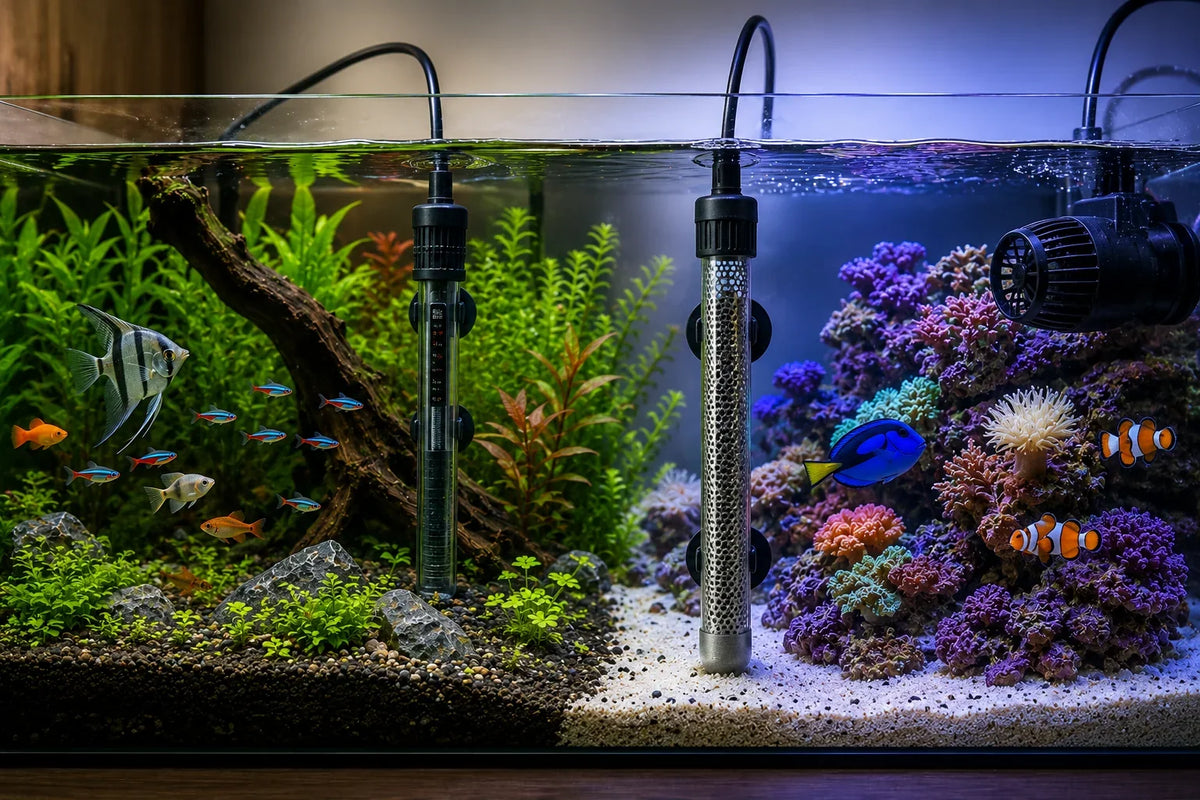
Adjustable Submersible Aquarium Heaters
<text></text>
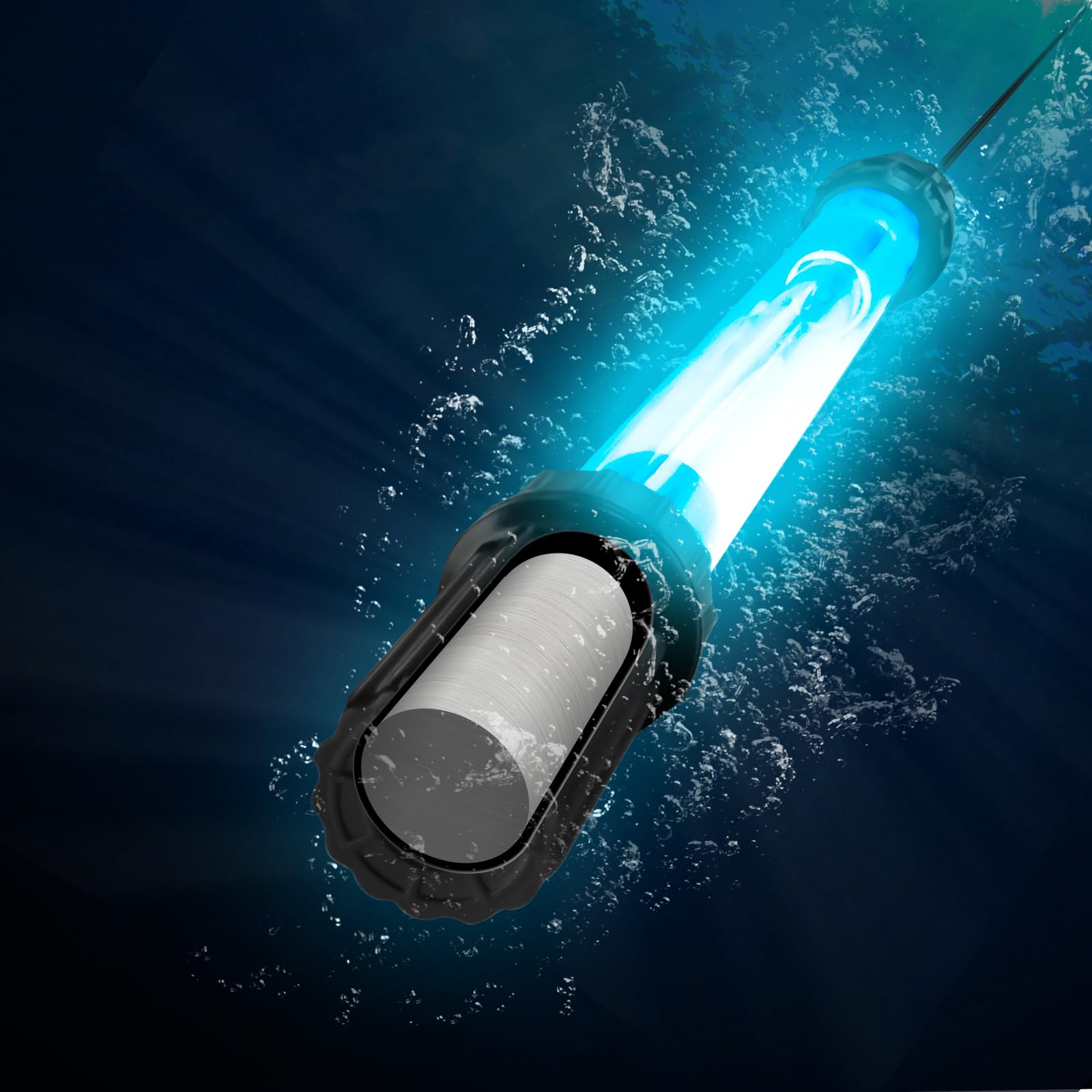
Adjustable submersible heaters are among the most popular choices for home aquariums.
These devices are designed to operate underwater according to the manufacturer's immersion requirements. Most include a thermostat that switches the heating element on and off to maintain a selected temperature.
Advantages
-
Flexible temperature settings for different fish species.
-
Broad availability across tank sizes and price ranges.
-
Straightforward installation in many standard aquariums.
-
Easy replacement when a unit reaches the end of its service life.
Potential disadvantages
-
Some models have inaccurate or difficult-to-read adjustment dials.
-
Incorrect installation can cause uneven heating or equipment damage.
-
Thermostat failure can lead to overheating or inadequate heating.
-
The heater occupies space inside the aquarium.
Adjustable submersible heaters are a practical choice for many beginners because they combine convenience, flexibility, and relatively simple operation.
When comparing models, check the rated aquarium volume, wattage, minimum water level, mounting instructions, and available safety features.
Preset Aquarium Heaters
Preset heaters are designed to maintain a predetermined temperature or operate within a fixed temperature range.
They are convenient for beginners who want a straightforward product without adjusting a dial.
Advantages
-
Simple operation.
-
Fewer settings to manage.
-
Useful when the preset temperature matches the fish's requirements.
Potential disadvantages
-
Limited flexibility.
-
The factory setting may not suit every species.
-
Some models cannot be adjusted when seasonal conditions change.
A preset heater can be an excellent choice for a straightforward aquarium, provided the operating temperature is appropriate for your fish.
Do not assume that all preset heaters use the same target temperature. Check the specifications before buying, then verify the actual water temperature with an independent thermometer.
Digital Aquarium Heaters
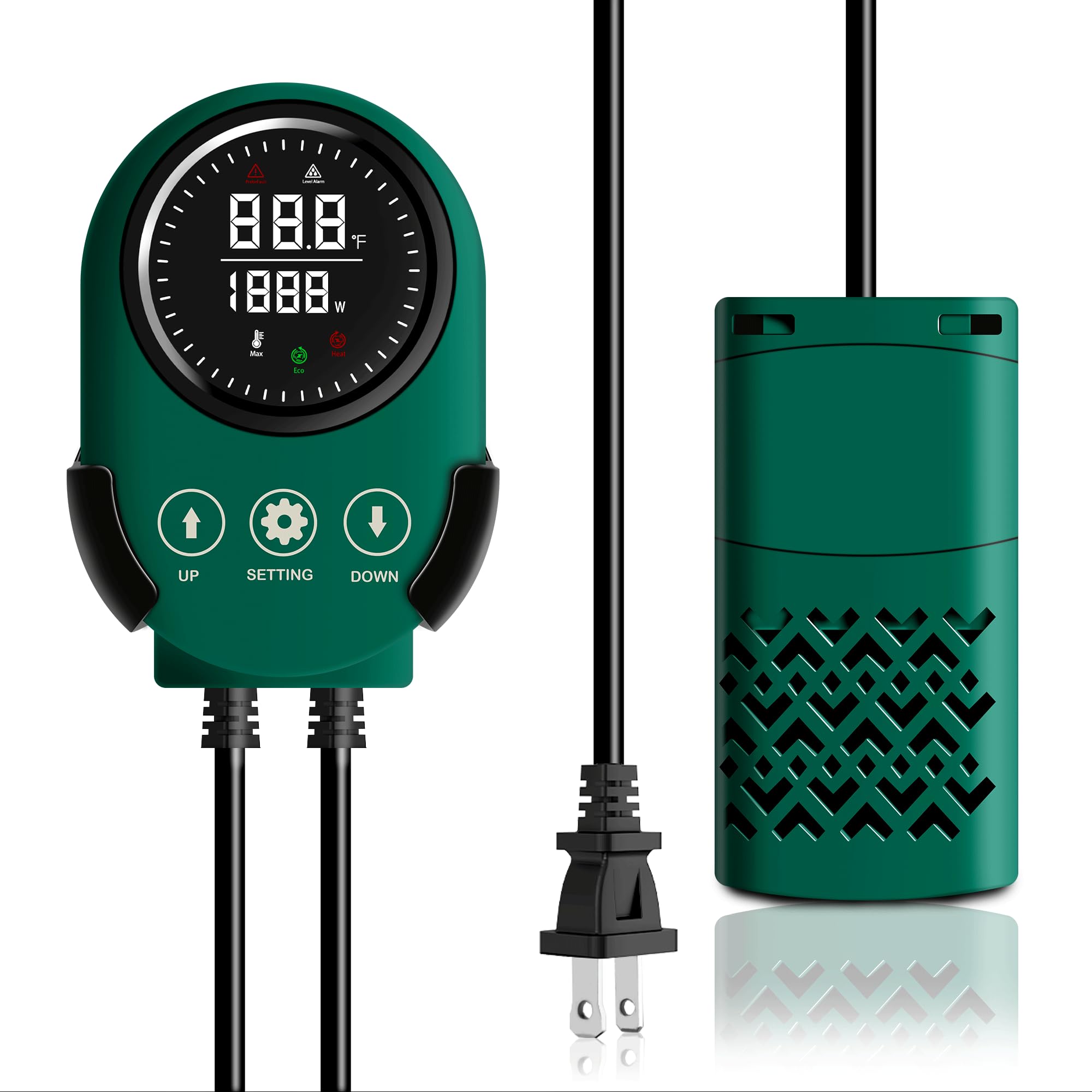
Digital heaters use electronic controls and may include a numerical display, electronic thermostat, or additional monitoring functions.
Their primary advantage is convenience. A clear display can make it easier to select and review a target temperature than a small mechanical dial.
Some models also include alarms or other protective features, but these functions vary by product.
Advantages
-
Easy-to-read temperature settings.
-
Convenient adjustments.
-
Potential access to additional monitoring features.
Potential disadvantages
-
Often more expensive than basic models.
-
Electronic components can fail.
-
A digital display does not guarantee that the water temperature is accurate.
Do not pay extra for a digital display unless it offers a meaningful benefit for your setup. A basic heater paired with a reliable thermometer may be sufficient for many aquariums.
External or Inline Aquarium Heaters
External heaters warm water as it circulates through compatible filtration plumbing.
They are often considered for larger aquariums or specialized systems where keeping equipment out of the display tank is desirable.
Advantages
-
Less equipment inside the aquarium.
-
Potentially convenient for certain large or specialized setups.
-
Can provide integrated heating when correctly matched with compatible filtration.
Potential disadvantages
-
More complicated installation.
-
Dependence on suitable water circulation.
-
Additional plumbing and compatibility requirements.
-
Potentially higher initial cost.
An inline heater is not automatically better than a submersible heater. It is a specialized option that should be selected only when the aquarium's filtration system and installation conditions support it.
Beginners maintaining a conventional freshwater tank will often find an internal heater simpler and easier to manage.
Heating Cables, Mats, and Other External Devices
Heating cables and mats may be used in specialized aquatic, planted-tank, or other controlled environments, but they are not interchangeable with conventional aquarium heaters.
Their suitability depends on the intended application, installation requirements, and ability to maintain the necessary water conditions.
A generic heating mat placed beneath a glass aquarium may create localized heating, uneven temperatures, or other risks if the product is not designed for that use.
Likewise, household space heaters should not be placed in contact with aquarium water or used as improvised substitutes for aquarium heating equipment.
For most beginners, a heater specifically designed for aquariums is the safest and most straightforward starting point.
3. Aquarium Heater Comparison: Which Type Offers the Best Value?
The following comparison summarizes the major differences.
| Heater Type | Main Advantage | Main Limitation | Best Suited For |
|---|---|---|---|
| Adjustable submersible | Flexible temperature control | Requires correct installation and monitoring | Most standard tropical aquariums |
| Preset heater | Simple operation | Limited temperature flexibility | Tanks with straightforward requirements |
| Digital heater | Convenient display and controls | Higher cost on some models | Owners who value easy adjustments |
| External or inline heater | Keeps heating equipment outside the display | More installation complexity | Compatible larger or specialized systems |
| Specialized heating cables or mats | Useful in specific applications | Not suitable for every aquarium | Setups designed for that equipment |
There is no single winner for every aquarium.
For most beginners, a suitable adjustable submersible heater offers a good balance of price, convenience, and flexibility. A preset model may be adequate for a tank with uncomplicated temperature requirements. Digital or external systems may make sense when their specific features solve a real problem.
The most important considerations are appropriate capacity, reliable temperature control, safe installation, and the ability to verify the actual water temperature.
4. How Many Watts Does Your Aquarium Heater Need?
Wattage is one of the first specifications shoppers notice, but it should not be the only factor in your decision.
Wattage indicates electrical power. It does not independently tell you the temperature a heater will maintain in every aquarium.
A heater must compensate for heat loss through the tank's surfaces and water exchange with the surrounding environment.
Typical Heater Wattage Ranges
The table below provides illustrative wattage ranges commonly encountered when shopping for aquarium heaters. These are starting points for comparison, not universal recommendations.
| Aquarium Size | Example Wattage Range to Compare |
|---|---|
| 5 gallons | 25–50 watts |
| 10 gallons | 25–75 watts |
| 20 gallons | 50–100 watts |
| 30 gallons | 75–150 watts |
| 40 gallons | 100–200 watts |
| 55 gallons | 150–250 watts |
| 75 gallons | 200–300 watts |
Always consult the manufacturer's sizing chart. Actual requirements may differ significantly depending on the room temperature, tank construction, and desired water temperature.
Why Room Temperature Changes the Calculation
Consider two aquariums that each hold 20 gallons of water and need to maintain 78°F.
The first aquarium sits in a room that remains at 70°F. The second sits in a room that falls to 55°F overnight.
Although both tanks have the same volume and target temperature, the second aquarium has a much larger temperature difference to overcome.
It may therefore require greater heating capacity to maintain the desired temperature.
This is why a heater that works well in a heated apartment may be unsuitable for an unheated basement or a poorly insulated room.
Is a Higher-Wattage Heater Always Better?
No.
A higher-wattage heater can transfer more energy, but that does not automatically make it safer or more suitable.
A heater that is unnecessarily powerful may introduce additional risk if its thermostat fails in the on position. Conversely, an undersized heater may run continuously without maintaining the desired temperature.
The correct choice is a model whose capacity matches the aquarium and the expected heat loss, with suitable temperature control and independent monitoring.
For larger tanks, two appropriately sized heaters may provide more distributed heating and limited redundancy. However, using two units also introduces additional equipment and control considerations.
Follow manufacturer guidance and avoid assuming that maximum wattage equals maximum safety.
5. Which Heater Materials and Designs Should You Consider?
Aquarium heaters are manufactured with different housings and protective structures. Material choice can influence durability, handling requirements, and suitability for particular aquarium environments.
Glass Aquarium Heaters
Glass heaters are common and often relatively affordable.
Many use a glass tube containing a heating element and thermostat.
Their advantages include broad availability and a straightforward design. However, glass can break if the heater is struck, dropped, or exposed to temperature changes outside its specifications.
Buying advice: Choose a model with suitable mounting hardware and follow the manufacturer's instructions for immersion and cooling. Keep it away from rocks, decorations, and other objects that may strike the housing.
Shatter-Resistant or Polymer-Protected Heaters
Some heaters use protective materials or construction intended to reduce the risk of damage from impact.
These designs may be useful in aquariums with active fish, limited installation space, or a greater chance of accidental contact.
However, descriptions such as "shatter-resistant" do not mean that a heater is indestructible.
Inspect the product specifications and follow the installation instructions, regardless of the material.
Titanium Aquarium Heaters
Titanium heating elements or housings are used in some aquarium heating systems, particularly certain marine and larger setups.
Titanium can offer corrosion resistance and durability when used in an appropriately designed product. Some titanium systems rely on a separate external temperature controller.
This distinction matters because the heating element and controller may be separate components.
Before buying, confirm what is included in the package, whether the controller is required, and whether the equipment is appropriate for freshwater or saltwater use.
Do not assume that every titanium heater includes the same controls or safety features.
Which Material Is Best?
There is no universally best material.
For a small freshwater aquarium, a well-designed glass heater may be entirely adequate. For a specialized marine system or a tank where impact resistance is a priority, another construction may be worth considering.
Prioritize product suitability, reliable controls, safe mounting, manufacturer support, and ease of monitoring rather than choosing based on material claims alone.
6. Important Safety Features to Look For
An aquarium heater operates in water and connects to electricity. Safety features deserve at least as much attention as wattage and price.
Overheat Protection
Some heaters incorporate protective mechanisms intended to reduce the risk of overheating.
The exact design and operation vary by model. Review the manufacturer's description to understand what the feature actually does.
Do not assume that an overheat-protection label eliminates the risk of thermostat failure.
Automatic Temperature Control
A thermostat helps maintain the selected temperature by switching heating on and off.
Its accuracy and reliability matter because a thermostat failure can cause water to become too warm or remain too cold.
Check product documentation for the temperature-control design, operating range, and any specified limitations.
Low-Water-Level Protection
Some heaters include safeguards against operation when water levels fall below the permitted range.
This feature may be useful in certain installations, but it does not mean that you can operate the heater outside the manufacturer's specified immersion conditions.
Always observe the minimum water level and installation requirements.
Independent Temperature Monitoring
A separate thermometer is one of the most useful additions to an aquarium heating system.
It allows you to check whether the heater's setting corresponds to the actual water temperature.
For added convenience, a digital thermometer with high- and low-temperature alarms can alert you to unexpected changes.
This is particularly useful during winter, when room temperatures may fluctuate overnight.
External Temperature Controllers
An external controller may offer another layer of control in some systems.
However, compatibility matters. Confirm that the controller is suitable for the heater, probe, and electrical load.
An incorrectly configured controller can cause overheating, failure to heat, or other problems. Read the instructions and test the complete setup while monitoring the aquarium.
For many small aquariums, a suitable heater and independent thermometer are sufficient. Additional control equipment should solve a specific problem rather than add unnecessary complexity.
7. How to Install an Aquarium Heater Correctly
Even a high-quality heater can become unsafe when installed incorrectly.
Follow the instructions supplied with the exact model you purchase.
Step 1: Inspect the Equipment
Before installation, check the heater housing, cable, plug, and mounting hardware.
Do not use a heater with cracks, damaged wiring, exposed conductors, or other visible defects.
If the product appears damaged when it arrives, contact the seller or manufacturer.
Step 2: Choose a Suitable Position
Many submersible heaters perform well when installed in an area with steady water movement, such as near a filter outlet, provided the manufacturer's instructions permit that location.
Circulation helps distribute warmed water throughout the aquarium.
Avoid locations where plants, decorations, or equipment can obstruct water movement or contact the heating element.
Step 3: Observe the Immersion Requirements
Some heaters must be fully submerged, while others have specific minimum water levels.
Check the instructions carefully. Never operate a heater outside its approved immersion conditions.
Step 4: Allow the Heater to Acclimate
Many aquarium heaters require a waiting period after being placed in water before they can be switched on.
Follow the model's instructions to reduce the risk of damage caused by sudden temperature differences.
Do not assume that every heater can be powered immediately after installation.
Step 5: Set the Correct Temperature
Select a temperature appropriate for your fish.
Avoid setting the heater excessively high simply because winter has arrived. The goal is to maintain a suitable temperature, not to make the water as warm as possible.
Step 6: Verify the Result
Use an independent thermometer to confirm the actual water temperature.
Allow sufficient time for the aquarium to respond, and observe whether the heater maintains the desired range.
If the temperature remains too low, check the room conditions, heater capacity, installation, and thermometer accuracy before making major adjustments.
Step 7: Make Electrical Connections Safely
Follow the heater manufacturer's electrical requirements and applicable local codes.
In the United States, appropriate ground-fault protection, such as a GFCI where required or recommended, can help reduce electric-shock risk.
Keep plugs and electrical connections dry, arrange cables with drip loops, and avoid overloading outlets or power strips.
Never handle electrical equipment with wet hands. If equipment becomes wet or appears damaged, disconnect power safely before handling it.
8. Common Aquarium Heater Buying Mistakes to Avoid
A few purchasing mistakes can lead to unnecessary costs or unreliable winter temperature control.
Mistake 1: Buying the Cheapest Heater Without Checking Specifications
Price matters, but a low-cost product is not a good deal if it is unsuitable for your aquarium.
Compare wattage, rated tank volume, temperature controls, installation requirements, warranty terms, and manufacturer support.
A straightforward model with appropriate specifications may offer better value than a more expensive product with features you will never use.
Mistake 2: Choosing Wattage Based Only on Tank Volume
Tank volume is important, but it does not tell the whole story.
Room temperature and heat loss can substantially affect heater requirements.
Check the manufacturer's sizing chart and consider the coldest expected conditions.
Mistake 3: Assuming the Heater Dial Is Accurate
A setting of 78°F does not guarantee that the water is actually 78°F.
Thermostats may differ in accuracy, and conditions within the aquarium can affect temperature distribution.
Use an independent thermometer to verify the result.
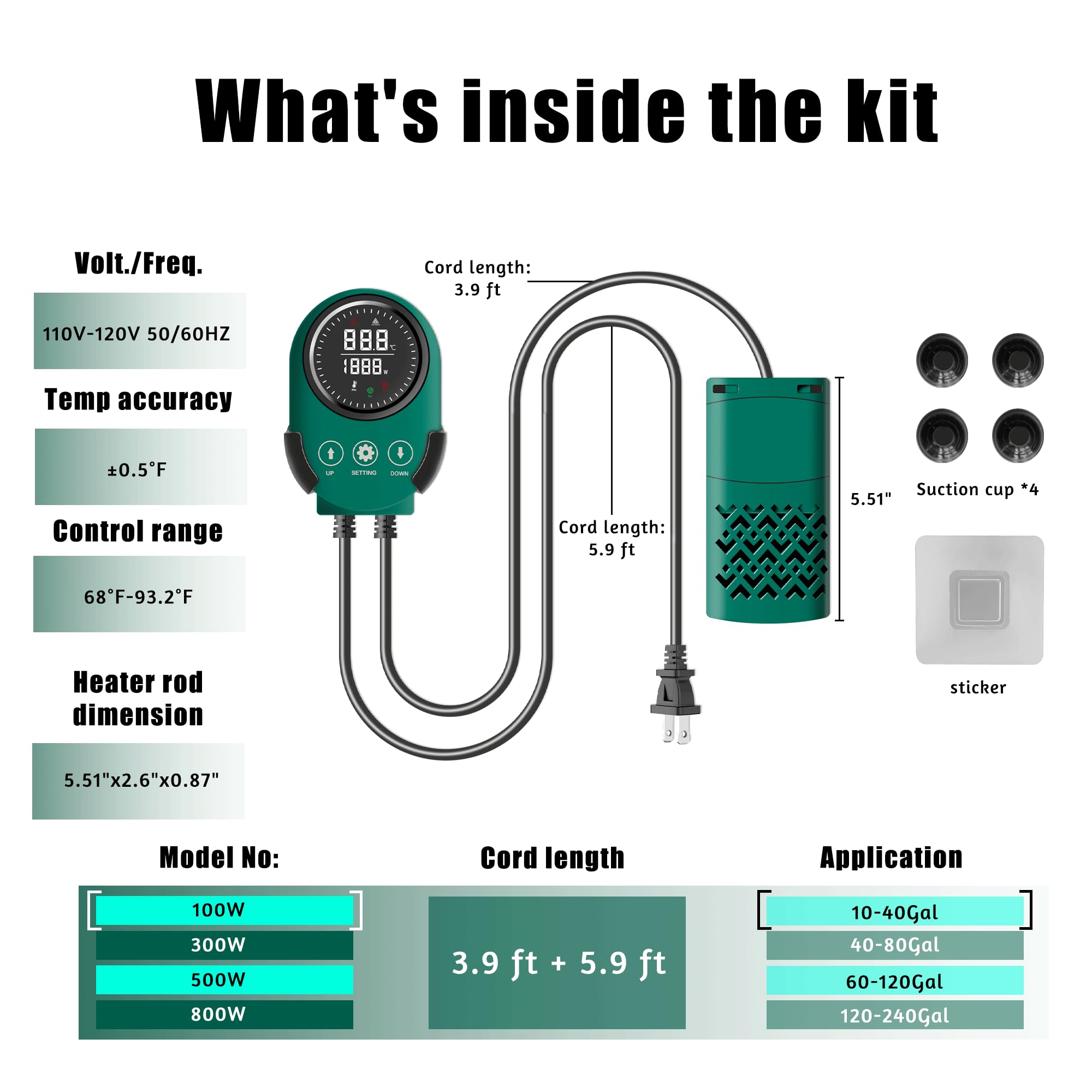
Mistake 4: Ignoring Product Dimensions
A heater that is too long or bulky may be difficult to install in a small aquarium.
Check the physical dimensions, cable arrangement, mounting options, and required clearance before purchasing.
Mistake 5: Buying Features You Do Not Need
Digital displays, wireless monitoring, external controllers, and premium materials may be useful in certain circumstances.
However, these features can increase the cost and complexity of your setup.
Start with the requirements of your aquarium and purchase additional features only when they provide a clear benefit.
Mistake 6: Ignoring the Warranty and Replacement Process
Heating equipment can eventually fail, so warranty terms and manufacturer support matter.
Check the warranty duration, exclusions, proof-of-purchase requirements, and replacement process.
Keep the product documentation and purchase information in a safe place.
Mistake 7: Waiting Until a Cold Snap to Test the Heater
A heater that has not been checked for months may fail when it is needed most.
Install and test your heating equipment before extreme winter weather arrives. Observe the temperature over several days and confirm that the system can maintain the desired range.
9. How to Use an Aquarium Heater Safely Throughout Winter
Correct installation is only the beginning. Regular observation helps you detect problems before they affect your fish.
Check the Temperature Daily
During winter, make a habit of checking the aquarium thermometer.
Pay attention to overnight readings and early-morning conditions, especially when the room is cold.
If the temperature changes unexpectedly, investigate rather than immediately increasing the heater setting.
Watch Fish Behavior
Observe whether your fish are swimming normally, eating appropriately, and breathing at a typical rate.
Unusual lethargy, rapid breathing, loss of balance, or a sudden appetite change may indicate a problem.
These symptoms are not specific to temperature changes, so also consider oxygen availability, water quality, and disease.
Inspect the Heater and Filter
Check for visible damage, unusual equipment behavior, and interrupted water circulation.
If a heater is cracked or otherwise unsafe, disconnect it according to safe electrical procedures and replace it.
Do not attempt to repair a sealed heater unless the manufacturer explicitly provides a safe repair procedure.
Maintain Appropriate Water Quality
Heating does not eliminate the need for regular aquarium maintenance.
Continue monitoring water quality and maintaining filtration. In an established, properly functioning aquarium, ammonia and nitrite should normally remain undetectable.
When performing water changes, prepare replacement water appropriately, condition it according to the product instructions, and match its temperature closely to the aquarium.
Before lowering the water level, switch off the heater when required by its instructions. Allow it to cool before exposing or handling it as directed by the manufacturer.
Insulate the Aquarium When Appropriate
A suitable lid and properly installed insulating panels can help reduce heat loss.
Keep the aquarium away from cold drafts and avoid placing it beside heating vents that may create uneven conditions.
Insulation slows heat loss but does not replace a functioning heater when supplemental heating is required.
10. What Should You Do if the Aquarium Heater Stops Working?
A heater failure can become more serious during winter, particularly if the room is cold.
The appropriate response depends on the actual water temperature, fish species, and severity of the problem.
First, confirm the temperature. Use a reliable thermometer to check whether the water is genuinely outside the desired range.
Second, check the equipment safely. Inspect the power supply and heater installation without touching unsafe electrical components.
Third, identify the cause. The problem may involve heater failure, an unsuitable wattage, poor circulation, a cold room, or an inaccurate thermometer.
Fourth, restore appropriate conditions. Use a suitable replacement heater and monitor the water closely. Avoid pouring hot water directly into the aquarium or making sudden temperature changes.
Fifth, monitor the fish. If they show serious distress, seek advice from an aquatic veterinarian or qualified fish-health professional.
If the water has cooled substantially, the safest recovery approach depends on the species and the severity of the temperature change. There is no single recovery rate that is appropriate for every situation.
11. Preparing Your Aquarium for a Winter Power Outage
A power outage can stop heating, filtration, and circulation simultaneously.
Prepare in advance rather than waiting until the aquarium begins to cool.
A suitable aquarium lid and safe side insulation can slow heat loss. Battery-powered aeration may help maintain oxygenation if the filter stops.
For larger or more sensitive aquariums, an appropriately rated backup power station may be useful for essential equipment. Confirm that it can support the required electrical load and follow the manufacturer's instructions.
Never operate a fuel-powered generator indoors or in an enclosed space because of the risk of carbon monoxide poisoning.
During an outage, monitor the water temperature when safe, avoid adding hot water directly to the tank, and maintain oxygenation when possible.
When power returns, confirm that the heater and filter have resumed normal operation. If filtration was interrupted for an extended period, assess water quality as well as temperature.
A simple emergency plan can help prevent rushed decisions during severe winter weather.
12. A Practical Aquarium Heater Buying Checklist
Before making your final purchase, review the following points.
Aquarium requirements
-
Identify your fish species and their appropriate temperature range.
-
Confirm the aquarium's actual water volume.
-
Determine the lowest expected room temperature.
-
Decide whether adjustable or preset controls are appropriate.
Heater specifications
-
Check the manufacturer's recommended tank-size range.
-
Compare wattage and physical dimensions.
-
Confirm immersion and installation requirements.
-
Review temperature-control and protective features.
-
Check warranty terms and manufacturer support.
Monitoring and safety
-
Purchase a reliable independent thermometer.
-
Consider temperature alarms if the aquarium needs closer monitoring.
-
Verify that electrical connections can be installed safely.
-
Prepare a plan for equipment failure and power outages.
-
Test the heater before the coldest part of winter.
This checklist helps you focus on the features that affect reliability and safety rather than getting distracted by unnecessary specifications.
Frequently Asked Questions About Aquarium Heaters
1. What Is the Best Aquarium Heater for Beginners?
For many conventional freshwater aquariums, an appropriately sized adjustable submersible heater is a practical choice.
It offers temperature flexibility and is generally straightforward to install. Pair it with an independent thermometer and follow the manufacturer's instructions.
2. Is a Preset Heater Better Than an Adjustable Heater?
Neither is universally better.
A preset heater is convenient when its fixed temperature matches the aquarium's requirements. An adjustable heater offers more flexibility when different species or environmental conditions require a different target.
3. How Many Watts Do I Need for a 20-Gallon Fish Tank?
A heater in the 50–100-watt range may be a reasonable starting point to compare, but actual requirements depend on room temperature and heat loss.
Check the manufacturer's sizing chart and consider the coldest expected conditions.
4. Can I Leave My Aquarium Heater On All the Time?
Aquarium heaters are generally designed to maintain a selected temperature automatically when operated according to their instructions.
Check the actual water temperature regularly and replace damaged equipment. Do not assume that continuous operation guarantees safe performance.
5. Should I Buy a Heater With a Digital Display?
A digital display can make adjustments easier, but it is not essential for every aquarium.
A basic heater with suitable temperature control and a reliable independent thermometer may be sufficient.
6. Do I Need Two Heaters for a Large Aquarium?
Some larger aquariums benefit from two appropriately sized heaters to distribute heating and provide limited redundancy.
However, two heaters introduce additional equipment and control considerations. Follow manufacturer guidance and monitor the water temperature carefully.
7. Can I Use a Household Heating Pad for My Aquarium?
Do not assume that a household heating pad is suitable for aquarium use.
Products not designed for the application may create localized heating, uneven temperatures, or electrical hazards. Use equipment specifically designed for the aquarium and installation conditions.
8. How Often Should I Replace My Aquarium Heater?
There is no universal replacement interval for every model.
Follow the manufacturer's maintenance and replacement recommendations. Replace the heater if it becomes damaged, unreliable, or unable to maintain the required temperature safely.
9. Why Is My Aquarium Still Cold Even Though the Heater Is On?
Possible causes include insufficient wattage, a cold room, poor water circulation, incorrect installation, or an inaccurate thermometer.
Verify the actual temperature and investigate the conditions before increasing the setting substantially.
10. Are More Expensive Aquarium Heaters Worth It?
Sometimes, but not always.
A more expensive model may offer useful controls, monitoring, construction, or support. However, the best value is the heater that safely meets your aquarium's requirements without unnecessary features.
Conclusion: Choose the Right Heater, Not Just the Most Powerful One
Choosing an aquarium heater for winter is ultimately about matching the equipment to your fish, tank size, and surrounding environment.
An adjustable submersible heater is a practical choice for many beginners, while preset, digital, and external models can be useful in specific situations. Wattage matters, but room temperature, heat loss, installation, and temperature monitoring are equally important.
Before buying, identify your fish's temperature requirements, consider the coldest conditions your aquarium may experience, and compare the manufacturer's specifications carefully.
Once the heater is installed, verify the actual water temperature, inspect the equipment regularly, maintain safe electrical connections, and prepare for potential power outages.
Do not assume that the highest wattage, the most expensive model, or the longest feature list automatically makes a heater the best choice.
A suitable heater, a reliable thermometer, and a consistent maintenance routine will usually do more for winter aquarium safety than unnecessary upgrades.
Choose carefully, install safely, and keep your aquarium temperature stable so your fish can remain healthy and comfortable throughout winter.