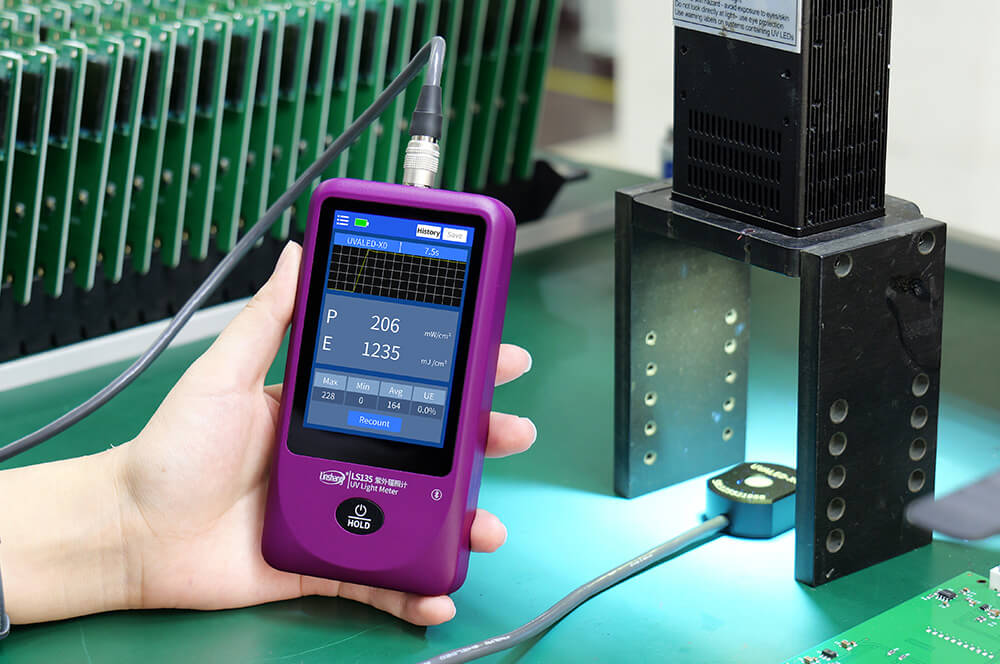
UV curing systems are widely used in modern manufacturing industries such as electronics assembly, automotive coatings, medical device production, 3D printing, and optical materials processing. These systems rely on ultraviolet light to rapidly cure adhesives, coatings, inks, and resins with high precision and efficiency.
At the core of many UV curing machines is a critical but often overlooked component: the photodetector sensor system. This optical sensing element is responsible for monitoring UV intensity, verifying curing conditions, and ensuring process stability.
When the photodetector malfunctions, the entire curing process can become unreliable. This may result in under-cured materials, overexposure damage, inconsistent product quality, or full system shutdowns. In high-precision manufacturing environments, even small deviations in UV monitoring can lead to significant production losses.
Understanding how these sensors work, why they fail, and how to properly diagnose issues is essential for maintaining stable industrial performance.
This guide explores the fundamentals of photodetector systems in UV curing equipment, common failure modes, diagnostic strategies, safe maintenance practices, and modern upgrades that improve long-term reliability.
Understanding Photodetector Systems in UV Curing Machines
What a Photodetector Does
A photodetector in a UV curing system is designed to measure ultraviolet light intensity and convert it into an electrical signal that the system can interpret.
This feedback loop enables:
-
Real-time UV intensity monitoring
-
Closed-loop curing control
-
Process consistency verification
-
Safety shutoff mechanisms
-
Quality assurance tracking
Without accurate photodetection, UV curing becomes an open-loop system, increasing variability and risk.
Types of Photodetectors Used in UV Systems
Different UV curing systems use different sensor technologies depending on precision requirements and cost considerations.
1. Photodiodes
Photodiodes are the most common type. They generate current proportional to light intensity and are known for:
-
Fast response time
-
High sensitivity
-
Compact size
2. Phototransistors
Phototransistors provide amplified signal output, making them suitable for lower-intensity monitoring applications.
3. UV-Specific Sensors
These sensors are calibrated specifically for UV wavelengths (typically UV-A range in curing applications), ensuring accurate measurement of curing energy rather than visible light interference.
4. Fiber-Optic Coupled Sensors
In high-end systems, optical fibers are used to transmit UV signals to remote detectors, protecting sensitive electronics from heat and radiation exposure.
Why Photodetector Failures Occur in UV Curing Systems
Photodetector issues rarely happen suddenly. They are usually the result of gradual degradation or environmental stress.
1. UV Radiation Degradation
Even though sensors are designed to measure UV light, prolonged exposure can still degrade:
-
Optical windows
-
Filter coatings
-
Semiconductor sensitivity
Over time, this leads to inaccurate readings.
2. Thermal Stress
UV curing systems generate significant heat. If thermal management is insufficient, sensors may experience:
-
Drift in calibration
-
Signal instability
-
Component fatigue
High temperatures are one of the most common causes of long-term sensor failure.
3. Contamination and Surface Fouling
Dust, resin vapor, ink particles, and chemical residues can accumulate on sensor surfaces.
This leads to:
-
Reduced light transmission
-
Signal attenuation
-
False low-intensity readings
Even microscopic contamination layers can significantly distort measurement accuracy.
4. Electrical Instability
Photodetectors depend on stable electrical environments. Issues such as:
-
Voltage fluctuations
-
Connector oxidation
-
Cable shielding degradation
can cause intermittent or noisy signals.
5. Mechanical Misalignment
In systems where photodetectors are positioned relative to UV lamps or reflective chambers, slight misalignment can alter readings significantly.
Early Warning Signs of Photodetector Problems
Identifying early symptoms is essential for preventing production defects.
Inconsistent UV Intensity Readings
One of the earliest indicators is fluctuating sensor output even when lamp conditions remain stable.
Process Curing Inconsistency
Manufactured products may show:
-
Sticky or under-cured surfaces
-
Over-hardened coatings
-
Variable adhesion quality
These symptoms often reflect inaccurate UV monitoring.
System Error Alerts
Modern UV curing machines often trigger alarms such as:
-
Intensity threshold errors
-
Sensor calibration warnings
-
Feedback loop instability messages
Unexpected Machine Shutdowns
In severe cases, safety systems may shut down UV output entirely if sensor readings fall outside acceptable parameters.
Drift Over Time
Gradual deviation between expected and measured UV intensity indicates sensor degradation rather than lamp failure.
Diagnostic Approach: How Professionals Analyze Sensor Issues
Rather than immediately replacing components, industrial maintenance teams follow structured diagnostic workflows.
Step 1: Signal Verification Testing
Technicians analyze sensor output under controlled conditions to determine whether the signal is stable, noisy, or drifting.
Step 2: Optical Path Inspection
Without disassembling sealed UV modules, professionals check:
-
Sensor window clarity
-
Reflective chamber cleanliness
-
Light path obstruction
Step 3: Thermal Analysis
Infrared thermography is used to detect overheating zones that may influence sensor accuracy.
Step 4: Electrical Continuity Testing
Wiring, connectors, and grounding systems are checked for:
-
Resistance irregularities
-
Intermittent connections
-
Shielding integrity
Step 5: Calibration Comparison
Sensors are compared against known reference standards to determine accuracy deviation.
Safe Maintenance Principles for Photodetector Systems
Because UV curing systems involve high-intensity light and industrial electrical components, maintenance must prioritize safety and system integrity.
Avoid Direct Exposure to UV Radiation
UV curing systems should never be operated or inspected without proper shielding and protective protocols.
Focus on External and Modular Components
Most professional maintenance avoids direct internal modification and instead focuses on:
-
External sensor modules
-
Optical windows
-
Replaceable housings
-
Connector assemblies
Maintain Clean Optical Surfaces
Even minor contamination can significantly distort readings. Regular cleaning of accessible optical surfaces is essential for system stability.
Ensure Proper Environmental Conditions
Stable operation depends on:
-
Controlled temperature
-
Low dust environments
-
Minimal chemical vapor exposure
Common Photodetector Failure Scenarios in Industrial Systems
Scenario 1: Gradual Sensitivity Loss
The sensor slowly becomes less responsive due to optical degradation or UV fatigue.
Scenario 2: Intermittent Signal Dropout
Loose connectors or electrical instability cause unpredictable signal loss.
Scenario 3: False High Readings
Contaminated optics or calibration drift causes the system to believe UV intensity is higher than actual output.
Scenario 4: False Low Readings
Obstructions or sensor aging lead to underestimation of UV output, triggering unnecessary system adjustments.
When Repair Is Not Enough: Replacement vs. Restoration
In industrial environments, photodetectors are often treated as consumable precision components.
Replacement is recommended when:
-
Calibration drift exceeds tolerance limits
-
Optical damage is irreversible
-
Electrical instability persists after external correction
-
Sensor response becomes nonlinear
-
Repeated recalibration fails to stabilize output
Modern UV curing systems often use modular sensor designs, making replacement more efficient than internal repair.
Preventive Maintenance Strategies for Photodetector Longevity
Regular Calibration Cycles
Routine calibration ensures measurement accuracy over time.
Optical Cleaning Protocols
Scheduled cleaning of sensor windows and optical paths helps maintain consistent readings.
Environmental Control
Reducing dust, heat, and chemical exposure significantly extends sensor lifespan.
System-Level Monitoring
Tracking long-term trends in sensor output helps identify degradation before failure occurs.
The Role of Smart Systems in Improving Sensor Reliability
Modern UV curing systems increasingly integrate intelligent monitoring features.
Real-Time Feedback Loops
Systems automatically adjust curing intensity based on sensor input.
Predictive Maintenance Algorithms
AI-driven systems detect early patterns of sensor degradation.
Remote Diagnostics
Technicians can evaluate sensor performance without physical access to equipment.
Data Logging and Trend Analysis
Long-term data helps identify subtle performance shifts that indicate upcoming failure.
Industry Applications Requiring High-Precision Photodetector Systems
Electronics Manufacturing
UV curing is essential for circuit board coatings and adhesives.
Medical Device Production
High reliability is required for biocompatible bonding processes.
Automotive Coatings
UV-curable paints require consistent energy exposure for durability.
3D Printing and Additive Manufacturing
Photopolymer curing accuracy depends heavily on sensor feedback.
Future Trends in UV Curing Sensor Technology
The next generation of photodetectors will include:
-
Self-calibrating optical sensors
-
AI-driven compensation for drift
-
Integrated multi-spectrum detection
-
Wireless sensor modules
-
Heat-resistant nano-coated optics
-
Fully digital calibration ecosystems
These advancements aim to reduce downtime and increase process stability in high-precision manufacturing environments.
Final Thoughts: Precision Is a System, Not a Single Component
Photodetector systems in UV curing equipment are not isolated components—they are part of a tightly integrated precision control loop that ensures manufacturing consistency and product quality.
When issues arise, the most effective approach is not aggressive internal intervention, but structured diagnostics, environmental optimization, and system-level maintenance strategies.
By focusing on prevention, calibration discipline, and intelligent monitoring, manufacturers can significantly reduce sensor-related downtime while maintaining the high standards required in modern industrial production.
Ultimately, precision manufacturing depends not only on powerful UV curing technology, but on the reliability of the sensing systems that guide it. A stable photodetector is not just a component—it is the foundation of controlled, repeatable, and high-quality production outcomes.