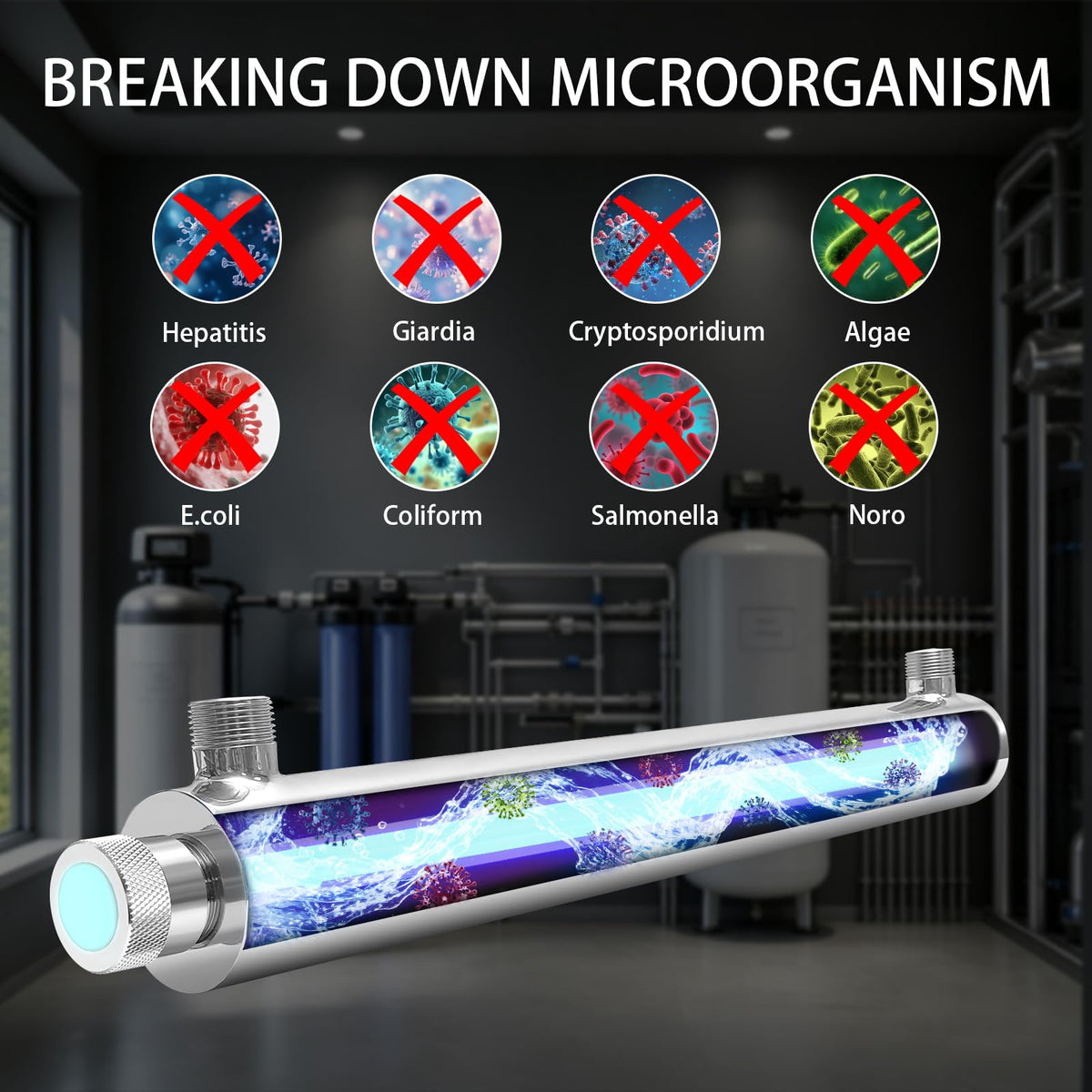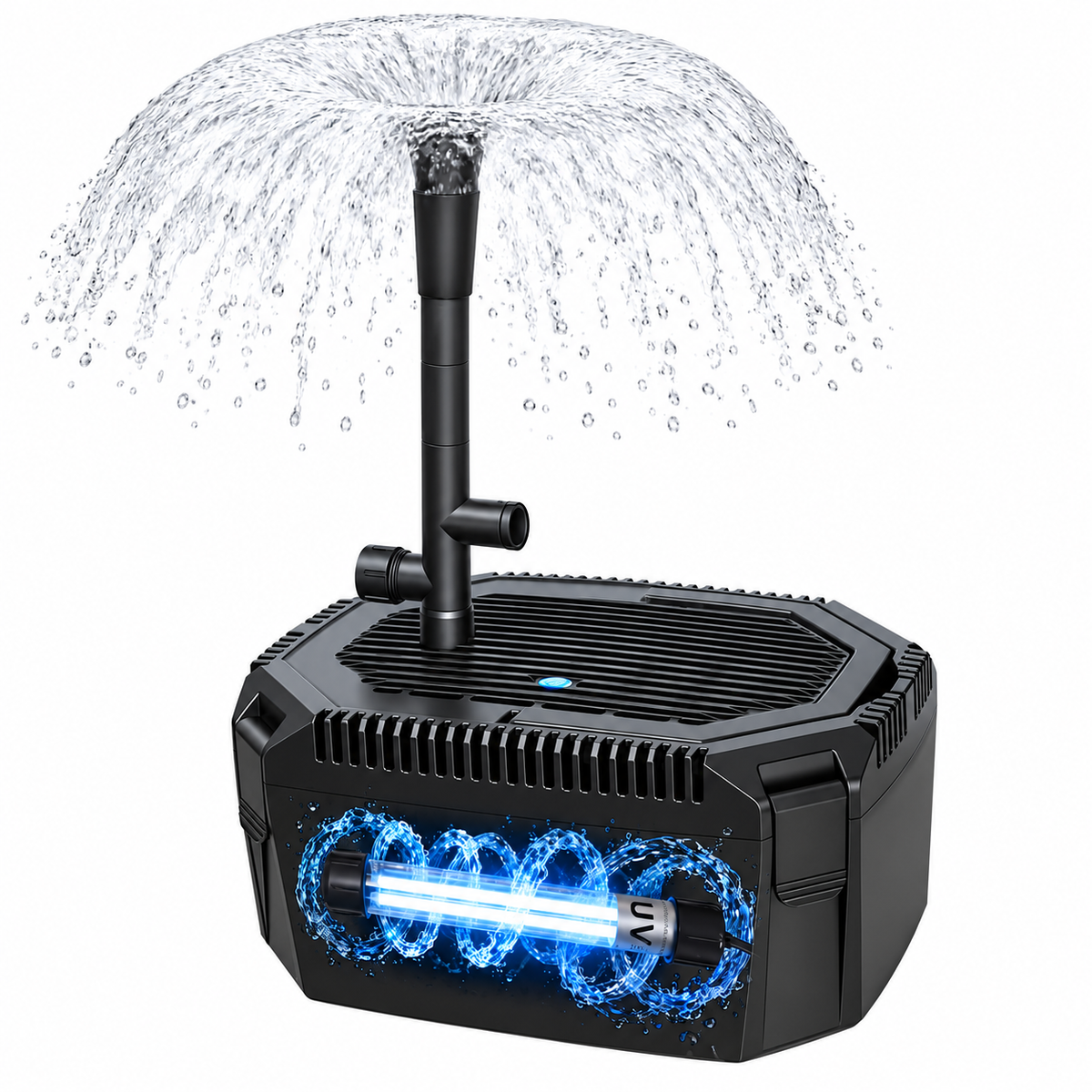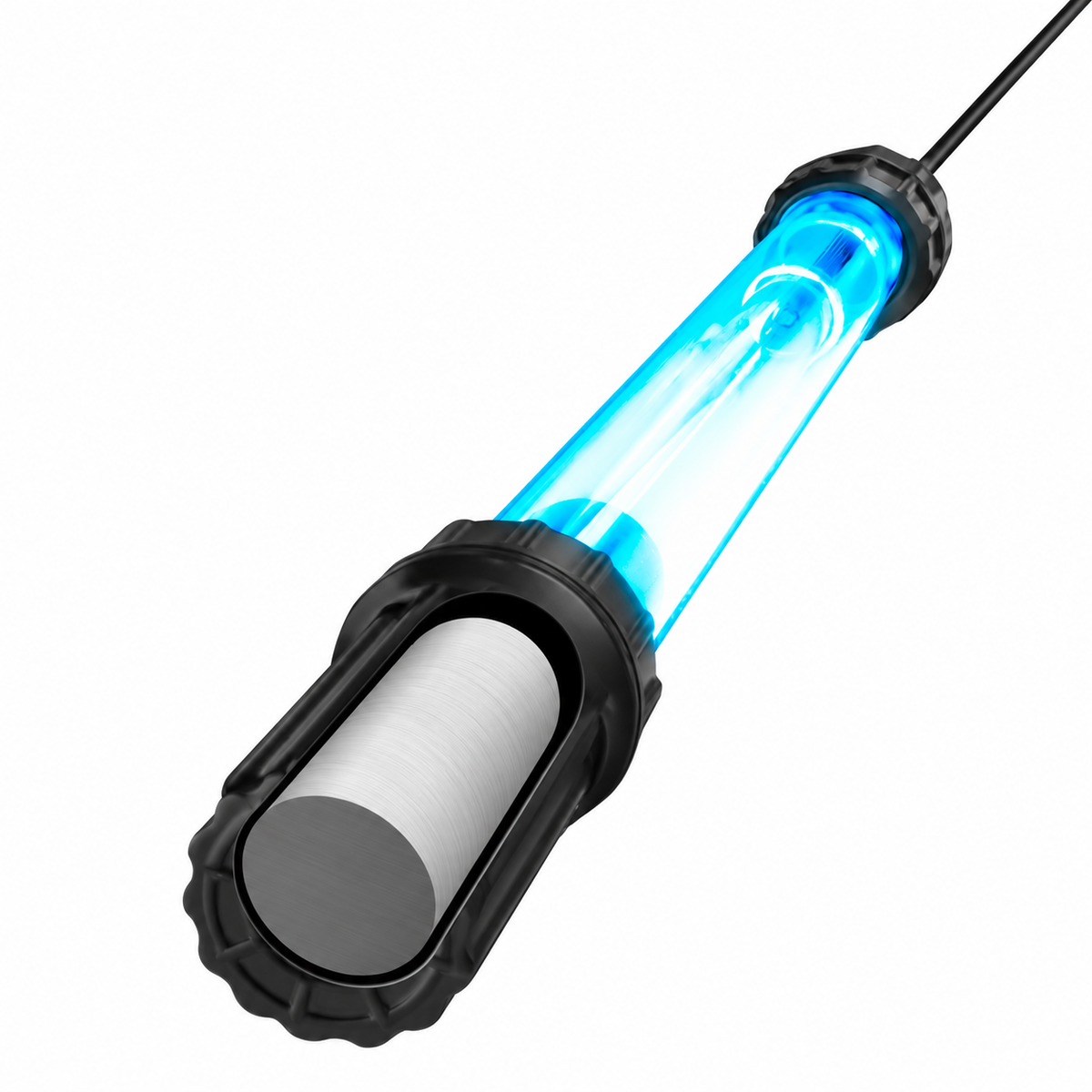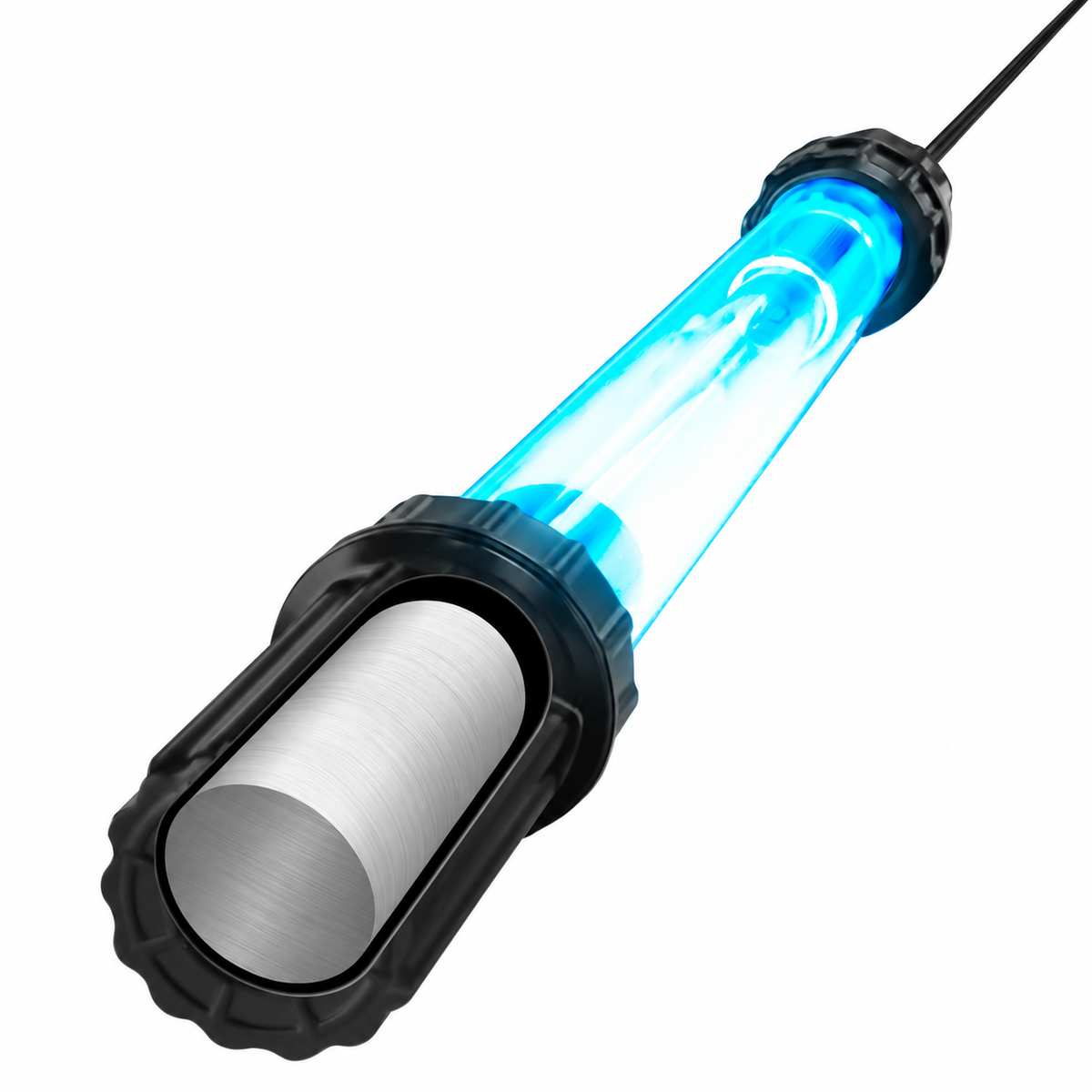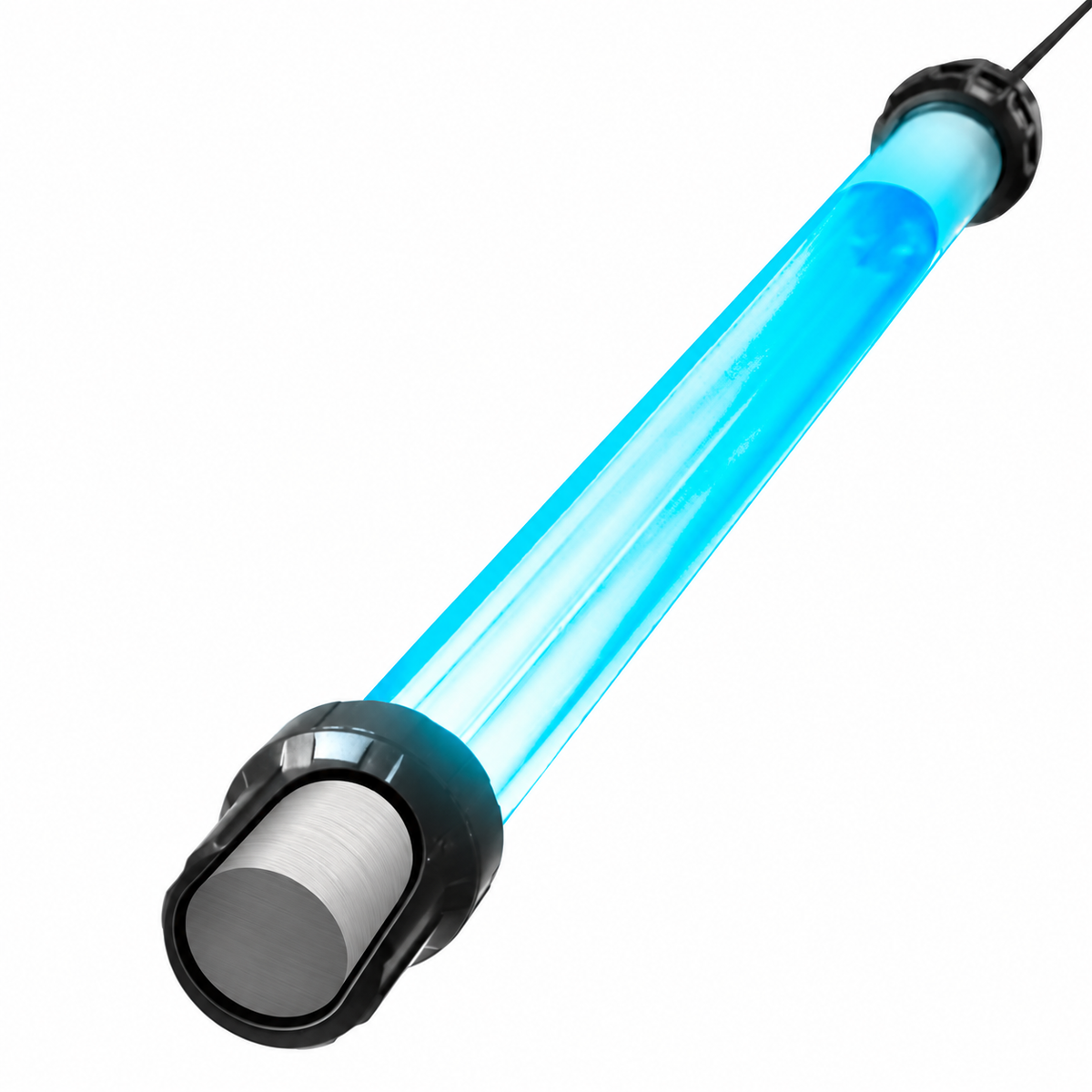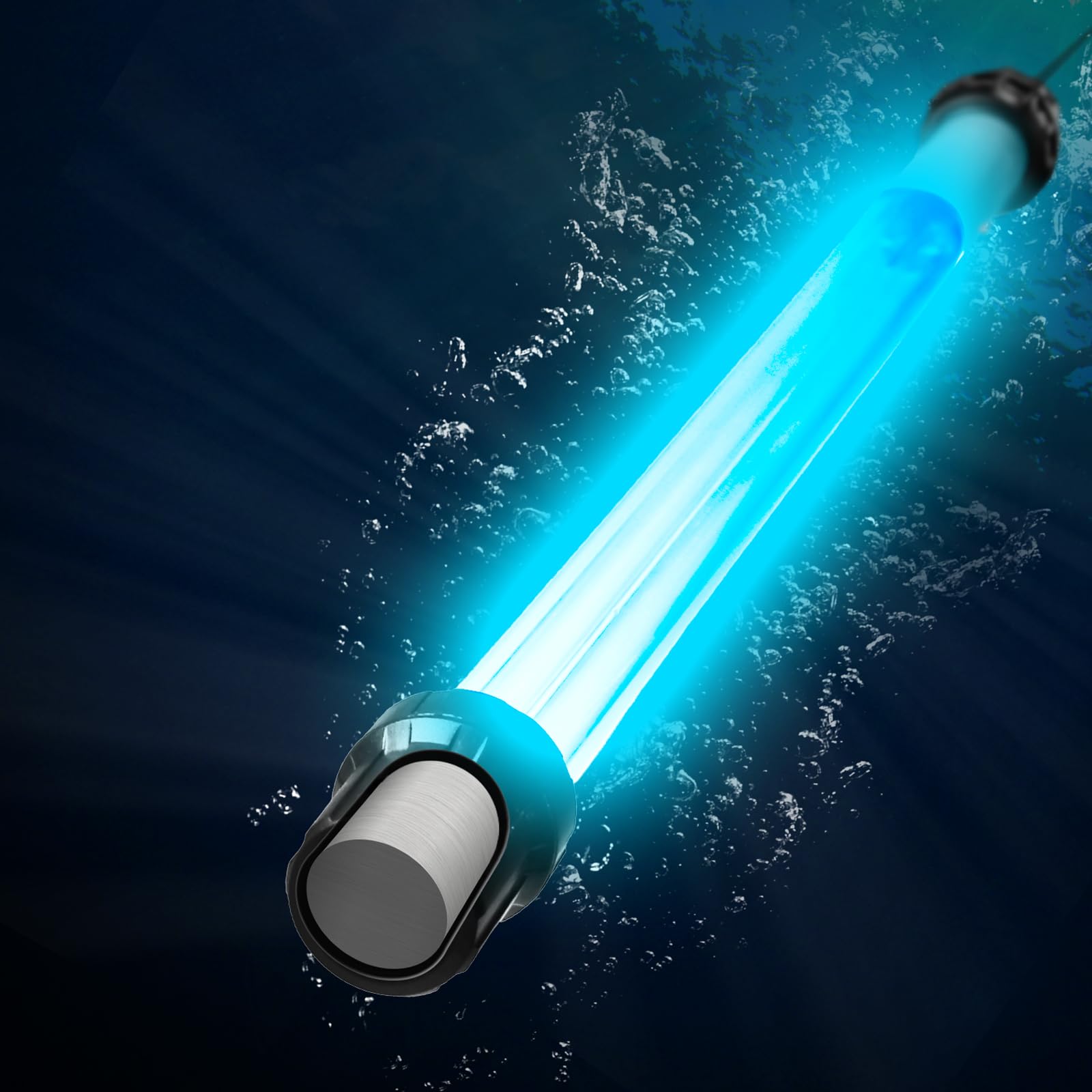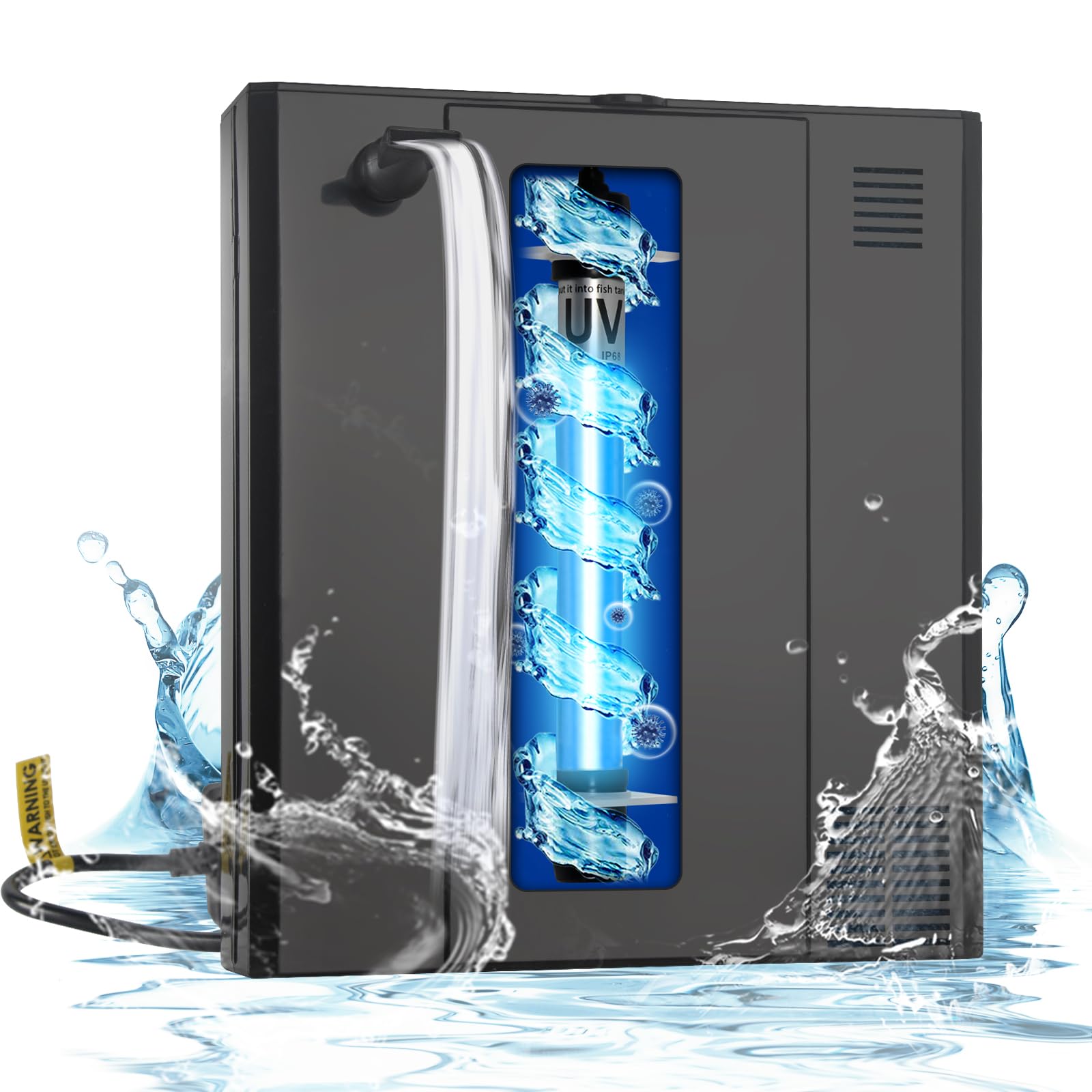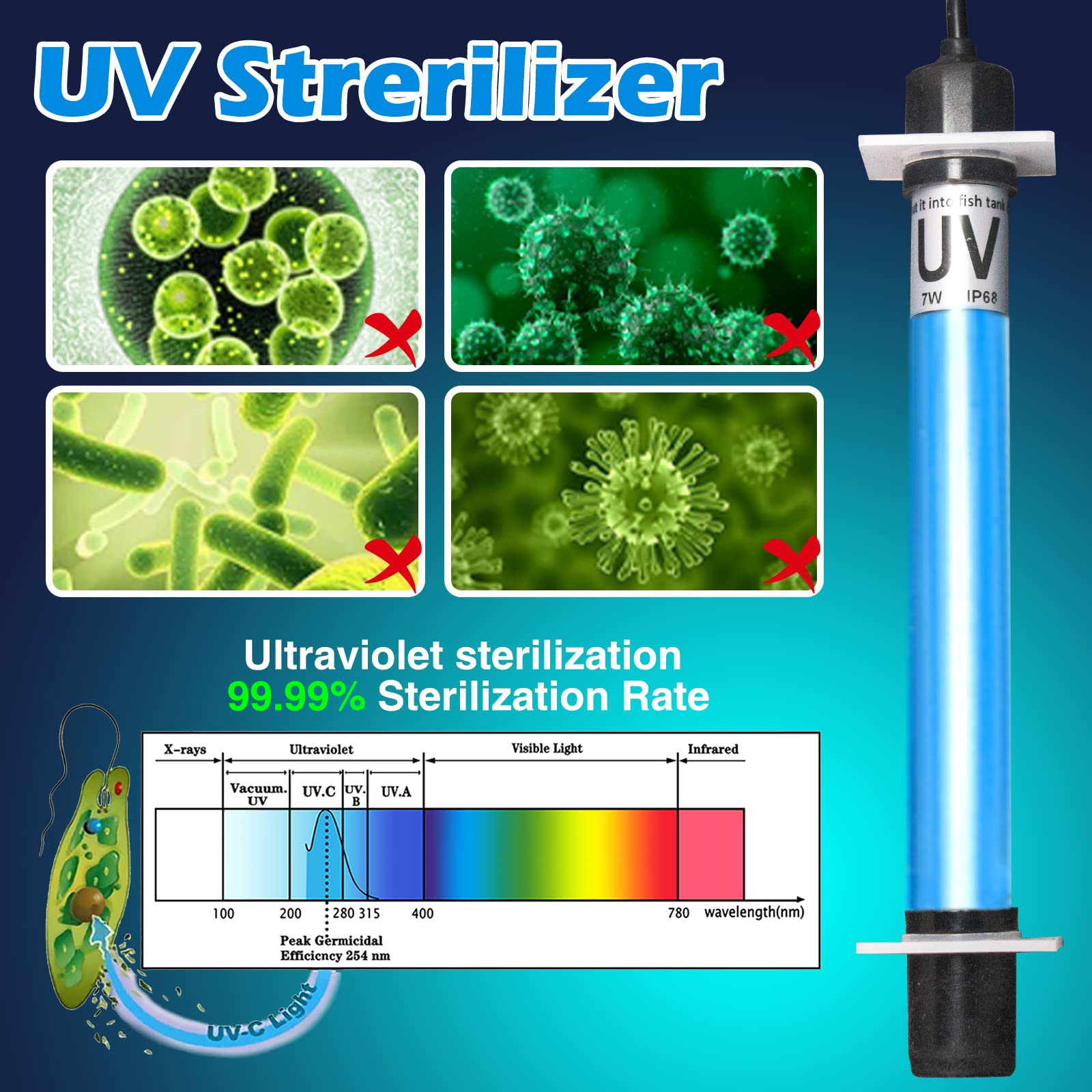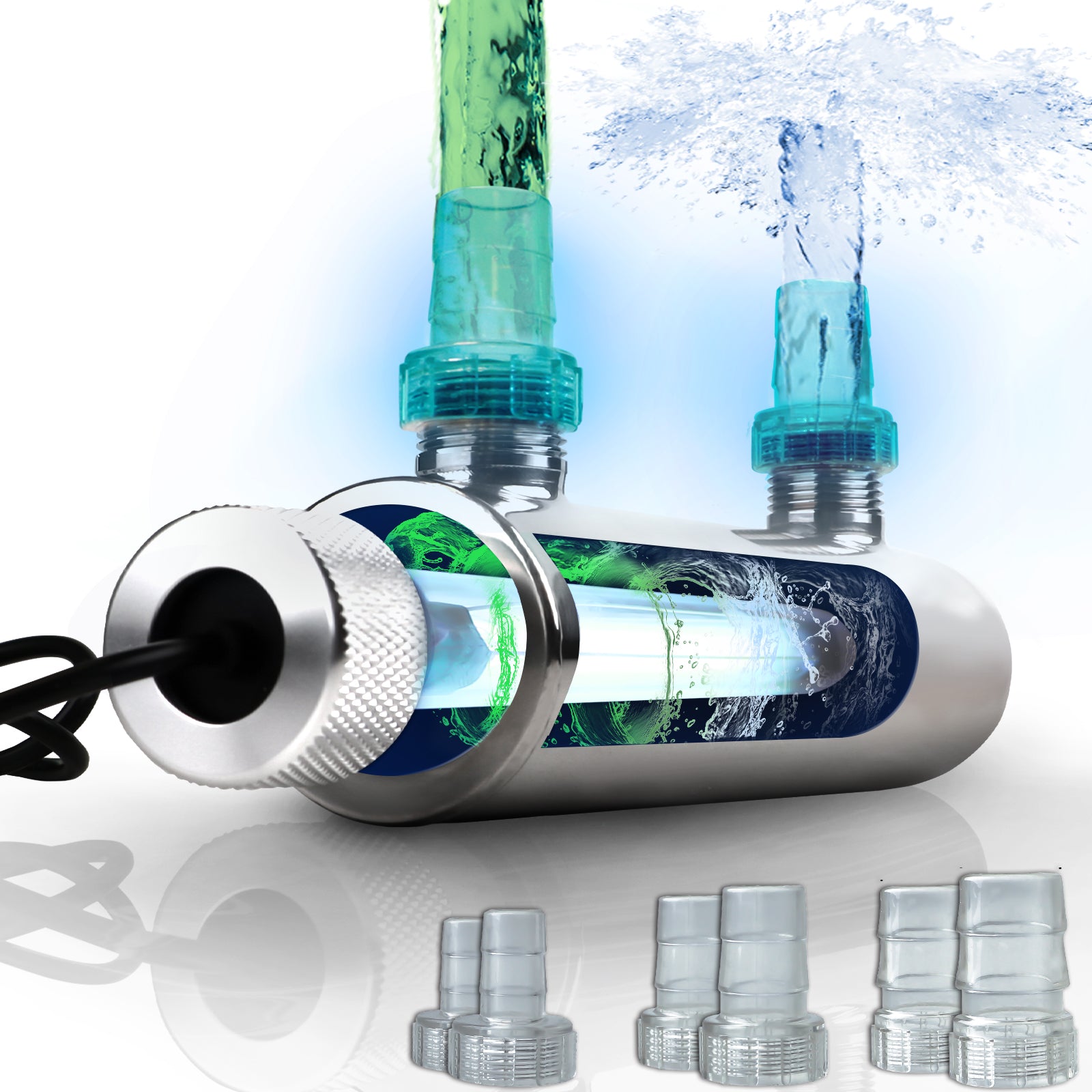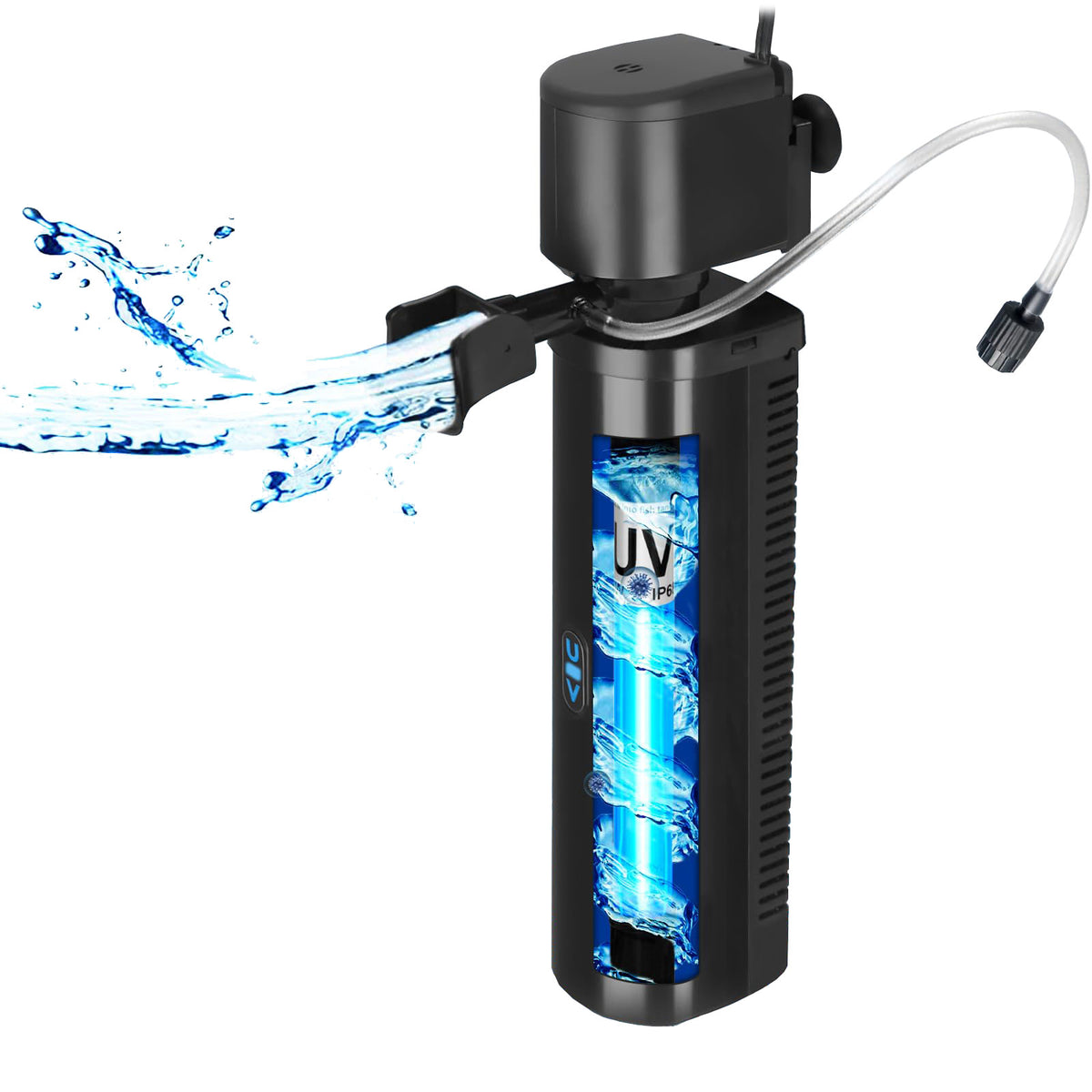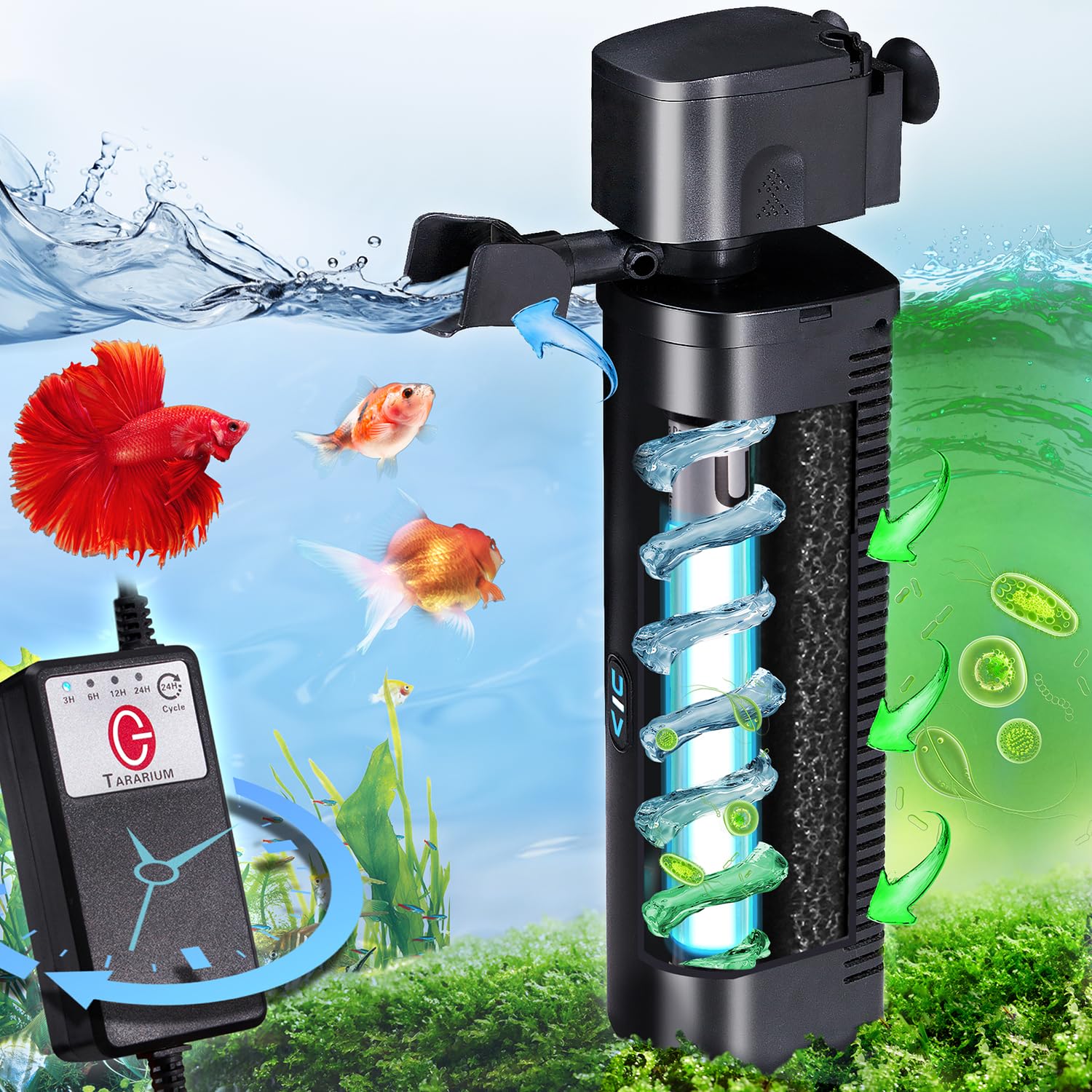
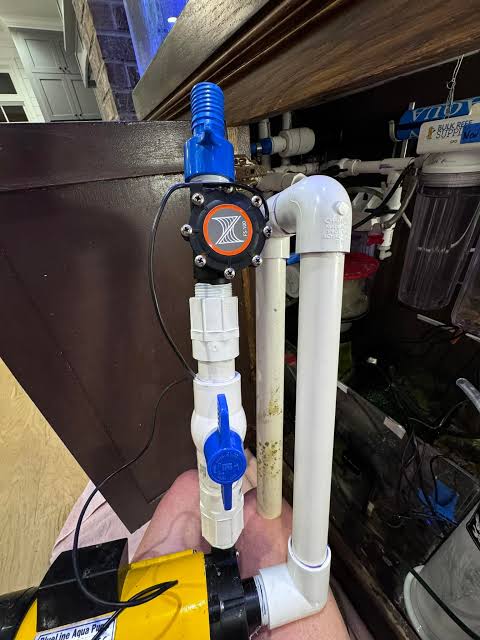
An aquarium UV sterilizer can be an effective tool for improving water clarity and reducing certain microorganisms in a fish tank. However, installing a powerful UV-C lamp does not automatically guarantee good results. One of the most important factors determining how well a UV sterilizer works is the speed at which water flows through its treatment chamber.
If water moves too quickly, microorganisms may not receive sufficient UV-C exposure during a single pass. If water moves too slowly, the sterilizer may treat a smaller volume of aquarium water than necessary. The challenge is finding a flow rate that provides an appropriate UV dose while allowing the system to circulate and process enough water to support the aquarium's needs.
This is why aquarium owners should pay attention to more than lamp wattage or advertised tank capacity. The actual flow rate through the UV sterilizer, the time water spends inside the chamber, the condition of the lamp, water clarity, and the overall circulation pattern all influence treatment performance.
A correctly adjusted UV system can help manage green water, reduce suspended microorganisms, and support a more stable aquarium environment. A poorly adjusted system, however, may consume electricity without delivering the expected results.
This guide explains how aquarium UV sterilizer flow rates work, why contact time matters, how to calculate and measure actual water flow, and how to optimize water circulation for different aquarium applications. Whether you maintain a freshwater planted tank, a tropical fish aquarium, a marine system, or a large aquarium with a sump, understanding these principles will help you get more value from your UV equipment.
1. Why Flow Rate Is So Important for Aquarium UV Sterilization
A UV sterilizer works by exposing circulating water to ultraviolet-C radiation inside a controlled chamber.
As water passes through the chamber, microorganisms suspended in the water may receive a UV dose that damages their genetic material and interferes with their ability to reproduce.
The effectiveness of this process depends on several factors, including:
-
UV-C lamp output.
-
Water flow rate.
-
Exposure time.
-
Treatment chamber design.
-
Distance between the lamp and the water.
-
Water clarity and UV transmission.
-
Lamp age and condition.
-
Cleanliness of the quartz sleeve.
Among these factors, water flow rate is particularly important because it directly influences how long water remains inside the chamber.
What Happens When Water Flows Too Quickly?
When the flow rate is too high, water moves through the UV sterilizer more rapidly.
This reduces the time available for UV-C exposure.
Even when the lamp is operating correctly, microorganisms may pass through the chamber before receiving the dose required for the intended treatment objective.
For example, a UV sterilizer may perform well at controlling suspended algae when operated at one flow rate but provide insufficient exposure for a more demanding microorganism-reduction objective at that same flow.
The lamp has not necessarily become defective. The problem may simply be that the water is moving too quickly for the desired treatment.
This is one reason manufacturers often publish different maximum flow rates for different applications.
What Happens When Water Flows Too Slowly?
A lower flow rate generally increases the time water spends inside the treatment chamber.
This can increase the UV exposure received by each passing portion of water.
However, excessively slow flow is not automatically better.
When the flow is too low:
-
Less water passes through the sterilizer over a given period.
-
The aquarium may take longer to circulate water through the unit.
-
The treatment system may process less water than required.
-
The equipment may operate outside its recommended flow range.
-
Some systems may experience undesirable temperature or operating conditions.
The goal is not to reduce flow as much as possible. It is to select a flow rate that provides the required UV performance while maintaining suitable water circulation.
Why Maximum Flow Is Not Always the Best Setting
A UV sterilizer's maximum flow rating should not be interpreted as the ideal flow rate for every application.
A maximum flow rating may refer to a particular clarification objective or a specific performance standard.
If the goal changes from controlling green water to reducing more resistant free-floating microorganisms, the recommended flow may be considerably lower.
Always check which treatment objective a manufacturer's flow specification refers to.
The most useful question is not simply, "How much water can this sterilizer handle?"
It is, "How much water can this sterilizer treat effectively for the problem I am trying to manage?"
2. Understanding the Relationship Between Flow Rate, Contact Time, and UV Dose
To optimize a UV sterilizer, aquarium owners need to understand three connected concepts: flow rate, contact time, and UV dose.
These are not interchangeable measurements. Each describes a different part of the treatment process.
What Is Flow Rate?
Flow rate is the volume of water moving through the UV sterilizer during a specific period.
It is commonly measured in:
-
Gallons per hour (GPH).
-
Liters per hour (LPH).
-
Gallons per minute (GPM).
-
Liters per minute (LPM).
For example, a system operating at 200 GPH moves 200 gallons of water through the unit in one hour.
It is important to distinguish the flow rate through the UV chamber from the circulation rate of the entire aquarium.
These two values may be very different.
What Is Contact Time?
Contact time is the amount of time water remains exposed to UV-C radiation while passing through the treatment chamber.
The chamber's effective water volume and the actual flow rate influence this time.
A simplified relationship is:
Contact Time = Effective Chamber Volume ÷ Flow Rate
For example, if a hypothetical UV chamber contains 0.25 gallons of effectively treated water and the flow rate is 15 gallons per minute, the nominal residence time is:
0.25 ÷ 15 = 0.0167 minutes
That equals approximately one second.
This is a simplified illustration, not a method for calculating the actual UV dose of a commercial unit. Real chamber geometry, water distribution, lamp placement, and variations in UV intensity affect the exposure received by individual microorganisms.
Nevertheless, the relationship explains why increasing flow generally decreases contact time.
What Is UV Dose?
UV dose describes the amount of UV energy received by a microorganism during exposure.
It is commonly expressed in millijoules per square centimeter (mJ/cm²).
A simplified conceptual relationship is:
UV Dose = UV Intensity × Exposure Time
In practical systems, UV intensity is not necessarily uniform throughout the chamber. It can vary according to distance from the lamp, chamber design, water transmission, and other operating conditions.
For this reason, aquarium owners should not attempt to calculate a precise dose using lamp wattage and flow rate alone unless they have the engineering data required for that specific sterilizer.
Manufacturers may publish flow rates associated with particular UV performance ratings. These specifications are generally more useful than trying to estimate the dose from electrical wattage alone.
Why the Same Lamp Can Produce Different Results
Imagine that two aquariums use identical UV sterilizers with the same lamps.
The first system sends water through the chamber at a relatively low flow rate.
The second system uses a much stronger pump and sends water through the chamber several times faster.
Although both lamps have the same electrical rating, the water in the first system generally receives more exposure time per pass.
The result may be a higher UV dose per pass, assuming the other operating conditions are comparable.
The second system processes more water per hour, but each portion of water may receive a lower dose.
This is the basic trade-off between treatment intensity per pass and processing volume.
3. Flow Rate Requirements Differ Between Green Water Control and Microorganism Reduction
One of the most common mistakes in aquarium UV installation is using the same flow-rate target for every purpose.
Different organisms respond differently to UV-C exposure. Their sensitivity varies, and the required UV dose depends on the treatment objective.
This means that the flow rate recommended for controlling suspended algae may be unsuitable for a more demanding microorganism-reduction application.
Flow Rate for Green Water Control
Green water is commonly caused by suspended single-celled algae multiplying in the water column.
A correctly sized UV clarifier can expose these algae cells to UV-C radiation as they pass through the chamber.
For this application, the system may be designed to process a relatively high volume of water per hour.
The exact maximum flow depends on the lamp, chamber design, and manufacturer specifications.
If the flow is too high, algae may pass through without receiving sufficient exposure.
If the flow is unnecessarily low, the unit may still work, but it may take longer to process the aquarium's circulating water.
When green water is the main concern, use the manufacturer's recommended clarification flow range rather than choosing a setting based only on tank volume.
Flow Rate for Bacterial and General Water Clarity Applications
Some UV systems are designed to reduce certain suspended bacteria and other microorganisms.
The appropriate flow depends on the performance objective and the susceptibility of the organisms being targeted.
Not all bacteria respond equally to UV-C exposure.
Some may be more sensitive than others, and water quality can influence treatment performance.
A UV sterilizer should therefore be selected and adjusted according to published performance information for the specific equipment.
It should not be assumed that a unit rated for green water clarification will provide the same level of microbial reduction at its maximum advertised flow.
Flow Rate for Free-Swimming Parasite Stages
Reducing certain free-swimming parasite stages is generally more demanding than controlling suspended algae.
These organisms may require a higher UV dose, which often means a lower flow rate through the sterilizer.
However, an important distinction must be made: UV treatment does not eliminate parasites that are attached to fish, embedded in tissue, or present in aquarium substrate and other locations outside the treatment chamber.
It can only affect susceptible organisms that pass through the unit and receive an adequate dose.
UV sterilization should not be treated as a complete cure for fish diseases.
For example, managing marine or freshwater parasites requires an appropriate diagnosis, quarantine or treatment strategy, and attention to the parasite's life cycle. A UV unit may be a supplementary tool, but it does not replace veterinary guidance or established disease-management procedures.
Why One Flow Setting Cannot Guarantee Every Result
A flow rate that is suitable for green water may be too high for a more demanding parasite-control objective.
Likewise, a very low flow rate selected for a specific UV dose may not provide the processing capacity required by an aquarium designed primarily for water clarification.
If your aquarium has several treatment objectives, you may need to prioritize the most important one or consider a system designed for multiple operating conditions.
Do not assume that one maximum-flow number represents every possible performance level.
4. Aquarium Turnover Rate vs. UV Sterilizer Flow Rate
Another common source of confusion is the difference between aquarium turnover rate and the flow rate through the UV sterilizer.
These measurements are related, but they describe different aspects of the system.
What Is Aquarium Turnover Rate?
Aquarium turnover rate describes how many aquarium volumes are circulated through the filtration or circulation system over a given period.
For example, if an aquarium contains 100 gallons of water and the filtration system circulates 300 gallons per hour, the nominal turnover rate is:
300 ÷ 100 = 3 turnovers per hour.
This means the filtration system moves a volume equivalent to three times the aquarium's capacity each hour.
However, turnover rate does not mean that every drop of water passes through the filter exactly three times.
Water circulation patterns are not perfectly uniform. Some areas may experience strong movement, while others may contain stagnant zones.
What Is UV Flow Rate?
UV flow rate is the actual amount of water passing through the UV sterilizer.
It may be supplied by:
-
A dedicated pump.
-
A controlled branch from a return line.
-
A canister filter outlet.
-
Another compatible filtration circuit.
The UV flow rate may represent only a portion of the total aquarium circulation.
For example, a 100-gallon aquarium may have a return pump delivering 500 GPH to the display system, while only 150 GPH passes through the UV sterilizer.
The aquarium's nominal return circulation and the UV treatment flow are therefore different.
Why You Should Not Automatically Send the Entire Return Flow Through the UV
If the main return pump sends water through the sterilizer at a rate above its recommended operating range, the UV dose per pass may be too low for the intended application.
This is particularly important when using a system that requires relatively slow flow.
A controlled branch can allow the return pump to deliver suitable circulation while a smaller amount of water passes through the UV chamber at the desired rate.
However, the plumbing arrangement must respect the manufacturer's minimum and maximum flow requirements.
The return system should also continue to provide adequate circulation to the aquarium.
Why More Aquarium Turnover Does Not Always Mean Better UV Treatment
Increasing the main pump's flow rate may improve overall water movement, but it does not automatically improve UV sterilization.
If the increase also raises the flow through the UV chamber, contact time may decrease.
A better approach is to manage aquarium circulation and UV treatment separately when their required flow rates are different.
5. How to Calculate the Appropriate UV Flow Rate
Before adjusting pumps or installing valves, determine the aquarium's actual water volume and the manufacturer's recommended flow range.
There are several ways to evaluate the appropriate flow rate.
Step One: Determine the Actual System Water Volume
Calculate the approximate water volume of the complete system.
For a freshwater aquarium with a sump, consider:
-
Display tank water volume.
-
Operating sump water volume.
-
Water in connected equipment.
-
Any additional connected tanks.
Do not simply use the aquarium's external dimensions if the tank contains substantial substrate, rocks, and decorations.
For a sump system, distinguish between the sump's total physical capacity and the actual amount of water it holds during normal operation.
Step Two: Identify the Treatment Objective
Decide what the UV sterilizer is expected to accomplish.
Is the primary goal:
-
Controlling suspended green water?
-
Improving water clarity?
-
Reducing certain free-floating microorganisms?
-
Supporting a broader disease-management program?
Different objectives may require different flow rates.
Step Three: Check the Manufacturer's Flow Specifications
Locate the recommended flow information for the exact UV model.
Look for:
-
Maximum clarification flow.
-
Maximum sterilization flow.
-
Flow range for a specified UV performance level.
-
Minimum operating flow.
-
Recommended pump capacity.
-
Maximum system pressure.
-
Installation requirements.
If the manufacturer provides flow ratings for different treatment purposes, use the rating that matches your objective.
Avoid relying on generic watt-per-gallon rules alone.
Step Four: Compare the Required Flow With Your Pump's Actual Output
The pump's advertised maximum flow is not necessarily the flow you will obtain after installation.
The real flow can be lower because of:
-
Vertical lift.
-
Pipe diameter.
-
Hose length.
-
Elbows and bends.
-
Valves and fittings.
-
Filter resistance.
-
UV chamber resistance.
-
Other equipment connected to the same line.
The actual operating flow should be measured or reliably estimated under the final plumbing conditions.
Step Five: Adjust and Verify
Once you know the recommended range, adjust the pump or valve to achieve a suitable operating point.
Do not assume that turning a valve halfway produces half the flow.
The relationship between valve position and actual flow is not necessarily linear.
Use a flow meter or a practical measurement method to verify the result.
6. How to Measure the Actual Flow Rate Through a UV Sterilizer
Many aquarium owners select pumps based on the specifications printed on the packaging.
This is convenient during the initial purchase, but it can create problems after installation.
The flow rating printed on a pump often describes performance under particular conditions. The installed flow may be substantially different.
Measuring actual flow is therefore one of the most useful steps in UV optimization.
Method One: Use an Inline Flow Meter
An inline flow meter is one of the most convenient options for a permanent UV installation.
It measures water moving through the plumbing and can help you monitor changes over time.
A flow meter is especially useful when:
-
The UV system operates continuously.
-
The pump output varies.
-
The installation has several valves.
-
The sterilizer requires a relatively narrow flow range.
-
You need to monitor performance during maintenance.
Choose a meter compatible with the pipe diameter, water conditions, and expected flow range.
Follow the meter manufacturer's installation instructions and check that the measurement is taken in the correct flow direction.
Some meters are more accurate under stable flow conditions than others.
Method Two: Use a Timed Bucket Test
A timed bucket test can provide a basic estimate when water can be collected safely at the UV outlet.
The method is simple:
-
Prepare a container with a known volume.
-
Arrange a safe way to collect water exiting the system.
-
Measure the time required to fill the container.
-
Calculate the flow rate.
The basic formula is:
Flow Rate = Collected Water Volume ÷ Collection Time
For a five-gallon container filled in one minute:
5 gallons × 60 minutes = 300 gallons per hour.
For a five-gallon container filled in two minutes:
5 gallons ÷ 2 minutes × 60 = 150 gallons per hour.
The bucket test is an approximation. Make sure the collection setup does not create excessive back pressure, alter the pump's operating conditions, or allow the aquarium to overflow.
It is also important to avoid disconnecting pressurized plumbing while the system is operating.
If the installation cannot be safely tested with a bucket, use a suitable inline flow meter or ask an aquarium equipment professional to measure it.
Method Three: Estimate Flow From Pump Performance Data
Pump performance charts can help estimate actual output when direct measurement is not possible.
Look for the pump's flow curve.
It typically shows how flow changes with operating head or pressure.
Compare the installed plumbing arrangement with the manufacturer's performance information.
This method can be useful during planning, but it is less reliable when the system contains several restrictions or filters whose resistance is difficult to estimate.
Why Flow Should Be Rechecked After Maintenance
Flow can change as equipment ages or becomes dirty.
A clogged prefilter may reduce output.
A pump impeller may accumulate debris.
A partially blocked hose may restrict circulation.
A valve may also be accidentally moved during routine maintenance.
For a system that depends on a controlled UV flow rate, periodic verification is a good maintenance practice.
7. How to Optimize Water Circulation Through the UV Sterilizer
Once the correct flow range has been identified, the next step is arranging the plumbing so that water moves consistently through the treatment chamber.
A good installation should balance treatment effectiveness, maintenance convenience, and overall aquarium circulation.
Use a Dedicated Pump When Precise Flow Control Is Needed
A dedicated pump can be a practical choice when the UV sterilizer needs a flow rate that differs significantly from the main filtration return.
For example, a large aquarium may have a powerful return pump, but its UV sterilizer may need a much slower flow for the intended treatment objective.
A separate pump allows the UV flow to be adjusted without changing the aquarium's main circulation.
This approach also makes troubleshooting easier because the UV circuit operates independently.
However, the dedicated pump must be compatible with the sterilizer's operating requirements.
Do not select a pump based only on its advertised maximum flow.
Choose a pump with a suitable operating range under the actual installed head and plumbing resistance.
Use a Controlled Branch From the Return Line
Another option is to create a branch from the aquarium's return plumbing.
A valve can regulate the amount of water passing through the UV chamber.
This can be an efficient arrangement because the existing return pump supplies the water.
The branch should be designed so that adjusting UV flow does not compromise the rest of the filtration system.
Use suitable valves, unions, and connectors.
Make sure the plumbing arrangement does not exceed the sterilizer's pressure or flow limits.
Where a pump uses a discharge-side valve to control flow, follow the pump manufacturer's instructions. Avoid restricting the pump's intake unless its design specifically permits it.
Avoid Uncontrolled Bypass Flow
A bypass can be useful for maintaining circulation while servicing the UV system.
However, if the plumbing allows water to take an easier route around the treatment chamber, the amount of water actually receiving UV exposure may be lower than expected.
Make sure the flow path is intentional.
If the goal is to treat a controlled portion of the aquarium water, know exactly how much passes through the sterilizer and how much bypasses it.
Do not assume that the total pump output represents UV-treated flow when only part of it enters the chamber.
Install the UV Unit in an Accessible Location
Correct flow is important, but maintenance matters too.
Place the sterilizer where the lamp, quartz sleeve, seals, and connections can be inspected and replaced without dismantling the entire aquarium system.
This makes regular cleaning easier and reduces the risk of installation errors.
Follow the manufacturer's mounting instructions.
Some systems are designed for horizontal operation, while others require a vertical or specific orientation to prevent trapped air or support proper circulation.
Do not assume that all UV sterilizers can be installed in any position.
Prevent Air From Becoming Trapped in the Chamber
Air pockets can interfere with water contact and, depending on the design, may affect heat transfer or lamp cooling.
Prime the unit according to the manufacturer's instructions.
Confirm that water is moving through the chamber correctly before powering the lamp.
If the sterilizer requires continuous water circulation while operating, never run it dry.
8. Where Should a UV Sterilizer Be Installed in the Filtration System?
The installation position can influence treatment performance.
One important consideration is the amount of suspended debris entering the chamber.
Why Mechanical Filtration Often Helps
Particles in aquarium water can interfere with UV treatment.
Suspended debris may absorb or scatter ultraviolet radiation.
Some microorganisms may also be shielded by particles or organic material.
A mechanical filter can remove a portion of this debris before water enters the UV sterilizer.
For many systems, placing the UV unit after mechanical filtration is a practical arrangement.
This does not mean every installation must follow one universal plumbing sequence. The manufacturer's instructions should take priority.
Some compact aquarium units are designed for connection to a specific filter outlet, while larger systems may have different plumbing arrangements.
A Common Filtration Sequence
A typical arrangement for an external filtration system may look like this:
-
Aquarium water enters the mechanical filtration stage.
-
Suspended debris is removed or reduced.
-
Filtered water passes through the UV sterilizer.
-
Treated water returns to the aquarium.
This arrangement can reduce the amount of debris entering the UV chamber.
It can also make the system easier to maintain because the UV unit receives relatively cleaner water.
Should UV Be Installed Before or After a Canister Filter?
For many canister-filter installations, connecting the UV unit to the filter's output can be useful.
The water has already passed through mechanical filtration, so fewer large particles may enter the UV chamber.
However, the connection must be compatible with the filter and the UV equipment.
Check the manufacturer's recommendations for hose size, flow, pressure, and installation position.
Some in-line units are designed to work with specific filter models and may not be compatible with every canister filter.
What About Sump-Based Systems?
In a sump system, the UV sterilizer may be installed on a dedicated feed pump or a controlled return branch.
A practical arrangement often draws relatively clean water from a suitable sump compartment and returns treated water to the sump or display system according to the plumbing design.
Avoid drawing water from an area with excessive debris if that debris could interfere with the treatment chamber.
Make sure the UV circuit does not disturb the sump's water level management or reduce the flow required by other equipment.
9. How Tank Circulation Affects the Overall Effectiveness of UV Treatment
Even when water passes through the UV sterilizer at the correct rate, the aquarium may not receive effective overall treatment if its circulation pattern is poor.
UV systems treat water that enters the chamber.
They do not directly treat organisms attached to fish, plants, substrate, or decorations.
For an effective system, aquarium water must circulate sufficiently well so that water from different parts of the tank has an opportunity to pass through the sterilizer.
Avoid Dead Zones
A dead zone is an area where water movement is limited.
These areas may occur:
-
Behind large rocks.
-
Beneath dense decorations.
-
Behind equipment.
-
In heavily planted corners.
-
Near the bottom of deep tanks.
-
In areas separated from the main flow path.
Water in these locations may move slowly toward the filter intake.
This can delay its passage through the UV sterilizer.
Adding or repositioning circulation pumps may help improve overall tank movement.
However, stronger circulation is not automatically better for every fish or plant.
Adjust the flow according to the species being kept.
Position Filter Intakes and Returns Thoughtfully
The position of the filter intake and return outlet influences how water moves around the aquarium.
If water travels directly from the return outlet to the intake without mixing through the rest of the aquarium, some areas may receive less effective circulation.
Try to create a broad, natural circulation pattern that encourages water movement through the full tank.
For larger aquariums, multiple circulation outlets may help reduce stagnant areas.
Keep Surface Movement Appropriate
Surface movement supports gas exchange.
A suitable circulation pattern helps exchange gases between the aquarium water and the surrounding air.
UV treatment does not replace this function.
When repositioning pumps or changing filter returns, make sure that the aquarium continues to provide appropriate surface movement for its fish and other inhabitants.
Consider Plant and Coral Requirements
Planted aquariums and reef systems may require carefully controlled water movement.
Some aquatic plants prefer gentle circulation, while certain corals require stronger and more varied water flow.
Arrange circulation pumps so that the UV-related improvements do not create excessive current in areas where delicate organisms are located.
The goal is balanced circulation, not simply maximum water movement.
10. How to Balance UV Flow With Aquarium Water Turnover
The correct UV flow rate should not be selected without considering the overall aquarium system.
However, there is no universal turnover rate that applies to every fish tank or UV application.
Different aquarium types have different circulation requirements, and manufacturers may publish specific turnover guidelines for their systems.
Freshwater Aquariums
Freshwater systems vary considerably.
A low-stocked community tank, a densely planted aquarium, and a large fish-only system may all require different circulation patterns.
A UV sterilizer used primarily for green water control may process water at a relatively high rate.
A system intended for a more demanding microbial-reduction objective may need a lower flow through the UV chamber.
The filter and circulation system should still provide suitable water movement for the fish and plants.
Marine Aquariums
Marine aquariums often use sumps and dedicated circulation pumps.
A reef tank may need substantial internal water movement to support coral health, while the flow through the UV sterilizer may be controlled independently.
This is one reason a dedicated UV feed pump or branch circuit can be useful.
The UV sterilizer's flow should be selected according to its published ratings and the intended treatment objective.
Do not automatically use the display tank's total circulation pump rating as the UV flow rate.
Fish-Only Marine Systems
Fish-only marine aquariums may have different circulation and filtration priorities from reef systems.
The correct UV flow depends on the equipment and treatment objective.
If the unit is intended to reduce certain free-floating organisms, follow the manufacturer's recommended flow and performance information.
Do not assume that faster circulation automatically provides stronger sterilization.
Large Aquariums and Multiple-Tank Systems
Large systems may benefit from more than one UV unit or a larger chamber, particularly when the total water volume and required processing capacity are substantial.
Multiple units can sometimes be connected in parallel to provide greater combined flow capacity.
Parallel plumbing divides the water between separate treatment chambers.
However, the flow through each unit must still remain within its recommended operating range.
Connecting units in series may increase the number of treatment stages that water passes through, but it also changes hydraulic resistance and may reduce total system flow.
The correct configuration depends on the equipment and the intended application.
Follow the manufacturer's recommendations rather than assuming that adding more UV units automatically improves performance.
11. Common Flow Rate Problems and How to Fix Them
A UV sterilizer may appear to operate normally while delivering less effective treatment than expected.
The following problems are common in aquarium installations.
Problem One: The Flow Rate Is Too High
Possible signs:
-
Green water remains after an extended period.
-
The unit does not perform as expected.
-
The water appears to pass through the chamber extremely quickly.
-
The installed pump is much stronger than the manufacturer's recommended flow range.
Possible solutions:
-
Measure the actual flow through the sterilizer.
-
Reduce the flow using an appropriate valve.
-
Use a dedicated pump.
-
Select a larger UV unit if higher processing capacity is required.
-
Recheck the manufacturer's flow recommendations.
Do not simply install a stronger lamp without evaluating the chamber and flow specifications.
Problem Two: The Flow Rate Is Too Low
Possible signs:
-
Very slow movement through the UV circuit.
-
Reduced circulation through the filtration system.
-
A clogged prefilter or hose.
-
A pump that is operating below its expected output.
Possible solutions:
-
Inspect the pump and impeller.
-
Clean clogged mechanical filtration components.
-
Check hoses for kinks or blockages.
-
Inspect valves and connectors.
-
Verify that the unit is operating within its minimum flow requirement.
Do not increase pump output without confirming that the sterilizer can safely handle the additional flow.
Problem Three: Flow Drops Gradually Over Time
A gradual decline may indicate accumulating debris in the filtration system or plumbing.
Check:
-
Mechanical filter media.
-
Pump intake screens.
-
Impellers.
-
Hose connections.
-
Inline valves.
-
Pipe bends and narrow sections.
-
Any sediment accumulation inside accessible components.
A sudden flow decline may indicate a mechanical failure or blockage.
If the pump becomes noisy or overheats, disconnect it and investigate according to the manufacturer's instructions.
Problem Four: The Flow Meter Shows Unexpected Readings
An inaccurate reading can result from incorrect meter installation, air in the system, an unsuitable measurement range, or unstable water movement.
Check that the meter is compatible with the pipe size and flow range.
Make sure it is installed in the correct direction.
If readings remain inconsistent, compare them with a second measurement method or consult the equipment supplier.
Problem Five: The Aquarium Remains Green Despite Correct Flow
Correct flow alone does not guarantee successful green water control.
Other possible problems include:
-
An aging UV lamp.
-
A dirty quartz sleeve.
-
Insufficient lamp output.
-
An undersized UV chamber.
-
Poor water mixing.
-
Excessive light exposure.
-
Nutrient accumulation.
-
Other water quality problems.
Inspect the complete system rather than adjusting the pump repeatedly.
12. How Water Quality and Lamp Condition Affect Flow Performance
Flow rate is important, but it cannot compensate for poor UV transmission or an aging lamp.
The amount of UV-C energy that reaches microorganisms depends on the condition of the entire treatment system.
Cloudy Water Can Reduce UV Effectiveness
Suspended particles, organic material, and colored dissolved substances can interfere with ultraviolet transmission.
Particles may absorb or scatter UV radiation, while some microorganisms may be shielded by material surrounding them.
This is one reason mechanical filtration is often useful before UV treatment.
If the aquarium water is heavily loaded with debris, improve filtration and identify the source of the problem before relying on the sterilizer.
Clean the Quartz Sleeve Regularly
The quartz sleeve protects the lamp from direct water contact while allowing UV-C radiation to pass through.
Over time, mineral deposits, biofilm, and other residue may accumulate on its surface.
These deposits can reduce UV transmission and lower treatment performance.
Inspect and clean the sleeve according to the manufacturer's maintenance instructions.
Do not use abrasive materials that may scratch the quartz.
A cracked or damaged sleeve must be replaced before the system is returned to service.
Replace the Lamp at the Recommended Interval
UV-C output gradually declines as a lamp ages.
A lamp can still appear illuminated even when its germicidal performance has decreased.
For this reason, use the replacement interval specified by the manufacturer rather than waiting for the lamp to stop working.
When replacing the lamp, verify compatibility with the exact sterilizer model.
Do not select a replacement using wattage alone.
Check the Ballast and Electrical Connections
A failing ballast or damaged connector can affect lamp operation.
If the lamp flickers, fails to start, or behaves inconsistently, disconnect the equipment and investigate according to the manufacturer's instructions.
Electrical repairs should be handled by a qualified person when necessary.
Never inspect an operating UV-C lamp by looking directly at the exposed light.
UV-C radiation can injure eyes and skin.
Allow Proper Operating Conditions
Some UV systems require a warm-up period or particular operating conditions before they deliver their rated performance.
Follow the manufacturer's instructions for starting, stopping, and maintaining the unit.
Also make sure the unit receives the required water flow while operating.
Never run a model dry unless its manufacturer explicitly confirms that the design allows it.
13. A Practical Example: Adjusting UV Flow for a 100-Gallon Aquarium
Consider a hypothetical 100-gallon aquarium connected to a sump.
The aquarium owner has installed a UV sterilizer and wants to improve water clarity.
The main return pump is rated at 600 GPH under its advertised operating conditions.
However, the actual return flow after installation is lower because of vertical lift, plumbing bends, and filtration resistance.
The owner should not assume that the UV sterilizer receives 600 GPH simply because that number appears on the pump.
Step One: Establish the Actual UV Flow
The owner measures the flow through the UV circuit using a compatible flow meter.
The reading is 250 GPH.
This is the actual UV treatment flow, not the pump's advertised maximum.
Step Two: Check the Manufacturer's Rating
The owner reviews the UV sterilizer documentation and identifies the recommended flow range for green water clarification.
The manufacturer's rating, rather than a generic online chart, becomes the reference point.
If 250 GPH is outside the recommended range, the owner adjusts the plumbing accordingly.
Step Three: Confirm the Treatment Objective
The owner is primarily trying to control suspended algae.
If the aquarium later requires support for a different treatment objective, the flow rate must be reassessed.
The same setting should not automatically be considered suitable for every microorganism.
Step Four: Improve Mechanical Filtration
The owner inspects the mechanical filtration stage and removes accumulated debris.
This helps reduce the amount of suspended material entering the UV chamber.
Step Five: Check Overall Circulation
The owner observes water movement in the display tank.
There is strong flow near the return outlet but limited movement behind several large decorations.
A circulation pump is repositioned to improve movement without creating excessive current for the fish.
Step Six: Monitor Performance
The owner records the initial flow rate, lamp replacement date, and water clarity.
Over the following days, the aquarium's appearance and system flow are monitored.
If the problem remains, the owner checks other possible causes instead of repeatedly increasing the pump speed.
The example illustrates a general principle: effective UV treatment requires the right flow, a suitable unit, good water quality, and adequate circulation throughout the aquarium.
14. A Step-by-Step Setup Checklist for Better UV Sterilization
Before operating an aquarium UV sterilizer, review the following checklist.
Equipment Selection
-
Confirm the aquarium's actual system water volume.
-
Identify the primary treatment objective.
-
Select a unit with suitable manufacturer-rated performance.
-
Check the recommended flow range.
-
Verify lamp compatibility.
-
Confirm the unit's pressure and plumbing limits.
Installation
-
Follow the manufacturer's mounting orientation.
-
Use compatible hoses, pipes, and fittings.
-
Install the UV system in an accessible location.
-
Consider mechanical filtration before the UV chamber.
-
Avoid unnecessary restrictions.
-
Make sure the plumbing cannot leak or become accidentally disconnected.
-
Prevent air from becoming trapped where the design requires a fully flooded chamber.
Flow Adjustment
-
Measure the actual flow through the UV unit.
-
Compare the result with the manufacturer specifications.
-
Use a suitable valve or dedicated pump when necessary.
-
Check that other filtration circuits retain adequate circulation.
-
Confirm that bypass arrangements do not create unintended flow paths.
Maintenance
-
Inspect the quartz sleeve regularly.
-
Replace the lamp at the recommended interval.
-
Check O-rings and seals.
-
Inspect cables and electrical connectors.
-
Clean mechanical filtration components.
-
Recheck flow after maintenance.
Performance Monitoring
-
Record water clarity.
-
Monitor aquarium temperature and general water conditions.
-
Observe fish behavior.
-
Check for algae or other water quality problems.
-
Review circulation patterns.
-
Investigate persistent problems instead of assuming that higher flow or more wattage will solve them.
15. Frequently Asked Questions About Aquarium UV Sterilizer Flow Rate
What Is the Best Flow Rate for an Aquarium UV Sterilizer?
There is no universal best flow rate.
It depends on the sterilizer model, UV output, chamber design, water clarity, and treatment objective.
Use the manufacturer's recommended flow range for the application you want to achieve.
Should Water Flow Slowly Through a UV Sterilizer?
Slower flow generally increases contact time and may allow a higher UV dose per pass.
However, extremely slow flow may reduce the total volume of water treated and may fall outside the manufacturer's operating range.
The correct setting is the one that provides suitable exposure while maintaining adequate processing capacity.
Does Higher Flow Reduce UV Sterilization Effectiveness?
Higher flow generally decreases contact time in a given treatment chamber.
This can reduce the UV dose received per pass.
However, the total performance also depends on lamp output, chamber design, and other factors.
A higher flow may be suitable for some clarification applications while being unsuitable for other treatment objectives.
Can I Use the Same Flow Rate for Green Water and Parasite Control?
Not necessarily.
Green water control and reducing certain free-swimming parasite stages may require different UV doses.
Many systems specify lower maximum flow rates for more demanding applications.
Check the manufacturer specifications and remember that UV treatment is not a complete cure for fish parasites.
Is It Better to Use a Dedicated Pump for a UV Sterilizer?
A dedicated pump can provide more precise control when the required UV flow differs from the main return flow.
It can also simplify adjustments and troubleshooting.
However, a controlled return-line branch may be suitable for some installations.
The choice depends on plumbing design, pump characteristics, and the sterilizer's requirements.
Should the UV Sterilizer Be Installed Before or After the Filter?
For many systems, installing the UV sterilizer after mechanical filtration is practical because fewer suspended particles enter the treatment chamber.
However, the correct installation position depends on the equipment design.
Follow the manufacturer's instructions, particularly for compact in-line clarifiers and canister-filter connections.
Does a UV Sterilizer Increase Aquarium Water Turnover?
The UV sterilizer does not automatically increase overall aquarium circulation.
It treats the water passing through its chamber.
A stronger pump or an additional feed circuit may increase the volume processed through the UV unit, but the aquarium's total circulation depends on the entire filtration and pump system.
How Do I Know Whether My UV Flow Is Too High?
Compare the measured flow with the manufacturer's recommended maximum for your treatment objective.
If the flow is above the specified range, adjust the pump or plumbing.
Do not rely on visual estimates of how quickly water moves through the equipment.
Can I Reduce Flow With a Valve?
Many installations use a compatible valve to regulate flow.
The valve should be installed according to the pump and sterilizer manufacturers' instructions.
Do not create excessive pressure or restrict a pump's intake unless the equipment is specifically designed for that condition.
Measure the flow after adjustment instead of relying on valve position.
Does a Dirty Quartz Sleeve Affect the Required Flow Rate?
A dirty sleeve does not directly change the hydraulic flow rate in most designs, but it reduces UV transmission.
This means the same measured flow may produce a less effective UV treatment.
Clean the quartz sleeve according to the manufacturer's maintenance schedule.
Will a More Powerful UV Lamp Allow Higher Flow?
Not automatically.
A higher-output lamp may support a higher flow at a specified UV performance level, but the actual result depends on chamber design, lamp efficiency, and the manufacturer's testing.
The complete unit must be rated for the intended flow.
Can UV Sterilization Kill Every Parasite in an Aquarium?
No.
UV treatment can affect susceptible free-floating stages that pass through the chamber and receive a sufficient dose.
It does not reliably treat organisms attached to fish, hidden in substrate, or present in areas that do not pass through the sterilizer.
Use appropriate quarantine and disease-management procedures.
How Often Should I Measure the Flow Rate?
For a stable system, check flow during installation, after plumbing changes, after pump maintenance, and whenever performance changes unexpectedly.
Aquarium systems with controlled flow requirements may benefit from more frequent monitoring.
A permanent flow meter makes this easier.
Conclusion: The Right Flow Rate Makes Your UV Sterilizer More Effective
An aquarium UV sterilizer is only as effective as the conditions under which it operates.
A powerful lamp cannot compensate for water moving too quickly through the chamber. Likewise, an extremely low flow rate is not automatically the best solution because the system must still process enough water to meet the aquarium's needs.
The most important factors are the relationship between flow rate and contact time, the UV dose required for the intended treatment objective, water clarity, lamp condition, and the overall circulation pattern.
Start by identifying whether your main goal is green water control, general water clarification, or reducing certain free-floating microorganisms. Then consult the manufacturer's performance specifications and measure the actual flow through the sterilizer.
Use a dedicated pump or a controlled branch when the required UV flow differs from the main filtration return. Improve mechanical filtration, keep the quartz sleeve clean, replace the lamp at the recommended interval, and make sure water circulates throughout the aquarium rather than bypassing stagnant areas.
Most importantly, do not rely on advertised pump capacity or a generic tank-size chart as a substitute for actual measurement.
The best aquarium UV setup is not necessarily the one that moves the most water. It is the one that delivers the appropriate UV exposure at a controlled flow rate while maintaining healthy circulation throughout the entire aquarium.