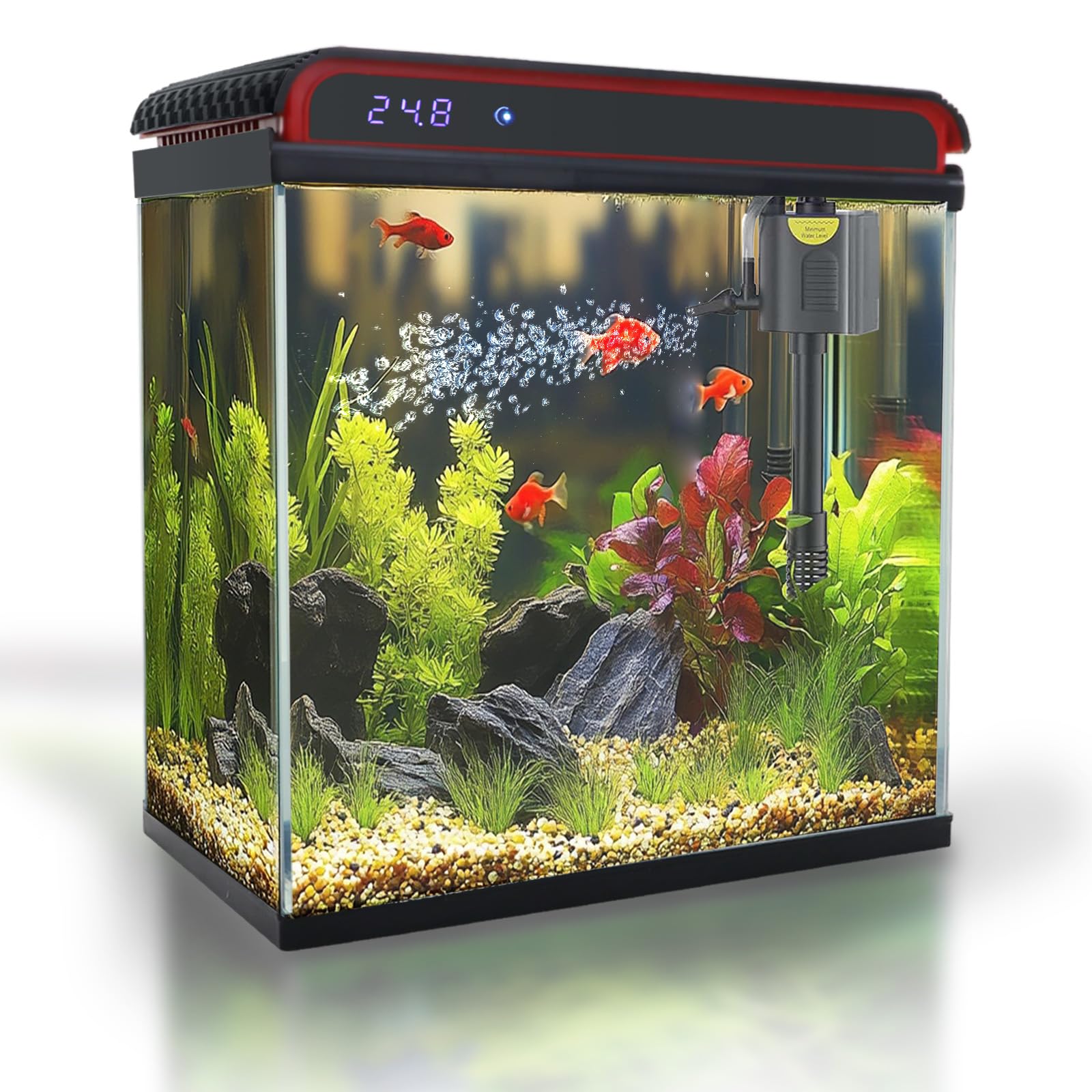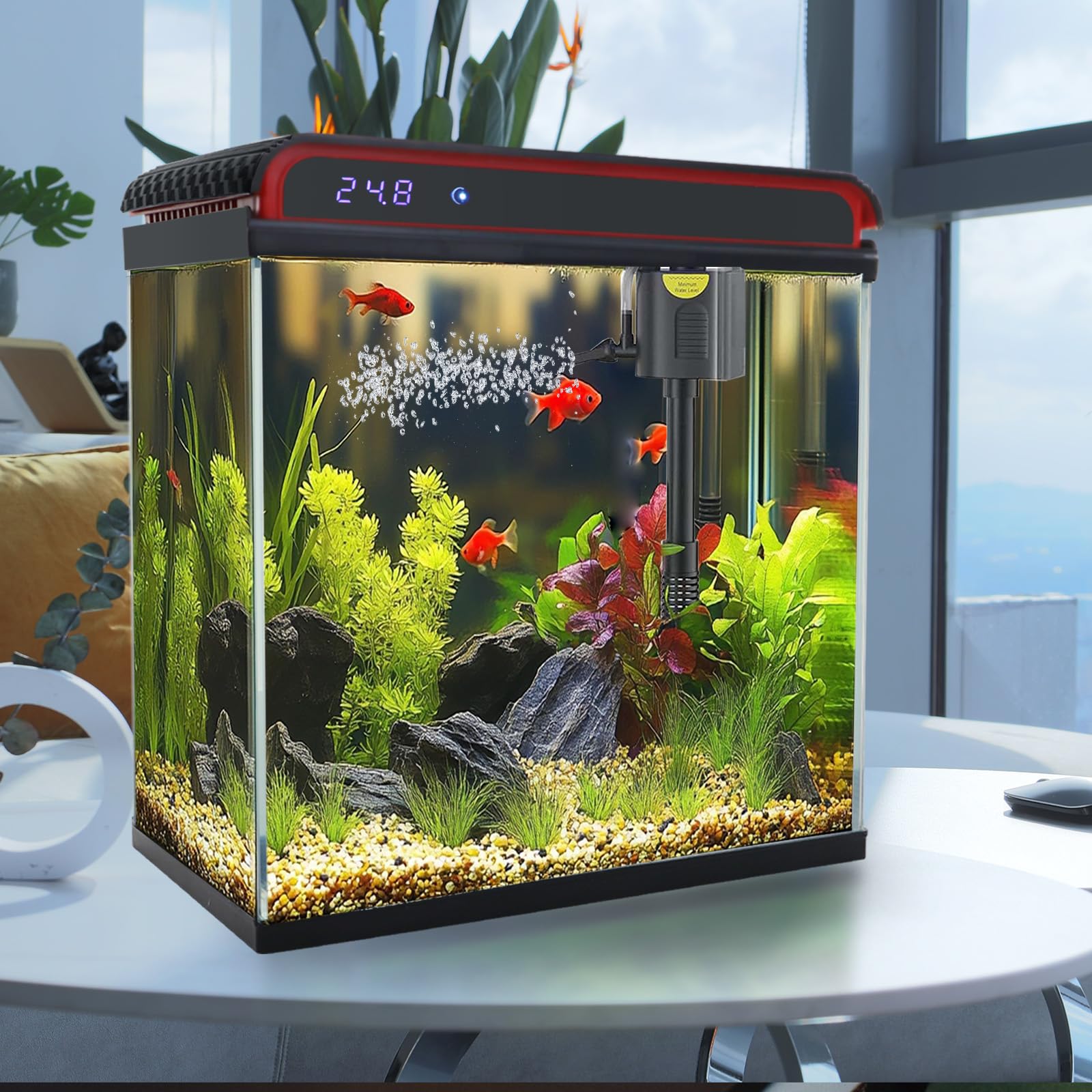
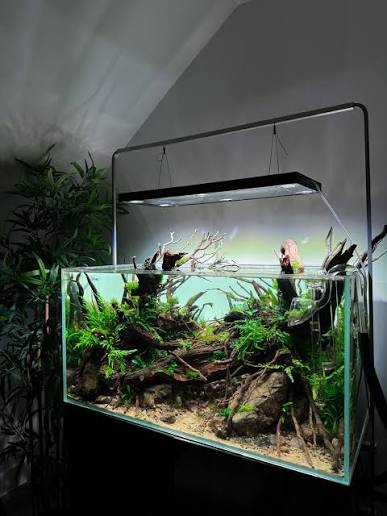
Keeping an aquarium warm during cold weather is an important part of maintaining a healthy aquatic environment. When room temperatures drop, aquarium owners often add insulation around the tank, install a cover, or reduce exposure to cold air to help retain heat. These measures can reduce temperature fluctuations, support fish health, and make aquarium heating more efficient.
However, there is another factor that should not be overlooked: light.
For aquariums with live plants, corals, or other photosynthetic organisms, lighting is not simply a decorative feature. It provides the energy needed for photosynthesis, supports healthy plant development, and influences the balance between plants and algae. When insulation materials, blackout panels, or aquarium covers block too much light, they can interfere with the daily lighting requirements of aquatic plants.
This creates a practical challenge for aquarium owners, especially during winter: How can you improve heat retention without sacrificing the light needed for photosynthesis?
The good news is that insulation and lighting do not have to work against each other. With the right materials, a thoughtful aquarium cover design, and a consistent lighting schedule, it is possible to maintain stable water temperatures while providing adequate light for healthy plant growth.
This guide explains how aquarium insulation and shading affect photosynthesis, which areas of a fish tank should be insulated, how different covers influence light transmission, and how to establish a balanced daily lighting routine. Whether you maintain a small freshwater aquarium, a densely planted tank, or a larger aquatic display, these practical ideas can help you create a more stable and efficient setup.
1. Does Aquarium Insulation Affect Photosynthesis?
The relationship between aquarium insulation and photosynthesis depends primarily on where the insulation is installed and how much light it blocks.
Insulation materials are designed to slow heat transfer. Common materials used around aquariums include foam boards, expanded polystyrene, closed-cell foam sheets, insulating panels, and reflective insulation products.
Most of these materials are not transparent. When installed on the back or sides of an aquarium, they can block light entering through those surfaces. When installed above the aquarium or placed between the lighting fixture and the water, they can reduce the amount of light reaching aquatic plants.
However, insulating the back and sides of a tank does not automatically reduce plant photosynthesis significantly.
Most planted aquariums use an overhead light source as their primary source of illumination. Plants receive most of their usable light from the aquarium light positioned above the water. In this arrangement, opaque insulation on the back, sides, and underside can improve heat retention without blocking the main lighting path.
The problem begins when insulation interferes with the overhead light.
How Insulation Can Reduce Photosynthesis
Photosynthesis is the process through which plants use light energy to convert carbon dioxide and water into sugars, releasing oxygen as a byproduct.
Aquatic plants require several important resources to grow:
-
Light energy.
-
Carbon dioxide.
-
Water.
-
Essential nutrients.
-
Suitable environmental conditions, including an appropriate temperature.
When one of these resources becomes insufficient, plant growth may slow even when other resources are available.
Light is particularly important because it provides the energy that powers photosynthesis. If an opaque cover blocks the aquarium light, plants may receive less usable light than before.
This can happen when:
-
An insulating board is placed directly over the aquarium.
-
A dark cover overlaps the lighting area.
-
A thick or dirty lid reduces light transmission.
-
A temporary blackout blanket is left in place during the daytime.
-
Floating plants become so dense that they shade submerged plants.
-
A decorative canopy prevents the light fixture from illuminating the entire tank.
The result may be slower growth, weaker stems, reduced compactness, or deterioration of plants that require stronger illumination.
However, these symptoms are not always caused by shading. Nutrient deficiencies, insufficient carbon dioxide, poor water circulation, and unsuitable temperatures can create similar problems.
The important point is that insulation itself does not stop photosynthesis. Its effect depends on whether it changes the amount of usable light reaching the plants.
Can Aquarium Insulation Actually Help Plant Growth?
Indirectly, yes.
Aquatic plants need an appropriate temperature range to maintain normal biological functions. Temperature influences enzyme activity, metabolism, nutrient uptake, and the overall growth rate of plants.
A tank that experiences large daily temperature changes may create stressful conditions for sensitive aquatic species.
Insulation can help reduce unnecessary temperature fluctuations, especially when an aquarium is located in a cold room, near a drafty window, or against an exterior wall.
More stable temperatures can support a healthier environment for both fish and plants.
However, insulation cannot replace appropriate lighting, carbon dioxide, or nutrients.
A well-insulated aquarium with insufficient light may still experience poor plant growth. Likewise, a brightly illuminated aquarium with unstable temperatures may struggle to support sensitive species.
The goal is to balance thermal stability with suitable lighting rather than maximizing either factor independently.
2. Understanding How Light Powers Photosynthesis in an Aquarium
Before changing an aquarium's insulation or lighting arrangement, it helps to understand what aquatic plants actually need from their light source.
Not all aquarium lighting is equally useful for plant growth. Brightness to the human eye does not always correspond directly to the amount of light available for photosynthesis.
Several factors determine how effective aquarium lighting is.
Light Intensity
Light intensity describes how much light reaches the plants.
A strong LED fixture positioned close to the water may provide substantially more light than a weaker fixture mounted farther away.
However, light intensity decreases as the distance from the light source increases. Aquarium depth, water clarity, floating plants, decorations, and cover materials can also affect the amount of light reaching lower parts of the tank.
For planted aquariums, PAR, or photosynthetically active radiation, is a more useful measurement than electrical wattage alone.
PAR describes light in the wavelength range commonly used by photosynthetic organisms. Measurements are typically expressed in micromoles of photons per square meter per second.
When available, a PAR measurement taken near the substrate can help determine whether plants at different depths receive suitable illumination.
This is particularly useful for deep aquariums, densely planted layouts, and tanks with substantial floating plant coverage.
Light Duration
Light duration, also called the photoperiod, refers to how many hours the aquarium receives light each day.
Even if the light intensity is appropriate, running the fixture for an unsuitable period can create problems.
Too little light may limit plant development, while excessive lighting can encourage algae growth, particularly when carbon dioxide and nutrients are not properly balanced.
The most useful photoperiod depends on plant species, lighting intensity, tank maturity, and aquarium maintenance.
A newly established planted aquarium often benefits from a relatively conservative schedule of approximately six to eight hours per day. More established systems may require adjustments based on plant growth and equipment output.
Some aquarium lighting guides recommend longer schedules for particular planted setups, while other systems perform well with shorter periods.
There is no universal number that works for every aquarium.
Consistency is generally more important than frequently changing the schedule.
Light Spectrum
Light spectrum describes the different wavelengths emitted by an aquarium fixture.
Red and blue portions of the visible spectrum contribute to photosynthesis, while other wavelengths also contribute to plant growth and the overall appearance of the aquarium.
Modern full-spectrum LED fixtures are often designed to support aquatic plants while producing natural-looking colors.
A white aquarium light can provide useful illumination for plant growth, but different fixtures may produce different amounts of photosynthetically useful radiation even when they appear equally bright.
For this reason, selecting a suitable planted-tank light is generally more effective than choosing a fixture based only on its advertised wattage or visual brightness.
Carbon Dioxide and Nutrient Availability
Light is only one part of the photosynthesis equation.
Plants also require carbon dioxide and nutrients.
When light intensity increases, plants may need additional carbon dioxide and nutrients to support the higher potential growth rate.
If these resources are insufficient, simply increasing the lighting period may not improve plant health.
Instead, it may encourage algae growth or create an imbalance in the aquarium.
This is why successful planted aquariums require a balance between light, carbon availability, and fertilization.
Adding insulation or changing a tank cover should not distract from these basic requirements.
3. How Aquarium Insulation Materials Affect Light Transmission
Different insulation materials serve different purposes.
Some are designed to reduce heat loss, while others are intended to block external light, reflect radiant energy, or provide a protective cover.
Understanding their characteristics can help aquarium owners select materials that improve temperature stability without unnecessarily reducing plant illumination.
Expanded Polystyrene Foam Boards
Expanded polystyrene, commonly called EPS foam, is one of the most familiar insulation materials.
It is lightweight, relatively inexpensive, and easy to cut into panels.
EPS boards are commonly used on the back or sides of aquariums located in cold rooms, garages, or other environments where temperature stability is difficult to maintain.
Because standard EPS is opaque, it blocks light through any surface it covers.
This makes it suitable for the back and side panels of an aquarium but generally unsuitable for covering the entire top of a planted tank.
A practical approach is to use foam boards only where they are needed for heat retention.
For example, a planted aquarium can have insulation panels behind the rear glass while keeping the overhead LED fixture completely exposed.
This provides thermal benefits without significantly interfering with the primary lighting arrangement.
Extruded Polystyrene Foam Boards
Extruded polystyrene, or XPS, is another common insulation material.
It is usually more uniform and denser than standard expanded polystyrene.
Its closed-cell structure makes it useful in applications where a durable, moisture-resistant insulation panel is desirable.
XPS is also opaque, so it should generally be installed around the sides, back, or underside of the tank rather than across the main lighting area.
When selecting any foam insulation, make sure the material is suitable for its intended location and cannot contaminate the aquarium water.
Do not assume that every construction-grade insulation product is automatically safe for direct or prolonged contact with aquarium water.
Reflective Insulation Materials
Reflective insulation products may contain foil-faced layers, reflective films, foam, or multiple combined materials.
These products can help manage radiant heat transfer in certain installations.
However, reflective materials are usually opaque and can block aquarium lighting if placed between the LED fixture and the water.
They should not be installed in a way that obstructs the fixture's cooling vents or traps excessive heat around electrical components.
For aquarium applications, reflective insulation is generally more appropriate for external panels than for a transparent aquarium cover.
Transparent Polycarbonate and Acrylic Covers
Transparent polycarbonate and acrylic panels can provide a different solution.
Instead of placing opaque insulation over the tank, aquarium owners can use a clear cover that allows most of the intended lighting to reach the water while helping reduce evaporation and heat loss.
The amount of light transmitted depends on the material's optical properties, thickness, surface condition, scratches, and condensation.
A clear cover may become less effective when covered with mineral deposits, dust, salt residue, or water marks.
Regular cleaning is therefore important.
Transparent covers can be particularly useful when a planted aquarium needs both a protected water surface and an unobstructed overhead lighting path.
Thermal Blankets and Temporary Covers
Some aquarium owners use temporary insulating blankets during unusually cold periods.
These can help reduce heat loss, but they need to be removed or adjusted during the normal lighting period if they block the aquarium light.
A blanket that remains over a planted aquarium throughout the day may reduce photosynthesis significantly.
Temporary covers are more appropriate for short periods when lighting is not required, such as during a carefully managed emergency heating situation.
Do not leave an aquarium covered in a way that prevents adequate ventilation or causes electrical equipment to overheat.
4. Which Parts of an Aquarium Should Be Insulated?
One of the most effective ways to balance aquarium heating and lighting is to decide which surfaces actually need insulation.
The aquarium does not have to be wrapped in opaque material on every side.
In most planted tanks, the best arrangement is to insulate selected surfaces while keeping the primary light path clear.
Insulating the Back Panel
The back panel is often a practical location for insulation.
It is usually less important for visual viewing than the front glass, and many aquariums already use a dark background.
A foam insulation board placed behind the aquarium can reduce heat transfer through the rear panel.
It may also reduce unwanted light from the room entering the tank.
Because the main aquarium light usually comes from above, rear insulation normally has little effect on the primary illumination reaching aquatic plants.
One additional advantage is that insulation can create a more controlled visual background, especially when the tank is positioned against a bright or visually distracting wall.
Insulating the Side Panels
Side insulation can also be useful, particularly when an aquarium is placed close to an exterior wall or in a cold environment.
For a tank viewed primarily from the front, insulating one or both side panels may have little impact on viewing comfort.
However, if the aquarium uses side-mounted lighting or receives substantial natural light from a nearby window, consider how the panels will affect illumination.
Some plants near the sides may receive a portion of their light from these directions.
If those plants become noticeably shaded, adjust their placement or provide a suitable overhead light distribution.
Insulating the Bottom
The underside of an aquarium can also contribute to heat loss, especially when the tank sits on a cold surface.
A suitable aquarium mat or manufacturer-approved insulating support may help reduce temperature transfer.
However, structural support is the main concern.
Never place a soft, uneven, or unsuitable insulation material beneath an aquarium if the tank or stand requires a particular support arrangement.
Use a base mat compatible with the aquarium design.
A bottom insulation layer should not compromise the tank's stability, leveling, or structural requirements.
Protecting the Front Panel
In most display aquariums, the front panel should remain clear.
Covering the front glass with opaque insulation would reduce visibility and is generally unnecessary for normal household setups.
If the aquarium is located in an unusually cold environment, consider whether the room itself needs better temperature control before covering the front viewing surface.
For special installations, removable insulation panels may be useful outside the viewing period, but they should not remain in place in a way that interferes with daily observation, feeding, or maintenance.
Keeping the Top Lighting Area Clear
The top of the aquarium requires the most attention.
For a planted tank, the overhead light is typically the primary source of photosynthetic energy.
An opaque board or blanket placed over this area can dramatically reduce illumination.
Rather than covering the top with traditional insulation, consider a transparent cover, an appropriately ventilated canopy, or a partial top arrangement that preserves light access.
The objective is to retain heat where possible without blocking the light required by aquatic plants.
5. Aquarium Covers: Balancing Heat Retention, Evaporation, and Light
The top of an aquarium is an important area for both thermal management and lighting.
A cover can reduce evaporation and help retain warmth, but the material and design influence light transmission and airflow.
Choosing the correct cover is therefore an important part of winter aquarium preparation.
Glass Aquarium Lids
Glass lids are commonly used on freshwater aquariums.
They can reduce water evaporation, help prevent fish from jumping out, and create a barrier between the water surface and the room environment.
They also allow overhead light to pass through.
However, light transmission may decrease when the glass becomes dirty, scratched, or covered with condensation and mineral deposits.
A glass cover should be cleaned regularly so that deposits do not gradually reduce the amount of light reaching plants.
Glass lids can also affect ventilation and gas exchange depending on their coverage and the aquarium's design.
Make sure the filtration system and water movement continue to support appropriate surface exchange.
Acrylic and Polycarbonate Covers
Acrylic and polycarbonate covers are lightweight alternatives to glass.
They can be shaped or cut to fit specific aquarium designs.
Transparent versions allow overhead lighting to reach the water while providing some protection against evaporation and splashing.
However, these materials may scratch more easily than glass, depending on the grade and cleaning method.
Use non-abrasive cleaning materials and avoid chemicals that are not suitable for aquarium equipment.
Check the manufacturer's temperature limits, especially when the cover is close to an LED fixture or other heat-producing equipment.
Mesh Covers
Mesh covers allow air to move through the top of the aquarium.
They are useful for tanks that need good ventilation and for fish that may jump.
However, mesh covers provide less protection against evaporation than solid covers.
They also provide less insulation against heat loss from the water surface.
The effect on lighting depends on the mesh material, thickness, color, and how closely it is positioned to the light.
A suitable aquarium mesh can provide a reasonable balance between ventilation and light transmission, but it is not a substitute for a thermal cover when maximum heat retention is required.
Partial Covers
A partial cover may provide a useful compromise.
For example, an aquarium owner might use a transparent lid over most of the water surface while leaving a designed opening for cables, feeding, and gas exchange.
Another approach is to use removable insulated panels only during particularly cold periods, keeping the main planted area exposed to the aquarium light.
The best arrangement depends on tank design, humidity, filtration, equipment placement, and the needs of the fish and plants.
Do not seal the aquarium completely without considering oxygen exchange and ventilation.
Why Cleaning the Cover Matters
Even a transparent cover can become an unexpected source of shading.
Water droplets, mineral deposits, salt residue, dust, and algae can reduce light transmission.
This may happen gradually, making it difficult to notice the decline in illumination.
A simple maintenance routine can prevent unnecessary light loss.
Clean the cover with an appropriate non-abrasive method, remove deposits according to the material manufacturer's recommendations, and dry it before reinstalling when appropriate.
If a cover has become permanently cloudy or scratched, consider replacing it rather than compensating by increasing the light output.
6. How Excessive Shading Affects Aquatic Plant Growth
Shading is not always harmful.
Some aquatic plants prefer lower light levels, and moderate shade can help create a more natural environment.
The problem occurs when shading exceeds what the selected plant species can tolerate.
Different aquatic plants have different light requirements.
Plants that grow well under relatively low illumination may struggle if placed in direct, high-output light. Conversely, demanding foreground plants may deteriorate when covered by dense floating vegetation or an opaque aquarium lid.
Reduced Growth Rate
One of the first possible effects of excessive shading is slower growth.
Plants may produce fewer new leaves, develop smaller growth points, or take longer to recover after trimming.
This does not always indicate an immediate problem.
Some species naturally grow slowly.
However, if several plants show a sudden change after an insulation panel or blackout cover is installed, reduced light availability deserves attention.
Stretched or Leggy Growth
Certain plants respond to insufficient light by producing longer stems or extending toward a light source.
This can result in a less compact appearance.
Stem plants may become taller and thinner, while lower leaves may receive less light as the canopy develops.
The visual effect can be especially noticeable in densely planted aquariums.
Loss of Lower Leaves
When the upper parts of a plant block light from reaching the lower portions, older leaves may gradually deteriorate.
This can occur naturally as plants mature, but excessive shading can accelerate the process.
Pruning and adjusting plant placement can help improve light distribution.
If the problem occurs after installing a dark aquarium canopy or top insulation panel, inspect whether the main light is still reaching the lower sections of the tank.
Changes in Color
Some aquatic plants develop different colors depending on their species, lighting conditions, nutrient availability, and overall health.
Plants that require stronger light may lose some of their characteristic coloration under insufficient illumination.
However, color changes are not reliable indicators of light availability by themselves.
Nutrient deficiencies, unsuitable water conditions, and plant adaptation can produce similar symptoms.
Avoid increasing light intensity simply because a plant looks pale.
Check the entire growing environment before making adjustments.
Slower Recovery After Trimming
Pruning is a normal part of maintaining a planted aquarium.
After trimming, plants need suitable conditions to produce new growth.
If the aquarium receives insufficient light, recovery may take longer.
When this happens, check the lighting arrangement, but also consider whether the plants have enough nutrients and carbon dioxide.
Increasing the photoperiod without correcting other limitations may not solve the problem.
7. Can Too Much Light Be a Problem When Trying to Keep an Aquarium Warm?
Yes.
More light is not always better for a planted aquarium.
A powerful light fixture operated for long periods can create excessive illumination, especially when carbon dioxide and nutrients are not available in sufficient quantities.
This can encourage algae growth and make the aquarium harder to maintain.
During winter, some aquarium owners increase lighting duration because the surrounding room becomes darker earlier in the day.
However, the aquarium's lighting needs do not automatically increase simply because outdoor daylight becomes shorter.
The plants respond to the light they receive inside the tank, not directly to the season outside.
If the aquarium has a controlled LED fixture, the daily lighting schedule can remain consistent throughout the year unless plant growth, species requirements, or the room's ambient conditions change.
Excessive Light and Algae Growth
Plants and algae both use light for photosynthesis.
When a tank receives more light than its plants can effectively use, especially when other growth resources are unbalanced, algae may become more noticeable.
Common signs include:
-
Green film on aquarium glass.
-
Algae on plant leaves.
-
Green water.
-
Increased growth on decorations.
-
Brown or green coatings on surfaces.
Algae is not caused by light alone.
Nutrient availability, carbon dioxide, water circulation, maintenance routines, and aquarium maturity all influence algae development.
If algae increases after removing insulation or changing a cover, review the new light exposure rather than immediately assuming that the insulation was necessary.
Does Reducing Light Help Keep Water Temperature Stable?
Reducing the aquarium light may slightly affect the heat contributed by the lighting system, depending on the fixture and its design.
However, modern LED aquarium lights are generally selected primarily for illumination rather than as a heating source.
If the aquarium is losing significant heat, proper room temperature management, suitable insulation, and an appropriately controlled aquarium heater are more reliable solutions.
Do not use excessive lighting as a substitute for an aquarium heater.
Similarly, do not block the aquarium light solely to reduce heat from the fixture without checking whether the light itself is overheating or installed incorrectly.
8. How to Balance Aquarium Insulation and Daily Lighting
The most practical solution is to separate the two functions.
Insulation should reduce unnecessary heat loss, while the aquarium light should provide the illumination required for healthy plant growth.
The following steps provide a useful approach.
Step One: Identify the Main Sources of Heat Loss
Before adding insulation, determine where heat is escaping.
Common sources include:
-
Cold room air.
-
Drafts near windows and doors.
-
An exposed rear aquarium panel.
-
A tank positioned against an exterior wall.
-
Evaporation from an uncovered water surface.
-
An unsuitable aquarium stand or base.
-
Large differences between daytime and nighttime room temperatures.
A cold room can increase the workload of an aquarium heater.
Moving the tank away from a drafty window or exterior door may improve thermal stability without requiring additional materials.
Step Two: Insulate the Back and Sides First
For many planted aquariums, the back and side panels are the most convenient locations for opaque insulation.
These surfaces can be covered without blocking the overhead lighting area.
Use materials that are suitable for the environment and will remain stable around moisture.
Panels should be fitted securely without placing pressure on the aquarium glass or compromising the stand.
If one side of the aquarium is frequently viewed, use removable insulation or leave that panel uncovered.
Step Three: Protect the Main Lighting Path
Keep the area directly between the light fixture and the plants free from opaque insulation.
If the aquarium has a transparent lid, check that it remains clean.
Make sure the LED fixture is positioned at the intended height and covers the planted area evenly.
If the aquarium uses a canopy, verify that its design does not create shadows along the front or rear sections.
Step Four: Select an Appropriate Top Cover
A transparent cover can provide a useful balance between reducing evaporation and allowing light through.
If the aquarium requires more ventilation, consider a mesh or partial-cover design.
Avoid placing thick foam, foil-faced insulation, or blackout materials directly above the plants during the normal lighting period.
The cover should also be compatible with the aquarium light's operating temperature and installation requirements.
Step Five: Maintain a Consistent Photoperiod
Once the insulation and cover are installed, establish a regular lighting schedule.
A timer is one of the easiest ways to maintain consistency.
Rather than manually switching the light on and off each day, set a schedule that provides the required number of hours.
For example, a planted aquarium might begin with a seven-hour daily schedule, adjusted according to plant growth and the lighting system.
The exact schedule should reflect the plants, aquarium maturity, and light intensity.
Step Six: Monitor Temperature and Plant Growth Separately
Do not rely on plant appearance alone to judge whether the insulation is working.
Use a reliable aquarium thermometer to monitor water temperature.
Separately observe plant growth, algae, and lighting conditions.
This helps distinguish a thermal problem from a lighting problem.
If the water temperature becomes more stable while plants continue growing normally, the insulation arrangement is likely suitable.
If temperatures improve but plants begin showing signs of insufficient light, review the cover and illumination path.
Step Seven: Adjust One Variable at a Time
When changing aquarium insulation or lighting, avoid making many adjustments simultaneously.
For example, do not install a new opaque cover, increase the LED output, change the photoperiod, and increase fertilization on the same day.
If plant growth changes afterward, it will be difficult to determine which change caused the result.
Make one adjustment and observe the aquarium over the following one to two weeks.
Plants may take time to show a response, so avoid making repeated changes based on a single day's observation.
9. Recommended Daily Lighting Schedules for Different Aquarium Types
Different aquarium setups require different lighting arrangements.
A fish-only tank does not have the same photosynthetic requirements as a densely planted freshwater aquarium.
A reef aquarium also has different lighting needs because corals and their photosynthetic symbionts require carefully managed illumination.
For this reason, the lighting schedule should be selected according to the organisms being kept.
Fish-Only Aquariums
Fish-only tanks generally require much less artificial lighting than planted aquariums.
The main purposes of aquarium lighting are visibility and maintaining a predictable day-and-night cycle.
A schedule of approximately six to eight hours may be sufficient for many fish-only setups, although the required period depends on ambient light and the fish species.
If the aquarium receives significant daylight from a room, additional lighting may not be necessary for the entire day.
Avoid placing the tank in direct sunlight, which can create uncontrolled heating and encourage algae growth.
Low-Light Planted Aquariums
Low-light planted aquariums contain species that can grow under relatively modest illumination.
Examples may include Java fern, Anubias, and certain Cryptocoryne species.
A conservative photoperiod of approximately six to eight hours can be a useful starting point.
The lighting intensity should also be appropriate.
A weak light operated for many additional hours does not necessarily produce the same results as a suitable light operating for a shorter period.
Medium-Light Planted Aquariums
Medium-light aquariums typically contain a wider range of stem plants and other species with moderate lighting requirements.
A schedule of approximately seven to nine hours may be a practical starting point for some systems.
However, actual requirements depend on the fixture, aquarium depth, plant selection, and whether carbon dioxide is supplemented.
Observe new growth and algae development before extending the lighting period.
High-Light Planted Aquariums
High-light aquariums often contain demanding foreground plants, dense carpeting species, and plants that require stronger illumination.
These systems may need more powerful lighting and careful management of carbon dioxide and nutrients.
A controlled schedule is especially important.
Running high-output lighting for too long without matching carbon dioxide and nutrient availability may create persistent algae problems.
Instead of automatically extending the photoperiod, adjust light intensity and resource availability together.
Reef Aquariums
Reef aquariums require a different lighting strategy.
Corals may depend on photosynthetic symbionts, and different species can have very different lighting requirements.
The correct lighting schedule depends on coral type, aquarium depth, fixture output, spectrum, and PAR distribution.
A freshwater planted-tank schedule should not automatically be applied to a reef aquarium.
Likewise, opaque insulation must not block or substantially alter the light reaching photosynthetic corals.
Reef owners should use coral-appropriate lighting guidance and acclimate corals gradually when changing fixture intensity or coverage.
10. How to Use Timers and Dimmable LED Lights More Effectively
Modern aquarium lighting systems often provide more control than older fixtures.
Dimming, programmable timers, gradual sunrise and sunset settings, and adjustable color channels can help create a consistent environment.
These features are especially useful when an aquarium has been insulated or fitted with a new cover.
Use a Timer for Consistency
A timer removes the uncertainty of manually switching lights on and off.
For example, an aquarium light might turn on at 10:00 a.m. and turn off at 5:00 p.m.
The exact hours are less important than providing an appropriate and consistent daily schedule.
The schedule can be selected to match the owner's routine.
There is no requirement for aquarium lights to follow the same clock hours as natural outdoor daylight, provided the aquarium receives the appropriate lighting and darkness periods.
Use Dimming Instead of Extending the Photoperiod
If plants appear to need more light, increasing intensity may be more appropriate than adding several extra hours.
Likewise, if algae becomes excessive, reducing brightness may be useful in some setups.
A dimmable fixture allows gradual adjustments without replacing the entire lighting system.
Make changes in small steps and monitor plant response.
Avoid making large adjustments to light output in an established aquarium unless the plants are being carefully acclimated.
Use Sunrise and Sunset Features Carefully
Some aquarium lights gradually increase brightness at the beginning of the day and decrease it in the evening.
These features can create a more gradual lighting transition.
However, the ramping period should be included when considering the total daily light exposure.
A long sunrise program, a full daytime schedule, and a long sunset program can create more light exposure than expected.
If the tank begins developing algae, review the entire programmed schedule rather than looking only at the hours of peak brightness.
Avoid Continuous Night Lighting
Leaving aquarium lights on throughout the night is generally unnecessary for planted freshwater tanks.
Plants need a regular light-dark cycle, and fish also benefit from predictable periods of darkness.
Plants continue to respire when lights are off, using stored energy and releasing carbon dioxide.
Photosynthesis, however, requires available light.
A permanent night light can interfere with the natural daily rhythm of aquarium inhabitants and may encourage algae growth.
If you want to observe nocturnal fish, use low-intensity lighting designed for occasional viewing rather than running the main aquarium light continuously.
11. How to Recognize Whether Your Aquarium Needs More Light or Less Light
One of the most difficult tasks for aquarium owners is deciding whether plants need additional illumination or whether the current light level is excessive.
Insulation and shading make this decision more complicated because they can change how much light reaches different parts of the aquarium.
The best approach is to evaluate several signs together.
Signs That Plants May Be Receiving Too Little Light
Possible indicators include:
-
Stems becoming unusually elongated.
-
Plants growing toward the light source.
-
Reduced compactness.
-
Slower production of new leaves.
-
Lower leaves deteriorating more quickly.
-
Shade-sensitive plants struggling beneath floating vegetation.
-
Plants near the bottom receiving noticeably less light than those near the surface.
These signs should prompt a lighting check, not an automatic increase in brightness.
Also examine nutrients, carbon dioxide, plant species, and water quality.
Signs That the Aquarium May Be Receiving Excessive Light
Possible indicators include:
-
Rapid algae accumulation.
-
Algae growing on plant leaves.
-
Persistent green film on glass.
-
Strong light reaching surfaces that previously remained shaded.
-
Plants showing stress after a sudden increase in light intensity.
-
More frequent algae maintenance despite otherwise stable aquarium conditions.
Again, excess light is only one possible contributor.
Nutrient levels, carbon availability, and aquarium maturity also matter.
Use a PAR Meter When More Precision Is Needed
A PAR meter can help measure the photosynthetically active light reaching different parts of the aquarium.
It is particularly useful when:
-
The tank is deep.
-
The light fixture has adjustable output.
-
Floating plants create substantial shade.
-
The aquarium contains demanding plant species.
-
A new cover or canopy has been installed.
-
Light distribution appears uneven.
Measurements taken before and after installing a cover can show whether the material significantly reduces illumination.
When comparing results, use the same measurement locations and conditions.
A PAR measurement is not the only way to maintain a successful aquarium, but it can make lighting adjustments more objective.
12. Common Mistakes When Combining Aquarium Insulation and Lighting
A poorly designed insulation arrangement can create more problems than it solves.
The following mistakes are particularly common during winter aquarium preparation.
Mistake One: Covering the Entire Aquarium With Opaque Foam
This may reduce heat loss, but it also blocks light from reaching the plants.
A more practical solution is to insulate selected panels, especially the back and sides, while keeping the primary lighting area open.
Mistake Two: Using a Dark Blackout Cover During the Day
A blackout cover can be useful during a short emergency or a temporary period when lighting is intentionally restricted.
However, leaving it in place throughout the day may deprive plants of the light they need.
Use removable insulation and make sure it is taken off or repositioned before the scheduled lighting period.
Mistake Three: Assuming a Transparent Cover Never Blocks Light
A clear cover can still reduce light transmission.
Condensation, mineral deposits, scratches, and dirt may gradually create shading.
Keep the cover clean and inspect it regularly.
Mistake Four: Extending the Photoperiod to Compensate for Poor Light Transmission
If a cover blocks too much light, running the aquarium light for several extra hours may not be the best solution.
A better approach may be to clean the cover, replace unsuitable material, or redesign the insulation arrangement.
Longer lighting periods can increase algae pressure if other growth requirements are not balanced.
Mistake Five: Ignoring Gas Exchange
A completely sealed aquarium cover may restrict air movement at the water surface.
Fish and other aquatic organisms require appropriate oxygen availability, and gas exchange is influenced by surface movement and the surrounding air.
A cover should not prevent the filtration system from maintaining suitable surface circulation.
Leave suitable openings according to the aquarium design and equipment requirements.
Mistake Six: Blocking LED Cooling Vents
Aquarium LED fixtures and their power supplies may require ventilation.
Covering the light with foam, reflective foil, blankets, or other insulation can trap heat around electronic components.
This may shorten equipment life or create a safety problem.
Never obstruct the manufacturer's cooling vents or place insulation directly against electrical components unless the equipment is specifically designed for that arrangement.
Mistake Seven: Using Insulation to Compensate for an Incorrect Heater
Insulation can reduce heat loss, but it cannot generate heat.
If an aquarium heater is unsuitable for the tank, damaged, or unable to maintain the required temperature, adding more insulation may not solve the underlying problem.
Choose heating equipment according to aquarium volume, room temperature, species requirements, and manufacturer instructions.
Use an independent thermometer to verify the actual water temperature.
Mistake Eight: Ignoring Seasonal Temperature Changes
Insulation that helps in winter can become a disadvantage during warm weather.
A tank that retains heat too effectively may become difficult to cool when room temperatures rise.
Consider whether insulation panels should be removable or adjustable.
The aquarium should be monitored throughout the year rather than treated as a permanent winter-only installation.
13. A Practical Winter Setup for a Planted Aquarium
A balanced winter arrangement does not need to be complicated.
The following example shows how a typical planted freshwater aquarium can retain heat without sacrificing daily lighting.
Step One: Position the Aquarium Carefully
Place the aquarium away from direct drafts and, where practical, away from cold exterior windows.
A stable indoor location can reduce heat loss before any additional insulation is installed.
Avoid placing the tank in direct sunlight because uncontrolled sunlight may increase algae growth and create unnecessary temperature changes.
Step Two: Add Rear Insulation
Install a suitable foam insulation board behind the aquarium.
Use a secure external arrangement that does not put pressure on the glass or interfere with the stand.
The panel should cover the rear area that needs insulation while leaving cables and equipment accessible.
Step Three: Add Side Insulation if Necessary
If the aquarium is located in a particularly cold room, consider insulating one or both side panels.
Choose which sides to cover based on the tank's viewing arrangement and lighting design.
If side lighting is important to particular plants, monitor whether the insulation changes their growth conditions.
Step Four: Use a Suitable Base Mat
Check whether the aquarium requires an insulating or leveling mat beneath it.
Follow the tank manufacturer's support requirements.
Do not use an improvised soft material that could create uneven pressure.
Step Five: Install a Transparent or Partial Cover
If the aquarium currently has no cover, consider whether a suitable transparent lid could help reduce evaporation and heat loss.
Make sure the cover is appropriate for the light fixture, aquarium equipment, and gas exchange requirements.
Leave the required openings for cables, feeding, filtration, and ventilation.
Step Six: Keep the LED Fixture Unobstructed
Position the aquarium light according to the manufacturer's instructions.
Make sure the beam reaches the entire planted area.
Do not wrap the LED fixture in insulation or block its ventilation openings.
Step Seven: Set a Consistent Lighting Schedule
Choose an appropriate daily photoperiod and use a timer.
A newly established low-tech planted tank may begin with approximately six to eight hours of light.
More demanding or mature aquariums may need different settings depending on their plants and equipment.
Make changes gradually and observe the results.
Step Eight: Check Water Temperature
Use a reliable thermometer to monitor the aquarium.
Do not rely exclusively on the heater's dial or indicator light.
If the water temperature remains unstable, examine room conditions, circulation, heater performance, and the insulation arrangement.
Step Nine: Review the Setup After One to Two Weeks
Observe plant growth, algae development, water temperature, and any changes in fish behavior.
If the aquarium remains stable and the plants continue to grow normally, the arrangement may be suitable.
If plants become weak or algae increases, review light exposure and nutrient balance before making further changes.
14. An Easy Maintenance Routine for Insulation and Lighting
A good aquarium setup still requires regular attention.
Insulation panels, transparent covers, lighting fixtures, and heaters should all be checked as part of normal maintenance.
Weekly Checks
Once a week, inspect:
-
Aquarium temperature.
-
Light timer operation.
-
Visible condensation on the cover.
-
Water level and evaporation.
-
Plant growth.
-
Algae accumulation.
-
General fish behavior.
-
Insulation panels for movement or moisture.
Make sure the lighting schedule has not been changed accidentally.
A timer can lose its programmed settings after a power interruption, depending on the model.
Monthly Checks
At least once a month, inspect the aquarium cover and surrounding insulation more carefully.
Clean transparent covers and remove mineral deposits.
Check whether foam panels remain securely positioned.
Inspect the light fixture for dust, moisture, and signs of overheating.
Review the aquarium's temperature records and compare them with the requirements of the fish and plants.
Seasonal Checks
At the beginning of cold weather, review the insulation arrangement.
Make sure it is sufficient to reduce unnecessary heat loss without blocking the main light source.
When the weather becomes warmer, assess whether some panels should be removed.
A winter setup should not automatically remain unchanged throughout the year.
15. How to Balance Heating and Lighting Without Increasing Energy Costs
Aquarium owners sometimes assume that improving heat retention requires more equipment or more electricity.
In many cases, a better arrangement can reduce unnecessary energy use.
Reduce Uncontrolled Heat Loss
Start by addressing drafts, cold surfaces, and unnecessary evaporation.
A suitable cover may reduce heat loss from the water surface.
Rear and side insulation may reduce heat transfer through exposed panels.
These improvements can help the aquarium heater maintain the desired temperature with less frequent operation.
Use an Appropriate Heater
Choose a heater designed for the aquarium's volume and environmental conditions.
A heater that is too small may run continuously without maintaining the correct water temperature.
An unnecessarily powerful or poorly controlled heater can also create problems.
Follow the manufacturer's sizing recommendations and use an independent thermometer to verify performance.
For larger aquariums, some installations may benefit from more than one appropriately sized heater, but this should be based on system requirements and safe installation practices.
Avoid Using Aquarium Lights as a Heating Method
Aquarium lighting should be selected for illumination and the needs of photosynthetic organisms.
It should not be treated as a replacement for dedicated heating equipment.
A light that produces more heat is not necessarily more effective for photosynthesis.
Likewise, using a powerful light simply to warm the tank may result in excessive illumination and algae problems.
Use Timers and Efficient LED Fixtures
Timers prevent unnecessary lighting hours.
Modern LED fixtures can also provide controlled illumination without the high electrical consumption associated with some older lighting systems.
Choose an LED that suits the plants and aquarium depth rather than purchasing the highest-output fixture available.
A properly configured light can support healthy growth without unnecessary energy use.
Monitor Room Temperature
Room temperature affects how much heat the aquarium loses.
If a room becomes significantly colder at night, the heater may need to work harder.
Improving the room's temperature stability may provide benefits beyond the aquarium itself.
A stable environment makes aquarium temperature management easier and reduces the need for excessive insulation.
16. Frequently Asked Questions About Aquarium Insulation, Shading, and Photosynthesis
Does Aquarium Insulation Stop Photosynthesis?
No. Insulation does not directly stop photosynthesis.
Its effect depends on whether it blocks the light reaching aquatic plants.
Insulation installed on the back, sides, or underside of a top-lit aquarium generally has little impact on the primary light source.
An opaque cover placed above the plants, however, can reduce photosynthetically useful light.
Can I Wrap My Entire Aquarium With Foam Insulation?
It is generally not advisable to wrap a planted display aquarium completely with opaque foam.
Although insulation may reduce heat loss, covering every surface can block light, limit observation, and make maintenance more difficult.
A better arrangement is to insulate selected panels while keeping the main light path clear.
Is It Safe to Insulate the Back and Sides of a Fish Tank?
External insulation on the back and sides can be useful when a tank is located in a cold environment.
Make sure the material is suitable for the installation and does not interfere with glass support, cables, filters, or other equipment.
Avoid materials that can contaminate aquarium water.
Does a Glass Aquarium Lid Reduce Light?
A clean, suitable glass lid generally allows much of the overhead light to pass through.
However, condensation, mineral deposits, scratches, and dirt can reduce light transmission.
Regular cleaning is important, especially in planted aquariums that rely on a particular lighting level.
Can I Put Insulation Above the Aquarium Light?
Do not cover an LED fixture, driver, or ventilation opening with insulation unless the manufacturer explicitly approves that arrangement.
Trapped heat can damage electrical components or create a safety hazard.
If you need to insulate the aquarium's top, use an appropriately designed transparent cover or a ventilated arrangement that does not obstruct the light's cooling system.
How Many Hours of Light Do Aquarium Plants Need Each Day?
There is no universal photoperiod for all aquatic plants.
Approximately six to eight hours is a practical starting point for many newly established planted aquariums.
Some established systems may benefit from longer periods, depending on plant species, lighting intensity, carbon dioxide, and nutrient availability.
Use a timer and observe plant growth before adjusting the schedule.
Will Reducing Aquarium Light Help Prevent Algae?
Reducing excessive light can help control algae in some aquariums.
However, algae growth is also influenced by nutrients, carbon dioxide, water circulation, and aquarium maintenance.
A lighting adjustment should be combined with a review of the overall system rather than treated as the only solution.
Can I Leave the Aquarium Light On Longer During Winter?
Not automatically.
The outdoor season does not determine how many hours of light aquarium plants require.
If your aquarium uses artificial lighting, maintain a consistent schedule based on plant requirements and equipment output.
Increasing the photoperiod without a clear reason may increase algae pressure.
Do Aquarium Plants Need Darkness at Night?
Yes, a regular dark period is an important part of a normal daily cycle.
Plants continue to respire when the lights are off, while photosynthesis requires light.
Fish also benefit from a predictable day-and-night routine.
Leaving the main aquarium light on continuously is generally unnecessary.
Does Aquarium Insulation Increase Water Temperature?
Insulation does not generate heat.
It slows heat transfer between the aquarium and its surroundings.
If the water is already warmer than the room, insulation can help the tank retain that warmth for longer.
However, if the aquarium is too cold, suitable heating equipment is still necessary.
Should I Use a Solid Lid or a Mesh Lid?
The choice depends on the aquarium's requirements.
A solid transparent lid generally reduces evaporation more effectively and may help retain heat.
A mesh lid provides greater ventilation but usually allows more evaporation and heat loss.
Consider fish behavior, humidity, filtration, lighting, and the need for gas exchange before selecting a cover.
Can Floating Plants Replace Aquarium Insulation?
No.
Floating plants can provide shade and absorb nutrients, but they do not replace thermal insulation.
A dense floating plant layer can also reduce the amount of light reaching submerged plants.
Keep floating vegetation under control so that it does not block too much light from the rest of the aquarium.
Will a Dark Background Reduce Plant Growth?
A dark background placed outside the rear glass generally has little influence on plants receiving most of their light from above.
However, any opaque material that blocks a significant light source can affect plants positioned near that surface.
The actual effect depends on the aquarium's lighting arrangement.
Conclusion: Retain Heat Without Blocking the Light Your Aquarium Needs
Aquarium insulation and plant lighting should be managed as two connected but separate parts of aquarium care.
Insulation helps reduce heat loss and supports more stable water temperatures. Lighting provides the energy required for photosynthesis and helps maintain healthy aquatic plants.
Problems arise when an attempt to improve one system unintentionally interferes with the other.
For most planted aquariums, a practical solution is to insulate the back, sides, and suitable base areas while keeping the overhead lighting path clear. A transparent or carefully designed partial cover can help reduce evaporation and heat loss without creating unnecessary shading.
Daily lighting should remain consistent and should be matched to the plants, aquarium depth, light intensity, carbon dioxide availability, and nutrient supply. Avoid extending the photoperiod simply because winter days are shorter, and do not use powerful lighting as a substitute for proper aquarium heating.
Regularly inspect covers, remove mineral deposits, monitor water temperature, and observe plant growth. Make adjustments gradually so that changes in light and temperature do not create unnecessary stress for fish or plants.
Most importantly, remember that a healthy aquarium depends on balance. A well-insulated tank does not need to be dark, and a brightly illuminated planted aquarium does not need to lose excessive heat.
The best aquarium setup is one that maintains stable temperatures, provides consistent daily light, allows appropriate gas exchange, and creates the right growing conditions for every fish and plant in the tank.