When it comes to baby care, nothing matters more than safety. Newborns and infants have delicate immune systems that are still developing, making them especially vulnerable to bacteria, viruses, and environmental contaminants. While parents do everything they can to keep their babies safe, one critical area is often underestimated: the cleanliness of baby products.
From feeding bottles and pacifiers to teething toys and everyday play items, baby products are constantly exposed to germs. Traditional cleaning methods, while helpful, often fall short of providing complete and consistent sterilization. This is why UV sterilizer boxes have emerged as the gold standard in modern baby product hygiene.
In this comprehensive guide, we’ll explore why UV sterilization is becoming an essential part of baby care, how it works, and why it is trusted by parents around the world for disinfecting bottles and toys safely and effectively.
1. Why Baby Product Safety Requires a Higher Standard
1.1 Babies Are More Vulnerable Than Adults
Unlike adults, babies have immature immune systems. Their bodies are still learning how to fight infections, which means even low levels of bacteria can cause illness.
Common risks include:
-
Gastrointestinal infections
-
Respiratory illnesses
-
Skin irritations
-
Oral infections such as thrush
Because babies explore the world with their mouths, anything they touch is likely to be sucked, chewed, or licked.
1.2 Everyday Baby Items Are Germ Magnets
Many parents assume that baby products are inherently clean. In reality, items such as:
-
Baby bottles
-
Pacifiers
-
Teething toys
-
Plush toys
-
Bottle nipples
are constantly exposed to saliva, milk residue, and household surfaces. These conditions create the perfect environment for bacteria and mold to grow.
2. Common Germs Found on Baby Bottles and Toys
Scientific studies have identified several microorganisms commonly found on baby products, including:
-
E. coli
-
Salmonella
-
Staphylococcus aureus
-
Candida (yeast)
-
Respiratory viruses
Milk residue and moisture significantly increase microbial growth, especially in bottle nipples and hard-to-clean crevices.
3. Traditional Baby Product Cleaning Methods: Pros and Cons
3.1 Hand Washing with Soap and Water
Hand washing is essential but has limitations:
-
Inconsistent effectiveness
-
Depends heavily on technique
-
Cannot reach microscopic crevices
Soap removes dirt, but it does not always eliminate all microorganisms.
3.2 Boiling Water Sterilization
Boiling is effective but inconvenient:
-
Requires constant supervision
-
Can damage plastic over time
-
Risk of burns and accidents
-
Not suitable for all materials
3.3 Steam Sterilizers
Steam sterilizers are popular but:
-
Require water refills
-
Generate heat and moisture
-
Can cause material degradation
-
Take longer drying times
While these methods help, none provide the combination of convenience, consistency, and material safety that modern parents demand.
4. What Is a UV Sterilizer Box?
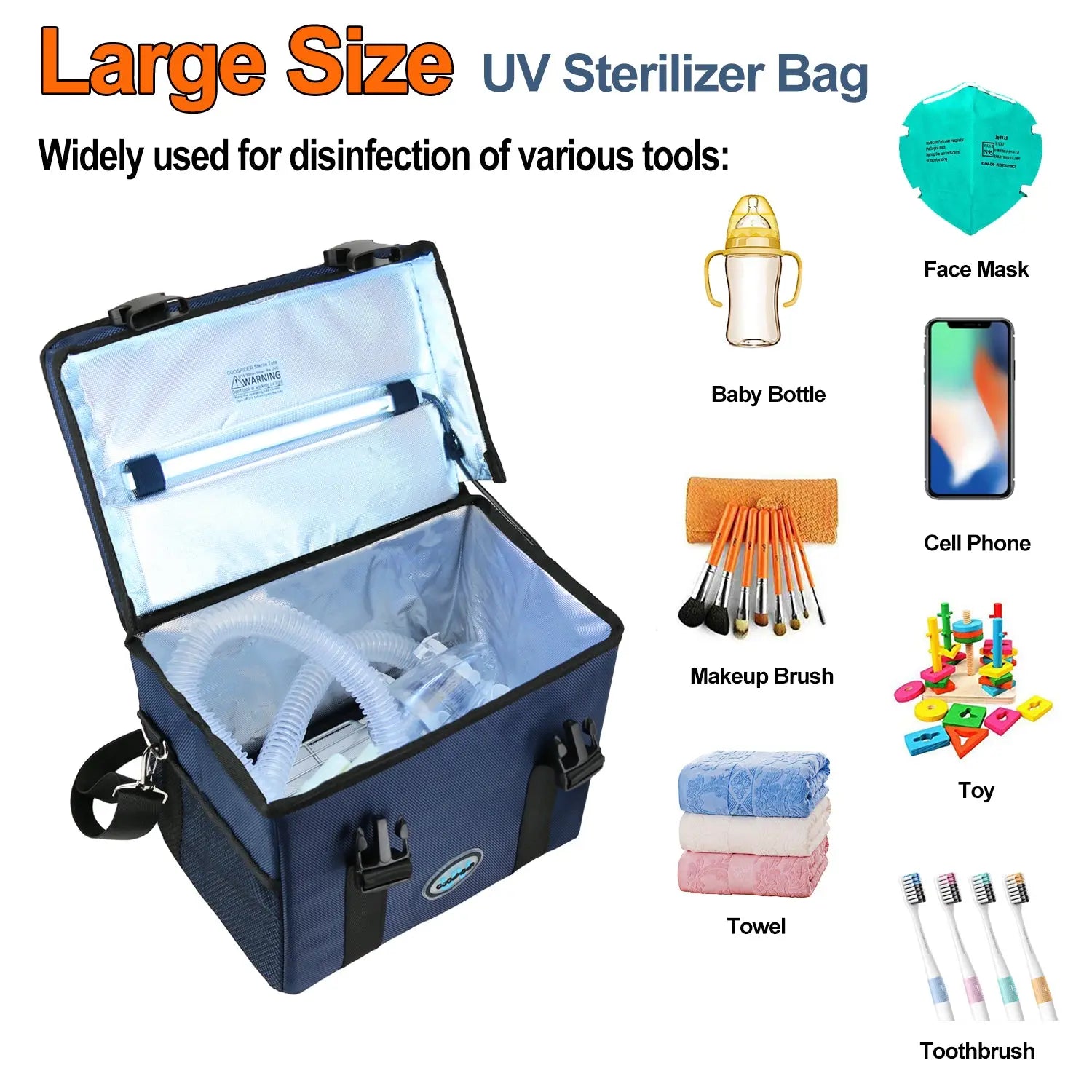
A UV sterilizer box is a compact device that uses ultraviolet (UV-C) light to disinfect items by destroying the DNA and RNA of microorganisms.
Unlike chemical or heat-based methods, UV sterilization:
-
Works without water
-
Produces no residue
-
Operates at room temperature
-
Is gentle on baby products
5. The Science Behind UV Sterilization
5.1 Understanding UV-C Light
UV light is categorized into:
-
UVA
-
UVB
-
UVC (200–280 nm)
UVC light is scientifically proven to be germicidal. It penetrates microorganisms and disrupts their genetic material, preventing them from reproducing.
5.2 Why UV Is Highly Effective Against Germs
UV sterilization:
-
Kills up to 99.9% of bacteria and viruses
-
Works on surfaces and exposed areas
-
Is effective against antibiotic-resistant strains
This makes UV sterilizer boxes especially valuable in baby care, where reliability is critical.
6. Why UV Sterilizer Boxes Are the Gold Standard for Baby Care
6.1 Chemical-Free Safety
Babies frequently put items in their mouths. UV sterilization avoids:
-
Chemical residues
-
Artificial fragrances
-
Potential allergens
This makes it ideal for feeding and teething items.
6.2 Gentle on Materials
UV sterilization does not:
-
Melt plastics
-
Warp silicone
-
Fade colors
-
Weaken bottle nipples
This extends the lifespan of baby products.
6.3 Consistent and Reliable Results
Unlike hand washing, UV sterilization provides:
-
Consistent exposure time
-
Controlled disinfection cycles
-
Repeatable results
Parents can trust that items are sanitized every time.
7. Using UV Sterilizer Boxes for Baby Bottles
7.1 Why Bottles Need Extra Care
Milk residue promotes bacterial growth, especially in:
-
Bottle nipples
-
Screw threads
-
Anti-colic valves
Even a small amount of residue can cause contamination.
7.2 Best Practices for Bottle Sterilization
-
Wash bottles thoroughly with soap and water
-
Rinse and allow excess water to drain
-
Place bottles and components in the UV sterilizer box
-
Run a full sterilization cycle
UV sterilization works best as a final disinfection step, not a replacement for washing.
8. UV Sterilization for Baby Toys
8.1 Toys and Cross-Contamination
Baby toys are frequently:
-
Dropped on floors
-
Shared with siblings
-
Taken outdoors
Stuffed animals, plastic toys, and teething rings can all carry harmful microorganisms.
8.2 Advantages of UV for Toys
UV sterilizer boxes allow parents to:
-
Disinfect toys without soaking
-
Avoid damage to electronic toys
-
Reduce mold and odor buildup
This is especially helpful for toys that cannot be washed easily.
9. Safety Considerations When Using UV Sterilizers
9.1 Built-In Safety Features
Modern UV sterilizer boxes are designed with:
-
Enclosed chambers
-
Automatic shut-off
-
Child-safe locks
These features prevent accidental exposure to UV light.
9.2 Proper Usage Guidelines
-
Follow manufacturer instructions
-
Do not overload the chamber
-
Ensure items are properly positioned
-
Keep the device out of children’s reach
When used correctly, UV sterilizers are extremely safe for home use.
10. UV Sterilization vs. Other Methods: A Comparison
| Feature | UV Sterilizer | Boiling | Steam | Chemical |
|---|---|---|---|---|
| Chemical-Free | Yes | Yes | Yes | No |
| Heat Damage Risk | No | High | Moderate | No |
| Drying Needed | No | Yes | Yes | Yes |
| Ease of Use | High | Low | Moderate | Moderate |
| Material-Friendly | Excellent | Poor | Moderate | Variable |
UV sterilizer boxes provide the most balanced solution for modern parents.
11. When UV Sterilization Is Especially Important
UV sterilization is particularly recommended:
-
For newborns (0–6 months)
-
During illness
-
In multi-child households
-
For daycare-bound babies
-
When traveling
It offers peace of mind when hygiene risks are elevated.
12. Integrating UV Sterilization into Daily Parenting Routines
12.1 Simple Daily Use
Many parents use UV sterilizers:
-
After every feeding
-
Before bedtime
-
As part of evening cleanup
12.2 Long-Term Hygiene Benefits
Consistent sterilization:
-
Reduces infection risk
-
Improves feeding safety
-
Supports healthy development
13. The Future of Baby Product Hygiene
As parents become more informed and health-conscious, UV sterilization is rapidly becoming a standard rather than a luxury. Advances in LED UV technology have made devices:
-
More energy-efficient
-
More affordable
-
More compact
UV sterilizer boxes are now a staple in modern nurseries worldwide.
Conclusion: Giving Your Baby the Safest Start Possible
Babies deserve the highest standard of care—and that includes the products they use every day. While traditional cleaning methods are helpful, they are no longer enough on their own.
UV sterilizer boxes offer a powerful, chemical-free, and reliable solution for disinfecting baby bottles and toys. By eliminating harmful microorganisms without heat or residue, they set the gold standard in baby product safety.
In the journey of parenthood, peace of mind is priceless. UV sterilization helps ensure that every bottle, every toy, and every moment is as safe as possible—for the ones who matter most.