Introduction: The Secret to Clearer Aquarium Water
Maintaining a clean, clear, and healthy aquarium is one of the most important responsibilities of fishkeeping. Whether you keep a small freshwater community tank, a large tropical aquarium, a planted tank, or a saltwater reef system, water clarity plays an important role in the overall appearance and health of your aquatic environment.
However, even when an aquarium has a powerful filter, regular water changes, and a carefully maintained biological filtration system, the water may occasionally become cloudy or develop a green tint. Floating algae, suspended microorganisms, and other microscopic particles can make aquarium water look dirty even when the filtration system appears to be working properly.
One effective piece of equipment that can help address certain types of water clarity problems is an aquarium UV sterilizer.
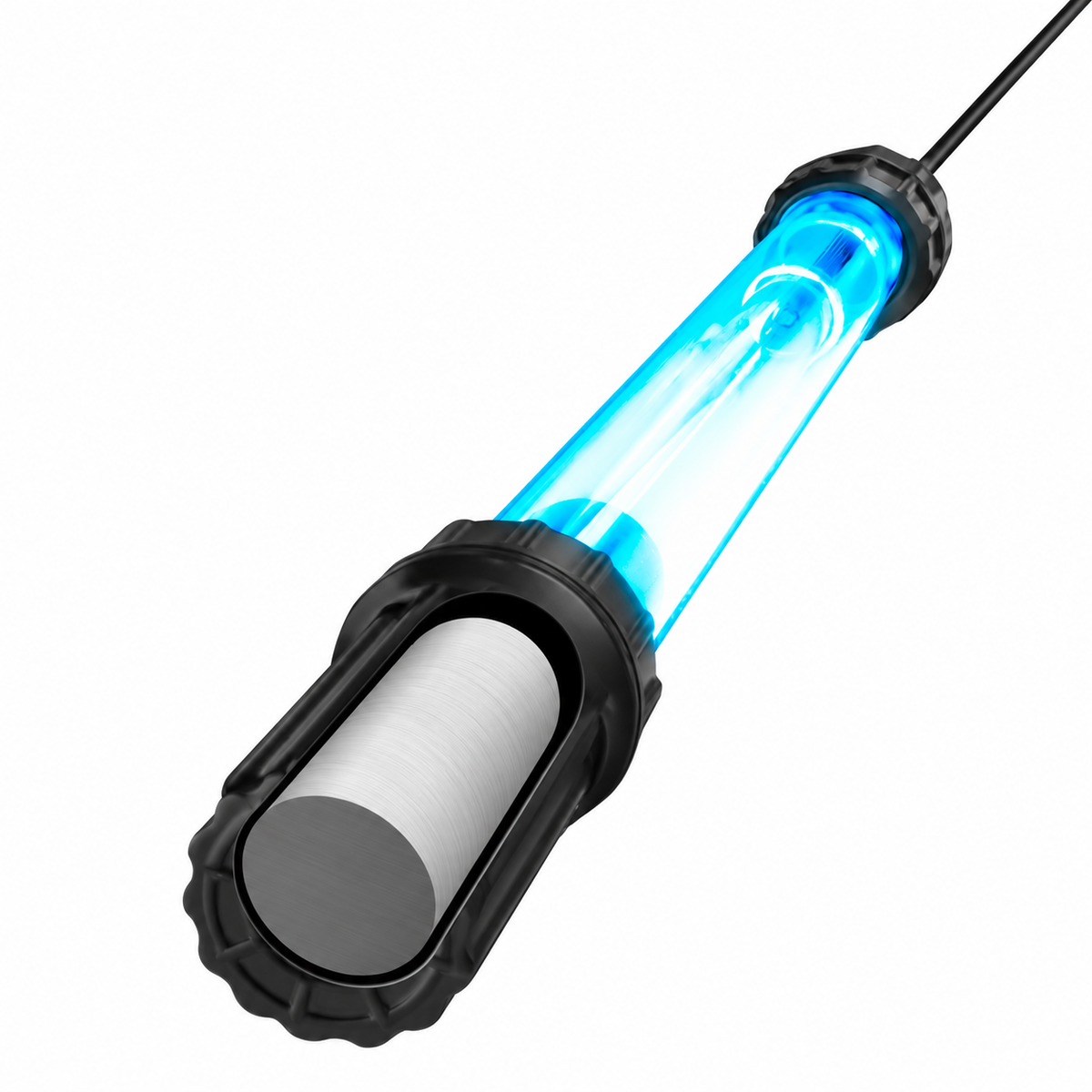
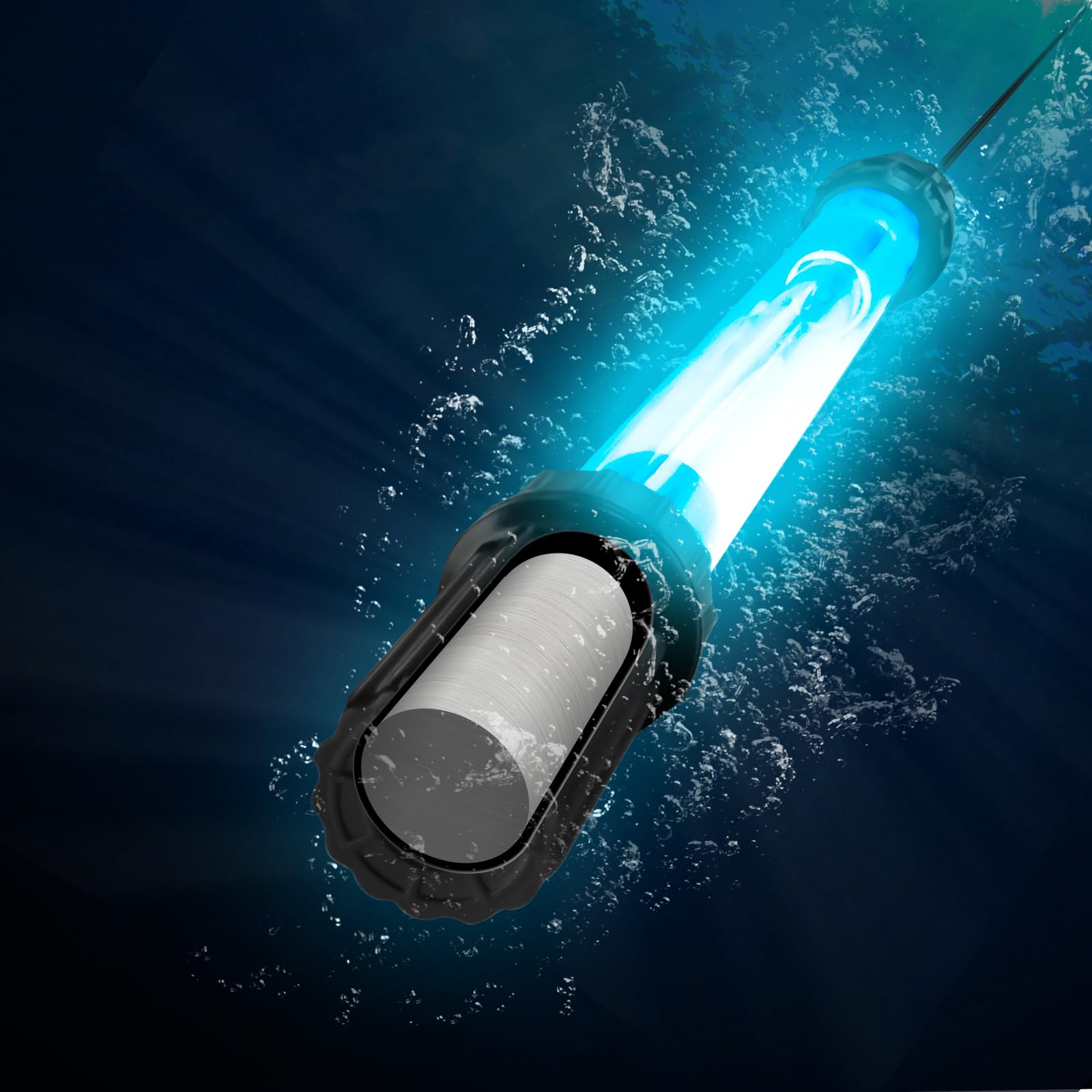
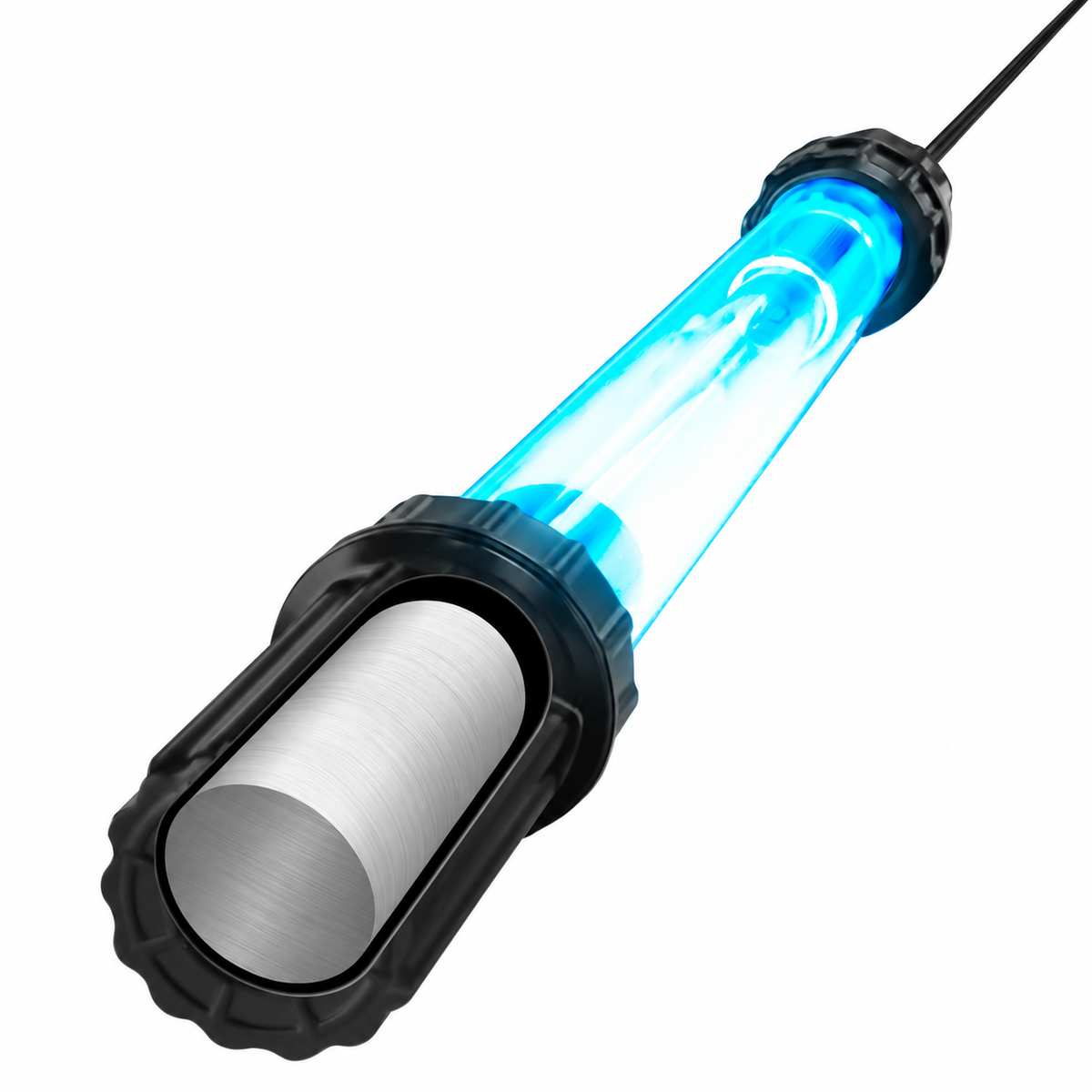
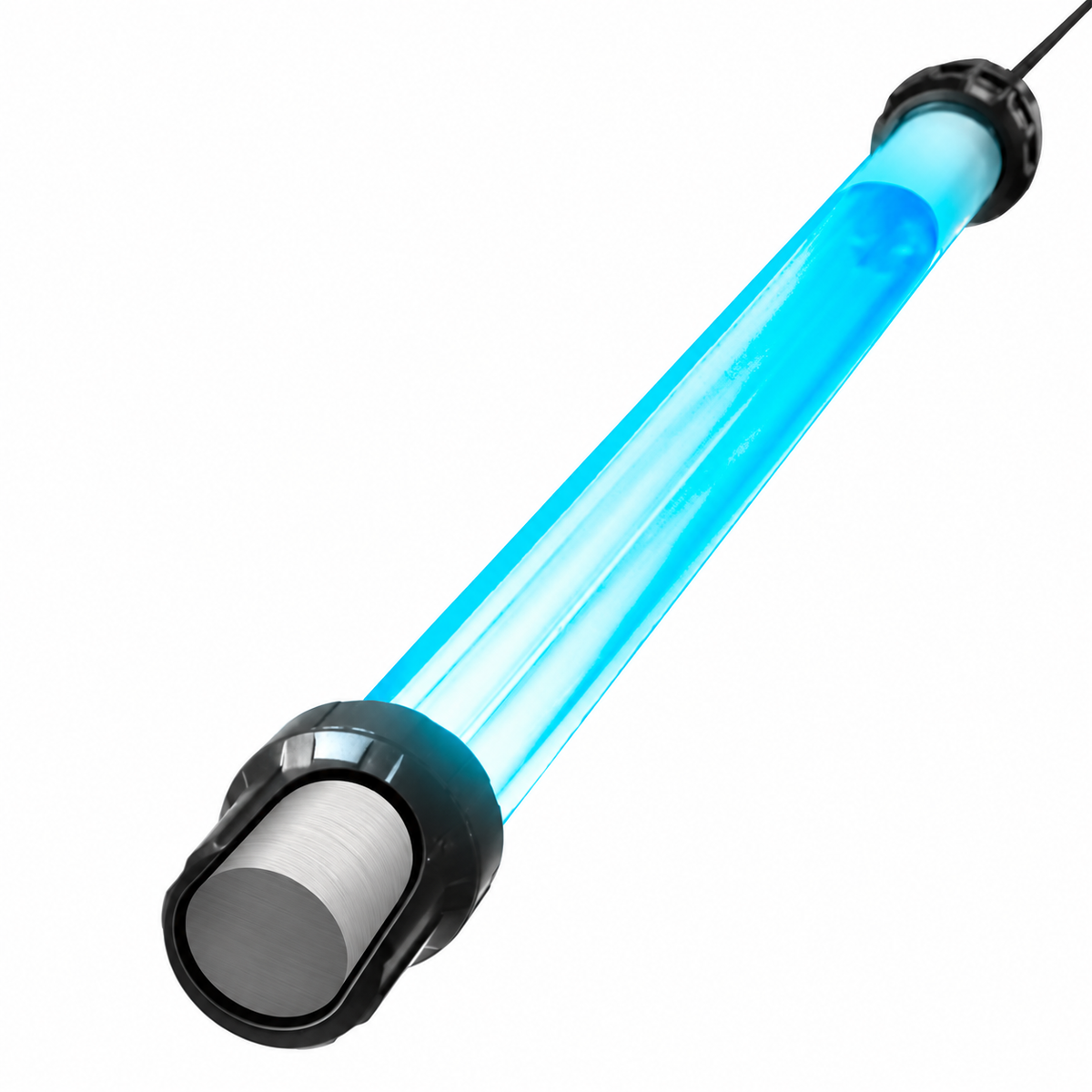
A UV sterilizer uses ultraviolet light, specifically UV-C radiation, to damage the genetic material of microorganisms as water passes through a specially designed chamber. When properly sized, installed, and maintained, it can help control free-floating algae and reduce certain microorganisms circulating through the aquarium water.
However, simply purchasing a UV sterilizer and connecting it to an aquarium does not guarantee crystal-clear water.
Its effectiveness depends on several factors, including lamp output, water flow rate, exposure time, installation position, aquarium size, water quality, and maintenance frequency.
An incorrectly configured UV sterilizer may provide disappointing results, even if the equipment itself is functioning normally.
In this comprehensive guide, we will explain how aquarium UV sterilizers work, how to select the right unit, how to calculate appropriate flow rates, where to install the equipment, and how to maintain it for consistent performance.
Whether you are dealing with green water, persistent cloudiness, or simply looking for an additional water-management tool, understanding these principles can help you get better results from your aquarium UV sterilizer.
1. What Is an Aquarium UV Sterilizer and How Does It Work?
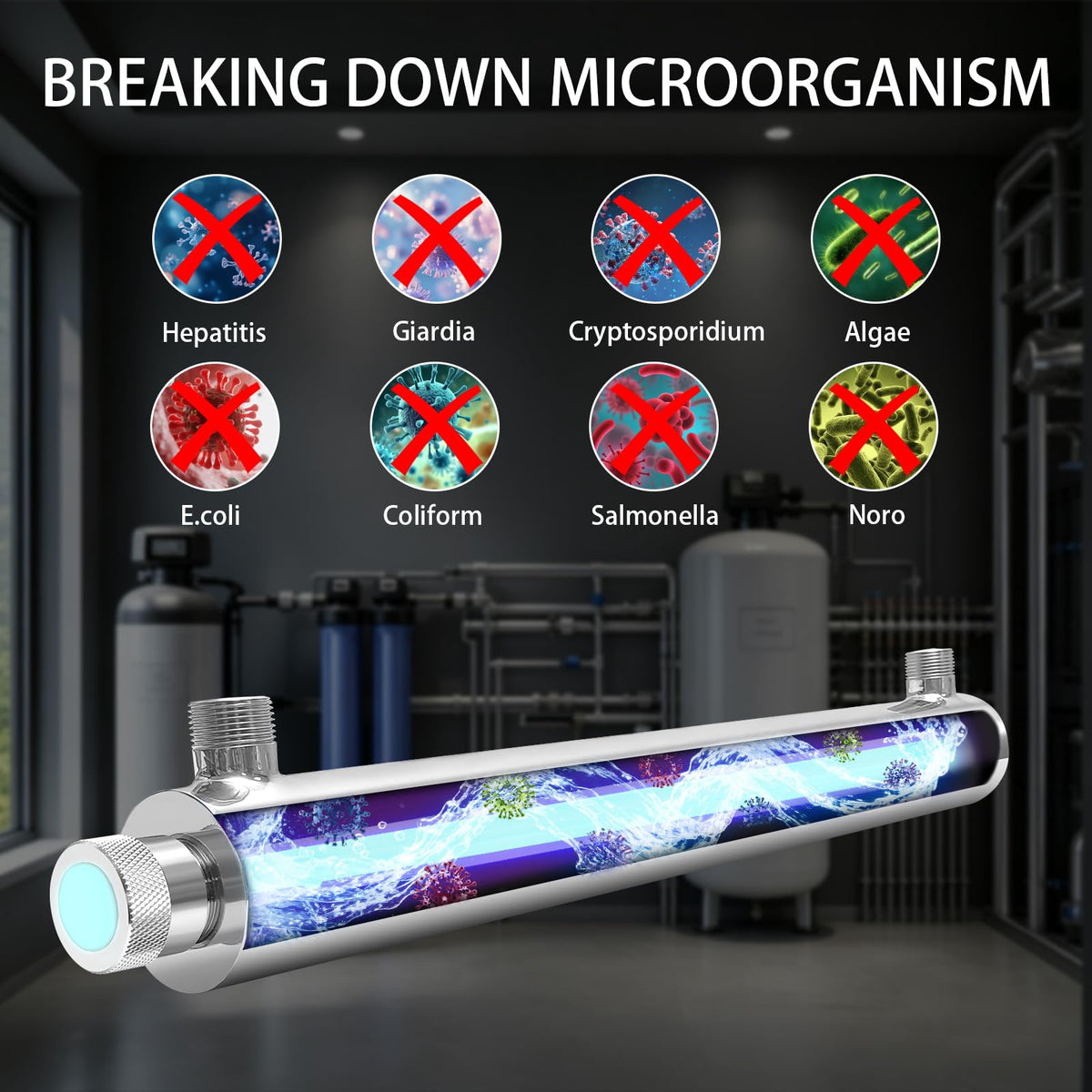
An aquarium UV sterilizer is a water-treatment device that uses ultraviolet radiation to reduce the number of susceptible microorganisms passing through its treatment chamber.
Unlike mechanical filters, which physically capture suspended particles, or biological filters, which support beneficial bacteria that process fish waste, UV sterilizers work by exposing microorganisms to UV-C light.
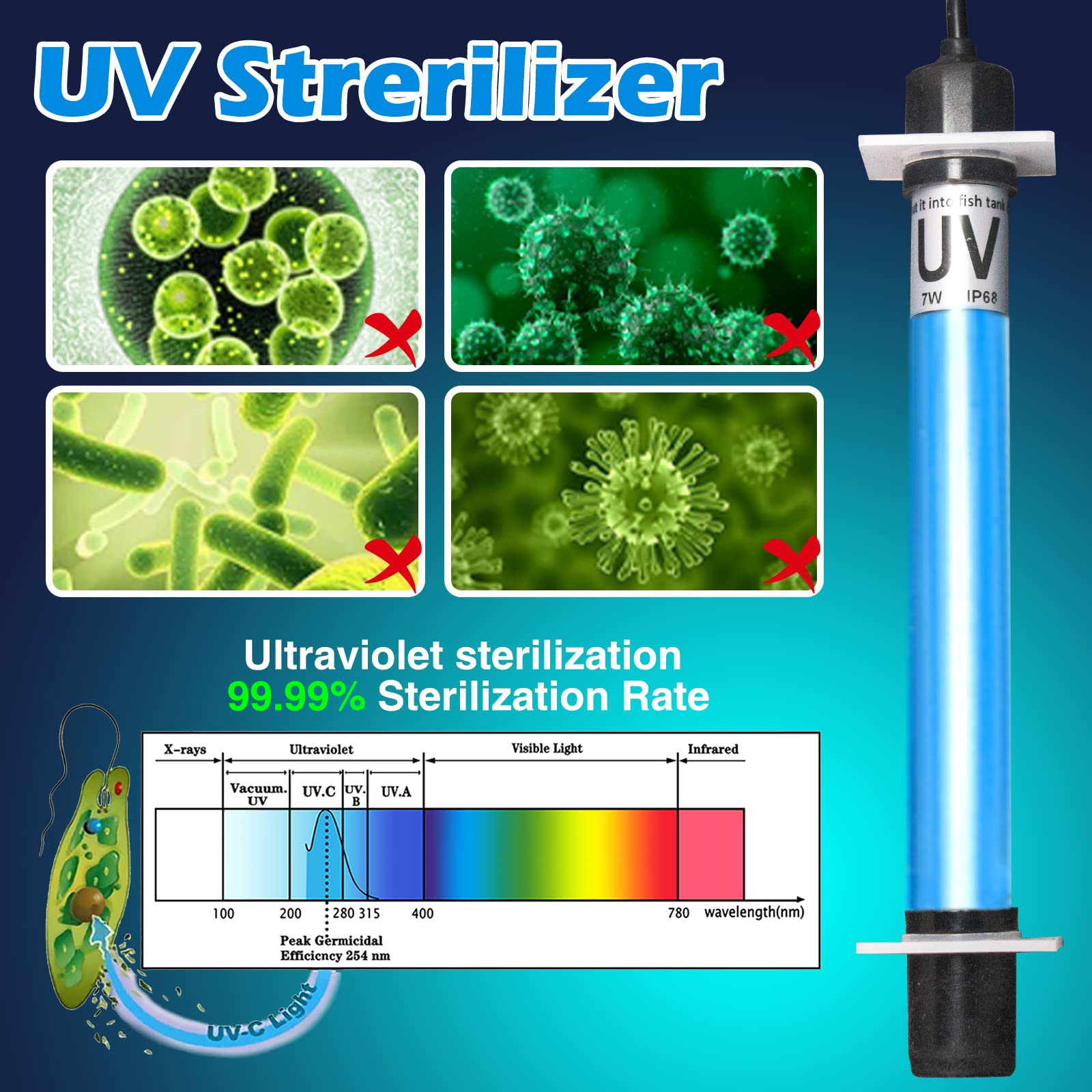
1.1 Understanding UV-C Light
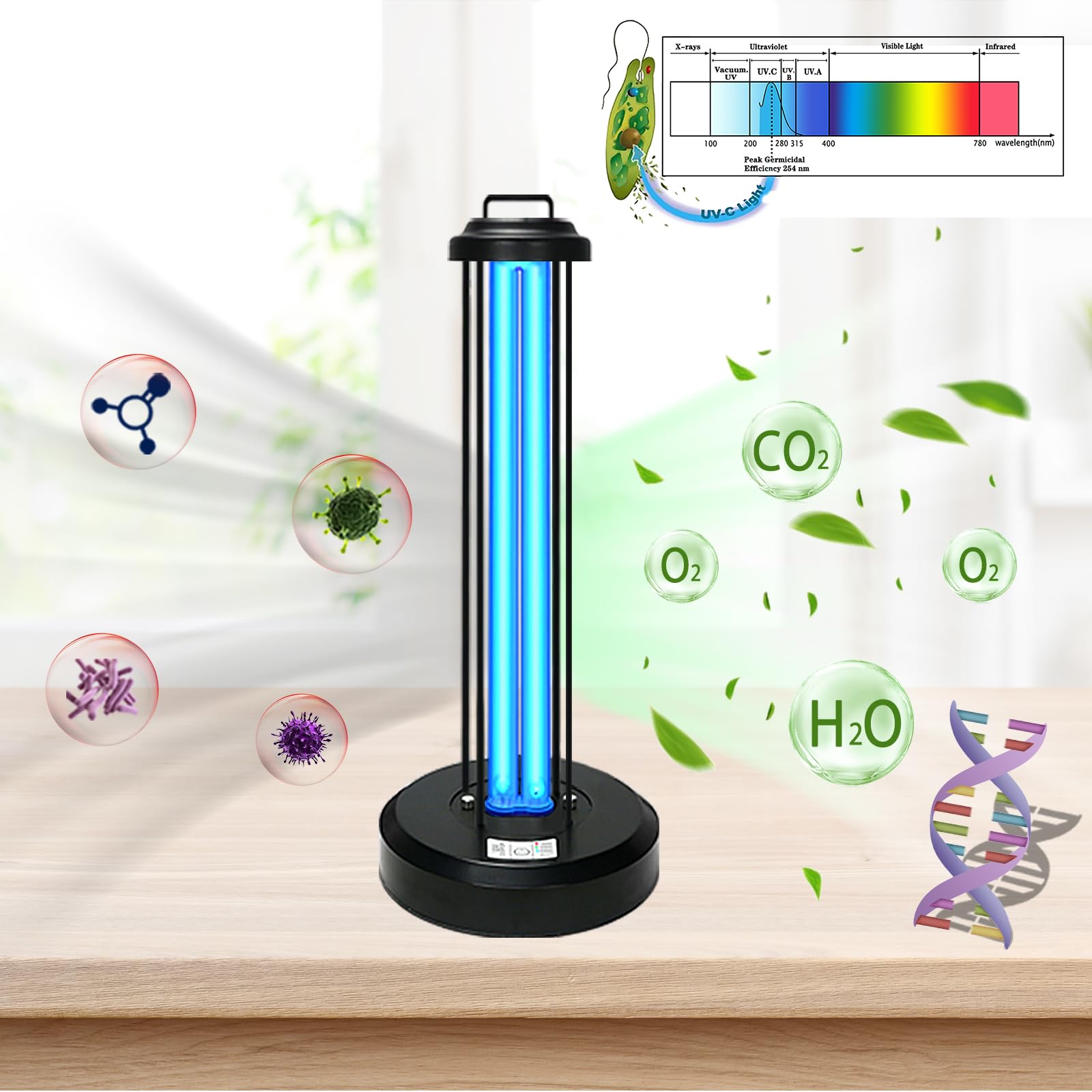
Ultraviolet radiation is divided into several wavelength ranges:
-
UVA: Approximately 315–400 nanometers.
-
UVB: Approximately 280–315 nanometers.
-
UVC: Approximately 100–280 nanometers.
Aquarium UV sterilizers commonly use lamps that produce UV-C radiation near 254 nanometers.
This wavelength is effective at damaging the DNA or RNA of many microorganisms.
When susceptible microorganisms receive a sufficient UV-C dose, their ability to reproduce and carry out normal biological functions can be disrupted.
Depending on the organism and exposure conditions, this may result in inactivation.
This is why UV-C technology is widely used in water treatment, air treatment, and certain disinfection applications.
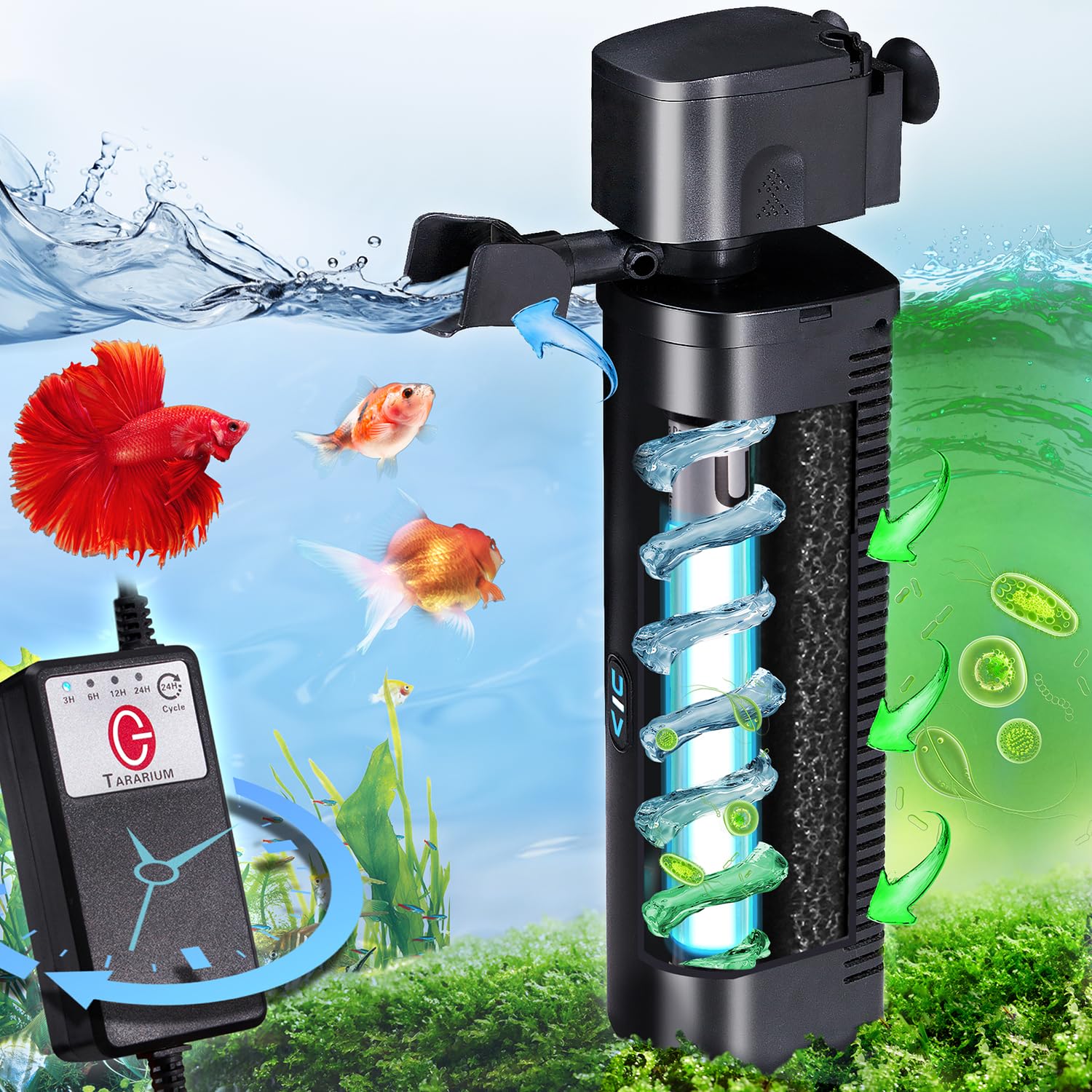
1.2 How Water Moves Through a UV Sterilizer
Most aquarium UV sterilizers use a simple operating principle.
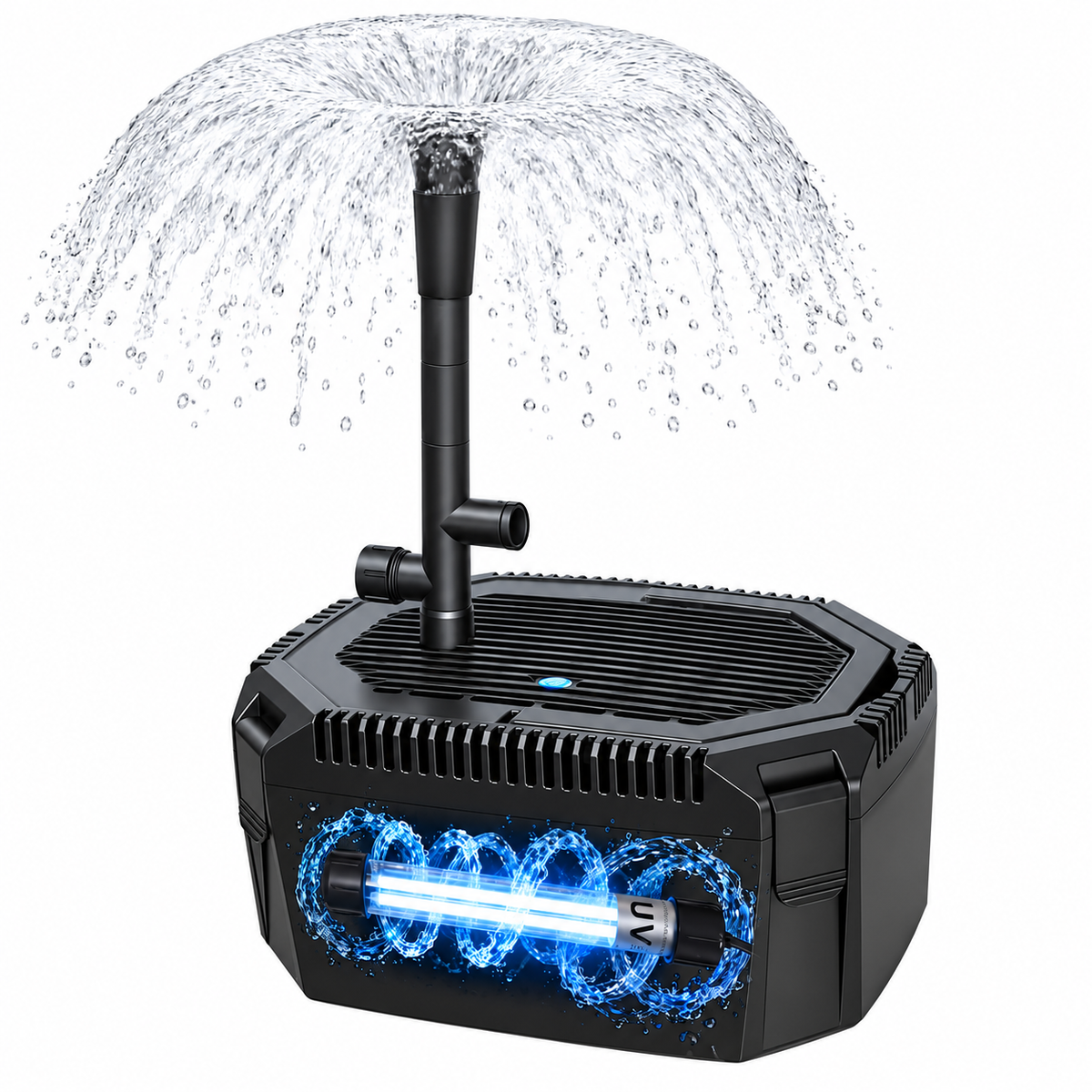
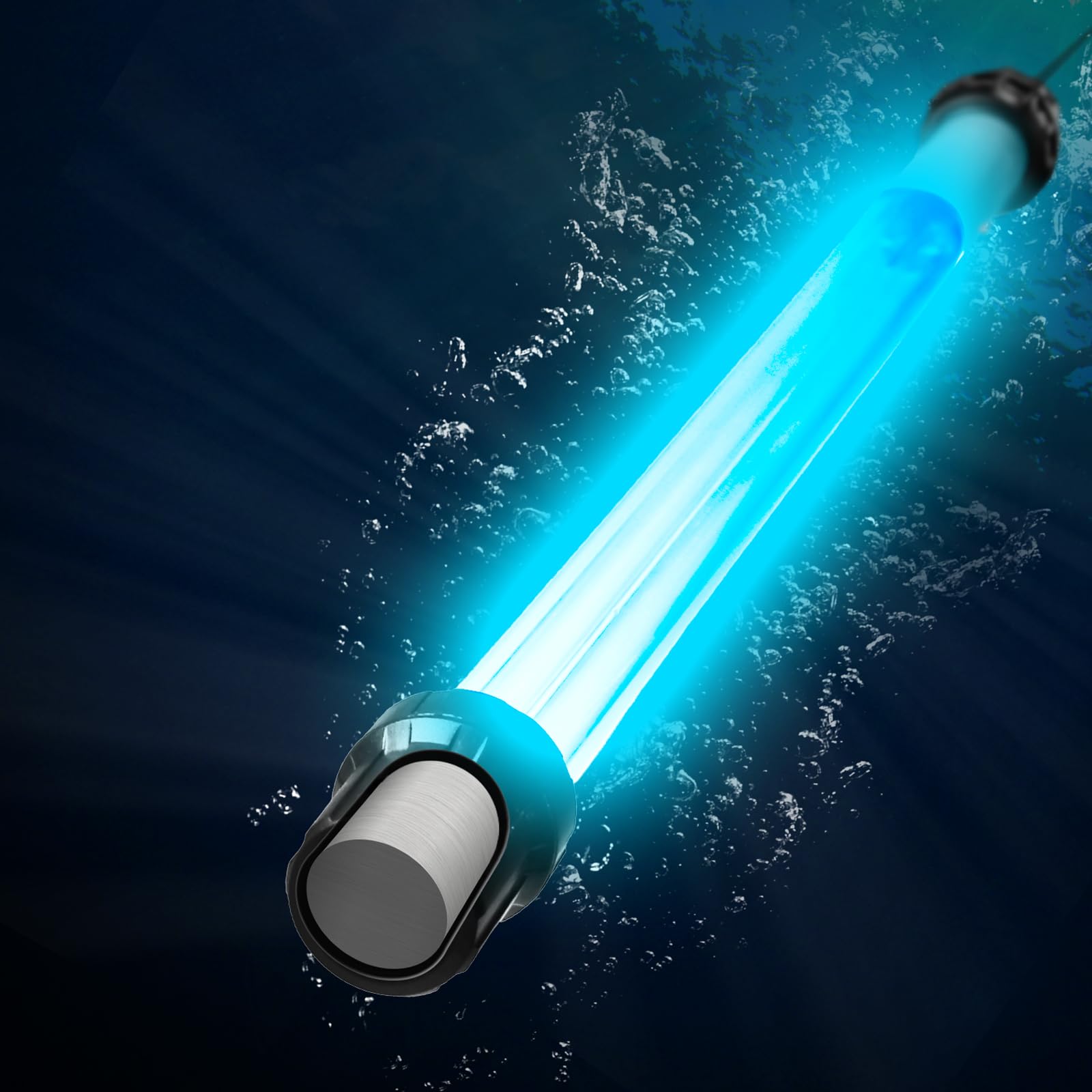
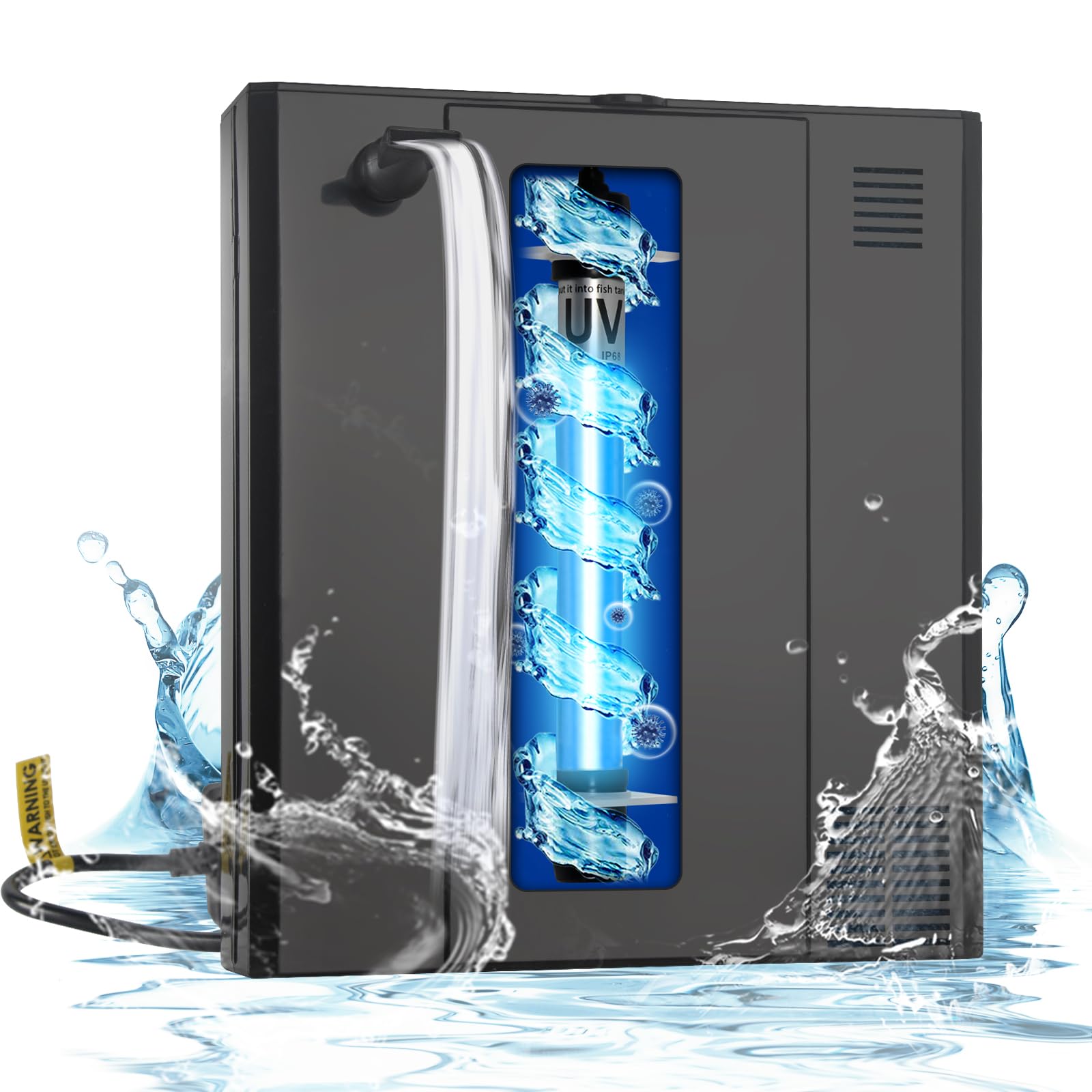
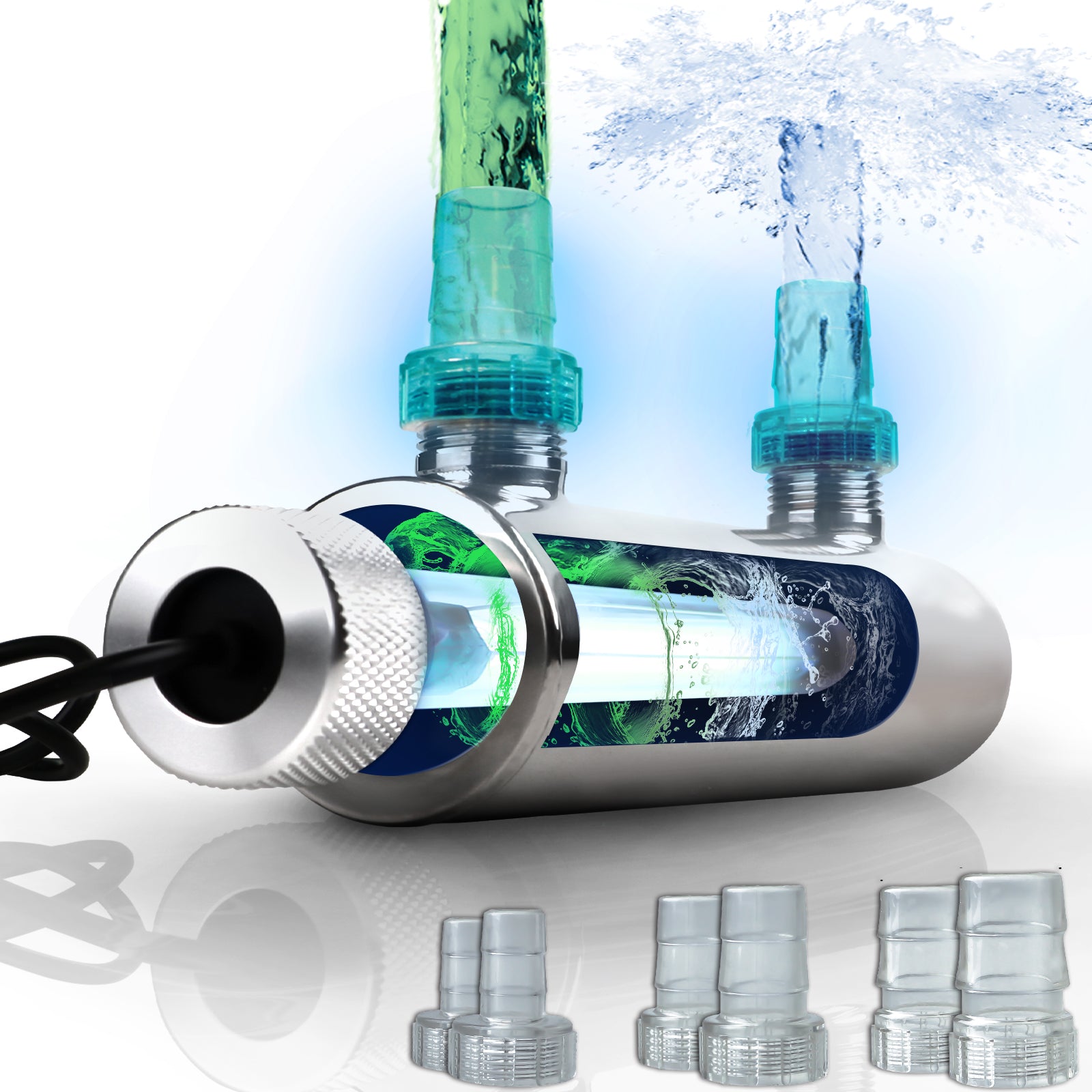
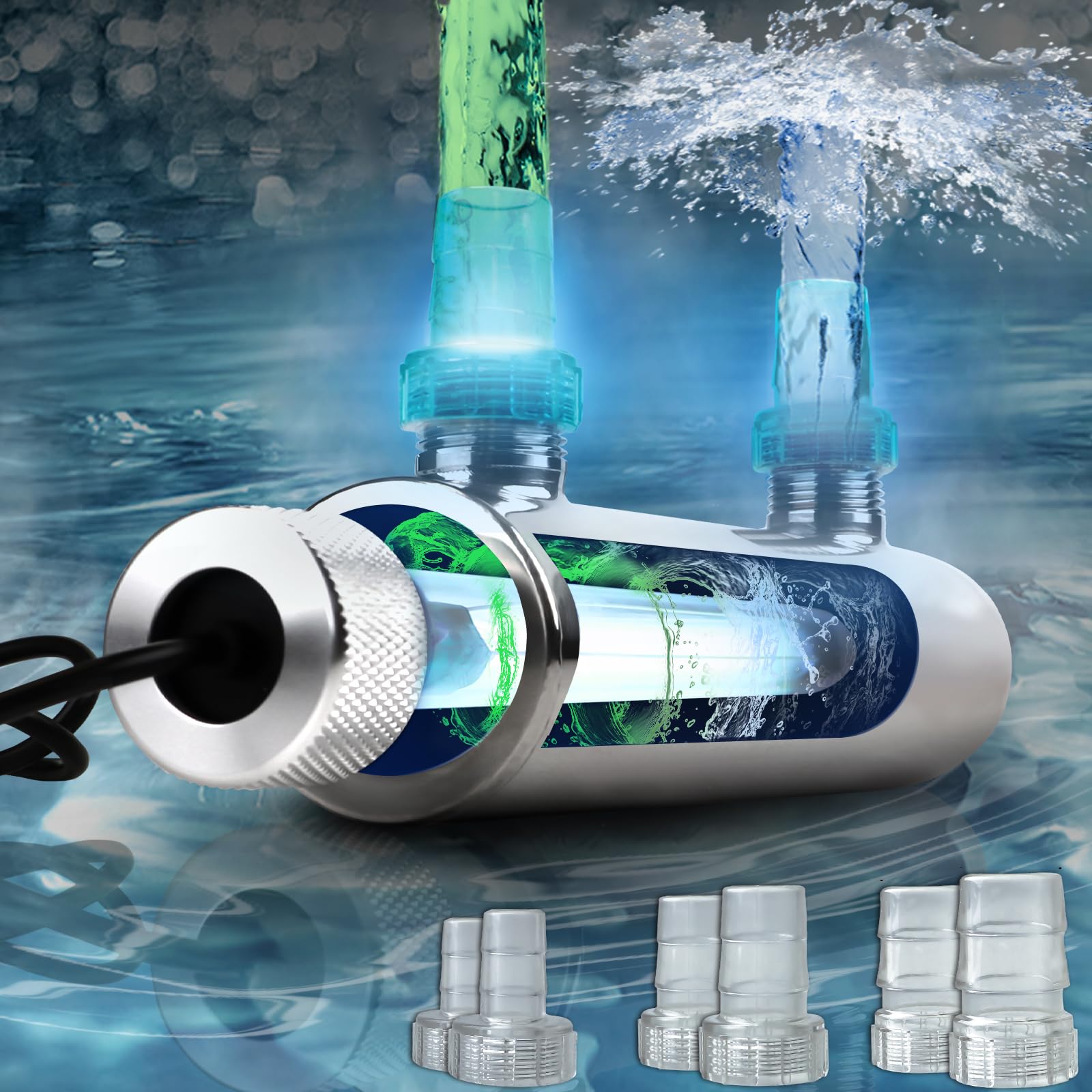
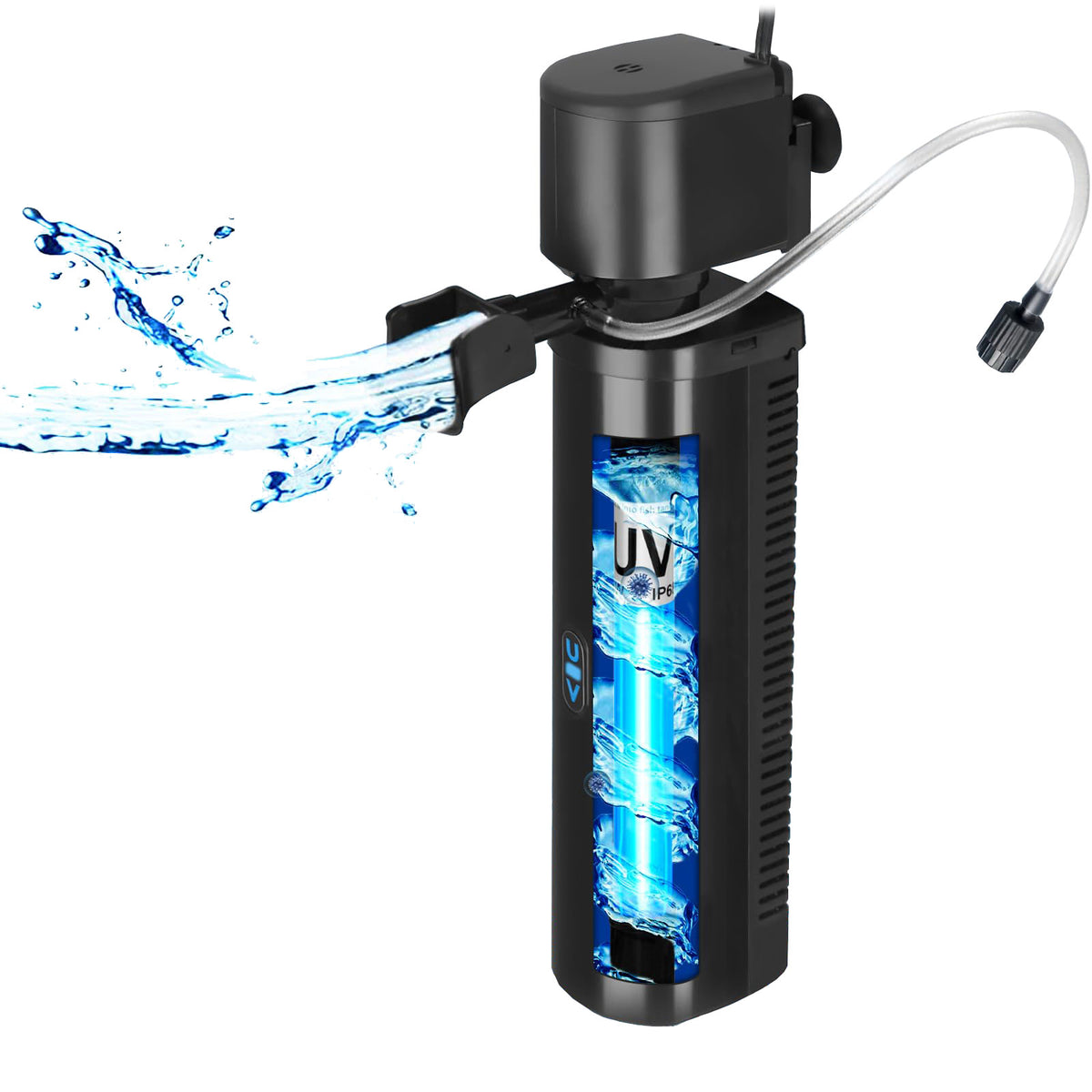
Water is pumped into a chamber containing a UV-C lamp protected by a transparent quartz sleeve.
As water flows through the chamber, microorganisms suspended in the water pass through the UV-C treatment area.
The ultraviolet radiation acts on susceptible organisms during their exposure.
The treated water then flows back into the aquarium or filtration system.
The basic process is:
Aquarium → Water Pump → UV Sterilizer → Treated Water → Aquarium
The quartz sleeve protects the electrical lamp while allowing ultraviolet radiation to pass through.
Because the lamp and water are separated, the equipment can operate without exposing the aquarium's water directly to electrical components.
1.3 What Can a UV Sterilizer Remove?
It is important to understand that a UV sterilizer does not physically remove every contaminant from aquarium water.
Its main purpose is to inactivate susceptible organisms that pass through the treatment chamber.
Depending on the equipment and operating conditions, it may help control:
-
Free-floating algae cells.
-
Certain waterborne bacteria.
-
Some suspended protozoan stages.
-
Certain microorganisms associated with cloudy water.
-
Some free-swimming stages of aquatic pathogens.
However, UV sterilization does not directly remove:
-
Fish waste.
-
Uneaten food.
-
Dissolved organic compounds.
-
Ammonia.
-
Nitrite.
-
Nitrate.
-
Phosphate.
-
Heavy metals.
-
Most dissolved chemical pollutants.
-
Algae attached to aquarium glass and decorations.
These substances require other forms of filtration and aquarium maintenance.
A UV sterilizer should therefore be considered a supplementary water-treatment device rather than a replacement for mechanical, biological, or chemical filtration.
2. Why Does Aquarium Water Become Cloudy or Green?
Before adjusting a UV sterilizer, identify the actual cause of the water clarity problem.
Different types of cloudy water require different solutions.
Installing a UV sterilizer without understanding the problem may lead to unnecessary equipment costs and disappointing results.
2.1 Green Water Caused by Suspended Algae
Green water is one of the most common reasons aquarium owners purchase UV sterilizers.
It occurs when microscopic algae multiply rapidly in the water column.
Instead of growing only on surfaces, these organisms remain suspended throughout the aquarium.
The result is water that appears green, sometimes becoming so opaque that fish are difficult to see.
Common contributing factors include:
-
Excessive lighting.
-
Long lighting periods.
-
High nutrient availability.
-
Excessive feeding.
-
Inadequate nutrient management.
-
Limited competition from aquatic plants.
-
Environmental instability.
A properly sized UV sterilizer can be particularly useful for this type of problem because suspended algae cells pass through the treatment chamber.
As more viable cells are inactivated, the aquarium's existing filtration system can capture or remove the resulting particles over time.
This is one of the applications where UV-C treatment can produce a noticeable improvement in water clarity.
2.2 White or Milky Cloudiness
White or gray cloudy water may have several causes.
In newly established aquariums, it can result from a bacterial bloom associated with changes in the biological environment.
Other possible causes include:
-
Disturbed substrate.
-
Fine suspended particles.
-
Excessive organic waste.
-
Changes in water chemistry.
-
Inadequate mechanical filtration.
A UV sterilizer may help reduce certain free-floating microorganisms, but it does not correct the underlying cause of every bacterial bloom.
For example, if cloudy water is associated with an immature biological filtration system, the priority should be establishing a stable nitrogen cycle.
Check ammonia and nitrite levels rather than relying on visual water clarity alone.
2.3 Brown or Yellow Water
Brown or yellow water may be caused by dissolved organic compounds, tannins, or other substances released by driftwood, leaves, and aquarium materials.
UV sterilization is generally not an effective solution for removing these dissolved substances.
Depending on the cause, possible solutions include:
-
Activated carbon.
-
Appropriate chemical filtration media.
-
Regular water changes.
-
Removing excessive decaying organic matter.
2.4 Suspended Dirt and Fine Particles
If aquarium water contains visible particles, the issue may be mechanical rather than biological.
Common causes include:
-
Inadequate mechanical filtration.
-
Damaged filter media.
-
Disturbed substrate.
-
Excessive feeding.
-
Poor water circulation.
-
Accumulated organic waste.
A suitable mechanical filter with appropriately selected filter floss or polishing media may be more effective than a UV sterilizer for this problem.
The key principle is simple: identify the source of cloudy water before deciding which equipment to use.
3. The Main Benefits of Using a UV Sterilizer in an Aquarium
When installed and operated correctly, an aquarium UV sterilizer can provide several useful benefits.
3.1 Helps Control Green Water
This is one of the most visible advantages.
Suspended algae are continuously circulated through the UV treatment chamber.
With adequate exposure, the number of viable algae cells in the water column can decrease.
Over time, this can help restore water clarity.
However, the aquarium's lighting and nutrient conditions must also be managed.
Otherwise, algae may continue reproducing faster than the treatment system can control them.
3.2 Reduces Certain Waterborne Microorganisms
UV-C treatment can reduce susceptible microorganisms circulating through aquarium water.
This may help lower the concentration of certain waterborne pathogens under appropriate operating conditions.
However, UV sterilization is not a complete disease-prevention solution.
It cannot reliably treat infections already established inside fish or organisms attached to aquarium surfaces.
It also cannot guarantee the elimination of every pathogen passing through the aquarium.
Good quarantine procedures, appropriate stocking levels, water quality management, and fish health monitoring remain essential.
3.3 Supports More Consistent Water Clarity
For aquariums prone to recurring green water or certain types of suspended microbial cloudiness, a UV sterilizer can provide ongoing treatment.
This may reduce the frequency of visible water clarity problems.
However, it should work alongside regular filter maintenance and water changes.
3.4 Can Help Reduce Waterborne Algae During Seasonal Changes
Changes in temperature, lighting, and nutrient availability can encourage algae growth.
For example, aquariums exposed to stronger natural sunlight during certain seasons may experience recurring green water.
A properly operated UV sterilizer can help manage suspended algae during these periods.
Still, controlling the underlying environmental conditions is necessary for long-term stability.
3.5 Helps Improve the Visual Appearance of Display Aquariums
Clear water makes fish colors, plants, decorations, and aquarium layouts easier to appreciate.
This is particularly important in:
-
Living room aquariums.
-
Office display tanks.
-
Hotel aquariums.
-
Commercial installations.
-
Public display systems.
-
Large decorative freshwater and marine aquariums.
For these applications, UV treatment can be a useful part of a comprehensive water-quality management strategy.
4. How to Choose the Right UV Sterilizer for Your Aquarium
Choosing the correct UV sterilizer is one of the most important factors affecting performance.
A unit that is too small may provide insufficient treatment.
A unit that is unnecessarily large may increase energy consumption and equipment costs without providing meaningful additional benefits.
Consider the following factors before purchasing.
4.1 Calculate the Aquarium's Actual Water Volume
Start by determining the aquarium's approximate water volume.
For a rectangular aquarium:
Volume = Length × Width × Water Height
When measurements are in inches:
Gallons = Length × Width × Height ÷ 231
For example, consider an aquarium measuring:
-
Length: 36 inches.
-
Width: 18 inches.
-
Water height: 20 inches.
Its approximate gross volume is:
36 × 18 × 20 ÷ 231 = 28 gallons.
However, actual water volume may be lower because of substrate, decorations, equipment, and the distance between the water surface and aquarium rim.
For more accurate equipment selection, use the estimated operating water volume rather than relying only on the aquarium's advertised capacity.
4.2 Consider the UV Lamp Wattage
UV sterilizers are available in different wattage ratings.
Common configurations include:
-
5-watt units for smaller systems.
-
9-watt units for selected small to medium systems.
-
18-watt units for larger applications.
-
36-watt units for higher-capacity systems.
-
55-watt and higher units for some large aquarium or pond installations.
These are examples of available equipment configurations, not universal aquarium sizing recommendations.
Wattage alone does not determine treatment effectiveness.
Two UV sterilizers with identical lamp wattages may deliver different UV-C doses because of differences in:
-
Lamp efficiency.
-
Chamber dimensions.
-
Water flow.
-
Quartz sleeve design.
-
Lamp age.
-
Water clarity.
-
Internal flow distribution.
Always evaluate the manufacturer's recommended flow rates and UV output specifications.
4.3 Match the Unit to the Required Flow Rate
Flow rate is one of the most important variables in UV sterilizer performance.
Water must remain inside the UV chamber long enough to receive an effective radiation dose.
If water moves too quickly, exposure time decreases.
If water moves too slowly, treatment throughput may become unnecessarily limited.
The appropriate flow rate depends on the desired treatment objective and the UV dose required.
For example, the flow rate needed to help control green water may differ from the flow rate required for a higher level of microbial reduction.
Do not assume that the maximum advertised flow rate is suitable for every application.
4.4 Check the UV-C Output
The actual UV-C output matters more than the electrical wattage printed on the product label.
A lamp consumes electrical power, but only part of that power becomes useful UV-C radiation.
Look for manufacturers that provide technical information about:
-
UV-C output.
-
Recommended flow rates.
-
Target UV dose.
-
Lamp replacement intervals.
-
Chamber dimensions.
-
Operating temperature.
-
Maximum working pressure.
Products with clearly documented specifications are easier to evaluate and configure correctly.
4.5 Consider Aquarium Type
Freshwater, saltwater, planted, and reef aquariums may have different requirements.
For example:
-
A freshwater tank with persistent green water may benefit from UV treatment.
-
A heavily planted aquarium may require careful integration with its existing filtration and nutrient-management strategy.
-
A marine fish-only system may use UV treatment as an additional water-management measure.
-
A reef aquarium requires particular attention to the placement of the UV unit and its effect on organisms circulating through the treatment chamber.
Choose a model designed for the intended aquarium environment.
5. Understanding UV Dose: Why Flow Rate and Exposure Time Matter
One of the most common mistakes aquarium owners make is focusing only on lamp wattage.
In reality, the amount of UV energy delivered to microorganisms is a critical factor.
This is commonly expressed as UV dose or UV fluence.
It is usually measured in millijoules per square centimeter (mJ/cm²).
5.1 What Is UV Dose?
UV dose describes the amount of ultraviolet energy received by a microorganism over a period of time.
A simplified relationship is:
UV Dose = UV Intensity × Exposure Time
A higher intensity or longer exposure generally increases the delivered dose.
However, actual UV delivery depends on the equipment's optical design, lamp output, water characteristics, and flow distribution.
5.2 Why Fast Water Flow Can Reduce Treatment Effectiveness
Imagine water passing through a UV sterilizer at a very high speed.
The microorganisms inside that water may spend only a short time in the treatment chamber.
Even if the lamp is powerful, insufficient exposure may result in an inadequate UV dose.
This is why manufacturers often specify different flow rates for different treatment goals.
A flow rate suitable for basic water clarification may not be suitable for applications requiring greater microbial reduction.
5.3 Why Extremely Slow Flow Is Not Always Better
Reducing the flow rate can increase exposure time, but excessively slow operation is not necessarily ideal.
It may reduce the amount of water treated per hour and create poor circulation within the aquarium.
The objective is to balance treatment dose and water throughput.
Use the manufacturer's performance data to determine the appropriate operating range.
5.4 A Simple Way to Estimate Exposure Time
A simplified estimate of water residence time can be calculated using:
Exposure Time = Treatment Chamber Volume ÷ Water Flow Rate
For example, suppose a UV chamber has an internal water volume of 0.5 liters and the flow rate is 100 liters per hour.
The theoretical average residence time is:
0.5 ÷ 100 × 3,600 = 18 seconds.
This is only an illustrative calculation.
Actual UV exposure is more complicated because water may follow different paths through the chamber, and the effective irradiance is not necessarily uniform.
Therefore, use manufacturer-validated dose and flow specifications whenever available.
6. Where Should You Install an Aquarium UV Sterilizer?
Correct installation is essential for effective treatment and reliable operation.
A UV sterilizer can be connected in several different ways, depending on the aquarium's filtration system and equipment design.
6.1 Installation After Mechanical Filtration
For many aquarium systems, installing the UV sterilizer after mechanical filtration is a practical approach.
Mechanical filtration removes suspended particles that may otherwise interfere with UV transmission.
Cleaner water generally allows more UV-C energy to reach microorganisms.
A typical arrangement is:
Aquarium → Mechanical Filter → UV Sterilizer → Return to Aquarium
This configuration also helps prevent larger particles from accumulating inside the UV chamber.
6.2 Use a Dedicated Pump
Some aquarium owners prefer to operate a UV sterilizer using a separate circulation pump.
This arrangement allows them to control the flow rate independently from the main filtration system.
Potential benefits include:
-
Easier flow adjustment.
-
Independent operation.
-
Flexible installation.
-
More predictable treatment flow.
However, ensure that the pump and plumbing are compatible with the UV unit's flow and pressure specifications.
6.3 Install the Unit in a Suitable Position
Depending on the product design, UV sterilizers may be installed horizontally or vertically.
Always follow the manufacturer's instructions.
Pay attention to:
-
Water inlet direction.
-
Outlet direction.
-
Air removal.
-
Mounting stability.
-
Electrical safety.
-
Maintenance access.
-
Protection from accidental water splashes.
Avoid placing the unit where routine maintenance becomes difficult.
6.4 Ensure Adequate Water Circulation
A UV sterilizer can only treat water that actually passes through it.
If aquarium circulation is poor, some areas may remain poorly mixed.
This can reduce the overall effectiveness of the treatment system.
Use appropriately positioned filter outlets and circulation pumps to help distribute water throughout the aquarium.
6.5 Avoid Bypassing the Mechanical Filter
If the UV sterilizer is installed before mechanical filtration, larger suspended particles may accumulate inside the chamber.
This can increase maintenance requirements and potentially reduce UV transmission.
For many systems, pre-filtration is therefore preferable.
However, the ideal configuration depends on the equipment manufacturer's design.
7. How to Set Up a UV Sterilizer for Better Aquarium Water Clarity
Once the correct equipment has been selected and installed, it must be configured properly.
The following process provides a practical setup approach.
Step 1: Identify the Water Clarity Problem
Determine whether the aquarium has green water, bacterial cloudiness, suspended particles, or dissolved discoloration.
UV treatment is especially useful for certain free-floating microorganisms, particularly suspended algae.
It is not a universal solution for every type of cloudy water.
Step 2: Confirm the Aquarium Volume
Calculate the actual operating water volume.
Use this information when comparing equipment recommendations.
Step 3: Select a Suitable UV Sterilizer
Choose a unit based on:
-
Aquarium volume.
-
UV-C output.
-
Required treatment objective.
-
Recommended flow rate.
-
Plumbing compatibility.
-
Maintenance requirements.
Step 4: Install Mechanical Pre-Filtration
Make sure water entering the UV chamber is reasonably free of large suspended particles.
Clean mechanical filter media when necessary.
Step 5: Adjust the Water Flow
Set the flow rate according to the manufacturer's recommendation for the intended treatment objective.
Do not simply operate the pump at its maximum capacity.
If the pump does not provide adjustable flow, select a suitable pump or approved flow-control arrangement.
Step 6: Verify the Lamp Is Operating
Confirm that the unit is powered and that the lamp indicator behaves as described in the manufacturer's instructions.
An illuminated power indicator does not necessarily prove that the lamp is delivering its specified UV-C output.
Step 7: Monitor Water Clarity
Record the aquarium's appearance before and after installation.
Take photographs under similar lighting conditions if you want to compare results.
Monitor water clarity over the following days.
The improvement may be gradual because UV treatment does not physically remove all existing particles from the water.
Mechanical filtration and normal aquarium circulation help remove the inactivated material.
Step 8: Continue Regular Aquarium Maintenance
Maintain the nitrogen cycle, clean filters, perform appropriate water changes, and control feeding and lighting.
UV treatment works best as part of a complete aquarium maintenance routine.
8. How Long Should an Aquarium UV Sterilizer Run Each Day?
There is no single operating schedule suitable for every aquarium.
Some UV sterilizers are designed for continuous operation, while others may be used for specific treatment periods.
The correct schedule depends on the manufacturer's instructions and the aquarium's treatment objectives.
8.1 Continuous Operation
For aquariums with recurring green water or ongoing water-treatment requirements, continuous operation may be appropriate when the equipment is designed for it.
Potential advantages include:
-
Consistent treatment.
-
Continuous reduction of susceptible organisms passing through the chamber.
-
Less variation in treatment availability.
-
Easier routine management.
However, continuous operation increases lamp operating hours.
This means lamp output and replacement schedules must be monitored.
8.2 Temporary Operation During Green Water Problems
Some aquarium owners use UV sterilizers temporarily when dealing with green water.
The equipment may be operated until the water becomes visibly clearer.
Afterward, the owner may reduce operating time or return to an intermittent schedule, depending on the manufacturer's guidance.
However, stopping UV treatment does not solve the underlying causes of algae growth.
If lighting and nutrient conditions remain favorable, green water may return.
8.3 Avoid Frequent Unnecessary Switching
Repeatedly switching the lamp on and off may not provide any meaningful benefit and can affect equipment life depending on the lamp type.
Follow the manufacturer's operating recommendations.
If the unit is designed for continuous operation, maintain the intended operating schedule unless maintenance or safety procedures require shutdown.
9. How to Maintain an Aquarium UV Sterilizer for Long-Term Performance
A UV sterilizer requires regular maintenance.
Even if the lamp still illuminates, the equipment may gradually lose effectiveness.
Two of the most important maintenance tasks are cleaning the quartz sleeve and replacing the UV-C lamp at the recommended interval.
9.1 Clean the Quartz Sleeve Regularly
The quartz sleeve separates the UV lamp from the water.
It allows ultraviolet radiation to pass through while protecting the lamp.
Over time, the sleeve may become covered with:
-
Mineral deposits.
-
Organic films.
-
Biofilm.
-
Fine particles.
-
Other contaminants.
These deposits can reduce the amount of UV-C radiation reaching the water.
A dirty quartz sleeve may therefore reduce treatment effectiveness.
Clean it according to the manufacturer's recommended schedule.
For many systems, inspecting it monthly is a reasonable starting point, although actual cleaning frequency depends on water conditions and equipment design.
Always disconnect the unit from electrical power before opening it.
9.2 Replace the UV-C Lamp on Schedule
UV-C lamps gradually lose output during operation.
A lamp may continue glowing visibly even after its useful UV-C output has declined.
This is an important point because visible light is not a reliable indicator of germicidal performance.
Many conventional UV-C lamps have recommended replacement intervals in the range of several thousand operating hours.
The exact interval depends on lamp technology and manufacturer specifications.
Follow the specified replacement schedule rather than waiting for the lamp to stop illuminating.
9.3 Inspect the Quartz Sleeve for Damage
During maintenance, check the quartz sleeve for:
-
Cracks.
-
Scratches.
-
Mineral buildup.
-
Discoloration.
-
Damaged seals.
A damaged sleeve should be replaced.
Never operate the UV sterilizer with a cracked or incorrectly installed protective sleeve.
9.4 Check the Sealing Rings
O-rings and other sealing components help prevent leaks.
Inspect them periodically for:
-
Flattening.
-
Cracking.
-
Hardening.
-
Deformation.
-
Incorrect positioning.
Replace worn seals with compatible parts.
Never assume that a visually similar replacement ring will provide the correct fit.
9.5 Clean the Inlet and Outlet Connections
Debris can accumulate around plumbing connections.
Check for restricted water flow and clean the connections when needed.
A reduction in flow may change the treatment characteristics of the unit.
A sudden increase in flow may also reduce exposure time.
Maintaining stable flow is an important part of reliable UV operation.
10. Common UV Sterilizer Mistakes That Reduce Water Clarity
Many aquarium owners purchase good-quality UV sterilizers but fail to achieve the expected results.
In many cases, the problem is not the equipment itself.
It is the way the equipment is installed or maintained.
Mistake 1: Choosing a UV Sterilizer Based Only on Wattage
A higher-wattage lamp is not automatically more effective.
Treatment depends on UV-C output, chamber design, exposure time, water flow, and water clarity.
Better approach: Compare the manufacturer's recommended flow rates and validated treatment specifications.
Mistake 2: Running Water Through the Unit Too Quickly
High flow rates reduce the time microorganisms spend inside the treatment chamber.
This may result in inadequate UV exposure.
Better approach: Adjust the flow rate according to the desired treatment objective.
Mistake 3: Ignoring the Quartz Sleeve
A dirty quartz sleeve can reduce UV transmission.
Even a powerful lamp may perform poorly if the protective sleeve is covered with deposits.
Better approach: Inspect and clean the sleeve regularly.
Mistake 4: Waiting Until the Lamp Stops Working
A UV-C lamp may lose useful output before it visibly fails.
Better approach: Replace the lamp according to the manufacturer's recommended operating-hour interval.
Mistake 5: Expecting UV Sterilization to Replace Filtration
UV-C treatment does not physically remove ammonia, nitrite, nitrate, or suspended debris.
Better approach: Maintain mechanical and biological filtration alongside UV treatment.
Mistake 6: Ignoring Aquarium Lighting
Excessive lighting can encourage algae growth.
A UV sterilizer may help control suspended algae, but the underlying conditions can still support rapid regrowth.
Better approach: Adjust lighting duration and intensity according to the aquarium's plant and livestock requirements.
Mistake 7: Expecting Immediate Results
A UV sterilizer does not instantly make all aquarium water clear.
Inactivated algae and microorganisms still need to be removed from the water through filtration and other processes.
Better approach: Allow time for the filtration system to remove suspended material and monitor changes consistently.
Mistake 8: Installing the Unit Without Checking Water Flow
Incorrect plumbing can lead to insufficient flow, excessive flow, or uneven treatment.
Better approach: Follow the manufacturer's inlet, outlet, and flow requirements.
Mistake 9: Forgetting Electrical Safety
UV sterilizers combine electricity, water, and UV-C radiation.
Improper maintenance can expose users to electrical hazards and potentially harmful ultraviolet radiation.
Better approach: Disconnect power before opening the unit and never look directly at an exposed operating UV-C lamp.
11. UV Sterilizers and Beneficial Bacteria: Will UV Treatment Damage the Aquarium's Biological Filter?
This is a common concern, particularly among owners of established aquariums.
Beneficial nitrifying bacteria play a critical role in the aquarium nitrogen cycle.
They convert ammonia into nitrite and then nitrate.
Without adequate biological filtration, toxic nitrogen compounds can accumulate and threaten fish health.
So, can a UV sterilizer damage beneficial bacteria?
The answer depends on where those bacteria are located.
11.1 Most Beneficial Nitrifying Bacteria Live on Surfaces
In established aquariums, most of the beneficial bacteria responsible for biological filtration are attached to surfaces.
These include:
-
Filter media.
-
Substrate.
-
Decorations.
-
Aquarium glass.
-
Plant surfaces.
-
Biological filtration materials.
They are not primarily free-floating throughout the water column.
11.2 UV Treatment Acts on Organisms Passing Through the Chamber
A UV sterilizer mainly affects susceptible organisms that pass through its treatment chamber.
It does not directly irradiate the biological filter media or the surfaces inside the aquarium.
Therefore, a correctly installed UV sterilizer generally does not destroy the established biological filter.
11.3 Why Newly Established Aquariums Still Require Care
A newly established aquarium may have an immature biological filtration system.
Water cloudiness during the cycling process should not automatically be treated as an algae problem.
Monitor ammonia and nitrite carefully.
Do not use UV treatment as a substitute for establishing a stable nitrogen cycle.
The priority should always be maintaining safe water chemistry.
11.4 Consider the Effect on Planktonic Organisms
UV treatment can affect susceptible organisms circulating freely through the water column.
In reef and specialized planted systems, some organisms in the water column may be part of the desired ecosystem.
Therefore, UV use should be evaluated according to the aquarium's biological goals.
12. UV Sterilizer Applications in Different Aquarium Types
Different aquarium environments have different water-treatment requirements.
Understanding these differences helps determine whether UV sterilization is appropriate.
12.1 Freshwater Community Aquariums
Freshwater community aquariums are among the most common applications.
UV treatment may help control:
-
Green water.
-
Certain suspended microorganisms.
-
Some recurring microbial cloudiness.
It should be combined with proper feeding, filtration, water changes, and lighting management.
12.2 Planted Aquariums
Planted aquariums require a balance between lighting, nutrients, carbon availability, and plant growth.
UV sterilization may help control suspended algae, but it does not correct excessive nutrient availability or poor lighting management.
For heavily planted systems, consider how UV operation fits into the overall nutrient and maintenance strategy.
12.3 Goldfish Aquariums
Goldfish produce substantial waste relative to their body size.
Their aquariums often require strong mechanical filtration and biological filtration.
A UV sterilizer may provide additional support for water clarity, particularly when suspended algae are present.
However, it cannot replace adequate filtration capacity or regular waste removal.
12.4 Marine Fish Aquariums
Marine aquariums can benefit from carefully configured UV treatment.
A UV sterilizer may help reduce certain susceptible microorganisms circulating through the water column.
For marine fish systems, consider:
-
Salinity compatibility.
-
Corrosion resistance.
-
Pump specifications.
-
Appropriate UV dose.
-
Plumbing design.
-
Maintenance accessibility.
12.5 Reef Aquariums
Reef aquariums require more careful consideration.
The water column may contain beneficial planktonic organisms, larvae, and other microorganisms that are part of the ecosystem.
UV treatment may affect some of these organisms when they pass through the chamber.
Therefore, equipment sizing and operating schedules should be based on the needs of the specific reef system.
13. How to Combine UV Sterilization with Other Water-Clearity Strategies
A UV sterilizer is most effective when used as part of a complete aquarium maintenance system.
It should not be expected to solve every water-quality problem independently.
13.1 Maintain Mechanical Filtration
Mechanical filtration removes suspended particles.
Use suitable filter media to capture debris and fine material.
Replace or clean the media as recommended.
Avoid allowing filter media to become so clogged that water bypasses the filtration system.
13.2 Maintain Biological Filtration
Keep biological filter media functioning properly.
Avoid cleaning all biological media simultaneously with aggressive methods.
Preserve the beneficial bacterial population.
Monitor ammonia and nitrite, especially after major aquarium maintenance.
13.3 Perform Regular Water Changes
Water changes help remove accumulated nitrate, dissolved organic compounds, and other substances that UV sterilizers cannot directly eliminate.
The appropriate water-change schedule depends on:
-
Aquarium stocking.
-
Feeding levels.
-
Filtration capacity.
-
Plant growth.
-
Water chemistry.
-
Livestock requirements.
Use dechlorinated water with suitable temperature and chemistry.
13.4 Control Lighting
Excessive lighting can encourage algae growth.
For many freshwater aquariums, a moderate and consistent photoperiod is a useful starting point.
However, planted aquariums may require different lighting intensity and duration.
Avoid exposing aquariums to prolonged direct sunlight unless the system has been designed to accommodate it.
13.5 Avoid Overfeeding
Uneaten food decomposes and contributes to nutrient accumulation.
Feed fish appropriate quantities and remove uneaten food when necessary.
This helps reduce the organic load on the filtration system.
13.6 Maintain Good Water Circulation
Proper circulation helps distribute suspended particles and microorganisms throughout the aquarium.
It also improves the likelihood that water will pass through the filtration and UV treatment systems.
Avoid creating large stagnant areas.
14. A Practical UV Sterilizer Maintenance Schedule
A consistent maintenance schedule helps preserve the performance of the UV system.
The following table provides a general starting point. Actual intervals should follow the equipment manufacturer's recommendations.
| Maintenance Task | Suggested Frequency | Purpose |
|---|---|---|
| Check lamp operation | Weekly | Identify obvious equipment problems |
| Check water flow | Weekly | Maintain the intended treatment flow |
| Inspect inlet and outlet | Monthly | Prevent restrictions |
| Inspect quartz sleeve | Monthly | Identify deposits and damage |
| Clean quartz sleeve | As needed | Maintain UV transmission |
| Inspect O-rings and seals | During servicing | Prevent water leakage |
| Check electrical connections | Monthly | Maintain safe operation |
| Replace UV-C lamp | According to rated operating hours | Maintain useful UV output |
| Inspect complete unit | Before and after major maintenance | Verify system condition |
A maintenance record is particularly useful for larger aquarium systems.
Record lamp installation dates, cleaning dates, and any changes in water flow.
This makes it easier to identify gradual performance deterioration.
15. Frequently Asked Questions About Aquarium UV Sterilizers
Q1: Will a UV sterilizer make my aquarium water crystal clear?
It can help significantly when cloudiness is caused by suspended algae or certain free-floating microorganisms.
However, it will not directly remove dissolved substances, fish waste, or all suspended particles.
For best results, combine UV treatment with effective mechanical and biological filtration.
Q2: How long does it take for a UV sterilizer to clear green aquarium water?
The time required depends on aquarium volume, UV output, flow rate, algae concentration, and filtration efficiency.
Some aquariums show visible improvement within a few days, while others require longer.
The underlying causes of algae growth must also be addressed to prevent recurrence.
Q3: Should I run my aquarium UV sterilizer 24 hours a day?
Some models are designed for continuous operation.
Others may be used for specific treatment schedules.
Follow the manufacturer's instructions and consider the requirements of your aquarium's inhabitants.
Q4: Does a UV sterilizer kill beneficial bacteria?
It can affect susceptible bacteria circulating through the treatment chamber.
However, most beneficial nitrifying bacteria in established aquariums live attached to filter media and other surfaces.
A properly installed UV sterilizer generally does not destroy the established biological filter.
Q5: Can a UV sterilizer remove green algae growing on aquarium glass?
No. A conventional UV sterilizer treats water passing through its chamber.
It does not directly remove algae attached to aquarium glass, decorations, rocks, or plant leaves.
These areas require appropriate physical cleaning and algae management.
Q6: Does a higher-wattage UV sterilizer always work better?
No.
UV-C output, flow rate, exposure time, chamber design, and water quality all affect performance.
A properly configured lower-wattage unit may be more effective for a particular application than a poorly configured higher-wattage unit.
Q7: How often should I replace the UV lamp?
Follow the manufacturer's recommended replacement interval.
Many conventional UV-C lamps require replacement after several thousand operating hours.
Do not rely on visible illumination alone to determine whether the lamp is still delivering sufficient UV-C output.
Q8: Can I install a UV sterilizer before the aquarium filter?
Some systems allow different installation arrangements, but installing the UV unit after mechanical filtration is often preferable.
Pre-filtration helps reduce particles that could interfere with UV transmission or accumulate inside the chamber.
Always follow the equipment manufacturer's recommended configuration.
Q9: Is a UV sterilizer necessary for every aquarium?
No.
A properly maintained aquarium can remain healthy and clear without UV sterilization.
It is an additional water-treatment tool that may be particularly useful for recurring green water or certain waterborne microorganism problems.
Q10: Is UV-C light dangerous to fish or people?
Direct exposure to UV-C radiation can damage eyes and skin.
Aquarium UV sterilizers are designed to contain the radiation inside a protective chamber.
Never operate a unit with an exposed lamp, damaged housing, or missing protective components.
Always disconnect electrical power before opening the unit.
Conclusion: Proper Setup and Maintenance Are the Keys to Clear Aquarium Water
An aquarium UV sterilizer can be a valuable tool for improving water clarity, particularly when suspended algae and certain free-floating microorganisms are responsible for cloudy or green water.
However, its effectiveness depends on much more than lamp wattage.
Correct equipment selection, suitable water flow, adequate UV exposure, proper installation, and regular maintenance all play essential roles.
To get the best results from your aquarium UV sterilizer:
-
Identify the actual cause of cloudy water before selecting equipment.
-
Choose a unit appropriate for the aquarium volume and treatment objective.
-
Follow the manufacturer's UV output and flow-rate recommendations.
-
Install the unit in a suitable position, preferably after mechanical filtration when appropriate.
-
Keep the quartz sleeve clean and replace lamps according to their rated operating life.
-
Maintain mechanical and biological filtration.
-
Control aquarium lighting, feeding, and nutrient accumulation.
-
Monitor water clarity and overall water chemistry regularly.
Most importantly, remember that clear water does not automatically mean healthy water. Ammonia, nitrite, nitrate, dissolved pollutants, and other water-quality factors still require proper monitoring.
A well-maintained UV sterilizer should complement—not replace—a balanced aquarium filtration and maintenance routine.
With the right configuration and consistent care, UV-C technology can help create a clearer, more attractive, and better-managed aquatic environment, allowing fishkeepers to enjoy their aquariums with greater confidence.