In today’s fast-paced industrial environment, manufacturers are constantly searching for faster production methods, improved product quality, lower operating costs, and more sustainable solutions. Among the many technologies transforming modern manufacturing processes, ultraviolet (UV) curing has become an essential method for rapidly solidifying coatings, inks, adhesives, and protective materials.
UV curing technology allows liquid materials to transform into solid structures within seconds through exposure to ultraviolet light. Unlike traditional thermal curing methods that require long heating periods, UV curing provides instant processing, improved production efficiency, and better control over final product performance.
However, not all UV curing systems operate in the same way. The two most widely used technologies in industrial applications today are mercury UV curing systems and LED-UV curing systems. While both rely on ultraviolet energy to initiate photochemical reactions, their working principles, performance characteristics, energy consumption, maintenance requirements, and application advantages are significantly different.
For manufacturers investing in curing equipment, understanding the difference between mercury UV and LED-UV technology is not simply a technical comparison—it is a key decision that can influence production efficiency, product quality, environmental performance, and long-term operating expenses.
This guide provides a comprehensive comparison of mercury UV lamps and LED-UV curing systems, helping industrial users understand which technology is better suited for different manufacturing needs.
1. What Is UV Curing Technology?
UV curing is a photochemical process that uses ultraviolet radiation to trigger the rapid polymerization of specially formulated materials. These materials usually contain photo initiators that react when exposed to specific UV wavelengths.
When UV energy reaches the material surface, the photo initiators absorb the light energy and generate reactive species. These reactive molecules begin a chain reaction that converts liquid resins, coatings, inks, or adhesives into solid polymers.
The process is widely used in industries such as:
- Electronics manufacturing
- Automotive components
- Optical products
- Printing and packaging
- Wood finishing
- Medical devices
- Aerospace materials
- Plastic decoration
- Adhesive bonding
- 3D printing
The popularity of UV curing comes from several major advantages:
Rapid Processing Speed
Traditional curing processes may require minutes or even hours. UV curing can often complete the curing process within seconds, allowing manufacturers to increase production speed significantly.
Improved Product Quality
UV curing provides consistent curing results, excellent surface hardness, strong chemical resistance, and improved durability.
Reduced Space Requirements
Because UV curing does not require large heating ovens, manufacturers can save valuable factory space and simplify production lines.
Lower Material Waste
Since UV curing materials cure only when exposed to UV energy, manufacturers can reduce solvent evaporation and minimize environmental emissions.
However, selecting the right UV curing light source is critical. The two major options—mercury UV and LED-UV—have different advantages and limitations.
2. Understanding Mercury UV Curing Systems
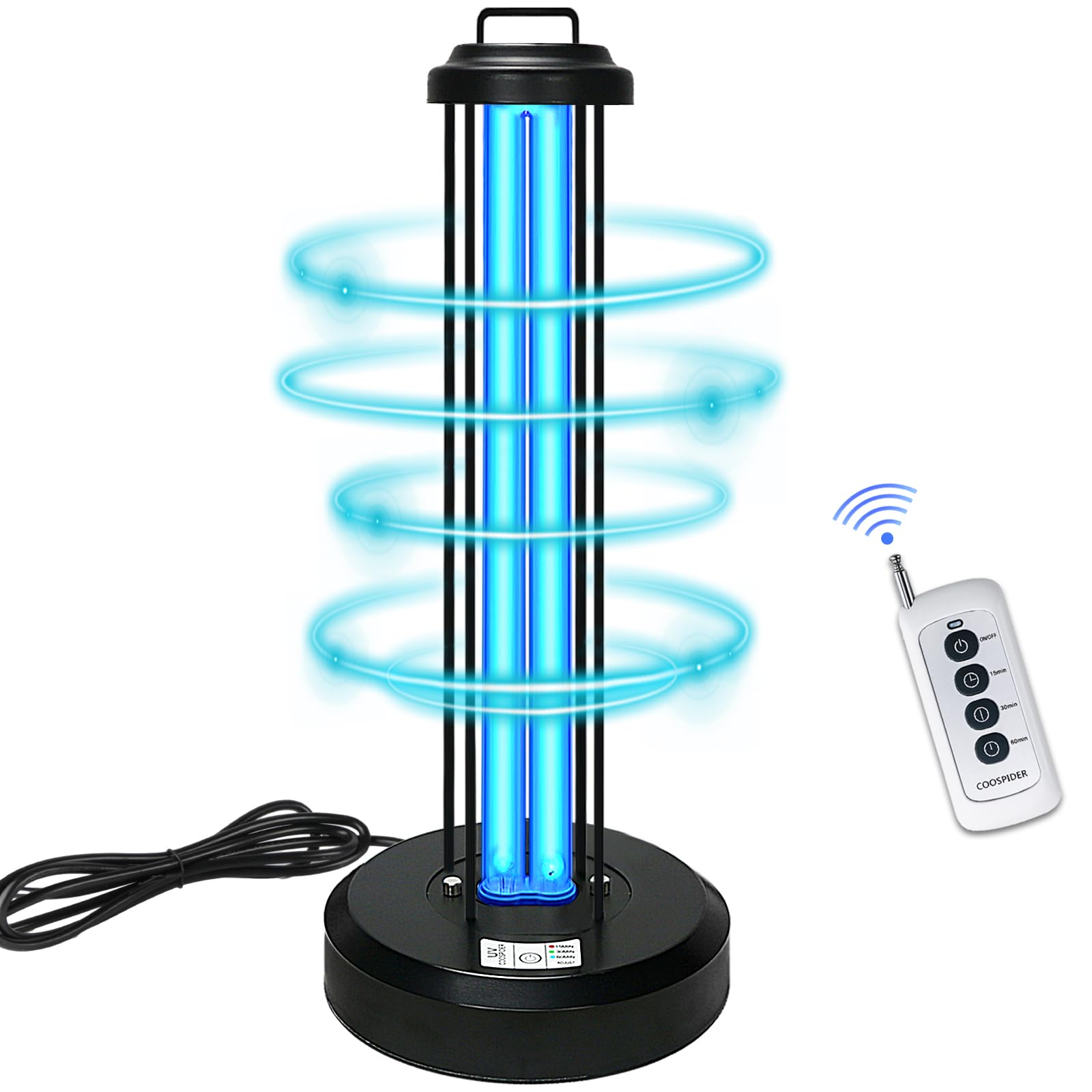
Mercury UV curing technology has been widely used in industrial production for decades. It relies on mercury vapor lamps to generate ultraviolet radiation.
A mercury UV lamp contains mercury gas inside a quartz tube. When electrical energy passes through the lamp, the mercury vapor produces an intense UV spectrum containing multiple wavelengths.
This broad-spectrum UV output allows mercury lamps to cure a wide range of traditional UV materials.
How Mercury UV Lamps Work
A mercury UV curing system typically includes:
- Mercury vapor lamp
- Reflector system
- Cooling mechanism
- Power supply
- Control system
During operation, electrical energy excites mercury atoms inside the lamp. The excited mercury produces ultraviolet radiation across a broad wavelength range, including UVA, UVB, and UVC regions.
The broad emission spectrum is one of the main reasons mercury UV technology has been successful. Many UV coatings and adhesives developed over previous decades were specifically designed around mercury lamp wavelengths.
Advantages of Mercury UV Curing
1. Strong UV Intensity
Mercury lamps can generate extremely high UV intensity, making them suitable for applications requiring deep curing or fast production speeds.
Industries such as high-speed printing and industrial coating often rely on mercury UV systems because of their powerful output.
2. Wide Material Compatibility
Because mercury lamps produce multiple UV wavelengths, they can activate many different photo initiators.
This makes mercury UV suitable for:
- Thick coatings
- Complex formulations
- Traditional UV inks
- Industrial varnishes
- Large-area curing applications
3. Proven Industrial Reliability
Mercury UV technology has been used successfully for many years. Many factories already have established processes, equipment, and materials based on mercury curing systems.
For manufacturers with existing production lines, continuing with mercury UV may be the most practical option.
3. Limitations of Mercury UV Technology
Although mercury UV systems remain widely used, they also have several disadvantages that have encouraged the development of LED-UV alternatives.
Higher Energy Consumption
One of the biggest challenges of mercury UV systems is energy efficiency.
Mercury lamps require significant electrical power not only to generate UV radiation but also to maintain operating temperature and support cooling systems.
A large portion of consumed energy is converted into:
- Heat
- Visible light
- Unused wavelengths
Only part of the energy contributes directly to curing.
For factories operating thousands of production hours per year, energy consumption can become a major operating expense.
Heat Generation Issues
Mercury UV lamps produce substantial heat during operation.
This heat can create challenges when curing temperature-sensitive materials such as:
- Thin plastic films
- Electronic components
- Optical materials
- Heat-sensitive coatings
Additional cooling equipment may be required, increasing system complexity and maintenance costs.
Lamp Replacement Requirements
Mercury lamps have a limited service life. Over time, their UV output gradually decreases, affecting curing consistency.
Manufacturers typically need to:
- Replace lamps regularly
- Maintain reflectors
- Clean optical components
- Monitor UV intensity
These maintenance tasks require production downtime and additional labor.
Environmental Concerns
Mercury lamps contain mercury, a regulated hazardous material. Disposal and recycling must follow environmental guidelines.
As industries worldwide move toward greener manufacturing practices, many companies are looking for alternatives that reduce environmental impact.
4. Understanding LED-UV Curing Technology
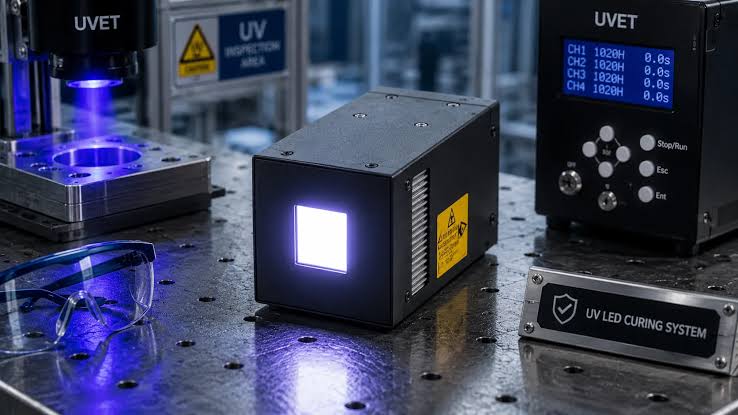
LED-UV curing represents the next generation of ultraviolet curing solutions. Instead of using mercury vapor lamps, LED-UV systems use semiconductor light-emitting diodes to produce ultraviolet radiation at specific wavelengths.
Unlike traditional mercury lamps that generate a wide spectrum of UV energy, LED-UV systems are designed to emit highly focused wavelengths, commonly including:
- 365 nm
- 385 nm
- 395 nm
- 405 nm
The selected wavelength depends on the chemistry of the UV material being cured and the requirements of the manufacturing process.
LED-UV technology has rapidly gained popularity because it offers improved energy efficiency, longer operating life, lower heat output, and greater process control.
How LED-UV Curing Systems Work
LED-UV curing systems use arrays of UV LEDs arranged on a specialized module. When electrical current passes through the semiconductor material inside each LED, ultraviolet photons are generated.
The generated UV energy activates photo initiators in the curing material, creating a rapid polymerization reaction.
Unlike mercury lamps, LED-UV systems produce UV energy only within a narrow wavelength range. This precise output allows manufacturers to optimize curing performance by matching the LED wavelength with the chemical characteristics of the material.
A typical LED-UV curing system includes:
- UV LED modules
- Heat management system
- Electronic driver
- Control interface
- Optical lens or focusing system
Modern industrial LED-UV equipment can be customized according to production requirements, including curing area, intensity, wavelength, and operating distance.
Advantages of LED-UV Curing Systems
1. Exceptional Energy Efficiency
One of the biggest benefits of LED-UV technology is its energy-saving performance.
Mercury UV lamps continuously consume power to maintain operation, generate heat, and support cooling systems. LED-UV systems, however, convert electrical energy into UV radiation much more efficiently.
LED-UV technology offers:
- Lower electricity consumption
- Reduced cooling requirements
- Lower operating expenses
- Improved factory energy management
For manufacturers running continuous production lines, the energy savings can become substantial over the lifetime of the equipment.
2. Longer Service Life
LED-UV systems typically have a much longer operating lifespan compared with mercury lamps.
A mercury UV lamp may require regular replacement because its UV output decreases over time. In contrast, industrial UV LEDs can operate for tens of thousands of hours when properly designed and cooled.
This longer lifespan provides several advantages:
- Reduced replacement frequency
- Lower maintenance costs
- Less production interruption
- More stable curing performance
For factories where downtime directly affects profitability, this reliability is a major advantage.
3. Lower Heat Generation
Because LED-UV systems produce minimal infrared radiation compared with mercury lamps, they generate significantly less heat.
This makes LED-UV especially suitable for temperature-sensitive materials, including:
- Flexible electronics
- Thin plastics
- Films
- Optical components
- Delicate coatings
Manufacturers can achieve high-speed curing without damaging sensitive substrates.
4. Instant On/Off Operation
Mercury UV lamps require warm-up and cool-down periods. Operators often need to wait before the lamp reaches stable output.
LED-UV systems work differently.
They can turn on and off instantly, providing:
- Faster production startup
- Reduced idle energy consumption
- Better process control
- Improved automation capability
This feature is particularly valuable in modern smart factories where equipment efficiency and automation are priorities.
5. Environmentally Friendly Operation
LED-UV systems do not contain mercury and produce fewer environmental concerns during operation and disposal.
Their advantages include:
- No hazardous mercury materials
- Reduced energy consumption
- Lower carbon emissions
- Longer equipment lifespan
As sustainability becomes increasingly important in industrial manufacturing, LED-UV technology aligns well with environmentally responsible production goals.
5. Mercury UV vs LED-UV: Key Differences at a Glance
Understanding the practical differences between mercury UV and LED-UV technology helps manufacturers select the right curing solution.
Light Source
Mercury UV
Mercury UV lamps use mercury vapor inside a quartz tube to generate broad-spectrum ultraviolet radiation.
LED-UV
LED-UV systems use semiconductor chips to generate specific UV wavelengths.
The difference in light generation creates major variations in performance and application.
Wavelength Output
Mercury UV
Mercury lamps produce multiple wavelengths across the UV spectrum.
This broad output can cure many traditional materials without major formulation adjustments.
LED-UV
LED systems produce narrow wavelength bands.
This provides better efficiency but requires compatible photo initiators and properly designed UV formulations.
Energy Consumption
Mercury UV
Higher power requirements due to:
- Lamp operation
- Heat production
- Cooling systems
- Continuous energy usage
LED-UV
Lower energy consumption because UV energy is generated more efficiently and only when needed.
Heat Production
Mercury UV
Produces considerable heat and may require cooling equipment.
LED-UV
Produces significantly less heat, making it suitable for sensitive materials.
Maintenance Requirements
Mercury UV
Requires:
- Lamp replacement
- Reflector maintenance
- UV intensity monitoring
- Cooling system maintenance
LED-UV
Requires:
- LED module inspection
- Cooling system maintenance
- Periodic cleaning
Overall maintenance demands are usually lower.
6. Comparing Industrial Applications
Different industries have different curing requirements. The choice between mercury UV and LED-UV depends heavily on production conditions, material chemistry, and performance expectations.
Printing Industry
The printing industry has historically relied heavily on mercury UV curing systems.
Applications include:
- Commercial printing
- Packaging printing
- Label production
- Digital printing
Mercury UV remains popular because many existing inks are designed for broad-spectrum UV exposure.
However, LED-UV printing technology is growing rapidly because it offers:
- Lower energy costs
- Reduced heat impact
- Longer equipment life
- Improved production flexibility
Modern printers increasingly choose LED-UV systems for new equipment investments.
Electronics Manufacturing
Electronics production requires highly controlled curing processes.
Applications include:
- PCB assembly
- Component bonding
- Protective coatings
- Display manufacturing
LED-UV is often preferred because electronics components can be sensitive to heat.
The precise wavelength control of LED-UV systems also allows manufacturers to optimize curing performance for specialized adhesives and coatings.
Adhesive Bonding Applications
UV-curable adhesives are widely used in:
- Optical assembly
- Medical devices
- Automotive electronics
- Consumer electronics
LED-UV systems provide excellent advantages for adhesive bonding because they allow precise energy delivery and rapid curing.
However, manufacturers must ensure that adhesive formulations are compatible with the selected LED wavelength.
Coating and Surface Finishing
Industrial coatings require strong surface performance, including:
- Scratch resistance
- Chemical resistance
- Gloss retention
- Durability
Mercury UV systems remain useful for some thick coatings because their broad-spectrum output can penetrate deeper into certain materials.
LED-UV technology is increasingly used for thinner coatings and applications requiring precise temperature control.
7. Performance Comparison: Mercury UV vs LED-UV
When choosing between mercury UV and LED-UV curing technology, manufacturers need to evaluate several performance factors beyond initial equipment cost. The right choice depends on production goals, material requirements, energy management strategies, and long-term operational plans.
The following comparison highlights the most important differences between these two technologies.
Curing Speed
Mercury UV Performance
Mercury UV lamps have traditionally been known for their high intensity and strong curing capability. Their broad UV spectrum allows them to activate a wide range of photo initiators, making them effective for many conventional UV materials.
For applications involving:
- Thick coatings
- High-speed production lines
- Large surface areas
- Established UV formulations
mercury lamps can still deliver reliable performance.
LED-UV Performance
LED-UV systems can achieve extremely fast curing speeds when paired with compatible materials.
Because LED-UV systems deliver concentrated UV energy at specific wavelengths, they can provide highly efficient curing reactions.
However, curing speed depends on:
- LED wavelength selection
- UV intensity
- Material formulation
- Coating thickness
- Production requirements
A properly designed LED-UV system can often match or exceed mercury UV performance in many modern applications.
Energy Efficiency and Operating Costs
For industrial manufacturers, the total cost of ownership is often more important than the initial equipment investment.
Mercury UV Cost Considerations
Mercury UV systems usually involve higher operating costs because of:
- Higher electricity consumption
- Frequent lamp replacement
- Cooling requirements
- Maintenance labor
- Production interruptions
Although the initial equipment may appear affordable, long-term operating expenses can become significant.
LED-UV Cost Considerations
LED-UV systems typically provide better long-term economics through:
- Reduced electricity usage
- Longer operating lifespan
- Minimal replacement costs
- Lower heat management expenses
- Reduced downtime
While LED-UV equipment may require a higher initial investment, many manufacturers recover the additional cost through operational savings over time.
8. Material Compatibility: A Critical Decision Factor
One of the most important considerations when selecting UV curing technology is material compatibility.
UV curing depends heavily on the relationship between:
- UV wavelength
- Photo initiator chemistry
- Material thickness
- Required curing depth
- Surface characteristics
A common misunderstanding is that LED-UV is always a direct replacement for mercury UV. In reality, the transition requires careful evaluation.
Mercury UV Material Compatibility
Because mercury lamps emit multiple UV wavelengths, they can activate a broad range of photo initiators.
This makes them suitable for:
- Older UV coating formulations
- Traditional printing inks
- General industrial coatings
- Materials designed before LED technology became common
Manufacturers with existing mercury-based production systems may find that changing to LED-UV requires material reformulation.
LED-UV Material Compatibility
LED-UV systems require materials specifically designed for LED wavelengths.
Many modern UV coatings, inks, and adhesives are now optimized for:
- 365 nm LED
- 385 nm LED
- 395 nm LED
- 405 nm LED
When properly matched, LED-compatible materials can achieve excellent curing performance.
Before upgrading equipment, manufacturers should evaluate:
- Current chemical formulations
- Photo initiator response
- Required curing depth
- Production speed
- Final product requirements
9. Safety Considerations in Industrial UV Curing
Safety is a major concern when operating any UV curing equipment.
Both mercury UV and LED-UV systems require proper protection because ultraviolet radiation can affect:
- Skin
- Eyes
- Sensitive materials
- Workplace environments
Industrial facilities should implement appropriate safety measures, including:
- UV shielding systems
- Protective equipment
- Equipment interlocks
- Operator training
- Regular system inspections
Safety Features of Mercury UV Systems
Mercury UV systems require additional attention because they involve:
- High operating temperatures
- Glass lamp components
- Mercury-containing materials
- Strong UV emissions
Proper handling is necessary during lamp replacement and disposal.
Safety Features of LED-UV Systems
LED-UV systems generally offer improved operational safety because they:
- Generate less heat
- Do not contain mercury
- Provide controlled wavelength output
- Require fewer replacement procedures
However, direct exposure to UV LED radiation should still be avoided.
10. Environmental Impact: Moving Toward Sustainable Manufacturing
Sustainability is becoming an increasingly important factor in industrial equipment selection.
Manufacturers today are not only considering production speed but also:
- Energy efficiency
- Carbon footprint
- Waste reduction
- Environmental regulations
Mercury UV Environmental Challenges
Mercury UV technology faces several environmental concerns:
Mercury Content
Mercury is a hazardous substance requiring controlled handling and disposal.
Energy Consumption
Higher electricity usage increases overall environmental impact.
Waste Generation
Frequent lamp replacement creates additional waste management requirements.
LED-UV Environmental Advantages
LED-UV technology supports greener manufacturing through:
Lower Energy Demand
Reduced electricity consumption helps lower operational emissions.
Longer Equipment Life
Fewer replacements reduce material waste.
Mercury-Free Design
The absence of mercury simplifies disposal and improves workplace sustainability.
For companies pursuing environmental certifications or sustainability goals, LED-UV can provide significant advantages.
11. Common Misunderstandings About LED-UV Technology
Although LED-UV has become increasingly popular, several misconceptions still exist.
Misunderstanding 1: LED-UV Cannot Match Mercury UV Performance
This was partially true during the early development of LED technology. However, modern high-power LED-UV systems have improved significantly.
Today, LED-UV solutions can successfully replace mercury UV systems in many applications, especially when materials are optimized correctly.
Misunderstanding 2: LED-UV Works With All Existing UV Materials
LED-UV requires wavelength compatibility.
A material designed for mercury UV may not cure properly under a specific LED wavelength.
Manufacturers should confirm compatibility before switching systems.
Misunderstanding 3: LED-UV Is Only Suitable for Small Applications
Modern industrial LED-UV systems are available for:
- Large coating lines
- Printing equipment
- Automated assembly systems
- Manufacturing production cells
LED-UV is no longer limited to laboratory or small-scale applications.
12. How to Choose Between Mercury UV and LED-UV
Selecting the right curing technology requires a systematic evaluation.
Manufacturers should consider the following questions:
1. What Material Are You Curing?
The chemistry of the coating, ink, or adhesive is the first consideration.
Ask:
- Is the material LED-compatible?
- What wavelength activates the photo initiator?
- How deep must curing occur?
2. What Is Your Production Speed Requirement?
High-volume production environments need reliable and consistent curing performance.
Consider:
- Line speed
- Required curing intensity
- Operating hours
- Production capacity
3. What Are Your Energy Goals?
Companies looking to reduce energy consumption should evaluate the long-term benefits of LED-UV.
Important factors include:
- Electricity costs
- Cooling requirements
- Equipment efficiency
4. What Is Your Maintenance Strategy?
Manufacturers should consider the cost of:
- Replacement parts
- Downtime
- Labor
- Equipment servicing
LED-UV systems often provide advantages for companies seeking lower maintenance operations.
5. Are You Planning Future Upgrades?
Technology decisions should consider future production development.
A curing system should support:
- New materials
- Automation upgrades
- Increased production demand
- Sustainability goals