Every day, millions of people rely on buses, subways, and airplanes to commute, travel, and connect with the world. These systems are designed for efficiency and capacity—but that very efficiency creates a unique challenge: shared, enclosed spaces with extremely high passenger turnover.
In recent years, hygiene has shifted from a background concern to a central expectation. Passengers now pay close attention to cleanliness, air quality, and surface sanitation. Transportation authorities and airlines, in turn, are under pressure to adopt solutions that are effective, scalable, and visible.
Among the technologies gaining serious attention is ultraviolet (UV) light.
This article examines the realistic potential of UV light in public transportation environments—what it can do, where it works best, its limitations, and how it fits into a broader sanitation strategy for buses, subways, and aircraft cabins.
1. Why Public Transportation Is a Hygiene Challenge
1.1 High Density, High Contact
Public transport vehicles share several characteristics:
-
Large numbers of passengers
-
Frequent turnover
-
Limited personal space
-
Repeated contact with the same surfaces
Common high-touch areas include:
-
Handrails and poles
-
Seat backs and armrests
-
Door buttons and handles
-
Tray tables and seatbelt buckles
-
Overhead bins and touchscreens
These surfaces can become vectors for microbial transfer within hours.
1.2 Enclosed Spaces and Limited Ventilation
Unlike open environments, vehicles such as buses, subway cars, and airplane cabins are enclosed for long periods.
Even with modern HVAC systems:
-
Air is recirculated
-
Surfaces accumulate contamination
-
Cleaning windows between trips are short
This makes efficient, non-disruptive sanitation methods especially valuable.
2. Traditional Cleaning Methods: Strengths and Limits
2.1 Manual Cleaning and Chemical Disinfection
Most transit systems rely on:
-
Manual wiping
-
Sprays and disinfectants
-
Nightly deep-cleaning routines
While effective, these methods face constraints:
-
Labor-intensive processes
-
Inconsistent coverage
-
Chemical residue concerns
-
Limited frequency during peak operations
2.2 The Time Constraint Problem
Public transportation runs on tight schedules.
Vehicles often have:
-
Minutes—not hours—between trips
-
High utilization rates
-
Limited downtime for cleaning
Any new solution must work within these operational realities.
3. Understanding UV Light as a Disinfection Technology
3.1 How UV Light Works
Ultraviolet light, particularly UV-C wavelengths, can:
-
Disrupt the DNA or RNA of microorganisms
-
Prevent bacteria and viruses from replicating
-
Reduce microbial load on exposed surfaces and in the air
UV disinfection is:
-
Chemical-free
-
Dry
-
Contactless
-
Fast-acting
3.2 UV Is Not New—but Its Applications Are Expanding
UV technology has long been used in:
-
Water treatment
-
Healthcare facilities
-
Laboratories
What’s new is its adaptation for large-scale, mobile, public environments.
4. Why UV Light Appeals to Public Transportation Systems
4.1 Speed and Automation
UV systems can:
-
Operate autonomously
-
Disinfect without manual labor
-
Run during off-hours or between trips
This makes them attractive for high-throughput environments.
4.2 No Chemical Residue
UV leaves:
-
No moisture
-
No smell
-
No residue
This is particularly important in:
-
Aircraft cabins
-
Enclosed subway cars
-
Passenger-facing surfaces
4.3 Public Confidence and Visibility
Visible sanitation efforts matter.
UV technology:
-
Signals innovation
-
Demonstrates commitment to hygiene
-
Helps rebuild passenger trust
Even when invisible during operation, UV systems often become part of public communication strategies.
5. UV Light in Buses: Practical Applications
5.1 Overnight UV Disinfection
For bus fleets, UV can be used:
-
In depots
-
During overnight parking
-
As a supplement to manual cleaning
UV fixtures or mobile units can target:
-
Seats
-
Handrails
-
Driver cabins
5.2 Challenges in Bus Environments
Buses present unique difficulties:
-
Irregular layouts
-
Shadowed surfaces
-
Fabric seats that UV may not penetrate deeply
As a result, UV works best as:
-
A surface-level reduction tool
-
A complement to regular cleaning
6. UV Light in Subways and Metro Systems
6.1 Scale and Consistency
Subway systems operate at massive scale.
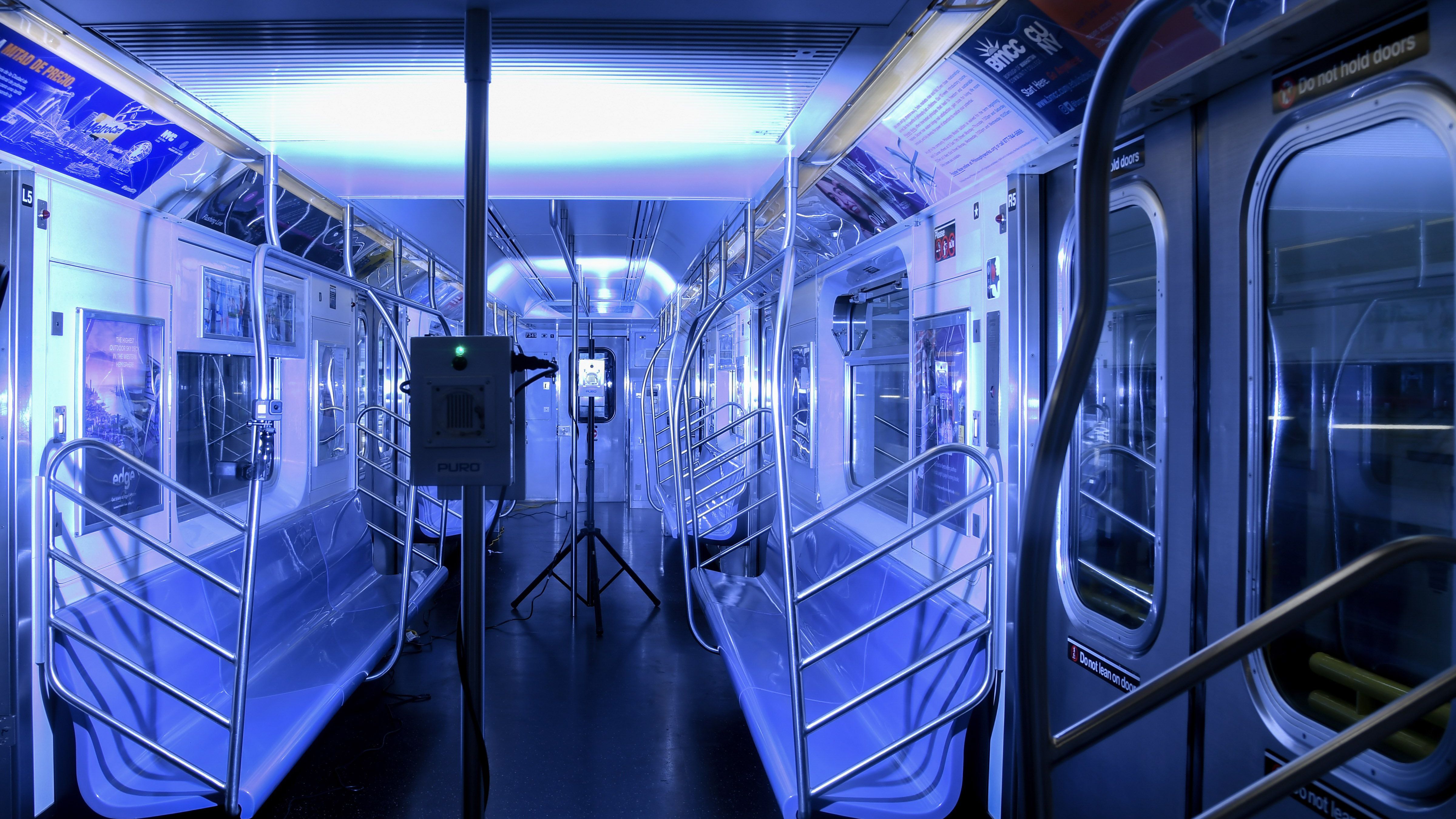
UV solutions may be applied to:
-
Individual cars
-
Platform-level air systems
-
Maintenance facilities
Automation is key for feasibility.
6.2 Fixed UV Installations
Some transit authorities explore:
-
UV air treatment within HVAC systems
-
Enclosed UV chambers in depots
These approaches:
-
Avoid passenger exposure
-
Run continuously or cyclically
-
Target airborne microorganisms
6.3 High-Touch Surfaces
UV may be used selectively for:
-
Poles
-
Handles
-
Operator areas
However, careful placement is required to ensure safety and coverage.
7. UV Light in Aircraft Cabins: A High-Stakes Environment
7.1 Why Aviation Is Different
Aircraft cabins are:
-
Highly regulated
-
Tightly enclosed
-
Sensitive to weight, energy use, and materials
Any technology introduced must meet strict safety and certification standards.
7.2 Cabin Turnaround Time
Airplanes face extreme time pressure:
-
30–90 minutes between flights
-
Hundreds of passengers per day
UV offers potential for:
-
Rapid disinfection cycles
-
Automated systems that reduce labor load
7.3 Common UV Applications in Aviation
UV technology is being explored for:
-
Overhead bin surfaces
-
Lavatories
-
Galleys
-
Air circulation systems
Some airlines have tested:
-
Portable UV robots
-
Handheld UV devices
-
Integrated HVAC UV systems
8. UV and Air Disinfection in Transit Systems
8.1 Surface vs Airborne Microorganisms
While surface disinfection gets attention, air quality matters too.
UV systems in HVAC ducts can:
-
Reduce airborne microbial load
-
Prevent mold growth
-
Improve overall air hygiene
This is particularly relevant in:
-
Subway tunnels
-
Long-haul flights
-
Crowded peak-hour services
8.2 UV in HVAC Systems
Advantages include:
-
Continuous operation
-
No passenger exposure
-
Integration with existing infrastructure
Limitations include:
-
Upfront installation costs
-
Maintenance requirements
9. Safety Considerations: Non-Negotiable
9.1 Passenger Safety Comes First
Direct UV exposure can be harmful.
Therefore, UV systems in public transport must be:
-
Fully enclosed
-
Shielded
-
Operated only when vehicles are empty
-
Integrated into HVAC systems
9.2 Regulatory Compliance
Any UV deployment must comply with:
-
Transportation authority regulations
-
Occupational safety standards
-
Aviation and transit-specific guidelines
UV adoption is a carefully controlled process, not a quick add-on.
10. UV Is Not a Silver Bullet
Despite its promise, UV has limitations.
UV Cannot:
-
Penetrate dirt or organic residue
-
Replace manual cleaning
-
Reach shaded or covered surfaces effectively
This is why UV is best viewed as:
-
A supporting layer
-
Part of a multi-step sanitation strategy
11. Integrating UV into a Layered Hygiene Approach
The most effective systems combine:
-
Manual cleaning
-
Chemical disinfection
-
UV surface treatment
-
UV air purification
-
Improved ventilation
UV enhances—not replaces—existing protocols.
12. Operational and Cost Considerations
12.1 Initial Investment
UV systems require:
-
Equipment purchase
-
Installation or deployment planning
-
Staff training
12.2 Long-Term Value
Over time, UV may:
-
Reduce labor hours
-
Lower chemical usage
-
Extend cleaning intervals
-
Improve passenger confidence
The value lies in efficiency and consistency, not cost-cutting alone.
13. Public Perception and Communication
Passengers want transparency.
Clear communication about:
-
When UV is used
-
How it works
-
Why it’s safe
Helps prevent misunderstandings and builds trust.
14. Lessons from the Post-Pandemic Era
The pandemic reshaped expectations.
Passengers now assume:
-
Higher hygiene standards
-
Visible sanitation efforts
-
Proactive risk management
UV technology aligns with these expectations when deployed responsibly.
15. Environmental Impact of UV-Based Sanitation
UV systems can:
-
Reduce reliance on harsh chemicals
-
Lower disposable wipe usage
-
Support sustainability goals
This aligns with broader environmental initiatives in transportation.
16. Case Scenarios: Where UV Makes the Most Sense
Urban Bus Fleets
-
Overnight depot disinfection
-
Driver cabin sanitation
Subway Systems
-
HVAC air treatment
-
Maintenance facility applications
Airlines
-
Cabin air systems
-
Lavatories and galleys
-
Automated overnight cycles
Each environment requires customized solutions, not one-size-fits-all deployments.
17. The Future of UV in Public Transportation
Emerging trends include:
-
Far-UV technologies with enhanced safety profiles
-
Smarter sensors and automation
-
Integration with real-time air quality monitoring
The direction is toward precision, safety, and efficiency.
18. Ethical and Operational Responsibility
Transportation agencies serve the public.
Adopting UV technology responsibly means:
-
Prioritizing safety
-
Avoiding exaggerated claims
-
Grounding decisions in science, not marketing
Trust is built through measured, honest implementation.
19. A Realistic Perspective on UV’s Role
UV light is neither a miracle cure nor a cosmetic gesture.
It is:
-
A proven scientific tool
-
Most effective when applied correctly
-
Valuable as part of a layered defense strategy
Conclusion: Moving Forward with Care and Confidence
Public transportation will always involve shared space.
The challenge is not to eliminate all risk—but to manage it intelligently.
UV light offers real potential:
-
To enhance surface and air hygiene
-
To improve operational efficiency
-
To reassure passengers through science-backed solutions
When used thoughtfully, UV technology helps public transportation systems move forward—cleaner, safer, and more resilient than before.