Whether you’re managing a large-scale aquaculture system, running a commercial fish farm, or maintaining a home aquarium, water quality is the single most important factor affecting fish health. Yet water is also the easiest place for problems to hide—especially microscopic ones.
Algae blooms, bacterial infections, parasites, and waterborne pathogens often develop long before visible symptoms appear. By the time fish show stress or disease, the problem is already well established.
This is where UV light has quietly become one of the most effective and misunderstood tools in modern aquaculture and aquarium management.
In this article, we’ll explore how UV light works, why it’s so effective at controlling algae and pathogens, where it fits into filtration systems, and how to use it responsibly to maintain a healthier aquatic environment.
1. Why Water Quality Is the Core of Aquaculture Success
1.1 Fish Live in Their Environment—Literally
Unlike land animals, fish are in constant contact with their environment:
-
They breathe water
-
They absorb substances through their gills
-
They are exposed to microorganisms 24/7
Even minor water quality issues can quickly escalate into:
-
Stress
-
Weakened immune systems
-
Disease outbreaks
-
Reduced growth or reproduction
1.2 The Invisible Threats in Aquatic Systems
Most aquarium problems are microbial before they are visual.
Common hidden threats include:
-
Free-floating algae spores
-
Harmful bacteria
-
Protozoan parasites
-
Waterborne viruses
Traditional filtration alone cannot fully address these microscopic threats.
2. The Limits of Traditional Filtration Methods
2.1 Mechanical Filtration
Mechanical filters remove:
-
Solid waste
-
Uneaten food
-
Debris
They do not eliminate microorganisms suspended in the water.
2.2 Biological Filtration
Biological filtration relies on beneficial bacteria to:
-
Break down ammonia
-
Convert nitrites to nitrates
While essential, it:
-
Does not kill pathogens
-
Does not control algae spores
-
Can be overwhelmed during outbreaks
2.3 Chemical Treatments: A Risky Shortcut
Chemical solutions may:
-
Temporarily reduce algae
-
Kill certain pathogens
But they also:
-
Stress fish
-
Harm beneficial bacteria
-
Create long-term instability
This is why aquaculture increasingly favors non-chemical, preventative solutions.
3. Understanding UV Light in Aquatic Systems
3.1 What UV Light Does in Water
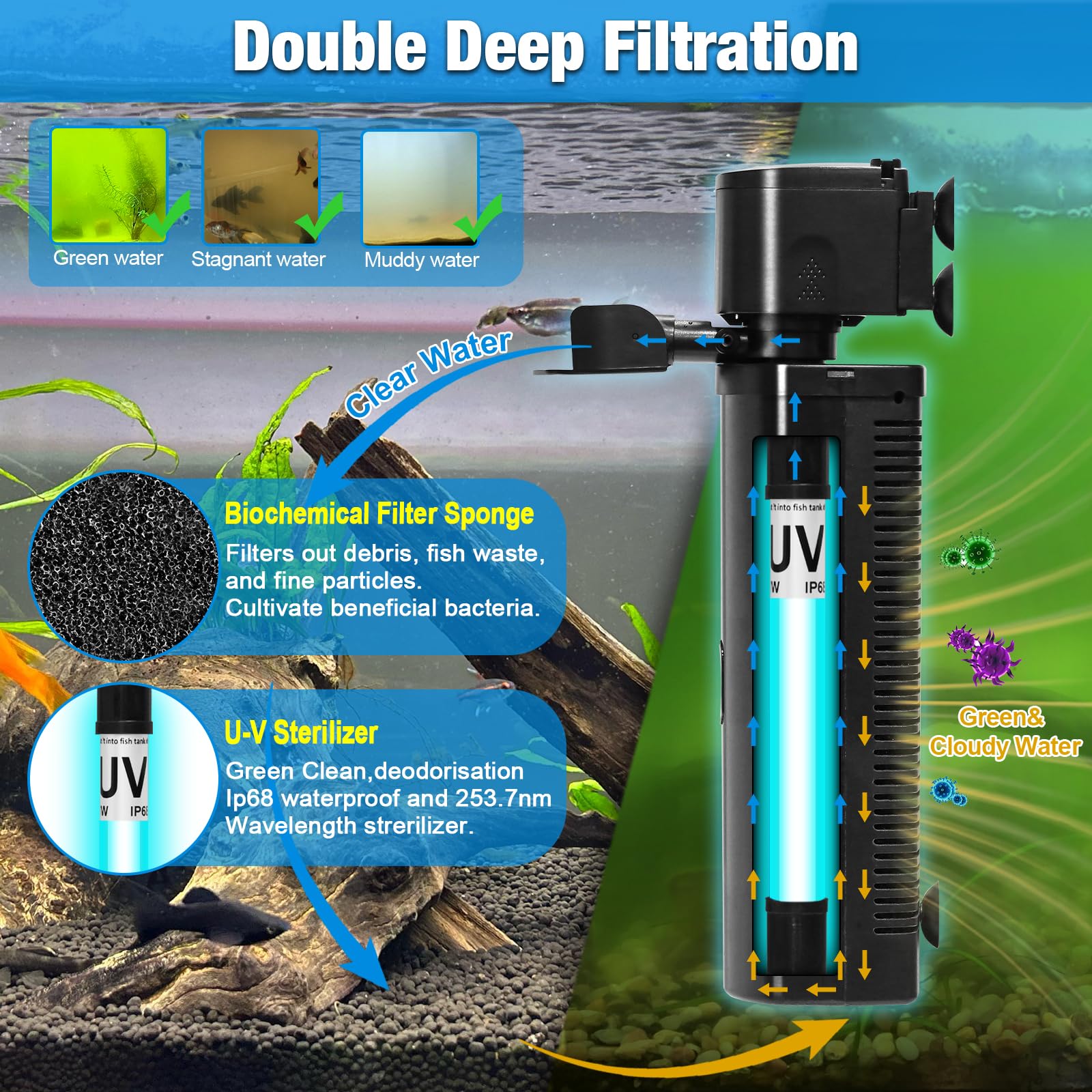
Ultraviolet (UV) light, particularly UV-C wavelengths, works by:
-
Disrupting the DNA and RNA of microorganisms
-
Preventing algae, bacteria, and parasites from reproducing
-
Rendering pathogens inactive without adding chemicals
Importantly, UV does not “clean” water—it neutralizes what passes through it.
3.2 UV Is a Control Tool, Not a Cure-All
UV light:
-
Does not remove debris
-
Does not fix poor maintenance
-
Does not replace filtration
Instead, it acts as a powerful control layer within a complete system.
4. How UV Light Controls Algae in Fish Tanks
4.1 The Real Cause of Green Water
Green water isn’t caused by surface algae—it’s caused by free-floating algae cells multiplying rapidly in the water column.
UV light is highly effective because:
-
Algae cells must pass through the UV chamber
-
UV damages their reproductive ability
-
The bloom collapses naturally
4.2 Why UV Works Better Than Algaecides
Unlike chemicals, UV:
-
Doesn’t poison fish
-
Doesn’t disrupt biological filtration
-
Doesn’t require water changes after use
This makes it ideal for:
-
Display aquariums
-
Koi ponds
-
Recirculating aquaculture systems (RAS)
5. UV Light and Pathogen Control
5.1 Bacteria in Aquatic Environments
Pathogenic bacteria can:
-
Spread rapidly in closed systems
-
Enter through new fish, plants, or equipment
UV reduces:
-
Bacterial load in the water column
-
Transmission rates between fish
It does not eliminate bacteria on surfaces—but it reduces overall disease pressure.
5.2 Parasites and Protozoa
Many common parasites have:
-
Free-swimming stages
-
Waterborne transmission cycles
UV is especially effective against:
-
Ich (Ichthyophthirius)
-
Cryptocaryon (marine ich)
-
Certain protozoans
By interrupting their life cycle, UV lowers reinfection rates.
6. UV Light in Aquaculture Systems
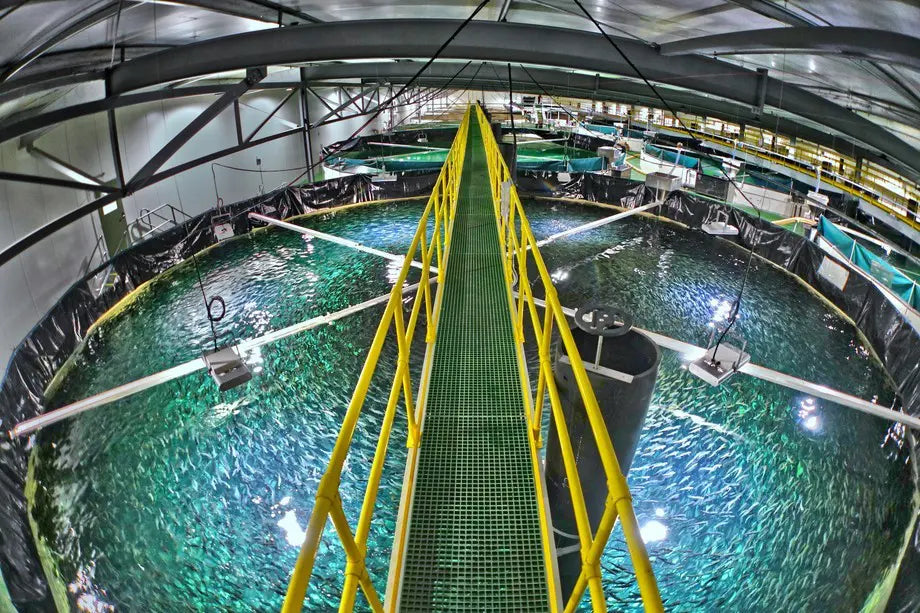
6.1 Recirculating Aquaculture Systems (RAS)
In RAS setups, UV:
-
Improves biosecurity
-
Reduces disease outbreaks
-
Stabilizes water quality
It is commonly installed:
-
After mechanical filtration
-
Before biological filtration or return lines
6.2 Hatcheries and Fry Systems
Young fish are especially vulnerable.
UV helps by:
-
Reducing pathogen exposure
-
Supporting higher survival rates
-
Lowering reliance on antibiotics
7. Home Aquariums: Why UV Isn’t Just for Professionals
7.1 For Freshwater Tanks
UV is ideal for:
-
Community tanks
-
Planted aquariums
-
Large freshwater systems
It helps maintain:
-
Clear water
-
Stable conditions
-
Reduced disease outbreaks
7.2 For Marine and Reef Aquariums
In saltwater systems, UV:
-
Reduces free-swimming parasites
-
Helps manage bacterial imbalances
-
Supports fish health in mixed reefs
When sized correctly, UV does not harm corals or beneficial organisms.
8. How to Properly Size a UV Sterilizer
8.1 Flow Rate Matters More Than Wattage
Effective UV treatment depends on:
-
Exposure time
-
Flow rate
-
UV intensity
Too fast, and pathogens pass through unaffected.
Too slow, and system efficiency drops.
8.2 Match UV to Your Goal
Different goals require different setups:
-
Algae control
-
Bacterial reduction
-
Parasite management
Proper sizing ensures control, not overexposure.
9. Installation Best Practices
9.1 Placement in the System
UV works best:
-
After mechanical filtration
-
Before water returns to the tank
This ensures:
-
Clear water exposure
-
Maximum effectiveness
9.2 Maintenance Is Non-Negotiable
UV bulbs:
-
Lose effectiveness over time
-
Must be replaced on schedule
Quartz sleeves:
-
Must be cleaned regularly
-
Can reduce UV transmission if dirty
Neglected UV systems provide a false sense of security.
10. Common Myths About UV in Aquariums
Myth 1: “UV Kills All Beneficial Bacteria”
False.
UV only affects organisms that pass through the unit.
Beneficial bacteria on surfaces remain untouched.
Myth 2: “UV Makes Water Sterile”
False.
UV reduces microbial load—it does not sterilize the system.
Myth 3: “UV Is Dangerous to Fish”
Incorrect when properly installed.
UV chambers are sealed and safe.
11. UV vs Chemical Treatments: A Long-Term View
Chemicals:
-
Offer short-term fixes
-
Create dependency
-
Increase stress
UV:
-
Provides continuous control
-
Reduces intervention frequency
-
Supports long-term stability
This makes UV a preventative investment, not a reactionary tool.
12. Sustainability and Responsible Aquaculture
UV systems:
-
Reduce chemical discharge
-
Support antibiotic-free practices
-
Improve environmental outcomes
This aligns with modern sustainable aquaculture standards.
13. When UV Should NOT Be Used Alone
UV cannot fix:
-
Overfeeding
-
Overstocking
-
Poor filtration
-
Infrequent water changes
It supports good practices—it does not replace them.
14. Case Scenarios: Where UV Makes the Biggest Impact
-
Green water outbreaks in koi ponds
-
Disease prevention in high-density systems
-
Parasite control in marine aquariums
-
Water clarity in display tanks
In each case, UV works as part of a layered management approach.
15. The Future of UV in Aquatic Management
Advancements include:
-
Energy-efficient UV LEDs
-
Smarter flow control
-
Integrated monitoring systems
UV technology continues to evolve alongside aquaculture science.
Conclusion: Clean Water Is Controlled Water
Aquaculture success isn’t about reacting to problems—it’s about preventing them.
UV light offers a:
-
Chemical-free
-
Non-invasive
-
Scientifically proven way
To control algae and pathogens before they become visible threats.
When used correctly, UV doesn’t just improve water clarity—it creates a healthier, more stable environment for aquatic life.
In aquaculture and aquarium care, UV light isn’t a shortcut.
It’s a quiet, reliable guardian working behind the scenes—and one of the best-kept secrets of clean, thriving water systems.