In modern manufacturing, speed is no longer a competitive advantage—it is a baseline requirement. From consumer electronics to automotive assembly lines and medical device production, manufacturers are under constant pressure to reduce cycle times, improve bonding precision, and maintain flawless product quality at scale.
One of the most powerful yet often underestimated technologies enabling this transformation is the UV lamp used in UV-curable adhesives. Acting as a true “catalyst” in production environments, UV light enables adhesives to cure in seconds, replacing traditional slow-setting chemical processes with near-instant bonding performance.
This shift has redefined how factories design production lines, manage throughput, and engineer product assemblies.
In this article, we will explore how UV lamps work in UV-curable adhesives, why they are so effective, and how they have become a cornerstone of high-efficiency industrial manufacturing.
Understanding UV-Curable Adhesives and Their Industrial Importance
UV-curable adhesives are specialized bonding materials that remain liquid or semi-liquid until exposed to ultraviolet (UV) light. Once irradiated, they undergo a rapid photochemical reaction that transforms them into solid, high-strength bonds.
This curing process is used in industries where:
-
Speed is critical
-
Precision alignment is required
-
Heat-sensitive materials are involved
-
Clean, residue-free bonding is essential
Instead of relying on heat, pressure, or long chemical curing times, UV adhesives respond instantly when exposed to UV energy.
This technology is widely supported by material innovators and system providers such as Henkel, 3M, and UV system manufacturers like Heraeus.
How UV Lamps Act as a “Catalyst” in Adhesive Curing
In chemistry, a catalyst accelerates a reaction without being consumed. In manufacturing, UV light plays a similar role—it initiates and accelerates polymerization without becoming part of the final material.
The Basic Mechanism
-
UV-curable adhesive is applied between two surfaces
-
Photoinitiators within the adhesive absorb UV light
-
Reactive molecules are activated
-
Polymer chains rapidly form
-
The adhesive solidifies into a strong bond
This entire process can take seconds or even fractions of a second.
The UV lamp does not become part of the adhesive. Instead, it acts as an energy trigger—making it a true production “catalyst.”
Types of UV Lamps Used in Adhesive Curing Systems
Different UV lamp technologies are used depending on production requirements.
1. Mercury Vapor UV Lamps
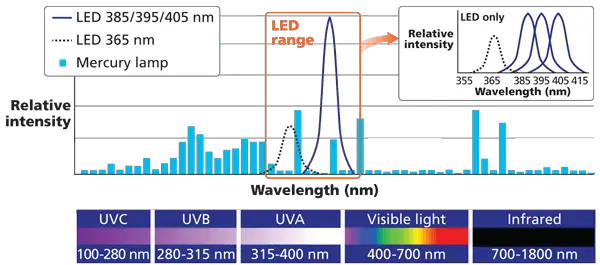
Traditional UV curing systems rely on mercury vapor lamps, which produce a broad spectrum of ultraviolet light.
Characteristics:
-
High intensity output
-
Broad wavelength range
-
Effective for many adhesive formulations
-
Requires warm-up time
-
Generates significant heat
These systems are still widely used in heavy industrial environments.
2. UV LED Lamps
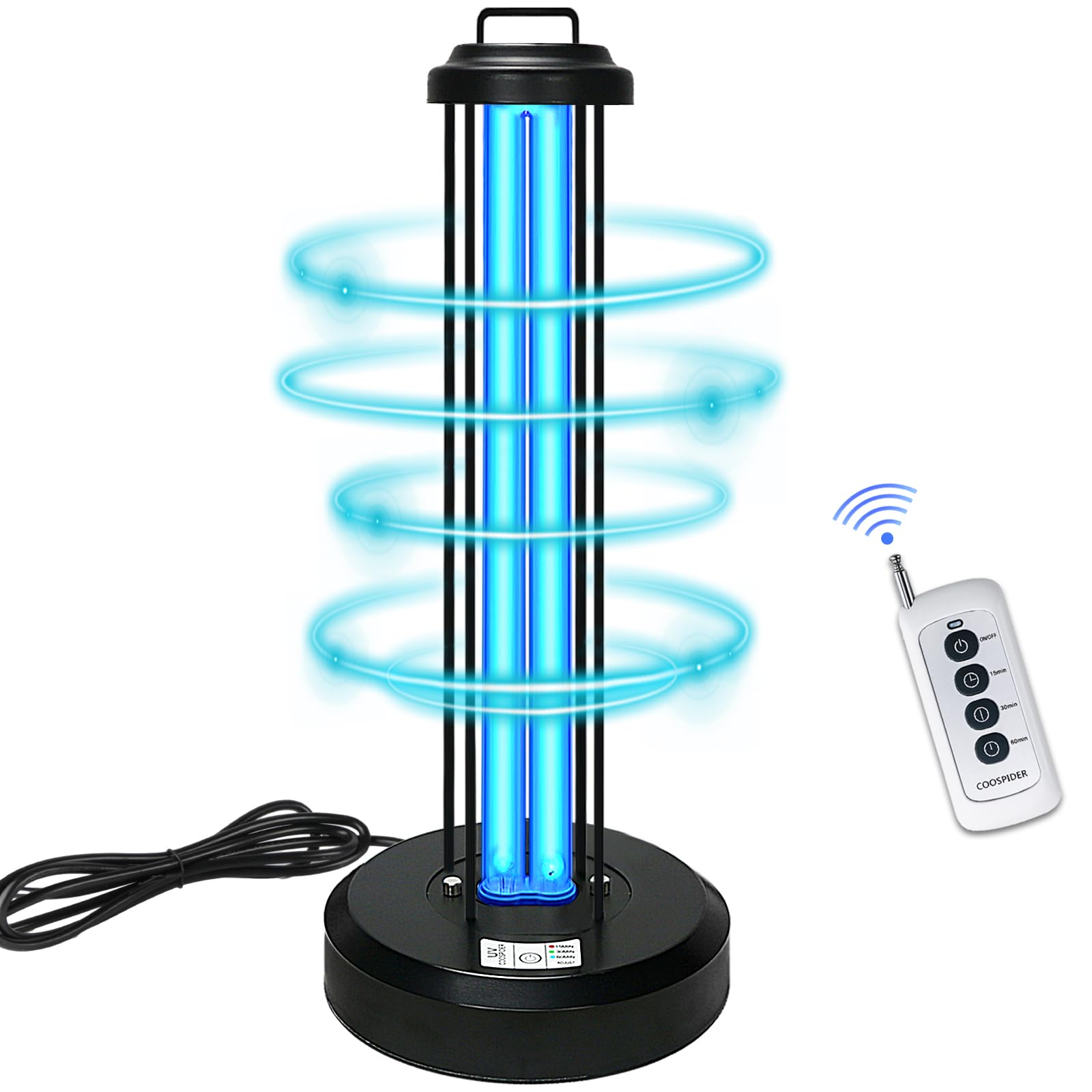
UV LED systems are rapidly replacing traditional lamps in many industries.
Characteristics:
-
Instant on/off operation
-
Narrow, precise wavelength output
-
Low heat generation
-
Long lifespan
-
Energy efficient
Companies like Excelitas Technologies and Nordson are leading the development of UV LED curing solutions for industrial bonding applications.
Why UV Lamps Are Essential in Modern Adhesive Applications
Without UV lamps, UV-curable adhesives would simply not function. The lamp is not optional—it is the activation source that determines whether the adhesive remains liquid or becomes a solid bond.
Their importance can be understood through three core industrial demands:
1. Speed of Production
Manufacturers cannot afford long curing times. UV lamps reduce bonding cycles from minutes or hours to seconds.
2. Precision Bonding
UV curing allows components to be aligned perfectly before activation, ensuring exact placement.
3. Clean Manufacturing
No solvents, no evaporation, and no residue—ideal for cleanroom environments.
UV-Curable Adhesives in Electronics Manufacturing
One of the most important applications of UV adhesive curing is in electronics assembly.
Modern devices such as smartphones, tablets, and wearable technology require extremely precise bonding processes.
Key Applications
-
Display bonding
-
Camera module assembly
-
Sensor sealing
-
Optical component fixation
-
PCB protection coatings
UV lamps enable manufacturers to:
-
Bond fragile components without heat damage
-
Achieve micron-level alignment accuracy
-
Reduce production cycle times dramatically
For example, smartphone assembly lines rely heavily on UV-curable adhesives to attach glass screens and internal modules without thermal stress.
Automotive Industry Applications of UV Adhesive Curing
In automotive manufacturing, UV-curable adhesives are used for both structural and cosmetic applications.
Common Uses
-
Interior trim bonding
-
Sensor and camera assembly
-
Headlamp sealing
-
Glass component fixation
-
Electronic control module assembly
Major material suppliers such as BASF and PPG Industries support automotive-grade UV-curable systems designed for durability and performance.
Why UV Lamps Are Critical in Automotive Production
-
Fast cycle times on assembly lines
-
Strong, vibration-resistant bonds
-
Compatibility with plastic and composite materials
-
Reduced reliance on mechanical fasteners
In modern electric vehicles, where lightweight materials dominate, UV adhesives are becoming even more important.
Medical Device Manufacturing: Precision and Safety
Medical device production requires extreme accuracy, cleanliness, and material compatibility.
UV-curable adhesives are widely used in:
-
Catheter assembly
-
Surgical instrument bonding
-
Diagnostic device sealing
-
Optical medical components
Advantages in Medical Applications
-
No solvent emissions
-
Biocompatible formulations available
-
Fast curing reduces contamination risk
-
High precision bonding under controlled conditions
UV lamps are especially valuable in cleanroom environments where process reliability is critical.
UV Adhesives in Packaging and Consumer Goods
The packaging industry is another major adopter of UV curing technology.
Applications include:
-
Flexible packaging lamination
-
Label adhesion
-
Cosmetic packaging assembly
-
Transparent container bonding
UV curing enables:
-
Faster packaging line speeds
-
Improved adhesive clarity
-
Reduced energy consumption
-
High resistance to moisture and chemicals
This is especially important in fast-moving consumer goods industries where production speed directly impacts profitability.
Optical and Precision Engineering Applications
UV-curable adhesives are widely used in optical manufacturing due to their clarity and precision.
Key applications:
-
Lens assembly
-
Fiber optic bonding
-
Laser component fixation
-
Camera optics alignment
UV curing ensures:
-
Optical clarity without yellowing
-
High mechanical stability
-
Micron-level bonding accuracy
This makes UV lamps essential in high-precision engineering fields.
How UV Lamps Improve Production Efficiency
The impact of UV lamps on manufacturing efficiency can be summarized across several dimensions.
1. Cycle Time Reduction
Traditional adhesives may require:
-
Heat curing: minutes to hours
-
Air drying: hours to days
UV curing reduces this to seconds.
2. Floor Space Optimization
No long curing ovens or drying racks are required, freeing up valuable factory space.
3. Automation Compatibility
UV curing integrates seamlessly into:
-
Robotic assembly lines
-
Conveyor systems
-
High-speed pick-and-place machines
4. Reduced Work-in-Progress Inventory
Faster curing means products move through production faster, reducing bottlenecks.
UV LED vs. Mercury Lamps in Adhesive Curing
When evaluating UV lamp systems, manufacturers typically compare LED and mercury technologies.
Mercury Lamps
Pros:
-
Broad-spectrum curing
-
Proven industrial reliability
-
Effective for legacy adhesives
Cons:
-
High energy consumption
-
Heat generation
-
Frequent replacement
-
Mercury content
UV LED Lamps
Pros:
-
Energy efficient
-
Long lifespan
-
Instant activation
-
Low heat output
-
Environmentally friendly
Cons:
-
Material formulation requirements
-
Higher initial system cost
Challenges in UV Adhesive Curing Systems
Despite its advantages, UV curing is not without limitations.
1. Shadow Areas
UV light cannot cure areas it does not reach, limiting use in complex geometries.
2. Material Compatibility
Adhesives must be specifically formulated for UV response.
3. Initial Equipment Investment
UV lamp systems require upfront capital investment for installation and integration.
Safety Considerations in UV Lamp Operation
UV light can be harmful to human skin and eyes. Proper safety measures include:
-
Shielded curing chambers
-
Protective eyewear
-
Automated exposure systems
-
Controlled work environments
Modern industrial systems are designed to minimize operator exposure.
Sustainability Benefits of UV Adhesive Systems
UV curing contributes significantly to sustainable manufacturing:
-
No solvent emissions
-
Lower energy consumption (especially UV LED systems)
-
Reduced waste from rework
-
Longer product lifespan due to stronger bonds
As environmental regulations tighten globally, UV systems are becoming even more attractive.
Future Trends in UV Adhesive Curing Technology
The future of UV lamp applications in adhesives is evolving rapidly.
1. Smart Curing Systems
AI-controlled UV systems will adjust intensity based on adhesive thickness and material type.
2. Advanced Photoinitiators
New chemical formulations will improve curing speed and material compatibility.
3. Fully Integrated Smart Factories
UV curing will become a standard component in fully automated production ecosystems.
4. Expansion into New Materials
UV adhesives are being developed for:
-
Flexible electronics
-
Wearable devices
-
Biomedical implants
Why UV Lamps Are the “Catalyst” of Modern Manufacturing
UV lamps are more than just light sources—they are enablers of industrial transformation.
By accelerating adhesive curing from hours to seconds, they:
-
Unlock high-speed production
-
Improve product quality
-
Enable automation
-
Reduce operational costs
-
Support sustainable manufacturing goals
They act as a catalyst in the literal and industrial sense: initiating rapid change without being consumed in the process.
Conclusion
UV lamps used in UV-curable adhesives have fundamentally changed the way modern manufacturing operates. From electronics and automotive production to medical devices and packaging, their impact is visible across nearly every high-precision industry.
As factories continue to evolve toward smarter, faster, and more sustainable systems, UV curing technology will remain at the center of this transformation.
In many ways, the future of manufacturing is not just about machines or materials—it is about light. And UV lamps are the invisible catalyst making that future possible.