Modern manufacturing is constantly searching for ways to become faster, more efficient, more sustainable, and more reliable. While many people notice advanced robots, automated assembly systems, and intelligent production equipment on factory floors, there are also many hidden technologies quietly improving industrial performance every day.
One of these technologies is the UV curing lamp.
Although it may appear to be a simple lighting device, UV curing technology has become a powerful tool that is reshaping manufacturing processes across industries. From electronics and automotive components to packaging, medical devices, printing, optical products, and consumer goods, UV curing lamps are helping manufacturers achieve faster production speeds, stronger product performance, and improved quality control.
The concept behind UV curing is surprisingly simple: specially formulated materials such as adhesives, coatings, inks, and resins are exposed to ultraviolet light, triggering a rapid chemical reaction that transforms them from liquid or semi-liquid states into solid materials within seconds.
This process may seem like a small step in production, but its impact is enormous. Traditional drying and curing methods often require long waiting times, large heating systems, and significant energy consumption. UV curing technology provides manufacturers with a faster alternative that supports modern demands for precision, automation, and efficiency.
As factories continue moving toward intelligent manufacturing and high-speed production, UV curing lamps have become an essential component of many industrial processes. They represent a type of “invisible magic”—a technology that works behind the scenes but creates remarkable improvements in manufacturing performance.
This article explores how UV curing lamps work, why they are changing production lines, and how industries are using this technology to build the factories of the future.
1. What Is a UV Curing Lamp?
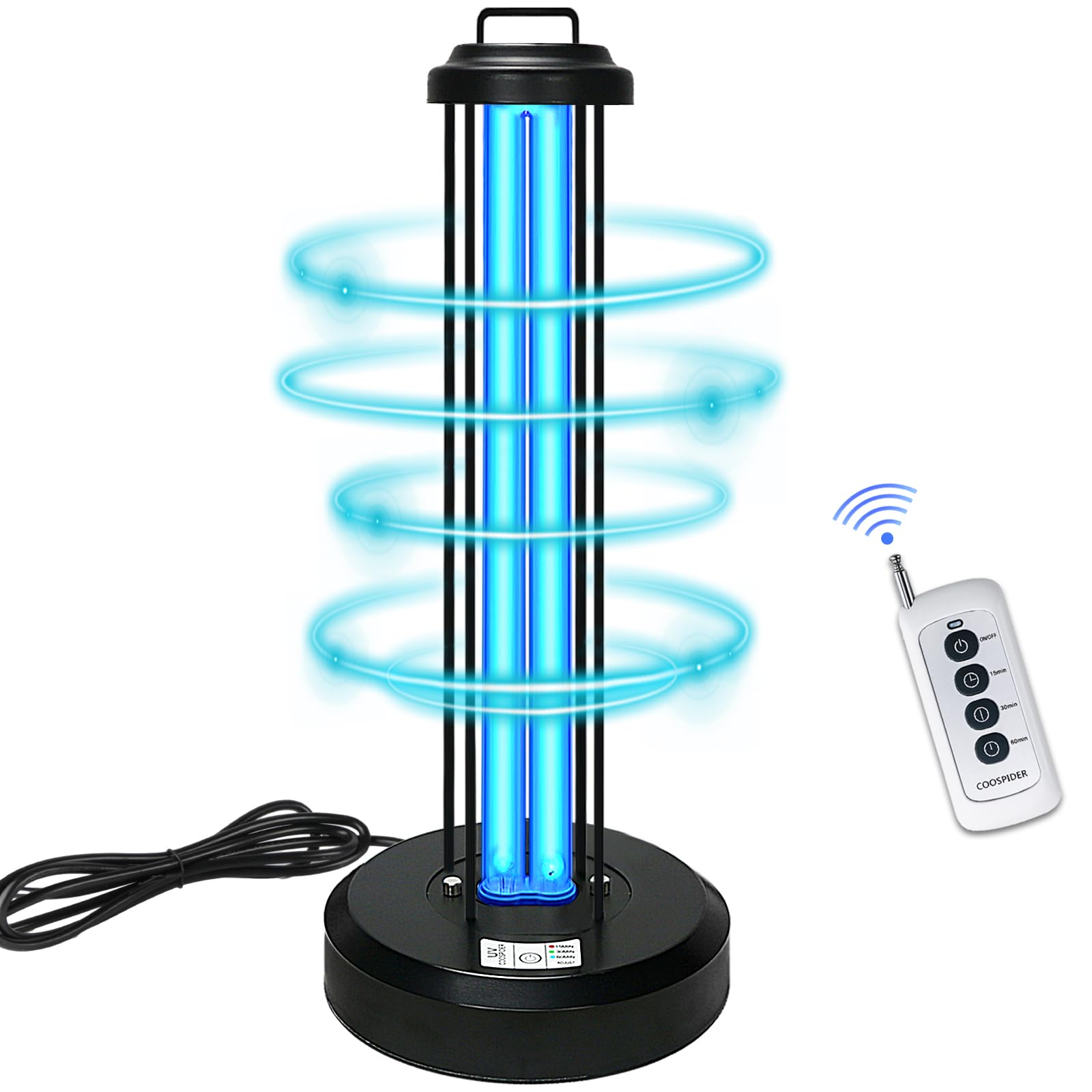
A UV curing lamp is a specialized light source designed to emit ultraviolet radiation at specific wavelengths to initiate photochemical reactions.
Unlike ordinary lighting products, UV curing lamps are engineered for industrial processing. Their purpose is not illumination but transformation.
When UV-sensitive materials are exposed to ultraviolet energy, chemical compounds called photoinitiators absorb the UV light and begin a polymerization reaction. During this reaction, small molecules join together to form stronger molecular structures, turning liquid materials into solid coatings, adhesives, or protective layers.
This process is known as ultraviolet curing.
The technology is widely used in industries that require:
-
Fast bonding
-
High-precision coating
-
Rapid surface treatment
-
Strong adhesion
-
Consistent product quality
Common applications include:
-
Electronic component assembly
-
Smartphone manufacturing
-
Automotive parts production
-
Optical lens coating
-
Industrial printing
-
Medical equipment manufacturing
-
Packaging production
-
Wood and furniture finishing
The biggest advantage of UV curing is speed. A material that may require hours or even days to dry naturally can often be cured within seconds using the appropriate UV curing system.
This dramatic improvement allows manufacturers to increase production capacity while maintaining excellent quality standards.
2. How UV Curing Technology Works
Understanding how UV curing works helps explain why it has become so valuable in modern manufacturing.
The process involves three main elements:
-
UV light source
-
UV-reactive material
-
Photochemical reaction
When these three components work together, rapid curing occurs.
Step One: Application of UV-Sensitive Material
The process begins when a UV-curable material is applied to a product surface.
Examples include:
-
UV adhesives used for bonding components
-
UV coatings used for surface protection
-
UV inks used for printing
-
UV resins used in industrial manufacturing
These materials remain in a liquid state until they receive sufficient UV energy.
This provides manufacturers with excellent processing flexibility because materials can be positioned accurately before curing begins.
Step Two: UV Energy Activation
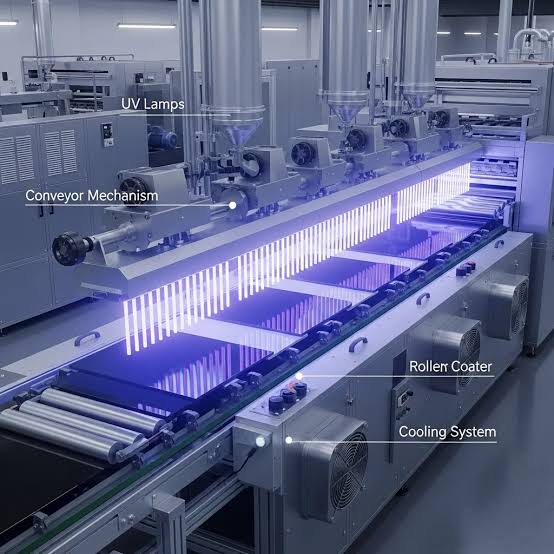
The product then passes under a UV curing lamp.
The lamp produces ultraviolet radiation at a specific wavelength range. The energy penetrates the material surface and activates photoinitiators inside the formula.
The quality of the curing process depends on several factors:
-
UV wavelength
-
Light intensity
-
Exposure time
-
Distance between lamp and material
-
Material formulation
Professional UV curing systems are designed to control these parameters precisely.
Step Three: Instant Hardening
After absorbing UV energy, the material undergoes polymerization.
The liquid molecules rapidly connect together, creating a solid structure.
The result is:
-
Strong bonding
-
Durable coating
-
Scratch resistance
-
Chemical resistance
-
Improved surface performance
Unlike traditional drying methods that rely on evaporation, UV curing creates a chemical transformation. This means the process is faster and often produces stronger results.
3. Traditional Curing Methods vs. UV Curing Technology
For decades, manufacturers relied on traditional methods such as heat drying, air drying, and chemical curing.
While these methods remain useful in certain applications, they have several limitations.
Slow Production Speed
Traditional curing processes often require long waiting periods.
For example:
-
Paint coatings may need extended drying time
-
Adhesives may require hours to achieve full strength
-
Printed materials may need additional processing stages
In high-volume manufacturing, these delays reduce efficiency.
UV curing eliminates much of this waiting time by allowing products to move immediately to the next production stage.
Higher Energy Consumption
Many traditional curing systems require large heating equipment.
Industrial ovens and thermal drying systems consume significant amounts of energy because they must heat both the product and surrounding air.
UV curing systems work differently. They deliver focused energy directly to the curing material, reducing unnecessary energy waste.
This makes UV technology attractive for manufacturers seeking more efficient production methods.
Limited Material Compatibility
Heat-based curing can damage sensitive materials.
For example:
-
Electronic components may be affected by high temperatures
-
Plastic parts may deform
-
Delicate surfaces may suffer damage
UV curing operates at lower temperatures, making it suitable for temperature-sensitive applications.
4. Mercury UV Lamps and UV LED Curing Lamps: Understanding the Difference
UV curing technology has developed significantly over time. Today, manufacturers typically choose between traditional mercury UV lamps and modern UV LED curing systems.
Each technology has unique characteristics.
Mercury UV Curing Lamps
Mercury lamps have been widely used in industrial applications for many years.
Their advantages include:
-
Strong UV output
-
Proven reliability
-
Compatibility with many existing processes
-
Broad wavelength emission
They are commonly used in:
-
Printing systems
-
Large-scale coating operations
-
Industrial finishing applications
However, mercury lamps also have limitations:
-
Higher energy consumption
-
Heat generation
-
Regular maintenance requirements
-
Lamp replacement costs
-
Environmental concerns
As manufacturing moves toward more sustainable solutions, many industries are gradually adopting UV LED technology.
UV LED Curing Lamps
UV LED curing lamps represent a newer generation of curing technology.
Instead of using gas discharge technology, UV LEDs generate ultraviolet light through semiconductor materials.
Their advantages include:
Lower Energy Consumption
UV LEDs convert electrical energy more efficiently, reducing operating costs.
For factories running continuous production lines, energy savings can become significant over time.
Longer Service Life
UV LED systems typically have a much longer operational lifespan compared with traditional lamps.
This reduces:
-
Maintenance frequency
-
Production interruptions
-
Replacement expenses
Lower Heat Output
Because UV LEDs generate less heat, they are suitable for sensitive products and precision manufacturing.
This is especially important in industries such as:
-
Electronics
-
Medical devices
-
Optical manufacturing
Instant On/Off Capability
Traditional lamps often require warm-up time.
UV LEDs can turn on and off instantly, making them ideal for automated production lines.
This improves:
-
Process control
-
Energy efficiency
-
Production flexibility
5. Why UV Curing Has Become Essential in Smart Manufacturing
The rise of intelligent factories has created new demands for manufacturing technology.
Modern production lines require:
-
Faster processing
-
Real-time control
-
Lower waste
-
Higher precision
-
Greater automation compatibility
UV curing technology fits perfectly into this environment.
Because UV curing systems can be digitally controlled, manufacturers can integrate them with automated equipment and smart production platforms.
For example:
-
Robotic assembly systems can precisely position components before curing
-
Sensors can monitor UV intensity
-
Automated systems can adjust curing parameters in real time
-
Production data can be collected for quality analysis
This combination of speed, precision, and automation makes UV curing lamps an important part of Industry 4.0 manufacturing strategies.
6. How UV Curing Lamps Are Revolutionizing Different Industries
The influence of UV curing technology extends across many manufacturing sectors. As industries demand faster production, higher precision, and improved product durability, UV curing lamps have become an important solution for countless applications.
From tiny electronic components to large industrial surfaces, UV curing provides manufacturers with a reliable way to improve efficiency and product performance.
Electronics Manufacturing: Improving Precision and Reliability
The electronics industry is one of the biggest beneficiaries of UV curing technology.
Modern electronic products are becoming smaller, more powerful, and more complex. Manufacturers need advanced bonding and coating solutions that can provide excellent performance without damaging delicate components.
UV curing lamps are widely used in:
-
Circuit board assembly
-
Semiconductor packaging
-
Display manufacturing
-
Sensor production
-
Camera module assembly
-
Microelectronic bonding
One common application is UV-curable adhesive bonding.
In electronics manufacturing, components often need to be positioned with extremely high accuracy. Traditional adhesives may require long curing times, creating challenges during high-speed assembly.
UV curing solves this problem by allowing manufacturers to:
-
Position components precisely
-
Cure adhesives within seconds
-
Reduce production waiting time
-
Improve assembly efficiency
For example, smartphone cameras, optical sensors, and display components often require microscopic alignment. UV curing technology enables manufacturers to achieve strong and stable bonding while maintaining production speed.
Automotive Manufacturing: Supporting Faster Vehicle Production
The automotive industry has always focused on durability, efficiency, and automation. As vehicles become more advanced, UV curing technology is playing a larger role in automotive production.
Applications include:
-
Interior component assembly
-
Sensor bonding
-
Lighting system manufacturing
-
Protective coatings
-
Decorative finishing
Modern vehicles contain numerous electronic systems, including:
-
Driver assistance sensors
-
Touchscreen displays
-
Cameras
-
Electronic control modules
These components require strong and reliable bonding solutions.
UV adhesives cured by UV lamps provide:
-
High bonding strength
-
Resistance to vibration
-
Protection against environmental conditions
-
Fast manufacturing cycles
In automotive coating applications, UV curing also improves surface durability.
Manufacturers can create protective finishes with:
-
Better scratch resistance
-
Improved chemical resistance
-
Enhanced appearance
As electric vehicles and smart vehicles continue growing, the demand for advanced curing solutions is expected to increase.
Medical Device Manufacturing: Meeting Strict Quality Requirements
Medical devices require extremely high standards for safety, reliability, and cleanliness.
UV curing technology is widely used in medical manufacturing because it offers precise control and fast processing.
Applications include:
-
Medical tubing assembly
-
Syringe manufacturing
-
Diagnostic equipment
-
Laboratory devices
-
Wearable medical products
In medical production, adhesives must meet strict requirements.
They need to provide:
-
Strong bonding performance
-
Chemical resistance
-
Biocompatibility
-
Long-term stability
UV curing allows manufacturers to create reliable bonds without excessive heat, making it suitable for sensitive medical components.
The ability to quickly verify and control curing conditions also helps manufacturers maintain consistent quality.
Printing and Packaging Industry: Increasing Production Speed
The printing industry has experienced major changes due to UV curing technology.
Traditional printing processes often require drying time, which can limit production speed.
UV curing enables instant drying of:
-
Inks
-
Coatings
-
Finishes
-
Protective layers
Applications include:
-
Commercial printing
-
Product packaging
-
Labels
-
Promotional materials
-
Decorative printing
The benefits include:
Faster Production
Printed materials can move immediately to the next processing stage.
This improves workflow efficiency and reduces storage requirements.
Better Print Quality
UV-cured inks provide:
-
Sharp images
-
Strong colors
-
Smooth surfaces
-
Improved durability
More Material Options
UV printing can be applied to various materials, including:
-
Plastic
-
Glass
-
Metal
-
Wood
-
Specialty films
This flexibility makes UV curing valuable for modern packaging solutions.
Optical Industry: Achieving High-Precision Manufacturing
Optical products require exceptional accuracy and surface quality.
UV curing technology is commonly used in:
-
Lens manufacturing
-
Optical adhesive bonding
-
Fiber optic assembly
-
Precision instrument production
Because UV curing provides fast and controlled bonding, manufacturers can maintain precise alignment of optical components.
This is especially important in products such as:
-
Cameras
-
Microscopes
-
Sensors
-
Optical communication equipment
Even small positioning errors can affect performance, making reliable curing technology essential.
7. The Major Benefits of UV Curing Technology in Modern Production Lines
The rapid adoption of UV curing lamps is not accidental. Manufacturers choose this technology because it delivers measurable improvements in productivity, quality, and operational efficiency.
Faster Manufacturing Cycles
One of the most important advantages of UV curing is speed.
Traditional curing methods may require minutes, hours, or even days.
UV curing can often complete the process within seconds.
This allows factories to:
-
Increase production capacity
-
Reduce bottlenecks
-
Improve delivery speed
-
Support higher order volumes
In competitive industries, faster production can provide a significant market advantage.
Improved Product Quality and Consistency
Manufacturing success depends heavily on consistency.
Human-controlled drying processes may create variations caused by:
-
Temperature changes
-
Environmental conditions
-
Drying time differences
UV curing systems provide controlled and repeatable results.
Manufacturers can precisely manage:
-
Light intensity
-
Exposure time
-
Wavelength
-
Curing conditions
This improves product reliability and reduces quality problems.
Reduced Manufacturing Space Requirements
Traditional curing systems often require large ovens or drying areas.
UV curing equipment is usually more compact.
This provides several advantages:
-
Smaller production footprint
-
Easier equipment integration
-
More flexible factory layouts
For manufacturers operating in limited spaces, compact UV curing systems can significantly improve production planning.
Lower Energy Consumption
Energy efficiency has become a major concern for manufacturers worldwide.
UV curing technology helps reduce energy use because it directly targets the curing process rather than heating large areas.
Compared with traditional thermal systems, UV LED curing can provide:
-
Lower electricity consumption
-
Reduced cooling requirements
-
Less heat management
-
Lower operating expenses
For factories running multiple production lines, these savings can become substantial.
Cleaner Production Processes
Environmental responsibility is becoming increasingly important in industrial manufacturing.
UV curing technology supports cleaner production by reducing:
-
Solvent emissions
-
Waste materials
-
Energy consumption
Many UV-curable materials contain fewer volatile organic compounds compared with traditional coatings and adhesives.
This makes UV curing attractive for companies seeking more sustainable manufacturing methods.
Better Automation Integration
Modern factories rely heavily on automation.
UV curing lamps are highly compatible with automated systems because they can be precisely controlled.
They can be integrated into:
-
Robotic assembly lines
-
Conveyor systems
-
Smart manufacturing platforms
-
Automated inspection equipment
Automation improves:
-
Production accuracy
-
Labor efficiency
-
Process monitoring
-
Data collection
As factories become smarter, UV curing technology will continue playing an important role.
8. Choosing the Right UV Curing Lamp for Industrial Applications
Selecting the correct UV curing lamp is essential for achieving reliable production results.
Different manufacturing processes require different curing solutions.
Important factors include:
UV Wavelength Selection
UV curing systems operate at different wavelength ranges.
The correct wavelength depends on:
-
Material formulation
-
Photoinitiator type
-
Application requirements
Using the wrong wavelength may result in incomplete curing or poor product performance.
Professional manufacturers should evaluate material compatibility before selecting equipment.
Light Intensity
UV intensity affects curing speed and quality.
Insufficient intensity may cause:
-
Weak bonding
-
Incomplete curing
-
Reduced durability
Excessive intensity may waste energy or damage sensitive materials.
The ideal system provides balanced energy output.
Cooling System Design
Although UV LED systems produce less heat than traditional lamps, thermal management remains important.
Effective cooling helps:
-
Extend equipment lifespan
-
Maintain stable performance
-
Protect sensitive products
Industrial UV systems may use:
-
Air cooling
-
Heat sinks
-
Water cooling solutions
The appropriate method depends on application requirements.
Equipment Reliability
For industrial production, equipment downtime can be expensive.
A high-quality UV curing system should provide:
-
Stable performance
-
Long service life
-
Easy maintenance
-
Technical support
Choosing a reliable manufacturer is as important as choosing the correct technology.