Ultraviolet (UV) light has been used as a disinfection tool for more than a century. Yet despite its widespread use—in hospitals, laboratories, water treatment plants, and increasingly in homes—many people still treat UV sterilization as a “black box” technology.
We know it works.
But how does it actually work?
What happens at the molecular level when ultraviolet light strikes a bacterium or a virus?
Why are some wavelengths lethal to microbes while others are not?
And why can microorganisms not simply “adapt” to UV exposure the way they do to antibiotics?
This article takes a deep but accessible dive into the science behind UV disinfection, explaining exactly how ultraviolet radiation damages microbial DNA and RNA, disrupts replication, and ultimately renders bacteria and viruses harmless.
1. Understanding Ultraviolet Light: A Quick Scientific Foundation
What Is Ultraviolet Radiation?
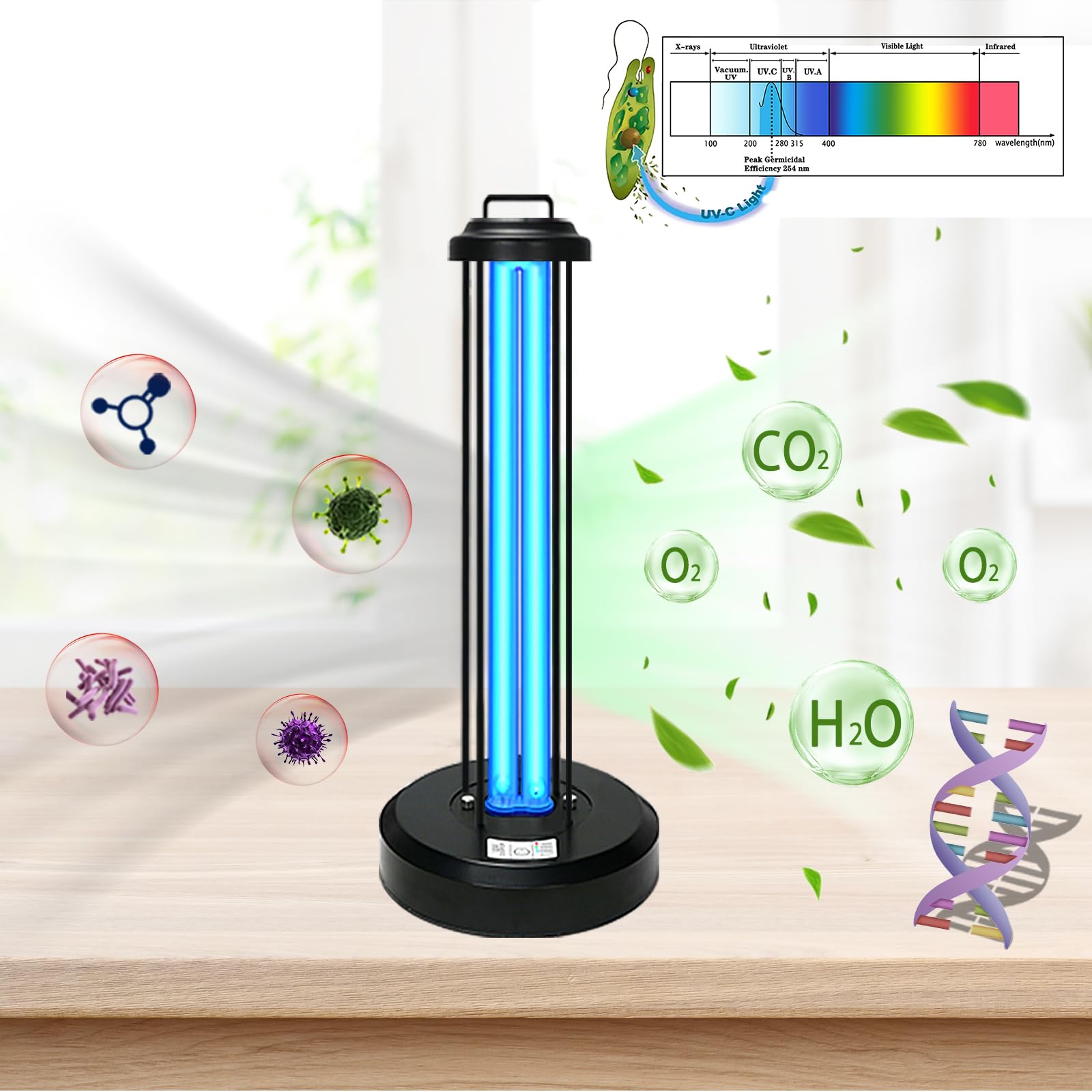
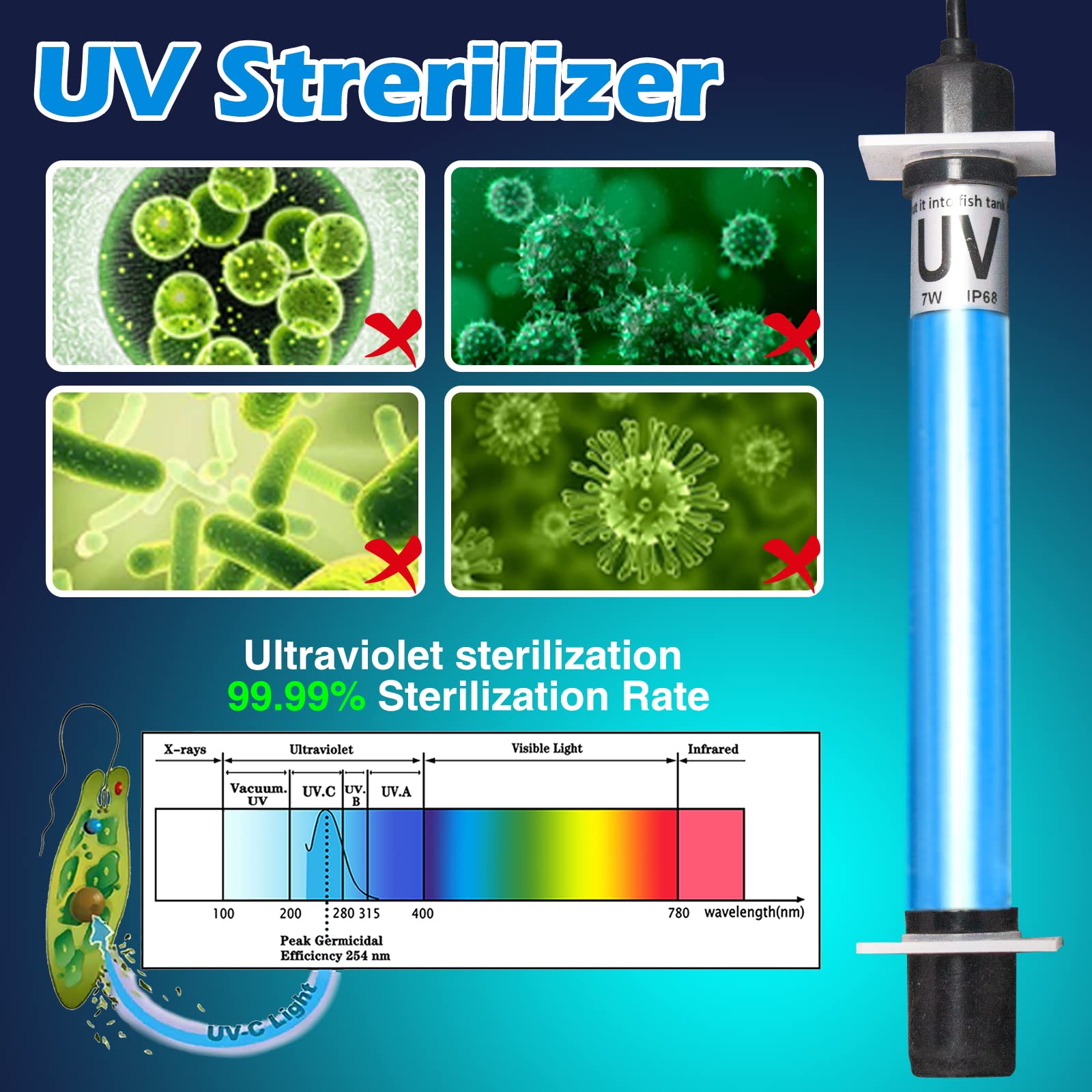
Ultraviolet light is a form of electromagnetic radiation with wavelengths shorter than visible light but longer than X-rays. It occupies the spectrum between approximately 100 and 400 nanometers (nm).
Although invisible to the human eye, UV light carries significantly more energy than visible light—enough to trigger chemical reactions at the molecular level.
The Three Main Types of UV Light
UV radiation is typically divided into three categories:
-
UV-A (315–400 nm)
Long-wave ultraviolet; lowest energy -
UV-B (280–315 nm)
Medium-wave ultraviolet; moderate energy -
UV-C (200–280 nm)
Short-wave ultraviolet; highest energy
For microbial inactivation, UV-C is the most important range.
2. DNA and RNA: The Blueprint of Life
Why Genetic Material Is the Key Target
All living organisms—including bacteria and viruses—depend on genetic material to:
-
Replicate
-
Repair damage
-
Maintain cellular function
Bacteria typically store their genetic information in DNA, while viruses may use DNA or RNA, depending on the virus type.
If this genetic blueprint is damaged beyond repair, the organism becomes biologically inactive—even if it still physically exists.
The Molecular Structure of DNA and RNA
DNA and RNA are made up of nucleotide bases:
-
Adenine (A)
-
Thymine (T) – DNA only
-
Uracil (U) – RNA only
-
Cytosine (C)
-
Guanine (G)
These bases pair in specific ways and form long chains that encode genetic instructions.
UV light targets these bases directly.
3. Why UV-C Light Is So Effective Against Microbes
Energy Meets Absorption
The effectiveness of UV light depends on one crucial factor:
absorption by nucleic acids.
DNA and RNA absorb UV light most strongly at around 260 nanometers, which falls squarely within the UV-C range.
When this absorption occurs, the energy doesn’t simply “pass through”—it triggers chemical reactions.
Formation of Pyrimidine Dimers
The most critical form of UV-induced damage is the creation of pyrimidine dimers, especially:
-
Thymine dimers (in DNA)
-
Uracil dimers (in RNA viruses)
When UV-C photons hit adjacent pyrimidine bases, they cause those bases to bond together abnormally.
This creates a kink or distortion in the genetic strand.
4. How UV Damage Stops Replication
Replication Requires Precision
For a cell or virus to reproduce, enzymes must:
-
Read the genetic code accurately
-
Copy base sequences precisely
Pyrimidine dimers prevent this process.
Replication enzymes:
-
Stall
-
Misread sequences
-
Terminate replication entirely
The result is replication failure, not necessarily immediate physical destruction.
Why “Killed” Doesn’t Mean Exploded
UV light does not usually destroy microbes by:
-
Burning
-
Melting
-
Rupturing membranes
Instead, it neutralizes their ability to reproduce.
A bacterium that cannot divide is effectively dead.
A virus that cannot replicate is no longer infectious.
5. UV Effects on RNA Viruses
RNA Is Even More Vulnerable
RNA molecules are:
-
Single-stranded (in many viruses)
-
Structurally less stable than DNA
This makes RNA viruses particularly susceptible to UV damage.
UV exposure can:
-
Break RNA strands
-
Create base cross-links
-
Disrupt protein-binding regions
Once RNA integrity is compromised, viral replication becomes impossible.
Why UV Works Against Antibiotic-Resistant Bacteria
Antibiotic resistance arises from genetic adaptation.
UV damage:
-
Is physical, not biochemical
-
Does not rely on metabolic pathways
-
Cannot be “pumped out” or neutralized
This makes UV disinfection fundamentally different from chemical treatments.
6. Why Microbes Can’t Easily Develop UV Resistance
Evolution Has Limits
While some bacteria have limited DNA repair mechanisms, these systems:
-
Are energy-intensive
-
Can only fix small amounts of damage
High-intensity UV exposure overwhelms repair pathways.
More importantly:
-
UV does not target a single gene
-
It causes widespread, random damage
There is no simple mutation that confers UV immunity.
Photoreactivation: A Common Misunderstanding
Some organisms possess enzymes that can partially repair UV damage when exposed to visible light—a process called photoreactivation.
However:
-
It is inefficient
-
It requires specific conditions
-
It cannot reverse heavy UV damage
Modern UV systems account for this by delivering sufficient dosage.
7. Dosage: Why Time and Intensity Matter
UV Dose = Intensity × Exposure Time
Effective disinfection depends on:
-
Wavelength
-
Light intensity
-
Exposure duration
-
Distance from the source
Insufficient exposure may damage some DNA but not enough to fully inactivate the organism.
Different Microbes, Different Sensitivities
-
Vegetative bacteria: relatively easy to inactivate
-
Viruses: generally sensitive to UV-C
-
Bacterial spores: require higher doses
-
Fungi and molds: moderate resistance
This is why professional UV systems are carefully calibrated.
8. UV vs Chemical Disinfection: A Molecular Comparison
Chemical Disinfectants
Work by:
-
Oxidizing proteins
-
Disrupting membranes
-
Interfering with metabolism
Limitations include:
-
Chemical residues
-
Material degradation
-
Resistance development
UV Disinfection
Works by:
-
Direct genetic damage
-
No residue
-
No chemical interaction
However:
-
Requires line-of-sight exposure
-
Does not provide residual protection
Each method has strengths; UV excels where precision and cleanliness matter.
9. Real-World Applications of UV Genetic Damage
Water Treatment
UV systems neutralize:
-
Bacteria
-
Viruses
-
Protozoa
Without altering taste or chemistry.
Air Disinfection
UV-C in HVAC systems damages airborne pathogens before they circulate.
Surface Sterilization
Hospitals and labs rely on UV to disinfect:
-
Equipment
-
Workspaces
-
High-touch surfaces
10. Safety Boundaries: Why UV Is Powerful but Controlled
UV and Human Cells
Human DNA absorbs UV light in the same way microbial DNA does.
Overexposure can:
-
Damage skin cells
-
Increase cancer risk
-
Injure eyes
This is why:
-
Shielding
-
Timers
-
Motion sensors
Are critical in UV system design.
Far-UV (222 nm): A Special Case
Emerging research shows that far-UV-C (around 222 nm):
-
Still damages microbial DNA
-
Does not penetrate human skin or eyes deeply
This opens possibilities for continuous air disinfection in occupied spaces—though regulation and long-term data are still evolving.
11. Common Myths About UV Sterilization
“UV Kills Everything Instantly”
False. Effectiveness depends on dose.
“UV Is the Same as Sunlight”
Sunlight contains mostly UV-A and UV-B, not germicidal UV-C.
“UV Replaces All Other Cleaning”
UV complements cleaning—it does not remove dirt or organic matter.
12. The Future of UV-Based Microbial Control
As technology advances, UV disinfection is becoming:
-
More precise
-
More energy-efficient
-
More integrated into daily environments
Future systems will rely on:
-
Smart sensors
-
AI-controlled dosing
-
Hybrid disinfection strategies
The fundamental mechanism, however, remains unchanged:
targeting the genetic core of microorganisms.
Conclusion: Why UV Is a Genetic-Level Solution
Ultraviolet disinfection works not because it is harsh—but because it is surgically precise.
By directly damaging DNA and RNA, UV light:
-
Stops replication
-
Prevents infection
-
Avoids chemical side effects
It doesn’t poison microbes.
It doesn’t burn them.
It simply removes their ability to exist as living, reproducing entities.
Understanding this mechanism explains why UV has endured for over a century—and why it will remain a cornerstone of infection control in the decades ahead.