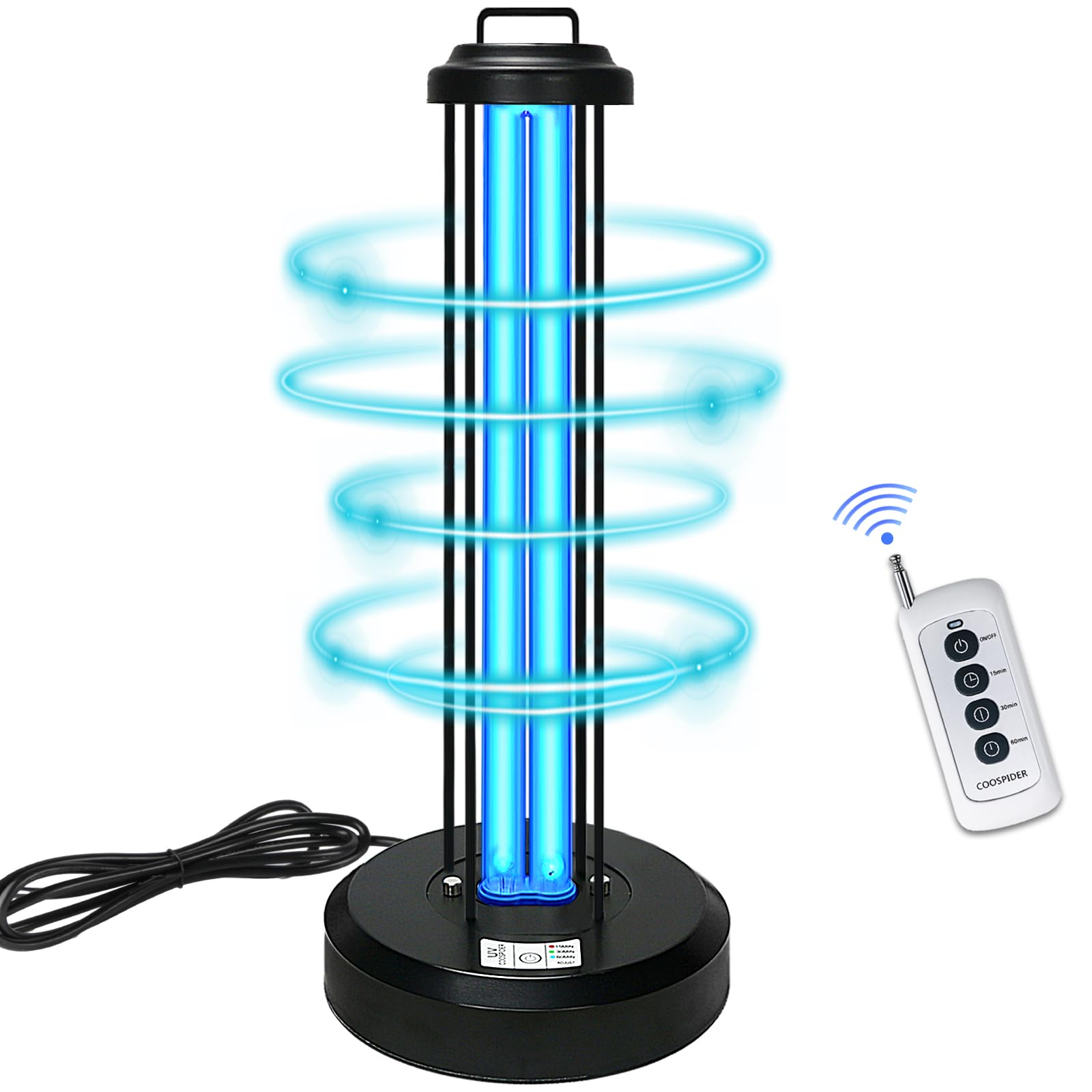
The global industrial UV curing light source market is entering a period of significant transformation in 2026 and beyond. Once considered a specialized technology mainly used in printing, coatings, and adhesive bonding, ultraviolet curing systems have evolved into a critical manufacturing solution supporting advanced electronics, automotive production, semiconductor packaging, medical devices, renewable energy, and smart manufacturing.
UV curing technology uses ultraviolet radiation to trigger rapid chemical reactions that transform liquid materials such as inks, coatings, adhesives, and resins into solid materials within seconds. Compared with traditional thermal curing processes, industrial UV curing offers advantages including faster production speeds, lower energy consumption, reduced heat generation, and improved environmental performance.
As global manufacturers continue to pursue higher efficiency, lower carbon emissions, and more flexible production systems, UV curing light sources are undergoing a fundamental shift. Traditional mercury lamps are increasingly being challenged by advanced UV LED technologies, while intelligent control systems and application-specific light solutions are redefining how factories approach curing processes.
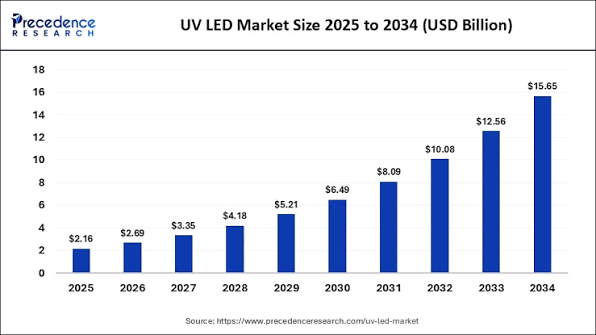
Market research indicates continued expansion of UV curing systems and UV LED technologies during the second half of the decade, driven by increasing adoption in industrial manufacturing, electronics, printing, and precision assembly applications.
Looking ahead, three major trends will determine the future direction of the global industrial UV curing light source market:
- The accelerated replacement of traditional mercury lamps by high-performance UV LED systems
- The integration of intelligent control, automation, and digital manufacturing technologies
- The development of customized wavelength solutions for advanced industrial applications
These trends will not only reshape UV curing equipment but also influence global manufacturing strategies throughout 2026 and beyond.
Trend One: UV LED Technology Will Become the Core Driving Force of Industrial UV Curing
From Mercury Lamps to Semiconductor-Based Light Sources
The most significant transformation in the UV curing industry is the rapid transition from conventional mercury lamp systems to UV LED curing solutions.
For decades, mercury lamps dominated industrial UV curing because they provided strong ultraviolet output and broad-spectrum emission. However, these systems have several limitations:
- High energy consumption
- Significant heat generation
- Frequent maintenance requirements
- Long warm-up times
- Environmental concerns related to mercury disposal
As manufacturers face stricter environmental regulations and rising energy costs, these disadvantages have become increasingly difficult to ignore.
UV LED technology provides a fundamentally different approach. Instead of generating ultraviolet radiation through gas discharge, UV LEDs use semiconductor materials to produce targeted wavelengths with higher efficiency and greater control.
Modern UV LED curing systems offer several important advantages:
1. Lower Energy Consumption
Industrial manufacturers are under increasing pressure to reduce operational costs and carbon emissions. UV LED systems can significantly decrease electricity usage because they convert energy directly into ultraviolet output with less wasted heat.
This advantage is particularly valuable in industries operating continuous production lines, where even small efficiency improvements can create substantial annual savings.
For example, electronics manufacturers, automotive suppliers, and packaging producers increasingly evaluate UV curing equipment not only based on initial investment but also on long-term operating costs.
2. Longer Service Life
Traditional UV lamps require regular replacement because their output gradually decreases during operation. UV LED modules typically provide much longer operating lifetimes, reducing downtime and maintenance expenses.
For factories running 24/7 production, improved reliability becomes a major competitive advantage.
3. Instant On/Off Capability
Unlike mercury lamps that require warm-up periods, UV LEDs can turn on and off instantly.
This capability enables:
- More precise process control
- Reduced idle energy consumption
- Better compatibility with automated production lines
- Faster response during manufacturing changes
These benefits align closely with the development of smart factories and flexible manufacturing systems.
Industry analysis suggests that UV LED adoption will continue expanding as manufacturers prioritize energy efficiency and environmentally responsible production methods.
Why UV LED Adoption Will Accelerate After 2026
The shift toward UV LED curing is not simply a technology upgrade. It reflects broader changes in global manufacturing.
Environmental Regulations Are Reshaping Equipment Choices
Governments and industrial organizations worldwide are increasing pressure on manufacturers to reduce hazardous materials and improve sustainability.
Mercury-containing technologies face growing scrutiny because of environmental risks associated with production, usage, and disposal.
At the same time, many companies have established carbon reduction targets and sustainability programs. Equipment suppliers that provide energy-efficient alternatives will increasingly gain market advantages.
UV LED systems fit naturally into these sustainability strategies because they:
- Reduce power consumption
- Minimize waste
- Require fewer consumable components
- Support cleaner production environments
Advanced Materials Are Creating New Opportunities
Another important factor accelerating UV LED adoption is the development of new UV-curable materials.
Modern industrial applications increasingly require:
- Faster curing speeds
- Higher bonding strength
- Better optical performance
- Lower temperature processing
- Compatibility with sensitive materials
Traditional broad-spectrum UV lamps are often inefficient for these specialized requirements.
UV LED systems allow manufacturers to select specific wavelengths, making them better suited for advanced materials.
For example:
- Electronics assembly may require precise curing of miniature adhesives.
- Optical components may need controlled UV exposure to prevent material damage.
- Medical devices may require reliable curing without excessive thermal impact.
- Battery manufacturing may demand highly controlled bonding processes.
The ability to customize UV output is becoming a major competitive factor.
The Rise of High-Power and Multi-Wavelength UV LED Systems
Although early UV LED systems faced limitations in output intensity, technology improvements are rapidly changing the market.
Future industrial UV LED systems will increasingly feature:
Higher Optical Power
Manufacturers are investing in stronger UV LED chips, improved thermal management, and advanced optical designs.
Higher output power enables UV LEDs to compete with traditional lamps in demanding applications such as:
- Industrial coatings
- High-speed printing
- Large-area curing
- Automotive production
Multi-Wavelength Capability
Different UV-curable materials respond differently to wavelength ranges.
Future systems will increasingly combine multiple wavelengths, such as:
- 365 nm
- 385 nm
- 395 nm
- 405 nm
This flexibility allows manufacturers to optimize curing performance for different materials and production conditions.
Instead of purchasing a general-purpose curing system, companies will increasingly choose application-specific UV solutions.
Trend Two: Intelligent UV Curing Systems Will Become a Key Component of Smart Manufacturing
The second major evolution trend in the global industrial UV curing light source market is the rapid integration of intelligence, automation, and digital technologies.
In the past, UV curing systems were often viewed as standalone production tools. Manufacturers mainly focused on basic parameters such as UV intensity, exposure time, and lamp replacement cycles. However, as factories move toward Industry 4.0, modern production environments require equipment that can communicate, analyze data, and automatically optimize performance.
By 2026 and beyond, industrial UV curing light sources will increasingly become intelligent manufacturing components rather than simple energy-output devices.
This transformation will redefine how manufacturers monitor, control, and optimize curing processes.
The Growing Importance of Smart UV Curing Control Systems
Modern manufacturing requires higher levels of precision and consistency. Even small variations in UV intensity, temperature, or exposure time can affect final product quality.
This is especially critical in industries such as:
- Semiconductor packaging
- Microelectronics assembly
- Medical device manufacturing
- Automotive electronics
- Optical component production
- Precision adhesive bonding
In these applications, curing quality directly influences product reliability.
Intelligent UV curing systems address these challenges by combining:
- Sensors
- Real-time monitoring
- Automated feedback systems
- Data analytics
- Machine communication technologies
These capabilities allow manufacturers to move from reactive maintenance toward predictive and preventive management.
Real-Time Monitoring Will Improve Manufacturing Accuracy
One of the most important developments in future UV curing systems is real-time process monitoring.
Traditional curing equipment typically operates according to preset parameters. Operators may check performance periodically, but problems are often discovered only after product defects appear.
Smart UV curing equipment changes this approach.
Advanced systems can continuously monitor:
- UV intensity output
- Light distribution
- Operating temperature
- Exposure duration
- Equipment performance
- Energy consumption
If the system detects abnormal conditions, it can automatically adjust parameters or alert operators before quality problems occur.
For manufacturers, this creates several benefits:
Improved Product Consistency
Automated monitoring ensures that every product receives the correct curing conditions.
This is particularly important for industries where even microscopic differences can affect performance.
For example, in semiconductor manufacturing, improper curing of encapsulation materials may influence device reliability. In optical manufacturing, inconsistent UV exposure may affect transparency or bonding strength.
Reduced Production Waste
Manufacturing defects caused by curing problems can result in expensive material losses.
Smart UV systems help reduce waste by identifying issues earlier and maintaining stable production conditions.
Higher Equipment Availability
Predictive monitoring allows companies to schedule maintenance before unexpected failures occur.
Instead of waiting for equipment breakdowns, manufacturers can replace components based on actual operating conditions.
Artificial Intelligence Will Enhance UV Process Optimization
Artificial intelligence is becoming increasingly important across industrial manufacturing, and UV curing technology is no exception.
Future UV curing systems may use AI-based algorithms to analyze production data and optimize curing parameters automatically.
Potential AI applications include:
Automatic Parameter Adjustment
Different materials, production speeds, and environmental conditions require different curing settings.
AI systems can analyze historical production data and recommend optimal:
- UV power levels
- Exposure times
- Cooling conditions
- Operating schedules
This reduces dependence on manual adjustment and improves production efficiency.
Quality Prediction
AI-powered systems can identify patterns between curing conditions and final product performance.
For example, the system may discover that certain combinations of:
- UV intensity
- Material thickness
- Ambient temperature
- Conveyor speed
produce higher-quality results.
Manufacturers can then optimize production before defects occur.
Self-Learning Manufacturing Systems
The future of industrial UV curing will move toward self-improving systems.
Instead of simply following programmed instructions, intelligent equipment will continuously learn from operational data.
This represents a major shift from traditional automation toward adaptive manufacturing.
UV Curing Equipment Will Become More Connected Through Industry 4.0 Networks
Another major development is the increasing connectivity between UV curing systems and factory-wide digital platforms.
Modern factories are becoming interconnected ecosystems where machines exchange information through industrial communication networks.
Future UV curing systems will increasingly support:
- Manufacturing execution systems (MES)
- Enterprise resource planning platforms (ERP)
- Industrial Internet of Things (IIoT) networks
- Cloud-based monitoring platforms
This connectivity allows manufacturers to manage curing operations as part of a complete digital production environment.
For example, a smart factory may automatically:
- Receive production orders
- Adjust curing parameters according to product requirements
- Monitor UV system performance
- Analyze quality data
- Generate maintenance recommendations
This level of automation will become increasingly valuable as manufacturers face labor shortages and rising production complexity.
Miniaturization Will Drive Demand for Precision UV Curing Technologies
A major factor influencing intelligent UV curing development is the increasing miniaturization of industrial products.
Electronic devices are becoming smaller, thinner, and more powerful. As a result, manufacturers require extremely precise bonding and curing processes.
Applications include:
- Wearable electronics
- Smartphones
- Sensors
- Microcontrollers
- Flexible circuits
- Advanced displays
In these applications, traditional curing methods may create problems such as:
- Excessive heat exposure
- Uneven curing
- Material deformation
- Limited process control
Intelligent UV LED curing systems provide better precision because they can deliver controlled energy exactly where it is needed.
This capability supports the production of next-generation electronic devices.
Automation and Robotics Will Increase UV Curing Integration
The expansion of industrial robotics is another factor accelerating intelligent UV curing adoption.
Modern production lines increasingly rely on:
- Robotic arms
- Automated assembly stations
- Machine vision systems
- Automated inspection equipment
UV curing systems are becoming integrated directly into these automated workflows.
For example, a robotic assembly line may:
- Position components automatically
- Apply adhesive precisely
- Activate UV curing
- Inspect bonding quality
- Continue production without human intervention
This integration improves speed, accuracy, and repeatability.
As manufacturers compete globally, automated UV curing solutions will become an important tool for improving productivity.
Energy Management Will Become a Core Feature of Future UV Systems
Beyond production quality, energy management is becoming increasingly important.
Industrial companies are seeking ways to reduce electricity consumption while maintaining output.
Future UV curing equipment will likely include advanced energy management features such as:
- Automatic power adjustment
- Standby energy reduction
- Production-based energy optimization
- Carbon footprint monitoring
These functions will help manufacturers meet sustainability goals while lowering operating expenses.
The combination of UV LED efficiency and intelligent energy management will create a new generation of environmentally optimized curing systems.
Trend Three: Customized UV Wavelength Solutions Will Unlock New Industrial Applications
While UV LED replacement and intelligent manufacturing represent major market transformations, another critical trend will define the future of industrial UV curing: application-specific wavelength customization.
The future of UV curing will not be dominated by one universal light source. Instead, manufacturers will increasingly demand specialized UV solutions designed for specific materials, processes, and industries.
Different materials react differently to ultraviolet wavelengths. Therefore, selecting the correct wavelength has become essential for achieving maximum curing performance.
Trend Three: Customized UV Wavelength Solutions Will Unlock New Industrial Applications
The third major evolution trend in the global industrial UV curing light source market is the rapid growth of customized wavelength solutions.
For many years, industrial UV curing was based on relatively standardized equipment. Manufacturers selected curing systems according to general power requirements and broad application categories. However, as industrial processes become more sophisticated, a one-size-fits-all approach is no longer sufficient.
In 2026 and beyond, UV curing technology will increasingly move toward application-driven customization, where light source wavelength, optical design, energy distribution, and control systems are specifically engineered for individual manufacturing needs.
This shift will create new opportunities across advanced industries, including electronics, automotive, healthcare, renewable energy, and precision manufacturing.
Why Wavelength Customization Is Becoming Essential
Ultraviolet light covers a wide range of wavelengths, and different materials respond differently to different UV energies.
A curing process that works well for one adhesive or coating may perform poorly for another. Factors such as:
- Chemical composition
- Material thickness
- Surface characteristics
- Required curing speed
- Temperature sensitivity
- Production environment
all influence the ideal UV wavelength selection.
As manufacturers develop more advanced materials, UV curing systems must become more precise.
The future of industrial UV curing will therefore focus not only on stronger light output but also on smarter and more targeted energy delivery.
Electronics Manufacturing Will Become One of the Largest Growth Areas
The electronics industry is expected to remain one of the most important markets driving industrial UV curing development.
Modern electronic products continue to become:
- Smaller
- Thinner
- More powerful
- More complex
This creates increasing demand for highly precise bonding and coating technologies.
UV curing is widely used in applications such as:
- Camera module assembly
- Display manufacturing
- Semiconductor packaging
- Sensor production
- Flexible electronics
- Circuit board protection
In these applications, manufacturers require curing solutions that provide:
- Extremely accurate energy control
- Minimal thermal impact
- Fast processing speed
- High reliability
Customized UV LED systems are particularly valuable because they can deliver targeted wavelengths for specific optical adhesives and protective coatings.
For example, a miniature optical component may require a carefully controlled wavelength to achieve strong bonding without damaging sensitive materials.
Semiconductor and Microelectronics Applications Will Push Precision Requirements Higher
The semiconductor industry represents one of the most demanding environments for UV curing technology.
As chip designs become increasingly advanced, manufacturers require extremely accurate assembly and packaging processes.
UV curing plays an important role in:
- Die bonding
- Encapsulation
- Underfill curing
- Protective coating
- Wafer-level processes
Future semiconductor manufacturing will demand UV systems capable of:
- Ultra-high stability
- Precise dose control
- Uniform irradiation
- Advanced process monitoring
Customized UV solutions will help manufacturers achieve the reliability required for next-generation chips and electronic devices.
Automotive Manufacturing Will Expand UV Curing Adoption
The automotive industry is undergoing a major transformation due to electric vehicles, autonomous driving systems, and intelligent vehicle technologies.
Modern vehicles contain significantly more electronic components than traditional vehicles.
UV curing is increasingly used in:
- Automotive sensor assembly
- Camera systems
- Battery components
- Interior electronics
- Display bonding
- Lightweight material assembly
Electric vehicle production creates additional opportunities because battery systems require reliable bonding and insulation processes.
Unlike traditional thermal curing methods, UV curing can provide fast processing while protecting heat-sensitive components.
Customized UV systems will allow automotive manufacturers to optimize curing processes for different materials used in modern vehicles.
Medical Device Manufacturing Will Require Highly Reliable UV Technologies
Healthcare manufacturing is another important area where UV curing technology is expected to grow.
Medical devices often require strict quality standards, reliable bonding, and clean production environments.
UV curing is used in products such as:
- Diagnostic equipment
- Catheters
- Disposable medical components
- Optical medical devices
- Laboratory instruments
Medical manufacturing requires:
- Consistent curing quality
- Low contamination risk
- Precise process control
- Material compatibility
UV LED systems are well suited for these requirements because they offer stable output and controlled operation.
As healthcare technology advances, demand for specialized UV curing solutions will continue increasing.
Renewable Energy Applications Will Create New Market Opportunities
The global transition toward renewable energy is also creating new demand for industrial UV curing technologies.
Solar panel manufacturing, energy storage systems, and advanced materials production increasingly require efficient bonding and coating processes.
Potential UV curing applications include:
- Solar module assembly
- Protective coatings
- Battery component manufacturing
- Energy equipment insulation
As renewable energy products become more advanced, manufacturers need faster and more reliable production methods.
UV curing provides advantages including:
- Rapid processing
- Lower energy consumption
- Compatibility with automated production
This makes it an attractive solution for future energy manufacturing.
Regional Market Development: Asia-Pacific Will Remain a Major Growth Engine
The global industrial UV curing light source market is expected to experience strong regional development, with Asia-Pacific continuing to play a central role.
Countries such as China, Japan, South Korea, and Taiwan have strong manufacturing ecosystems covering:
- Electronics
- Semiconductor production
- Automotive components
- Display technologies
- Precision equipment
These industries are major users of UV curing systems.
China, in particular, has become an important market for UV LED manufacturing and industrial automation.
Meanwhile, Japan and South Korea continue to invest heavily in advanced semiconductor and electronics manufacturing, creating demand for high-precision UV solutions.
North America Will Focus on Advanced Manufacturing and Automation
The North American market is expected to grow through increased investment in advanced manufacturing technologies.
Key growth factors include:
- Semiconductor production expansion
- Domestic electronics manufacturing
- Medical device innovation
- Industrial automation development
Manufacturers in the United States are increasingly adopting smart production systems, creating opportunities for intelligent UV curing equipment.
The combination of automation, digital monitoring, and energy efficiency will become a major purchasing factor.
Europe Will Emphasize Sustainability and Energy Efficiency
European manufacturers are expected to prioritize UV curing technologies that support sustainability goals.
Important market drivers include:
- Carbon reduction initiatives
- Energy efficiency requirements
- Environmental regulations
- Green manufacturing strategies
UV LED curing systems align well with these objectives because they consume less energy and reduce dependence on traditional mercury-based technologies.
Industries including automotive, industrial coatings, and precision manufacturing will continue exploring UV solutions as part of their sustainability strategies.
Competitive Landscape: Technology Innovation Will Determine Market Leadership
As the UV curing market evolves, competition among manufacturers will increasingly focus on technological capability rather than simple equipment supply.
Future market leaders will likely be companies that can provide:
Advanced UV LED Performance
Manufacturers will compete to develop:
- Higher optical output
- Better thermal management
- Longer operational life
- Improved energy efficiency
Complete Intelligent Solutions
Equipment providers will increasingly offer integrated solutions combining:
- UV light sources
- Control software
- Sensors
- Data platforms
- Automation compatibility
Industry-Specific Expertise
Companies with deep knowledge of specific industries will have advantages.
For example, semiconductor customers require different solutions from automotive or medical device manufacturers.
The ability to customize systems according to application requirements will become increasingly valuable.
Future Outlook: Industrial UV Curing Will Become Smarter, Greener, and More Specialized
Looking toward 2026 and beyond, the global industrial UV curing light source market will experience a transformation driven by three powerful forces:
- UV LED technology replacing traditional curing systems
- Intelligent manufacturing integration improving efficiency and quality
- Customized wavelength solutions enabling advanced industrial applications
These trends represent more than technological improvements. They reflect a broader transformation in global manufacturing toward greater precision, sustainability, and automation.
The future UV curing market will no longer focus only on producing ultraviolet energy. Instead, it will focus on delivering intelligent, efficient, and application-specific manufacturing solutions.
Companies that embrace advanced UV curing technologies will gain advantages through:
- Lower production costs
- Higher product quality
- Improved sustainability performance
- Greater manufacturing flexibility
As industries continue to evolve, UV curing light sources will become an increasingly important foundation for next-generation production systems.
From smart factories and semiconductor innovation to electric vehicles and medical technology, UV curing will continue expanding its role as a critical technology supporting the future of global industrial manufacturing.