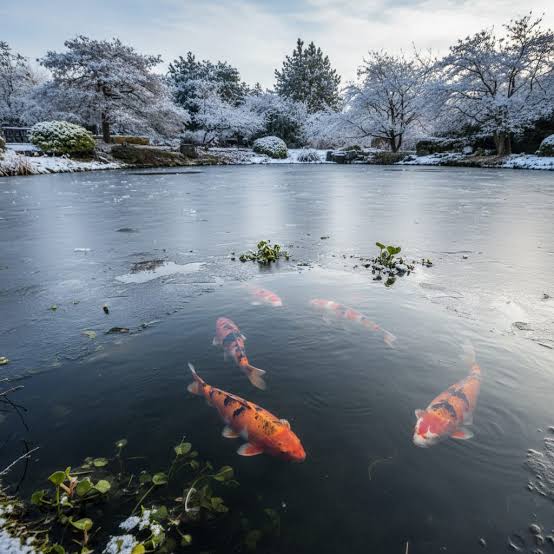
Introduction: The Traditional Wisdom of Helping Goldfish and Koi Survive Winter
Winter is one of the most challenging seasons for outdoor goldfish and koi. As temperatures drop, pond water gradually cools, fish metabolism slows, appetite decreases, and biological activity inside the pond changes. In regions where winter temperatures regularly fall below freezing, the surface of an outdoor pond may eventually become covered with a layer of ice.
For pond owners, seeing an ice-covered pond can be worrying. Are the fish still alive underneath? Can they breathe? Should the ice be removed? Is it necessary to bring goldfish and koi indoors? How can a pond maintain a safe environment when the surface remains frozen for weeks?
Traditional fishkeeping offers several useful lessons. For generations, people have raised goldfish and carp in outdoor ponds without modern filtration systems, electronic temperature controllers, or sophisticated heating equipment. Their approach often relied on choosing suitable pond locations, maintaining adequate water depth, controlling feeding, preserving water quality, and observing seasonal changes.
These traditional practices remain valuable today, especially when combined with modern knowledge of fish physiology and water chemistry.
However, traditional winter care should not be confused with simply leaving fish in frozen water and hoping for the best. Fish can survive cold conditions when they are properly acclimated and their environment is suitable, but prolonged freezing, insufficient dissolved oxygen, accumulated waste, and sudden temperature changes can create serious risks.
The goal of winter pond management is not to keep the water warm throughout the season. Instead, it is to maintain a stable, oxygenated, and relatively clean aquatic environment while allowing cold-water fish to enter their natural winter resting state.
This guide explores traditional goldfish and koi winter care, explains how fish survive beneath frozen water, and provides practical methods for protecting outdoor ponds during freezing weather.
Whether you maintain a traditional garden pond, a backyard koi pond, or a small outdoor goldfish habitat, understanding these principles can help your fish pass through winter safely and return to active growth in spring.
1. Understanding How Goldfish and Koi Survive Winter
Before preparing a pond for winter, it is important to understand how goldfish and koi respond to cold temperatures.
Goldfish and koi are both members of the carp family. They are ectothermic animals, meaning their body temperature changes according to the surrounding water temperature. Unlike mammals, they cannot maintain a constant internal body temperature by generating their own heat.
As pond water becomes colder, their biological processes gradually slow down.
1.1 Metabolism Slows as Water Temperature Falls
During warm weather, goldfish and koi are generally active. They swim around the pond, search for food, interact with other fish, and maintain relatively high metabolic activity.
As the water cools, their energy requirements decrease.
Their swimming becomes slower, digestion takes longer, and their appetite gradually declines. They may spend more time near the bottom of the pond, where temperatures are often more stable.
This seasonal slowdown is a natural response to cold water rather than necessarily a sign of illness.
For many temperate-climate goldfish and koi, water temperatures around 50°F (10°C) mark an important transition in feeding and activity. At lower temperatures, digestion becomes increasingly slow, and the fish require much less food.
When water temperatures approach the low 40s°F (approximately 5°C), activity may become very limited.
However, there is no single temperature at which every goldfish or koi enters winter dormancy. Fish condition, species, acclimation, pond environment, and the speed of temperature change all influence their response.
1.2 Why Fish Gather Near the Bottom
One common winter observation is that goldfish and koi gather near the deepest part of the pond.
This behavior is closely related to water temperature and stability.
In many freshwater ponds, water reaches its greatest density at approximately 39°F (4°C). During cold weather, water near this temperature tends to settle toward the bottom, while colder water remains closer to the surface.
If the pond is sufficiently deep and protected from excessive disturbance, the lower water layers can remain relatively stable even when the surface freezes.
Fish may therefore reduce movement and remain in deeper areas to conserve energy.
This is one reason traditional pond design emphasizes depth rather than relying entirely on heaters.
1.3 Can Goldfish and Koi Breathe Under Ice?
Yes. Goldfish and koi continue exchanging gases through their gills while underwater.
Even when the pond surface is frozen, the water beneath the ice can contain dissolved oxygen. However, oxygen is gradually consumed by fish, beneficial microorganisms, and the decomposition of organic material.
At the same time, carbon dioxide and other waste gases can accumulate.
A pond that remains completely sealed beneath thick ice for an extended period may experience deteriorating water quality.
Therefore, maintaining a suitable opening in the ice is important in many freezing climates.
The purpose is not simply to let fish reach the air. Fish obtain oxygen from dissolved oxygen in the water. The opening helps support gas exchange between the pond and the atmosphere.
This distinction is essential for understanding safe winter pond management.
2. Traditional Pond Preparation: Build a Suitable Environment Before Winter
One of the oldest principles of successful fishkeeping is that prevention is more effective than emergency treatment.
Traditional pond owners often prepared their ponds before the coldest part of the year arrived. Rather than waiting until the surface froze, they focused on pond structure, water quality, fish condition, and seasonal maintenance.
Modern pond owners should follow the same principle.
2.1 Choose an Appropriate Pond Depth
Pond depth is one of the most important factors affecting winter survival.
A shallow pond loses heat quickly and is more vulnerable to freezing throughout its entire water column.
In regions with consistently freezing winters, a pond with a depth of approximately 3 to 4 feet (0.9 to 1.2 meters) is often a useful starting point for overwintering goldfish and koi.
However, this is not a universal guarantee. Areas experiencing prolonged extreme cold may require deeper ponds, and local climate conditions should determine the final design.
Koi generally benefit from larger, deeper ponds because they grow relatively large and require more stable environmental conditions.
Goldfish may tolerate a wider range of pond sizes, but they also need adequate depth to survive extended cold periods.
A pond that is only 12 to 18 inches deep may freeze too extensively in a severe winter, leaving fish with insufficient unfrozen water.
When planning a new pond, consider:
-
The typical minimum winter temperature in your region.
-
The number of consecutive freezing days.
-
The expected thickness of surface ice.
-
The number and size of fish.
-
The amount of organic material accumulating at the bottom.
-
The availability of electricity for aeration or de-icing equipment.
A deeper pond provides a more reliable temperature refuge than a shallow decorative basin.
2.2 Select a Sheltered Pond Location
Traditional garden ponds were often positioned in locations protected from harsh winter winds.
This practical choice remains useful.
Strong winds increase heat loss from exposed water surfaces and can cause rapid temperature fluctuations. Although wind protection cannot prevent freezing during prolonged cold weather, it can reduce unnecessary environmental stress.
If possible, locate an outdoor pond:
-
Away from strong prevailing winter winds.
-
Where surrounding buildings or landscaping provide some protection.
-
Away from areas receiving excessive roof runoff.
-
Where fallen leaves and garden debris can be controlled.
-
Where electrical equipment can be installed safely.
Trees and shrubs may provide useful shelter, but deciduous trees can also introduce large amounts of leaves into the pond during autumn.
The best location balances protection, maintenance access, sunlight, and water quality.
2.3 Remove Excess Leaves and Organic Debris
One traditional winter preparation method is to clean the pond before cold weather becomes severe.
Fallen leaves, dead aquatic plants, uneaten food, and accumulated organic debris can decompose underwater.
During decomposition, microorganisms consume oxygen. This becomes particularly important when the pond is covered by ice and natural gas exchange is restricted.
Excessive organic matter can also contribute to ammonia, carbon dioxide, and other water-quality problems.
Before winter:
-
Remove floating leaves and visible debris.
-
Trim dead portions of aquatic plants.
-
Remove excessive sludge without aggressively disturbing the pond.
-
Clean accessible filter components according to their design.
-
Check that water circulation and aeration equipment are functioning correctly.
Do not completely sterilize the pond or remove every beneficial microorganism.
A healthy pond depends on an established biological community. Excessive cleaning can disrupt this balance and make water quality more difficult to manage.
2.4 Check the Pond's Water Quality
A visually clear pond is not necessarily a healthy pond.
Before winter, test important water parameters, including:
-
Ammonia: ideally 0 ppm.
-
Nitrite: ideally 0 ppm.
-
pH: stable and appropriate for the fish.
-
Dissolved oxygen: adequate for the stocking level.
-
Nitrate: preferably controlled through routine maintenance.
Ammonia and nitrite are particularly important because they can damage fish even when the water looks clean.
Cold temperatures slow many biological processes, including the activity of beneficial filter bacteria. This means a filter that performed well during summer may process waste less efficiently during winter.
Do not assume that cold weather eliminates the need for water-quality monitoring.
2.5 Check Fish Health Before Winter
Winter is not the ideal time to discover that a fish has a serious untreated health problem.
Before temperatures fall significantly, observe each fish for:
-
Damaged fins.
-
Ulcers or unusual skin discoloration.
-
White spots or abnormal growths.
-
Excessive mucus.
-
Unusual swimming behavior.
-
Difficulty maintaining balance.
-
Loss of appetite beyond what would normally be expected from cooling water.
Any sick fish should be evaluated before winter whenever possible.
However, avoid unnecessary handling and stressful treatment once the water becomes very cold.
A healthy, well-acclimated fish is much better prepared for winter than one entering the season with an existing infection, injury, or nutritional deficiency.
3. Feeding Goldfish and Koi Before and During Winter
Feeding is one of the most misunderstood aspects of winter fishkeeping.
Some traditional pond owners believe fish should receive extra food before winter so they can build energy reserves. Others stop feeding completely as soon as autumn arrives.
The correct approach depends primarily on water temperature, fish condition, and food digestibility.
3.1 Adjust Feeding According to Water Temperature
Fish do not require the same amount of food throughout the year.
As water temperature declines, their digestive systems slow down. Food that could be processed easily during summer may remain undigested for much longer in cold water.
A practical seasonal feeding approach is:
Above approximately 65°F (18°C):
Goldfish and koi can generally continue receiving their normal seasonally appropriate diets, provided water quality is good and they remain active.
Approximately 55–65°F (13–18°C):
Gradually reduce feeding as activity declines. Monitor appetite rather than continuing to provide summer portions automatically.
Approximately 50–55°F (10–13°C):
Use smaller portions and consider a highly digestible cool-water or wheat-germ-based food if the fish remain interested and are actively feeding.
Below approximately 50°F (10°C):
Feeding should generally be stopped or reduced to the point recommended for the specific fish and conditions. Many outdoor pond owners stop feeding at this stage because digestion becomes increasingly slow.
Near 40°F (4–5°C):
Healthy, acclimated fish are generally not fed. Their activity and energy requirements are very low.
These temperatures are practical guidelines, not rigid biological rules. Always consider the actual water temperature and fish behavior.
3.2 Why Wheat Germ Food Is Commonly Used in Autumn
Wheat-germ-based koi food is widely used during cooler seasons because it is formulated to be relatively digestible.
As temperatures fall, feeding a suitable cool-water diet can be preferable to continuing with a high-protein growth formula.
However, wheat germ is not a special winter survival treatment.
It does not eliminate the need for clean water, adequate oxygen, or proper temperature management.
The most important principle is to avoid feeding fish more than they can comfortably digest.
3.3 Never Overfeed Before the Pond Freezes
A common mistake is increasing food portions before winter in the belief that fish must build up a large energy reserve.
Although healthy fish benefit from adequate nutrition during the active season, excessive feeding can create serious problems.
Uneaten food settles to the bottom and decomposes. Additional waste from fish digestion also increases the biological load on the pond.
When ice restricts gas exchange, the consequences of excess organic matter become more significant.
A better strategy is to maintain consistent nutrition during the appropriate feeding season, gradually reduce portions as temperatures decline, and stop feeding when conditions indicate that digestion is too slow.
3.4 Do Not Feed Fish Just Because They Approach You
Goldfish and koi can retain feeding responses even when their digestive activity is limited.
A fish swimming toward the pond edge does not necessarily mean it needs food.
Some fish continue searching for food out of habit.
Observe the water temperature, activity level, and feeding behavior together.
If food remains uneaten, remove it when practical and reduce or stop subsequent feeding.
During winter, protecting water quality is more important than maintaining a feeding routine.
4. What Happens When the Pond Surface Freezes?
When air temperatures remain below freezing, the pond surface may gradually develop a layer of ice.
For fish owners, this is often the most stressful stage of winter.
However, an ice-covered pond is not automatically a dangerous pond.
The key question is whether the water beneath the ice remains suitable for fish survival.
4.1 Why a Frozen Surface Does Not Mean the Entire Pond Is Frozen
Freshwater has an unusual physical property: it reaches its maximum density at approximately 39°F (4°C).
As the surface water cools, it becomes denser and sinks until it approaches this temperature.
Once the surface water becomes colder than approximately 39°F, it becomes less dense and remains closer to the top.
Eventually, the surface freezes while deeper water can remain liquid.
This natural process creates a relatively stable lower-water environment.
It is one of the main reasons many temperate freshwater fish can survive beneath winter ice.
However, this process depends on pond depth, weather conditions, water movement, and the duration of freezing temperatures.
In an extremely shallow pond or during prolonged severe cold, the available unfrozen water may become dangerously limited.
4.2 The Main Winter Risk Is Not Ice Alone
A frozen pond creates several potential problems.
The most important include:
Oxygen depletion
Fish, microorganisms, and decomposing organic material continue consuming oxygen.
If ice and snow prevent adequate gas exchange, dissolved oxygen may decline.
Accumulation of waste gases
Carbon dioxide and other gases can accumulate as biological activity continues beneath the ice.
Excessive organic decomposition
Leaves, dead plants, and other organic material can increase oxygen consumption.
Extreme cold
Although deeper water may remain liquid, prolonged severe cold can threaten fish in ponds without sufficient depth.
Sudden environmental changes
Rapid temperature changes, aggressive ice removal, or unnecessary pond cleaning can stress or injure fish.
Understanding these risks helps pond owners distinguish between normal winter conditions and genuine danger.
5. How to Maintain a Safe Opening in an Ice-Covered Pond
One of the most important winter pond-management practices is maintaining an opening in the ice when freezing conditions persist.
Traditionally, people used simple methods to prevent the entire surface from becoming sealed.
Modern equipment offers more reliable options, but the underlying principle remains the same: allow gas exchange without unnecessarily disturbing the fish's deeper resting area.
5.1 Use a Pond De-Icer
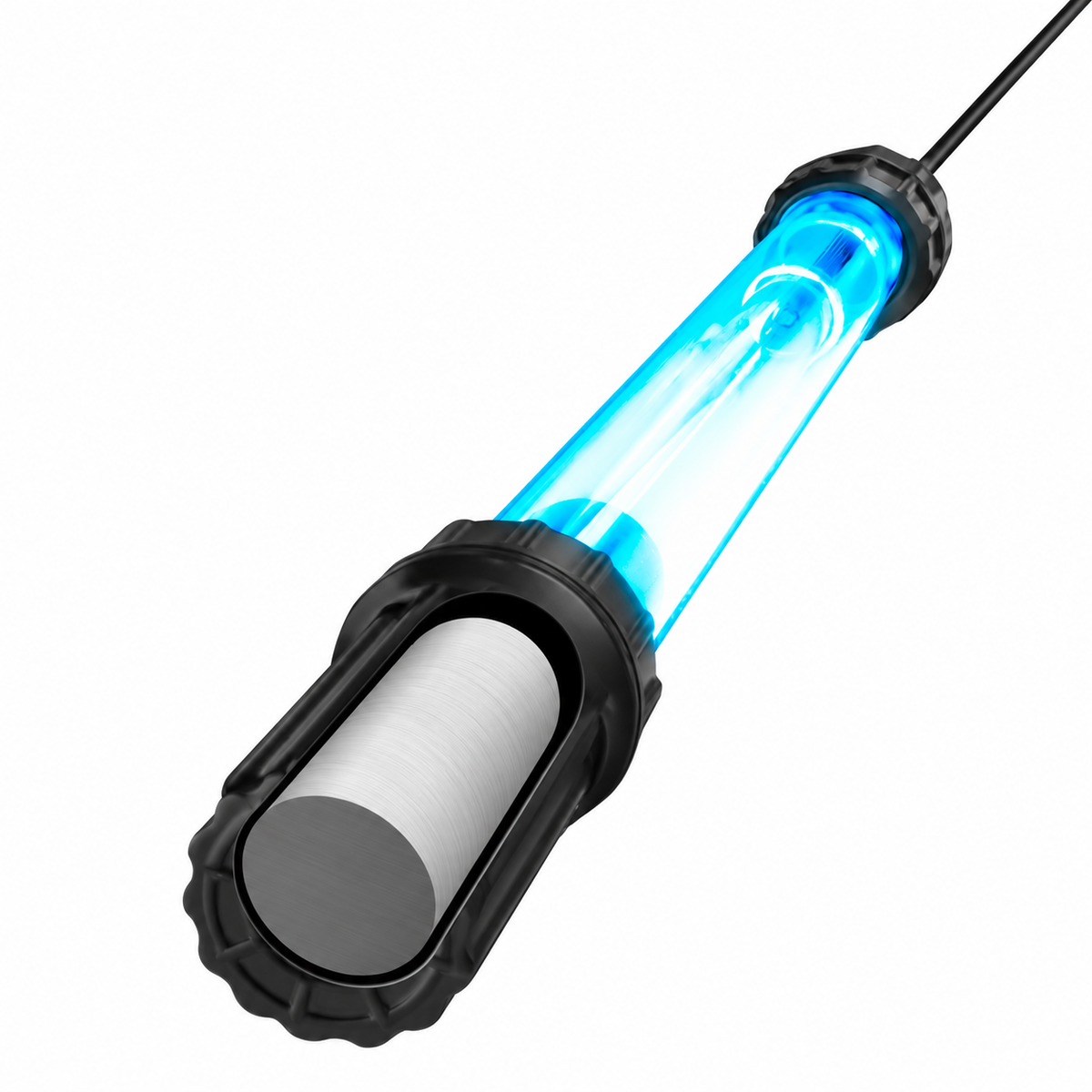
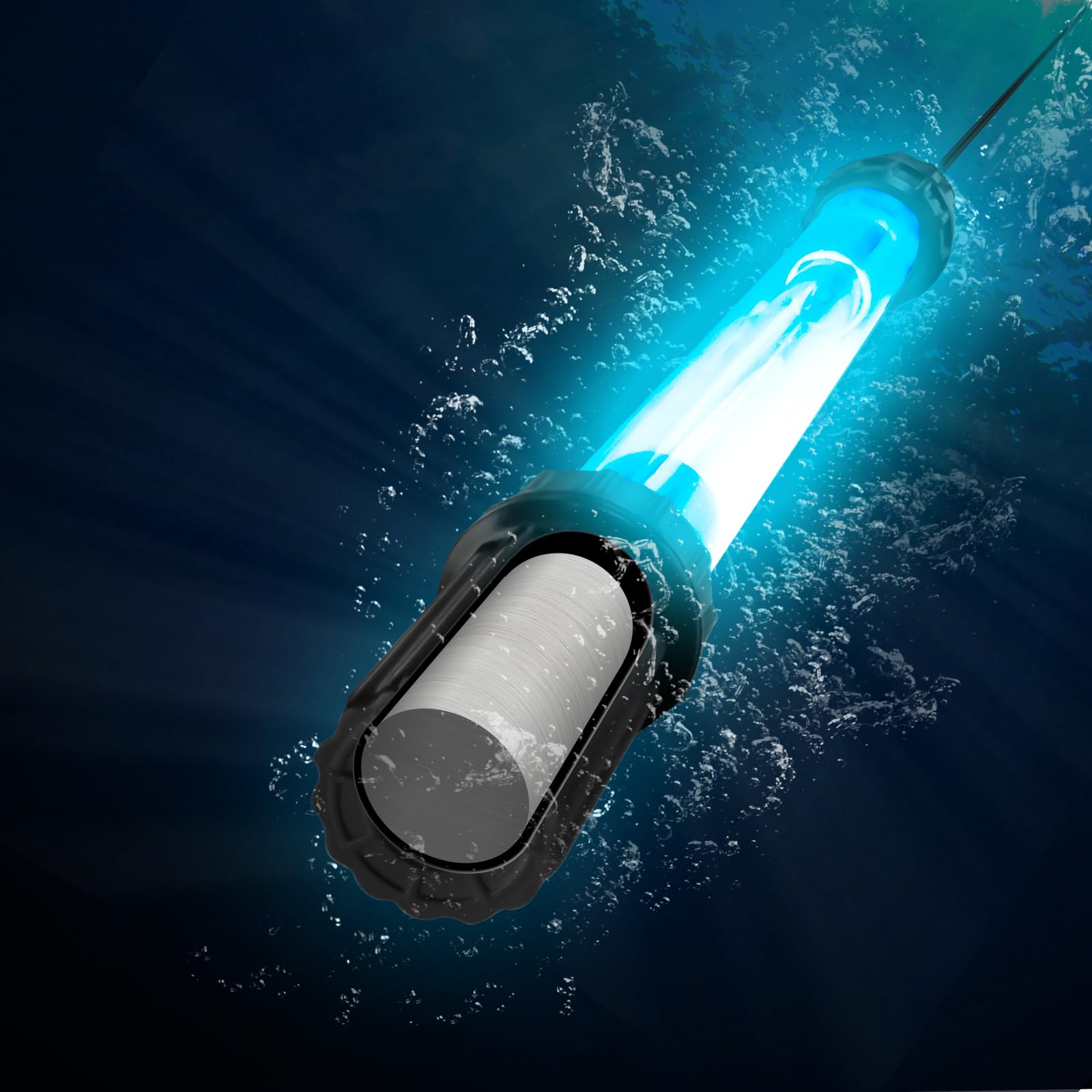
A floating pond de-icer is one of the most practical tools for maintaining an opening in winter.
Unlike a heater designed to warm the entire pond, a de-icer generally maintains a small area of open water around itself.
This allows gases to escape and helps preserve a pathway for atmospheric exchange.
When selecting a de-icer, consider:
-
Whether it is designed specifically for outdoor pond use.
-
Its power rating.
-
The expected minimum winter temperature.
-
The size and insulation characteristics of the pond.
-
Electrical safety and outdoor installation requirements.
A de-icer should not be expected to warm the entire pond.
Its purpose is to prevent a small section of the surface from becoming completely sealed.
Position the equipment according to the manufacturer's instructions, ideally without placing it directly over the deepest winter refuge.
5.2 Use a Properly Positioned Aeration System
Aeration can help maintain dissolved oxygen and support gas exchange.
However, the position of the air diffuser is extremely important.
In winter, placing an air stone at the deepest point of a pond may circulate relatively warm bottom water toward the cold surface.
This can destroy the stable temperature layering that helps fish survive winter.
A better approach is to position the diffuser in relatively shallow water, away from the deepest resting area.
The diffuser should provide gentle aeration without creating excessive water circulation throughout the pond.
The ideal placement depends on pond depth, diffuser strength, water temperature, and local climate.
In severe freezing conditions, an appropriately sized pond de-icer may be more dependable than relying on aeration alone to maintain an open surface.
5.3 Never Smash the Ice
This is one of the most important winter safety rules.
When pond owners see a frozen surface, their first instinct may be to break the ice with a hammer, shovel, or other heavy object.
This is dangerous.
Sudden impacts can create pressure waves that travel through the water and potentially stress or injure fish beneath the surface.
Breaking large sections of ice may also expose fish to rapid environmental changes.
Instead of striking the ice:
-
Use a pond de-icer.
-
Use an appropriately installed aerator.
-
Use warm water carefully to create a small opening when necessary.
-
Follow equipment instructions for maintaining the opening.
Never pour boiling water directly into the pond.
Avoid applying large quantities of hot water, which can create localized temperature changes.
If a temporary opening is needed, use a controlled method that does not involve hitting or cracking the ice violently.
5.4 Do Not Remove All the Ice
Some pond owners believe the entire ice layer must be removed to keep fish alive.
This is usually unnecessary.
A small opening can support gas exchange without exposing the entire pond to additional heat loss.
The ice itself can also provide some insulation against extremely cold air temperatures.
The goal is to maintain a stable aquatic environment, not to turn a winter pond into a completely open body of water.
6. How to Protect Fish During Prolonged Freezing Weather
Short periods of freezing weather are often manageable for a properly designed pond.
The situation becomes more challenging when temperatures remain below freezing for several days or weeks.
During extended cold periods, fish owners should pay particular attention to oxygen availability, water depth, ice coverage, and equipment performance.
6.1 Maintain an Open Gas-Exchange Area
If the pond is likely to remain frozen for an extended period, make sure the de-icer or aeration system continues operating as intended.
Check the equipment regularly.
Heavy snowfall, strong winds, power interruptions, and equipment failure can affect its performance.
Do not assume that a small opening will remain open indefinitely without monitoring.
6.2 Remove Excessive Snow from the Surface
Snow accumulation can block sunlight from reaching the water.
Although light penetration is not the only factor affecting oxygen levels, photosynthesis by aquatic plants and algae can contribute to oxygen production during daylight hours.
Removing some snow from the pond surface may help preserve light penetration.
However, avoid heavy scraping, aggressive ice removal, or damaging the pond liner.
Do not stand on the ice unless its structural safety has been independently established. A pond that appears frozen may not support a person's weight.
6.3 Monitor Dissolved Oxygen When Possible
Dissolved oxygen is particularly important during winter.
Fish continue using oxygen even when their metabolism slows.
A dissolved oxygen meter provides more reliable information than judging water quality by appearance.
Although oxygen requirements vary according to fish size, temperature, stocking density, and health, maintaining adequate oxygen is essential.
If fish are crowded into a small pond or if a large amount of organic material is decomposing, oxygen demand may become significant.
A properly designed aeration system and sensible stocking density help reduce this risk.
6.4 Keep the Deepest Area Relatively Undisturbed
The deepest section of a properly designed pond often serves as the fish's winter refuge.
Avoid placing powerful pumps, waterfalls, or vigorous aeration equipment in this area unless the system has been specifically designed for winter operation.
Strong circulation can disrupt thermal layering and expose fish to colder water.
Many traditional pond owners reduced water movement during the coldest part of winter for precisely this reason.
However, not every pond should have all circulation stopped.
Some ponds require continued filtration or carefully designed water movement to maintain acceptable oxygen and water quality.
The correct approach depends on the pond's design and equipment.
If circulation is reduced, continue monitoring the pond rather than assuming the fish will automatically be safe.
7. Should You Turn Off the Pond Filter in Winter?
This question has no universal answer.
Traditional ponds often relied on natural biological processes and limited mechanical filtration.
Modern koi ponds, however, frequently depend on established filtration systems to maintain water quality.
Whether to continue running a filter depends on its design, the local climate, and the manufacturer's recommendations.
7.1 Why Filter Activity Changes in Cold Water
Biological filtration depends on beneficial microorganisms that convert toxic ammonia into nitrite and then nitrate.
These organisms remain active in cold water, but their activity generally decreases as temperatures fall.
Consequently, the biological capacity of a filter may become lower during winter.
This does not mean all biological filtration should be shut down.
If a filter is designed for year-round operation and can be protected from freezing, it may continue providing valuable water-quality benefits.
7.2 When Shutting Down a Filter May Be Appropriate
Some external filters, exposed pipes, waterfalls, and pressurized systems are vulnerable to freezing.
Water trapped in pipes or filter housings can freeze, expand, and damage equipment.
If the system is not winter-rated, it may need to be drained and shut down before freezing temperatures arrive.
When shutting down equipment:
-
Follow the manufacturer's winterization instructions.
-
Drain exposed pipes and vulnerable housings.
-
Protect biological media according to the filter design.
-
Avoid allowing beneficial filter media to dry out if it is intended to remain biologically active.
-
Prevent stagnant water from freezing inside equipment.
Never restart a filter after winter without checking its condition.
7.3 Avoid Creating an Unnecessary Waterfall in Extreme Cold
Waterfalls and fountains increase water movement and expose water to cold air.
In freezing weather, this can accelerate heat loss.
They may also create ice formations that block water flow or cause water to escape from the pond.
Many pond owners turn off decorative waterfalls during winter and use a separate, appropriately positioned aeration or de-icing system.
This can help preserve a more stable temperature environment.
8. Traditional Aquatic Plants and Their Role in Winter Pond Care
Aquatic plants are an important part of a natural pond ecosystem.
However, their winter management requires some attention.
Different plant species respond differently to cold temperatures.
8.1 Remove Dead Plant Material
Dead leaves and stems decompose underwater and increase the organic load.
Before winter, remove excessive dead material, especially from plants that die back completely.
This reduces the amount of decomposing matter that could consume oxygen.
8.2 Protect Hardy Aquatic Plants
Some aquatic plants are naturally adapted to temperate winters.
Hardy water lilies, for example, can survive winter in suitable conditions when their crowns remain below the freezing zone.
Marginal plants vary considerably in their cold tolerance.
Check the winter requirements of each plant species rather than applying the same treatment to every plant.
8.3 Avoid Excessive Plant Removal
Aquatic plants contribute to nutrient cycling and provide habitat for microorganisms and aquatic animals.
Removing every plant can unnecessarily disrupt the pond ecosystem.
The objective is to eliminate excessive dead material while preserving healthy plants that can survive local winter conditions.
9. Special Considerations for Goldfish and Koi
Although goldfish and koi share many winter-care requirements, they are not identical.
Their body size, growth potential, and environmental needs should influence pond preparation.
9.1 Goldfish Winter Care
Goldfish are adaptable freshwater fish and can survive cold winters in suitable outdoor ponds.
Common varieties of hardy goldfish, such as comet and shubunkin goldfish, are often suitable for outdoor pond environments.
However, fancy goldfish varieties require additional consideration.
Their body shapes, swimming abilities, and general hardiness may make them less suitable for prolonged exposure to severe outdoor conditions.
For outdoor goldfish:
-
Provide sufficient water depth.
-
Maintain stable water quality.
-
Avoid excessive feeding during cooling weather.
-
Maintain suitable oxygen levels.
-
Protect the pond from excessive organic debris.
-
Monitor fish condition before and after winter.
Small containers and shallow ornamental ponds are generally less suitable for overwintering fish in regions with severe freezing temperatures.
9.2 Koi Winter Care
Koi can tolerate cold water when properly acclimated, but their size and environmental requirements make pond preparation particularly important.
Large koi require adequate swimming space and stable water quality.
Their waste production can also be substantial.
A pond that supports several small goldfish during summer may not provide a suitable winter environment for multiple large koi.
For koi ponds, pay particular attention to:
-
Pond depth and total water volume.
-
Stocking density.
-
Biological filtration capacity.
-
Dissolved oxygen.
-
Organic waste accumulation.
-
Protection of exposed pipes and equipment.
-
The availability of a stable winter refuge.
Koi should not be transferred into warm indoor water immediately after spending an extended period in very cold outdoor water without a carefully planned acclimation process.
Sudden temperature changes can be extremely stressful.
9.3 Can Goldfish and Koi Spend Winter Together?
Goldfish and koi can coexist in suitable ponds, including during winter.
However, the pond must meet the requirements of both groups.
Koi generally grow much larger than ordinary goldfish and produce more waste.
Differences in body size can also create feeding and competition issues during warmer seasons.
If both species share an outdoor pond, make sure there is adequate space, suitable water depth, sufficient filtration, and no overcrowding.
Winter survival depends more on the quality of the environment than on whether the fish belong to the same species.
10. Common Winter Pond-Keeping Mistakes to Avoid
Even experienced fish owners can make mistakes when preparing an outdoor pond for freezing conditions.
The following problems are especially common.
Mistake 1: Assuming Ice Means the Fish Have Died
A frozen surface does not automatically mean the fish are dead.
Goldfish and koi may remain almost motionless in deep water during winter.
Their reduced activity is often a normal seasonal response.
Do not immediately remove fish or disturb the bottom of the pond simply because they are not swimming near the surface.
Mistake 2: Breaking the Ice with Heavy Objects
Striking the ice can create harmful pressure waves.
Use a suitable de-icer or controlled ice-opening method instead.
Mistake 3: Feeding Fish Throughout Winter
Fish that are barely active do not need the same food intake as fish during summer.
Uneaten food creates additional waste and can worsen winter water quality.
Adjust feeding to actual water temperature and fish activity.
Mistake 4: Keeping the Entire Pond Warm
Attempting to maintain summer temperatures throughout a large outdoor pond can be expensive and unnecessary.
For hardy, properly acclimated goldfish and koi, stable cold water is often more appropriate than artificially maintaining warm conditions.
A small de-icing device is generally intended to maintain an opening rather than heat the entire pond.
Mistake 5: Placing an Air Stone at the Deepest Point
Strong bottom aeration may disrupt the stable temperature layering that helps fish during winter.
Use appropriately positioned aeration and avoid unnecessary disturbance of the deepest refuge.
Mistake 6: Completely Neglecting Water Quality
Cold water slows biological processes but does not eliminate waste production.
Fish continue releasing waste, and organic material continues decomposing.
Water quality should still be monitored during winter.
Mistake 7: Restarting Equipment Without Inspection
Pumps, pipes, filters, and electrical equipment may be damaged by freezing conditions.
Inspect equipment before restarting it in spring.
Mistake 8: Introducing New Fish Immediately Before Winter
New fish may not have enough time to acclimate to outdoor temperature changes.
They may also introduce parasites or infectious diseases.
Whenever possible, avoid introducing new fish immediately before winter.
11. A Practical Month-by-Month Winter Preparation Plan
A structured seasonal plan makes pond maintenance easier.
The following schedule is designed for temperate regions with cold winters. Adjust the timing according to local weather and actual water temperature.
Early Autumn: Prepare the Pond
During early autumn, temperatures are usually still suitable for normal fish activity.
This is the best time to inspect the pond and address potential problems.
Recommended tasks:
-
Test ammonia, nitrite, pH, and other relevant water parameters.
-
Inspect pumps, filters, and aeration systems.
-
Check the condition of electrical connections and outdoor equipment.
-
Remove excessive fallen leaves.
-
Trim dead aquatic plant material.
-
Inspect fish for signs of disease.
-
Review pond depth and winter protection arrangements.
-
Prepare a suitable pond de-icer if freezing conditions are expected.
This is also a useful time to correct overcrowding or address existing water-quality problems.
Mid-Autumn: Adjust Feeding
As the water temperature gradually declines, begin reducing food portions.
Avoid making sudden changes based only on the calendar.
Measure the water temperature and observe how actively the fish feed.
If fish remain active, continue providing appropriate food in smaller portions.
Remove uneaten food promptly.
Late Autumn: Complete Winter Preparation
Before the first prolonged freeze:
-
Finish removing excessive organic debris.
-
Confirm that the pond has adequate water depth.
-
Prepare the de-icer and aeration equipment.
-
Winterize exposed plumbing where necessary.
-
Turn off vulnerable decorative fountains or waterfalls if appropriate.
-
Check that the pond has a suitable gas-exchange plan.
-
Reduce or stop feeding as water temperature requires.
At this stage, avoid unnecessary changes to the pond environment.
Early Winter: Monitor Ice Formation
When temperatures begin falling below freezing, observe the pond regularly.
Make sure that a suitable opening remains available if ice covers the surface.
Check the operation of electrical equipment.
If snow accumulates, remove excessive coverage carefully without striking the ice.
Do not disturb fish resting in deeper water.
Midwinter: Maintain Stability
During the coldest part of the year, stability becomes the priority.
Avoid feeding inactive fish.
Do not carry out major pond renovations.
Do not introduce new fish.
Check the pond opening, monitor equipment, and watch for unusual changes in water quality or fish behavior.
Late Winter and Early Spring: Prepare for Recovery
As the weather gradually warms, fish activity will eventually increase.
Do not immediately return to summer feeding portions.
Allow fish to adjust naturally as water temperatures rise.
Inspect the pond for accumulated debris and equipment problems.
Resume regular maintenance gradually.
12. What to Do When the Ice Starts Melting
The end of winter does not mean the risk to fish has completely disappeared.
Spring can be a particularly sensitive period because water temperatures fluctuate considerably.
Fish metabolism increases as the water warms, but biological filtration may take time to regain its full seasonal activity.
This creates a period when fish waste production can increase before the filtration system is fully active.
12.1 Avoid Sudden Temperature Changes
Do not rapidly warm the pond simply because the surface ice has disappeared.
Fish that have spent weeks in cold water need time to adjust.
Allow natural seasonal warming to take place.
12.2 Resume Feeding Gradually
When water temperatures rise and fish become more active, begin offering small amounts of appropriate food.
Observe whether the fish consume it comfortably.
Do not immediately resume heavy feeding.
Gradually increase portions as water temperature, fish appetite, and filtration performance improve.
12.3 Check Water Quality More Frequently
Spring maintenance should include testing ammonia, nitrite, pH, and other relevant parameters.
If fish begin feeding more actively, the biological load may increase.
A properly functioning filtration system is essential for maintaining water quality.
12.4 Inspect Fish for Winter-Related Problems
After winter, observe each fish carefully.
Look for:
-
Skin injuries.
-
Fin damage.
-
Unusual swimming patterns.
-
Loss of balance.
-
Abnormal growths.
-
Ulcers.
-
Persistent lethargy after temperatures have become suitable for normal activity.
Do not assume every unusual behavior is simply a consequence of winter.
Seek appropriate aquatic veterinary or experienced fish-health advice when signs of disease appear.
13. Should You Move Goldfish and Koi Indoors for Winter?
Not every goldfish or koi needs to be moved indoors.
Hardy fish in a sufficiently deep, well-managed pond can often overwinter outdoors successfully.
However, indoor overwintering may be appropriate in certain circumstances.
For example:
-
The outdoor pond is too shallow.
-
The local winter climate is extremely severe.
-
The fish are unsuitable for prolonged cold exposure.
-
The pond cannot maintain adequate oxygen or water quality.
-
The fish have health or physical conditions requiring special care.
If indoor housing is necessary, the transition should be carefully planned.
13.1 Prepare an Appropriate Indoor Tank
An indoor holding system should have adequate water volume, filtration, aeration, and temperature stability.
Koi require considerably more space than small goldfish.
A small aquarium is not a suitable long-term winter home for large koi.
The system should be fully prepared before fish are transferred.
13.2 Acclimate Fish Carefully
Moving fish from cold outdoor water into warm indoor water too quickly can cause temperature shock.
The difference in temperature should be managed carefully.
Fish may also experience stress from handling, transportation, and changes in water chemistry.
Plan the transition according to the fish's condition and the temperatures of both environments.
13.3 Avoid Repeated Indoor and Outdoor Transfers
Repeatedly moving fish between warm indoor tanks and cold outdoor ponds creates unnecessary stress.
Choose a suitable wintering strategy in advance whenever possible.
A stable environment is generally better than frequent temperature changes.
14. The Relationship Between Traditional Fishkeeping and Modern Winter Technology
Traditional pond management and modern equipment do not need to compete with each other.
In fact, the most effective winter strategy often combines the simplicity of traditional methods with the reliability of modern monitoring tools.
Traditional fishkeeping emphasizes:
-
Adequate pond depth.
-
Natural seasonal adaptation.
-
Careful feeding.
-
Minimal disturbance.
-
Clean water.
-
Observation of fish behavior.
Modern pond management adds:
-
Digital water-temperature monitoring.
-
Dissolved oxygen testing.
-
Pond de-icers.
-
Controlled aeration.
-
Biological filtration.
-
Water-quality testing kits.
-
Reliable outdoor electrical equipment.
Each approach has advantages.
Traditional methods encourage fish owners to understand the natural behavior of their animals rather than relying entirely on equipment.
Modern tools make it easier to identify problems before they become emergencies.
For example, an owner may notice that koi are gathering at the bottom of the pond and assume that everything is normal. A dissolved oxygen test may reveal that oxygen levels are actually declining.
Likewise, a pond may appear healthy because the surface is clear, while ammonia or nitrite levels remain unsuitable.
The best approach is to combine observation with measurable water-quality information.
15. A Winter Safety Checklist for Outdoor Goldfish and Koi Ponds
Before the coldest weather arrives, review the following checklist.
Pond structure
-
The pond has sufficient depth for the local climate.
-
Fish have an adequately deep winter refuge.
-
The pond is protected from excessive wind exposure.
-
The pond is not overcrowded.
Water quality
-
Ammonia is at 0 ppm.
-
Nitrite is at 0 ppm.
-
pH is stable.
-
Excessive organic debris has been removed.
-
Dissolved oxygen is adequate.
Fish preparation
-
Fish are healthy before winter.
-
Feeding is adjusted according to water temperature.
-
Uneaten food is removed.
-
New fish are not introduced unnecessarily before winter.
Equipment
-
The pond de-icer is suitable for outdoor use.
-
Aeration equipment is functioning correctly.
-
Air diffusers are appropriately positioned.
-
Vulnerable pumps and pipes are winterized.
-
Outdoor electrical connections are protected.
During freezing weather
-
A suitable opening is maintained when necessary.
-
The ice is never struck with heavy objects.
-
The deepest winter refuge is not unnecessarily disturbed.
-
Snow accumulation is managed carefully.
-
Equipment is checked regularly.
-
Fish are not fed when water temperatures are too low for normal digestion.
Following this checklist can significantly reduce avoidable winter risks.
16. Frequently Asked Questions About Goldfish and Koi Winter Care
Can goldfish survive in a pond that freezes completely on the surface?
Yes. Goldfish can survive beneath surface ice when sufficient liquid water remains underneath and the pond maintains suitable oxygen levels and water quality.
However, if the pond freezes throughout its depth, fish cannot survive simply by remaining motionless. Adequate pond depth and protection against prolonged freezing are essential.
Can koi survive under several inches of ice?
Koi can survive beneath several inches of ice when the pond has adequate depth, sufficient dissolved oxygen, and a stable liquid-water environment.
The thickness of the ice alone does not determine survival.
A deep, properly managed pond may support fish beneath substantial surface ice, while a shallow pond with poor water quality may become dangerous even with relatively thin ice.
Should I feed goldfish when the pond is frozen?
Generally, no.
When water temperatures are very low, goldfish metabolism and digestion slow considerably.
Feeding inactive fish can result in uneaten food and unnecessary waste accumulation.
Resume feeding gradually when water temperatures rise and the fish become active again.
Do goldfish and koi need a pond heater?
Not necessarily.
Hardy, properly acclimated goldfish and koi can overwinter in suitable cold-water ponds.
A pond de-icer is often more useful than a heater because it maintains an opening for gas exchange without attempting to warm the entire pond.
Is an air pump necessary in winter?
Aeration can be beneficial, particularly in ponds with high fish populations or significant organic material.
However, the diffuser should be positioned carefully.
Strong aeration at the deepest point may disrupt temperature layering.
In some situations, a properly positioned aerator combined with a pond de-icer provides a practical winter solution.
Why are my koi not moving during winter?
Reduced movement is normal when water temperatures become very low.
Koi often gather in deeper areas and conserve energy.
However, fish that remain unresponsive, show abnormal body positions, or display visible signs of disease should not automatically be assumed to be experiencing normal winter dormancy.
Observe them carefully and seek professional advice if necessary.
Can I pour warm water onto the ice?
Warm water can sometimes be used carefully to create a temporary opening, but it should never be poured directly onto fish or used in large quantities.
Never use boiling water.
A dedicated pond de-icer is generally a more reliable long-term solution.
Should I clean the pond during winter?
Avoid major cleaning during the coldest months.
Removing excessive debris before winter is preferable.
If an urgent water-quality problem develops, take appropriate action carefully without unnecessarily disturbing fish resting in deeper water.
Can I keep koi in a shallow garden pond during winter?
This depends on the local climate, but shallow ponds are generally much more vulnerable to freezing throughout their depth.
In regions with severe winters, a shallow ornamental pond is usually unsuitable for overwintering koi.
Consider redesigning the pond or providing a properly equipped alternative winter habitat.
How do I know whether my fish are still alive under the ice?
It can be difficult to determine fish condition visually when the pond is frozen.
Slow movement does not necessarily indicate a problem.
Avoid breaking the ice or repeatedly disturbing the fish to check whether they are alive.
Monitor the pond environment and observe the fish when conditions allow safe viewing.
Conclusion: The Best Winter Care Begins with Respecting Nature
Traditional goldfish and koi winter care is built around a simple principle: allow fish to follow their natural seasonal rhythm while protecting the environment they depend on.
An ice-covered pond is not automatically a disaster. Hardy goldfish and koi have physiological adaptations that allow them to survive cold water, reduce their activity, and conserve energy during winter.
However, their ability to tolerate cold temperatures should never be mistaken for an ability to survive any frozen environment.
Adequate pond depth, stable water conditions, controlled feeding, limited organic waste, sufficient dissolved oxygen, and appropriate gas exchange all contribute to successful overwintering.
The most important preparations should take place before winter arrives. Clean the pond, inspect the fish, check the filtration system, and prepare suitable de-icing or aeration equipment.
Once freezing weather begins, avoid unnecessary intervention. Never smash the ice, do not feed inactive fish, and avoid disturbing the deepest part of the pond.
Instead, focus on maintaining a stable environment and monitoring the conditions beneath the surface.
Traditional fishkeepers understood that winter was not a season for forcing fish to remain active. It was a season for protecting the pond and allowing nature to take its course.
By combining this traditional wisdom with modern water-quality monitoring and carefully selected equipment, pond owners can give their goldfish and koi a much better chance of surviving winter safely.
When spring finally arrives and the ice disappears, the sight of healthy goldfish and koi returning to their familiar swimming patterns is one of the most rewarding experiences of maintaining an outdoor pond.
A successful winter is not measured by how warm the pond remains. It is measured by how well the fish are protected while nature follows its seasonal cycle.