Introduction: Can You Use a UV Sterilizer in a Planted Aquarium?
A healthy planted aquarium is more than a glass tank filled with water. It is a carefully balanced aquatic ecosystem where fish, beneficial bacteria, aquatic plants, microorganisms, and water chemistry work together.
Aquatic plants absorb nutrients, release oxygen during photosynthesis, provide shelter for fish, and contribute to the biological stability of the aquarium. However, maintaining clear water and controlling unwanted microorganisms can sometimes be challenging, especially in heavily stocked aquariums, newly established tanks, and systems experiencing green water or recurring algae problems.
One piece of equipment that aquarium enthusiasts often consider is a UV sterilizer.
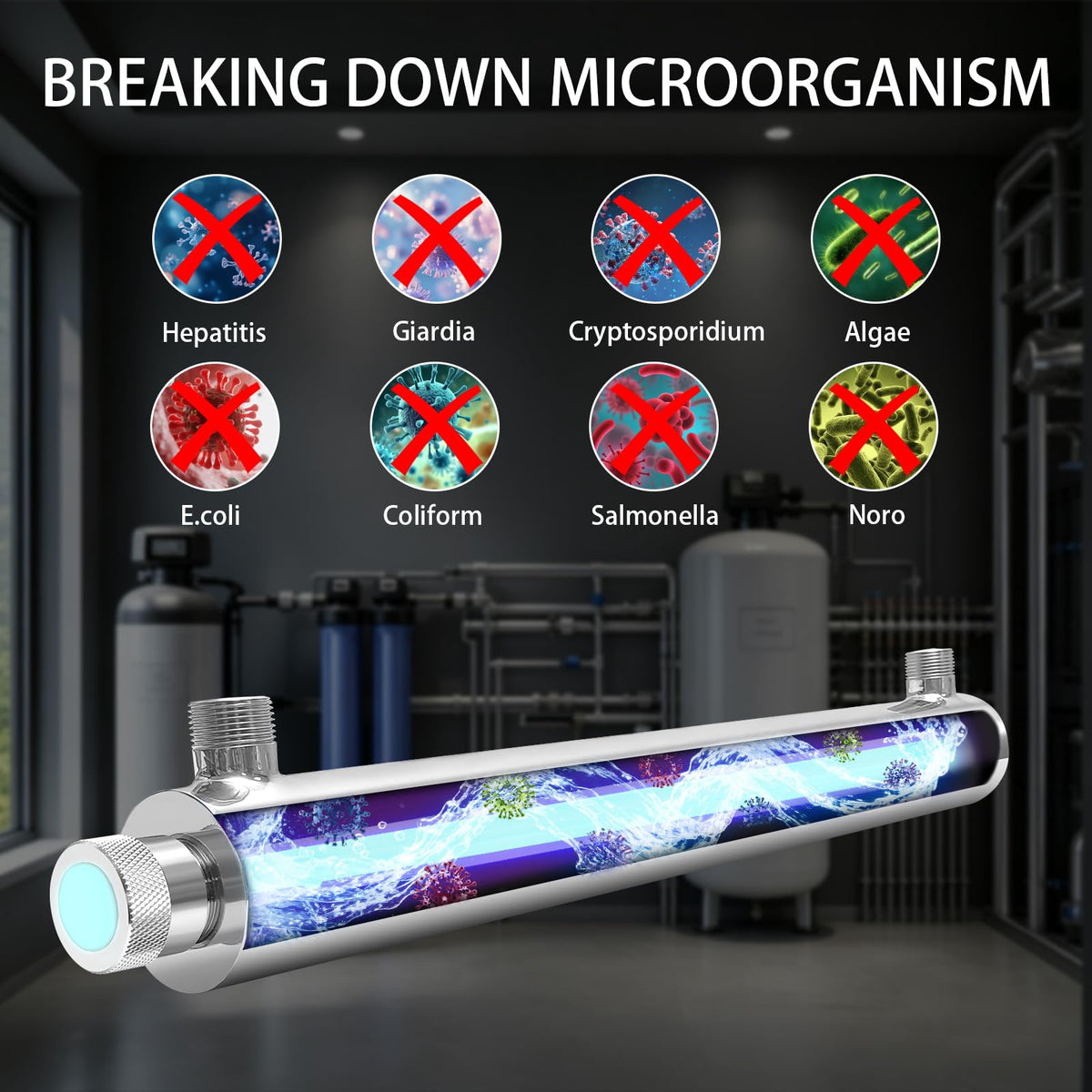
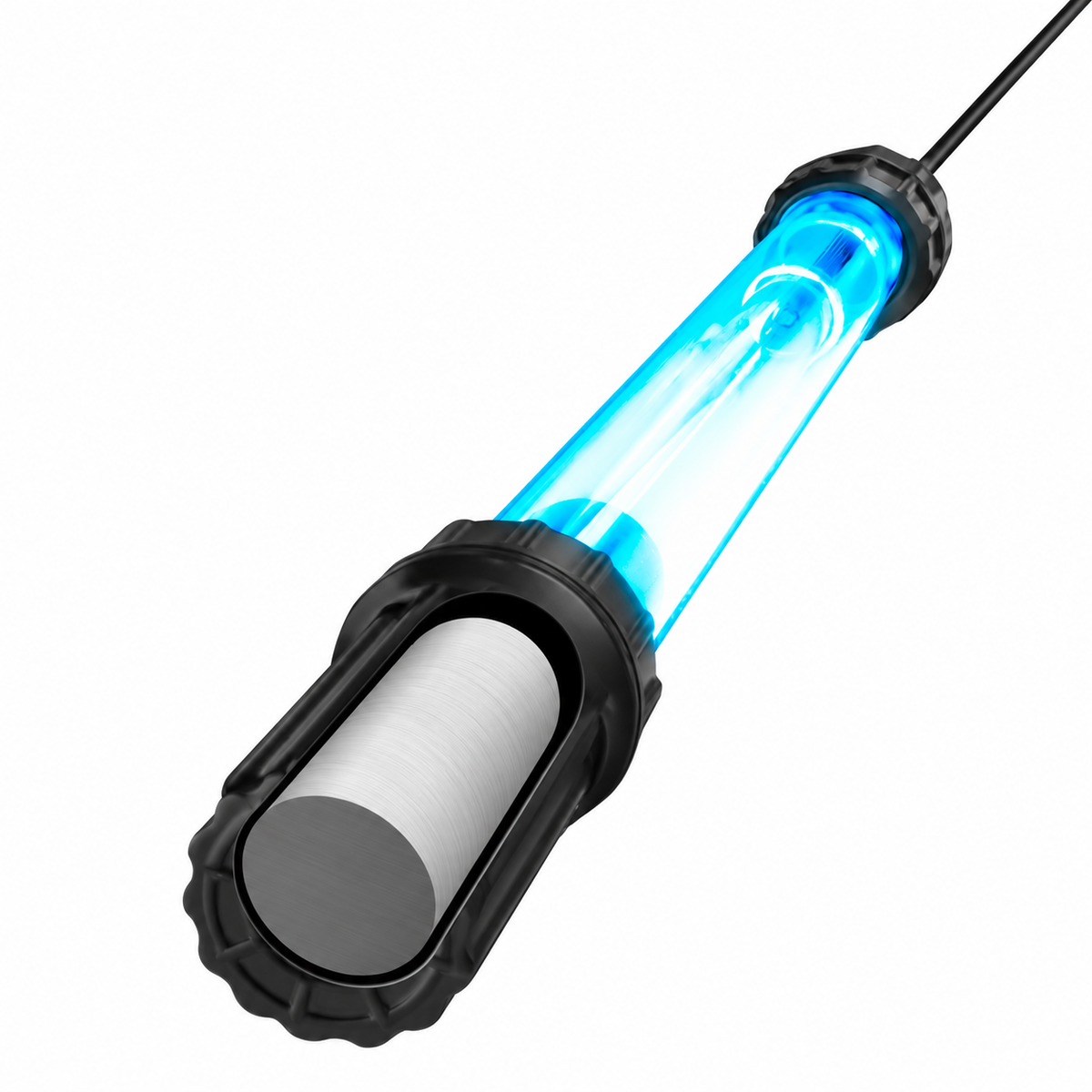
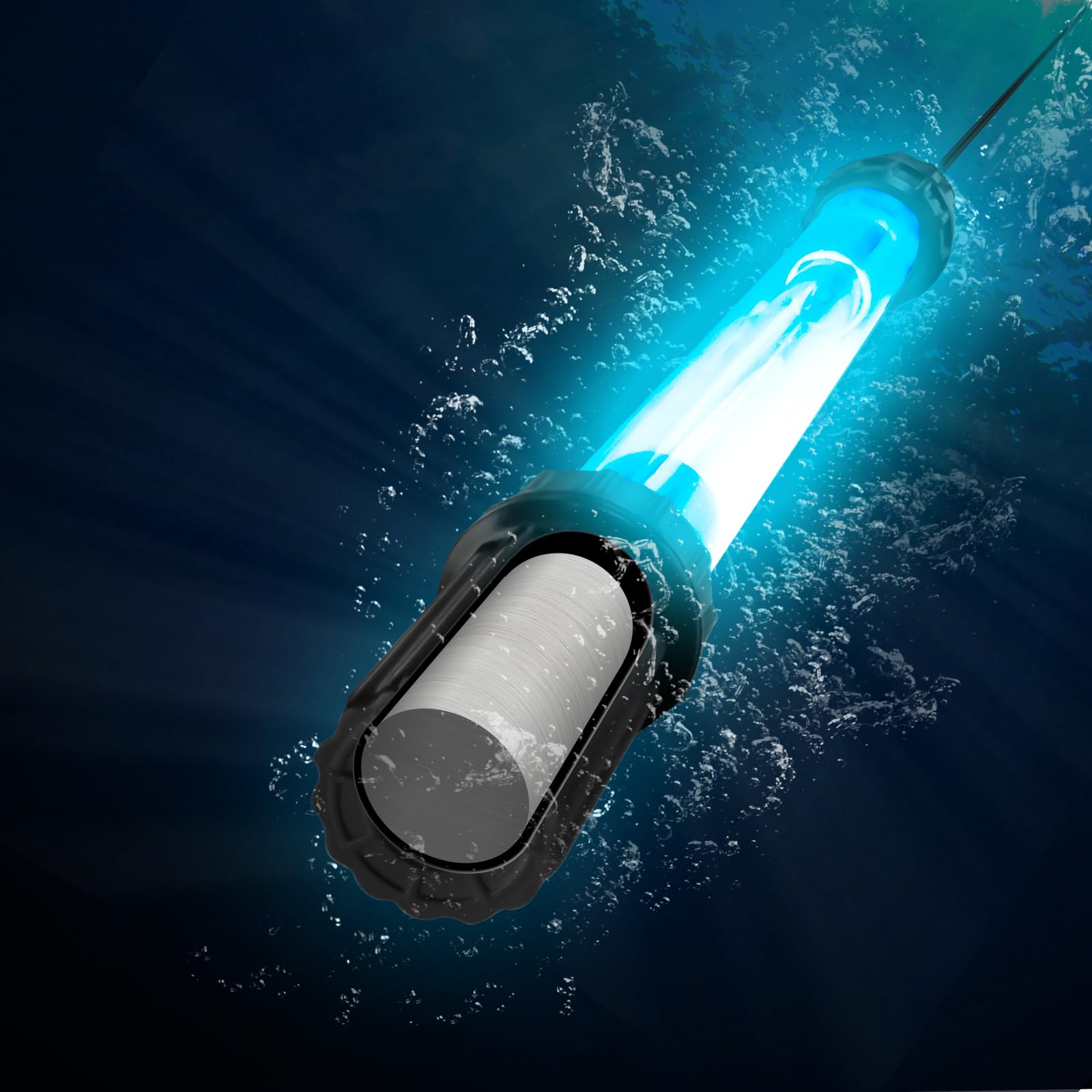
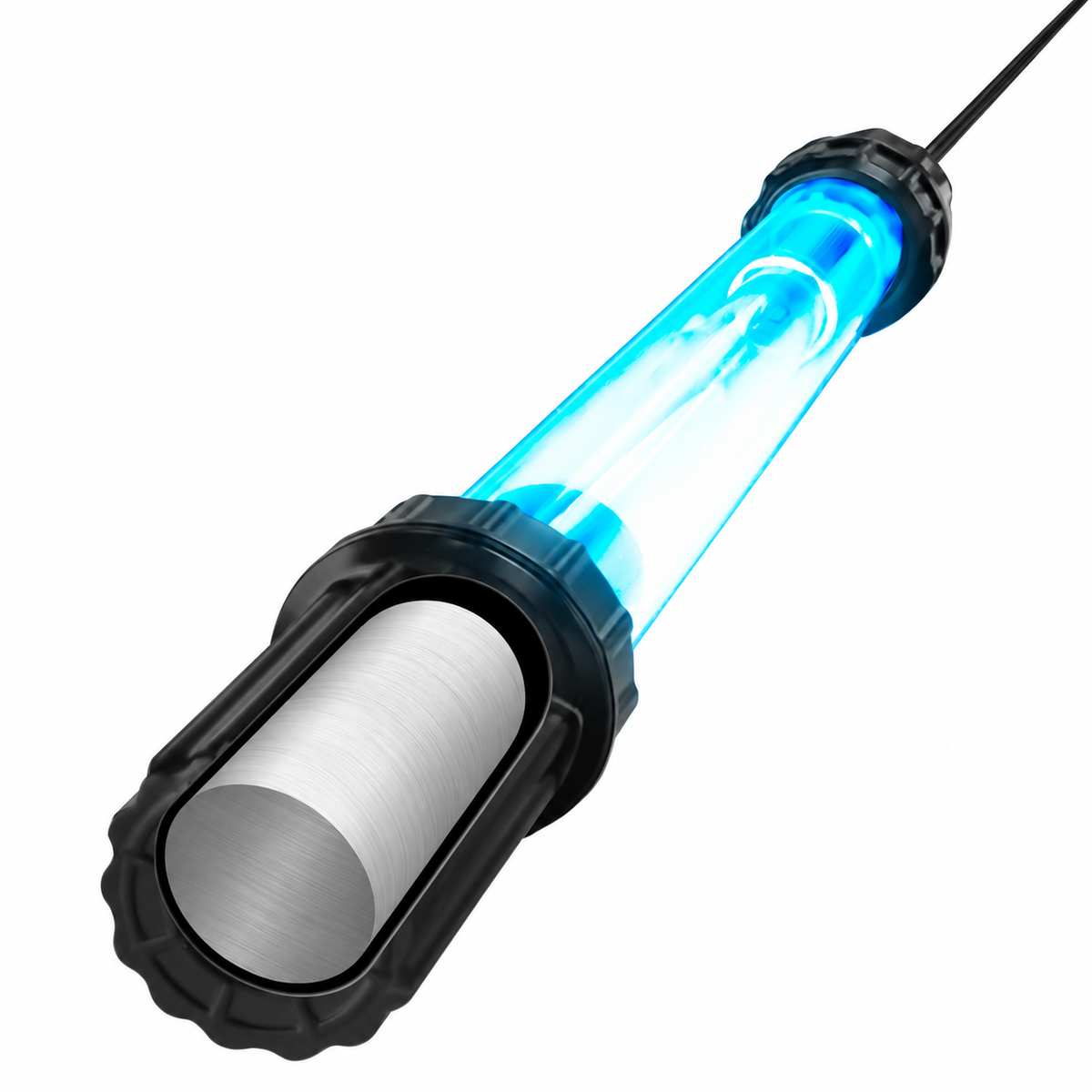
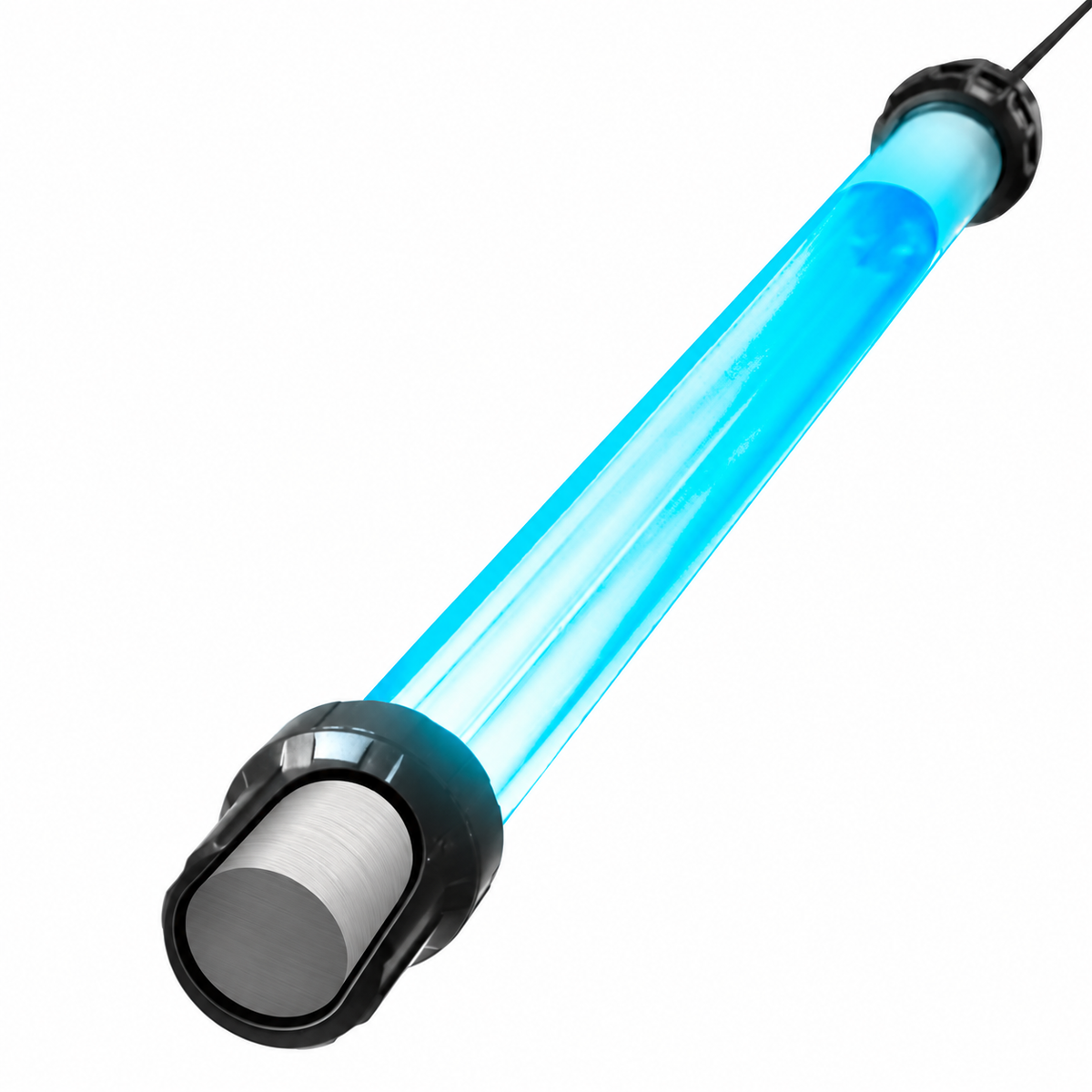
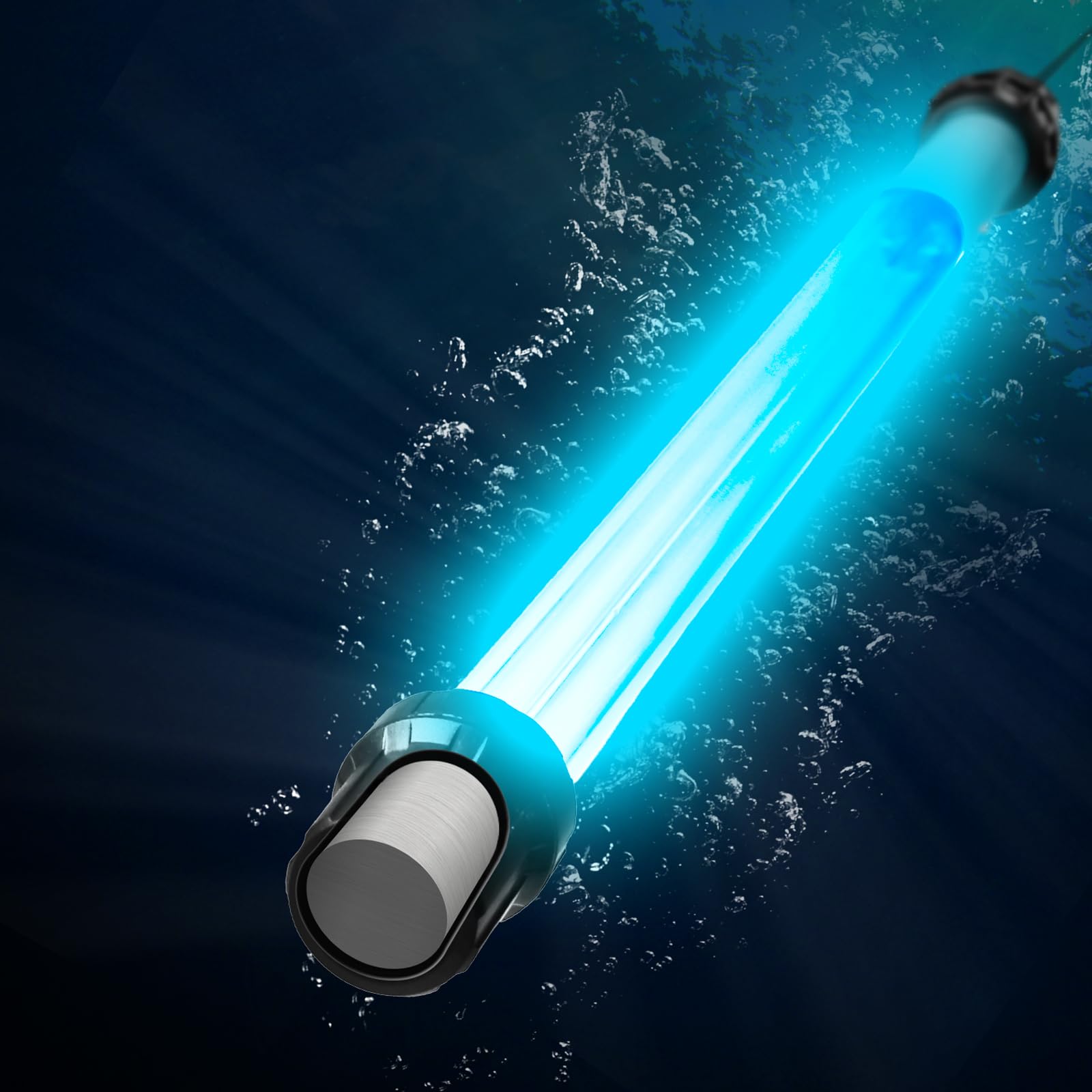
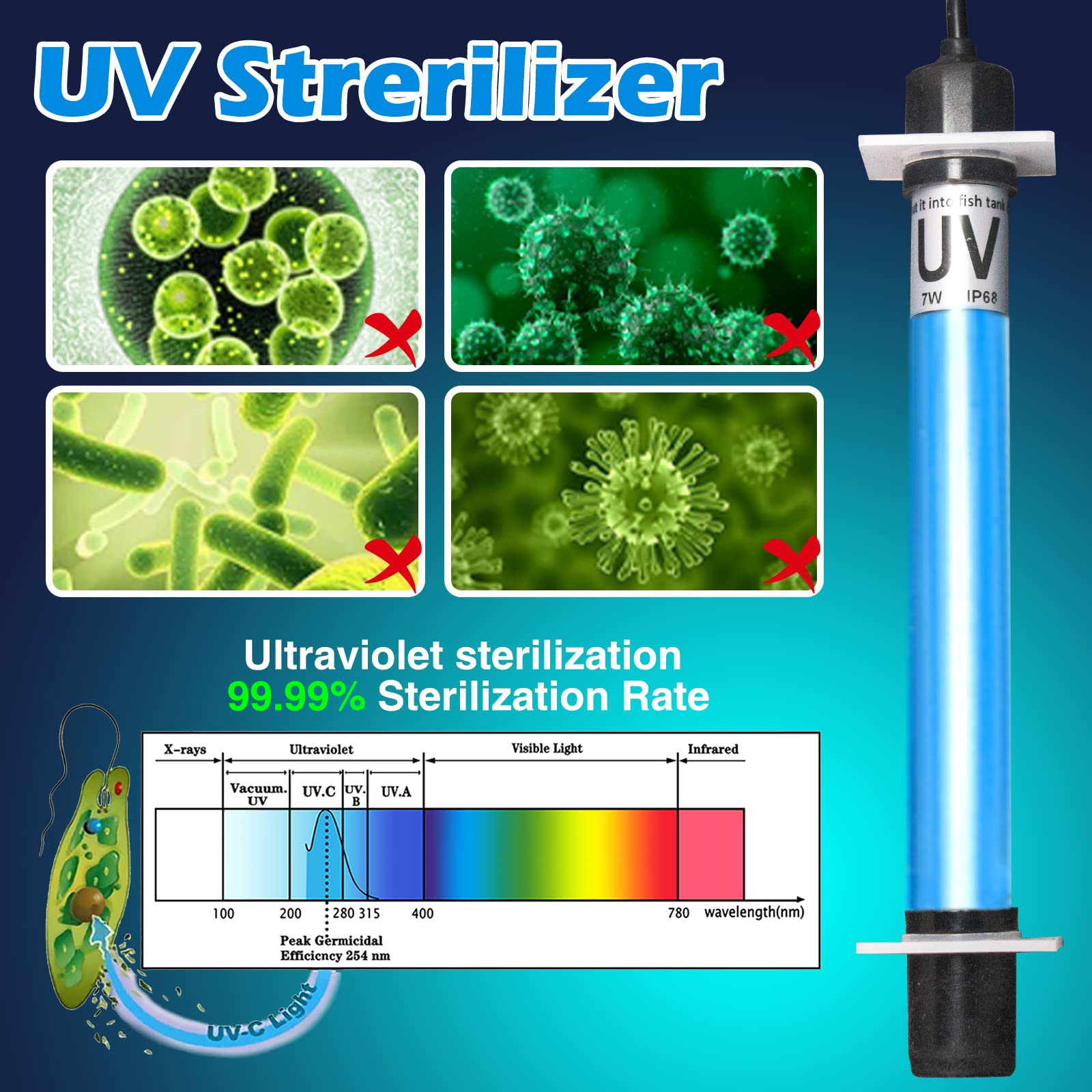
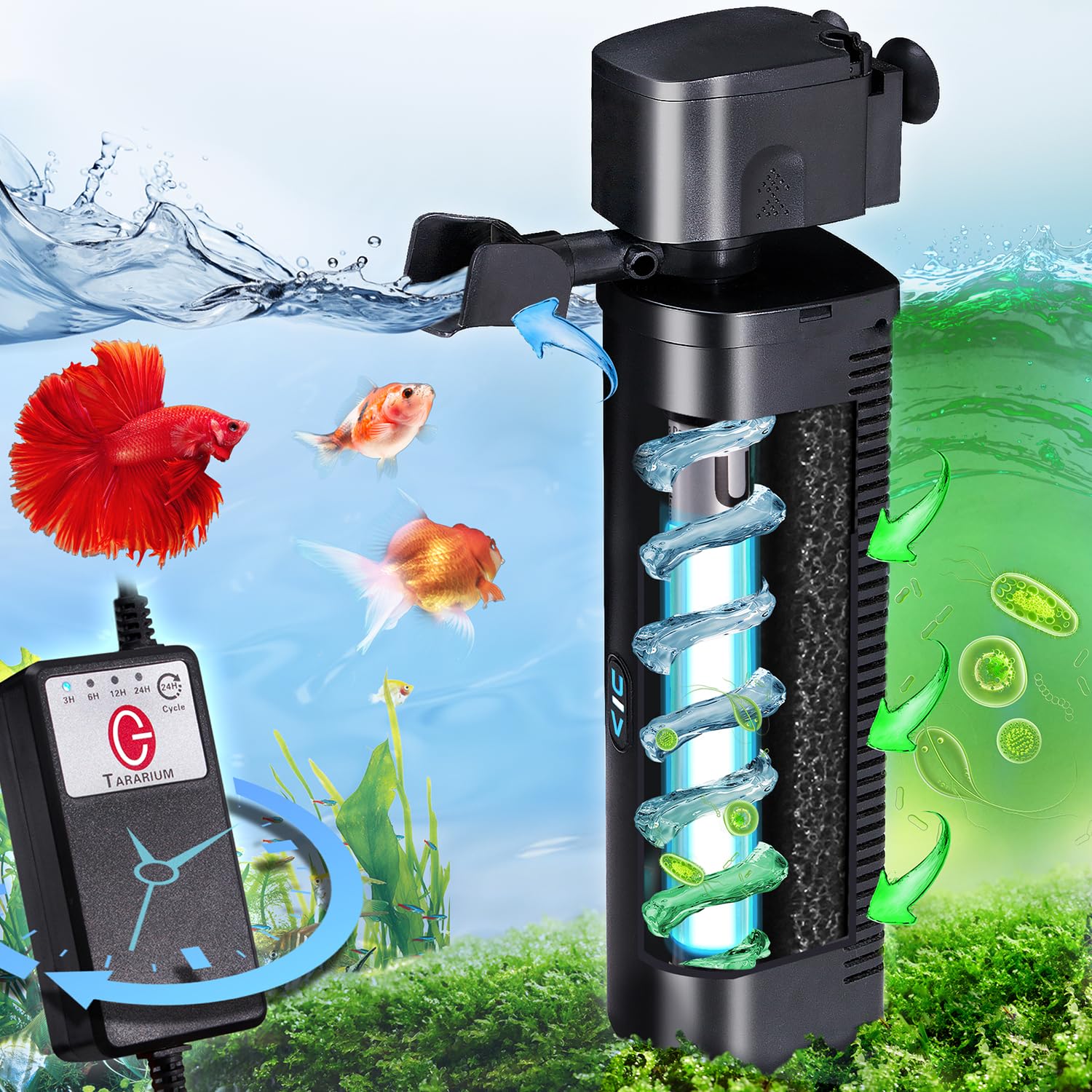
UV sterilizers use ultraviolet-C (UV-C) light to inactivate microorganisms as aquarium water passes through a specially designed treatment chamber. They are commonly used to help control suspended algae, certain free-floating microorganisms, and some waterborne pathogens.
But planted aquarium owners often have an important concern:
Will a UV sterilizer kill aquatic plants, damage beneficial bacteria, or disrupt the natural balance of a planted tank?
The good news is that a properly installed and operated UV sterilizer generally does not directly harm healthy aquatic plants. This is because the UV-C light remains inside the sterilizer's enclosed treatment chamber rather than illuminating the entire aquarium.
However, incorrect installation, excessive treatment, unsuitable equipment, or misunderstanding how UV sterilization works can create unnecessary problems.
For example, UV-C light can damage living cells if organisms are directly exposed to it. It can also inactivate beneficial microorganisms that happen to pass through the treatment chamber. Furthermore, a UV sterilizer cannot replace biological filtration, regular water changes, or proper algae management.
This guide explains how UV sterilizers work, how they interact with aquatic plants and beneficial bacteria, how to choose the right equipment, and how to use UV sterilization safely in freshwater planted aquariums.
Whether you maintain a low-tech planted tank, a high-tech CO2-injected aquarium, a Dutch-style aquascape, or a fish-heavy community aquarium, understanding these principles will help you use UV technology more effectively without compromising plant health.
1. Understanding How a UV Sterilizer Works in an Aquarium
Before installing a UV sterilizer, it is important to understand what the equipment actually does.
A UV sterilizer is designed to expose microorganisms in moving water to ultraviolet-C radiation.
UV-C is a short-wavelength form of ultraviolet radiation, commonly used in water treatment and disinfection applications.
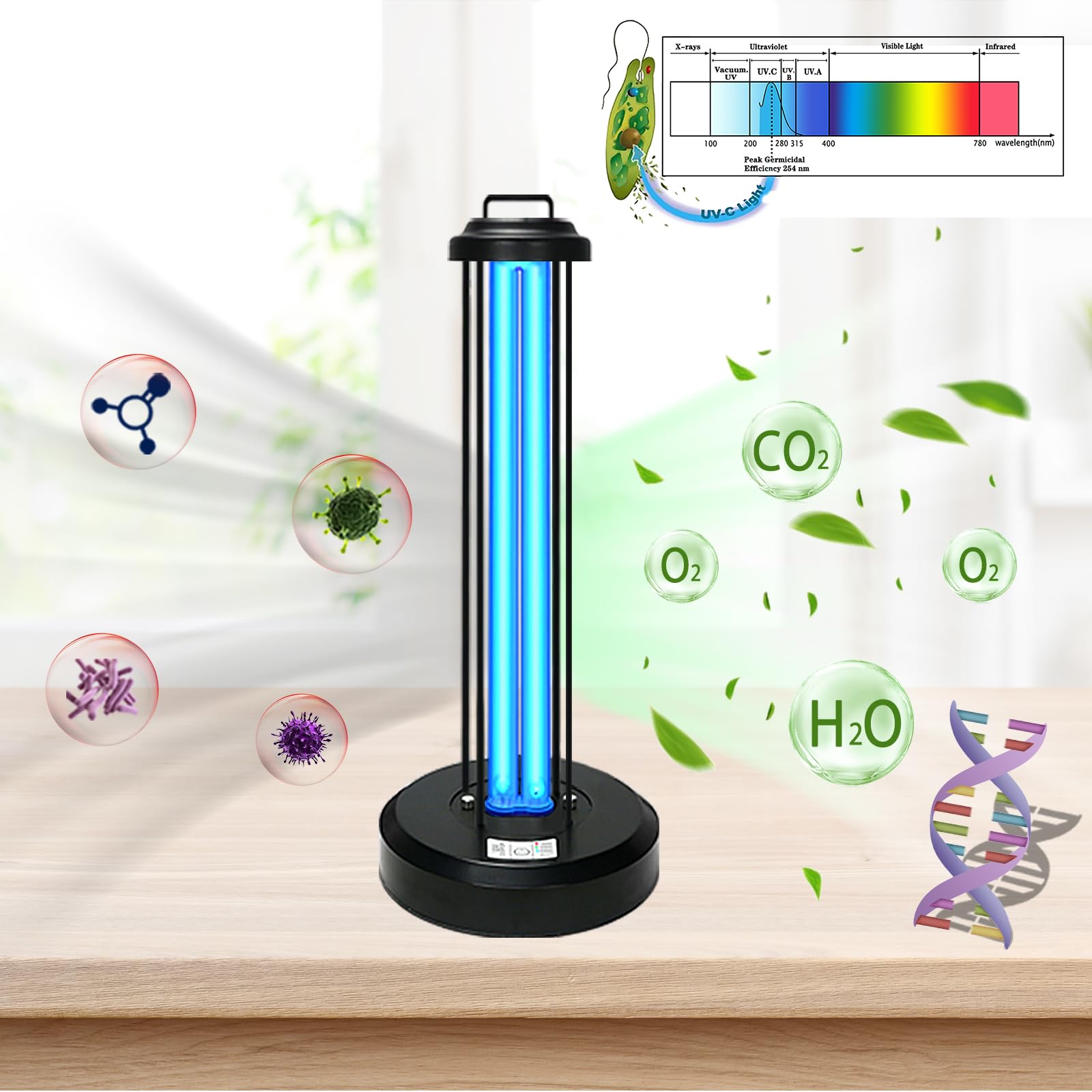
Most aquarium UV sterilizers operate around the germicidal UV-C wavelength of 254 nanometers, although equipment specifications vary.
When microorganisms receive a sufficient UV-C dose, the radiation damages their genetic material, interfering with their ability to reproduce.
The result is the inactivation of susceptible microorganisms passing through the treatment chamber.
1.1 The Basic Working Principle
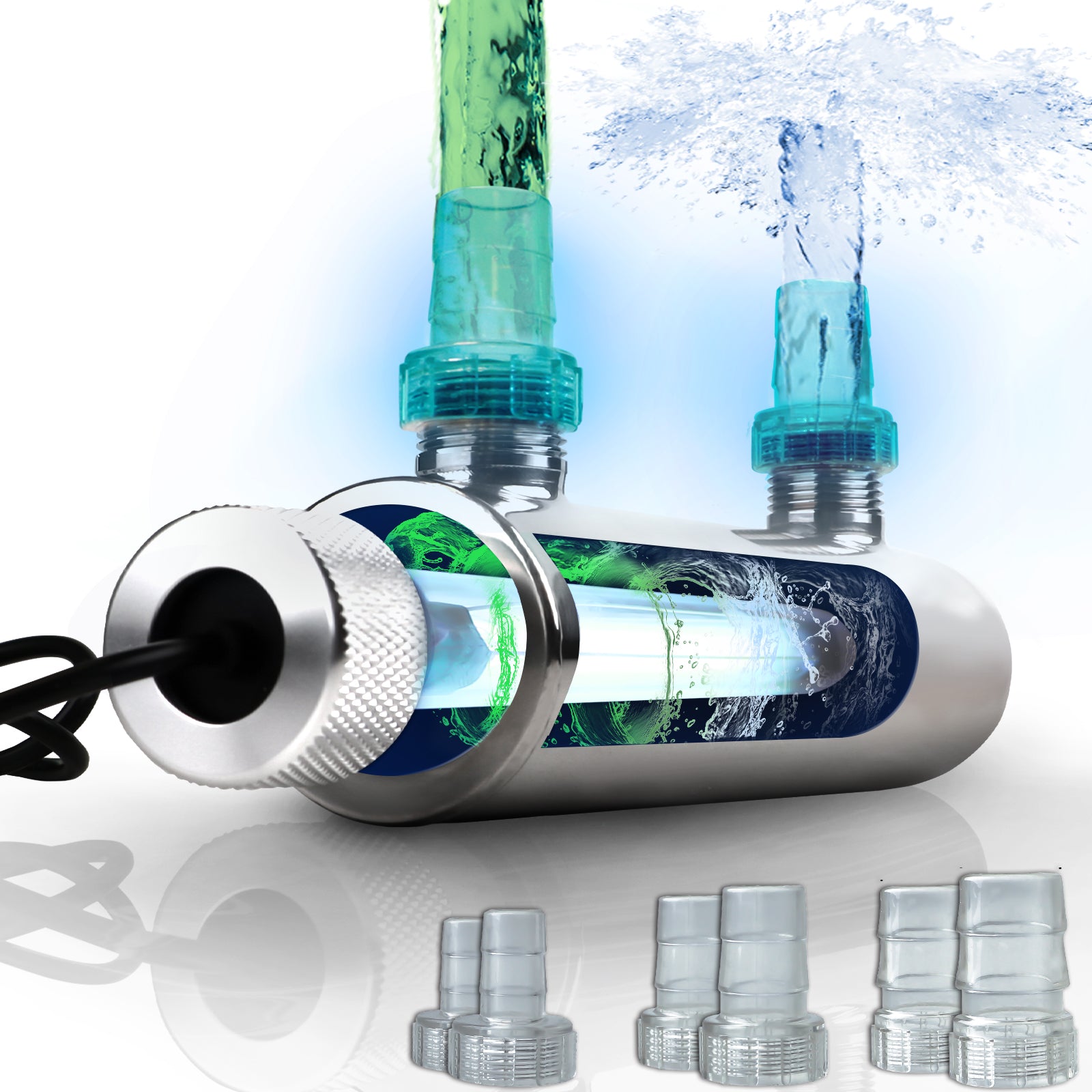
A typical aquarium UV sterilizer contains several important components:
-
A UV-C lamp.
-
A protective quartz sleeve.
-
A water-treatment chamber.
-
An inlet and outlet.
-
Electrical connections and a suitable power supply.
-
Optional flow-control or monitoring components.
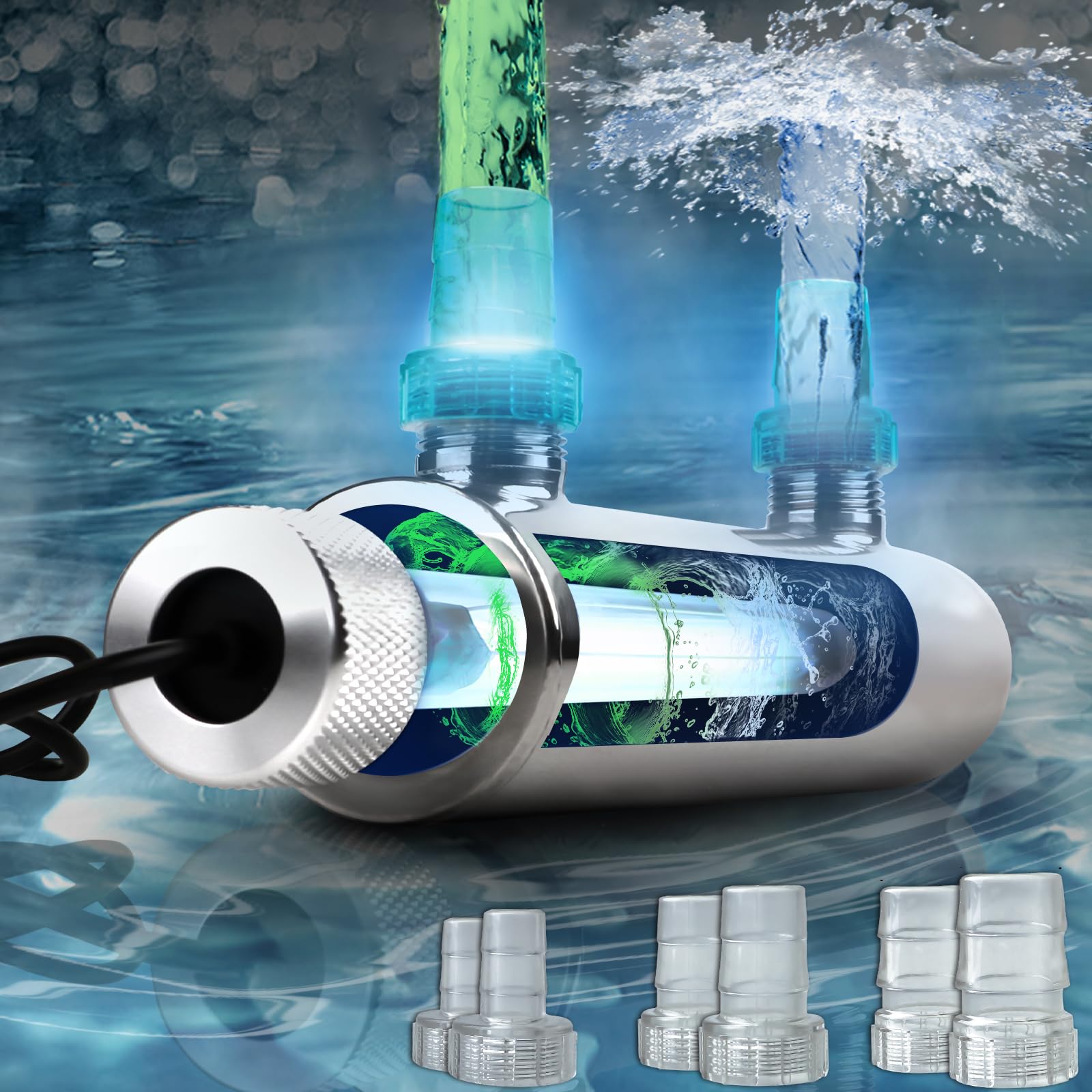
The aquarium pump moves water through the sterilizer.
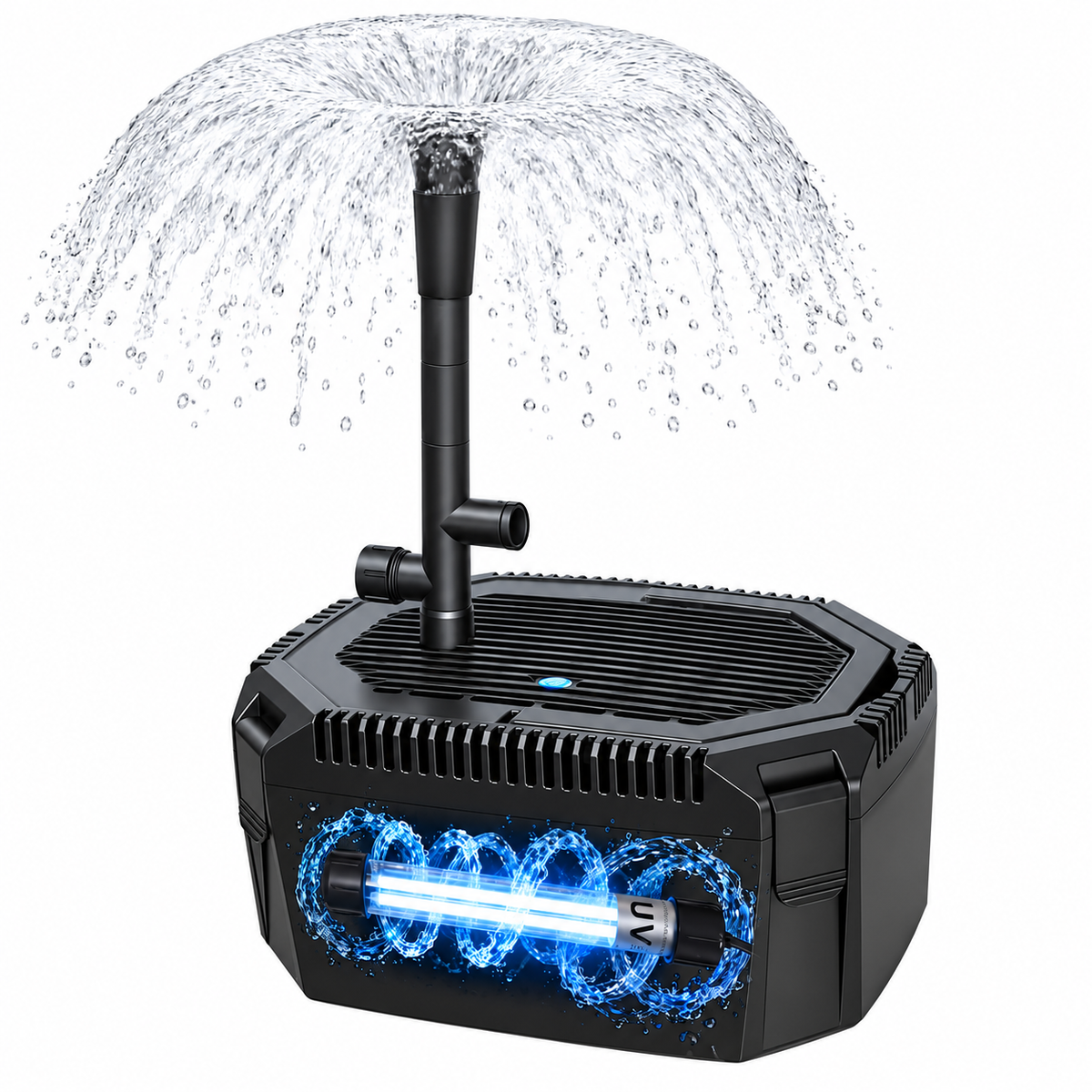
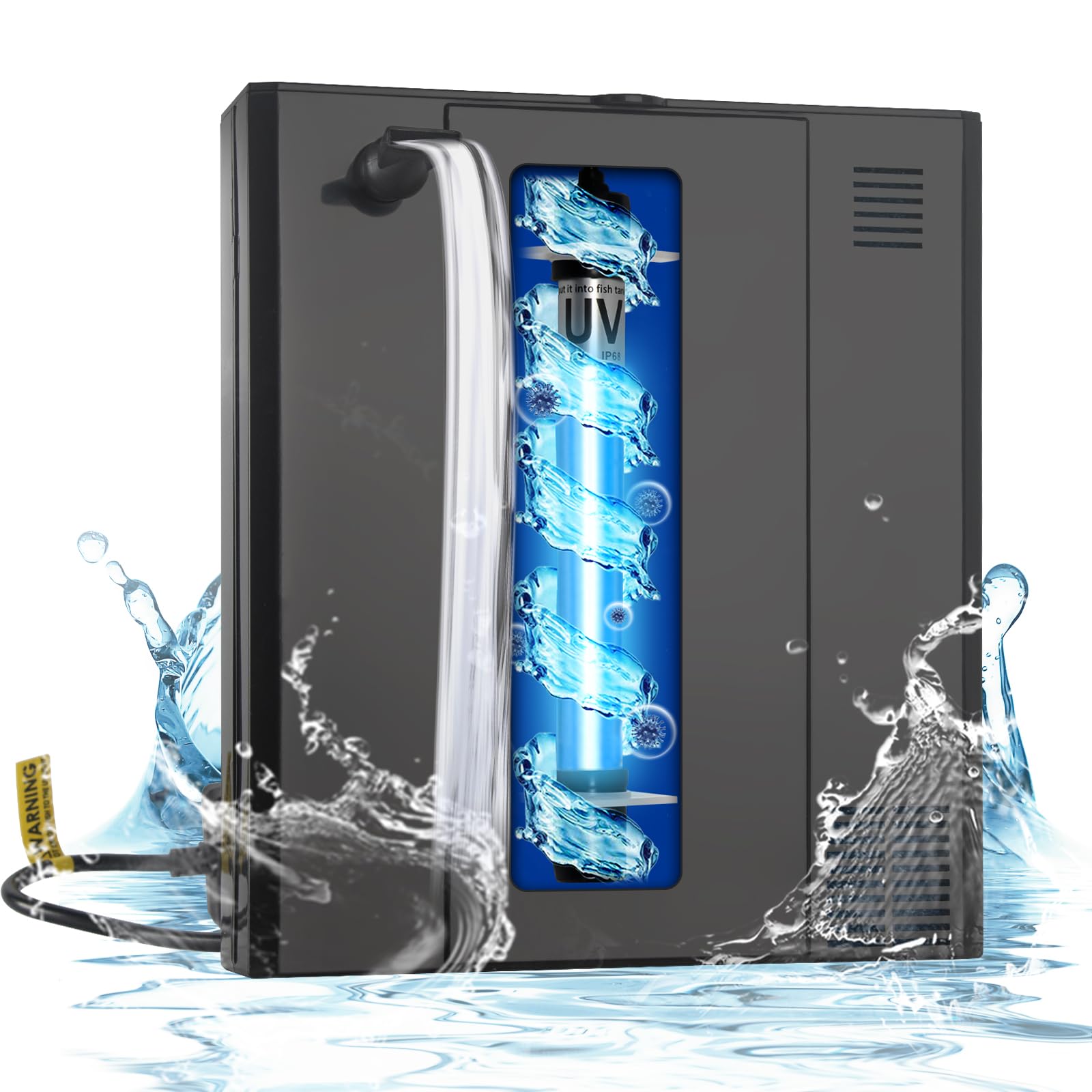
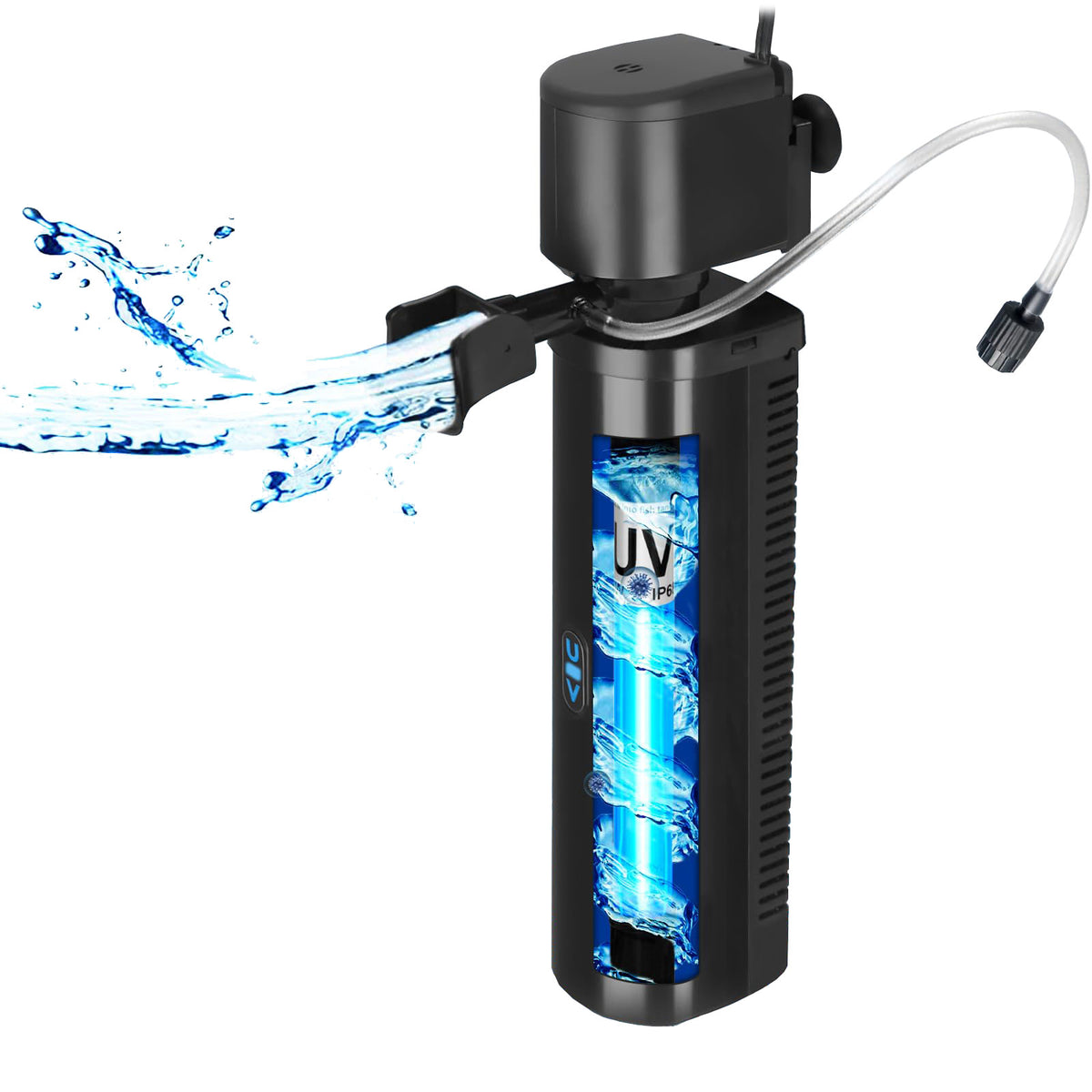
Inside the treatment chamber, water passes around the UV lamp, allowing suspended microorganisms to receive ultraviolet exposure.
The treated water then returns to the aquarium.
This process continues as aquarium water circulates through the system.
The sterilizer does not need to illuminate the entire aquarium to be effective. In fact, the UV-C radiation should remain completely enclosed within the equipment.
1.2 What Can a UV Sterilizer Control?
A UV sterilizer can help control certain organisms that are suspended in the water column.
Depending on the equipment, flow rate, and UV dose, it may help reduce:
-
Free-floating green algae responsible for green water.
-
Some waterborne bacteria.
-
Certain free-swimming protozoan stages.
-
Some suspended microorganisms that contribute to cloudy water.
However, its effectiveness depends on the organism and the amount of UV exposure.
A UV sterilizer does not automatically eliminate every microorganism in an aquarium.
For example, many parasites have life-cycle stages that remain attached to fish, plants, substrate, or other surfaces. These stages may never pass through the UV treatment chamber.
Therefore, UV sterilization should be considered a supplementary water-management tool rather than a universal disease treatment.
1.3 Why UV Sterilization Is Different from Ordinary Filtration
Mechanical filtration removes physical particles from aquarium water.
Biological filtration provides surfaces where beneficial microorganisms convert toxic nitrogen compounds into less harmful forms.
Chemical filtration uses materials such as activated carbon or specialized resins to remove selected dissolved substances.
UV sterilization works differently.
It acts on susceptible organisms suspended in the water that pass through the treatment chamber.
It does not physically remove debris, directly eliminate ammonia, or replace the biological filtration process.
Understanding these differences is essential when designing a stable planted aquarium.
2. Will a UV Sterilizer Harm Aquatic Plants?
This is the most important question for planted aquarium owners.
In a properly designed aquarium UV sterilizer, the answer is generally no.
Healthy aquatic plants are not normally exposed to the concentrated UV-C radiation inside the sterilizer because the lamp is enclosed within the treatment chamber.
Water enters the chamber, receives UV exposure, and returns to the aquarium without exposing the entire tank to direct UV-C light.
2.1 Why Aquatic Plants Are Generally Safe
Most aquatic plants grow under visible light.
They use photosynthetically active radiation, commonly referred to as PAR, to support photosynthesis.
The visible wavelengths used in aquarium lighting are different from the germicidal UV-C radiation used inside sterilizers.
A properly enclosed UV sterilizer does not function as a UV-C aquarium light.
The plants remain in their normal environment and receive the light supplied by the aquarium lighting system.
Therefore, using an appropriately installed UV sterilizer does not normally interfere directly with photosynthesis.
2.2 The Difference Between Direct UV Exposure and Treated Water
The distinction between direct UV-C exposure and water that has passed through a UV sterilizer is extremely important.
Direct exposure to UV-C radiation can damage biological tissue.
However, water passing through an enclosed UV sterilizer is not equivalent to exposing the entire aquarium to UV-C radiation.
The treated water simply returns to the tank.
This is why proper equipment design and installation matter so much.
Never operate an exposed UV-C lamp inside an aquarium.
Never remove the protective housing while the lamp is operating.
Never look directly at an illuminated UV-C lamp.
UV-C radiation can cause serious eye and skin injuries, even when exposure is relatively brief.
2.3 Can UV Sterilization Cause Aquatic Plants to Melt?
Some aquarium owners report that plants begin deteriorating after installing UV equipment.
However, this does not necessarily mean that UV sterilization is damaging the plants.
Several other factors may be responsible:
-
Changes in nutrient availability.
-
Insufficient CO2.
-
Lighting adjustments.
-
Temperature fluctuations.
-
Poor root development.
-
Plant adaptation after transplantation.
-
Changes in water circulation.
-
Excessive algae removal and subsequent nutrient imbalance.
UV sterilization may indirectly influence some aspects of aquarium water chemistry by affecting suspended microorganisms and certain dissolved organic compounds.
However, it should not automatically be blamed for plant melt.
If plants begin deteriorating after a UV sterilizer is installed, examine the aquarium's complete operating conditions before removing equipment or changing multiple variables.
3. How UV Sterilizers Affect Beneficial Bacteria in Planted Aquariums
Although aquatic plants are generally protected from UV-C exposure, beneficial bacteria require more careful consideration.
Beneficial microorganisms are essential to the nitrogen cycle.
They help process fish waste, decomposing organic matter, and other nitrogen-containing substances.
Without a stable biological filtration system, toxic ammonia and nitrite can accumulate.
Can a UV sterilizer damage these beneficial bacteria?
Yes, if susceptible bacteria pass through the treatment chamber and receive a sufficient UV dose.
However, the overall impact on an established aquarium's biological filtration is usually limited when the sterilizer is installed correctly.
3.1 Most Beneficial Nitrifying Bacteria Live on Surfaces
In a mature planted aquarium, many important nitrifying microorganisms are attached to surfaces rather than freely suspended in the water.
They commonly colonize:
-
Biological filter media.
-
Aquarium substrate.
-
Filter sponges.
-
Ceramic rings.
-
Filter housings.
-
Plant surfaces.
-
Decorations.
-
Other submerged materials.
These surface-associated communities are generally not exposed to UV-C radiation inside the sterilizer.
A properly installed UV unit mainly affects susceptible microorganisms suspended in the water that pass through its chamber.
This explains why a UV sterilizer usually does not destroy the biological filtration capacity of an established aquarium.
3.2 What Happens to Free-Floating Bacteria?
Some microorganisms naturally occur in the water column.
When they pass through a UV sterilizer, their susceptibility depends on their species, physical condition, exposure time, and received UV dose.
A sufficient dose may inactivate them.
This can help reduce certain suspended bacterial populations, especially when water becomes cloudy because of bacterial blooms.
However, not every bacterial organism is harmful.
Some free-floating microorganisms contribute to the broader microbial community of an aquarium.
For this reason, continuous high-dose UV treatment is not automatically necessary in every planted tank.
3.3 Should You Run UV During the Aquarium Cycling Process?
For a newly established aquarium, it is generally preferable to prioritize the development of a stable biological filtration system.
During cycling, beneficial nitrifying communities need time to establish themselves.
A UV sterilizer is not usually necessary during this stage unless there is a specific reason to use one.
It is not a substitute for biological cycling.
If a UV unit is used during cycling, remember that it cannot replace the need to monitor ammonia and nitrite or establish sufficient biological filtration.
For most beginners, allowing the tank to mature before introducing routine UV sterilization is a straightforward approach.
3.4 Does UV Sterilization Remove Beneficial Microorganisms from the Entire Aquarium?
No.
A UV sterilizer only treats water that passes through its chamber.
It does not sterilize the substrate, filter media, plant surfaces, decorations, or every part of the aquarium.
This is an important distinction.
The objective of UV sterilization is to manage certain suspended organisms, not to create a completely sterile aquarium.
A healthy planted tank depends on a diverse and stable biological environment.
4. Choosing the Right UV Sterilizer for a Planted Aquarium
Not all UV sterilizers are equally suitable for planted aquariums.
The correct equipment should match the aquarium's water volume, circulation system, treatment objective, and installation requirements.
4.1 Choose the Appropriate Wattage
UV sterilizers are commonly rated according to lamp power in watts.
Common aquarium models include:
-
5-watt units.
-
7-watt units.
-
9-watt units.
-
11-watt units.
-
18-watt units.
-
24-watt units.
-
36-watt units.
-
Higher-powered systems for larger aquariums and ponds.
However, wattage alone does not determine sterilization performance.
Two UV sterilizers with the same lamp wattage may provide different UV doses because of differences in chamber design, lamp output, water flow, and exposure time.
When choosing a product, look for its recommended aquarium volume and specified flow range.
4.2 Match the Equipment to the Aquarium's Water Volume
A small planted aquarium does not necessarily require the same UV equipment as a large community tank.
Consider the following general selection factors:
| Aquarium size | Selection considerations |
|---|---|
| Under 20 gallons | Compact UV units with controlled flow |
| 20–40 gallons | Small aquarium-rated UV sterilizers |
| 40–75 gallons | Medium-capacity units matched to the desired treatment |
| 75–125 gallons | Higher-capacity equipment with appropriate flow control |
| Above 125 gallons | Larger or professionally specified systems |
These are broad planning categories, not universal product recommendations.
Always follow the manufacturer's aquarium-volume and flow-rate specifications.
A unit selected solely according to tank size may not provide the intended treatment if water moves through it too quickly.
4.3 Pay Attention to UV-C Dose
UV performance depends on the amount of UV-C energy delivered to microorganisms.
This is commonly expressed as a UV dose in millijoules per square centimeter (mJ/cm²).
A higher UV dose generally increases the likelihood of inactivating susceptible organisms.
The required dose varies according to the target microorganism and the desired treatment level.
For example, controlling green water may require a different operating configuration from targeting more resistant microorganisms.
When selecting equipment, look for published UV output or dose information at specific flow rates.
Do not assume that a high-wattage lamp automatically provides effective treatment at every flow rate.
4.4 Choose Equipment with a Protective Housing
A reliable UV sterilizer should have a fully enclosed design.
Important features include:
-
A durable external housing.
-
A properly fitted quartz sleeve.
-
Secure electrical connections.
-
Appropriate water-resistant construction.
-
Reliable seals and connectors.
-
Accessible maintenance components.
-
Clear operating instructions.
The UV-C lamp should never be exposed during normal aquarium operation.
Safety should always take priority over convenience.
5. How to Determine the Correct Water Flow Rate
Water flow rate is one of the most important factors affecting UV sterilizer performance.
Even a powerful lamp may provide inadequate treatment if water passes through the chamber too quickly.
5.1 Why Flow Rate Matters
The amount of time water spends inside the treatment chamber is commonly called exposure time or contact time.
When water flows too quickly, microorganisms receive less UV exposure.
When flow is reduced, the water generally remains in the chamber longer.
However, slower flow is not automatically better in every situation.
The appropriate flow rate depends on the sterilizer's design and the target treatment.
Manufacturers may specify different recommended flow rates for algae control and microorganism inactivation.
5.2 Understand the Difference Between Clarification and Sterilization
Aquarium manufacturers and retailers sometimes use the terms clarification and sterilization differently.
In general:
Clarification: A lower-intensity treatment intended to help control suspended algae and improve water clarity.
Higher-level microbial control: A treatment configuration designed to deliver a greater UV dose to susceptible microorganisms.
These are different operating objectives.
If your main problem is green water, you may not need the same UV dose required for more demanding microbial-control applications.
Always check the manufacturer's performance chart rather than relying on a general rule.
5.3 Avoid Excessive Flow
If the pump moves water through the UV chamber too quickly, the equipment may not deliver the intended UV dose.
This is especially important when the UV sterilizer is connected directly to a powerful canister filter or return pump.
A suitable flow-control valve or dedicated pump can help maintain the required operating range.
However, never restrict a pump in a way that violates its operating requirements.
Use a properly sized pump and follow the equipment manufacturer's recommendations.
5.4 Avoid Extremely Low Flow Without a Reason
Very low flow may also create problems.
It can reduce overall circulation, increase the possibility of debris accumulating inside the treatment chamber, or create stagnant areas in the system.
The best flow rate is the one that delivers the required UV dose while maintaining reliable water circulation.
6. The Best Way to Install a UV Sterilizer in a Planted Aquarium
Correct installation is essential for safety and performance.
In most planted aquariums, an inline installation is preferable because it keeps the UV-C lamp completely enclosed and allows controlled water circulation.
6.1 Install the UV Sterilizer on a Suitable Filter Return Line
A common installation method is to connect the UV sterilizer to the outlet side of a filter or a dedicated circulation pump.
A typical arrangement looks like this:
Aquarium → Mechanical Filtration → UV Sterilizer → Aquarium
This arrangement helps remove larger suspended particles before water enters the UV chamber.
Cleaner water generally allows more effective UV penetration because suspended debris can shield microorganisms from radiation.
However, the exact arrangement depends on the sterilizer's design.
Some manufacturers recommend alternative configurations.
Follow the supplied installation instructions.
6.2 Use Mechanical Filtration Before UV Treatment
Mechanical filtration removes visible particles and suspended debris.
Examples include:
-
Filter floss.
-
Fine filter pads.
-
Sponge filtration.
-
Appropriate mechanical filter cartridges.
If water contains large amounts of suspended organic material, UV treatment may become less effective because particles can block or scatter UV-C radiation.
Mechanical filtration can therefore improve the conditions under which a sterilizer operates.
6.3 Ensure the Chamber Is Completely Filled with Water
A UV sterilizer should be installed and operated according to its specified orientation and water-flow requirements.
Ensure that the treatment chamber does not contain trapped air if the product requires a fully flooded operating condition.
Follow the manufacturer's instructions for priming and startup.
Never run a UV lamp in a configuration that the manufacturer does not permit.
6.4 Check All Connections for Leaks
Before switching on the UV lamp, inspect the water connections.
Check:
-
Inlet fittings.
-
Outlet fittings.
-
Hose clamps.
-
O-rings.
-
Quartz sleeve seals.
-
Housing connections.
A small leak can create electrical hazards and damage nearby equipment.
Use suitable tubing and connectors that match the sterilizer's specifications.
6.5 Use Appropriate Electrical Protection
Aquarium equipment operates in a wet environment.
Electrical safety should never be overlooked.
Use:
-
Properly grounded outlets where required.
-
Ground-fault circuit interrupter (GFCI) protection.
-
Drip loops on electrical cords.
-
Dry, accessible power connections.
-
Manufacturer-approved electrical components.
Do not place power supplies or exposed electrical connections where water can easily reach them.
7. How to Use a UV Sterilizer Without Disrupting Aquatic Plant Growth
Once the sterilizer is installed, the next challenge is deciding how long to operate it.
There is no universal operating schedule for every planted aquarium.
Some tanks benefit from continuous UV operation, while others only need temporary treatment.
The correct strategy depends on the problem being addressed.
7.1 Start with a Clear Treatment Objective
Before turning on the equipment, identify why you need it.
Common objectives include:
-
Controlling green water.
-
Managing a temporary bacterial bloom.
-
Reducing certain free-floating microorganisms.
-
Providing supplementary water treatment in a fish-heavy aquarium.
-
Supporting a broader disease-management strategy.
If the aquarium is already clear, healthy, and stable, continuous UV operation may provide little additional benefit.
7.2 Use UV as a Targeted Treatment for Green Water
Green water is commonly caused by suspended microscopic algae.
It can make the aquarium look cloudy or green even when the plants and fish appear healthy.
A UV sterilizer can be particularly useful because these algae pass through the treatment chamber as water circulates.
Under suitable conditions, the suspended algae population can gradually decline.
For green-water treatment:
-
Check the aquarium's water quality.
-
Inspect lighting duration and intensity.
-
Review nutrient levels.
-
Install a suitable UV sterilizer.
-
Set the flow rate according to the manufacturer's green-water treatment recommendations.
-
Monitor water clarity over several days.
-
Continue addressing the underlying causes of the algae bloom.
Do not assume that UV sterilization will prevent all future algae problems.
If excessive lighting or nutrient imbalance remains, green water may return after treatment stops.
7.3 Avoid Running UV Unnecessarily in Every Aquarium
A planted aquarium with stable water conditions may not need continuous UV treatment.
Some aquarists prefer to use UV only when a specific water-quality problem occurs.
This targeted approach can reduce equipment operating time and maintenance requirements.
It also avoids treating UV sterilization as a replacement for normal aquarium management.
7.4 Consider a Temporary Operating Schedule
For certain situations, a temporary operating schedule may be sufficient.
For example, an aquarium experiencing green water may benefit from several days of appropriately configured UV treatment.
The exact duration depends on water clarity, UV output, flow rate, and the severity of the bloom.
Do not stop treatment solely because the water appears slightly clearer.
Allow the treatment to work according to the equipment specifications and monitor whether the problem is actually resolving.
7.5 Do Not Make Multiple Major Changes at Once
When using UV for the first time, avoid simultaneously changing:
-
Lighting intensity.
-
Photoperiod.
-
CO2 injection.
-
Fertilizer dosage.
-
Filter media.
-
Water circulation.
-
Substrate composition.
Changing too many variables makes it difficult to determine why the aquarium improves or deteriorates.
Introduce the UV sterilizer while keeping other conditions reasonably stable.
This makes it easier to identify any unintended effects.
8. Will UV Sterilization Affect CO2 Levels in a Planted Aquarium?
CO2 is an essential component of photosynthesis in many planted aquariums.
High-tech planted tanks often use pressurized CO2 systems to support faster plant growth.
Aquarium owners sometimes worry that UV sterilization will remove CO2 from the water.
In general, an ordinary enclosed UV sterilizer is not designed to remove dissolved CO2 directly.
However, the relationship between UV treatment, dissolved organic matter, microbial activity, and water chemistry deserves attention.
8.1 UV-C Does Not Directly Function as a CO2 Removal System
UV-C radiation is primarily used to inactivate susceptible microorganisms.
It does not operate like an aerator or degassing system.
Therefore, properly installed UV equipment should not directly strip large amounts of dissolved CO2 from aquarium water.
8.2 Be Careful with Combined Filtration Systems
Some filtration systems combine UV treatment with additional components, such as:
-
Venturi devices.
-
Waterfalls.
-
Spray bars.
-
Surface agitation.
-
Air injection.
These components may increase gas exchange and contribute to CO2 loss.
If your planted aquarium uses pressurized CO2, inspect the entire circulation system rather than focusing only on the UV chamber.
8.3 Monitor CO2 Distribution
Plants may respond differently to changes in water circulation.
If installing a UV sterilizer changes the return flow or circulation pattern, CO2 distribution may also change.
Look for:
-
Uneven plant growth.
-
Poor circulation near the substrate.
-
Changes in fish behavior.
-
Persistent algae growth in low-flow areas.
-
Significant fluctuations in CO2 concentration.
Maintain consistent CO2 delivery and avoid excessive surface agitation when it is not needed.
Fish safety should always take priority over maximizing CO2 retention.
9. Can UV Sterilization Remove Nutrients Needed by Aquatic Plants?
Aquatic plants require several essential nutrients, including:
-
Nitrogen.
-
Phosphorus.
-
Potassium.
-
Iron.
-
Magnesium.
-
Calcium.
-
Trace elements.
These nutrients are absorbed through leaves and roots, depending on the plant species and growing conditions.
A UV sterilizer does not function as a nutrient-removal filter.
It does not directly remove nitrate, phosphate, potassium, or iron in the same way that specialized chemical filtration media may remove selected substances.
However, UV treatment can affect some dissolved organic compounds and suspended biological material.
This may indirectly influence nutrient availability in certain aquariums.
9.1 UV and Dissolved Organic Compounds
Some organic compounds absorb UV-C radiation and may undergo photochemical changes.
In certain systems, UV treatment can alter the characteristics of dissolved organic matter.
However, the degree of change depends on the compounds present, UV dose, water chemistry, and equipment design.
A standard aquarium UV sterilizer should not be expected to eliminate all dissolved organic matter.
9.2 Should You Increase Fertilizer After Installing UV?
Not automatically.
If aquatic plants are growing normally, there is no reason to increase fertilizer simply because a UV sterilizer has been installed.
Monitor plant growth and water conditions before making adjustments.
Look for:
-
Yellowing leaves.
-
Pinholes.
-
Stunted growth.
-
Pale new leaves.
-
Unusual algae accumulation.
-
Poor root development.
These symptoms can indicate nutrient problems, but they can also result from lighting, CO2, or other environmental factors.
Adjust fertilizer based on actual plant requirements rather than assuming UV treatment has removed essential nutrients.
10. UV Sterilizers and Algae Control: What They Can and Cannot Do
Algae management is one of the most common reasons planted aquarium owners purchase UV sterilizers.
However, not all algae are equally susceptible to UV treatment.
Understanding this distinction prevents unrealistic expectations.
10.1 Green Water
Green water is caused by suspended microscopic algae.
Because these organisms circulate through the aquarium, they can pass through the UV treatment chamber.
A properly sized and operated UV sterilizer can be very effective at improving green-water problems.
10.2 Green Dust Algae
Green dust algae usually forms a fine green layer on aquarium glass.
Because it is attached to surfaces rather than freely suspended in the water, a UV sterilizer cannot directly remove it.
Scraping, balanced lighting, and appropriate nutrient management remain important.
10.3 Green Spot Algae
Green spot algae forms small, hard green spots on glass, leaves, and decorations.
It is attached to surfaces and will not be directly eliminated by UV treatment.
Manual removal and balanced aquarium maintenance are more appropriate.
10.4 Hair Algae and Filamentous Algae
Hair algae and other filamentous algae attach to plants, decorations, and hardscape.
A UV sterilizer cannot directly reach these established growths.
Reducing excessive light, improving plant health, managing nutrients, and manually removing algae are more effective strategies.
10.5 Black Beard Algae
Black beard algae is another common challenge in planted aquariums.
It attaches to plant leaves, driftwood, rocks, and equipment.
Because it is not freely suspended in the water column, UV sterilization will not directly eliminate established black beard algae.
Address the underlying conditions, including circulation, organic waste accumulation, lighting, and overall plant health.
10.6 Algae Control Comparison
| Algae type | Can UV directly control it? | Recommended approach |
|---|---|---|
| Green water | Yes, often effective | UV treatment and nutrient management |
| Green dust algae | No | Manual cleaning and lighting control |
| Green spot algae | No | Surface cleaning and balanced maintenance |
| Hair algae | No | Manual removal and environmental adjustments |
| Black beard algae | No | Improve circulation and overall tank balance |
| Diatoms | Usually limited | Manage tank maturity and silicate-related conditions |
The most important lesson is that UV sterilizers are primarily useful against suspended organisms, not algae growing on surfaces.
11. How to Maintain a UV Sterilizer for Reliable Performance
A UV sterilizer does not remain equally effective forever.
Its performance gradually declines as the lamp ages, the quartz sleeve becomes dirty, or water flow becomes obstructed.
Routine maintenance is therefore essential.
11.1 Replace the UV-C Lamp According to Manufacturer Recommendations
UV-C lamps lose output over time.
Even if a lamp continues producing visible light, its germicidal output may have declined significantly.
Many aquarium UV lamps require replacement approximately every 6 to 12 months, depending on the lamp type and operating conditions.
Some models have different recommended replacement intervals.
Always follow the manufacturer's specifications.
Do not judge UV performance by whether the lamp still appears illuminated.
11.2 Clean the Quartz Sleeve
The quartz sleeve protects the lamp while allowing UV-C radiation to pass through.
Over time, mineral deposits, algae, and other residues may accumulate on its surface.
These deposits reduce UV transmission.
Regularly inspect the sleeve and clean it according to the manufacturer's instructions.
Before servicing the equipment:
-
Switch off the power.
-
Unplug the unit.
-
Shut off the water supply if required.
-
Drain the chamber according to the manual.
-
Allow the equipment to cool.
-
Carefully remove the quartz sleeve if the design permits.
-
Clean it using the recommended method.
-
Inspect seals and O-rings.
-
Reassemble and check for leaks before restarting.
Never handle a UV-C lamp unnecessarily or expose yourself to direct radiation.
11.3 Inspect the Water Chamber
Organic debris and mineral deposits can accumulate inside the sterilizer.
These may reduce water flow or interfere with the intended exposure conditions.
Inspect the chamber during routine maintenance.
Remove buildup using manufacturer-approved methods.
11.4 Check the Pump and Flow Rate
A UV sterilizer depends on reliable water circulation.
A clogged pre-filter, dirty pump impeller, or obstructed hose can change the flow rate.
This may affect treatment performance.
Check the pump and tubing regularly.
11.5 Keep a Maintenance Record
A simple maintenance record can help prevent missed lamp replacements and cleaning schedules.
Record:
-
Installation date.
-
Lamp replacement date.
-
Quartz sleeve cleaning.
-
Pump maintenance.
-
Flow-rate checks.
-
Any changes in aquarium water clarity.
This is particularly useful for large planted aquariums with complex filtration systems.
12. Common Mistakes When Using UV Sterilizers in Planted Aquariums
Even experienced aquarium enthusiasts can make mistakes when installing or operating UV equipment.
The following problems are worth avoiding.
Mistake 1: Assuming UV Sterilization Kills Every Type of Algae
UV sterilizers primarily treat suspended microorganisms.
They cannot directly remove established algae attached to aquarium glass, leaves, and decorations.
If hair algae or black beard algae is the main problem, address its underlying causes.
Mistake 2: Choosing a UV Sterilizer Based Only on Wattage
A high-wattage unit does not guarantee an effective UV dose.
Chamber design, lamp output, and flow rate are equally important.
Choose equipment using its published performance specifications.
Mistake 3: Setting the Flow Rate Too High
Excessive flow can reduce exposure time.
If the water moves through the chamber too quickly, microorganisms may not receive the intended UV dose.
Use the manufacturer's recommended flow rate.
Mistake 4: Running UV with Dirty Water
Large amounts of suspended debris can interfere with UV transmission.
Maintain effective mechanical filtration and clean the aquarium regularly.
Mistake 5: Exposing Aquatic Plants to Direct UV-C Radiation
A properly enclosed UV sterilizer should never expose plants to direct UV-C radiation.
Do not remove the protective housing while the lamp is operating.
Do not install exposed UV-C lamps inside the aquarium.
Mistake 6: Expecting UV to Replace Biological Filtration
UV sterilization does not remove ammonia or nitrite.
A mature biological filter is still essential.
Continue monitoring water quality.
Mistake 7: Ignoring Lamp Aging
An old lamp may still appear to work while producing insufficient germicidal output.
Replace it according to manufacturer recommendations.
Mistake 8: Using UV to Treat Every Fish Disease
UV may help reduce some susceptible free-floating stages of certain pathogens.
However, many parasites and disease organisms have life-cycle stages that remain attached to fish or surfaces.
Correct diagnosis and appropriate treatment are still necessary.
Mistake 9: Changing Too Many Aquarium Conditions at Once
If you install UV, reduce lighting, change fertilizer, modify CO2, and replace filter media simultaneously, it becomes difficult to identify the cause of any improvement or deterioration.
Make changes methodically.
13. Recommended UV Operating Strategies for Different Planted Aquariums
Different aquarium styles have different requirements.
The following examples illustrate how UV sterilization can be integrated into different setups.
13.1 Low-Tech Planted Aquarium
A low-tech planted aquarium usually operates without pressurized CO2 injection.
It may contain hardy plants such as:
-
Anubias.
-
Java fern.
-
Cryptocoryne.
-
Java moss.
-
Amazon swords.
If the aquarium is stable and water remains clear, a UV sterilizer may not be necessary.
If green water develops, a temporary UV treatment may help restore clarity.
Prioritize moderate lighting, sensible feeding, and regular maintenance.
13.2 High-Tech CO2-Injection Aquarium
High-tech aquariums often contain demanding plants and operate with stronger lighting and pressurized CO2.
These systems can be more sensitive to changes in circulation, nutrient availability, and carbon dioxide distribution.
If a UV sterilizer is installed:
-
Use an appropriate inline configuration.
-
Maintain stable CO2 delivery.
-
Avoid excessive surface agitation.
-
Keep the biological filter functioning.
-
Monitor plant growth.
-
Use UV according to a clearly defined treatment objective.
A stable high-tech aquarium does not automatically require continuous UV sterilization.
13.3 Heavily Stocked Community Aquarium
Aquariums with many fish can experience greater organic loading.
A UV sterilizer may provide additional control over some suspended microorganisms.
However, it cannot compensate for overcrowding, inadequate filtration, or poor water changes.
Maintain sufficient biological filtration and monitor ammonia and nitrite.
13.4 Newly Established Planted Aquarium
New aquariums often experience temporary microbial imbalances.
Green water and cloudy water can appear during the early stages of development.
Before using UV, check:
-
Whether the biological filter is mature.
-
Whether lighting is excessive.
-
Whether the tank receives too much direct sunlight.
-
Whether fish are being overfed.
-
Whether organic waste is accumulating.
A UV sterilizer may help with certain suspended blooms, but it should not replace proper aquarium cycling.
14. A Step-by-Step Guide to Safely Starting a UV Sterilizer
If you have purchased a UV sterilizer and want to introduce it into an established planted aquarium, follow a systematic process.
Step 1: Identify the problem.
Determine whether you are addressing green water, cloudy water, or another specific issue.
Do not install equipment without understanding its purpose.
Step 2: Check aquarium conditions.
Test ammonia, nitrite, nitrate, and pH.
Inspect mechanical and biological filtration.
Step 3: Select the correct equipment.
Match the sterilizer to aquarium volume, intended use, UV output, and recommended flow rate.
Step 4: Choose the installation location.
Use an appropriate inline configuration or dedicated circulation loop.
Ensure that all electrical components remain safely protected.
Step 5: Inspect all connections.
Check hoses, clamps, seals, and fittings.
Make sure the system is properly assembled.
Step 6: Start water circulation first.
Prime the system and ensure the UV chamber is filled as required by the manufacturer.
Check for leaks.
Step 7: Activate the UV lamp.
Only switch on the lamp after confirming that the equipment is operating under the specified conditions.
Never run a lamp dry unless the manufacturer explicitly permits that operating condition.
Step 8: Monitor aquarium conditions.
Observe fish behavior, plant growth, and water clarity.
Check that the circulation system continues operating normally.
Step 9: Maintain the equipment.
Clean the quartz sleeve and replace the lamp according to the manufacturer's schedule.
Step 10: Reassess the need for continued operation.
Once the original problem has been addressed, determine whether continuous operation is necessary.
Use UV as part of a balanced aquarium management strategy.
15. Frequently Asked Questions About UV Sterilizers in Planted Aquariums
Can UV sterilizers kill aquatic plants?
A properly enclosed aquarium UV sterilizer generally does not harm aquatic plants because the UV-C radiation remains inside the treatment chamber.
Direct exposure to UV-C radiation, however, can damage living tissues.
Will UV sterilization kill beneficial bacteria?
It can inactivate susceptible free-floating bacteria that pass through the treatment chamber.
However, most beneficial nitrifying microorganisms in established aquariums live on surfaces such as biological filter media, substrate, and plant material.
Consequently, properly installed UV equipment generally has a limited effect on established biological filtration.
Should I run my UV sterilizer 24 hours a day?
Not necessarily.
Some aquariums benefit from continuous operation, while others only require temporary treatment.
The correct schedule depends on aquarium conditions, equipment specifications, and treatment objectives.
Can UV sterilizers eliminate green water?
Yes. UV sterilizers can be highly effective against suspended algae responsible for green water when properly sized and operated.
They do not directly eliminate algae attached to glass, plants, or decorations.
Does UV sterilization remove CO2?
A conventional enclosed UV sterilizer does not directly function as a CO2-removal system.
However, associated circulation equipment and surface agitation can influence gas exchange.
Does UV sterilization affect fertilizer?
UV treatment does not directly remove essential plant nutrients such as nitrate, phosphate, and potassium in the same way as nutrient-removing filter media.
However, UV exposure may alter certain dissolved organic compounds.
Monitor plant growth and adjust fertilization only when there is evidence that changes are needed.
Can I use UV sterilization with shrimp?
Yes, an appropriately installed enclosed UV sterilizer can be used in a freshwater shrimp aquarium.
The UV-C lamp should remain fully enclosed.
Maintain suitable water quality, stable parameters, and adequate biological filtration.
Is UV sterilization necessary in every planted aquarium?
No.
Many stable planted aquariums operate successfully without UV sterilizers.
UV equipment is most useful when there is a specific need to control suspended algae or certain waterborne microorganisms.
How often should I replace a UV-C lamp?
Many aquarium UV-C lamps require replacement every 6 to 12 months, although the correct interval depends on the lamp and manufacturer.
Always follow the product's specified replacement schedule.
Can I use a UV sterilizer to treat fish parasites?
UV treatment may help reduce certain free-swimming stages of some parasites if they pass through the chamber and receive a sufficient UV dose.
However, it cannot reliably eliminate parasites attached to fish or other surfaces.
It should not replace proper diagnosis and treatment.
Will UV sterilization make aquarium water crystal clear?
It can help improve clarity when suspended algae or susceptible microorganisms are responsible for cloudiness.
It will not solve every cause of cloudy water, such as substrate dust, suspended debris, or excessive dissolved organic matter.
Conclusion: Keep Your Planted Aquarium Clear Without Sacrificing Plant Health
UV sterilizers can be valuable tools for maintaining water clarity and managing certain suspended microorganisms in freshwater planted aquariums.
When properly selected, installed, and operated, they generally do not directly harm aquatic plants.
The key is understanding that UV-C treatment takes place inside an enclosed chamber. Plants, fish, and most surface-associated beneficial bacteria remain outside that chamber and are not directly exposed to the concentrated radiation.
However, successful UV sterilization requires more than purchasing a lamp and connecting it to a pump.
Aquarium owners should consider the tank's water volume, UV output, treatment dose, flow rate, mechanical filtration, and overall biological stability.
They should also remember that UV sterilizers have limitations. They can help control green water, but they cannot directly remove attached algae, eliminate every fish pathogen, or replace biological filtration.
For planted aquariums, the best strategy is to use UV sterilization as a supplementary treatment rather than a substitute for balanced aquarium care.
Maintain appropriate lighting, stable CO2 levels, adequate nutrients, regular water changes, and healthy biological filtration. Clean the UV unit regularly and replace its lamp according to the manufacturer's recommendations.
With the right equipment and operating strategy, you can enjoy clearer aquarium water while preserving the healthy aquatic plants and biological balance that make a planted aquarium beautiful.
A successful planted aquarium is not a sterile aquarium. It is a balanced ecosystem in which technology supports nature rather than replacing it.