
A crystal-clear koi pond is more than just a backyard feature—it is a living ecosystem and a centerpiece for relaxation, beauty, and aquatic health. Koi enthusiasts spend countless hours perfecting filtration systems, balancing water chemistry, and selecting premium fish food, only to face one of the most frustrating problems in pond keeping: green water and algae blooms.
When pond water suddenly turns cloudy green, visibility drops, string algae spreads aggressively, and water quality becomes unstable, many pond owners begin searching for long-term solutions instead of temporary fixes. Among the most effective technologies available today, UV-C sterilizing lamps have become one of the most trusted tools for maintaining clear pond water while supporting healthier koi environments.
But despite their popularity, many pond owners still misunderstand how UV-C sterilizers actually work, how to size them correctly, where to install them, and how to avoid common mistakes that reduce their effectiveness.
This guide explores everything you need to know about using UV-C sterilizing lamps in koi ponds, including the science behind algae control, installation strategies, maintenance practices, energy efficiency, seasonal usage, and advanced optimization techniques.
Understanding Why Koi Pond Water Turns Green
Before discussing UV-C sterilizers, it is important to understand why algae blooms happen in the first place.
Green pond water is usually caused by microscopic single-celled algae suspended in the water column. Unlike string algae, which attaches itself to surfaces, suspended algae float freely and multiply rapidly when environmental conditions become favorable.
Several factors contribute to algae outbreaks in koi ponds:
-
Excess sunlight exposure
-
High nutrient levels
-
Accumulated fish waste
-
Uneaten food
-
Poor biological filtration
-
Warm water temperatures
-
Insufficient water circulation
-
Overstocked ponds
-
Infrequent maintenance
Koi produce a significant amount of waste, especially in heavily stocked ornamental ponds. As organic waste breaks down, ammonia and nitrates accumulate in the water. Combined with sunlight, these nutrients create ideal conditions for algae reproduction.
In many cases, algae blooms can develop almost overnight during warm seasons.
Although algae itself is not always immediately harmful, severe blooms can create multiple problems:
-
Reduced visibility of koi
-
Oxygen fluctuations
-
pH instability
-
Filter clogging
-
Increased maintenance requirements
-
Poor aesthetic appearance
-
Stress on fish
-
Higher disease risk
Traditional approaches like chemical algaecides may provide temporary results, but they often fail to address the root issue and can even harm beneficial bacteria or sensitive fish species.
This is where UV-C sterilization becomes extremely valuable.
What Is a UV-C Sterilizing Lamp?
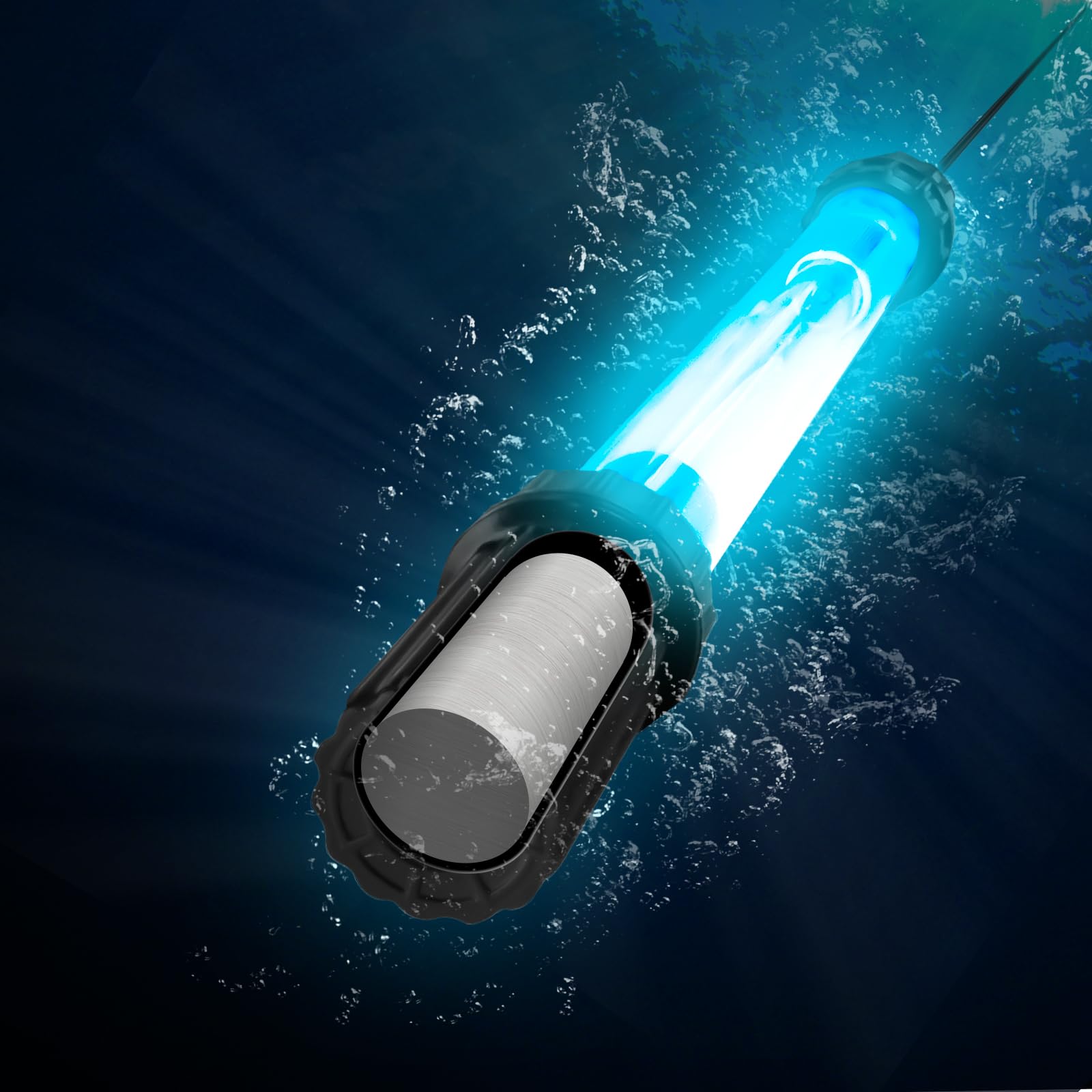
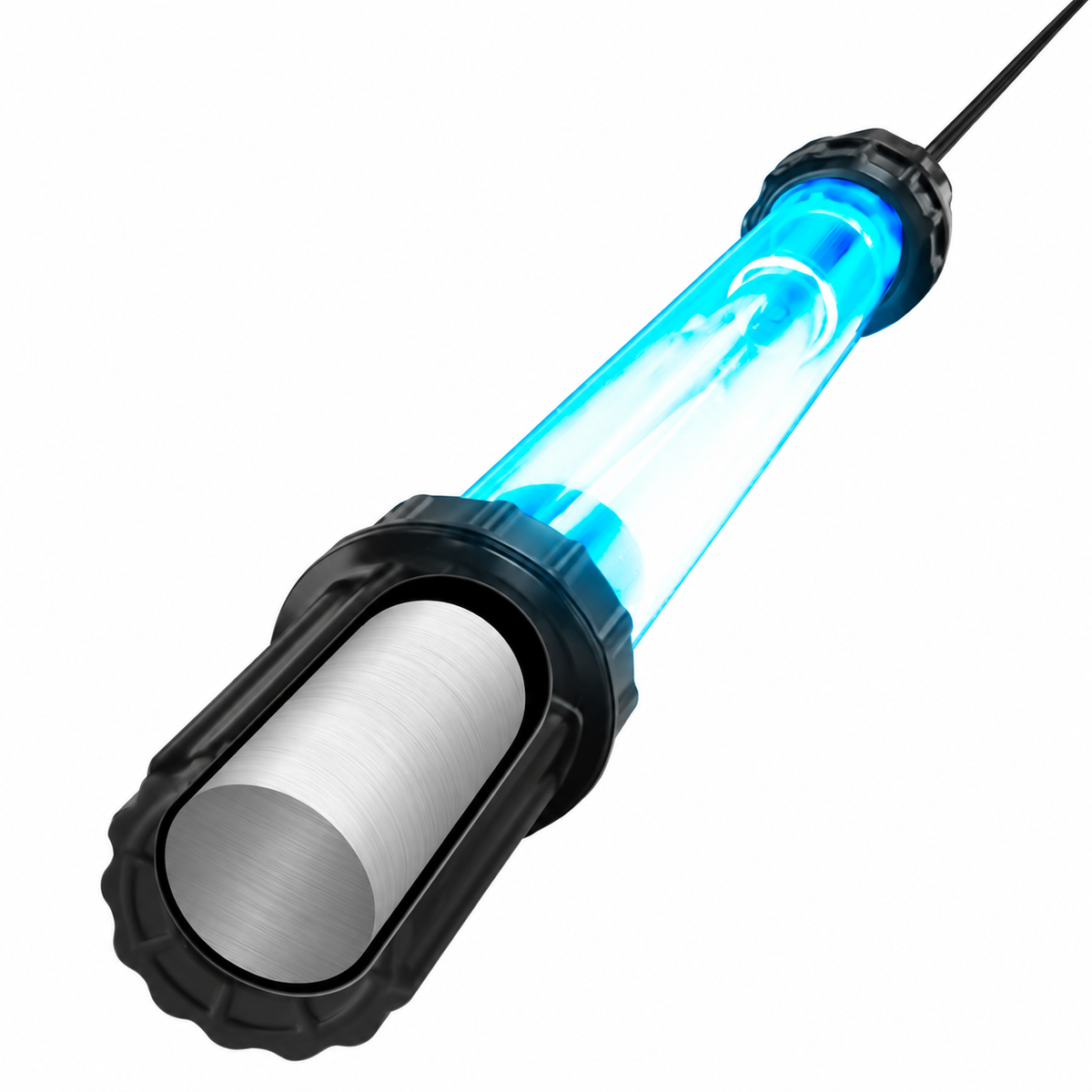
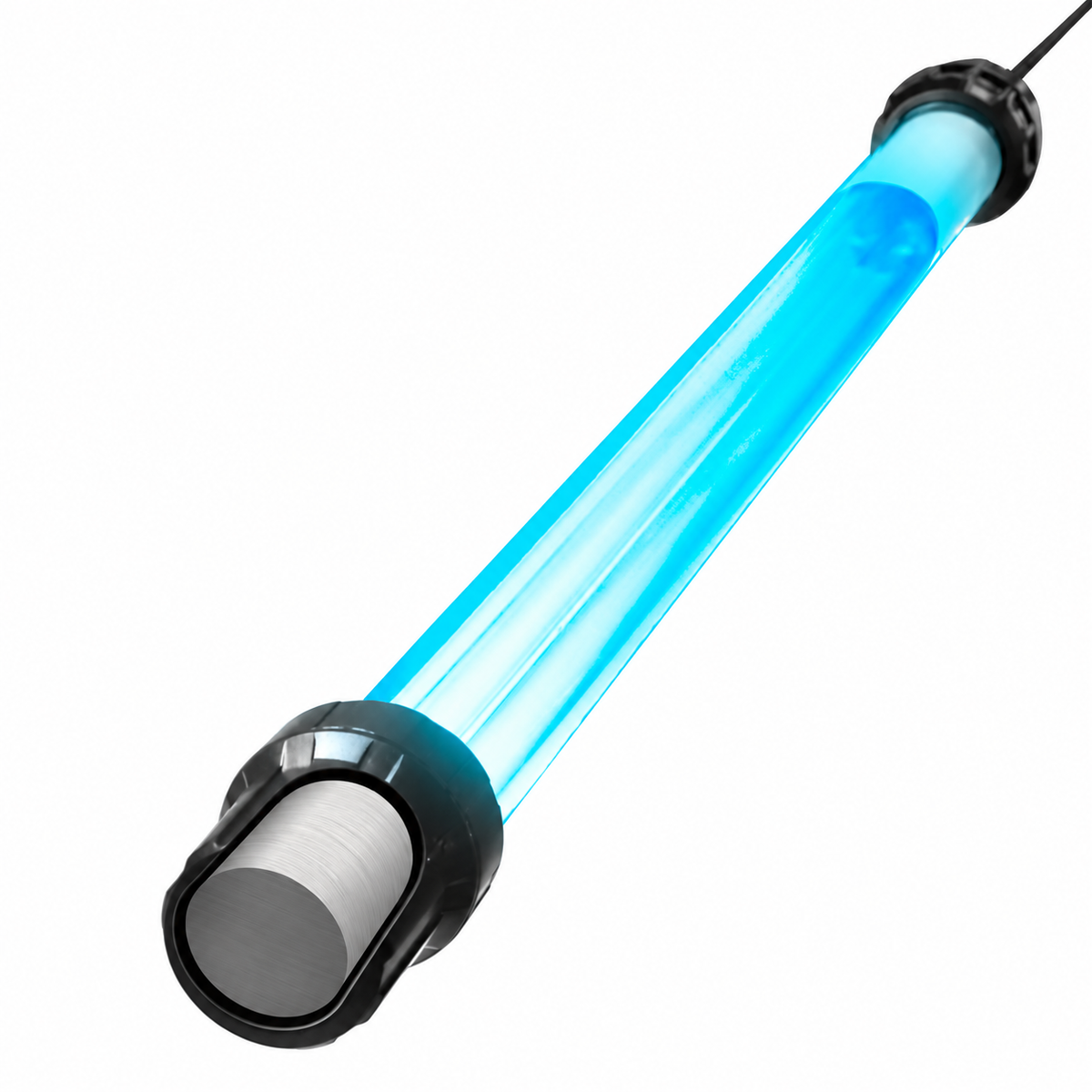
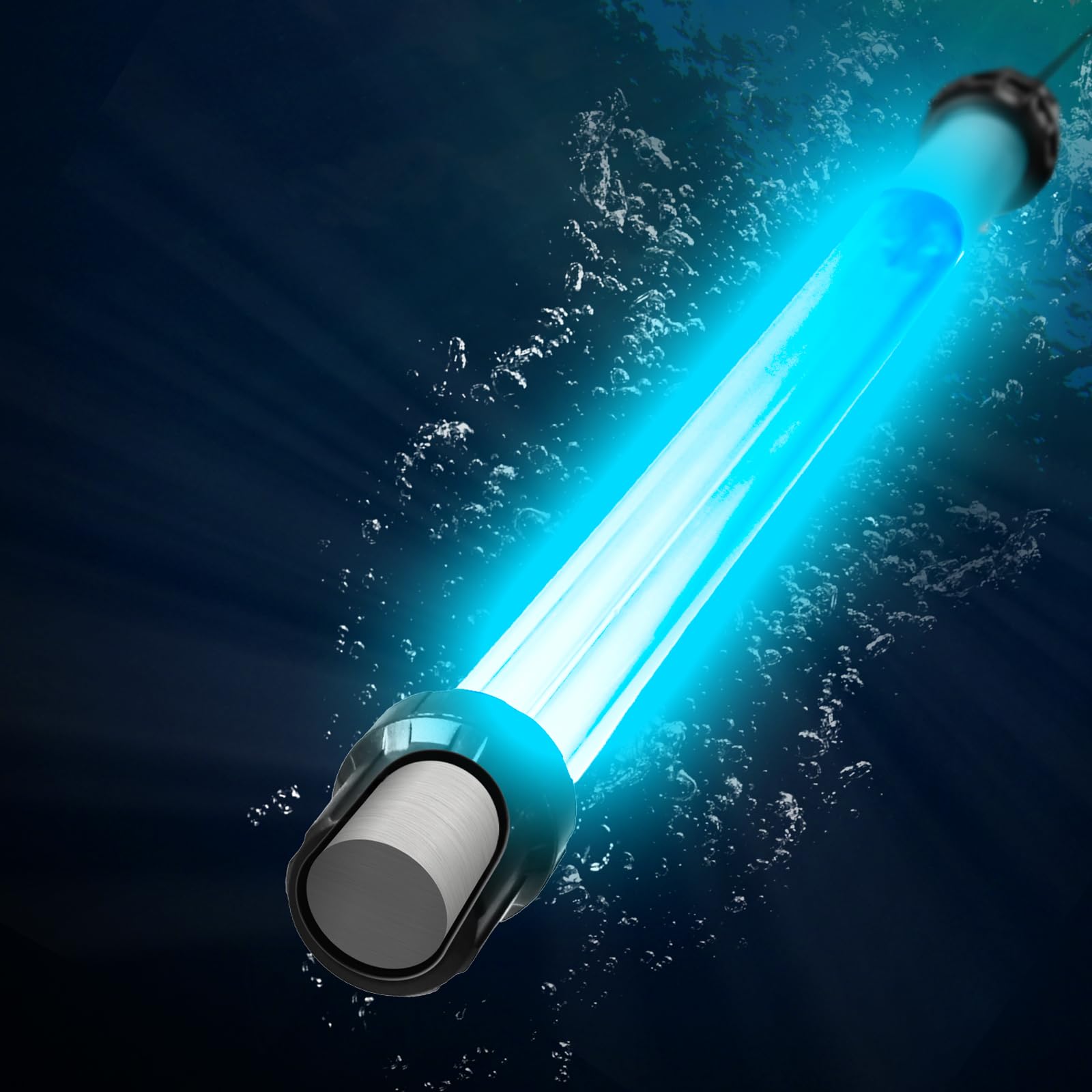
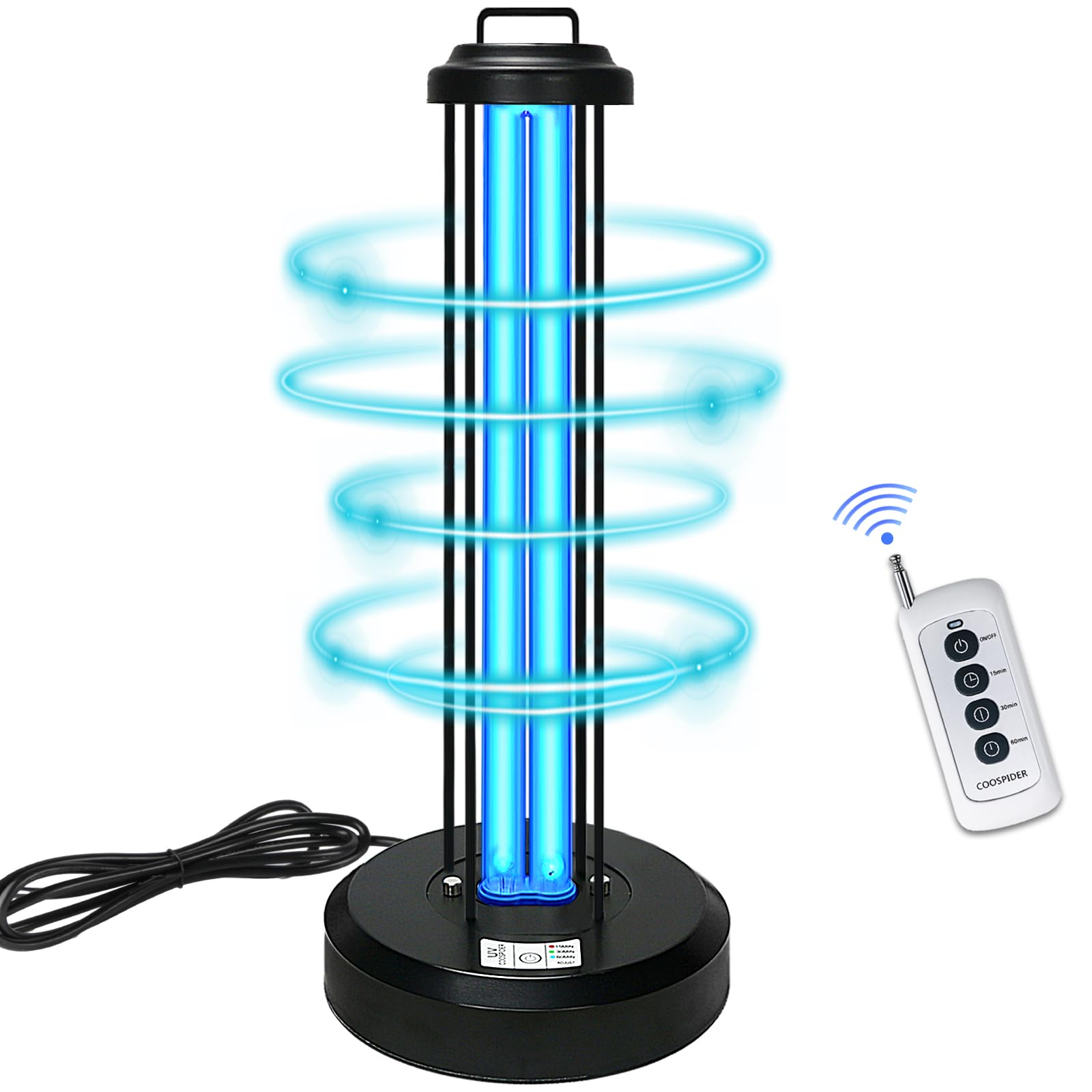
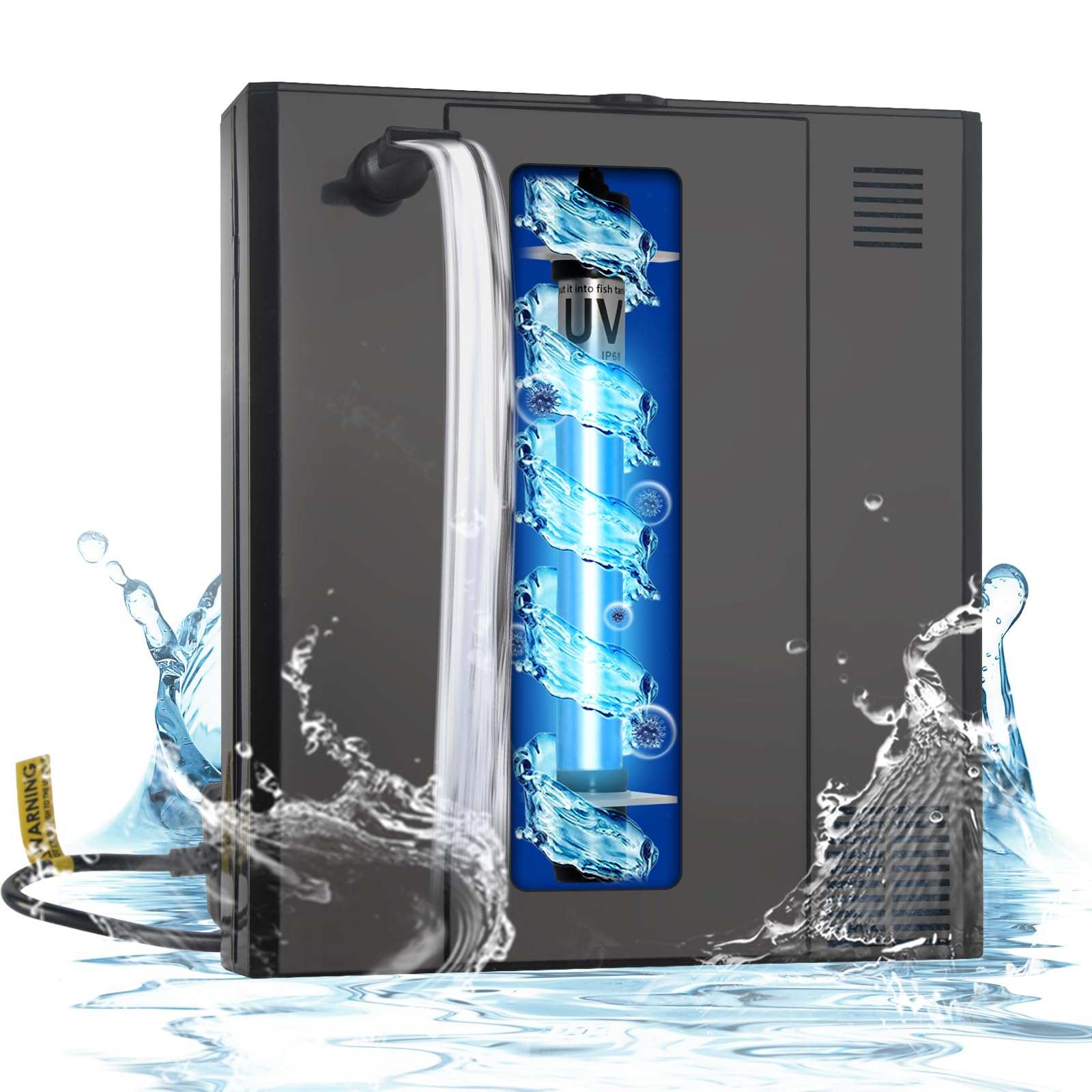
A UV-C sterilizing lamp is a specialized ultraviolet light system designed to neutralize microorganisms suspended in water.
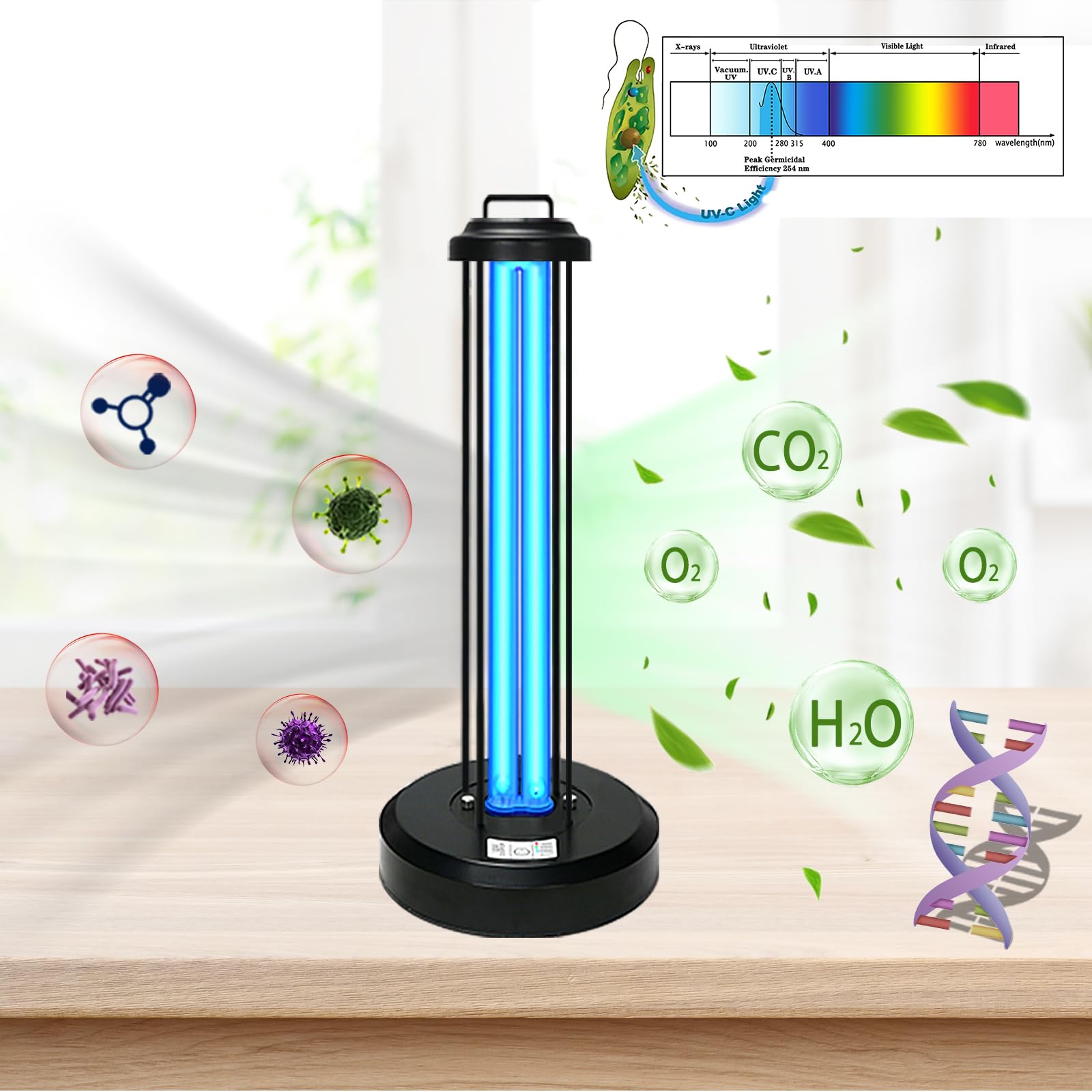
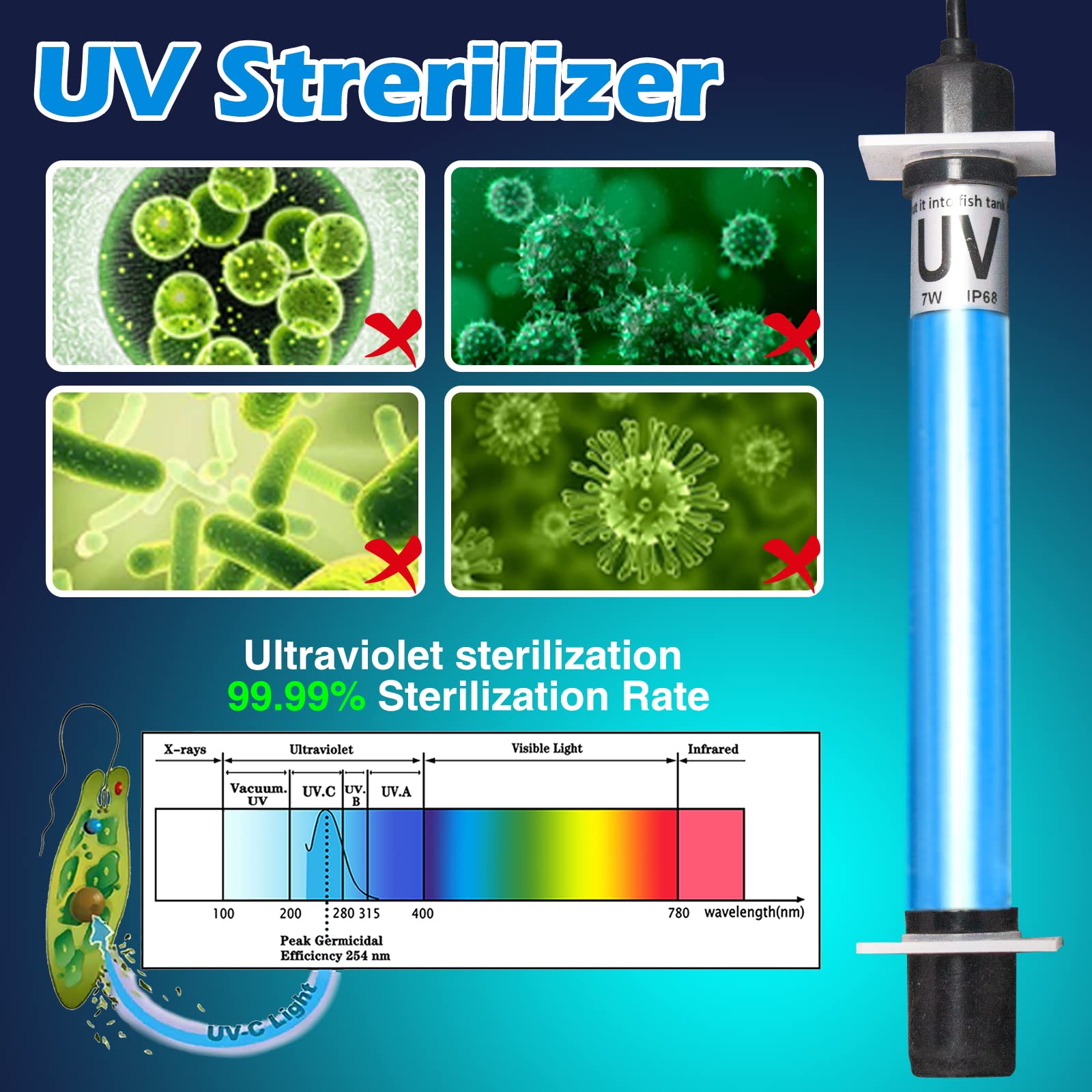
UV light is divided into several categories:
-
UV-A (315–400 nm)
-
UV-B (280–315 nm)
-
UV-C (100–280 nm)
UV-C light, particularly around 254 nanometers, possesses strong germicidal properties.
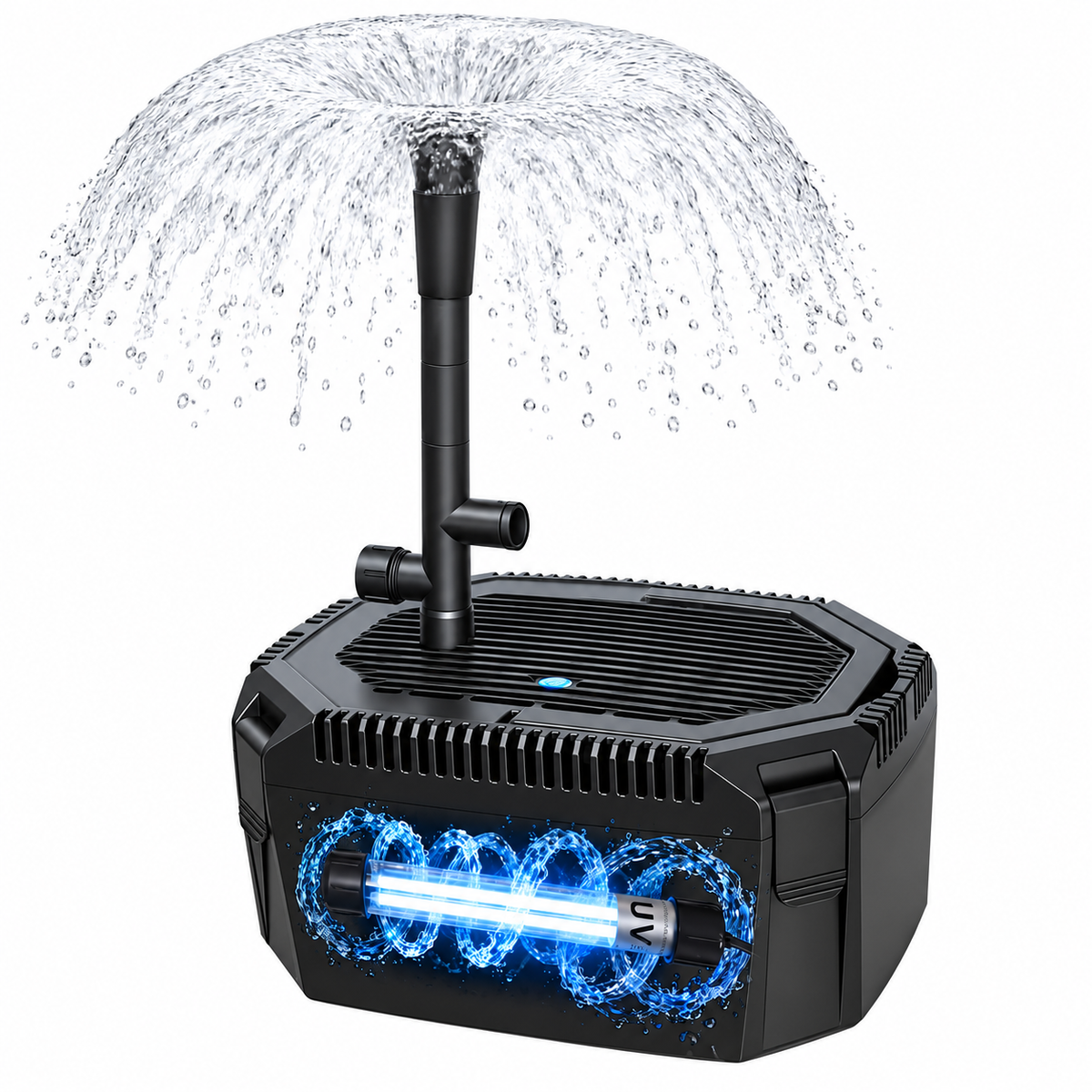
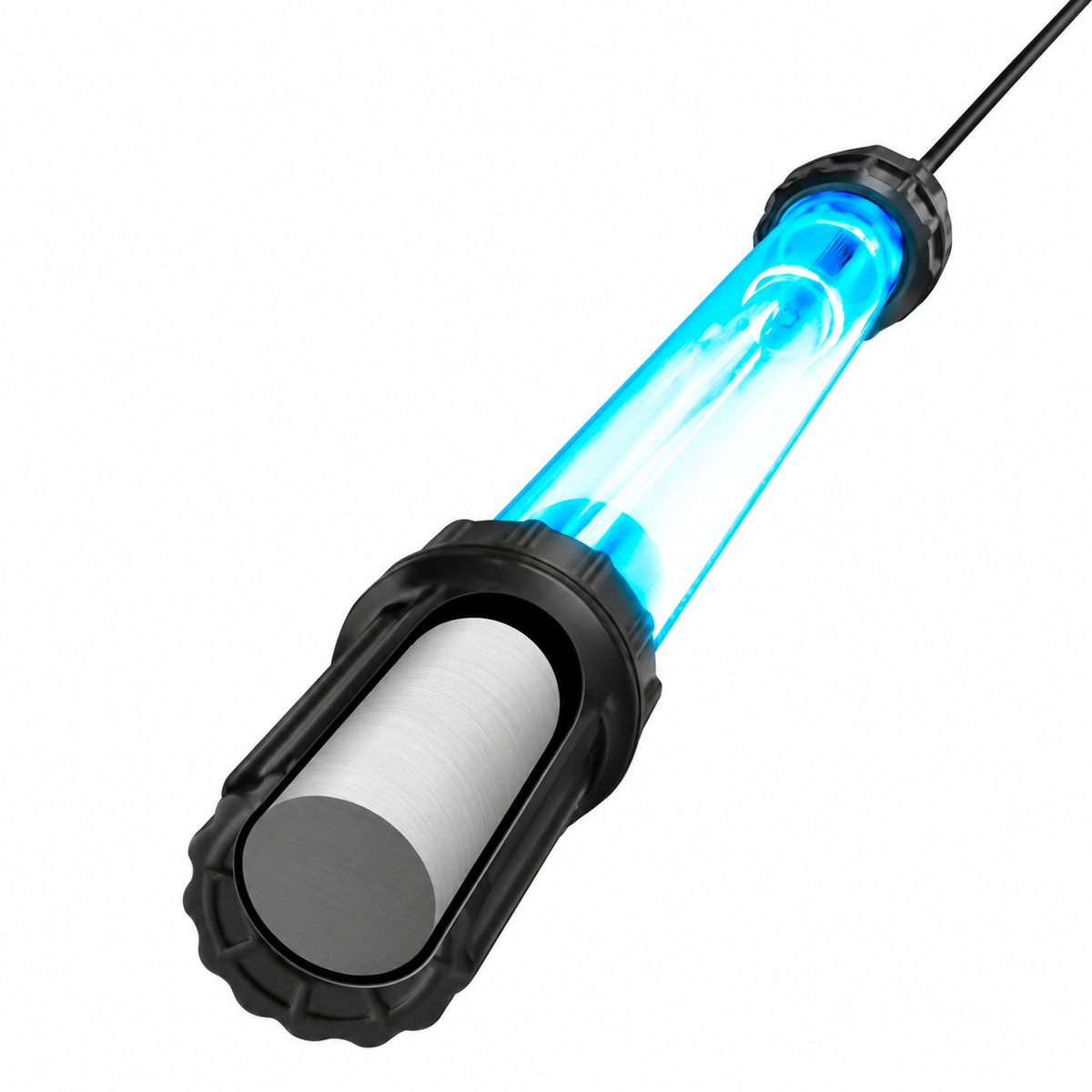
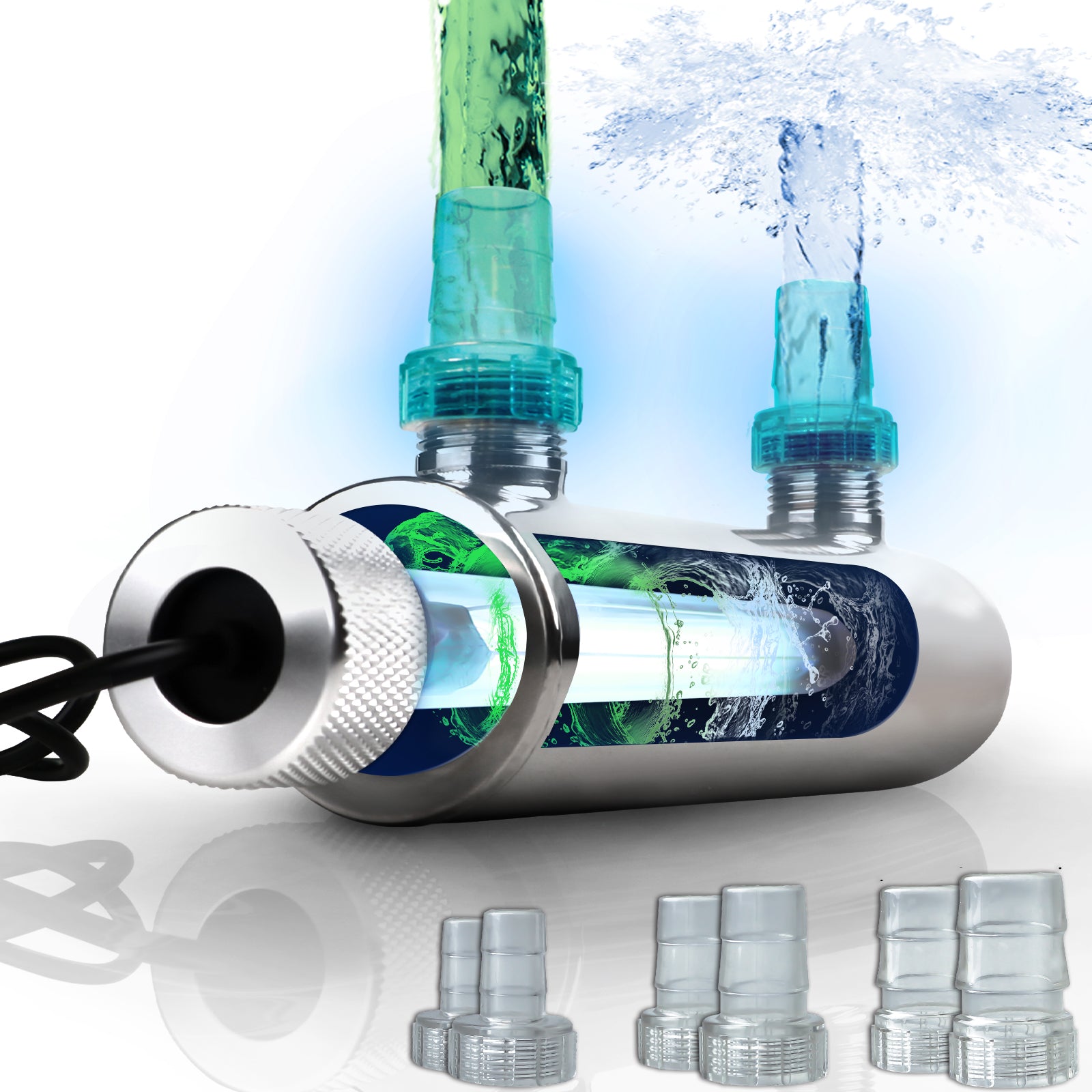
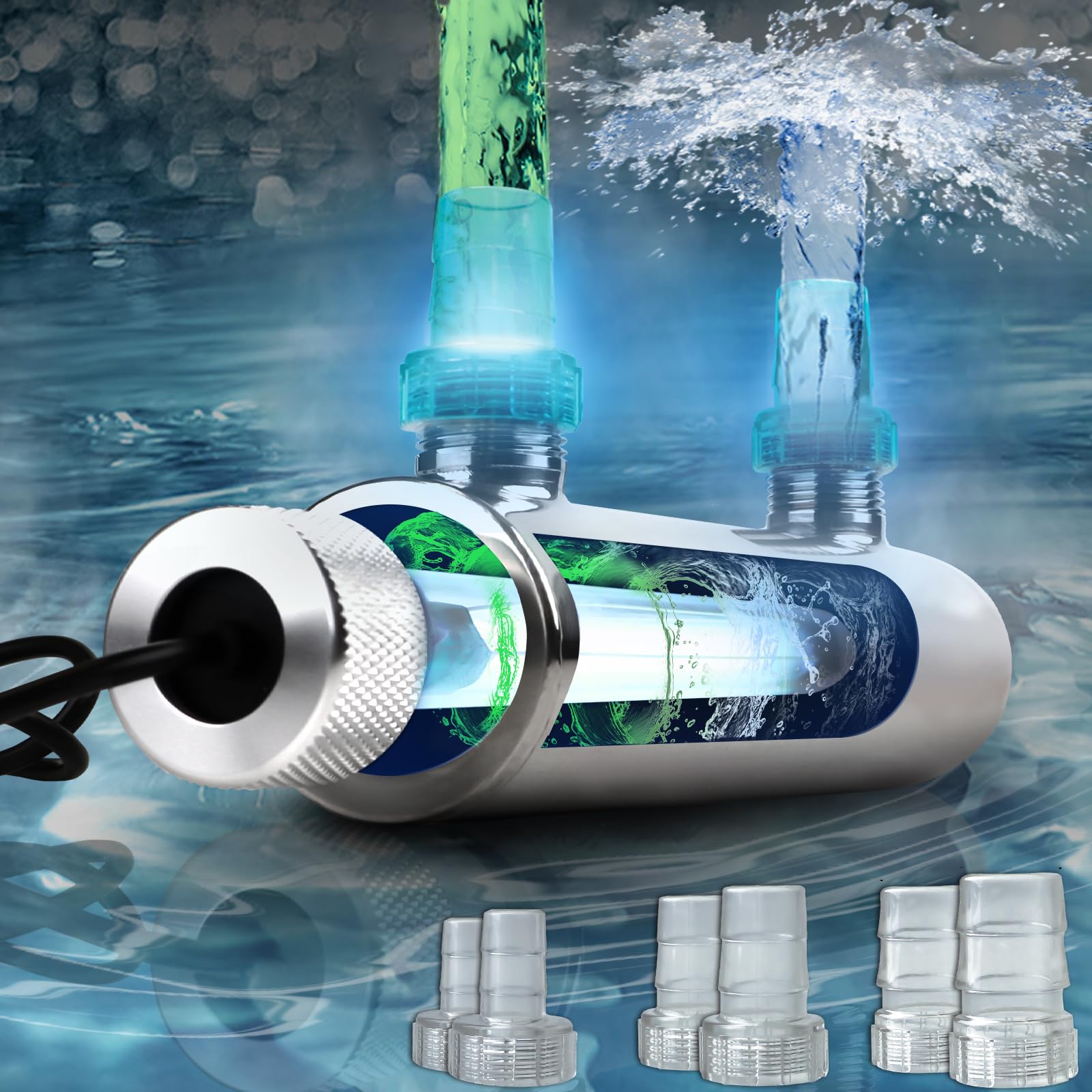
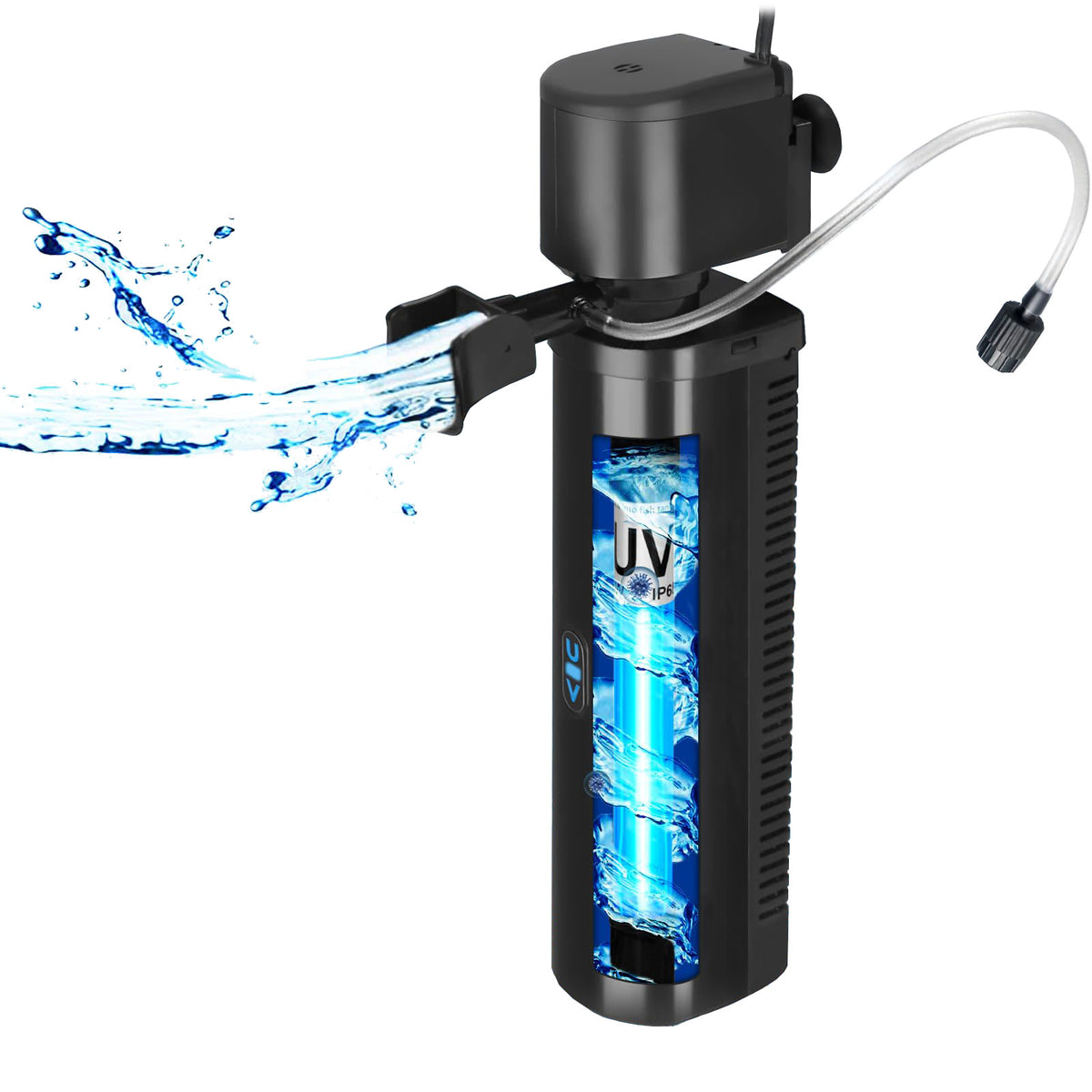
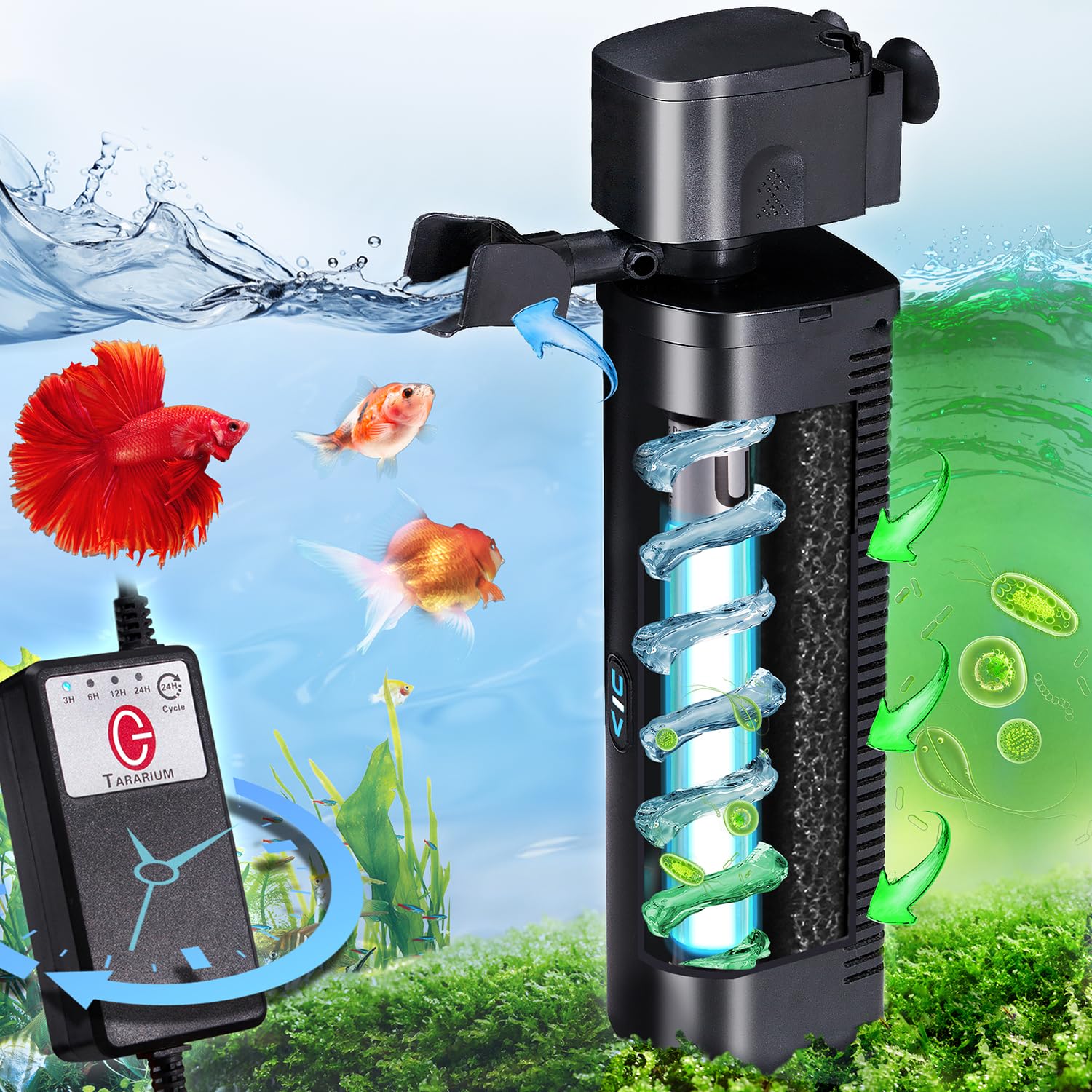
In koi pond systems, water passes through a sealed chamber containing a UV-C bulb protected by a quartz sleeve. As algae cells, bacteria, and certain pathogens flow through the chamber, the UV-C radiation damages their DNA and cellular structures.
Once exposed, these organisms lose their ability to reproduce.
For floating algae, this interruption in reproduction is critical. Instead of multiplying exponentially, the algae die off and become trapped by the filtration system.
The result is dramatically clearer water.
How UV-C Lamps Scientifically Control Green Water
One of the biggest misconceptions among pond owners is that UV-C lamps “kill all algae.”
In reality, UV-C systems specifically target free-floating microscopic algae suspended in the water column.
Here is how the process works step by step:
-
Pond water enters the UV sterilizer chamber.
-
Water flows around the UV-C lamp.
-
Microscopic algae cells absorb UV-C radiation.
-
DNA damage prevents algae reproduction.
-
Algae cells clump together and die.
-
Mechanical filtration removes the dead particles.
-
Water clarity improves over time.
Because the sterilizer only affects organisms passing through the chamber, attached algae such as string algae on rocks or waterfalls may not disappear entirely.
However, reducing suspended algae significantly stabilizes overall pond conditions and often limits future outbreaks.
The Difference Between Green Water Algae and String Algae
Understanding the distinction between algae types is essential when selecting a UV-C sterilizer.
Green Water Algae
-
Microscopic
-
Free-floating
-
Causes cloudy green water
-
Easily targeted by UV-C systems
String Algae
-
Long filament-like growth
-
Attaches to pond surfaces
-
Common on waterfalls and liner walls
-
Not directly eliminated by UV-C exposure
Many pond owners become disappointed when string algae remains after installing a UV clarifier.
However, UV-C systems are primarily designed to clarify water, not remove attached algae mats.
That said, reducing nutrient levels and improving filtration often indirectly reduces string algae growth over time.
Benefits of UV-C Sterilizing Lamps in Koi Ponds
UV-C systems provide far more advantages than simple water clarification.
1. Crystal-Clear Water
The most immediate and noticeable benefit is improved water clarity.
Clear water allows pond owners to fully enjoy the colors, movement, and patterns of their koi.
Visibility also makes it easier to monitor fish health and detect injuries or illness early.
2. Reduced Algae Blooms
By disrupting algae reproduction, UV-C systems prevent explosive green water outbreaks.
This creates a more balanced aquatic environment.
3. Lower Maintenance Requirements
Without UV sterilization, pond owners may need frequent water changes, manual algae removal, or chemical treatments.
UV-C systems reduce maintenance intensity over time.
4. Improved Biological Stability
Stable water clarity supports healthier oxygen levels and more consistent water chemistry.
This reduces stress on koi.
5. Decreased Pathogen Levels
While UV sterilizers should not replace quarantine procedures or medical treatment, they can help reduce certain waterborne bacteria and parasites.
Lower pathogen pressure contributes to healthier fish populations.
6. Chemical-Free Water Management
Many pond keepers prefer avoiding algaecides or harsh chemical solutions.
UV-C sterilization offers a physical treatment method without introducing additional compounds into the ecosystem.
7. Better Filter Performance
Once algae clumps together after UV exposure, mechanical filters can capture debris more efficiently.
This improves overall filtration performance.
Choosing the Right UV-C Sterilizer for a Koi Pond
Selecting the correct UV-C unit is critical.
An undersized sterilizer may produce minimal results, while an oversized unit may waste energy.
Several factors determine proper sizing.
Pond Volume
The first consideration is total pond size.
Larger ponds require stronger UV output.
Typical recommendations include:
-
Small ponds (500–1,500 gallons): 9–18 watts
-
Medium ponds (1,500–4,000 gallons): 25–40 watts
-
Large koi ponds (4,000–8,000 gallons): 55–80 watts
-
Heavy koi loads or high sunlight exposure: even larger systems
Always consider actual stocking density, not just water volume.
Fish Population
Koi produce much more waste than goldfish or aquatic plants.
Heavily stocked ponds generate higher nutrient levels and require stronger UV capacity.
Sunlight Exposure
Ponds receiving direct sunlight for most of the day experience faster algae growth.
Such ponds typically need larger sterilizers.
Pump Flow Rate
Water must remain inside the UV chamber long enough for proper exposure.
If flow rates are too high, organisms pass through too quickly.
Manufacturers provide maximum recommended flow rates for effective sterilization.
Desired Purpose
Some UV units are designed primarily for clarification, while others are intended for stronger sterilization effects.
Clarification systems generally require lower exposure levels than pathogen reduction systems.
UV Clarifier vs UV Sterilizer: What Is the Difference?
Many people use these terms interchangeably, but there are technical differences.
UV Clarifier
-
Targets suspended algae
-
Improves water clarity
-
Uses faster water flow
-
Common in residential ponds
UV Sterilizer
-
Targets algae, bacteria, and some parasites
-
Requires slower flow rates
-
Delivers stronger UV exposure
-
Often used in advanced koi systems or aquaculture
For most backyard koi ponds, a UV clarifier is sufficient for green water control.
However, serious koi hobbyists often prefer high-output sterilizers for additional biosecurity.
Proper Installation of UV-C Lamps in Koi Pond Systems
Correct installation dramatically affects performance.
Even the most powerful UV unit can fail if installed improperly.
Placement in the Filtration System
UV sterilizers are typically installed after mechanical filtration but before biological filtration or water returns.
This setup ensures:
-
Large debris is removed first
-
Water clarity improves UV penetration
-
Dead algae particles are easier to capture
A common setup sequence is:
Bottom drain → Mechanical filter → Pump → UV-C sterilizer → Biological filter → Waterfall/return
Horizontal vs Vertical Installation
Many modern UV units can operate horizontally or vertically.
However, vertical placement often reduces air trapping and improves efficiency.
Always follow manufacturer recommendations.
Avoiding Direct Sunlight
The sterilizer housing should not overheat.
Install the unit in a shaded, ventilated area whenever possible.
Leak Prevention
Use high-quality fittings and properly tightened unions.
Inspect O-rings regularly.
Water leaks near electrical components create obvious safety hazards.
Electrical Safety
Because pond systems combine water and electricity, proper GFCI protection is essential.
Never operate UV equipment without appropriate grounding and weatherproof electrical connections.
How Long Does It Take for UV-C Lamps to Clear Green Water?
Many pond owners expect instant results.
In reality, water clarification usually occurs gradually.
Typical timelines include:
-
Mild algae bloom: 3–7 days
-
Moderate bloom: 1–2 weeks
-
Severe green water: 2–4 weeks
Several factors influence recovery speed:
-
UV wattage
-
Flow rate
-
Water temperature
-
Existing filtration quality
-
Nutrient levels
-
Pond depth
-
Amount of sunlight
Patience is important.
If conditions remain favorable for algae growth, the sterilizer must continuously process the water before noticeable improvement occurs.
Why Some UV-C Systems Fail to Control Green Water
Not every installation succeeds.
Common mistakes often explain poor performance.
Incorrect Sizing
Undersized units simply cannot process enough water effectively.
Excessive Flow Rates
If water moves too quickly through the chamber, UV exposure becomes insufficient.
Dirty Quartz Sleeves
Mineral deposits and biofilm reduce UV penetration.
Even a thin layer can dramatically reduce effectiveness.
Aging Bulbs
UV-C bulbs lose output over time, even when they still appear illuminated.
Most bulbs should be replaced annually.
Poor Mechanical Filtration
Cloudy water blocks UV transmission.
Suspended debris can shield algae cells from exposure.
Excessive Nutrients
If fish waste and organic debris remain uncontrolled, algae growth may outpace sterilization.
Incorrect Plumbing Configuration
Improper placement can reduce exposure efficiency.
Maintaining a UV-C Sterilizer for Maximum Performance
Routine maintenance is essential.
A neglected UV unit gradually loses effectiveness.
Replace Bulbs Annually
Most UV-C bulbs maintain optimal germicidal output for approximately 8,000–10,000 hours.
Even if the bulb still glows, UV intensity may have declined significantly.
Annual replacement is standard practice.
Clean the Quartz Sleeve
Mineral buildup reduces UV transmission.
Clean the sleeve regularly using:
-
Vinegar solution
-
Soft cloth
-
Non-abrasive cleaning pads
Avoid scratching the quartz surface.
Inspect Seals and O-Rings
Rubber components can dry out or crack over time.
Replace worn seals immediately.
Monitor Water Flow
Check for clogs, pump issues, or reduced circulation.
Consistent flow is necessary for stable performance.
Remove Debris from Filters
Mechanical filters should be cleaned routinely to improve water clarity and UV penetration.
The Relationship Between UV-C Systems and Biological Filtration
Some pond owners worry that UV sterilizers may kill beneficial bacteria.
In practice, this concern is often exaggerated.
Beneficial nitrifying bacteria primarily live on surfaces:
-
Filter media
-
Pond walls
-
Rocks
-
Biofilm layers
Only a small fraction remains suspended in the water column.
As a result, properly sized UV systems typically do not harm established biological filtration significantly.
In fact, clearer water often improves overall pond stability.
Energy Efficiency of Modern UV-C Pond Systems
Energy consumption matters, especially for ponds operating year-round.
Fortunately, modern UV technology has become increasingly efficient.
Several factors influence operating costs:
-
Lamp wattage
-
Daily operating time
-
Electricity rates
-
Pump efficiency
-
Seasonal usage
Many pond owners run UV systems continuously during warmer months and reduce operation during winter.
High-efficiency electronic ballasts can further reduce power consumption.
When compared with the ongoing cost of chemical treatments, water changes, and algae maintenance, UV systems are often cost-effective long-term investments.
Seasonal Strategies for UV-C Pond Operation
UV usage does not necessarily remain identical year-round.
Spring
Spring is one of the most important times to activate UV systems.
As temperatures rise, algae growth accelerates rapidly.
Starting the UV unit early helps prevent initial blooms.
Summer
Summer requires peak UV performance.
Warm water, intense sunlight, and increased feeding all encourage algae growth.
Routine maintenance becomes especially important during this period.
Fall
As temperatures cool, algae activity gradually slows.
However, falling leaves and organic debris can still increase nutrient levels.
Continue monitoring water clarity closely.
Winter
In colder climates, some pond owners shut down UV systems entirely.
Others maintain partial operation if the pond remains active year-round.
Always protect equipment from freezing conditions.
Combining UV-C Sterilizers with Other Algae Control Methods
UV sterilization works best as part of a comprehensive pond management strategy.
Mechanical Filtration
Good mechanical filters remove suspended particles before water reaches the UV chamber.
This improves exposure efficiency.
Biological Filtration
Healthy biofilters convert toxic ammonia into less harmful compounds.
Stable nitrogen cycling reduces nutrient buildup.
Aquatic Plants
Plants compete with algae for nutrients.
Water lilies, marginal plants, and floating vegetation can help naturally suppress algae growth.
Shade Structures
Reducing direct sunlight limits photosynthesis.
Shade sails, pergolas, or strategically placed landscaping can significantly reduce algae pressure.
Proper Feeding Practices
Overfeeding dramatically increases nutrient accumulation.
Feed koi only what they can consume within a few minutes.
Regular Water Changes
Partial water changes dilute nitrates and dissolved organics.
Fresh water also improves overall pond stability.
Bottom Drain Systems
Removing waste before decomposition reduces nutrient availability for algae.
Advanced UV-C Optimization for Serious Koi Keepers
Experienced koi enthusiasts often optimize UV systems beyond basic installation.
Dual UV Systems
Large ponds sometimes use multiple UV units in parallel.
This increases exposure capacity while maintaining adequate flow rates.
Variable Flow Control
Adjustable pumps allow seasonal optimization.
Slower flow rates can improve sterilization effectiveness.
Redundant Filtration Loops
Some advanced ponds separate mechanical and biological circuits.
Dedicated UV loops improve consistency.
Monitoring UV Intensity
Commercial systems may include UV monitoring sensors.
These devices track actual output performance.
Pre-Filtration Optimization
Ultra-fine drum filters or sieve filters dramatically improve UV efficiency by reducing suspended solids.
Common Myths About UV-C Pond Sterilizers
Misinformation often causes confusion among pond owners.
Myth 1: UV-C Completely Eliminates All Algae
False.
UV-C mainly targets suspended algae.
Attached algae may still appear.
Myth 2: Stronger UV Is Always Better
Not necessarily.
Oversized systems may waste energy if flow rates and filtration are poorly configured.
Myth 3: UV Replaces Filtration
UV systems support filtration but cannot replace mechanical or biological filters.
Myth 4: UV Makes Water Unsafe for Fish
Properly installed systems are safe because fish are not directly exposed to UV radiation.
Myth 5: Bulbs Last Forever
Even functioning bulbs lose germicidal effectiveness over time.
Routine replacement is essential.
Signs Your UV-C System Is Working Properly
How can pond owners evaluate effectiveness?
Several indicators suggest good performance:
-
Water becomes visibly clearer
-
Green tint gradually disappears
-
Filter captures fine algae particles
-
Fish visibility improves
-
Reduced algae regrowth frequency
-
Stable water quality readings
Keep in mind that severe algae blooms may require time before noticeable improvement occurs.
Troubleshooting Persistent Green Water Problems
If algae remains despite UV usage, investigate the following areas.
Check Flow Rate
Measure actual pump output after head pressure losses.
Real-world flow often differs from pump ratings.
Verify Bulb Age
Replace bulbs older than one year.
Inspect Quartz Sleeve
Cloudy sleeves block UV transmission.
Improve Mechanical Filtration
Suspended debris reduces sterilization efficiency.
Reduce Nutrient Inputs
Review feeding practices and fish density.
Test Water Parameters
Monitor:
-
Ammonia
-
Nitrite
-
Nitrate
-
pH
-
KH
-
Phosphate
Increase Shade
Too much sunlight can overwhelm small UV systems.
Upgrade UV Capacity
Heavily stocked koi ponds often require larger systems than expected.
Are UV-C Sterilizers Safe for Koi?
When used properly, UV-C sterilizers are extremely safe.
The UV light remains sealed inside the housing and does not directly contact fish.
However, safety precautions remain important.
Never Look Directly at UV-C Bulbs
UV-C exposure can damage eyes and skin.
Always disconnect power before servicing.
Use Waterproof Electrical Connections
Outdoor pond environments expose equipment to moisture.
Proper installation prevents electrical hazards.
Avoid Improper DIY Modifications
Homemade systems lacking shielding or proper flow control can become dangerous.
How UV-C Technology Supports Overall Pond Health
Beyond aesthetics, UV systems contribute to healthier aquatic ecosystems.
Clearer water improves light penetration and oxygen dynamics.
Lower pathogen loads reduce stress on fish immune systems.
Reduced algae competition stabilizes nutrient cycling.
Healthy koi environments depend on balance, and UV sterilization helps maintain that balance more consistently.
The Future of UV-C Technology in Pond Keeping
UV technology continues evolving.
Modern systems now include:
-
Smart flow sensors
-
Energy-efficient ballasts
-
LED-based UV designs
-
Integrated monitoring systems
-
Compact high-output chambers
-
Automated maintenance alerts
As pond hobbyists demand lower maintenance and greater reliability, UV systems will likely become even more advanced and accessible.
LED UV-C technology, in particular, may transform the market in coming years due to longer lifespans and improved energy efficiency.
Building a Long-Term Algae Prevention Strategy
No single device can permanently solve every pond problem.
Long-term success requires a balanced approach.
An effective algae prevention strategy includes:
-
Proper pond design
-
Adequate filtration
-
Controlled stocking density
-
Responsible feeding
-
Consistent maintenance
-
Seasonal monitoring
-
Reliable UV sterilization
When all these elements work together, koi ponds remain clearer, healthier, and more visually stunning throughout the year.
Final Thoughts
UV-C sterilizing lamps have become one of the most powerful tools in modern koi pond management.
By scientifically disrupting the reproductive cycle of suspended algae, these systems provide a reliable, chemical-free solution for green water problems that frustrate countless pond owners.
However, successful UV performance depends on much more than simply installing a lamp.
Correct sizing, proper flow rates, effective filtration, routine maintenance, and nutrient control all play essential roles in achieving consistently clear water.
For koi enthusiasts seeking a healthier ecosystem and improved pond aesthetics, a well-designed UV-C system can dramatically reduce algae blooms while enhancing fish visibility, water quality, and overall pond enjoyment.
Whether you are building a new koi pond or upgrading an existing filtration system, understanding the science behind UV-C sterilization allows you to make smarter decisions and maintain a more stable aquatic environment for years to come.
With the right setup and maintenance practices, green water no longer has to dominate your pond.
Instead, your koi can thrive in the clean, clear water they deserve.