
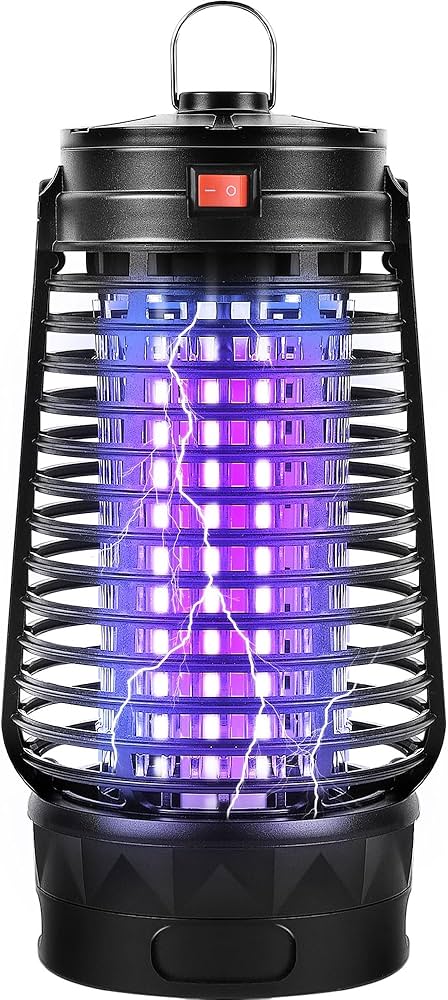
You switch on your mosquito killer lamp expecting the familiar crackling sound that signals insects meeting their end. The UV light turns on normally. The fan may even run. But something is wrong — the electric grid produces no spark, no zap, and no protection from mosquitoes.
If your bug zapper’s electric grid has no power, the issue almost always traces back to two critical internal components: the transformer and the capacitor.
These parts form the heart of the high-voltage system that makes mosquito killer lamps effective. When either one fails, the lamp may look perfectly functional while completely losing its ability to kill insects.
This in-depth guide explains why the electric grid stops working, how transformers and capacitors fail, how to diagnose problems safely, and how to restore performance without guesswork.
Understanding How a Mosquito Killer Lamp Generates High Voltage
To diagnose failure correctly, you must first understand how electricity flows through a mosquito killer lamp.
A typical bug zapper converts low household voltage into high-voltage electricity capable of electrocuting insects. The process happens in several stages:
- AC power enters the device
- Power passes through a conversion circuit
- Transformer boosts voltage
- Capacitor stores electrical energy
- High voltage energizes the electric grid
The UV light and the electric grid operate independently in many models. This is why the lamp can glow even when the grid has no power.
Many users mistakenly assume the device works because the light turns on. In reality, illumination only confirms partial functionality.
The Role of the Transformer in a Bug Zapper
The transformer is responsible for increasing voltage from a safe household level to a lethal insect-killing level.
What the Transformer Does
Your wall outlet supplies approximately:
- 110–120V in the United States
A mosquito killer lamp typically needs:
- 800V to 4000V for effective electrocution
The transformer performs this voltage step-up using electromagnetic induction.
Inside the transformer:
- A primary coil receives input voltage.
- A magnetic field forms.
- A secondary coil produces much higher voltage output.
Without this voltage boost, the electric grid cannot function.
The Role of the Capacitor in the Killing Process
If the transformer creates voltage, the capacitor delivers impact.
Why Capacitors Matter
The capacitor stores electrical energy and releases it instantly when an insect contacts the grid.
This stored energy creates:
- A sharp electrical arc
- Instant heat
- Rapid insect neutralization
Without a working capacitor, voltage may exist but discharge energy becomes too weak to kill mosquitoes.
The grid may appear inactive or completely powerless.
Symptoms of a Dead Electric Grid
Common signs include:
- UV light works but no zapping sound
- No sparks when insects touch the grid
- Zero buzzing noise
- Mosquitoes fly through safely
- No insect remains inside tray
These symptoms strongly indicate failure within the high-voltage circuit rather than attraction failure.
Why the Electric Grid Loses Power
Most failures fall into five categories:
- Transformer burnout
- Capacitor failure
- Broken wiring connections
- Power circuit damage
- Safety resistor or diode failure
Among these, transformer and capacitor issues account for the majority of cases.
Transformer Failure: The Most Common Cause
Transformers operate under constant electrical stress and heat.
Over time, insulation inside coil windings deteriorates.
Causes of Transformer Damage
- Continuous overnight operation
- Voltage surges
- Poor ventilation
- Cheap copper winding materials
- Moisture exposure
When insulation breaks down, coils short internally.
Result:
The transformer still receives power but produces no high voltage.
Signs Your Transformer Is Faulty
Look for these indicators:
- Lamp lights but grid inactive
- Slight humming without sparks
- Burnt smell inside device
- Transformer feels unusually hot
- Visible discoloration on coil housing
A completely silent transformer often means open-circuit failure.
How to Safely Check the Transformer
⚠ Always unplug the device before inspection.
Step 1: Visual Inspection
Open the housing and locate the transformer — usually a small rectangular block with copper windings.
Check for:
- Burn marks
- Melted insulation
- Loose wires
- Cracks or swelling
Physical damage strongly suggests failure.
Step 2: Continuity Test (Using a Multimeter)
Set your multimeter to resistance mode.
Measure across:
- Primary coil terminals
- Secondary coil terminals
Expected results:
- Primary coil: low resistance
- Secondary coil: higher resistance but not infinite
If the meter reads “open” or infinite resistance, the transformer is broken internally.
Step 3: Output Voltage Check (Advanced Users)
If experienced with electronics:
- Reconnect power carefully.
- Measure high-voltage output using a proper high-voltage probe.
No measurable output confirms transformer failure.
Never attempt this without appropriate equipment.
Capacitor Failure: The Silent Performance Killer
Capacitors degrade gradually rather than failing instantly.
This makes diagnosis trickier.
Why Capacitors Fail
Common reasons include:
- Heat buildup
- Voltage spikes
- Aging electrolyte
- Manufacturing defects
After months or years, capacitance decreases.
The grid loses discharge strength until it appears completely dead.
Symptoms of a Bad Capacitor
- No spark despite transformer working
- Occasional weak discharge
- Device previously worked but declined slowly
- No audible zap even when insects touch grid
In many cases, replacing the capacitor fully restores operation.
How to Check the Capacitor Safely
Capacitors can store dangerous charge even after unplugging.
Step 1: Discharge the Capacitor
Use an insulated screwdriver with a resistor or proper discharge tool.
Never short directly with bare metal tools.
Step 2: Visual Inspection
Look for:
- Bulging top
- Leakage
- Cracks
- Burn marks
Any of these signs indicate failure.
Step 3: Capacitance Measurement
Using a multimeter with capacitance mode:
- Disconnect capacitor from circuit.
- Measure value.
- Compare with rating printed on casing.
If measured capacitance is far below rated value, replacement is necessary.
Transformer vs Capacitor: Quick Diagnosis Comparison
| Symptom | Likely Cause |
|---|---|
| No high voltage at all | Transformer failure |
| Weak or inconsistent zapping | Capacitor degradation |
| Lamp works intermittently | Capacitor instability |
| Burning smell | Transformer overheating |
| Gradual performance loss | Capacitor aging |
Understanding this distinction saves time and prevents unnecessary part replacement.
Other Components That Can Interrupt Grid Power
Although less common, these parts may also fail:
High-Voltage Diodes
They convert AC into pulsed DC.
Failure blocks voltage flow completely.
Resistors
Protect circuits from overload.
Burned resistors interrupt energy transfer.
Wiring Connections
Vibration or corrosion can loosen terminals.
Always inspect wiring before replacing components.
Safety Tips Before Any Repair
Bug zappers generate dangerous voltage.
Always follow these precautions:
- Unplug before opening.
- Wait several minutes before touching components.
- Discharge capacitors.
- Use insulated tools.
- Avoid working in humid environments.
High voltage can remain stored even when unplugged.
Preventing Transformer and Capacitor Failure
Proper maintenance dramatically extends lifespan.
Improve Ventilation
Heat is the main enemy of electronic components.
Keep airflow unobstructed.
Clean Regularly
Insect debris traps heat and moisture.
Clean monthly during heavy mosquito seasons.
Avoid Continuous Operation
Running devices 24/7 accelerates aging.
Use timers when possible.
Protect From Moisture
Indoor placement or covered outdoor installation reduces corrosion risk.
Why Cheap Bug Zappers Lose Grid Power Faster
Budget models often use:
- Undersized transformers
- Low-temperature capacitors
- Thin insulation materials
- Minimal surge protection
These shortcuts reduce production cost but shorten operational life.
Higher-quality units maintain stable voltage output longer.
Repair or Replace: Making the Right Decision
Repair is worthwhile when:
- Housing and grid are intact
- Replacement parts are inexpensive
- Device is premium quality
Replacement is better when:
- Multiple components failed
- Plastic insulation degraded
- Severe overheating occurred
Electronics age collectively, not individually.
Upgrading Components for Better Performance
Experienced users sometimes upgrade parts:
- Higher-temperature capacitors
- Better insulation wiring
- Improved transformers with higher efficiency
These upgrades can improve reliability beyond original factory design.
Frequently Asked Questions
Why does the light work but the grid doesn’t?
Lighting and high-voltage circuits are separate systems.
Can a bug zapper work without a capacitor?
No. Voltage may exist, but lethal discharge energy will be insufficient.
Is transformer repair possible?
Usually not. Replacement is safer and more reliable.
How long should a mosquito lamp last?
Quality units typically operate effectively for 2–5 years with maintenance.
The Real Reason Your Mosquito Lamp Grid Has No Power
In most cases, the failure comes down to energy conversion breakdown.
Electricity enters the device normally, but the system responsible for amplifying and releasing energy no longer functions.
The transformer fails to generate high voltage, or the capacitor fails to deliver stored energy.
Without both working together, the electric grid becomes nothing more than inactive metal wires.
Final Thoughts
A mosquito killer lamp with no grid power can be confusing because the device often appears operational. Lights turn on, fans spin, and everything looks normal — yet mosquitoes remain untouched.
Understanding the roles of transformers and capacitors removes the mystery.
When you learn how these components interact, diagnosing problems becomes logical rather than frustrating.
Most importantly, proper inspection and maintenance can restore performance quickly and safely, turning a silent bug zapper back into an effective mosquito control tool.
The next time your mosquito lamp stops zapping, don’t assume the entire device is useless. In many cases, a careful check of the transformer and capacitor reveals a fixable issue — and brings the electric grid back to life.









1 comment
Roberto Javier Jimenez
Muchas gracias por la Información en muy buena