Introduction
Maintaining a stable water temperature is one of the most important aspects of keeping a healthy aquarium. Whether you have a tropical freshwater tank, a community aquarium, or a carefully maintained fish-only setup, temperature fluctuations can affect fish behavior, metabolism, immune function, appetite, and overall well-being.
Many aquarium owners rely on high-wattage heaters to maintain the desired water temperature, especially during colder months. However, powerful aquarium heaters are not always the most practical or energy-efficient solution. They can consume considerable electricity, create uneven heating in certain tank configurations, and potentially cause problems if a thermostat malfunctions or the equipment is incorrectly installed.
The good news is that you do not necessarily need a high-power heating rod to maintain a comfortable and stable aquarium environment. In many situations, a combination of proper insulation, thoughtful aquarium placement, temperature monitoring, room-temperature management, and appropriate equipment can significantly reduce heat loss.
The key is to understand how heat moves through an aquarium and how to prevent unnecessary temperature fluctuations.
This guide explains practical ways to keep aquarium water temperature stable without relying on a high-wattage heater. You will learn how to reduce heat loss, use natural thermal advantages, choose suitable aquarium accessories, protect fish during winter, and create a more energy-conscious aquarium environment.
Whether you are a beginner setting up your first fish tank or an experienced aquarist looking to reduce electricity consumption, these strategies can help you maintain a healthier aquarium with less dependence on powerful heating equipment.
1. Understand Why Aquarium Water Temperature Fluctuates
Before looking for ways to maintain aquarium temperature, it is important to understand why water becomes warmer or colder.
Aquarium water constantly exchanges heat with its surroundings. The temperature inside the tank depends on several factors, including room temperature, air circulation, evaporation, tank size, lighting, insulation, and the amount of heat produced by aquarium equipment.
Even when the room feels comfortable to people, aquarium water may experience noticeable temperature changes.
Heat Loss Through the Aquarium Glass
Glass is a relatively poor insulator compared with specialized insulating materials. Although aquarium glass provides excellent visibility and structural support, it allows heat to move between the water and the surrounding environment.
When the water inside the aquarium is warmer than the room, heat gradually escapes through the glass panels.
The larger the exposed glass surface, the greater the opportunity for heat exchange.
This is particularly important for small aquariums because they often have a relatively large surface-area-to-water-volume ratio. As a result, small tanks can lose heat more quickly than larger aquariums under similar conditions.
Heat Loss Through the Water Surface
The water surface is another major source of heat loss.
Aquarium water loses heat through evaporation, convection, and direct contact with cooler air. Evaporation is particularly important because water requires energy to change from a liquid into vapor.
As water evaporates, it carries heat away from the aquarium.
This explains why tanks with strong surface agitation, uncovered tops, or powerful fans may experience faster temperature drops.
Although water movement and gas exchange are essential for fish health, excessive evaporation can make temperature management more difficult.
Temperature Changes in the Surrounding Room
Room temperature has a direct influence on aquarium water temperature.
For example, an aquarium located near an air conditioner, open window, exterior wall, or frequently opened door may experience greater temperature fluctuations.
During winter, nighttime temperatures can drop significantly even when daytime conditions are relatively comfortable.
Without sufficient insulation, aquarium water gradually follows these changes.
Understanding these heat-loss mechanisms makes it easier to choose effective solutions.
2. Improve Aquarium Insulation to Reduce Heat Loss
One of the simplest ways to maintain stable aquarium water temperature without using a powerful heater is to improve the tank's insulation.
Instead of constantly adding more heat, focus on keeping the heat already present inside the aquarium.
Insulate the Back and Side Panels
Aquarium owners often overlook the amount of heat that escapes through the glass panels.
Adding an appropriate insulating layer to the outside of the aquarium can help slow heat transfer.
Common materials include:
-
Closed-cell foam insulation sheets
-
Aquarium-safe insulating panels
-
Reflective insulation materials
-
Thin insulating boards
-
Neoprene insulation sheets
For many aquarium setups, insulating the back and side panels is a practical starting point.
These areas do not necessarily need to remain transparent, making them suitable for additional insulation.
When installing insulation, make sure the material is dry, clean, and positioned securely. Avoid adhesives, coatings, or chemicals that could release harmful substances into the aquarium.
Do not cover the entire aquarium indiscriminately. Maintain access to electrical equipment, filters, tubing, and inspection areas.
Consider Insulating the Bottom of the Aquarium
Heat can also escape through the aquarium base, especially when the tank sits on a cold surface.
A suitable aquarium mat or insulating pad can reduce direct contact between the aquarium bottom and a colder cabinet or countertop.
This solution provides several advantages:
-
It helps reduce heat transfer to the supporting surface.
-
It can provide additional cushioning when recommended by the aquarium manufacturer.
-
It helps reduce the influence of cold furniture or surrounding materials.
-
It creates a more controlled thermal environment.
Always choose a support material compatible with the aquarium's construction and stand requirements.
For rimless aquariums and tanks requiring specific support arrangements, follow the manufacturer's recommendations rather than adding an unsuitable pad.
Use Insulation Without Blocking Aquarium Visibility
Not every aquarium owner wants to cover the visible sides of a display tank.
Fortunately, insulation does not have to compromise the aquarium's appearance.
You can insulate the back panel while leaving the front and selected side panels uncovered.
Dark aquarium backgrounds, decorative panels, and custom-fitted insulation boards can provide a clean appearance while reducing unnecessary heat loss.
For aquariums positioned against walls, insulating the rear panel is often a convenient option.
The most important consideration is to create an insulation arrangement that balances thermal performance, appearance, and equipment accessibility.
3. Use a Proper Aquarium Lid to Reduce Heat Loss
An aquarium lid is one of the most effective accessories for reducing unnecessary heat loss.
Open-top aquariums are visually attractive, but they allow warm, humid air to escape freely from the water surface.
This increases evaporation and can contribute to temperature fluctuations.
How Aquarium Covers Help Maintain Temperature
A suitable aquarium cover creates a partial barrier between the water surface and the surrounding air.
It can help:
-
Reduce evaporation.
-
Slow heat loss from the water surface.
-
Limit cold air movement directly above the water.
-
Maintain more consistent humidity around the aquarium.
-
Reduce the frequency of water replacement caused by evaporation.
These benefits are particularly valuable during winter.
Even a relatively simple cover can make a noticeable difference when combined with other insulation measures.
Choose the Right Lid Material
Common aquarium cover materials include glass, acrylic, and polycarbonate.
Each material has different advantages.
Glass Covers
Glass aquarium lids are durable, easy to clean, and resistant to moisture-related deterioration.
They are commonly used in freshwater aquariums and can provide a stable cover over the water surface.
However, glass lids are relatively heavy and should be supported correctly.
Acrylic Covers
Acrylic is lightweight and easy to customize.
It can be useful for aquariums with unusual dimensions or equipment arrangements.
However, acrylic may scratch more easily than glass and can gradually warp under certain temperature and environmental conditions.
Polycarbonate Covers
Polycarbonate offers good impact resistance and can be cut into custom shapes.
It is another practical option for aquarium covers, provided the material is suitable for prolonged use in a humid environment.
Regardless of the material, the cover should allow sufficient ventilation and accommodate filters, airline tubing, and other essential equipment.
Do Not Completely Seal the Aquarium
Although a lid helps reduce heat loss, an aquarium should not be made airtight.
Fish require oxygen, and biological filtration depends on healthy gas exchange.
Leave appropriate openings or ventilation gaps and ensure that the filter continues to provide adequate surface movement.
The goal is to reduce excessive heat loss without compromising oxygen availability.
4. Choose the Right Location for Your Aquarium
Aquarium placement can make a substantial difference in maintaining stable water temperature.
A poorly positioned tank may lose heat quickly even when the aquarium equipment is functioning correctly.
Before purchasing additional heating equipment, evaluate the location of your aquarium.
Keep the Aquarium Away From Exterior Doors and Windows
Windows and exterior doors are common sources of temperature fluctuations.
During colder weather, cold air can enter through small gaps, while glass windows may become considerably cooler than the indoor environment.
An aquarium positioned directly beside a window may therefore experience greater temperature changes.
Direct sunlight can also create another problem.
Although sunlight may warm the aquarium temporarily, the heating effect is difficult to control and can increase the risk of overheating and excessive algae growth.
A location away from direct sunlight and exterior drafts is generally preferable.
Avoid Direct Air Conditioning
Air conditioners can create localized cold airflow.
If an aquarium sits directly beneath or opposite an air-conditioning outlet, the surrounding air temperature may change rapidly.
This can increase heat loss from the tank.
Try to position the aquarium where air circulation is relatively consistent rather than where strong cold airflow reaches the glass directly.
In tropical climates, this is particularly important because indoor air conditioning may operate for long periods.
Use Interior Walls When Possible
Interior walls generally experience less direct temperature variation than exterior walls.
Placing an aquarium against an interior wall can reduce its exposure to colder external surfaces.
However, the aquarium should still have enough clearance for ventilation, maintenance, and equipment access.
A stable location is often more valuable than an elaborate heating system.
5. Maintain a Stable Room Temperature
One of the most practical ways to maintain aquarium temperature without a high-wattage heater is to manage the temperature of the surrounding room.
An aquarium does not exist independently of its environment.
If the room remains relatively stable, the water temperature will generally experience fewer fluctuations.
Why Room Temperature Matters
Water has a relatively high specific heat capacity, meaning it takes considerable energy to change its temperature.
This characteristic helps aquariums resist rapid temperature changes.
However, water will gradually move toward the temperature of its surroundings.
Maintaining a stable room temperature can therefore reduce the amount of additional heating required by an aquarium.
Use a Room Thermostat
A room thermostat can help maintain consistent indoor temperatures.
Instead of allowing a room to become extremely cold overnight and warm again during the day, a thermostat can maintain a narrower temperature range.
This is particularly useful for aquariums containing tropical fish that require relatively warm water.
However, room temperature should not be selected based only on the needs of the aquarium.
Consider the requirements of everyone using the room and the energy efficiency of the heating system.
Avoid Large Day-and-Night Temperature Changes
Some households reduce heating significantly at night to save energy.
Although this may be reasonable for general home energy management, large nighttime temperature drops can affect aquariums.
A more gradual adjustment is preferable.
The goal is not necessarily to keep the room extremely warm. It is to avoid sudden and repeated temperature changes.
If your aquarium is located in a room that becomes particularly cold at night, additional insulation may be necessary.
6. Choose a Larger Aquarium When Appropriate
Tank size can influence temperature stability.
Although a larger aquarium requires more water and may involve greater initial costs, it generally offers better resistance to rapid temperature fluctuations.
Why Larger Tanks Are More Temperature Stable
Water changes temperature more slowly when there is more water volume.
For example, a small aquarium containing only a few gallons of water may experience a noticeable temperature change when exposed to cold air.
A larger aquarium contains more thermal mass, which helps moderate short-term environmental changes.
This does not mean larger aquariums never need heating.
Instead, they often provide a more stable environment when other conditions are equal.
Surface Area and Water Volume Matter
The relationship between water volume and exposed surface area also affects heat loss.
A shallow, wide aquarium may have a larger water surface relative to its volume than a deeper tank.
This can increase evaporation and heat exchange.
A taller aquarium with a smaller exposed surface area relative to its water volume may retain heat more effectively.
However, aquarium dimensions must also suit the fish species being kept.
Swimming space, oxygen exchange, filtration, and fish behavior should always take priority over thermal considerations.
Do Not Buy a Larger Tank Only to Save Heating Costs
A larger aquarium requires more water, potentially more filtration capacity, and additional maintenance.
Its total energy consumption may not necessarily be lower.
Choose a tank size based on fish requirements, available space, maintenance capacity, and long-term operating costs.
Temperature stability is one advantage of an appropriately sized aquarium, not the only reason to upgrade.
7. Use Aquarium Lighting Carefully
Aquarium lighting produces some heat during operation.
Depending on the lighting technology, power consumption, fixture design, and operating duration, this heat may contribute slightly to the aquarium's overall thermal environment.
However, lighting should never be treated as a replacement for a proper heating system.
LED Lighting and Temperature Management
LED aquarium lights are widely used because they are energy-efficient and produce less waste heat than many traditional lighting technologies.
Some LED fixtures transfer a limited amount of heat into the surrounding aquarium environment, but their primary function is to provide suitable light for fish, plants, and other aquatic organisms.
Increasing the lighting duration simply to warm the aquarium is not recommended.
Excessive lighting can encourage algae growth and disrupt the natural day-and-night cycle.
Maintain a Consistent Lighting Schedule
A regular lighting schedule helps create a predictable aquarium environment.
For example, many planted aquariums operate with approximately six to eight hours of daily lighting, although the appropriate duration depends on plant species, light intensity, and algae management.
Do not extend the lighting period simply because the water temperature drops at night.
Instead, address temperature loss through insulation and environmental management.
Monitor Temperature During Lighting Changes
If you install a new lighting fixture or change its operating schedule, monitor aquarium temperature over several days.
This helps determine whether the equipment has a meaningful effect on the water temperature.
Remember that stable lighting conditions and appropriate thermal management serve different purposes.
Both are important, but they should be managed independently.
8. Reduce Excessive Evaporation
Evaporation is a frequently overlooked cause of aquarium heat loss.
When water changes from liquid to vapor, it requires energy. This energy is taken from the surrounding water and surfaces, contributing to cooling.
Reducing unnecessary evaporation can therefore help maintain aquarium temperature.
Use a Suitable Aquarium Cover
As discussed earlier, a properly fitted lid can significantly reduce the amount of water that evaporates.
This is particularly helpful in aquariums with high surface exposure.
A cover can also reduce humidity changes around the tank and decrease the need for frequent evaporation-related top-offs.
Adjust Water Movement Without Compromising Oxygen
Strong surface agitation increases gas exchange, but it may also increase evaporation.
For some aquarium setups, excessive splashing can create unnecessary water loss.
Consider adjusting the direction of filter outlets so that water circulation remains effective without producing excessive surface turbulence.
However, never sacrifice oxygenation simply to reduce heat loss.
Fish health and biological filtration depend on adequate gas exchange.
Aquariums with high stocking densities, warm water, or species with high oxygen requirements may need stronger aeration.
Be Careful With Fans
Fans are sometimes used to cool aquariums during hot weather.
They work by increasing evaporation, which removes heat from the water.
This can be useful when the aquarium becomes too warm.
However, during colder weather, fans can have the opposite effect by increasing heat loss.
If your priority is maintaining warmth, avoid unnecessary cooling fans.
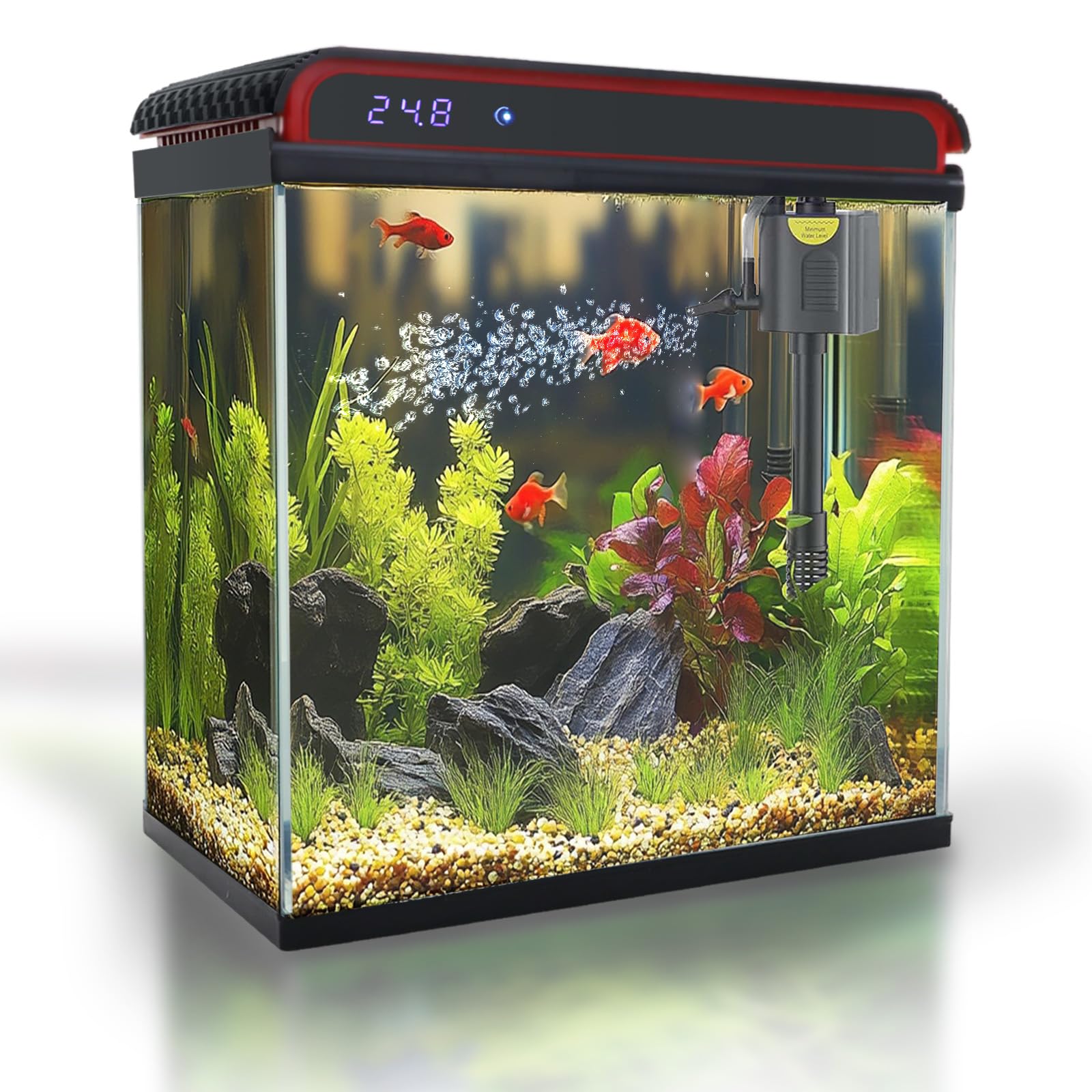
9. Use a Reliable Digital Aquarium Thermometer
Even the best insulation system cannot guarantee a stable aquarium temperature without proper monitoring.
A thermometer is one of the most important tools for managing an aquarium without excessive heating equipment.
Why Accurate Temperature Monitoring Matters
Fish cannot tell you exactly when their environment is becoming too cold or too warm.
Some species may continue swimming normally even when the temperature is approaching an unsuitable range.
By the time obvious behavioral changes appear, the aquarium may already have experienced prolonged temperature stress.
A reliable thermometer helps identify changes before they become serious.
Digital Thermometers vs. Traditional Glass Thermometers
Digital aquarium thermometers are convenient because they often provide easy-to-read displays and relatively quick temperature measurements.
Some models also include minimum and maximum temperature records.
This feature can be particularly useful for identifying nighttime temperature drops.
Traditional glass thermometers are another option.
They are simple and do not require batteries, but readings may be harder to interpret depending on their design.
Whichever type you choose, verify its accuracy and follow the manufacturer's instructions.
Consider Temperature Alarms
For valuable aquariums or sensitive fish species, a temperature alarm can provide additional protection.
Some monitoring devices allow users to establish upper and lower temperature limits.
If the water moves outside the selected range, the device provides an alert.
This can be particularly useful when aquarium owners are away from home for extended periods.
A temperature alarm does not replace proper equipment, but it can help identify problems earlier.
Monitor Both Daytime and Nighttime Temperatures
Checking the aquarium only during the day may provide an incomplete picture.
Temperature often reaches its lowest point during the early morning hours.
Record temperatures at different times to understand the aquarium's actual daily temperature range.
A minimum-maximum thermometer or a continuous monitoring device makes this process easier.
10. Use a Low-Wattage Heater Instead of a High-Power Heating Rod
Avoiding a high-wattage heater does not necessarily mean avoiding all heating equipment.
For many tropical aquariums, a small, properly sized heater is a safer and more reliable option than depending entirely on room temperature.
The important distinction is between maintaining a stable temperature and rapidly heating a large volume of cold water.
Why a Low-Wattage Heater Can Be Effective
A heater does not always need to operate at maximum power.
If the aquarium is well insulated and the surrounding room remains reasonably warm, a lower-wattage heater may only need to compensate for gradual heat loss.
This can help reduce temperature fluctuations.
For example, an appropriately selected low-wattage heater may maintain the desired temperature in a small, well-insulated aquarium under mild environmental conditions.
However, the correct wattage depends on:
-
Aquarium water volume.
-
Desired water temperature.
-
Minimum room temperature.
-
Insulation quality.
-
Aquarium shape and surface area.
-
Heating equipment specifications.
Never choose a heater based solely on tank volume without considering the room's lowest expected temperature.
Use an Adjustable Thermostat Heater
An adjustable thermostat heater allows you to select the desired temperature.
Once the water reaches the set point, the heater should reduce or stop heating according to its control design.
This helps prevent unnecessary heating.
However, thermostats can fail, so it is important to use reliable equipment and monitor the aquarium regularly.
For particularly sensitive fish, an independent temperature controller or secondary monitoring system may provide additional protection.
Avoid Undersized Equipment That Runs Continuously
Choosing a heater with insufficient capacity may seem like an easy way to reduce electricity consumption.
However, an undersized heater may operate continuously without being able to maintain the required temperature.
This is not necessarily more energy-efficient.
The best solution is to calculate heating requirements realistically and reduce heat loss before selecting equipment.
11. Maintain Good Water Circulation
Temperature stability is not only about keeping heat inside the aquarium.
It is also about distributing heat evenly throughout the water.
A tank may have an acceptable average temperature while still containing areas that are noticeably warmer or colder.
Why Water Circulation Matters
Water circulation helps distribute heat throughout the aquarium.
Without adequate movement, temperature differences may develop between different areas, particularly in tanks with complicated layouts.
A filter or circulation pump helps move water around the tank.
This supports more consistent environmental conditions and helps distribute dissolved oxygen.
Avoid Excessive Water Movement
Although circulation is beneficial, stronger is not always better.
Excessive water movement can stress fish that naturally prefer calmer environments.
It may also increase evaporation and surface cooling.
Select filtration and circulation equipment based on the species being kept.
The objective is to maintain effective circulation without creating unnecessarily strong currents.
Position Equipment Strategically
If a heater is used, position it according to the manufacturer's instructions.
Many aquarium heaters work effectively when installed near an area with good water circulation.
This allows heated water to move throughout the tank.
Similarly, thermometer placement matters.
Avoid measuring temperature immediately next to a heater because the reading may not represent the overall aquarium environment.
A central or otherwise representative location is usually more useful.
12. Manage Water Changes to Avoid Sudden Temperature Drops
Water changes are essential for maintaining aquarium water quality.
However, adding water that is significantly colder or warmer than the existing aquarium water can cause temperature fluctuations.
This is particularly important during winter.
Match Replacement Water Temperature
Before adding replacement water, measure its temperature.
Try to bring it close to the aquarium's existing temperature.
The acceptable difference depends on the fish species and the amount of water being replaced.
For sensitive tropical fish, even relatively small changes may create stress when combined with other environmental problems.
Avoid adding large volumes of cold tap water directly to a warm aquarium.
Avoid Excessively Large Water Changes Without a Reason
Routine water changes should be based on water quality, stocking levels, filtration capacity, and the aquarium's maintenance requirements.
A sudden, unnecessarily large water change can create several environmental changes at once.
If you are maintaining a stable aquarium, regular and appropriately sized water changes are generally easier to manage than irregular, dramatic changes.
Never Use Hot Water Directly Without Checking Its Quality
Some aquarium owners try to warm replacement water by mixing hot and cold tap water.
However, hot water systems may introduce additional plumbing-related contaminants, depending on the household's water system.
A safer approach is to prepare replacement water using a clean, appropriate container and verify its temperature and water quality before adding it to the aquarium.
Always use a suitable water conditioner when required.
13. Create a Winter Aquarium Protection Plan
Winter is one of the most challenging seasons for maintaining aquarium temperature without powerful heating equipment.
Even in regions with relatively mild winters, nighttime temperatures, air conditioning, and indoor ventilation can influence aquarium conditions.
A simple winter protection plan can reduce unnecessary heat loss.
Step 1: Inspect Existing Insulation
Before temperatures drop, inspect the aquarium's existing insulation.
Check whether:
-
The back panel is exposed to a cold wall.
-
The bottom has suitable support.
-
The lid fits correctly.
-
There are gaps that allow excessive cold airflow.
-
The aquarium stand is located near a cold surface.
Correcting these issues before winter begins is easier than responding to an emergency.
Step 2: Prepare Additional Insulation
Keep suitable insulating materials available.
Removable insulation panels can be particularly useful because they can be installed during colder periods and removed when conditions become warmer.
Ensure that any added insulation does not interfere with filtration, lighting, electrical connections, or maintenance.
Step 3: Monitor Overnight Temperature
Do not assume that daytime room conditions reflect the aquarium's nighttime environment.
Check the minimum temperature during the coldest part of the night.
If the aquarium repeatedly falls below the recommended range for its fish, additional heating may be necessary.
Step 4: Prepare Backup Equipment
Power interruptions and equipment failures can occur during severe weather.
Consider keeping a battery-powered air pump and an independent thermometer available.
For aquariums containing valuable or temperature-sensitive fish, a suitable backup heating solution may also be appropriate.
Step 5: Avoid Sudden Emergency Heating
If aquarium water becomes too cold, do not attempt to raise its temperature dramatically within a short period.
Rapid temperature changes can create additional stress.
Restore suitable conditions gradually using reliable equipment and follow species-specific care guidance.
14. Understand the Temperature Requirements of Different Fish
One of the most common mistakes in aquarium temperature management is assuming that all fish need the same water temperature.
Different species have different physiological requirements.
Some fish naturally inhabit warm tropical waters, while others are adapted to cooler environments.
Understanding these differences can reduce unnecessary heating and improve fish welfare.
Tropical Freshwater Fish
Many popular tropical freshwater fish require consistently warm water.
Examples include:
-
Betta fish.
-
Guppies.
-
Neon tetras.
-
Angelfish.
-
Discus.
-
Many varieties of dwarf cichlids.
However, their temperature requirements are not identical.
For example, some tropical species are more sensitive to temperature changes than others.
Always research the specific requirements of each species before selecting an aquarium temperature.
Goldfish
Goldfish are often described as cold-water fish, but this does not mean they should be exposed to extreme temperature fluctuations.
Different goldfish varieties may have different environmental preferences.
They generally do not require the same warm-water conditions as many tropical species.
A stable, appropriate temperature and good water quality are more important than simply keeping the aquarium warm.
Cold-Water Fish
Some fish species are naturally adapted to cooler environments.
For these aquariums, excessive heating may be unnecessary or even harmful.
If the fish species does not require warm water, maintaining an appropriate room temperature and preventing extreme fluctuations may be sufficient.
However, cold-water fish still need species-appropriate temperature management.
Avoid Mixing Species With Incompatible Temperature Requirements
A community aquarium should contain species with compatible environmental needs.
Trying to maintain one temperature for fish that require very different conditions can create long-term problems.
Choose compatible species before designing the aquarium's heating and insulation system.
15. Common Mistakes When Trying to Keep Aquarium Water Warm Without a Powerful Heater
Although reducing dependence on high-wattage heaters is a reasonable goal, some methods can create additional risks.
Understanding these mistakes can help aquarium owners avoid unnecessary problems.
Mistake 1: Covering the Entire Aquarium Without Ventilation
A tightly sealed aquarium may reduce evaporation, but it can also interfere with oxygen exchange.
Always maintain adequate ventilation and filtration.
Mistake 2: Using Household Blankets or Unsecured Materials
Wrapping an aquarium in blankets may appear convenient during cold weather.
However, fabric can absorb moisture, interfere with equipment ventilation, and create electrical safety concerns.
It may also conceal leaks or prevent regular inspection.
Use suitable aquarium insulation materials instead.
Mistake 3: Relying on Sunlight for Heating
Sunlight is unpredictable and can cause sudden temperature increases.
It may also encourage excessive algae growth.
An aquarium should not depend on direct sunlight to maintain its water temperature.
Mistake 4: Increasing Lighting Hours to Generate Heat
Aquarium lighting is designed to support fish observation and plant growth.
Extending the lighting schedule to warm the water can disrupt biological rhythms and increase algae problems.
Use appropriate heating equipment when necessary.
Mistake 5: Ignoring Temperature Measurements
An aquarium may look perfectly healthy while experiencing significant nighttime temperature drops.
Visual observation alone is not sufficient.
Use a reliable thermometer and record actual water temperatures.
Mistake 6: Choosing a Heater That Is Too Small
A low-wattage heater is not automatically the best solution.
If the heater cannot compensate for heat loss, the aquarium may remain too cold.
Select equipment based on real environmental conditions.
Mistake 7: Making Rapid Temperature Adjustments
Sudden changes can stress fish.
Whether warming or cooling an aquarium, prioritize gradual and controlled adjustments.
Mistake 8: Ignoring Oxygen Requirements
A warm aquarium may hold less dissolved oxygen than cooler water.
Maintaining temperature should never come at the expense of sufficient oxygenation.
Keep filtration and aeration appropriate for the fish population.
16. How Much Can Aquarium Insulation Reduce Energy Consumption?
The amount of energy saved through insulation depends on several factors.
These include the aquarium's size, surrounding temperature, desired water temperature, surface exposure, evaporation rate, and existing equipment.
There is no universal percentage that applies to every aquarium.
However, the underlying principle is straightforward: reducing heat loss lowers the amount of replacement energy needed to maintain a given water temperature.
Reduce Heat Loss Before Increasing Heating Power
Consider two aquariums with the same water volume and desired temperature.
The first aquarium has an uncovered top, exposed glass panels, and sits near a cold window.
The second aquarium has a suitable lid, insulated rear panels, and is positioned in a stable indoor environment.
The second aquarium will generally lose less heat under comparable conditions.
As a result, it may require less heating energy to maintain the same temperature.
Calculate Potential Electricity Costs
To estimate heater electricity consumption, use the following formula:
Electricity consumption (kWh) = Heater power (kW) × Operating time (hours).
For example, a 100-watt heater operating continuously for 24 hours would theoretically consume:
0.1 kW × 24 hours = 2.4 kWh.
However, a thermostatically controlled heater does not necessarily operate continuously.
Actual electricity consumption depends on how frequently the heater switches on and off.
If insulation reduces the time required for heating, electricity consumption may decrease.
You can estimate the monthly electricity cost using:
Monthly electricity cost = Monthly electricity consumption × Local electricity rate.
This calculation helps aquarium owners compare equipment choices and evaluate the benefits of insulation.
Focus on Long-Term Efficiency
The most effective aquarium energy strategy is usually a combination of several improvements:
-
Reduce unnecessary heat loss.
-
Maintain a stable room environment.
-
Use an appropriate aquarium lid.
-
Improve insulation where practical.
-
Choose correctly sized equipment.
-
Monitor temperature regularly.
These measures are often more practical than purchasing an increasingly powerful heater.
17. A Practical Low-Energy Aquarium Temperature Management Setup
For aquarium owners who want to reduce heating dependence, the following arrangement provides a useful starting point.
Aquarium Structure
Choose a tank with suitable dimensions and adequate water volume for the fish being kept.
Install a properly fitted lid to reduce evaporation.
Use an appropriate aquarium mat beneath the tank if recommended for the aquarium's construction.
Consider insulating the rear and side panels where visibility is not required.
Aquarium Location
Place the aquarium in a room with relatively stable indoor temperatures.
Avoid direct sunlight, exterior drafts, and strong air-conditioning airflow.
Ensure that the aquarium stand provides proper structural support.
Equipment
Use a reliable filtration system that provides suitable water circulation.
Install a digital thermometer with minimum and maximum temperature recording if possible.
For tropical aquariums, use a properly sized adjustable thermostat heater when environmental conditions require additional heating.
An independent temperature alarm can provide extra protection.
Maintenance
Check aquarium temperature daily.
Measure replacement water before water changes.
Maintain appropriate filtration and oxygenation.
Inspect insulation and covers regularly.
Observe fish behavior and appetite for signs of environmental stress.
This combination can help create a more stable aquarium environment without depending on excessive heating power.
18. Frequently Asked Questions
Can I Keep Tropical Fish Without an Aquarium Heater?
It depends on the fish species and the surrounding room temperature.
Some tropical aquariums may remain within a suitable temperature range naturally in consistently warm indoor environments.
However, many tropical fish require a relatively narrow temperature range.
If the room becomes too cold, a heater may be necessary.
Do not assume that insulation alone can maintain a suitable temperature in every environment.
Can Aquarium Insulation Replace a Heater?
Not completely.
Insulation slows heat loss but does not generate heat.
If the surrounding environment is consistently colder than the required aquarium temperature, insulation can only delay cooling.
A suitable heater may still be necessary for temperature-sensitive fish.
Is a Low-Wattage Aquarium Heater Better Than a High-Wattage Heater?
Not automatically.
A low-wattage heater may be suitable for a small, well-insulated aquarium in a relatively warm room.
However, a larger aquarium or a colder environment may require greater heating capacity.
The correct choice depends on the temperature difference between the aquarium and the surrounding room, as well as the tank's volume and heat-loss characteristics.
Does an Aquarium Lid Really Help Keep Water Warm?
Yes.
A suitable aquarium lid can reduce evaporation and heat exchange at the water surface.
This is particularly useful in colder environments and in aquariums with high evaporation rates.
However, sufficient ventilation and oxygen exchange must still be maintained.
Should I Turn Off My Aquarium Heater at Night?
Generally, no.
If your fish require a stable tropical water temperature, turning the heater off every night can create unnecessary temperature fluctuations.
A reliable thermostat heater is designed to maintain the selected temperature automatically.
If you are trying to reduce electricity consumption, improving insulation is generally a better approach.
What Is the Best Way to Monitor Aquarium Temperature?
A reliable digital aquarium thermometer is a convenient option.
Models with minimum and maximum temperature records are particularly useful because they help identify temperature changes that occur when nobody is watching the aquarium.
For sensitive aquariums, continuous monitoring and temperature alarms provide additional protection.
Can I Use Styrofoam to Insulate an Aquarium?
Rigid foam insulation can be useful when properly selected and installed on the outside of an aquarium.
However, it should not obstruct equipment ventilation, create structural problems, or come into direct contact with aquarium water unless specifically designed for that purpose.
Always consider material safety and the aquarium manufacturer's support requirements.
Does a Bigger Aquarium Stay Warm Longer?
Generally, yes, when other conditions are comparable.
A larger volume of water has greater thermal mass and usually changes temperature more slowly.
However, aquarium dimensions, exposed surface area, room temperature, and insulation also affect heat loss.
A larger aquarium does not automatically eliminate the need for heating equipment.
How Often Should I Check Aquarium Temperature?
Daily checks are a reasonable minimum for many home aquariums.
During seasonal temperature changes, equipment installation, or unusual weather, more frequent monitoring may be helpful.
For sensitive fish, continuous temperature monitoring provides greater confidence.
What Should I Do If My Aquarium Temperature Drops Suddenly?
First, confirm the reading using a reliable thermometer.
Check the room temperature, filtration, and heating equipment.
If the water is below the species' recommended range, restore suitable conditions gradually using reliable equipment.
Avoid pouring hot water directly into the tank or making dramatic temperature changes.
If fish show severe distress, seek advice from an experienced aquatic veterinarian or qualified aquarium professional.
Conclusion
Maintaining stable aquarium water temperature does not always require a high-wattage heating rod.
In many situations, the most effective strategy is to reduce heat loss before increasing heating power.
Proper aquarium insulation, a suitable lid, thoughtful tank placement, stable room temperature, controlled evaporation, and reliable temperature monitoring can all contribute to a more consistent aquatic environment.
For aquarium owners who want to reduce electricity consumption, these improvements can make a meaningful difference.
However, it is important to remember that insulation does not create heat. If the surrounding environment is too cold for the fish being kept, a properly sized heater remains essential.
The goal should never be to eliminate heating equipment at the expense of fish health.
Instead, focus on building an efficient aquarium system that maintains the correct temperature with as little unnecessary energy consumption as possible.
By understanding heat transfer, selecting suitable materials, monitoring temperature changes, and maintaining appropriate aquarium conditions, you can create a comfortable environment for your fish while reducing your dependence on powerful heating equipment.
A stable aquarium is not simply the result of a powerful heater. It is the result of thoughtful design, proper insulation, consistent maintenance, and a clear understanding of the needs of the aquatic life inside it.