Introduction: Keeping Aquarium Water Clean During the Winter Months
Winter brings several challenges for aquarium owners. As outdoor temperatures drop, indoor environments become colder, heating systems run more frequently, and aquarium water temperatures may fluctuate. Fish may become less active, biological processes can slow down, and maintaining stable water quality can require more attention than usual.
One common question among aquarium enthusiasts is whether they should reduce water changes during winter. Another is when to turn on an aquarium UV sterilizer to maintain clean water without creating unnecessary stress for fish or disrupting the aquarium's biological balance.
The answer requires understanding how aquarium water quality, beneficial bacteria, fish metabolism, and ultraviolet sterilization work together.
Reducing water changes during winter can sometimes be reasonable, particularly when water temperature is difficult to maintain during maintenance. However, changing less water does not mean that an aquarium requires less water-quality management. Fish waste, uneaten food, dissolved organic compounds, and other pollutants continue accumulating regardless of the season.
Similarly, a UV sterilizer can help control certain microorganisms and suspended algae in aquarium water, but it does not replace routine maintenance, filtration, or proper water changes.
The safest approach is to maintain stable water temperature, monitor water parameters, perform water changes according to actual water quality, and operate the UV sterilizer under appropriate conditions.
This guide explains how to manage aquarium water changes during winter, when to operate a UV sterilizer, how long it should run, and which common mistakes aquarium owners should avoid.
1. Why Aquarium Maintenance Requires More Attention in Winter
Aquarium maintenance does not stop when the weather becomes cold. In fact, winter can introduce additional challenges that affect both fish health and water quality.
Understanding these seasonal changes is the first step toward establishing a reliable aquarium maintenance routine.
1.1 Temperature Fluctuations Can Stress Fish
Most tropical aquarium fish require relatively stable water temperatures.
When the room temperature drops, aquarium heaters may need to work harder to maintain the desired temperature. If the heater is undersized, malfunctioning, or incorrectly positioned, water temperatures may fluctuate.
Sudden temperature changes can stress fish and affect their immune function.
Common warning signs of temperature-related stress include:
-
Reduced appetite.
-
Unusual swimming behavior.
-
Increased hiding.
-
Rapid breathing.
-
Reduced activity.
-
Greater sensitivity to environmental changes.
Different fish species have different temperature requirements, so there is no single ideal temperature for every aquarium.
For tropical community tanks, many commonly kept species do well within approximately 75–80°F (24–27°C), although individual species may require different ranges.
Coldwater fish, such as goldfish, have different environmental needs and should not automatically be maintained at tropical temperatures.
1.2 Fish Metabolism May Slow Down in Cooler Water
Temperature affects the metabolic activity of fish.
When water temperature decreases within a species' tolerated range, some fish become less active and may consume less food.
This can reduce waste production, but it does not eliminate the need for filtration or water changes.
Aquarium owners should avoid assuming that less active fish produce no pollutants.
Uneaten food, feces, decaying plant material, and dissolved organic waste continue affecting water quality.
Overfeeding during winter can be especially problematic because food consumption may decrease while excess food accumulates in the aquarium.
1.3 Biological Filtration May Become Less Efficient
Beneficial bacteria in aquarium filters are responsible for converting toxic ammonia into nitrite and then into nitrate through the biological filtration process.
These bacteria are sensitive to environmental conditions, including temperature, oxygen availability, pH, and water chemistry.
Lower temperatures can slow their activity.
If biological filtration becomes less efficient, ammonia and nitrite may accumulate, especially in heavily stocked aquariums or systems with unstable filtration.
This is why aquarium owners should continue monitoring ammonia and nitrite even when fish appear less active.
A healthy-looking aquarium does not necessarily have safe water parameters.
1.4 Indoor Heating Can Affect Aquarium Water Quality
During winter, indoor heating systems can reduce humidity and change room conditions.
Although indoor heating does not directly determine aquarium water quality, it can influence evaporation and water-temperature stability.
For example:
-
Water may evaporate more quickly in dry indoor environments.
-
Evaporation can increase mineral concentration if water is not topped off appropriately.
-
Cold drafts near windows may create localized temperature differences.
-
Heating equipment may cause nearby aquarium temperatures to fluctuate.
Aquariums placed near exterior doors, windows, heating vents, or poorly insulated walls may require additional monitoring.
2. Should You Reduce Aquarium Water Changes During Winter?
One of the most common winter aquarium questions is whether water changes should become less frequent.
The answer depends on aquarium conditions rather than the calendar.
Reducing the volume or frequency of water changes may be appropriate in some stable systems, but it should never be based solely on the assumption that fish need less maintenance in winter.
2.1 Why Some Aquarium Owners Reduce Water Changes
There are practical reasons why aquarium owners sometimes become more cautious about water changes during colder months.
The biggest concern is temperature stability.
If replacement water is significantly colder or warmer than aquarium water, adding it too quickly can cause a sudden temperature change.
This may stress fish, particularly sensitive species.
Another concern is the difficulty of maintaining consistent maintenance conditions in colder rooms.
For example, an aquarium owner may need to transport water from another room, prepare replacement water, and ensure that it reaches an appropriate temperature before use.
These additional steps can make winter water changes less convenient.
However, avoiding water changes altogether creates a different set of risks.
2.2 Water Pollutants Continue Accumulating in Winter
Even if fish eat less, aquarium water can still accumulate:
-
Nitrate.
-
Dissolved organic compounds.
-
Fish waste.
-
Uneaten food.
-
Phosphate.
-
Decaying plant material.
-
Other dissolved substances.
A mechanical filter can remove suspended particles, while biological filtration processes ammonia and nitrite.
However, these processes do not remove every dissolved pollutant.
Water changes remain an important way to dilute substances that accumulate over time.
2.3 Use Water Testing to Determine the Right Schedule
Instead of following a rigid winter water-change schedule, monitor the aquarium's actual condition.
Important water parameters include:
Ammonia: Should remain at 0 ppm in an established aquarium.
Nitrite: Should also remain at 0 ppm.
Nitrate: Should be maintained at a level appropriate for the fish and aquatic plants being kept. Lower concentrations are generally preferable, particularly for sensitive species.
pH: Should remain reasonably stable within the range appropriate for the aquarium's inhabitants.
Temperature: Should remain within the preferred range for the fish species.
General hardness and carbonate hardness: These can help identify changes in mineral content and buffering capacity.
If ammonia or nitrite becomes detectable, investigate the cause immediately rather than simply reducing water changes.
2.4 A Practical Winter Water-Change Schedule
For many established freshwater aquariums, a weekly water change of approximately 10–25% can be a reasonable starting point.
However, this is not a universal requirement.
The appropriate schedule depends on:
-
Aquarium volume.
-
Fish stocking density.
-
Feeding frequency.
-
Filtration capacity.
-
Plant growth.
-
Nitrate accumulation.
-
Water source quality.
-
Species sensitivity.
For a lightly stocked, mature planted aquarium, smaller or less frequent water changes may be appropriate if testing confirms stable water quality.
For a heavily stocked aquarium, a system with frequent feeding, or a tank with accumulating nitrate, more frequent water changes may be necessary.
The objective is not to minimize water changes at all costs. It is to maintain stable and healthy water conditions.
3. How to Perform Winter Water Changes Without Stressing Fish
When water changes are necessary, preparation is more important during winter.
The most reliable strategy is to make replacement water as similar as reasonably possible to the aquarium's existing conditions.
3.1 Match the Water Temperature
Temperature differences can cause stress when replacement water is introduced.
Before adding new water, measure the aquarium temperature and the replacement-water temperature.
For routine maintenance, try to keep the temperature difference small, ideally within approximately 1–2°F (0.5–1°C) for sensitive tropical fish.
The acceptable difference depends on species, aquarium conditions, and the volume being replaced.
Avoid pouring cold tap water directly into a tropical aquarium.
If necessary, prepare replacement water in a separate container and bring it to the appropriate temperature before use.
3.2 Always Treat Tap Water Properly
Municipal tap water may contain chlorine or chloramine.
These disinfectants can harm fish and beneficial bacteria.
Use an appropriate aquarium water conditioner according to the manufacturer's instructions before introducing tap water into the aquarium.
Do not assume that leaving water in an open container for a short period will remove all disinfectants. Chloramine, in particular, does not reliably disappear through simple standing or aeration.
3.3 Avoid Excessively Large Water Changes Without a Clear Reason
Large water changes are sometimes necessary, especially when dealing with serious water-quality problems.
However, unnecessary large changes can introduce abrupt differences in temperature, pH, hardness, and other water characteristics.
For routine winter maintenance, smaller, carefully prepared changes may be more comfortable for sensitive fish.
The correct volume should still be determined by water-quality measurements and the needs of the aquarium.
3.4 Keep the Filter Running During Routine Water Changes
Most aquarium filters should remain operating during ordinary water changes, provided that the water level remains appropriate and the equipment can operate safely.
Avoid exposing filter media to prolonged periods without water or allowing beneficial bacteria to dry out.
When cleaning filter media, use removed aquarium water or appropriately prepared water rather than untreated chlorinated tap water.
Do not replace all biological filter media at once.
Maintaining an established biological filter is especially important when lower winter temperatures may slow bacterial activity.
4. What Does an Aquarium UV Sterilizer Actually Do?
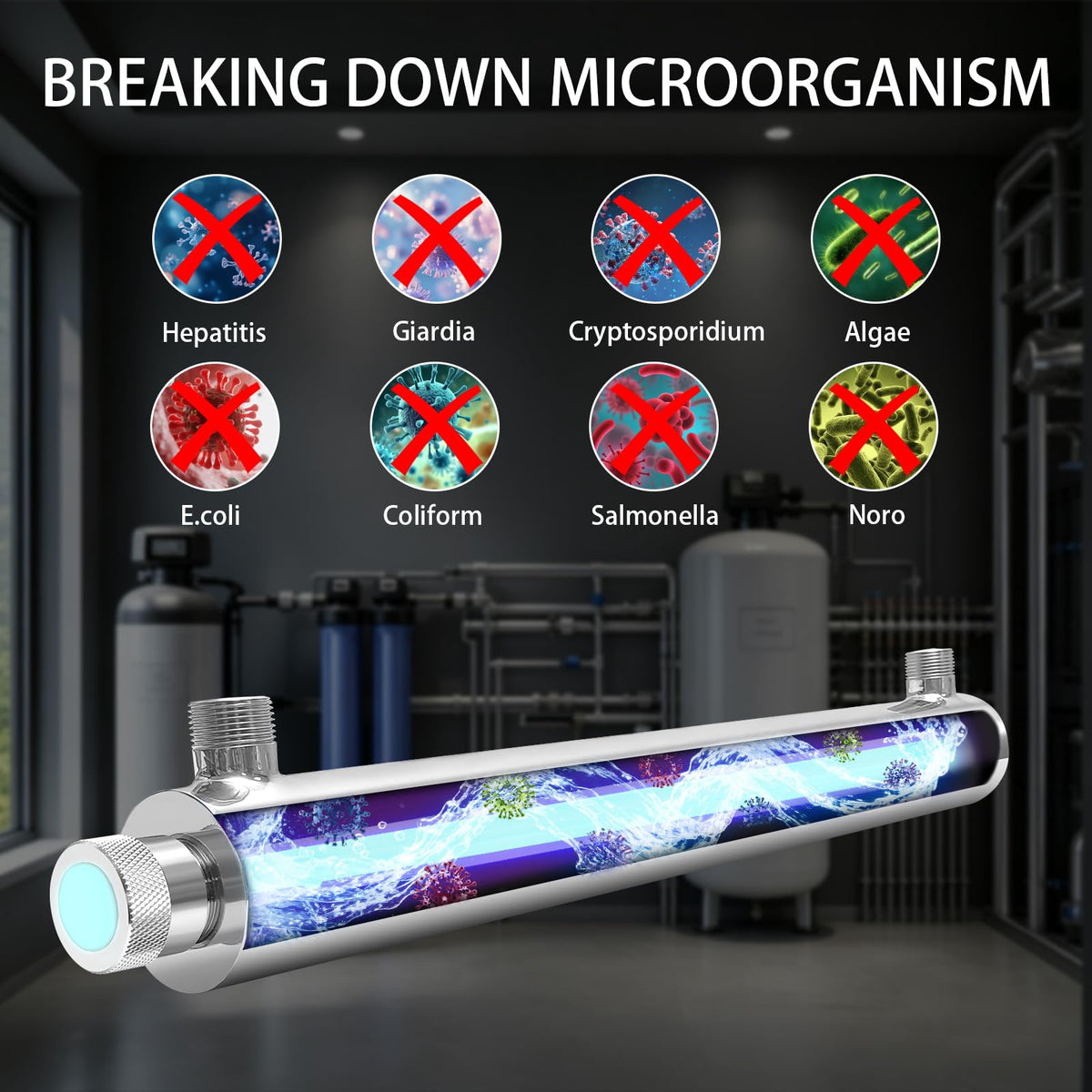
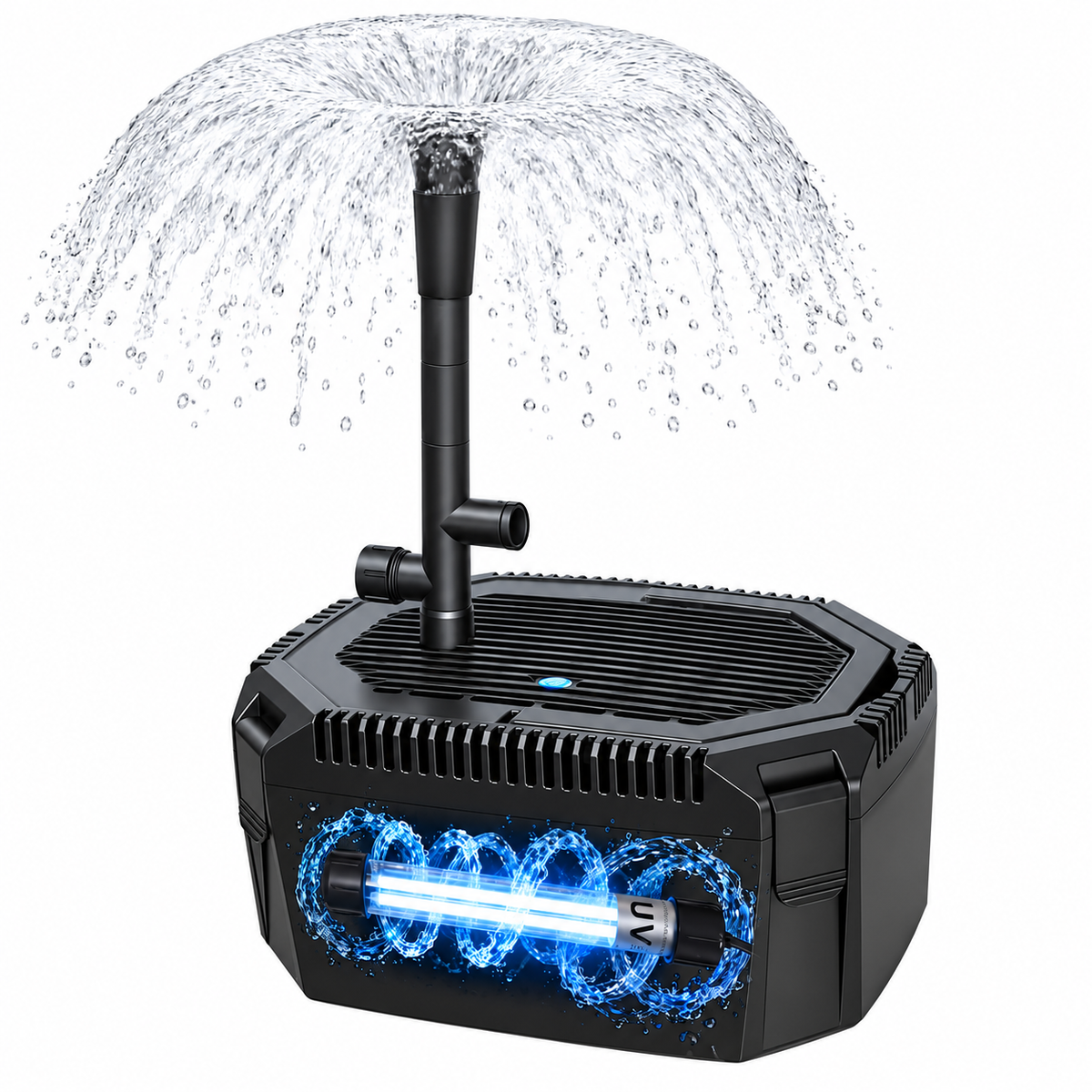
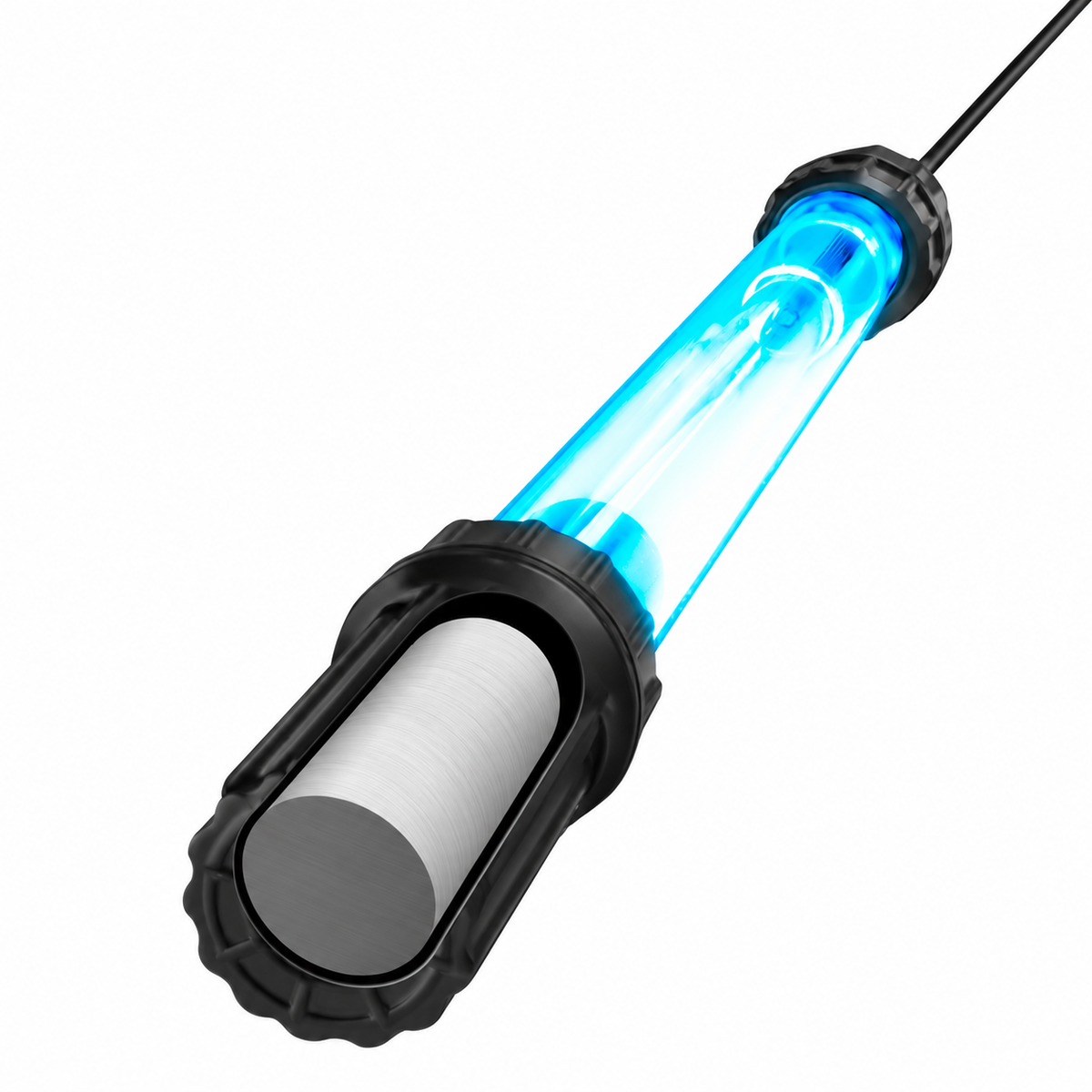
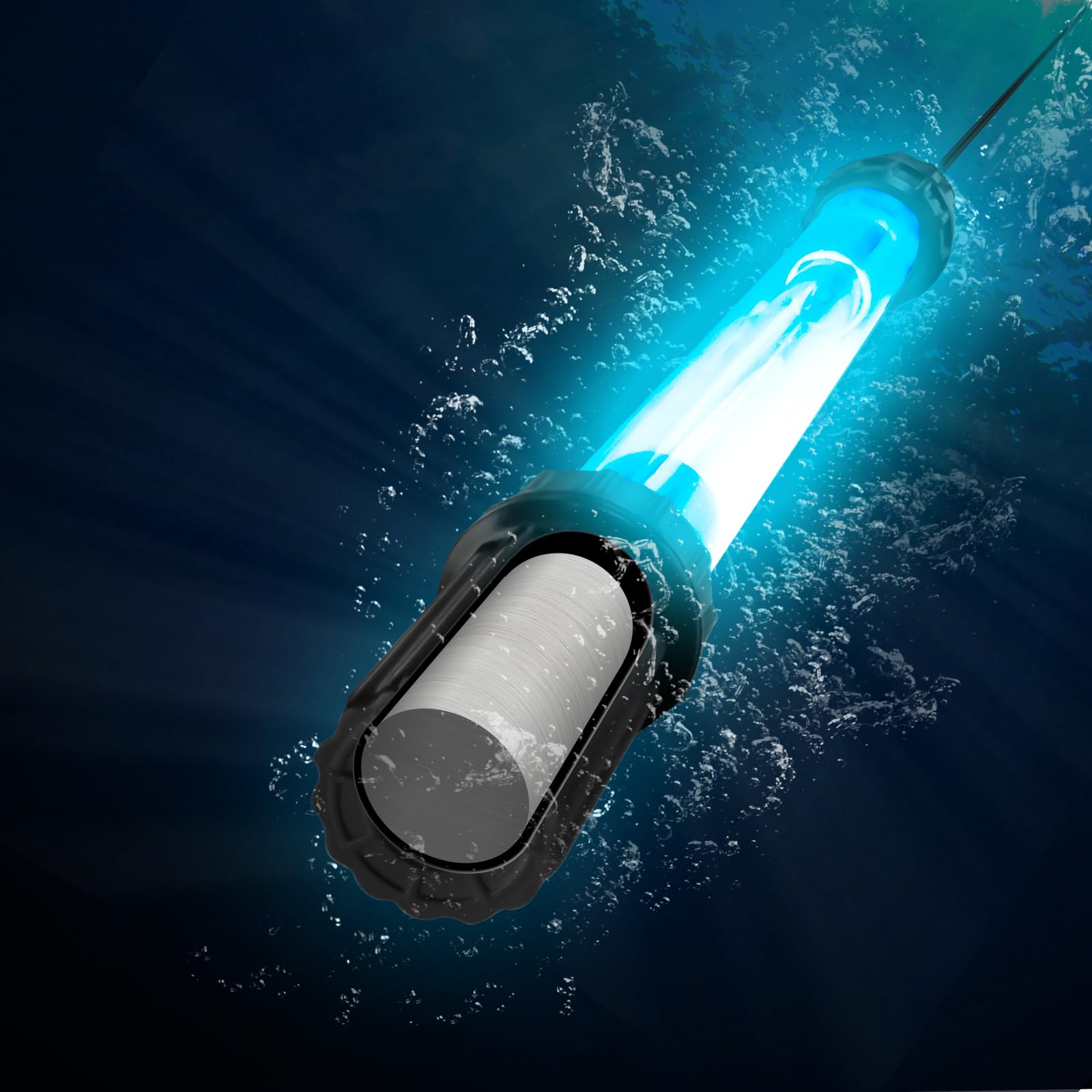
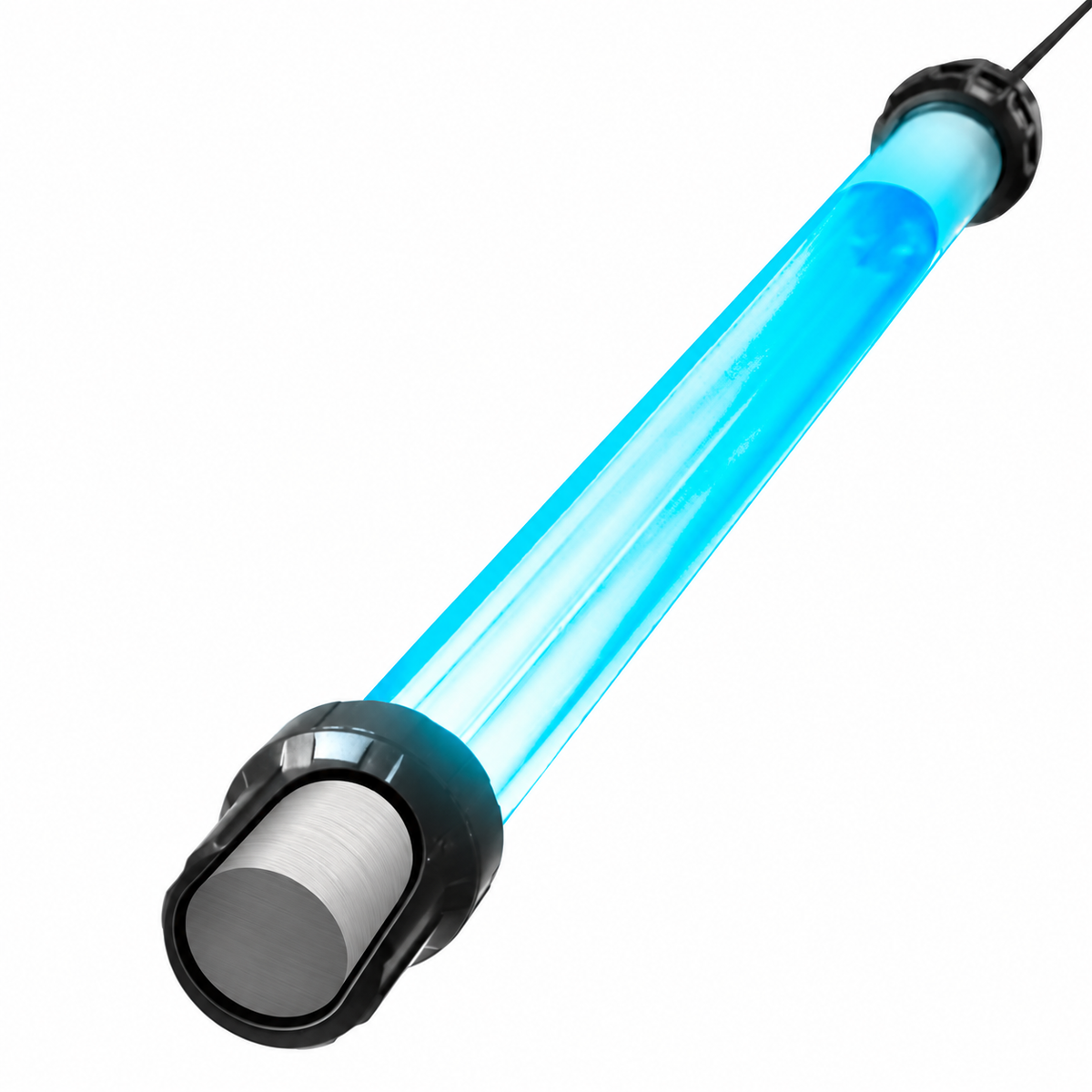
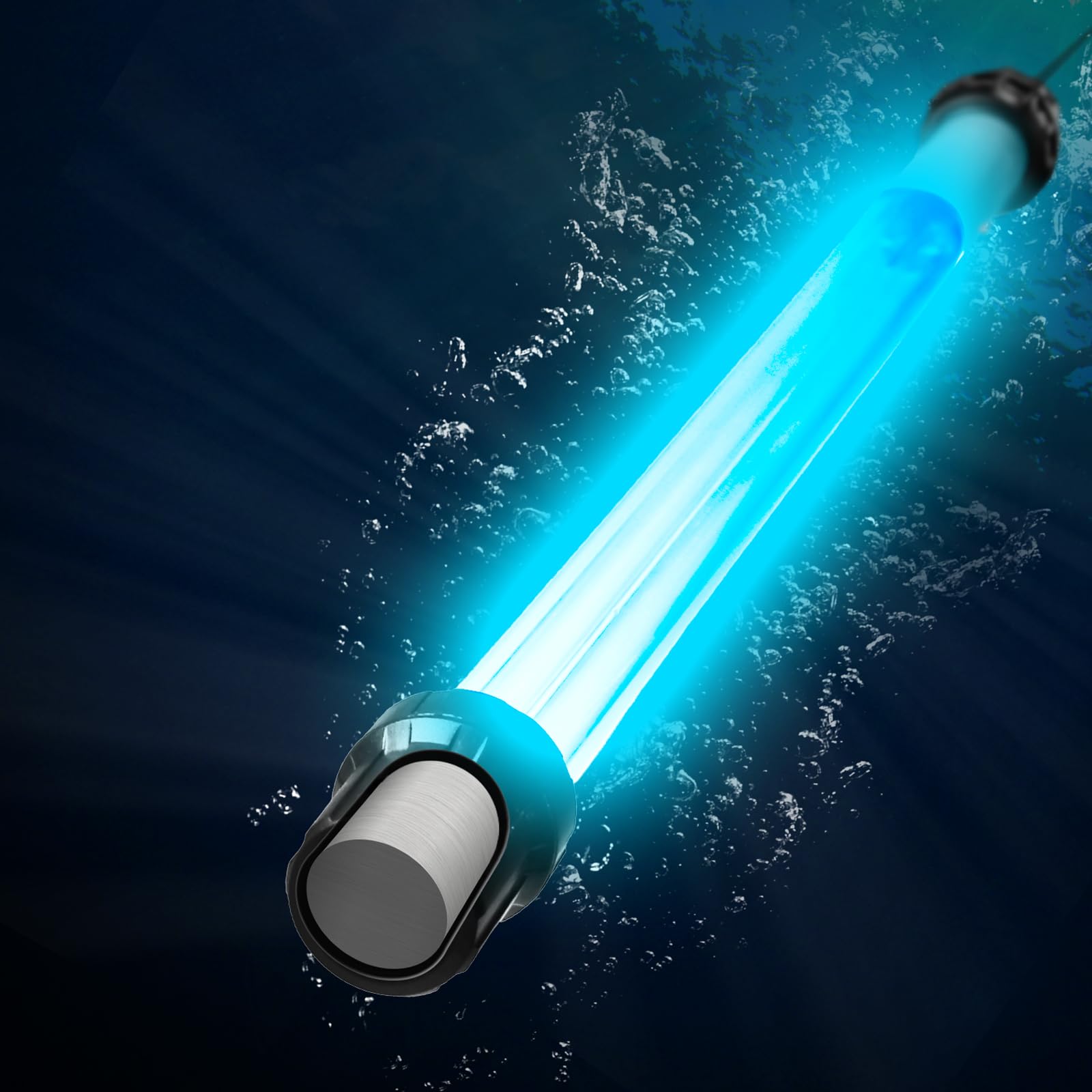
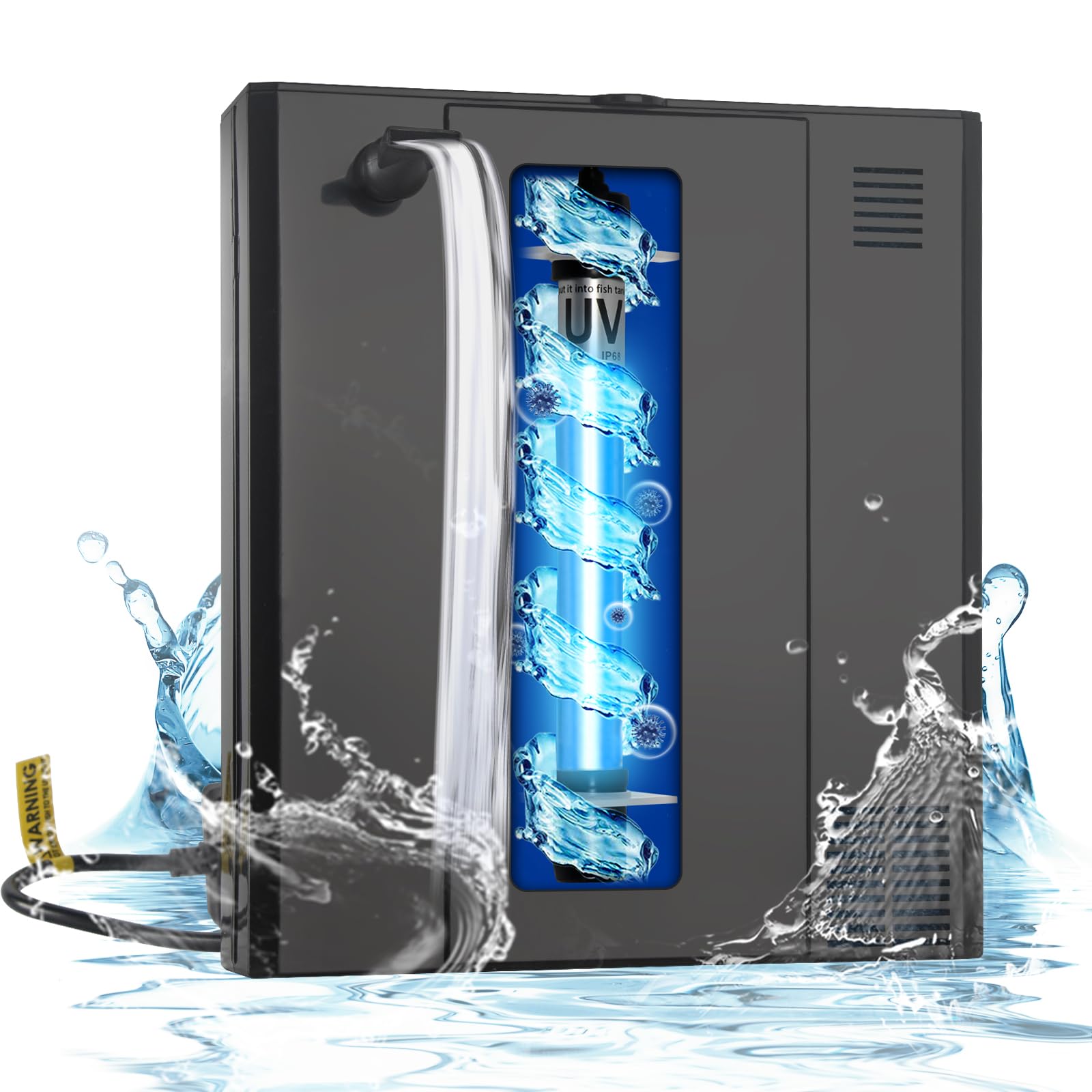
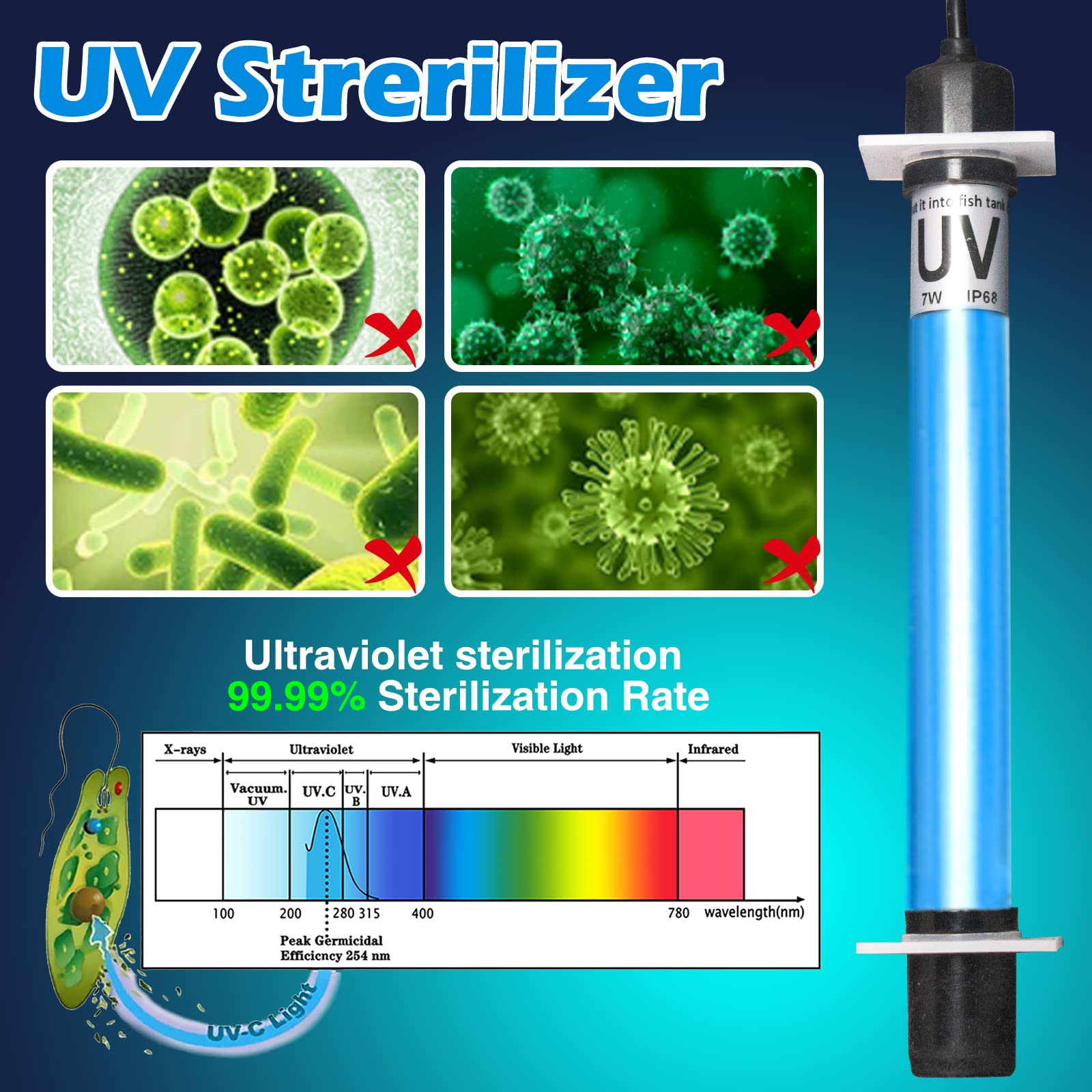
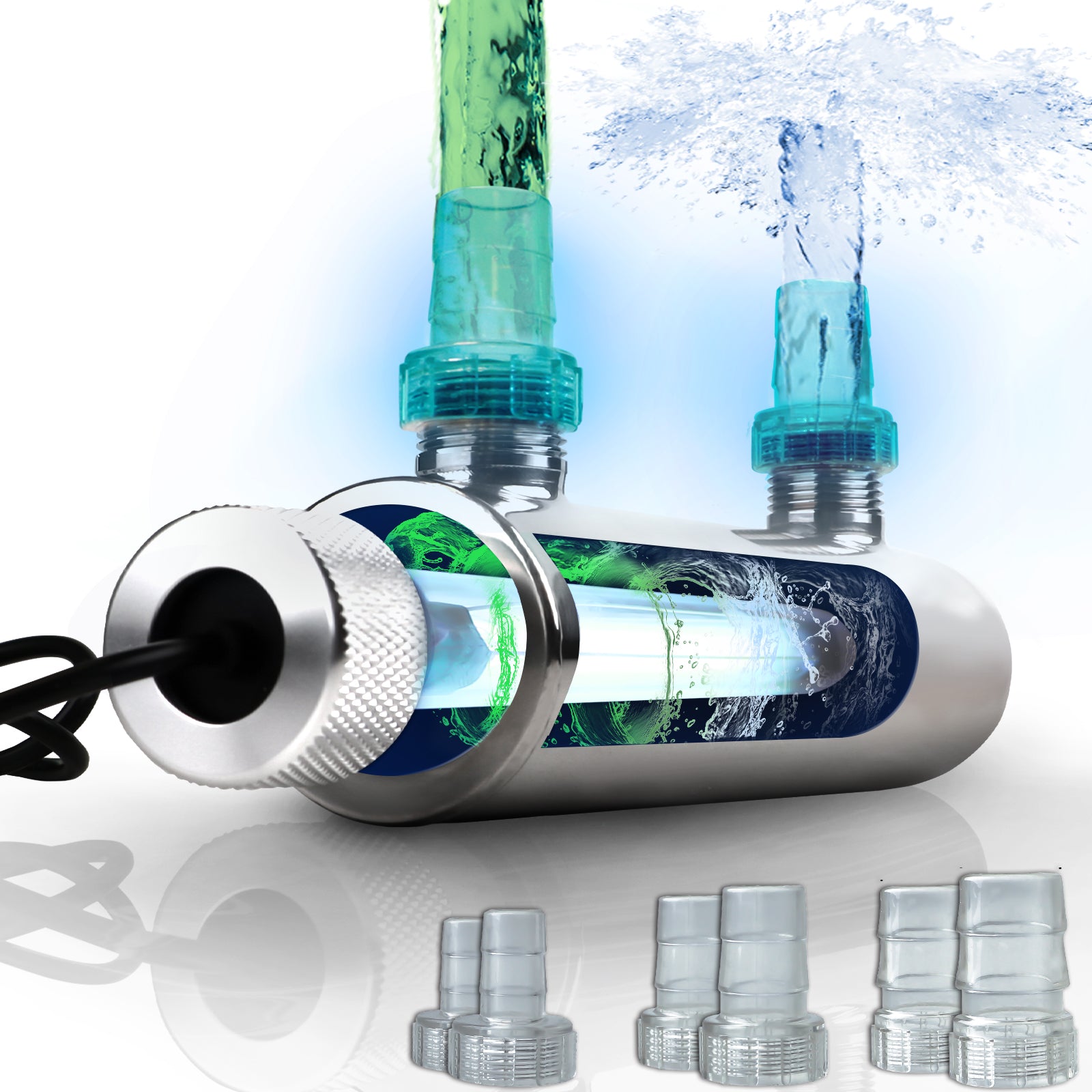
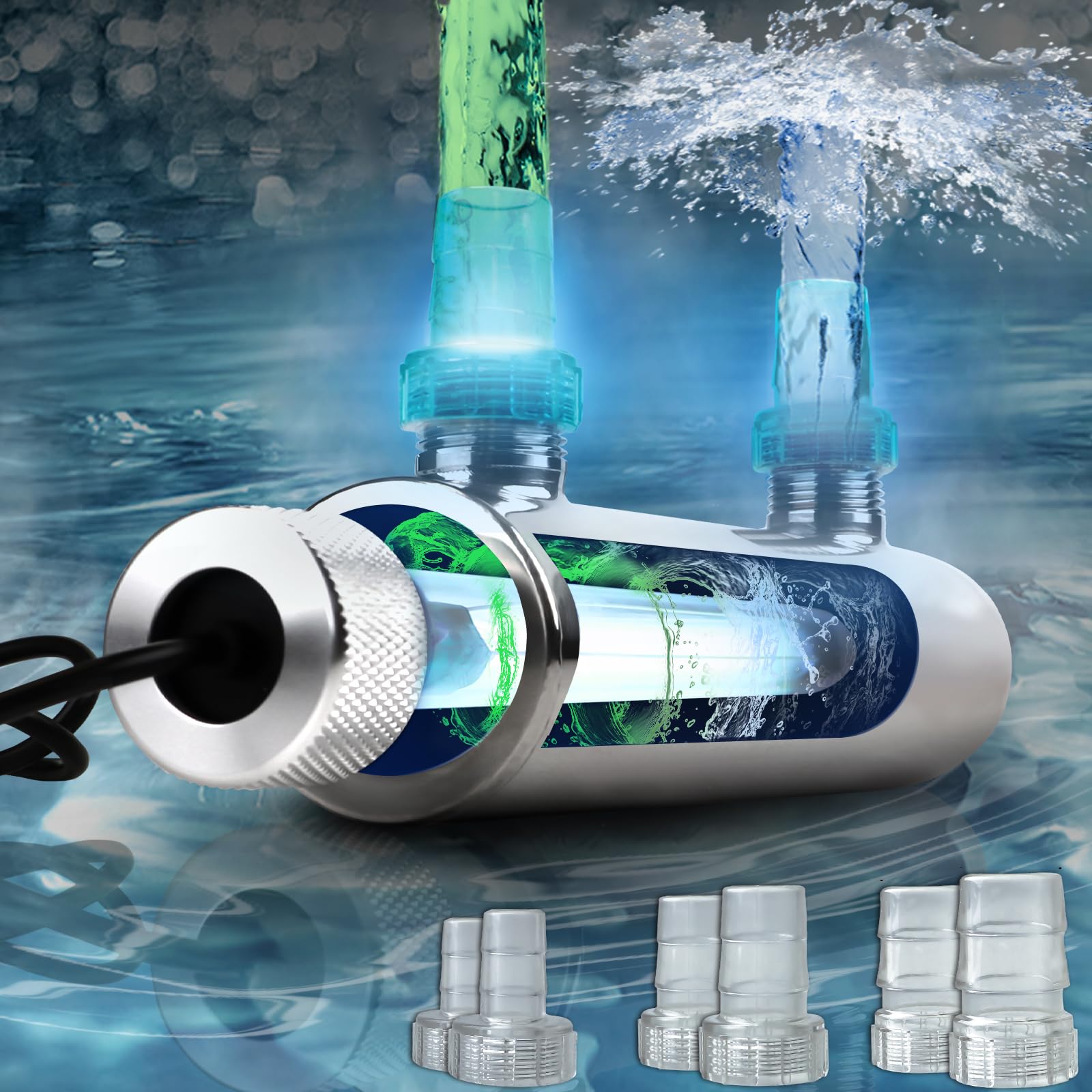
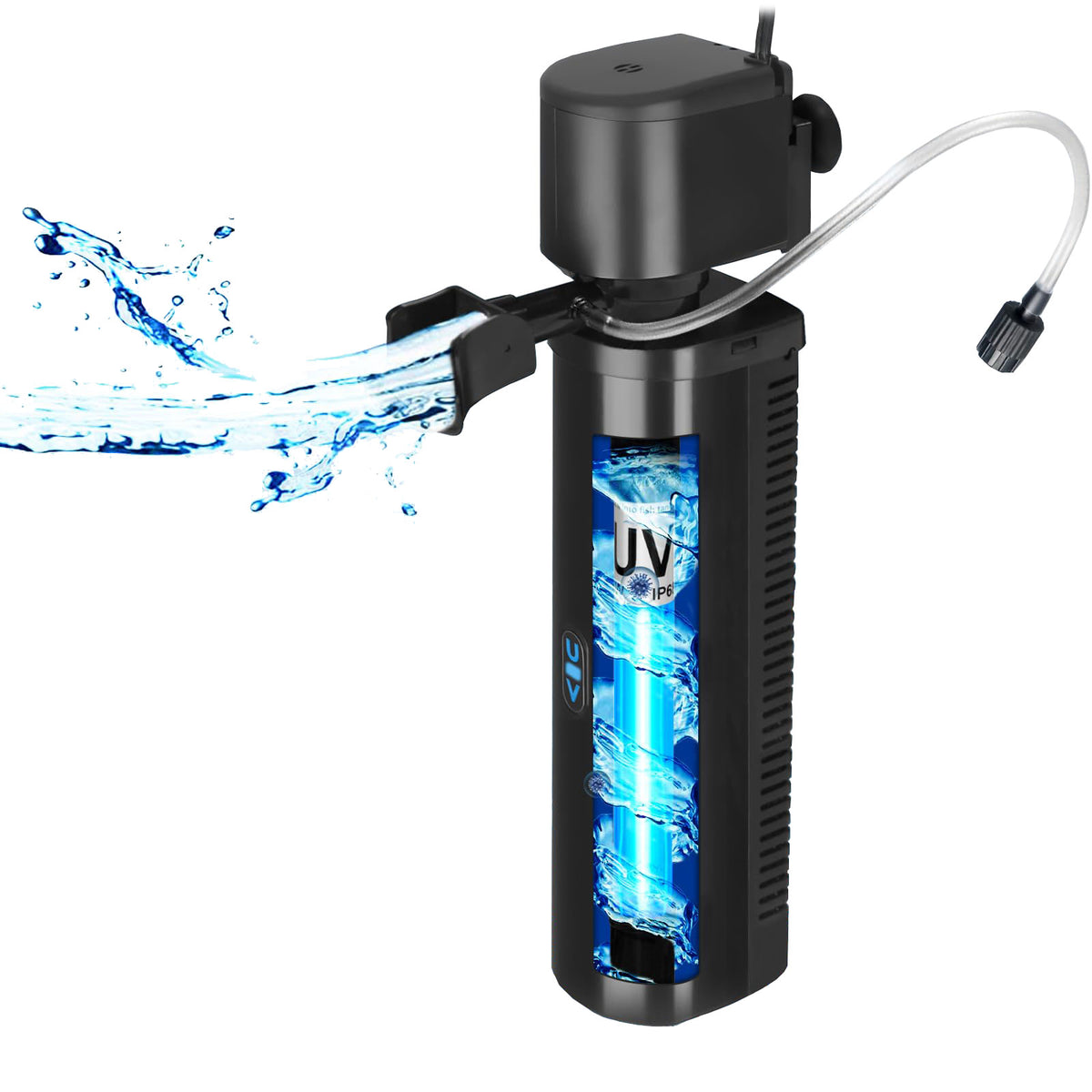
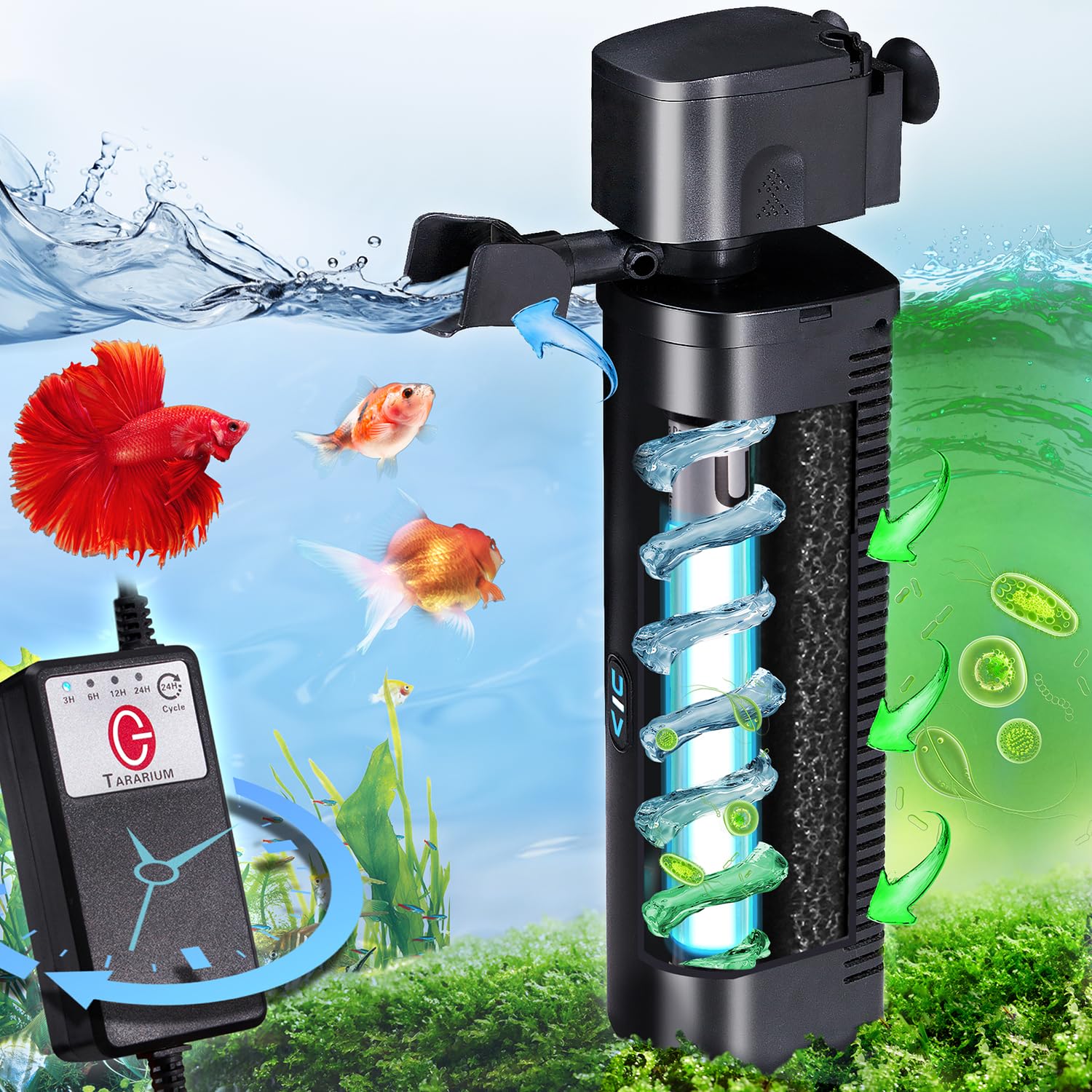
An aquarium UV sterilizer uses ultraviolet-C radiation to inactivate susceptible microorganisms as water passes through a dedicated treatment chamber.
It is commonly used to help control:
-
Free-floating algae.
-
Certain suspended bacteria.
-
Some waterborne parasites during susceptible life stages.
-
Other microorganisms that pass through the unit.
The UV lamp does not directly clean the aquarium in the same way that a mechanical filter removes physical particles.
Instead, it affects microorganisms exposed to sufficient UV radiation.
4.1 How UV-C Radiation Works
UV-C radiation damages the genetic material of susceptible microorganisms.
This prevents them from reproducing normally and can reduce their ability to cause infection or contribute to water-quality problems.
The effectiveness of UV treatment depends on several factors:
-
UV lamp output.
-
Exposure time.
-
Water flow rate.
-
Water clarity.
-
Lamp age.
-
Quartz sleeve cleanliness.
-
Microorganism sensitivity.
-
UV dose.
The amount of UV energy delivered to the water is commonly described as UV dose.
A higher dose generally increases the effectiveness of treatment against susceptible organisms, provided that other operating conditions are appropriate.
4.2 UV Sterilizers Do Not Replace Biological Filtration
One important misconception is that UV sterilization can replace an aquarium filter.
This is incorrect.
A UV sterilizer does not remove dissolved ammonia, nitrite, or nitrate.
It also does not remove accumulated fish waste, uneaten food, or dissolved organic compounds.
The aquarium still requires:
-
Mechanical filtration.
-
Biological filtration.
-
Appropriate water circulation.
-
Regular water testing.
-
Routine maintenance.
-
Proper water changes.
UV sterilization should be viewed as an additional water-treatment method rather than a complete filtration solution.
4.3 UV Sterilizers Primarily Affect Organisms Passing Through the Unit
UV treatment is most effective against organisms suspended in the water that pass through the sterilizer.
It does not reliably eliminate organisms attached to fish, aquarium surfaces, substrate, or decorations.
For example, a UV sterilizer may help reduce certain free-swimming parasite stages, but it should not be considered a complete treatment for ich or other fish diseases.
Many parasites have life cycles that include stages protected from UV exposure.
Therefore, fish disease should be identified and treated using an appropriate treatment plan rather than relying on UV equipment alone.
5. When Is the Safest Time to Turn On an Aquarium UV Sterilizer in Winter?
The safest time to operate a UV sterilizer is generally when the aquarium has stable water conditions, the equipment is installed correctly, and water circulation is functioning properly.
Importantly, UV sterilization does not need to be restricted to a particular time of day simply because it is winter.
Unlike lighting systems, UV sterilizers are not normally operated according to daylight requirements.
Their operating schedule should be determined by the purpose of treatment, equipment specifications, and aquarium conditions.
5.1 For Routine Water Clarity Management: Operate on a Consistent Schedule
If the goal is to control free-floating algae and maintain clear aquarium water, consistent operation is often more useful than switching the unit on and off randomly.
Many aquarium UV sterilizers are designed for continuous operation.
However, continuous operation is not automatically necessary for every aquarium.
The required schedule depends on the equipment's design, flow rate, UV dose, and the specific problem being addressed.
For a stable freshwater aquarium, the manufacturer may recommend continuous operation.
For other systems, periodic operation may be sufficient.
Follow the product's rated operating instructions.
5.2 After a Water Change: You Usually Do Not Need to Wait
A routine water change does not automatically require the UV sterilizer to remain off for several hours.
If:
-
The aquarium water level is normal.
-
The filter and circulation system are working.
-
The UV unit is properly installed.
-
The replacement water has been treated.
-
The aquarium temperature is stable.
Then the UV sterilizer can generally continue operating or be restarted according to the equipment manufacturer's instructions.
However, if maintenance involves draining the aquarium, cleaning the filter, or changing plumbing connections, verify that the UV chamber remains completely filled with water before switching the lamp on.
Never operate a water-cooled UV unit without the required water flow unless the manufacturer explicitly permits it.
5.3 During Filter Maintenance: Turn It Off When Necessary
If the aquarium filter is temporarily shut down, the UV sterilizer may also need to be turned off.
Many UV units rely on water circulation for cooling and correct operation.
Without adequate flow, the unit may overheat or operate outside its intended conditions.
For systems where the UV sterilizer is installed inline with the main filter, follow the manufacturer's maintenance and restart procedure.
A safe sequence is:
-
Turn off the UV lamp.
-
Stop or isolate the relevant water circulation equipment as required.
-
Perform maintenance.
-
Restore the water supply and circulation.
-
Confirm that the UV chamber is completely filled.
-
Check for leaks and adequate flow.
-
Restart the UV sterilizer according to the manufacturer's instructions.
This sequence helps prevent equipment damage and unnecessary operating risks.
5.4 When Fish Are Sick: Do Not Assume Continuous UV Is the Solution
Some fish diseases may involve free-swimming microorganisms that are susceptible to UV exposure.
However, UV treatment alone is rarely sufficient to manage an established disease outbreak.
If fish show symptoms such as white spots, rapid breathing, flashing, clamped fins, or unusual swimming behavior, first identify the likely cause.
Check:
-
Water temperature.
-
Ammonia.
-
Nitrite.
-
Nitrate.
-
Dissolved oxygen.
-
Fish behavior.
-
Recent changes in the aquarium.
If medication is required, follow the medication manufacturer's instructions regarding UV equipment.
Some treatments may be affected by UV exposure. In those cases, the UV sterilizer may need to be turned off temporarily.
Do not stop treatment or operate UV equipment against medication instructions.
6. Should an Aquarium UV Sterilizer Run 24 Hours a Day in Winter?
This is one of the most frequently asked questions about UV aquarium equipment.
The answer depends on the system's purpose and design.
6.1 Advantages of Continuous UV Operation
Continuous operation can provide consistent treatment of water passing through the UV chamber.
Potential benefits include:
-
More consistent control of free-floating algae.
-
Continuous exposure of circulating water to UV-C radiation.
-
Reduced dependence on manual operating schedules.
-
More predictable water-treatment performance.
For aquariums with recurring green-water problems, continuous operation may be useful when the unit is correctly sized.
6.2 When Continuous Operation May Not Be Necessary
Some aquariums do not require constant UV treatment.
For example, a mature aquarium with stable water quality, healthy fish, and no recurring suspended-algae problems may not benefit significantly from running a UV sterilizer continuously.
In these cases, periodic operation may be considered if supported by the manufacturer's recommendations and the aquarium's needs.
However, turning the unit on for only a few minutes each day may not deliver a meaningful treatment dose.
UV effectiveness depends on actual exposure and water flow, not simply the number of hours the lamp is switched on.
6.3 Do Not Use Operating Time as a Substitute for Proper UV Sizing
A small UV unit running for 24 hours does not necessarily provide the same treatment as a properly sized unit operating at the correct flow rate.
The important factors are:
-
Lamp power.
-
Chamber design.
-
Water flow.
-
UV transmission through the water.
-
Exposure time.
-
Target microorganism.
For example, a high flow rate may move water through the UV chamber too quickly to provide the intended treatment dose.
Reducing flow may improve exposure, but excessive restriction can create other circulation problems.
Always follow the manufacturer's recommended flow range for the intended application.
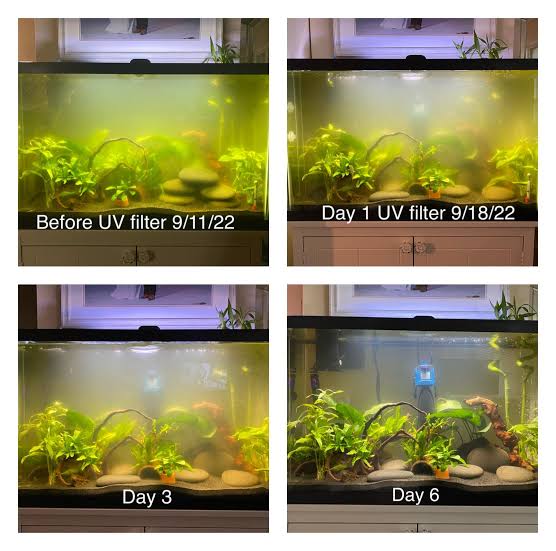
7. How Long Should You Run a UV Sterilizer to Control Green Water?
Green aquarium water is often caused by suspended microscopic algae.
It can make an aquarium appear cloudy or green even when the aquarium glass, decorations, and substrate look relatively clean.
A UV sterilizer can be an effective tool for controlling many types of free-floating algae.
7.1 Identify the Cause of Green Water First
Green water can result from several contributing factors:
-
Excessive light exposure.
-
Excess nutrients.
-
High phosphate availability.
-
Overfeeding.
-
Inadequate maintenance.
-
An imbalance between nutrients and plant growth.
UV sterilization can reduce suspended algae, but it does not eliminate the conditions that caused the algae to multiply.
If those conditions remain unchanged, green water may return.
7.2 Operate the Unit According to Its Rated Flow
When treating green water, the UV sterilizer must provide sufficient exposure to the water passing through it.
If the water flow is too high, algae may pass through without receiving an adequate UV dose.
Check the unit's recommended flow rate for algae control rather than assuming the maximum rated pump capacity is appropriate.
7.3 Allow Sufficient Time for Improvement
Depending on aquarium size, algae concentration, lamp output, and flow rate, water clarity may improve over several days.
Some aquariums respond quickly, while others require longer treatment periods.
Do not repeatedly increase the UV lamp power or reduce water flow beyond the manufacturer's recommendations in an attempt to accelerate the process.
7.4 Address the Underlying Algae Problem
In addition to UV treatment:
-
Reduce excessive lighting.
-
Avoid unnecessary direct sunlight.
-
Feed fish appropriately.
-
Remove uneaten food.
-
Clean accumulated organic waste.
-
Maintain suitable nutrient levels.
-
Check filtration performance.
Combining these practices provides more reliable long-term control.
8. Does UV Sterilization Affect Beneficial Bacteria in Winter?
Some aquarium owners worry that running a UV sterilizer may eliminate beneficial bacteria and damage the aquarium's biological filtration system.
This concern is understandable, but the distinction between suspended bacteria and established biofilm is important.
8.1 Most Beneficial Nitrifying Bacteria Live on Surfaces
The bacteria responsible for biological filtration primarily colonize surfaces inside the aquarium.
These include:
-
Filter media.
-
Sponge filters.
-
Ceramic rings.
-
Biological filtration blocks.
-
Substrate.
-
Aquarium decorations.
-
Other wet surfaces.
They form communities attached to these surfaces rather than remaining freely suspended in the water.
8.2 UV Treatment Mainly Affects Suspended Organisms
A UV sterilizer treats water passing through its chamber.
It does not directly expose most established beneficial bacteria living inside filter media or attached to aquarium surfaces.
Therefore, properly operated UV equipment generally does not destroy an established aquarium's biological filtration system.
However, UV treatment can affect susceptible free-floating microorganisms, including some bacteria in the water column.
8.3 Protect Biological Filtration During Winter
Although UV equipment generally does not eliminate established biofilm, winter conditions can still make biological filtration more vulnerable.
Protect the filter by:
-
Maintaining adequate water circulation.
-
Avoiding prolonged filter shutdowns.
-
Keeping biological media wet.
-
Avoiding excessive filter cleaning.
-
Replacing media gradually when necessary.
-
Monitoring ammonia and nitrite.
If fish stocking increases or feeding habits change, recheck water quality rather than assuming the biological filter can immediately handle the additional load.
9. How to Choose the Right Aquarium UV Sterilizer for Winter Use
Choosing an appropriate UV sterilizer is just as important as deciding when to operate it.
An incorrectly sized unit may consume electricity without delivering the expected treatment results.
9.1 Consider Aquarium Volume
Start by identifying the actual aquarium water volume.
Do not calculate the system size using only the external dimensions of the aquarium.
Substrate, decorations, equipment, and the space above the waterline reduce the actual water volume.
For systems with a sump or external filtration equipment, consider the total operating water volume.
9.2 Check the Recommended Flow Rate
The flow rate determines how quickly water moves through the UV chamber.
Different treatment objectives may require different flow rates.
For example, controlling suspended algae may require a different UV dose from targeting certain microorganisms.
Always compare the manufacturer's flow recommendations with the pump's actual operating performance.
Remember that plumbing resistance, filter condition, and pipe diameter can reduce actual flow.
9.3 Check UV Lamp Specifications
Important specifications include:
-
UV-C wavelength.
-
Lamp power.
-
Expected lamp lifespan.
-
Recommended replacement interval.
-
UV chamber design.
-
Maximum operating temperature.
-
Flow-rate recommendations.
Many aquarium UV sterilizers use low-pressure mercury lamps that produce UV-C radiation near 254 nanometers.
Other technologies may use different UV sources.
Do not evaluate UV equipment using wattage alone. Actual treatment effectiveness depends on delivered UV dose.
9.4 Choose a Unit With Appropriate Safety Features
A quality aquarium UV sterilizer should be designed to prevent direct exposure to UV-C radiation.
Look for:
-
An enclosed treatment chamber.
-
Secure housing.
-
Reliable electrical connections.
-
Appropriate waterproof ratings.
-
Suitable seals.
-
Clear maintenance instructions.
-
Protection against accidental exposure.
Never operate an exposed UV-C lamp where people or animals could look directly at it or receive direct exposure.
UV-C radiation can damage eyes and skin.
10. Common Winter Aquarium UV Sterilizer Mistakes
Even when aquarium owners understand the basic principles of UV treatment, several operating mistakes can reduce effectiveness or create unnecessary risks.
Mistake 1: Turning the UV Lamp On Before Water Flow Is Established
Many inline UV sterilizers require water circulation to operate safely.
Running the lamp without the required water flow can cause overheating or equipment damage.
Always verify the unit's operating requirements.
Mistake 2: Assuming UV Treatment Replaces Water Changes
UV sterilization does not remove nitrate, dissolved waste, or accumulated pollutants.
A visually clear aquarium can still have poor water chemistry.
Continue testing and performing appropriate water changes.
Mistake 3: Using Excessively High Water Flow
Water passing through the UV chamber too quickly may receive insufficient exposure.
Follow the recommended flow rate for the intended treatment purpose.
Mistake 4: Ignoring a Dirty Quartz Sleeve
Many UV sterilizers use a quartz sleeve to protect the lamp while allowing UV radiation to pass through.
Mineral deposits, biofilm, and other contamination can reduce UV transmission.
Inspect and clean the sleeve according to the manufacturer's maintenance instructions.
Mistake 5: Keeping an Old UV Lamp Too Long
UV lamps gradually lose effective output over time.
A lamp may still appear illuminated even when its UV-C performance has declined.
Replace the lamp according to the manufacturer's recommended service interval.
Mistake 6: Using UV Equipment as the Only Disease Treatment
UV sterilization cannot reliably eliminate every parasite or pathogen in an aquarium.
Some organisms remain attached to fish, substrate, or decorations.
Use an appropriate disease-management approach when fish become ill.
Mistake 7: Exposing Fish to Sudden Temperature Changes During Maintenance
A UV sterilizer cannot compensate for temperature shock caused by poorly prepared replacement water.
Always prioritize stable temperature and water chemistry.
Mistake 8: Forgetting About Medication Compatibility
Some aquarium medications may be degraded or affected by UV exposure.
Follow the medication manufacturer's instructions and temporarily disable UV treatment when required.
11. A Practical Winter Aquarium Maintenance Routine
A consistent maintenance routine can help prevent winter-related water-quality problems.
The following schedule provides a practical starting point for many freshwater aquariums.
Daily Checks
Spend a few minutes observing the aquarium.
Check:
-
Fish activity.
-
Feeding behavior.
-
Heater operation.
-
Water temperature.
-
Filter circulation.
-
Unusual water cloudiness.
-
Signs of illness.
If fish are breathing rapidly, gasping at the surface, or behaving abnormally, investigate immediately.
Weekly Checks
Perform a more detailed water-quality review.
Measure:
-
Ammonia.
-
Nitrite.
-
Nitrate.
-
pH, when appropriate.
-
Temperature.
Inspect the filter intake and confirm that water circulation remains normal.
Perform water changes according to test results and the aquarium's maintenance requirements.
If the UV sterilizer operates continuously, check for leaks, unusual noise, and visible signs of reduced water flow.
Monthly Checks
Review the overall condition of the equipment.
Inspect:
-
UV housing.
-
Quartz sleeve.
-
Electrical connections.
-
Water tubing.
-
Filter media.
-
Heater condition.
-
Water circulation.
Clean equipment according to its manufacturer's instructions.
Do not open or service an energized UV unit.
Seasonal Checks
Before winter becomes severe:
-
Verify that the heater is correctly sized.
-
Consider using a separate aquarium thermometer.
-
Check heater placement.
-
Inspect electrical connections.
-
Avoid placing the aquarium near cold drafts.
-
Review the UV lamp replacement schedule.
-
Prepare water-change equipment.
Preventive maintenance is generally easier than correcting problems after fish begin showing signs of stress.
12. Special Considerations for Different Aquarium Types
Not every aquarium requires the same winter maintenance strategy.
12.1 Tropical Freshwater Aquariums
Tropical aquariums generally require careful temperature management during winter.
Maintain a stable temperature appropriate for the species.
Continue monitoring ammonia, nitrite, and nitrate.
A UV sterilizer can be useful for managing suspended algae and certain waterborne microorganisms, but it should remain an additional treatment component rather than a replacement for normal filtration.
12.2 Planted Aquariums
Planted aquariums may have different nutrient and maintenance requirements.
Aquatic plants absorb nutrients, including nitrate, and can help stabilize the ecosystem.
However, plant growth may slow when lighting conditions, temperature, or nutrient availability change.
UV sterilization can help control suspended green-water algae, but it does not eliminate algae growing on leaves, glass, or decorations.
Pay attention to plant health, lighting duration, and nutrient balance.
12.3 Marine Aquariums
Marine aquariums often contain sensitive fish and invertebrates.
Water chemistry stability is particularly important.
Changes in salinity, alkalinity, calcium, and temperature should be monitored carefully.
UV sterilizers can be useful in marine systems, but appropriate sizing and flow rates depend on the intended treatment objective.
Always follow the manufacturer's guidance and consider the specific requirements of corals and other invertebrates.
12.4 Goldfish Aquariums
Goldfish produce considerable waste relative to their size.
Even when water temperature decreases and activity slows, waste management remains important.
Goldfish aquariums may require substantial filtration and regular water changes.
Reducing maintenance simply because it is winter can allow nitrate and organic waste to accumulate.
UV sterilization may help manage green water, but it cannot replace the filtration capacity and water-change schedule needed by goldfish.
13. Frequently Asked Questions About Winter Water Changes and UV Sterilizers
Q1: Can I Change Aquarium Water Less Frequently in Winter?
Sometimes, but only when water testing confirms that the aquarium remains stable.
Fish waste and dissolved pollutants continue accumulating during winter.
Do not reduce water changes simply because fish appear less active.
Q2: Should I Turn Off My Aquarium UV Sterilizer at Night?
Usually, there is no need to turn it off at night solely because it is dark.
UV sterilizers do not require daylight to function.
If the equipment is designed for continuous operation and the aquarium benefits from consistent treatment, it can generally run according to the manufacturer's instructions.
Q3: Should I Turn on the UV Sterilizer Immediately After a Water Change?
A routine water change does not automatically require a waiting period.
Once the aquarium has normal water circulation, the UV chamber is correctly filled, and the equipment is operating within its specifications, it can generally continue running or be restarted.
Q4: Can a UV Sterilizer Kill Beneficial Bacteria?
It can inactivate susceptible free-floating bacteria that pass through the unit.
However, most beneficial nitrifying bacteria live in established biofilms on filter media and other surfaces.
Proper UV operation generally does not eliminate the aquarium's established biological filtration.
Q5: Can UV Sterilization Remove Ammonia and Nitrate?
No.
UV sterilizers do not remove ammonia, nitrite, or nitrate.
These substances must be managed through biological filtration, appropriate maintenance, plant uptake where applicable, and water changes.
Q6: How Many Hours Should an Aquarium UV Sterilizer Run Each Day?
There is no universal number of hours.
Some systems are designed for continuous operation, while others may only require periodic use.
The appropriate schedule depends on the UV dose, water flow, aquarium conditions, and treatment objective.
Q7: Can I Use a UV Sterilizer During Fish Disease Treatment?
It depends on the disease and medication.
Some treatments may be affected by UV exposure, so follow the medication manufacturer's instructions.
Remember that UV sterilization is not a substitute for diagnosing and treating fish diseases.
Q8: Does Cold Weather Reduce UV Sterilizer Effectiveness?
Cold weather does not automatically make UV-C radiation ineffective.
However, equipment operating conditions, lamp specifications, water flow, and installation conditions still matter.
Ensure that the UV unit is used within its specified operating temperature range.
Q9: Can UV Sterilization Make Aquarium Water Crystal Clear?
It can help clear green water caused by suspended algae and reduce certain suspended microorganisms.
However, it cannot remove every type of cloudiness.
Bacterial blooms, suspended particles, dissolved organic compounds, and substrate disturbance may require different solutions.
Q10: Should I Buy a More Powerful UV Sterilizer for Winter?
Not necessarily.
The correct unit should match the aquarium's water volume, flow rate, and treatment objective.
A larger lamp does not automatically guarantee better results if water circulation and exposure conditions are inappropriate.
Conclusion: Stable Water Conditions Matter More Than Seasonal Operating Rules
Winter aquarium maintenance requires a balanced approach.
Reducing water changes may be reasonable for certain stable aquariums, but it should never become a substitute for water testing and proper waste management.
The most important priorities are maintaining stable temperatures, protecting biological filtration, preventing pollutant accumulation, and ensuring that replacement water is properly prepared.
An aquarium UV sterilizer can provide valuable additional protection against certain suspended microorganisms and free-floating algae. However, its operating schedule should be determined by equipment specifications and aquarium needs rather than a fixed winter timetable.
For routine water clarity management, consistent operation may be appropriate when the equipment is designed for continuous use. After routine water changes, there is generally no need to wait unnecessarily before restarting the unit, provided that water flow and operating conditions are safe.
Above all, remember that a UV sterilizer is only one part of a complete aquarium maintenance system.
Good filtration, appropriate feeding, regular water testing, careful water changes, and stable temperatures remain the foundation of a healthy aquarium.
By combining these practices, aquarium owners can maintain clearer water, reduce unnecessary fish stress, and keep their aquatic environments healthy throughout the colder months.
Looking for reliable UV sterilization solutions or professional aquarium water-treatment equipment? Feel free to leave us a message for a quote or inquiry. We'd be happy to help you find the right solution for your needs.